Home Blog Page 2524

LT-GEN SAQIB MEHMOOD APPOINTED AS ARMY’S CHIEF OF LOGISTICS STAFF

RAWALPINDI, APR 4: The Pakistan Army has announced the promotion of Major-General Saqib Mehmood Malik to the rank of Lieutenant General.

The announcement was made in a statement released by the military’s media wing, Inter Services Public Relations (ISPR), on Sunday.

According to the ISPR statement, after promotion Lieutenant General Saqib Mehmood Malik has been appointed as Chief of Logistics Staff, Pakistan Army.

UKRAINE DOES NOT EXPECT RUSSIAN ATTACK IN DONBAS

KYIV, APR 4 – Russia and Ukrainian security experts disagreed on Saturday whether Russia is preparing a new military operation in eastern Ukraine.

While Ukrainian experts claim Russia is pushing the West to compromise, Russian experts argue that Moscow might launch a new operation in the Donbas region.

Mykhalio Samus, deputy director of Ukraine’s Centre for Army, Conversion and Disarmament Studies, described recent increased Russian military activity along the Ukrainian-Russian border as information and psychological warfare to put pressure on Ukraine, France, Germany and the US and extract commercial concessions, particularly the Nordstream-2 natural gas pipeline.

Maintaining that the other purpose for Russian military activity is playing into politics on the eve of forthcoming parliamentary elections in Russia, Samus said: “Moscow has no reason to initiate such attack as its possible results are unpredictable. Hence, change of a Russian military operation is not more than how it was last year.”

Denis Moskalik from the Ukrainian National Institute for Strategic Studies told Anadolu Agency that a major armed conflict is possible in principle but it is not expected in the near future.

Agreeing with Samus that current Russian steps are intended to press Ukrainian and American administrations, and test their determination, Moskalik noted: “Russia might spark some minor

armed clashes to gain the upper-hand at the negotiation table and to see the limits of [US President Joe] Biden’s support to Ukraine.”

On the other hand, Viktor Litovkin, a senior Russian security expert remarked that Russia would not stand idle if Ukraine starts a military operation toward Donbas.

“Most of the residents living in Donbas are also Russian citizens. Thus, Russia might intervene to protect its own citizens. What is even more, Russia can attack the aggressor [Ukraine].”

Tension at Ukraine-Russia border

On March 30, Ruslan Homchak, the Commander-in-Chief of the Ukrainian Armed Forces, said Russia deployed its military near the Ukrainian border for “exercises.”

Kremlin spokesman Dmitry Peskov said Russia moved its armed forces within its territory “at its own discretion” and “it doesn’t pose any threat to anyone.”

Russian forces entered Ukraine’s Crimean Peninsula in February 2014, with Russian President Vladimir Putin formally dividing the region into two separate federal subjects of the Russian Federation the following month.

Turkey and the US, as well as the UN General Assembly, view the annexation as illegal, as does the EU, which imposed sanctions on Russia for the seizure.

AIOU SIGNS MOU WITH GSCWU BAHAWALPUR

ISLAMABAD, APR 4 (DNA) – Allama Iqbal Open University (AIOU) and the Government Sadiq Women College University (GSWCU), Bahawalpur join hands for the promotion of education and research culture in the country by signing a memorandum of understanding (MoU) the other day.

The MoU was signed by Prof. Dr. Zia Ul-Qayyum, Vice Chancellor, AIOU and Prof. Dr. Saiqa Imtiaz Asif, Vice Chancellor, GSWCU, Bahawalpur. As per the agreement they affirmed longstanding collaboration between the two universities in the fields teaching and research by exchanging academia as well as students.

On this occasion Prof. Zia offered AIOU’s full support to GSCWU, Bahawalpur in online education and capacity building of faculty and staff. He also shared recent developments of the Open University, especially the development of the AAGHI LMS Portal. He shed light on the altogether digital transformation of AIOU systems of admission, examination, finance, academic planning, etc.

 He, further, added that in the COVID-19 pandemic the AIOU completed its academic year as per its scheduled calendar without any problem or delay as according to the vice chancellor, they shifted their students to AAGHI LMS Portal. “Our students attended their tutorials, online live classes and submitted their assignments too, he added.

Prof. Saiqa Imtiaz Asif thanked Prof. Zia for his visit along with the AIOU delegation. She shared that the university was in a developmental stage and in need of help and support from AIOU. Dr Zia Ul-Qayyum while reiterating AIOU support to Prof. Saiqa said, “we will collaborate in faculty development programs, content development, joint research activities, exchange of journals, and sharing of AIOU expertise in the area of online or eLearning”.

Prof. Dr. Nasir Mahmood, Dean, Faculty of Education, and Dr. Zahid Majeed, Director Academics shared AIOU AAGHI LMS Portal with the faculty members of the women university.

Pakistan wins toss, elects to bowl first in second South Africa ODI

Johannesburg : Pakistan skipper Babar Azam has won the toss and elected to bowl first in the second ODI against South Africa at Wanderers.

Both teams are going unchanged in the match, termed as ‘Pink ODI’ to support the Breast Cancer cause. South Africa are donning the pink jersey.

Pakistan XI: Imam ul Haq, Fakhar Zaman, Babar Azam (c), Mohammad Rizwan, (wk) Danish Aziz, Asif Ali, Shadab Khan, Faheem Ashraf, Shaheen Afridi, Mohammad Hasnain, Haris Rauf

South Africa XI: Aiden Markram, Quinton de Kock (wk), Temba Bavuma (capt), Rassie van der Dussen, David Miller, Heinrich Klaasen, Andile Phehlukwayo, Kagiso Rabada, Anrich Nortje, Lungi Ngidi, Tabraiz Shamsi

Chinese envoy lauds Sino-Pak partnership

Special Correspondent


Islamabad, April 4 : Chinese envoy Nong Rong highly commended the fast growing Sino-Pak cooperative partnership under CPEC, according to a report.

He said, the upcoming meeting of the Joint Cooperation Committee (JCC), which is the apex body on CPEC, will focus on socio-economic development, industry, and agriculture to further boost the partnership.

He was speaking at video conference that was organized to mark the 70 years of Pakistan-China diplomatic ties, by Pakistan-China Institute under the banner of “Friends of Silk Road.”

Nong Rong said, China has so far invested $ 25. 4 billion in Pakistan under the China-Pakistan Economic Corridor (CPEC) and created more than 75,000 jobs for the Pakistanis, Chinese ambassador to Pakistan Nong Rong said.

Those who also addressed the envent included General Ehsanul Haq (retd), former chairman, Joint Chiefs of Staff Committee, Mushahid Hussain, chairman, Pakistan-China Institute, Sha Zukang, former UN Under Secretary-General and Masood Khalid, Pakistan’s former ambassador to China, ambassador Munir Akram, permanent representative of Pakistan to the United Nations, Tehmina Janjua, former foreign secretary.

The online event was moderated by Mustafa Hyder Sayed, executive director of the Pakistan-China Institute.

The Chinese ambassador thanked Pakistan for its consistent support to China during the past decades. He said the bilateral relationship was being further cemented through mutual support and high-level consultations and visits.

He said, no Pakistani worker was laid off during the pandemic from any CPEC project.

He said Pakistan was the first country to get a donation of Chinese COVID-19 vaccine and said the bilateral Free Trade Agreement (FTA) will narrow trade deficit and deepen economic cooperation.

He also said 100 million Chinese had benefited from the elimination of rural poverty in China.

Former chairman, Joint Chiefs of Staff Committee General Ehsanul Haq (retd) termed “security cooperation as a significant core area of Pakistan-China relations”. He said “75-80% of Pakistani defence equipment comes from China and Pakistan accounts for 35% of China’s military exports”.

Former Under Secretary General of the UN and president of the China-Pakistan Friendship Association, ambassador Sha Zukang said “Pakistan is the most important country in the region for China” and he said “Pakistan-China relations will blossom in today’s world, where changes not seen in a century, were occurring”.

Pakistan’s ambassador to the UN, Munir Akram termed “China the pivot of Pakistan’s foreign policy” and “this pivot will remain” and Pakistan is the strongest defender of China’s territorial integrity.

He said “Pakistan-China policies are completely aligned in South Asia, in the Indian Ocean, in Central Asia, in the Asia-Pacific region”.

Former ambassador of Pakistan to China, Masood Khalid said “China’s rise is an established reality” and he also narrated how 50 years ago, “despite China’s own difficulties during the Cultural Revolution, China provided invaluable support to building Pakistan’s heavy industrial base worth almost $300 million”.

Former foreign secretary Tehmina Janjua quoted President Xi Jinping as telling the Pakistani prime minister in 2019 in Beijing that “no matter how the international situation changes, China will always stand firmly with Pakistan”.

Senator Mushahid Hussain said “people-to-people relations are the core of the Pakistan-China bond” and he referred to his first visit to China in the early 70s as a young teenager in college, “I am very fortunate to have witnessed the remarkable transformation of China in the past five decades through my nearly 100 visits to China”.

He also thanked China for gifting 1.5 million doses of COVID-19 vaccine to Pakistan at a time when these vaccines were urgently needed.

He added that during a recent webinar on March 20, organised by the Chinese government, in which he and Dr Kissinger participated, the American statesman had recognised and appreciated Pakistan’s pivotal role in building ties with China.

The webinar lasted for 2 hours and 30 minutes, including an attentive 45 minutes Q&A and discussion among participants, who numbered about 80 diverse and distinguished audience of former policy-makers, students and scholars and representatives of think tanks.

Chinese enterprises in Pakistan get along well with Pakistani employees: Bai Yan

ISLAMABAD, April 4 : Chinese enterprises in Pakistan get along well with Pakistani employees and local people, said Bai Yan, a Chinese lady, who has been working and living here since 2010.

She lauded this cooperative and friendly relationship in terms of people-to-people exchanges, while talking to Gwadar Pro. For example, she said, her company often celebrates the Pakistani traditional holidays with employees and local people.  

When talking about the China-Pakistan Economic Corridor (CPEC), Bai said projects under the framework of CPEC have boosted the economic development of Pakistan and provided more job opportunities for locals. 

Sharing her experience livng in Islamabad, she said Pakistanis are friendly to her all the way.  
Bai recalled that when she first came here in August, the local scorching heat weather hit her first. “I hadn’t experienced such a torrid summer,” she said. However, the livable environment and green plants everywhere made her fall in love with the city.  

After settling down in a place, the importance of food emerges. Fortunately, the Pakistani barbecued meat and milky tea catch Bai’s eye. “The barbecued meat is pretty good,” she commented.     

According to Gwadar Pro, besides these conditions, Bai likes the lifestyle here. She thinks that the walking pace of local people is definitely not as hurried as that in some big cities in China. Another reason why Bai likes this city is that she has been impressed by the local people’s enthusiasm for Chinese.  

“Once knowing I am Chinese, Pakistanis will be friendlier to me. We are always enjoying such amicable atmosphere here,” she remarked.

France cuts economic growth forecast to 5% amid lockdown

PARIS: The French economy will expand by 5% in 2021, Economy Minister Bruno Le Maire said in a newspaper interview, as a third lockdown to tackle the coronavirus pandemic has prompted a downward revision in the previous government forecast for 6% growth.

The new forecast was prudent, Le Maire said in comments published on Sunday in Le Journal Du Dimanche (JDD).

“Our fundamentals are sound; we will be able to bounce back,” Le Maire said.

French schools and non-essential stores such as clothing chains will now be shut for four weeks, after COVID-19 cases surged in recent weeks, edging up the number of patients in intensive care units.

Bars and restaurants have already been closed for months, while tourist travel is at a standstill, although unlike when France entered its first national lockdown a year ago, construction work and manufacturing are among business areas still ticking over.

Like many countries in Europe, France has ploughed billions of euros into propping up struggling companies with state-backed loans, help with rents and partial unemployment schemes.

The latest restrictions will force some 150,000 businesses to temporarily close, and aid measures in April will cost 11 billion euros, the finance ministry has said.

Le Maire has repeatedly called for the European Union to accelerate the ratification and implementation of its 750 billion-euro economic stimulus plan.

He told the JDD that France was now unlikely to get the 5 billion euro disbursement from that scheme in July as planned, due to delays.

France has its own 100 billion-euro economic reboot programme, and plans to spend roughly half of that budget by the end of the year, Le Maire said.

Influence of Shanghai Spirit continues to grow

Vladimir Norov

SCO has firmly established itself as an influential and responsible participant in the modern system of international relations

In recent years, through the joint efforts of all parties, the Shanghai Cooperation Organization has successfully created a solid legal framework and effective mechanisms for multilateral cooperation in the fight against international terrorism, separatism and extremism, drug trafficking, organized crime, and ensuring information security, as well as strengthening trade, economic, cultural and humanitarian cooperation.

A fundamentally important feature of the organization is that, while fully preserving and respecting the autonomy of its members in their internal affairs and foreign policy, partnership within the SCO is based on active and cooperative interaction, joint determination of areas of overlapping interests and equal importance of opinions.

Mutual understanding, equality and coordination are the key elements defining the SCO. The organization does not pursue the goal of forming a military-political alliance, is not targeted against any third countries, and does not support ideological and confrontational positions in addressing international and regional development problems.

The SCO members consistently adhere to the principle of openness in cooperation with all interested countries and international organizations, and adhere to the goals and principles of the United Nations. The interaction between the UN and the SCO has already become a successful example of effective cooperation between a global and regional organization.

UN Secretary-General António Guterres has stressed the SCO is a strong partner of the UN, a leader in regional diplomacy and a promoter of cooperation in addressing the most pressing peace and security challenges facing Eurasia.

The SCO Development Strategy 2025, adopted in 2015, aims to ensure the successful implementation of its programs and plans for the development of multilateral cooperation in the economy, finance, investment, trade and transport project activities are being implemented.

Work is ongoing to expand scientific, technical, humanitarian and cultural exchanges, as well as cooperation in the health and tourism sectors.

The multifaceted interaction among the SCO members is promoting the stable development and welfare of the entire Eurasian region.

The creation and formation of the SCO came during a period of world history when a clear trend was emerging of the redistribution of the global balance of power, primarily due to the strengthening of new centers of development in the Asia-Pacific region.

The historic decision adopted 20 years ago on June 15, 2001 by the founding countries to establish the SCO was an important step toward the active promotion of peace and joint development in the region. The SCO’s emphasis on the Shanghai Spirit of mutual consultation, mutual trust and mutual benefit has deepened the good-neighborly, friendly and partnership relations among the member states.

The era of political, economic and financial dominance of the West, stretching over the past 500 years, is gradually coming to an end. Public recognition of this objective reality can even be found in the speeches of leading Western politicians, in particular, the statement of French President Emmanuel Macron on Aug 27, 2019, at the traditional Conference of Ambassadors, which is organized every year at the Elysee Palace when he said that: “We are definitely witnessing the end of Western hegemony in the world”.

At the same time, this process is unfolding against the backdrop of escalating global political and economic tensions, with some countries adopting growing unilateral protectionist measures, and other challenges to the globalization of international trade. The COVID-19 pandemic, as we can see firsthand, has only exacerbated these tensions.

In the two decades of its existence, the SCO has firmly established itself as an influential and responsible participant in today’s system of international relations and has become Asia’s main continental forum for security and sustainable development. The latter became particularly noticeable after 2017, when India and Pakistan joined the organization.

With the entry of these two countries, the SCO has acquired a transcontinental character, and in terms of total potential, the organization now encompasses the total population of almost 44 percent of the world’s population, territory, natural resources, and almost one-fourth of the world’s GDP. It has become the largest international trans-regional organization in the world.

The SCO has transformed into an influential organization, whose voice is more and more considered in the international arena, and with which more and more states seek cooperation. Including its members, observers and dialogue partner states, the organization comprises 18 states, from Eastern Europe and the Persian Gulf to Central and South Asia.

In addition, the SCO region represents a huge market for mutually beneficial trade and economic cooperation, and the implementation of joint projects covering almost all sectors of the economy.

That is why the SCO has proven to be the best platform for bridging national strategies, cross-border projects, and multilateral integration initiatives, including the Eurasian Economic Union, as well as national development strategies of member countries and China’s Belt and Road Initiative.

In addition, to various aspects of geopolitical, geo-economic and civilizational factors, the active participation in the organization of China and Russia has brought the SCO to the forefront of international politics.

The enormous political, defense, economic and cultural-civilizational potential, and impressive geographical scale of the SCO-from Southeast Asia to Eastern and Northern Europe-is a guarantee of the organization’s active and creative participation in shaping a multipolar world.

Over the past 20 years, the organization has been able to build one of the world’s largest systems of successful alignment of national and regional interests in various areas of development, as well as multifaceted regional cooperation with a focus on guaranteeing political stability, strengthening security, expanding economic cooperation, joint development and the prosperity of nations.

The author is secretary-general of the Shanghai Cooperation Organization. The author contributed this article to China Watch, a think tank powered by China Daily. The views do not necessarily reflect those of China Daily.

If The Writer is the Secretary General of SCO

PM Imran wishes Christian citizens ‘a happy Easter’

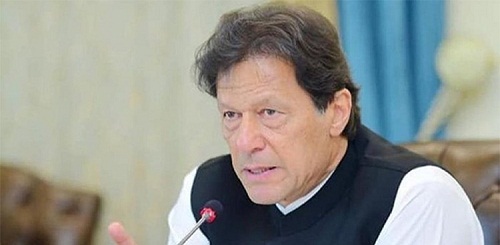
ISLAMABAD: Prime Minister Imran Khan took to popular microblogging site Twitter on Sunday to wish the Christian community “a happy Easter”.

“Wishing all our Christian citizens a happy Easter,” he tweeted.

Easter is one of the religious festivals celebrated by the Christians every year around the world.

The day usually celebrated on first Sunday after the full moon marks the culmination of the 40 day period of fasting called Lent. This year Easter falls on Sunday (April 04).

Pakistan records 5,020 fresh COVID cases with 81 deaths in past 24 hours

ISLAMABAD : The novel coronavirus has claimed 81 more lives in Pakistan during the past 24 hours, taking the overall death toll to 14,778.

The latest statistics of the National Command and Operation Centre (NCOC) showed the COVID-19 has claimed 81 more lives and 5,020 fresh infections were reported during the period.

During the period of a day, the total count of active cases was recorded at 58,581 and the positivity rate stood at 9.02 per cent.

The health facilities across the country conducted 50,186 coronavirus detection tests during the said period. Overall 10,403,335 tests have been conducted so far.

As many as 613,058 have regained their health from the deadly virus so far with  3,367 in past 24 hours. 3,568 patients are still critical and under treatment at the various hospitals.

Yesterday, Federal Minister for Planning, Development and Special Initiatives Asad Umar had chaired a meeting of the National Command and Operation Center (NCOC) to review the Covid-19 situation.

The NCOC session was held with Asad Umar in the chair through video link and co-chaired by National Coordinator NCOC Lieutenant General Hamood Uz Zaman Khan.

The meeting was apprised that the single-dose CanSino Covid vaccine administration would commence in all the provinces from Monday (tomorrow) onwards.

Stay Connected

64FansLike
60FollowersFollow

Latest Reviews

Exchange Rates

USD - United States Dollar
EUR
1.17
GBP
1.35
AUD
0.67
CAD
0.72