Home Blog Page 2512

India’s COVID-19 tally rises to 32,945,907

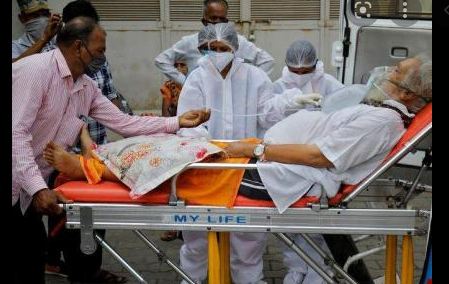
NEW DELHI, SEP 04 (DNA) – India’s COVID-19 tally rose to 32,945,907 on Saturday as 42,618 new cases were registered during the past 24 hours across the country, showed the federal health ministry’s latest data.

Besides, as many as 330 deaths due to the pandemic were since Friday morning, taking the total death toll to 440,225.Most number of single-day new cases and deaths were reported from the southern state of Kerala.

As many as 131 deaths were reported from Kerala alone during the past 24 hours. There are still 405,681 active COVID-19 cases in the country with an increase of 5,903 active cases during the past 24 hours.

A total of 32,100,001 people have been successfully cured and discharged from hospitals so far, out of which 36,385 were discharged during the past 24 hours. = DNA

=======================

TOKYO PARALYMPIC GAMES CONCLUDE

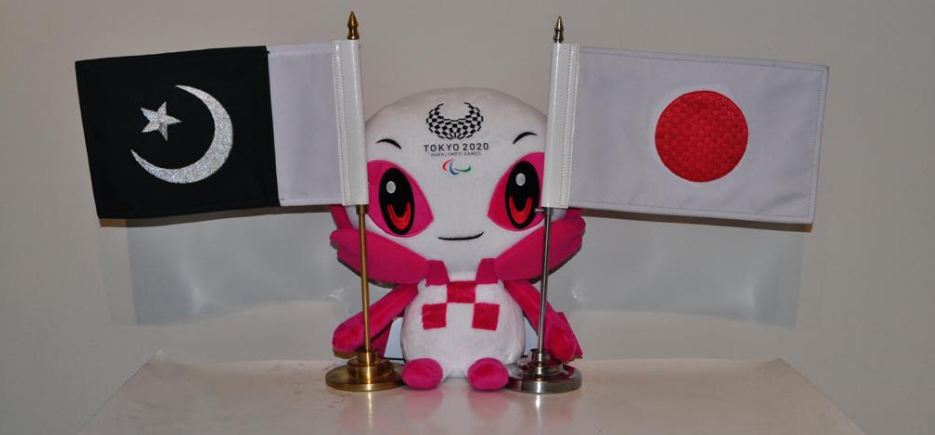
ISLAMABAD, SEPT 4 /DNA/ – After thirteen days of serious competitions with the Paralympians’ best performance, The Tokyo Paralympics comes to a close tonight with the closing ceremony to be held at the Tokyo Olympic Stadium.  “Harmonious Cacophony”, the theme of the closing ceremony, is acknowledging diversity among people and transforming their difference into a shared unity.
Let’s welcome the Pakistani Paralympic team back home with a massive applause!
H.E. Ambassador MATSUDA Kuninori expressed his sincere gratitude to all concerned with the Tokyo Paralympic Games including athletes, coaches, the staff and their families and friends who have supported the Paralympics. The Ambassador also congratulated the Pakistani athletes for their performance, saying that “The commitment and hard work by those athletes is exemplary.  They have made their country proud especially the performance by Mr. Haidar Ali for achieving the Gold medal. This could be the defining moment in which we see Pakistan’s athletes rising in the world of sport”.
We all wish Pakistani para-athletes well in the future Paralympic Games!

DG ISI ARRIVES IN KABUL TO HOLD TALKS WITH TALIBAN ON SECURITY, SAFE EVACUATION: SOURCES

  • DG ISI arrives in Kabul on day-long visit to meet with the Taliban representatives.
  • Sources say that matters related to evacuation, border management will come under discussion.
  • Security issues will also be discussed during the meetings, say sources.

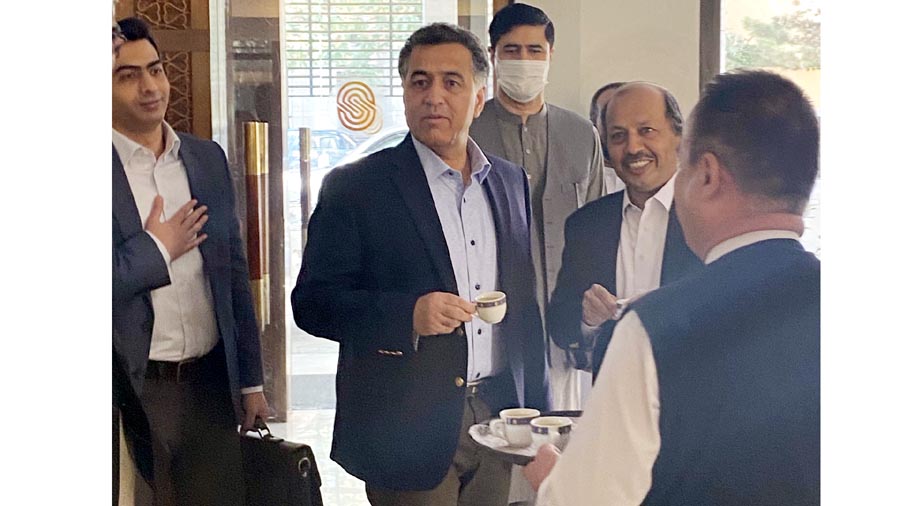
ISLAMABAD: Lt Gen Faiz Hameed, the director general of the Inter-Services Intelligence (ISI), Saturday arrived in Kabul to meet with the Taliban representatives and discuss matters related to the safe evacuation of foreign nationals, border management and security in the region, sources said.

The intelligence chief will spend a day in the Afghan capital, sources said, adding he is meeting and working with Pakistan’s Ambassador Mansoor Ahmed Khan and his team on issues of repatriation and transit through Pakistan and the situation on the border.

Since the Taliban came into power last month thousands of foreign nationals have been evacuated from the war-ravaged country with Pakistan’s help. The Pakistani embassy in Kabul had been working 24/7 to assist in the evacuation efforts.

According to the sources, the ISI chief will discuss matters with the Taliban related to the issue of pending requests from countries and international organizations for repatriation/transit through Pakistan.

He will also deliberate on the need to determine a mechanism through which Islamabad could allow these, in coordination with the ground authorities in Afghanistan.

Sources said that border management is another important issue that will come under discussion during the day-long visit of Lt Gen Faiz Hameed.

The officials, according to sources, will look into the matter to ensure that the mechanism under which Afghans cross over the border on a daily basis as routine and then return, runs smoothly and only those allowed to avail this facility do so.

They said that the Western media reports suggesting huge refugee inflow or pressure at Pakistan borders from Afghanistan are “incorrect”.

DG ISI will also hold discussions on the overall security issue to ensure that spoilers and terrorist organisations do not take advantage of the situation.

BIDEN WANTS AFGHAN EXIT TO END US GLOBAL COP ROLE

WASHINGTON, SEPT 4 – “America is back,” goes President Joe Biden’s catchphrase, but his unapologetic exit from Afghanistan shows America won’t be back to business as usual.

Beyond the trauma of the Kabul evacuation, Biden is pitching a much broader retreat: a halt to using vast military resources to impose order and US values around the planet.

“This decision about Afghanistan is not just about Afghanistan,” Biden said in what many see as a historic speech on Tuesday. “It’s about ending an era of major military operations to remake other countries.”

“Human rights will be at the centre of our foreign policy but the way to do that is not through endless military deployments,” he said.

“Our strategy has to change.” Benjamin Haddad, director of the Europe Center at the Atlantic Council and an expert on transatlantic relations, called the speech “one of the most eloquent repudiations of liberal internationalism by any US president in the last decades.”

For those Americans fond of imagining their country to be a unique, invincible superpower — winner of the Cold War, then awesome military interventionist everywhere from Iraq to Africa ever since — this is a shock.

For most, though, polls show Biden’s pivot is likely to be popular.

THE STORY OF RESURRECTION, REJUVENATION AND REDEMPTION: WITNESS TO TOIL, SWEAT AND BLOOD

Eph-Xe Cay

The sacred soil of beloved motherland is witness to supreme sacrifices its sons and daughters offered to strengthen its roots and defend its territories with their own sweat and blood, ever since its inception. The soldiers of Pakistan Army, the sailors of Pakistan Navy and the pilots of Pakistan Air Force have written epic stories of valour, professional excellence and disciplined commitment with chivalry and gallant. This is a fact that the friends and foes recognize alike, and the world’s top war correspondents mention it in their well-documented eye-witness accounts – be it 1948, 1965, 1971 wars, Kargil conflict or the 20-year-long war against terror.  

Their admittance that “Pakistan has fought one of the world’s toughest and longest wars of military history and Pakistani nation has emerged one of the most resilient, vibrant and intelligent nations on the globe” bears with it the testimony of strong will of the people belonging to all walks of life and the men in uniform from all ranks and files; they have made a pledge to safeguard the territorial existence of our homeland without fear of life and trepidation of loss. Pakistan has proved its metal by defeating the forces inimical on both conventional and nonconventional fronts, fighting nontraditional asymmetrical battles either in isolation or under the shadows, either in plains or in the rugged terrains, either under waters or above in the air.

If the challenges are enormous and new, Pakistan has evolved too, the Pakistani nation has transformed further, and the Pakistan Armed Forces have undergone further evolution, in accordance with the requirement of the newly emerging geostrategic environment. The Pakistan military has prepared itself to face the fifth generational war. It has successfully built its capacity and machination to thwart hybrid war or cyber-attack, propaganda onslaught or disinformation war.

Pakistan really has amazed the world. The world stands witness to our triumphs. The international community recognizes our contributions so big and sacrifices so many. We literally resurrected from ruins. Post 9/11 put us in grave test of time. Pakistan became the epicenter of global war due to the presence of terrorist roots in Afghanistan and its own contiguous tribal areas. The Allied Forces’ action against Al-Qaeda and Taliban resulted in yet another exodus of Afghan people into Pakistan who had already been hosting over 4 million refugees ever since the start of Afghan War in early 80s. With them also came militants who managed to sneak into Pakistan’s tribal areas, where they later gathered to wage war against the Pakistani state.

The enemy countries, especially India as our neighbor, took it as an opportune time to fuel and finance the terrorist organizations into forming a similar version of Pakistani Taliban, called TTP. Terrorism defeated in Afghanistan was transferred to Pakistan. The Global War on Terror was turned into Pakistan’s War on Terror. Through suicide bombings and Improvised Explosive Devices, the terrorists started targeting innocent Pakistani citizens and military personnel, vehicles and buildings, hospitals and schools, markets and airports, garrisons and installations. Hundreds of innocent people were killed. The terrorists eventually took over the entire Swat Valley and established so-called ‘Shariah Courts.’ The ‘Blood Squire’ called Khooni Chowk right in the middle of Swat city witnessed blood-letting of tens of innocent citizens every day. Brutal flogging of an innocent Swati girl, followed by a later attack on Malala Yusufzai, jolted the entire Pakistani nation.

The Government at Centre gave a go-ahead to Pakistan Army to launch military Operation under Gen Ashfaq Pervez Kayani’s command. Over 2 million people were evacuated from Swat, shifted to nearby towns in the makeshift IDP camps, and a sweeping operation was conducted. Most of the terrorists met their fate. Mullah Fazlullah, their leader, and his dreaded accomplices fled to Nangarhar in Afghanistan. Peace returned to Swat within months. The IDPs returned to the Valley much before stipulated time. Another Operation – the most difficult and daring one – was conducted in the mazes of Bajaur and mountainous South Waziristan where the TTP leadership had its strongholds.

The Pakistan Army exhibited extreme valour and bravery in carrying out operations. Rah-e-Rast and Rah-e-Nijaat were focused military operations conducted in areas saturated with terrorist hideouts. The operations in Swat, Bajaur and South Waziristan were difficult due to demography and terrain. But with robust determination Pakistan Army penetrated deep into the areas which were being used as terrorist safe havens. Pakistan Army busted and destroyed terror dens, safe havens, arm dumps, suicide training centers and highly sophisticated cyber-war and sabotage-gadgets which led to believe as to who actually was behind.

India in collaboration with anti-Pakistan elements had been conspiring to turn Pakistan into center-of-terrorism turmoil. As the external threats hovered over borders, we have had internal miscreants disrupting peace and stability of the nation. The Fourth Generational War was imposed upon us. Pakistan had to face two major challenges. One was the dangerous and dodgy narrative of the terrorists. They were using their own version of Shariah as their shield. And the other challenge was facing the terrorists from shadows, from behind the human shields. It was the ghost invisible amongst the visible – amongst our own.

Besides TTP, a number of al-Qaeda affiliates from Chechnya, Uzbekistan, Turkmenistan, and other Arab and African countries who had earlier been operating in Afghanistan entered the tribal areas. They held hostage the local population in North Waziristan, Bajaur and other tribal agencies. They established a command-and-control system from where they monitored terrorist activities all over the country. A new wave of terror gripped the entire country. Suicide bombings, IED blasts and terror-storming targeted the security personnel, government and private buildings, innocent citizens, women and children, which not only caused a heavy toll on human lives, but also posed serious dent to economy and trade, business activity and routine life. This also nosedived Pakistan’s international image and standing.

Desperate times call for difficult decisions. Winning a war becomes inevitable when the security of the homeland is threatened. Pakistan stepped up with a steady resolve to stand guard against the terrorists entrenched in the country. It was also hard for the Pakistani nation to step into a war where Pakistan was checkmated due to the regional and religious sentiments for the Afghan brethren. But the saying goes, “yesterday is not ours to recover, but tomorrow is ours to win or lose.”

The terror attacks in Islamabad courts, Rawalpindi, Peshawar, Lahore, Karachi, Attock, Quetta, and other cities sent a shockwave throughout the country. It put a serious question mark for the Security Establishment of the country. The Pakistan Army needed a nod from the political leadership. But the political dispensation first wanted to opt for peace talks with the TTP. This only proved to be a time gaining tactic for the terrorists. The terrorists stormed the Jinnah International Airport in Karachi on 9 June 2014. This was enough for Chief of Army Staff Gen Raheel Sharif who wasted no more time and launched the already planned Operation Zarb-e-Azb on 15 June 2014. The operation was all-encompassing. “This would end only after the elimination of the last terrorist”, declared Gen. Raheel.

The political government however still wanted to use talks as an option. It didn’t lend its fullest hand to Zarb-e-Azb. But 16 December 2014 changed all. The terrorists conducted the most barbarous attack on Army Public School Peshawar – 140 school children and teachers were brutally killed, many burnt alive – by the terrorists who had crossed over from Afghanistan. This atrocious act engulfed the country in pain – unimaginable and unbearable.

“Enough is Enough” – was the ONE Voice of the Nation. Political Government and Security Forces joined heads together. All Parties’ Conference was held. The National Security Council met. They came up with a consensus National Resolve to hit back. No talks. Patience no more. A comprehensive National Action Plan was finalized with an 18-point agenda – which led to gearing up of all tiers of national security apparatus against the terrorists, who attacked Mehran Base, Kamra Airbase, Budhber Camp, Wagha border, Lal Shahbaz shrine, Lahore city, Hazara community members in Quetta, and many more.

Now was the time for the falling the Azb – the Sword of the Prophet PBUH. Zarb-e-Azb was a high-magnitude offensive operation – an absolute measure to eradicate the terrorist threats from the country – once and for all. The operation was carried out at three fronts that included (one) gaining the political support, (two) isolating the militant groups by conducting targeted strikes, and (three) protecting the civilians from the backlash of the operation. The operation started off with air strikes targeting militant hideouts in North Waziristan and elsewhere. The Armed Forces destroyed militants’ training facilities and other infrastructures supporting the insurgents. Their sanctuaries were targeted and destroyed.

The first year of Zarb-e-Azb marked the aggressive blow to terrorist networks. The combative strikes by Pakistan Armed Forces rendered the terrorists to scatter and isolate. This nudged the peace to take over the country. After a long time, the frequency of bomb blasts lessened – a wave of life and a sigh of relief washed over the country. As per security report published in 2016, the terrorist related incidents decreased in Pakistan up to 40 percent since the inception of Zarb-e-Azb and a major dip was witnessed in terror related incidents in Pakistan. To support the operation and to execute punishments to the captive terrorists, Military Courts were set up and the moratorium on executions of terrorists was removed through a Presidential Order. Hundreds of terrorists have so far met their fate.

Zarb-e-Azab broke the backbone of terrorist networks. This also resulted in isolating the scattered hideouts. These insulated bunches entice and seam the terrorists providing safe havens for their restoration and resumption of activities. The success of a military operation lies in an incessant exertion to sojourn the unification and integration of the terrorist network. Such a need led to the evolving of the robust Bajwa Doctrine. The success of Zarb-e-Azb necessitated it to be ranged to every nook and corner of the country to ensure an enduring outcome of all military operations carried out previously – and propel it to probable conclusion of eradication and purge of terrorism in all forms – the primary source of its spread was corruption and illegal flow of money.

In permanence of this notion, Pakistan Army under Gen Qamar Javed Bajwa launched Operation Radd-ul-Fasaad on February 22, 2017. Radd-ul-Fasaad – as the name suggests – aims to eradicate the insurgents spreading all kinds of Fasaad and Fitna that may destabilize Pakistan. The eclectic spectrum of this ongoing operation aims to target the sleeper cells and various access nodes of the residual terrorist networks with the synchronizing contribution of Pakistan Army, Pakistan Air Force, Pakistan Navy, Civil Armed Forces, Intelligence and other Law Enforcing Agencies. The highest achievement attained by the success of Radd-ul-Fasaad is the prevalence of peace in the country – opening doors for tourists. The whole world has witnessed the successful commencement of Pakistan Super League cricket matches and international players coming to Pakistan.

The merger of FATA with KPK has taken place that is to deliver political, administrative, judicial and security reforms along with chalked down plans for rehabilitation and reconstruction in the war affected areas. The FATA reforms have mainstreamed the region – and with education and development it is embracing permanent peace.

Fencing of the Pakistan-Afghan border is also a big success aimed at solidifying the borders and encumbering any cross-border movement of terrorists. Forts and checkpoints are created to ensure better border security management. The almost complete project of over 2600km long fencing stands today as Pakistan’s another hard power deterrent.

The Quaid’s vision for Pakistan is a peaceful Pakistan where every citizen has a right to practice religion with complete freedom – and freedom for all regardless of religion, caste or creed. Pakistan is differing up against extremism and terrorism is a firm step towards Quaid’s vision. It is imperative for Pakistan to hold on to this Vision and strive for the Welfare State it was always meant to be. For the peace of Pakistan and peace of the world – Pakistan Armed Forces have sacrificed many precious lives. The brave soldiers have given their toil, sweat and blood to make the defence of Pakistan impregnable. The Pakistani nation, its citizens and people from all walks of life have stood firm at the rear of the Armed Forces and provided their support, love and respect. Pakistan as a vibrant nation has exhibited relentless resolve and unmatched resilience. More than 70,000 precious lives were lost in this war against terror. After every terrorist attack, Pakistanis gathered themselves. With fresh wounds, they returned to living their lives to the fullest. They have amazed the world.

Despite the terrorist attacks and threats, Pakistanis showed clearly that no matter what, they will challenge every threat and deny living in fear as it is a nation of the brave. The Pakistani nation wears with pride all these sacrifices made in the name of peace. All these wounds by the terrorist attacks may never heal and leave scars – but these scars mean that Pakistan as a nation survived, Pakistan as a nation is stronger than what was trying to hurt us. Integrated Pakistan never gave up the fight and stood guard with sheer bravery, unwavered resolve and unmatched resilience. We have come true to the words of the Quaid, who said: “there is no power on Earth that can undo Pakistan”.

The sacred land of beloved motherland will continue to witness supreme sacrifices of its sons and daughters to safeguard its territories when and where the new challenges emerge and will never let down the integrity, sovereignty and security of Pakistan.

(The writer is security analyst)

US DONATES 6.6 MLN PFIZER VACCINE DOSES TO PAKISTAN

Islamabad – Sept 4: /DNA/ – Over the next ten days, the United States will deliver an additional 6.6 million Pfizer COVID-19 vaccines through the COVAX facility to Pakistan.  This donation brings the total number of COVID-19 vaccines donated by the U.S. Government to the Pakistani people to 15.8 million.  

This tranche of 6.6 million vaccines is part of the 500 million Pfizer doses the United States purchased this summer to deliver to 92 countries and economies worldwide, including Pakistan, to fulfill President Joe Biden’s commitment to provide safe and effective vaccines around the world and supercharge the global fight against the pandemic.  

“The United States and Pakistan are partnering to overcome the fourth COVID-19 wave in Pakistan,” said U.S. Embassy Chargé d’affaires Angela P. Aggeler.  “Together, our efforts to rush vaccine doses to Pakistan and distribute them to the Pakistani population will increase the numbers of fully vaccinated Pakistanis and ease the burden on the healthcare workers.  This donation comes just as young Pakistanis, now including those over 17, are getting their first jabs.”  

The United States has also delivered more than $63 million in COVID-19 assistance through our partnership with the Government of Pakistan.  Since the start of the pandemic, the United States has worked together with Pakistan to improve infection prevention and control, enhance patient care, expand laboratory testing, and support frontline healthcare workers.  

The United States is the single largest contributor supporting COVAX efforts toward global COVID-19 vaccines access.  

PAK-AFGHAN TRADE CAN MULTIPLY MANIFOLD IF IRRITANTS REMOVED: MIAN ANJUM

KARACHI, SEPT 4 /DNA/ – At a time when the economy desperately needs a push for growth Pakistan can capitalize the present situation by increasing the scale and depth of economic engagement with Afghanistan.

Our economy is at the crossroads in the wake of a dramatic drop scene of the US-led war in Afghanistan with the return of Taliban back to power but in this crisis Pak-Afghan trade can be multiplied manifold if the irritants are removed and the traders are facilitated, said Mian Anjum Nisar, FPCCI former president.

The Federation of Pakistan Chambers of Commerce and Industry’s Businessmen Panel Chairman observed that a peaceful Afghanistan and development of friendly diplomatic ties will encourage Pakistan and its major ally China to facilitate the landlocked nation in international trade through Gwadar Port and provide enhanced access under the China-Pakistan Economic Corridor (CPEC). Provision of services through Gwadar Port will open a new revenue stream for Pakistan and China as well. Pakistan has continued to supply imported fertiliser to Afghanistan through Gwadar Port, despite the recent change in the political setup there.

Mian Anjum Nisar said that the BMP wishes for lasting peace in the neighboring country as Taliban leaders scramble for legitimacy in the wake of the bloodless takeover on August 15. Afghanistan’s economy has shrunk 1.9% in 2020. The country has the second-lowest per capita income in the region. Things are in flux and there is every chance for the situation to deteriorate further as the aid flow might get disrupted. After all, 80% of Afghanistan’s budget is financed by aid. It would serve us better if we lie low and do our homework to deal with all possible scenarios in Afghanistan, , as the logistic facilities, including sufficient weighing bridges and swift custom clearance, can shorten the travelling time, reduce the wastages, and increase overall trade to the benefit of the countries and their peoples, he added.

The BMP Chairman said that Pakistan’s construction companies could be part of the reconstruction process in a war-ravaged country, realizing that the trade ambitions of the landlocked Central Asian Republics using the Afghan corridor, and rake in dividends as Kabul unlocks its mineral wealth probably with Chinese help.

He said that any durable peace and rapid economic development in Afghanistan will create a positive outlook for the region where Pakistan, China, Russia and Iran may take the lead in reconstructing the war-torn economy as well as the infrastructure.

Mian Anjum Nisar observed that long-lasting peace and economic development in Afghanistan will prove positive for Pakistan and its economic activities and now, much depends on the Taliban leadership in Kabul as to how they deal with the situation.

Besides, Pakistan can expand economic ties with Afghanistan by providing more goods under the decades-old transit trade agreement through the two ports in Karachi. This way it will be able to step up exports of a number of goods and play a role in the reconstruction work.

Afghanistan will need almost everything for development and much will depend on Pakistan as to how it markets its products and services in the neighboring country.

Pakistan’s economy is already encountering challenges as it is implementing an action plan to get out of Financial Action Task Force’s (FATF) grey list and is struggling to resume the International Monetary Fund’s $6 billion loan program.

Pakistani rupee may also come under pressure in case the Taliban government does not get access to Afghanistan’s foreign exchange reserves, which are mostly parked in US banks or invested there.

This situation may encourage smugglers to supply US dollars illegally to traders in Afghanistan from Pakistan, where the current account deficit already stands high due to excessive foreign expenditures compared to its income.

The swift takeover of Afghanistan by the Taliban in the wake of the US-backed Ashraf Ghani regime in Kabul is causing concern not only about the war-ravaged country’s future but also about its potential implications for Pakistan’s economy.

“We are quite optimistic about the situation once the present transition period is over and stability returns to Afghanistan, we will be able to significantly increase exports to Afghanistan besides accessing the Central Asian markets.”

PAKISTAN TO REVIVE TOURISM THROUGH COOPERATION WITH CHINA: AMBASSADOR HAQUE

BEIJING, Sept 4 (DNA): “Pakistan has signed an MoU on tourism with Chinese tourism associations and forged partnership with travel agencies, and we are to launch a Chinese-language website called Discover Batie (also known as Discover Pakistan) to popularise Pakistan’s rich repertoire of culture and tourism resources across China.

According to China Economic Net, this was stated by Moin ul Haque, Pakistani Ambassador to China, at the 2021 World Tourism Cities Federation (WTCF) Fragrant Hills Tourism Summit & World Conference on Tourism Cooperation and Development held here.

Haque noted, Pakistan boasts a wide range of landmass including valleys and mountains and rich culture and cilivilisation, and that Pakistan as China’s ‘batie’ is receptive to Chinese tourists and can be an attractive destination to global tourists as the country has put in place relevant tourist organisations and committees, favourable policies, visa facilitation, and tourism development and rehabilitation.

Tourism contributes between 6-7 % of GDP in Pakistan and provides a little about two million jobs, according to a 2020 report by the Sustainable Development Policy Institute (SDPI). 

However, the COVID-19 pandemic has dealt a heavy blow to the tourism sector in Pakistan and the rest of the world.

Offering advice on tourism revival, the tourism-minded ambassador pointed out that the tourism sector should provide safe, responsible, and attractive tourism by rethinking tourism products and services as new tourism patterns occur. 

He added, countries can also seek to develop smart tourism, using new technologies to develop virtual or digital tourism resources.

It is learned that Mr Haque has formed a task force in the Embassy of Pakistan in Beijing to rev up Pakistan’s tourism sector. 

To this end, the Embassy has been producing a series of “Discover Batie” videos to introduce every aspect of Pakistan to the Chinese people and to lure more Chinese tourists to Pakistan after the pandemic.

“I want to emphasise that the Shanghai Cooperation Organisation (SCO) has established a close partnership with WTCF and UNWTO. I propose the possibility of preparing a programme of trilateral cooperation between our organisation for the development of tourism in the context of the pandemic,” noted Vladimir Norov, Secretary-General of SCO.

Sponsored by the World Tourism Cities Federation (WTCF) and the Beijing Municipal Government and organised by the Beijing Municipal Bureau of Culture and Tourism, the Summit focuses on the revival of the world’s tourism sector through city cooperation, smart transformation, model innovation and development trends from a global perspective.

The Summit was also attended by Pansy Ho, Vice Chairman and Secretary-General of Global Tourism Economy Forum (GTEF), Tojiddin Jurazoda, Chairman of the Committee for Tourism and Development of Tajikistan, David Andre, Mayor of Victoria, Eijiro Yamakita, President and CEO of JTB Corporation, and ambassadors from the Republic of Columbia, Jordan, Kenya, Mozambique, the UAE, Zimbabwe, and Spain, and renowned tourist associations.

6TH SEPTEMBER: WHEN IT BECAME CLEAR THAT PAKISTAN IS INVINCIBLE

By Adnan Yousuf

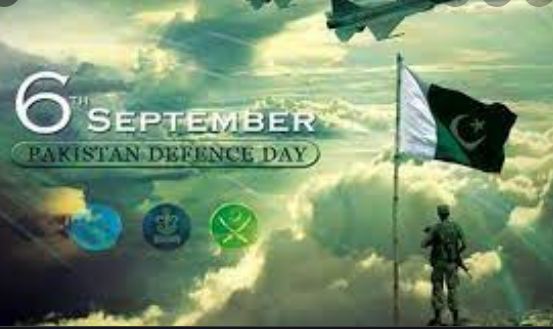
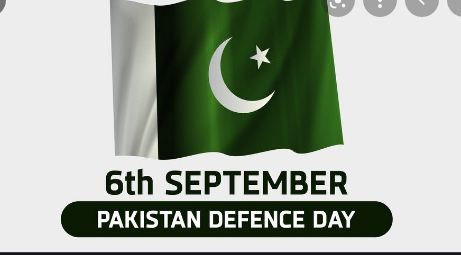
6th September is marked as Defence Day of Pakistan which is celebrated each year across the nation to pay tribute to the brave sons of the soil, who sacrificed their lives while defending Pakistan during the 1965 War. It was a momentous day in the history of Pakistan when the war-mongering India invaded our motherland. But our armed forces with the people of Pakistan on their backs, stopped the Indian attacks dead in their tracks and the dream of the Indian Army to celebrate the evening at one of Lahore’s most well-known addresses, was broken into pieces.
 

In order to familiarize the young generation with the history of Pakistan and the sacrifices of their forefathers, the achievements of Pakistani forces must be recounted so that the younger ones may not be misled by false information propagated purposely by Pakistan’s enemies and opponents.

  Pakistan’s armed forces have always played a substantial role in protecting its territorial integrity by rigorously dealing with any emerging threat or inimical situation. In fact, they know very well how to payback our enemies. The Indian side has been presenting severe challenges to Pakistan since 1947, but the acquiring of strategic capabilities has helped Pakistan turn back India’s malign intentions. The Pakistan Navy, along with the Pakistan Army and Air Force, defended the territorial water zones both during war and peace. Pakistan Navy’s history is filled with glory and eminence, exquisite skills and calamitous maneuverability, and tactical feats to defeat even the larger naval forces.
 

In the Indian offensive that began on 6th September, the joint action of the Pakistan Army, Navy, and Air Force effectively fended off the offensives and taught her a hard lesson on land, air, and maritime fronts. Two days after the initial attack, India employed its armored division and other striking formations to take Sialkot on 8th September. Resultantly, a large tank battle followed the largest since World War II. There were casualties on both sides in this bitter and long-lasting conflict fought over many days and nights. Eventually, the Indians were mauled and held. A very high loss of both men and materials forced India’s armored division into withdrawal. Immediately after the Sialkot attack, Pakistan waged a counter-attack in the south of Lahore and seized Indian territories of Khem Karan and beyond. As a result, the rear of the Indian troops facing Lahore was greatly threatened. In these two days, Pakistan Air Force also gave the enemy a tough time by launching continuous airstrikes from Pathankot to Agra. Besides the collateral damage caused during the night bombing, PAF destroyed 50 Indian aircraft and damaged eight for the loss of only six Pakistani aircraft. 

On sea fronts, Pakistan Navy, despite having a comparatively lesser size and offensive capability, conducted several operations in order to create strategic deterrence and respond to the Indian Navy appropriately. As a result of the Pakistan Navy’s nautical prowess, the sea lanes and waters surrounding Pakistan remained open to incoming ships. 

The major role Pakistan Navy played in the 1965 Indo-Pak War was launching the ‘Operation Dwarka. On 7th September, PN sailed battle-tested and capable seven ships with 24 guns for Dwarka. Dwarka was enforcing a blackout and only identifiable by radar, but the lighthouse provided a very good point of reference in terms of positioning for the task force. Executing the ‘Operation Somnath’ every ship was authorized to fire 50 rounds of high ammunition. The ships opened fire from a distance of 5.5 to 6.3 miles, still closing the range. Approximately, four minutes was all it took to fire the allocated number of shells, and quickly alter course to exit the area. 

On checking damage at Dwarka on 8th September, Indian navy officials acknowledged the damage caused as a result of this action. They found the radar station destroyed; the naval air station’s runway for test flights of INS Vikrant damaged; about 50 persons dead and a nearby cement factory also damaged. This official version of the Indian naval officials confirm that the Pakistan navy’s raid on Dwarka had been a stunning success as not only a massive material and psychological damage was done to the enemy but also Indian air raids on Karachi ceased, implying the radar station was knocked out. 


           The Pakistani fleet arrived back in home waters minutes after the attack, assumed their patrol stations 100 miles off Karachi, and ready for a possible Indian response, which through possible radar contacts were observed, never materialised. The sole Indian warship in the area, the Whitby Class frigate Talwar, had been undergoing repairs to her condensers in Okha and had not challenged the raid. 
           The Pakistani Navy’s strategic thinking and war planning cornered the Indian Navy as their operational plans were adversely affected. The PN had undertaken Operation Dwarka to achieve multiple objectives: destructing the Indian radar, and provoking its war craft stationed at Mumbai (then Bombay) port approach the Arabian Sea, where PN’s submarine ‘Ghazi’ was awaiting to engage and destroy Indian ships namely INS Vikrant and INS Mysore. 
Having already proven its operational readiness, the Pakistan navy does not fall short when it comes to meeting the regional and international obligations in maritime security. The Pakistan Navy, as a member of the Coalition Maritime Campaign Plan under UN mandate, has actively participated in maritime security and counter-piracy operations after 9/11. The Pakistan Navy has the highest share in maritime security campaigns after the United States, despite being a small naval force. Through its coordinated efforts, the PN has excluded merchant ships from the danger zone which had previously been paying war risk surcharge due to piracy. As a further step to support the international effort in the region, the Pakistan Navy has established Regional Maritime Security Patrols (RMSP), aimed at ensuring maritime security at sea to protect trade. Such PN’s initiatives have enabled Pakistan to manifest its role at large as a reliable regional and international maritime player.
           The exemplary role played by Pakistan’s armed forces in general and the Pakistan Navy in particular in showing the world that Pakistan’s defence is invincible makes it inevitable to emphasize that soldiers need their people’s support to fight the enemy with courage and bravery. So, this Defence Day, we should pledge as a nation that we will always remember the sacrifices of our brave soldiers and will stand by their side in the war and peace. We should also study the modern tactics used by the enemy to weaken our state, and pray that may God give us the strength, ability, and courage to protect our freedom and the honor of our motherland at all costs. 

NAVY: PAKISTAN’S DEFENCE DAY: A TALE OF COURAGE

Ali Basit

“O ye who believe! Take your precautions, and either go forth in parties or go forth all together”
Al Quran – Surah An Nisa
Each year, 6th September is celebrated to pay homage to the martyrs who laid down their lives while defending the country during 1965-war. On this memorable day, the people of Pakistan stood united as one solid edifice to meet the onslaught of an enemy that chose the cover of darkness to achieve its heinous ends of occupying our motherland. It is relevant to recount the achievements so that the present generation is also aware of the past events, and do not fall a prey to the propaganda of detractors of Pakistan. The coordinated action of the Pakistan Army, Navy and Air Force from Lahore, Karachi, Runn of Kutch to Chamb Jorian, had made all sectors the graveyard of ruined dreams of Indian leadership and army commanders who had dreamt of celebrating victory in Lahore. Pakistan with a relatively small armed forces and limited resources had indeed given adequate response to the enemy on all fronts including air, land and sea.
On 6th September, India’s attack against Lahore was held and beaten back with heavy losses to the attackers. The Pakistan Army units defending on the ground, supported by the Pakistan Air Force were able to blunt the Indian offensive and roll it back. Two days later on 8th September, India launched its main attack against Sialkot using its armored division and other strike formations. What ensued has been described as the largest tank battle since the Second World War. It was a hard and bitter struggle fought over many days and night’s resulting in casualties on both sides. In the end the Indian main attack was held and severely mauled. Its armored division was force to withdraw owing to very high losses in men and material. South of Lahore, Pakistan launched its own counter attack and captured Indian areas of Khem Karan and beyond. This posed a serious threat to the rear of Indian troops facing Lahore. During 6th and  7th September, Pakistan Air Force had also proved its mettle by continuous air attacks from Pathankot to Agra; for the loss of only 06 aircraft, PAF had destroyed 50 enemy aircraft on ground and in the air, and damaged 08, not counting the undermined losses inflicted by PAF’s night bombing.
On naval front, despite numerical less in size Pakistan Navy (PN) conducted a number of operations for creating strategic deterrence and offering a befitting response to Indian Navy. The prowess exhibited by PN ensured that Pakistani waters and sea lanes remain operational for ships coming to Pakistani ports. Pakistan Navy had played its part by launching a successful ‘Operation Dwarka’, vehemently destroyed the Indian Radar system which was guiding Indian Air Force to launch attacks against Pakistan. The core objective of ‘Dwarka’ was multi-fold in effect as it was not only aimed at destruction of the radar but to provoke Indian warships stationed at erstwhile Bombay (now Mumbai) port to come to the Arabian Sea where Pakistani submarine “Ghazi” was prowling and waiting to engage enemy’s ships namely INS Vikrant and INS Mysore to dock out and get destroyed. This maneuver had adversely affected the Indian Navy’s operational plans. Operation Dwarka was launched on 8th September and the bombardment on identified targets was completed in merely four minutes.
Having transcendence in operational preparedness, Pakistan navy is no less at meeting the regional and international maritime security obligations. Post 9/11 maritime security operations were being conducted in Arabian Sea and Indian Ocean Region, Pakistan Navy being part of Coalition Maritime Campaign Plan under UN mandate, has actively participated in maritime security and counter-piracy operations. Though a smal…
[14:03, 04/09/2021] Uzma NAVY: 6TH SEPTEMBER: WHEN IT BECAME CLEAR THAT PAKISTAN IS INVINCIBLE
By Adnan Yousuf
           6th September is marked as Defence Day of Pakistan which is celebrated each year across the nation to pay tribute to the brave sons of the soil, who sacrificed their lives while defending Pakistan during the 1965 War. It was a momentous day in the history of Pakistan when the war-mongering India invaded our motherland. But our armed forces with the people of Pakistan on their backs, stopped the Indian attacks dead in their tracks and the dream of the Indian Army to celebrate the evening at one of Lahore’s most well-known addresses, was broken into pieces.
           In order to familiarize the young generation with the history of Pakistan and the sacrifices of their forefathers, the achievements of Pakistani forces must be recounted so that the younger ones may not be misled by false information propagated purposely by Pakistan’s enemies and opponents.
           Pakistan’s armed forces have always played a substantial role in protecting its territorial integrity by rigorously dealing with any emerging threat or inimical situation. In fact, they know very well how to payback our enemies. The Indian side has been presenting severe challenges to Pakistan since 1947, but the acquiring of strategic capabilities has helped Pakistan turn back India’s malign intentions. The Pakistan Navy, along with the Pakistan Army and Air Force, defended the territorial water zones both during war and peace. Pakistan Navy’s history is filled with glory and eminence, exquisite skills and calamitous maneuverability, and tactical feats to defeat even the larger naval forces.
           In the Indian offensive that began on 6th September, the joint action of the Pakistan Army, Navy, and Air Force effectively fended off the offensives and taught her a hard lesson on land, air, and maritime fronts. Two days after the initial attack, India employed its armored division and other striking formations to take Sialkot on 8th September. Resultantly, a large tank battle followed the largest since World War II. There were casualties on both sides in this bitter and long-lasting conflict fought over many days and nights. Eventually, the Indians were mauled and held. A very high loss of both men and materials forced India’s armored division into withdrawal. Immediately after the Sialkot attack, Pakistan waged a counter-attack in the south of Lahore and seized Indian territories of Khem Karan and beyond. As a result, the rear of the Indian troops facing Lahore was greatly threatened. In these two days, Pakistan Air Force also gave the enemy a tough time by launching continuous airstrikes from Pathankot to Agra. Besides the collateral damage caused during the night bombing, PAF destroyed 50 Indian aircraft and damaged eight for the loss of only six Pakistani aircraft. 
           On sea fronts, Pakistan Navy, despite having a comparatively lesser size and offensive capability, conducted several operations in order to create strategic deterrence and respond to the Indian Navy appropriately. As a result of the Pakistan Navy’s nautical prowess, the sea lanes and waters surrounding Pakistan remained open to incoming ships. 
           The major role Pakistan Navy played in the 1965 Indo-Pak War was launching the ‘Operation Dwarka. On 7th September, PN sailed battle-tested and capable seven ships with 24 guns for Dwarka. Dwarka was enforcing a blackout and only identifiable by radar, but the lighthouse provided a very good point of reference in terms of positioning for the task force. Executing the ‘Operation Somnath’ every ship was authorized to fire 50 rounds of high ammunition. The ships opened fire from a distance of 5.5 to 6.3 miles, still closing the range. Approximately, four minutes was all it took to fire the allocated number of shells, and quickly alter course to exit the area. 
           On checking damage at Dwarka on 8th September, Indian navy officials acknowledged the damage caused as a result of this action. They found the radar station destroyed; the naval air station’s runway for test flights of INS Vikrant damaged; about 50 persons dead and a nearby cement factory also damaged. This official version of the Indian naval officials confirm that the Pakistan navy’s raid on Dwarka had been a stunning success as not only a massive material and psychological damage was done to the enemy but also Indian air raids on Karachi ceased, implying the radar station was knocked out. 
           The Pakistani fleet arrived back in home waters minutes after the attack, assumed their patrol stations 100 miles off Karachi, and ready for a possible Indian response, which through possible radar contacts were observed, never materialised. The sole Indian warship in the area, the Whitby Class frigate Talwar, had been undergoing repairs to her condensers in Okha and had not challenged the raid. 
           The Pakistani Navy’s strategic thinking and war planning cornered the Indian Navy as their operational plans were adversely affected. The PN had undertaken Operation Dwarka to achieve multiple objectives: destructing the Indian radar, and provoking its war craft stationed at Mumbai (then Bombay) port approach the Arabian Sea, where PN’s submarine ‘Ghazi’ was awaiting to engage and destroy Indian ships namely INS Vikrant and INS Mysore. 
Having already proven its operational readiness, the Pakistan navy does not fall short when it comes to meeting the regional and international obligations in maritime security. The Pakistan Navy, as a member of the Coalition Maritime Campaign Plan under UN mandate, has actively participated in maritime security and counter-piracy operations after 9/11. The Pakistan Navy has the highest share in maritime security campaigns after the United States, despite being a small naval force. Through its coordinated efforts, the PN has excluded merchant ships from the danger zone which had previously been paying war risk surcharge due to piracy. As a further step to support the international effort in the region, the Pakistan Navy has established Regional Maritime Security Patrols (RMSP), aimed at ensuring maritime security at sea to protect trade. Such PN’s initiatives have enabled Pakistan to manifest its role at large as a reliable regional and international maritime player.
           The exemplary role played by Pakistan’s armed forces in general and the Pakistan Navy in particular in showing the world that Pakistan’s defence is invincible makes it inevitable to emphasize that soldiers need their people’s support to fight the enemy with courage and bravery. So, this Defence Day, we should pledge as a nation that we will always remember the sacrifices of our brave soldiers and will stand by their side in the war and peace. We should also study the modern tactics used by the enemy to weaken our state, and pray that may God give us the strength, ability, and courage to protect our freedom and the honor of our motherland at all costs. 

Stay Connected

64FansLike
60FollowersFollow

Latest Reviews

Exchange Rates

USD - United States Dollar
EUR
1.15
GBP
1.34
AUD
0.70
CAD
0.71