Home Blog Page 251

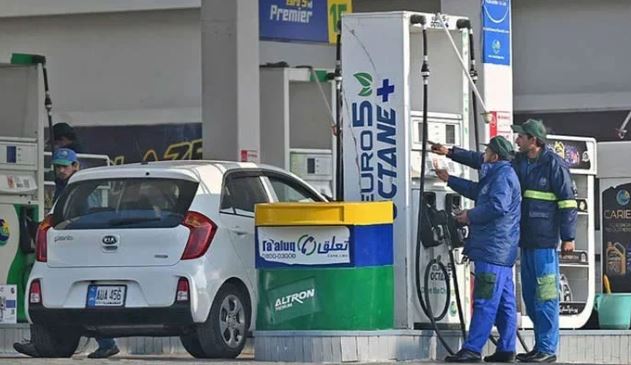
Govt ‘likely to hike petrol, diesel prices’ for next fortnight

Govt 'likely to hike petrol, diesel prices' for next fortnight

ISLAMABAD: The government is likely to increase petroleum prices for the next fortnight from February 16, industry sources said on Saturday.

The insiders added that the petrol rate might be increased by Rs4.39 per litre, which, if approved, will bring it to Rs257.56 per litre from the existing Rs253.17 per litre.

High-speed diesel (HSD) price, they also said, is likely to be hiked by Rs5.40 per litre from the existing Rs268.38 per litre, which will bring it to Rs273.78 per litre.

Kerosene oil may also become expensive for consumers due to a possible increase of Rs4 per litre. Furthermore, the price of light-diesel oil (LDO) is also expected to increase by Rs6.55 per litre.

The final decision, however, will be taken by the Oil and Gas Regulatory Authority (Ogra) in consultation with the Ministry of Finance and the prime minister.

Previously, the government announced on January 31, the price of high-speed diesel by Rs11.30 per litre while keeping petrol prices unchanged.

Petrol is mainly used by commuters in small vehicles, rickshaws and two-wheelers. Higher fuel prices significantly impact the budgets of middle and lower-middle class households, who rely on petrol for daily travel.

On the other hand, a significant portion of the transport sector relies on high-speed diesel.

Its price is considered inflationary since it is predominantly used in heavy goods transport vehicles, trucks, buses, trains, and agricultural machinery such as tractors, tube wells, and threshers.

The consumption of high-speed diesel particularly contributes to the increased prices of vegetables and other food items.

Imran Khan’s vision: Opposition sit-in at Parliament House enters second day

Imran Khan's vision: Opposition sit-in at Parliament House enters second day

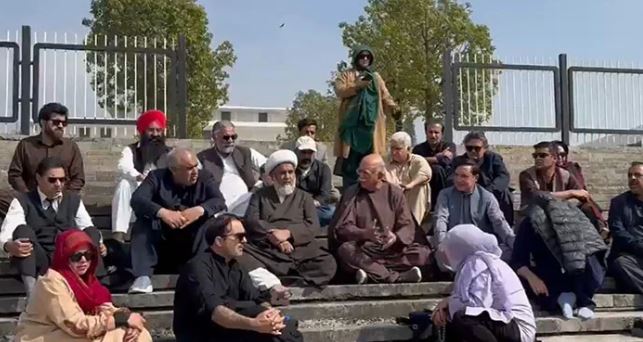
ISLAMABAD/LAHORE: The sit-in staged by lawmakers from Pakistan Tehreek-e-Insaf (PTI) and opposition alliance Tehreek Tahaffuz-e-Aiyeen Pakistan (TTAP) entered its second day on Saturday over concerns about the incarcerated former prime minister Imran Khan’s health, particularly claims of a worrisome decline in his vision in the right eye.

The protest demonstrations are being staged at the Parliament House, Khyber Pakhtunkhwa House and the Parliament Lodges, with National Assembly Opposition leader Mehmood Khan Achakzai and Senate Opposition Leader Allam Raja Nasir Abbas, KP Chief Minister Sohail Afridi and former CM Ali Amin Gandapur also among the protesting politicians along with other opposition lawmakers.

Authorities, on Friday, sealed Islamabad’s Red Zone, accompanied by deployments of police contingents and barriers.

The demonstrations by the opposition lawmakers come as the former ruling party has alleged negligence in the treatment of the jailed former prime minister’s eye ailment — who has been behind bars for more than two years, with his incarceration proving to be a flashpoint between the PTI and the government.

PTI counsel Salman Safdar, who has been appointed by the Supreme Court as amicus curiae (friend of the court), met Imran at Rawalpindi’s Adiala jail on the court’s orders and submitted a seven-page report on Imran’s living conditions before the apex court, revealing that the ex-PM complained that he had been left with only 15% vision in his right eye.

The top court, on Thursday, ordered access for the PTI founding-chairman to specialist eye doctors and ordered that a formal eye examination be conducted by a medical team before February 16 (Monday).

The court also ordered that Imran be provided the facility to hold telephone conversations with his sons, Kasim Khan and Sulaiman Khan.

Imran diagnosed with CRVO
The latest tensions between the government and the PTI follow last month’s confirmation of Imran undergoing a medical procedure for his eye at the Pakistan Institute of Medical Sciences (Pims).

The former premier was diagnosed with a serious eye condition known as central retinal vein occlusion (CRVO), a disorder that commonly affects older adults and is linked to underlying cardiovascular risk factors such as high blood pressure, high cholesterol, diabetes and heart disease.

Pims Executive Director Dr Rana Imran Sikandar later confirmed that a team of senior doctors assessed Imran’s condition before discharging him.

Sharing details of the treatment, Dr Sikandar said that Imran underwent a specialised medical procedure after doctors diagnosed a condition affecting the vision in his right eye.

Dr Sikandar said the procedure was performed in a sterile operating theatre under close monitoring and was completed successfully in about 20 minutes.

Govt, opposition at odds
Speaking to the media today, NA Opposition Leader Achakzai said that the sit-in would continue until the PTI founder is taken to the Shifa International Hospital.

A day earlier, Achakzai had said that the sit-in would remain peaceful and urged that Imran’s personal physician and family should be allowed to meet him.

However, at the same time, he warned that even if the government refuses to negotiate, the protest will continue, and if their demands are not met, the protest will continue through Ramadan and cautioned that if proper medical arrangements were not made, the ongoing sit-in could further escalate.

Separately, it is reported that PTI Chairman Barrister Gohar Ali Khan was contacted by government figures and was assured that a panel of doctors would be constituted to examine Imran’s eyes.

Meanwhile, speaking to the media in Lahore, Imran’s sister Aleema Khan said that the PTI founder’s vision had been blurry for the past three months.

Questioning as to why the authorities were not accepting the presence of ex-PM’s personal physician, She claimed that they were informed via a call last night that Imran will be treated at a hospital, but without the presence of his doctor and family members.

The government, on the other hand, has assured that if it is proved that medical treatment was deliberately withheld from Imran, it would constitute criminal negligence and could not be justified.

Prime Minister’s Adviser on Political Affairs Rana Sanaullah, while speaking in the Senate on Friday, said that Imran first raised the complaint about his eye in the first week of January, after which the jail doctor provided him with eye drops.

He further said the PTI founder was examined on January 16, while a medical team carried out a fresh examination and conducted tests on January 19. He added that an injection was administered on January 24.

Rejecting the claim that the complaint had been ongoing for four months, Sanaullah said the PTI founder was examined by the jail doctor every second day and that whenever he raised any medical concern, a check-up was carried out.

The PM’s aide further highlighted that the PTI founder had been examined by external doctors on 25 occasions. According to him, during a medical check-up on December 9, Imran did not raise any complaint regarding his eye.

Top US diplomat concludes five-day visit to Pakistan

Top US diplomat concludes five-day visit to Pakistan

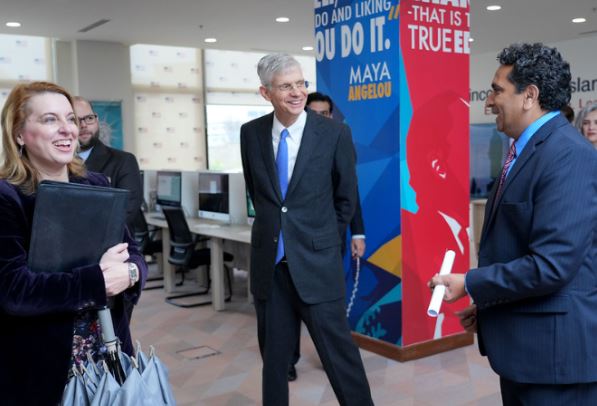
ISLAMABAD, FEB 14 /DNA/ – Deputy Assistant Secretary (DAS) for South and Central Asian Affairs at the U.S. Department of State John Mark Pommersheim concluded a five-day visit to Pakistan, marking the continued close cooperation between the United States and Pakistan.  DAS Pommersheim’s visit comes at a significant moment as both countries seek to deepen cooperation on economic growth and shared security interests.  Under President Trump’s vision, the United States is forging new partnerships, championing innovation, and defining a new era of diplomacy that will carry us forward for the next 250 years. 

During his visit, DAS Pommersheim met with Director General of Military Operations Major General Kashif Abdullah, Director General of Military Intelligence Major General Wajid Aziz Khan, Minister of IT and Telecommunications Shaza Khawaja, Interior Minister Mohsin Naqvi, Finance Minister Muhammad Aurangzeb, and Petroleum Minister Ali Pervaiz Malik.  He also engaged with business leaders and alumni of U.S. exchange programs.

In Islamabad, DAS Pommersheim attended the launch of Pakistan’s Indus AI Week, where he supported U.S. interests in expanding partnerships in Pakistan’s IT and digital sectors and advocated for a level playing field for U.S. firms.  DAS Pommersheim’s discussions with Pakistani officials underscored the importance of expanding trade and investment, including the AI, IT, energy, and critical minerals and mining sectors.

DAS Pommersheim recognized Pakistan’s ongoing economic reforms efforts under the IMF program and encouraged officials to implement policies that foster a fair investment environment.  He welcomed Pakistan’s efforts to implement reforms that enable private sector-led growth.

In Lahore, DAS Pommersheim attended Basant celebrations, experiencing Pakistan’s rich cultural heritage firsthand.  He met Senior Minister Marriyum Aurangzeb to discuss U.S. business engagement with Punjab and promote Pakistani investment in the United States.  He also visited the U.S. Educational Foundation in Pakistan’s new building, which opened in December 2025, where he met U.S. exchange program alumni.

Secretary WWF, President ICCI pledge joint efforts for workers’ welfare

Secretary WWF, President ICCI pledge joint efforts for workers’ welfare

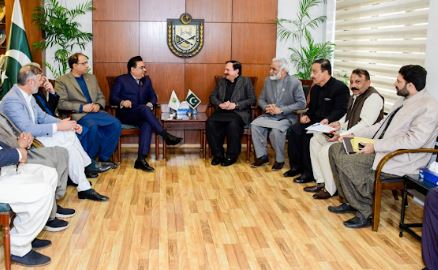
ISLAMABAD, FEB 14: /DNA/ – Secretary Workers Welfare Fund (WWF) Zulfiqar Ahmad led a high-level delegation to the Islamabad Chamber of Commerce and Industry (ICCI) and  held a productive meeting with ICCI President Sardar Tahir Mehmood, Senior Vice President Tahir Ayub and Vice President Irfan Chaudhry.

The meeting featured detailed discussions on enhancing mutual cooperation and strengthening initiatives aimed at the welfare and social protection of industrial workers.

Zulfiqar Ahmad briefed the ICCI President on various initiatives undertaken by the Workers Welfare Fund for the betterment of workers and their families, including the Marriage Grant, Death Grant, Educational Facilities, and Housing Colony projects.

He informed  that under the WWF scheme, a Marriage Grant of Rs. 600,000 is being provided for the daughters of deserving workers, in addition, a death grant of Rs. 1,000,000 is extended to the families of workers in case of death during service or thereafter. Furthermore, the WWF is facilitating quality educational opportunities for workers and their children through scholarships, admissions in schools and colleges, and access to professional and vocational education. Zulfiqar Ahmad also informed about the forthcoming launching of the WWF Mobile Application and Management Information System, aimed at enhancing transparency, efficiency, and service delivery.

In his welcome address, the ICCI President Sardar Tahir Mehmood appreciated the leadership of Chaudhry Salik Hussain, Federal Minister for Overseas Pakistanis and Human Resource Development, and commended the government’s initiatives for the welfare of the labor community. He praised the performance of the Workers Welfare Fund and assured that the Chamber would continue to play its role in fostering effective coordination between the business community and the government. He assured to disseminate all the information among the relevant circles for the welfare of the industrial workers.

On their part Senior Vice President Tahir Ayub and Vice President Irfan Chaudhry reaffirmed the Chamber’s commitment to continuing joint efforts for the welfare of workers and the promotion of industrial growth, recognizing the vital role of the labor force in strengthening the country’s economic development.

WWF delegation included Director Finance Gul Zaman, Director Media Chaudhry Zamir Ashraf, Director Receipt and Governing Body Masood Raza and Director Audit Hafiz Junaid Saial

Those prominent among the attendees included former President Mohamad Ejaz Abbasi, executive member Zulqurnain Abbasi, ICCI members Israr Mishwarni, Azaz Mohammad and others.

The Tianjin Moment and the SCO

The Tianjin Moment and the SCO

Dr. Muhammad Akram Zaheer

When leaders of the Shanghai Cooperation Organisation gathered in Tianjin in September 2025, the scale of the meeting itself told a story. It was the organisation’s 25th summit and the largest in its history, bringing together heads of state from China, Russia, India, Pakistan, Iran and Central Asia, alongside observers and dialogue partners. Yet size alone does not confer significance. The real question is whether the Tianjin Declaration marks a turning point for the SCO, or merely restates familiar ambitions in an increasingly fractured world.

The declaration leans heavily on the language of continuity. It reaffirms the “Shanghai Spirit” — a phrase that has become shorthand for mutual trust, equality, respect for sovereignty and non-interference. These principles have long distinguished the SCO from Western-led groupings that often combine cooperation with conditionality. In Tianjin, the emphasis on a multipolar international order and the primacy of the United Nations Charter echoed long-standing positions of both Beijing and Moscow. For many member states, especially those wary of external pressure, this insistence on sovereign equality remains the SCO’s central appeal.

At the same time, the document reflects a shared unease about the global environment. References to security threats, economic uncertainty and technological disruption suggest an organisation trying to define its role amid shifting power balances. The commitment to counter terrorism, separatism and extremism — the so-called “three evils” — remains a core pillar. Yet the security landscape confronting SCO members today is more complex than when the grouping was formed in the early 2000s. From Afghanistan’s unresolved instability to the ripple effects of conflicts in Europe and the Middle East, regional security can no longer be neatly compartmentalised.

One notable feature of the Tianjin Declaration is its expanded focus on economic and developmental cooperation. The approval of an SCO Development Strategy extending to 2035 signals an attempt to give the organisation a longer horizon. Trade facilitation, industrial cooperation, energy connectivity and sustainable growth feature prominently. This reflects a recognition that security without development is fragile and the economic grievances often feed political unrest.

It is in this context that Russia’s proposal for a dedicated SCO Council on Sustainable Development assumes importance. First floated during Russia’s chairmanship activities in 2025, the idea gained traction through a series of forums, including the inaugural Sustainable Development Forum hosted in Omsk. By the time of the Heads of Government meeting in Moscow later that year, the proposal had been formally placed on the SCO agenda, drawing positive remarks from the organisation’s secretary-general.

The Tianjin Declaration does not explicitly announce the council’s formal establishment, but it clearly endorses deeper cooperation on sustainable development, energy transitions and industrial modernisation. This alignment suggests that Moscow’s initiative fits comfortably within the broader direction the SCO is trying to set. For Russia, facing prolonged economic pressure from the West, such platforms offer a way to remain engaged in shaping regional norms. For others, including Pakistan and Central Asian states, the emphasis on development resonates with domestic priorities of growth, energy security and poverty reduction.

Yet ambition and implementation are not the same. The SCO has often been criticised for producing lofty statements with limited follow-through. Institutional capacity remains thin and internal divergences persist. India and Pakistan share the same table but not the same strategic outlook. China’s economic weight dwarfs that of most other members, raising quiet concerns about asymmetry. Iran’s recent inclusion adds geopolitical heft but also new complications, given its strained relations with the West.

Moreover, the call for “fair global governance” and a multipolar order raises practical questions. Can the SCO move beyond rhetoric to offer credible alternatives, or will it remain primarily a forum for coordination rather than action? On issues such as technology governance and trade, member states have differing levels of capacity and competing interests. Bridging these gaps will require more than declarations; it will require sustained political will and resources.

For Pakistan, the Tianjin summit underscores both opportunity and challenge. As a founding member, Islamabad has consistently viewed the SCO as a platform to diversify partnerships and reinforce regional connectivity. The renewed focus on development and energy aligns with Pakistan’s own economic needs. However, translating regional cooperation into tangible gains will depend on domestic stability and the ability to engage proactively within SCO mechanisms.

The Tianjin Declaration is best read as a statement of intent rather than a decisive break from the past. It reflects an organisation aware of global turbulence and eager to assert relevance, yet still constrained by its diversity. Whether the SCO can evolve from a consensus-driven forum into a more effective vehicle for cooperation will be tested in the years ahead. Tianjin may not have provided all the answers, but it has at least clarified the questions the SCO can no longer avoid.

Premier Shehbaz invites Bangladesh PM hopeful to Pakistan, vows stronger ties

Premier Shehbaz invites Bangladesh PM hopeful to Pakistan, vows stronger ties

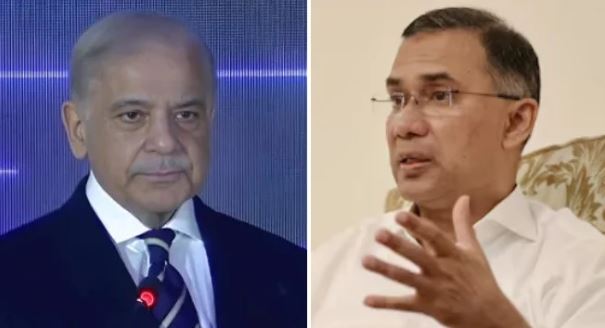
ISLAMABAD, FEB 13: Prime Minister Shehbaz Sharif on Friday invited Bangladesh Nationalist Party (BNP) chairman Tarique Rahman to undertake an official visit to Pakistan, following his party’s victory in Bangladesh’s elections.

In a post on X, the premier said he held a conversation with the Bangladesh prime minister hopeful over the phone and expressed Pakistan’s desire “to strengthen its brotherly ties with Bangladesh, build on the legacy of Begum Khaleda Zia, and advance our shared goals of peace, progress and prosperity”.

The BNP won a decisive two-thirds majority on Friday in general elections, a result expected to bring stability after months of tumult following the ouster of former prime minister Sheikh Hasina in a Gen Z-led uprising.

PM Shehbaz said that the successful conduct of elections reflected the democratic values cherished by the Bangladeshi people, state-media reported.

Recalling the historic ties between the two countries, the premier vowed to work closely with Dhaka to deepen bilateral cooperation in all mutually beneficial sectors, while fully respecting each nation’s sovereignty.

During the conversation, the two leaders also recalled the legacy of Begum Khaleda Zia, acknowledging her pivotal role in strengthening Pakistan-Bangladesh relations and fostering ties between the peoples of both countries.

PM Shehbaz invited Rahman to visit Pakistan soon, to which the BNP leader responded warmly by extending an invitation for the premier to visit Bangladesh.

Both leaders agreed to maintain close contact in the coming days to work for the welfare of their peoples.

Latest counts in an election, seen as the South Asian nation’s first truly competitive in years, gave the BNP and its allies at least 212 of the 299 seats up for grabs, Bangladesh’s domestic TV channels said.

The opposition Jamaat-e-Islami and its allies won 70 seats in the Jatiya Sangsad, or House of the Nation.

The BNP, which returns to power after 20 years, thanked the people soon after winning a majority in the overnight vote count and called for special prayers on Friday for the nation and its people.

“Despite winning … by a large margin of votes, no celebratory procession or rally shall be organised,” the party said in a statement calling for prayers nationwide.

A clear outcome had been seen as key for stability in the Muslim-majority nation of 175 million after months of deadly anti-Hasina unrest disrupted everyday life and industries such as garments, in the export of which Bangladesh is No.2 globally.

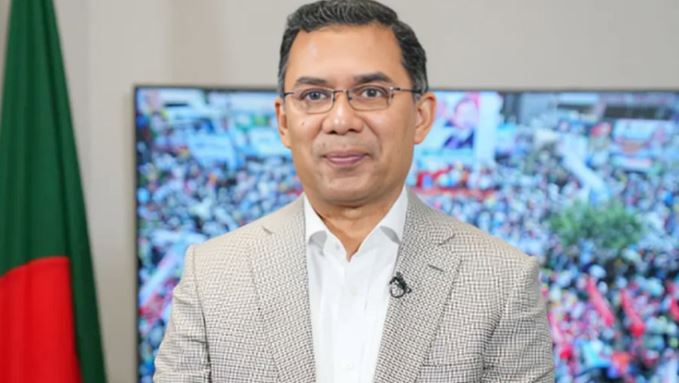
BNP leader Tarique Rahman is widely expected to be sworn in as prime minister. The son of the party’s founder, former president Ziaur Rahman, he returned in December to the capital, Dhaka, from 18 years abroad.

Nobel peace laureate Muhammad Yunus, 85, held office as interim head after Hasina fled to neighbouring India in August 2024.

Thai PM agrees coalition with Thaksin-backed party

Thai PM agrees coalition with Thaksin-backed party

BANGKOK, FEB 13: Thai caretaker Prime Minister Anutin Charnvirakul’s conservative party, which won a stunning election victory at the weekend, agreed to form a coalition with jailed ex-premier Thaksin Shinawatra’s party, both announced on Friday. 

Anutin’s pro-military and pro-monarchy party had its best electoral performance ever in polls that took place after two rounds of deadly border clashes with Cambodia last year.

Thailand’s most successful party of the 21st century, Pheu Thai, had its worst election result ever on Sunday, raising questions about the future of the political machine built by jailed Thaksin.

“Although the election results have not yet been officially confirmed, we have a consensus that Pheu Thai will support us in leading the coalition, as planned,” Anutin said at a news conference at his Bhumjaithai party’s headquarters. 

Prasert Chanruangthong, secretary-general of Thaksin’s Pheu Thai, told reporters the party “is ready to support the Bhumjaithai Party in forming the coalition. Other issues will be discussed further.”

The latest incarnation of the organisation founded by the telecom billionaire, Pheu Thai came a distant third in Sunday’s election, its vote share in the party-list section plunging by more than half.

Voters appeared to turn their backs on the reformist People’s Party, which came second. 

Pheu Thai and Bhumjaithai were previously coalition partners, until Anutin pulled out over a Cambodia border dispute scandal last June.

“Our priority is for the country to move forward for the greatest benefit of the people,” Prasert said ahead of coalition talks on Friday.

US to deploy new aircraft carrier to Middle East as Trump warns Iran

US to deploy new aircraft carrier to Middle East as Trump warns Iran

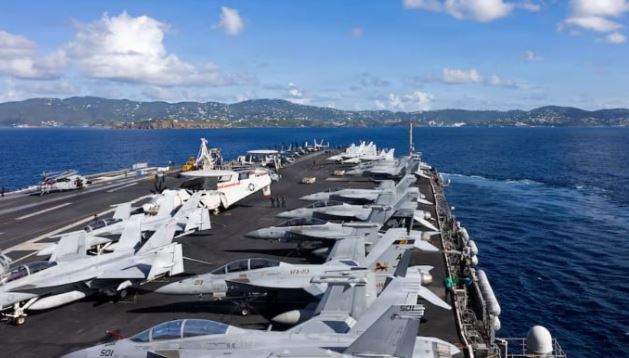
WASHINGTON, FEB 13: The United States was preparing on Friday to deploy a second aircraft carrier to the Middle East after President Donald Trump warned of “traumatic” consequences if Tehran failed to agree a deal over its nuclear programme.

Tensions have escalated between Tehran and its traditional foe Washington following protests last month that rights groups say killed thousands.

Trump has made refraining from military action conditional on a deal to curb Iran’s nuclear programme, which the West fears is aimed at making a bomb.

“We have to make a deal, otherwise it’s going to be very traumatic, very traumatic. I don’t want that to happen, but we have to make a deal,” Trump told reporters on Thursday.

Trump had already sent one aircraft carrier, the USS Abraham Lincoln, to the Middle East in a warning to Tehran, and multiple US media outlets said a second carrier, the USS Gerald R Ford, and its escort ships would also be sent to the region.

The vessels led by the Ford, currently deployed to the Caribbean, are not expected to return to their home ports until late April or early May, the New York Times said.

Representatives of Iran and the United States, who have had no diplomatic relations since shortly after the revolution, held talks on the nuclear programme last week in Oman.

While no dates have been set for new talks, there have been indications that Trump is upbeat about the prospects for a deal.

Israel’s Benjamin Netanyahu said after meeting Trump in Washington that the US leader believed he may clinch a “good deal”, though the Israeli prime minister himself expressed scepticism at the quality of any agreement if it didn’t also cover Iran’s ballistic missiles.
The United States joined Israel’s 12-day war against Iran in June, carrying out strikes on Iranian nuclear facilities.

But there is no consensus on what Washington would target in new strikes or whether it would seek to slacken supreme leader Ayatollah Ali Khamenei’s grip on power.

PM Shehbaz greets BNP chief on election victory

PM Shehbaz greets BNP chief on election victory

ISLAMABAD, FEB 13: /DNA/ – Prime Minister Muhammad Shehbaz Sharif spoke with Mr. Tarique Rahman, Chairman of the Bangladesh Nationalist Party (BNP), on telephone earlier tonight, and conveyed heartiest felicitations to him, on behalf of the people as well as the Government of Pakistan, on his party’s historic and resounding victory in the general elections.

The Prime Minister also congratulated the people of Bangladesh on the successful conduct of the general elections, that reflected the democratic ideals and values espoused by the Bangladeshi nation.
Recalling the historic, brotherly relations between Pakistan and Bangladesh, the Prime Minister affirmed his resolve to work together with the Bangladesh leadership to further strengthen mutually beneficial bilateral cooperation in all areas of mutual interest as well as for regional peace and progress, with full respect for each other’s sovereign equality.

During their warm and cordial conversation, both leaders fondly recalled Begum Khaleda Zia and paid tribute to her remarkable contributions to Pakistan-Bangladesh relations, and her key role in bringing the people of both countries closer.

The Prime Minister extended an invitation to Mr. Tarique Rahman to undertake a visit to Pakistan at his earliest convenience. The invitation was reciprocated by Mr. Rahman. Both leaders agreed to remain in close contact in the coming days to work for the betterment of the two peoples.

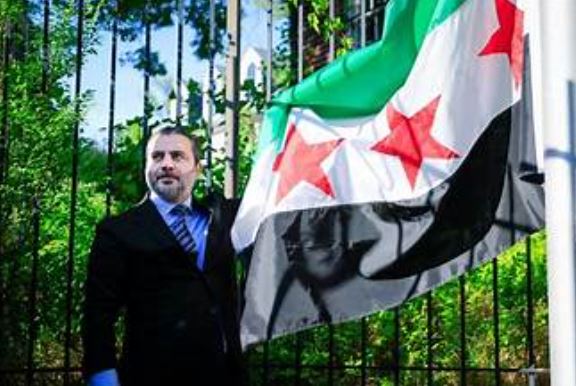
New Syrian consulate in Bonn marks diplomatic milestone

New Syrian consulate in Bonn marks diplomatic milestone

BERLIN, Feb 13: Foreign and Expatriates Minister, Asaad Hassan Al-Shaibani, affirmed that the reopening of the Syrian Consulate in the German city of Bonn represents a significant milestone in Syrian diplomatic efforts and reflects the Syrian State’s vision of strengthening its international presence and serving its citizens abroad.

“Syrian-German relations have deep cultural and humanitarian roots and have gained exceptional momentum since the fall of the ousted regime,” Al-Shaibani said during the opening ceremony the other day.

Stay Connected

64FansLike
60FollowersFollow

Latest Reviews

Exchange Rates

USD - United States Dollar
EUR
1.14
GBP
1.34
AUD
0.70
CAD
0.71