Home Blog Page 2508

THE STORY OF RESURRECTION, REJUVENATION AND REDEMPTION: WITNESS TO TOIL, SWEAT AND BLOOD

Eph-Xe Cay

The sacred soil of beloved motherland is witness to supreme sacrifices its sons and daughters offered to strengthen its roots and defend its territories with their own sweat and blood, ever since its inception. The soldiers of Pakistan Army, the sailors of Pakistan Navy and the pilots of Pakistan Air Force have written epic stories of valour, professional excellence and disciplined commitment with chivalry and gallant. This is a fact that the friends and foes recognize alike, and the world’s top war correspondents mention it in their well-documented eye-witness accounts – be it 1948, 1965, 1971 wars, Kargil conflict or the 20-year-long war against terror.  

Their admittance that “Pakistan has fought one of the world’s toughest and longest wars of military history and Pakistani nation has emerged one of the most resilient, vibrant and intelligent nations on the globe” bears with it the testimony of strong will of the people belonging to all walks of life and the men in uniform from all ranks and files; they have made a pledge to safeguard the territorial existence of our homeland without fear of life and trepidation of loss. Pakistan has proved its metal by defeating the forces inimical on both conventional and nonconventional fronts, fighting nontraditional asymmetrical battles either in isolation or under the shadows, either in plains or in the rugged terrains, either under waters or above in the air.

If the challenges are enormous and new, Pakistan has evolved too, the Pakistani nation has transformed further, and the Pakistan Armed Forces have undergone further evolution, in accordance with the requirement of the newly emerging geostrategic environment. The Pakistan military has prepared itself to face the fifth generational war. It has successfully built its capacity and machination to thwart hybrid war or cyber-attack, propaganda onslaught or disinformation war.

Pakistan really has amazed the world. The world stands witness to our triumphs. The international community recognizes our contributions so big and sacrifices so many. We literally resurrected from ruins. Post 9/11 put us in grave test of time. Pakistan became the epicenter of global war due to the presence of terrorist roots in Afghanistan and its own contiguous tribal areas. The Allied Forces’ action against Al-Qaeda and Taliban resulted in yet another exodus of Afghan people into Pakistan who had already been hosting over 4 million refugees ever since the start of Afghan War in early 80s. With them also came militants who managed to sneak into Pakistan’s tribal areas, where they later gathered to wage war against the Pakistani state.

The enemy countries, especially India as our neighbor, took it as an opportune time to fuel and finance the terrorist organizations into forming a similar version of Pakistani Taliban, called TTP. Terrorism defeated in Afghanistan was transferred to Pakistan. The Global War on Terror was turned into Pakistan’s War on Terror. Through suicide bombings and Improvised Explosive Devices, the terrorists started targeting innocent Pakistani citizens and military personnel, vehicles and buildings, hospitals and schools, markets and airports, garrisons and installations. Hundreds of innocent people were killed. The terrorists eventually took over the entire Swat Valley and established so-called ‘Shariah Courts.’ The ‘Blood Squire’ called Khooni Chowk right in the middle of Swat city witnessed blood-letting of tens of innocent citizens every day. Brutal flogging of an innocent Swati girl, followed by a later attack on Malala Yusufzai, jolted the entire Pakistani nation.

The Government at Centre gave a go-ahead to Pakistan Army to launch military Operation under Gen Ashfaq Pervez Kayani’s command. Over 2 million people were evacuated from Swat, shifted to nearby towns in the makeshift IDP camps, and a sweeping operation was conducted. Most of the terrorists met their fate. Mullah Fazlullah, their leader, and his dreaded accomplices fled to Nangarhar in Afghanistan. Peace returned to Swat within months. The IDPs returned to the Valley much before stipulated time. Another Operation – the most difficult and daring one – was conducted in the mazes of Bajaur and mountainous South Waziristan where the TTP leadership had its strongholds.

The Pakistan Army exhibited extreme valour and bravery in carrying out operations. Rah-e-Rast and Rah-e-Nijaat were focused military operations conducted in areas saturated with terrorist hideouts. The operations in Swat, Bajaur and South Waziristan were difficult due to demography and terrain. But with robust determination Pakistan Army penetrated deep into the areas which were being used as terrorist safe havens. Pakistan Army busted and destroyed terror dens, safe havens, arm dumps, suicide training centers and highly sophisticated cyber-war and sabotage-gadgets which led to believe as to who actually was behind.

India in collaboration with anti-Pakistan elements had been conspiring to turn Pakistan into center-of-terrorism turmoil. As the external threats hovered over borders, we have had internal miscreants disrupting peace and stability of the nation. The Fourth Generational War was imposed upon us. Pakistan had to face two major challenges. One was the dangerous and dodgy narrative of the terrorists. They were using their own version of Shariah as their shield. And the other challenge was facing the terrorists from shadows, from behind the human shields. It was the ghost invisible amongst the visible – amongst our own.

Besides TTP, a number of al-Qaeda affiliates from Chechnya, Uzbekistan, Turkmenistan, and other Arab and African countries who had earlier been operating in Afghanistan entered the tribal areas. They held hostage the local population in North Waziristan, Bajaur and other tribal agencies. They established a command-and-control system from where they monitored terrorist activities all over the country. A new wave of terror gripped the entire country. Suicide bombings, IED blasts and terror-storming targeted the security personnel, government and private buildings, innocent citizens, women and children, which not only caused a heavy toll on human lives, but also posed serious dent to economy and trade, business activity and routine life. This also nosedived Pakistan’s international image and standing.

Desperate times call for difficult decisions. Winning a war becomes inevitable when the security of the homeland is threatened. Pakistan stepped up with a steady resolve to stand guard against the terrorists entrenched in the country. It was also hard for the Pakistani nation to step into a war where Pakistan was checkmated due to the regional and religious sentiments for the Afghan brethren. But the saying goes, “yesterday is not ours to recover, but tomorrow is ours to win or lose.”

The terror attacks in Islamabad courts, Rawalpindi, Peshawar, Lahore, Karachi, Attock, Quetta, and other cities sent a shockwave throughout the country. It put a serious question mark for the Security Establishment of the country. The Pakistan Army needed a nod from the political leadership. But the political dispensation first wanted to opt for peace talks with the TTP. This only proved to be a time gaining tactic for the terrorists. The terrorists stormed the Jinnah International Airport in Karachi on 9 June 2014. This was enough for Chief of Army Staff Gen Raheel Sharif who wasted no more time and launched the already planned Operation Zarb-e-Azb on 15 June 2014. The operation was all-encompassing. “This would end only after the elimination of the last terrorist”, declared Gen. Raheel.

The political government however still wanted to use talks as an option. It didn’t lend its fullest hand to Zarb-e-Azb. But 16 December 2014 changed all. The terrorists conducted the most barbarous attack on Army Public School Peshawar – 140 school children and teachers were brutally killed, many burnt alive – by the terrorists who had crossed over from Afghanistan. This atrocious act engulfed the country in pain – unimaginable and unbearable.

“Enough is Enough” – was the ONE Voice of the Nation. Political Government and Security Forces joined heads together. All Parties’ Conference was held. The National Security Council met. They came up with a consensus National Resolve to hit back. No talks. Patience no more. A comprehensive National Action Plan was finalized with an 18-point agenda – which led to gearing up of all tiers of national security apparatus against the terrorists, who attacked Mehran Base, Kamra Airbase, Budhber Camp, Wagha border, Lal Shahbaz shrine, Lahore city, Hazara community members in Quetta, and many more.

Now was the time for the falling the Azb – the Sword of the Prophet PBUH. Zarb-e-Azb was a high-magnitude offensive operation – an absolute measure to eradicate the terrorist threats from the country – once and for all. The operation was carried out at three fronts that included (one) gaining the political support, (two) isolating the militant groups by conducting targeted strikes, and (three) protecting the civilians from the backlash of the operation. The operation started off with air strikes targeting militant hideouts in North Waziristan and elsewhere. The Armed Forces destroyed militants’ training facilities and other infrastructures supporting the insurgents. Their sanctuaries were targeted and destroyed.

The first year of Zarb-e-Azb marked the aggressive blow to terrorist networks. The combative strikes by Pakistan Armed Forces rendered the terrorists to scatter and isolate. This nudged the peace to take over the country. After a long time, the frequency of bomb blasts lessened – a wave of life and a sigh of relief washed over the country. As per security report published in 2016, the terrorist related incidents decreased in Pakistan up to 40 percent since the inception of Zarb-e-Azb and a major dip was witnessed in terror related incidents in Pakistan. To support the operation and to execute punishments to the captive terrorists, Military Courts were set up and the moratorium on executions of terrorists was removed through a Presidential Order. Hundreds of terrorists have so far met their fate.

Zarb-e-Azab broke the backbone of terrorist networks. This also resulted in isolating the scattered hideouts. These insulated bunches entice and seam the terrorists providing safe havens for their restoration and resumption of activities. The success of a military operation lies in an incessant exertion to sojourn the unification and integration of the terrorist network. Such a need led to the evolving of the robust Bajwa Doctrine. The success of Zarb-e-Azb necessitated it to be ranged to every nook and corner of the country to ensure an enduring outcome of all military operations carried out previously – and propel it to probable conclusion of eradication and purge of terrorism in all forms – the primary source of its spread was corruption and illegal flow of money.

In permanence of this notion, Pakistan Army under Gen Qamar Javed Bajwa launched Operation Radd-ul-Fasaad on February 22, 2017. Radd-ul-Fasaad – as the name suggests – aims to eradicate the insurgents spreading all kinds of Fasaad and Fitna that may destabilize Pakistan. The eclectic spectrum of this ongoing operation aims to target the sleeper cells and various access nodes of the residual terrorist networks with the synchronizing contribution of Pakistan Army, Pakistan Air Force, Pakistan Navy, Civil Armed Forces, Intelligence and other Law Enforcing Agencies. The highest achievement attained by the success of Radd-ul-Fasaad is the prevalence of peace in the country – opening doors for tourists. The whole world has witnessed the successful commencement of Pakistan Super League cricket matches and international players coming to Pakistan.

The merger of FATA with KPK has taken place that is to deliver political, administrative, judicial and security reforms along with chalked down plans for rehabilitation and reconstruction in the war affected areas. The FATA reforms have mainstreamed the region – and with education and development it is embracing permanent peace.

Fencing of the Pakistan-Afghan border is also a big success aimed at solidifying the borders and encumbering any cross-border movement of terrorists. Forts and checkpoints are created to ensure better border security management. The almost complete project of over 2600km long fencing stands today as Pakistan’s another hard power deterrent.

The Quaid’s vision for Pakistan is a peaceful Pakistan where every citizen has a right to practice religion with complete freedom – and freedom for all regardless of religion, caste or creed. Pakistan is differing up against extremism and terrorism is a firm step towards Quaid’s vision. It is imperative for Pakistan to hold on to this Vision and strive for the Welfare State it was always meant to be. For the peace of Pakistan and peace of the world – Pakistan Armed Forces have sacrificed many precious lives. The brave soldiers have given their toil, sweat and blood to make the defence of Pakistan impregnable. The Pakistani nation, its citizens and people from all walks of life have stood firm at the rear of the Armed Forces and provided their support, love and respect. Pakistan as a vibrant nation has exhibited relentless resolve and unmatched resilience. More than 70,000 precious lives were lost in this war against terror. After every terrorist attack, Pakistanis gathered themselves. With fresh wounds, they returned to living their lives to the fullest. They have amazed the world.

Despite the terrorist attacks and threats, Pakistanis showed clearly that no matter what, they will challenge every threat and deny living in fear as it is a nation of the brave. The Pakistani nation wears with pride all these sacrifices made in the name of peace. All these wounds by the terrorist attacks may never heal and leave scars – but these scars mean that Pakistan as a nation survived, Pakistan as a nation is stronger than what was trying to hurt us. Integrated Pakistan never gave up the fight and stood guard with sheer bravery, unwavered resolve and unmatched resilience. We have come true to the words of the Quaid, who said: “there is no power on Earth that can undo Pakistan”.

The sacred land of beloved motherland will continue to witness supreme sacrifices of its sons and daughters to safeguard its territories when and where the new challenges emerge and will never let down the integrity, sovereignty and security of Pakistan.

(The writer is security analyst)
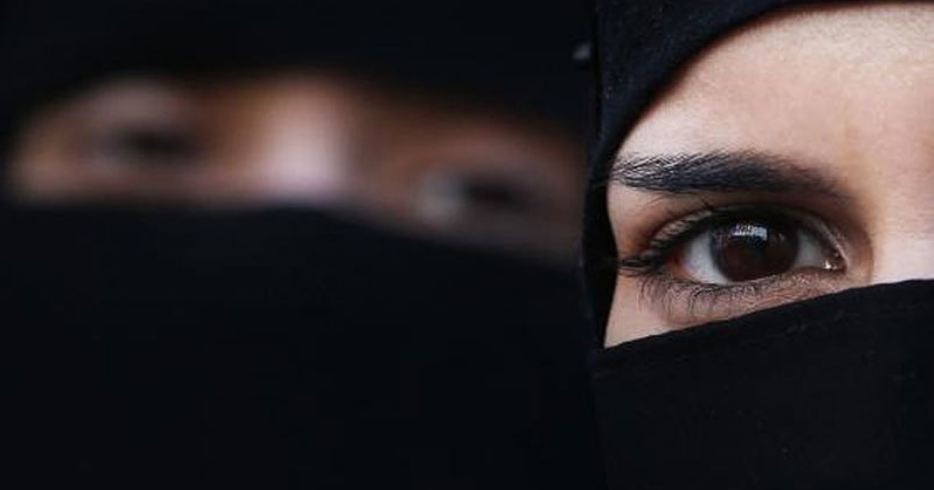
TALIBAN ORDER UNIVERSITY WOMEN TO WEAR FACE-COVERING NIQAB

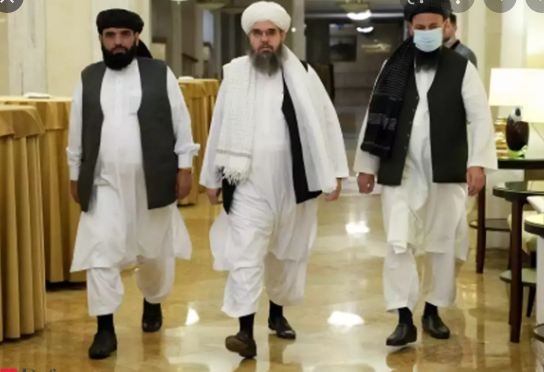
KABUL: Women attending private Afghan universities must wear an abaya robe and niqab covering most of the face, the Taliban have ordered, and classes must be segregated by sex — or at least divided by a curtain.

In a lengthy document issued by the Taliban’s education authority, they also ordered that female students should only be taught by other women, but if that was not possible then “old men” of good character could fill in.

The decree applies to private colleges and universities, which have mushroomed since the Taliban’s first rule ended in 2001.

During that period, girls and women were mostly excluded from education because of rules regarding same-sex classrooms and the insistence they had to be accompanied by a male relative whenever they left the house.

There was no order for women to wear the all-enveloping burqa in the new regulations issued late on Saturday, but the niqab effectively covers most of the face anyway, leaving just the eyes exposed.

In recent years, burqas and niqabs have largely vanished from the streets of Kabul, but are seen more frequently in smaller cities and towns.

The decree comes as private universities prepare to open on Monday.

“Universities are required to recruit female teachers for female students based on their facilities,” the decree said, adding that men and women should use separate entrances and exits.

If it is not possible to hire women teachers, then colleges “should try to hire old men teachers who have a good record of behaviour”.

While women now have to study separately, they must also end their lesson five minutes earlier than men to stop them from mingling outside.

They must then stay in waiting rooms until their male counterparts have left the building, according to the decree issued by the Taliban higher education ministry.

“Practically, it is a difficult plan — we don’t have enough female instructors or classes to segregate the girls,” said a university professor, who asked not to be named.

“But the fact that they are allowing girls to go to schools and universities is a big positive step,” he told AFP.

Afghanistan’s new rulers have pledged to be more accommodating than during their first stint in power, which also came after years of conflict — first the Soviet invasion of 1979, and then a bloody civil war.

They have promised a more “inclusive” government that represents Afghanistan’s complex ethnic makeup — though women are unlikely to be included at the top levels.

Over the past 20 years, since the Taliban were last in power, university admission rates have risen dramatically, particularly among women.

Before the Taliban returned in a lightning military campaign, entering the capital Kabul last month, women studied alongside men and attended seminars with male professors.

But a spate of deadly attacks on education centres in recent years sparked panic.

The Taliban denied being behind the attacks, some of which were claimed by the local chapter of the militant Islamic State group.

PM urges int’l community to support Afghan people to rebuild their country

ISLAMABAD: Prime Minister Imran Khan has urged the world community to remain engaged to support the Afghan people economically and to help rebuild their country.

In a telephonic conversation with Crown Prince of Abu Dhabi and Deputy Supreme Commander of the UAE Armed Forces  Mohamed Bin Zayed today, he emphasized the need to address the dire humanitarian needs and to ensure economic stability of Afghanistan.

The Prime Minister underscored that a peaceful and stable Afghanistan is in vital interest of Pakistan and the region. He underlined that an inclusive political settlement is the best way forward to ensure safety and security as well as protection of the rights of the people of Afghanistan.

Regarding bilateral cooperation, Imran Khan reaffirmed the importance Pakistan attaches to its strong fraternal ties with UAE and close cooperation between the two countries.

He congratulated the Crown Prince for making excellent arrangements for the upcoming Expo in UAE. He conveyed his best wishes for the resounding success of the mega event.

The Prime Minister and the Crown Prince agreed to work together to enhance collaboration in all areas of common interest.

IS THERE ANY CRISIS WITHIN THE TALIBAN RANKS?

Sources say, DG ISI also took up the matter of safe exit of the foreign nationals through the land route

DNA

KABUL: There are certain media reports that all is not well within the ranks of Taliban leadership and it has been facing some serious challenges while announcing the new government. Some media reports claim that there was a fight among various Afghan Taliban factions as Haqqanis are not ready to accept Mullah Hibatullah as the supreme leader.

Sources claim the visit of the DG ISI to Afghanistan was also in backdrop of this development.  Sources further claim the delay may signal a much greater crisis within the Taliban, hence Hameed’s emergency trip. The deeper problem with which Hameed now struggles is the fact that a unitary Taliban has always been illusionary. More than a decade ago, Secretary of State Hillary Clinton put the United States on the path of negotiations with the Taliban. “

Some Afghan factions seek a more inclusive government and are not enthusiastic about efforts to fight the Panjshiris. The Taliban largely conquered Afghanistan on the back of political deals rather than military victories and are unenthusiastic about the losses they now sustain in ground fighting in the Valley and its approaches.

Sources say, DG ISI also took up the matter of safe exit of the foreign nationals through the land route as the international flight operations from the Kabul airport as still suspended. The British foreign secretary and all those foreign minister who have recently visited Pakistan in fact insisted on just one point i.e safe passage to their nationals or those Afghans who have been working for them. 

CONSTRUCTION OF CYCLING TRACKS AT VARIOUS PLACES IN ISLAMABAD IN FULL SWING

ISLAMABAD, SEPT 5 /DNA/ – Construction and repair of cycling tracks at various places in Islamabad by the concerned departments on the directions of the management of the Capital Development Authority to provide facilities for healthy activities to the citizens of Islamabad.  The work is in full swing while the work of cycling tracks has been completed in some places
According to details, construction and repair work of cycling track along with Kachnar Park in Sector I-8 has been completed by CDA management
In addition, the CDA administration in Ladies Park for women and children in the vacant space adjacent to the Green Belt between Sector I-8/2 and H-8/2 opposite Edhi Home’s to provide healthy activities for women and children, the construction of a special park has been completed in which a cycling track has been constructed along with the park so that the visiting families can enjoy a healthy environment
In addition, keeping in view the healthy activities of the youth, the CDA administration has also entered the final stages of the work of Korang Cricket Ground on the land retrieve from the land mafia in Malpur area of ​​Islamabad, which will be inaugurated soon.

PAKISTAN TO FACE MORE UNCONVENTIONAL SECURITY THREATS: EXPERTS

Devcom-Pakistan webinar proposes more vigorous planning and management of climate and cyber security, cordial connections with neighbours to ensure economic gains and secured borders.  

ISLAMABAD, SEPT 5 /DNA/ – Speaking at a webinar on Sunday, the experts opined that Pakistan is on the verge of more unconventional security threats than physical attack through the geo-borders as the new cold war in the region is being fueled up. The emerging geopolitical and economic situation in Afghanistan could pose an influx of migration to Pakistan. The China-Pakistan Economic Corridor (CPEC) projects could also face the brunt of aggressive US-India collaboration against the brisk economic rise of China. Civil war in Afghanistan and unstable government would also have a trickle-down effect on Pakistan.

Pakistan needs to fully prepare its institutions and citizens to combat the impacts of changing climate especially on borders in the areas facing extreme weathers. Cyber security for financial institutions and defense installations will be more pertinent to ensure strong defense against cyber-attacks.

The webinar was organized by the Development Communications Network (Devcom Pakistan) and DTN on the subject, “Emerging Human Security Challenges for Pakistan and the Way Forward” in connection with the National Defense Day. Guest Speakers included Chairman Senate Standing Committee on Defense Senator Mushahid Hussain Sayed, Geopolitical Expert retired Lt General Haroon Aslam, Senior Journalist and Geopolitical Analyst Mazhar Abbas, former Add. Director General Federal Investigation Agency (FIA) and Cyber Security Expert Ammar Jafri, Senior Journalist Fauzia Shahid, and Devcom-Pakistan Executive Director Munir Ahmed who conducted the webinar.

Senator Mushahid Hussain Sayed said collective institutional decision making has been absent in the national life of Pakistan. All the institutions had never been on the same page as they were in 1965. We need the same spirit now too while the country is facing many challenges on borders as well as for human security. Poverty, health, population, climate change and disasters are some of the unconventional security threats that need to be dealt on war footings. The rise of Taliban in Afghanistan has been a blessing for Pakistan that has dysfunctional 66 Indian terrorist camps against Pakistan. Taliban’s brisk takeover of Afghanistan has been shocking for many but it was envisaged. August 15, 2021 was the demise of the US war in the region. He hoped that now the countries in the region would be able to decide their fate. He also criticized the lack of inclusive counter terrorism strategy.  

Lt General (retd) Haroon Aslam said war is national effort and it was seen at its best in 1965 where all segments of society were united together to fight against the enemy. Now is the era of hybrid wars which are fought on many fronts simultaneously including cyber spaces, propaganda strategies and fake news. We have to take care of all these fronts with vigorous and integrated strategies. The concept of National Counter Terrorism Authority (NACTA) has been failed and we need to win the public trust once again on the basis of transparent and cohesive strategies. Different types of threats are emerging around our borders which need to be dealt unitedly. Parliament, public and media have to play their role on the national strategic goals. A vibrant intelligence system and strong economy will help build Pakistan’s defense at all levels.  

A well-known former bureaucrat Tarqi Mustafa said Afghanistan is a burning point for Pakistan where an unstable government and weak economy would have resulted from migration to Pakistan and further stress on our food security. We all try to support Afghanistan for a viable, strong and an inclusive government. Taliban have learnt a lot from the past mistakes during the last 20 years. Hopefully they would have a rejime addressing the contemporary needs of their society and the neighbourhood.   

Mazhar Abbas said we never had independent think tanks to guide us on our engagement policies with each other. Media is one of the components misused every time without taking notice of the actual weaknesses in the system. Commercialization of media has adversely affected the actual objectives. All governments and institutions mold it according to their need but never take care of the public and national interest which lies in the learned and independent media.   

Ammar Jafri said the cyber security bill was prepared 8 years back and presented in the parliament. It is pending since then while cybercrimes have risen to the limits. The recent attack on the FBR virtual sites and databases has shown once again the importance of cyber security laws which should be in place sooner than later.   

Fauzia Shahid urged the government to take all the media workers and journalists associations in confidence to launch the media reform agenda. It is unwise to wrap up existing legislation to enforce dictatorial laws to influence and pressurize the media to bow down. It would have severe consequences.  

ICCI PROPERTY EXPO: GOVT. ASKED TO ENCOURAGE VERTICAL CONSTRUCTIONS

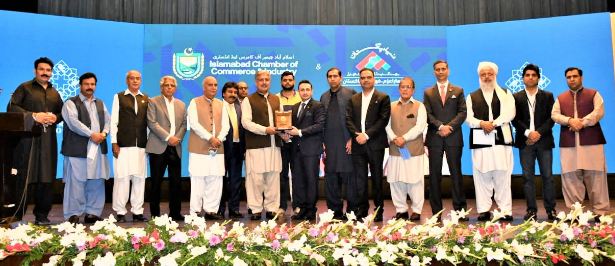
ISLAMABAD, SEPT 5 /DNA/ – On the sidelines of Pakistan’s largest Property, Housing and Construction Expo 21 organized by the Islamabad Chamber of Commerce & Industry at Pak-China Friendship Centre, conferences on various topics are also being held to develop policy recommendations for the government on how to further facilitate the construction industry for fast revival of the economy.

On Sep: 5, 2021, a conference on Policies, Rules & Regulations of Housing Societies/Development of Islamabad Industrial Estate was held. Chairman Rawalpindi Development Authority Tariq Mahmood Murtaza was the keynote speaker.

Addressing the conference, Tariq Mahmood Murtaza highlighted the various initiatives of the Rawalpindi Development Authority for the development of better infrastructure in Rawalpindi Region. He said that the redesigned Rawalpindi Ring Road would be constructed by RDA with its own resources and funds to address the traffic issues of the twin cities. He said that RDA was taking many steps to promote the ease of doing business.

He said that RDA has set a timeframe for issuance of NOCs and approval of building plans to accelerate the construction activities and facilitate the builders and developers. He said that due to business-friendly measures of RDA, its revenue has increased manifold. He also highlighted investment opportunities in various development projects in the Rawalpindi region and said that investors should capitalize on them.

He assured that RDA would extend all possible cooperation to ICCI for realization of its new industrial estate project.

Speaking at the occasion, Sardar Yasir Ilyas Khan, President, Islamabad Chamber of Commerce & Industry said that the best way for the government to meet the rising housing needs of people is to make new policies for promoting vertical buildings in the country and urged that CDA should also revise its building bye laws to encourage high rise buildings in the federal capital.

He emphasized that the government should also encourage banks to provide more credit to the private sector for construction projects and also provide low-cost house financing to common man that would help in addressing the housing needs of our rising population.

Sardar Yasir Ilyas Khan said that ICCI was ready to generate at least Rs.4 billion for the development of a new industrial estate in the region and said that RDA should allocate land for this project of vital importance at Rawalpindi Ring Road that would help in promoting industrialization, jobs creation, exports and revenue generation for the national exchequer.

The participants of the conference presented many good recommendations for further promoting the property, housing and construction sector.=DNA

==========================

Germany to make 100 million Covid vaccine doses available before 2022

BERLIN, SEPT 5 – Germany is planning to make 100 million vaccine doses against the coronavirus available for the international inoculation campaign before the end of the year, Health Minister Jens Spahn announces on the sidelines of a G20 ministerial meeting.

“That is the same amount as we have vaccinated in our own country so far,” says Spahn.

He adds that the contribution will help towards the goal of having at least 40 per cent of the world population vaccinated before 2022.

The pandemic is only over when it’s over worldwide, he says, warning of the danger that variants pose with the lack of a global response.

Spahn is meeting with other health ministers in Rome to discuss the next steps in the global effort to contain the coronavirus pandemic.

QATAR TO OPERATE DAILY AID FLIGHTS TO AFGHANISTAN

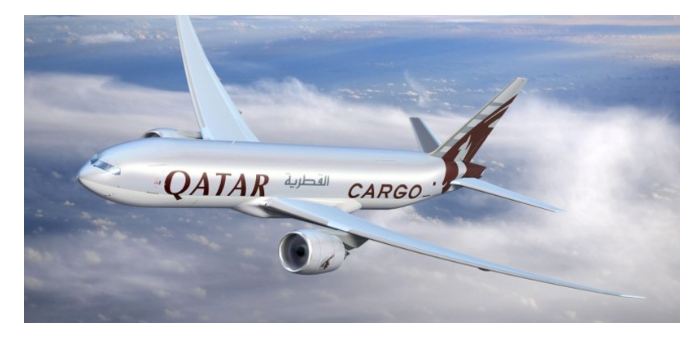
DOHA: Qatar has flown humanitarian aid into Kabul and said it will operate daily aid flights to Afghanistan over the next few days, providing much-needed supplies following a hiatus in much Western aid due to Taliban’s takeover last month.

Qatar has emerged as a key interlocutor between western nations and the Taliban, after developing close ties with the militant group through hosting its political office since 2013.

A Qatari aid flight carrying medical supplies and food products arrived in Kabul on Saturday and Qatar Ambassador to Afghanistan Saeed bin Mubarak Al Khayareen was at the airport for its arrival, the Gulf State’s foreign ministry said.

Qatar has helped reopen the airport, which closed for several days after the United States-led airlift of its citizens, Afghans and other nationals ended last month.

Half of Afghanistan’s 40 million people, including 10 million children, required humanitarian assistance as of the start of this year, the International Organization for Migration said late last month, adding that needs were expected to rise.

Pakistan Hosts Meeting Of Afghanistan’ Neighbours For ‘Regional Approach’

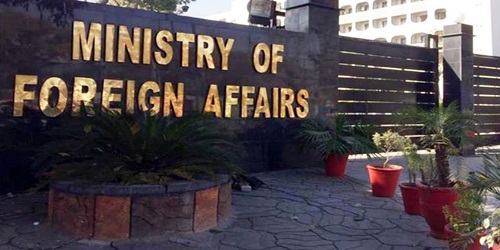
ISLAMABAD : Foreign Office on Sunday said that Pakistan has hosted a virtual meeting of the special representatives or envoys belonging to the neighbouring countries of Afghanistan to evolve a regional approach.

A statement released by the Foreign Office said that they hosted a virtual meeting of special representatives and envoys of neighbours of Afghanistan, today.

Special Representative for Afghanistan, Ambassador Mohammad Sadiq, chaired the session with participation from China, Iran, Tajikistan, Turkmenistan, and Uzbekistan.

During the meeting, views were exchanged on the latest situation in the neighbouring country.

Ambassador Sadiq, welcoming his counterparts, highlighted the importance of evolving a regional approach to address common challenges and to realize the new opportunities arising from a stable Afghanistan.

He added that a prosperous and peaceful Afghanistan would provide impetus to economic integration, strong people-to-people linkages, enhanced trade, and regional connectivity.

The participants of the meeting agreed to remain in close contact.

Stay Connected

64FansLike
60FollowersFollow

Latest Reviews

Exchange Rates

USD - United States Dollar
EUR
1.15
GBP
1.34
AUD
0.70
CAD
0.71