Home Blog Page 25

IRM hosts post-COP30 panel discussion

IRM hosts post-COP30 panel discussion

ISLAMABAD, Dec 24: Climate Action Forum (CAF) in collaboration with IRM and Institute of Regional Studies (IRS) has successfully hosted Post-COP30 panel discussion with a strong focus on translating global climate commitments into national policies and grassroots action relevant to Pakistan’s context.

The event brought together over 100 participants from government departments, academia/students and civil society. 

The event was graced by Khalida Bashir, Joint Secretary, Climate Finance Wing, Ministry of Climate Change and Environmental Coordination(MOCC&EC), as Chief Guest, said a press release issued here on Wednesday.

Distinguished moderators included Khalida Bashir, Joint Secretary, Climate Finance Wing, MoCC and EC, Dr. Roomi S. Hayat, Chair CAF and CEO IRM, Aisha Khan, CEO, CSCCC, Arif Goheer, Executive Director, GCISC, and Dr. Khalid Waleed, Research Fellow, SDPI with Ambassador Jauhar Saleem, President, IRS were the esteemed moderator of the panel discussion. The discussion featured diverse, intellectual, and substantive perspectives on COP30 outcomes by the esteemed panelists.

JS, MoCC and EC Khalida Bashir responding to a question regarding the loss and damage fund said, “Ministry is working on ideas to leverage this fund. NDRMF & NDMA is working in this regard and the Ministry is also seeking provincial support to strengthen the institutional capacity to channelize these funding streams.”

Dr. Hayat, Chair of the Climate Action Forum and CEO of IRM, highlighted that strengthening coordination can significantly improve climate action in Pakistan. He emphasized the need for better integration of scientific research, technical data, and indigenous knowledge to enhance responses to climate shocks. He also noted that engaging civil society would greatly improve the efficiency and impact of climate action initiatives.

Arif Goheer, ED GCISC responding to the progress of NDCs mentioned, ‘Last 2 NDCs were delayed, they were submitted one year delayed from their deadline, however, this time we tried our best to meet the deadline which was 2025 and submitted them right in time before the COP30 this year’

CEO, CSCCC Aisha discussing regarding the COP30 outcomes stated, “We do not have limited resources for climate action, what we need to do is to translate those promises to protection and ground for the communities that are the badly hit by the climate change.”

Dr. Khalid Waleed furthered the discussion with the mention of Just Transition and Belem Political Package and added, ‘The Belem Political Package at COP30 this year was based on ‘Mutirão’ which means collective action. COP provides this multilateral platform to discuss local problems with global context. In terms of Pakistan, Institutional Mutirão should be given priority.’

The session highlighted the importance of Post-COP dialogues in linking international agreements with local priorities. As many  practitioners, policymakers, and communities are not directly involved in COP negotiations, such forums are crucial for unpacking outcomes, fostering critical reflection, and ensuring that global agreements are understood, owned, and meaningfully followed up at home.
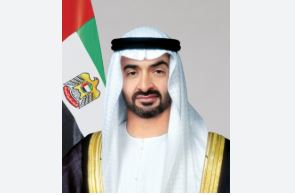
UAE president makes first official visit to Pakistan this week

UAE president makes first official visit to Pakistan this week

ISLAMABAD, DEC 24 /DNA/ – At the invitation of Prime Minister Muhammad Shehbaz Sharif, Sheikh Mohamed bin Zayed Al Nahyan, President of the United Arab Emirates and Ruler of Abu Dhabi, will undertake official visit to the Islamic Republic of Pakistan on 26 December 2025. This will be his first visit to Pakistan as the President of United Arab Emirates. He will be accompanied by a high-level delegation, including Ministers and senior officials.

During the visit, His Highness will hold a meeting with the Prime Minister of Pakistan, where the two leaders will review the entire spectrum of bilateral relations and exchange views on regional and international issues of mutual interest. The visit will provide an important opportunity to further strengthen the longstanding brotherly relations between Pakistan and the United Arab Emirates.

The visit of High Highness reflects the depth of bilateral relations between the two countries shared commitment of both sides to further enhancing collaboration in key areas, including trade, investment, energy, development and regional stability.

Study finds Pakistan’s new education exams expose deep classroom struggles

Study finds Pakistan's new education exams expose deep classroom struggles

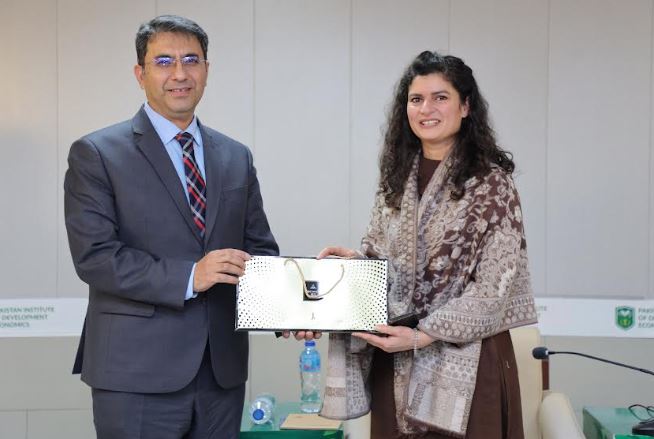
ISLAMABAD, DEC 24 /DNA/ – The Pakistan Institute of Development Economics (PIDE) convened a policy seminar to examine Pakistan’s transition to a Student Learning Outcomes (SLO) based curriculum and assessment system, with a particular focus on how national policy frameworks are being implemented in classrooms across Khyber Pakhtunkhwa (KP) and Islamabad Capital Territory (ICT). The seminar explored why outcome-based reforms, despite being fully operational in examinations, continue to face significant challenges at the teaching and learning level.

The seminar was moderated by Dr. Faheem Jehangir, Dean (Policy), PIDE/PD, and RASTA, who steered the discussion toward the broader policy relevance of education reforms and their implications for human capital development and long-term economic outcomes.

The keynote address was delivered by Dr. Aliya Khalid, Senior Departmental Lecturer at the Department of Education, University of Oxford, and Principal Investigator of a multi-year research project on SLO implementation in Pakistan. Drawing on international literature and Pakistan-specific evidence, Dr. Khalid explained that SLO-based reforms are part of a global movement aimed at shifting education systems away from rote memorization toward conceptual understanding, skills development, and application of knowledge. However, she cautioned that such reforms only succeed when curriculum, pedagogy, assessment, and teacher support are coherently aligned.

Tracing Pakistan’s reform trajectory, she outlined how SLOs were first introduced through the National Curriculum 2006 and mandated in textbooks under the National Education Policy 2009, followed by provincial ownership after the 18th Constitutional Amendment. She noted that Khyber Pakhtunkhwa emerged early as a reform leader, redesigning teacher training around outcome-based pedagogy, while later unification under the Single National Curriculum extended SLOs nationwide. The most consequential shift, she argued, occurred between 2023 and 2025, when federal and provincial examination boards moved decisively toward fully SLO-based, textbook-independent assessments.

Presenting preliminary findings from extensive fieldwork, she highlighted a persistent policy-to-practice gap. While examinations have rapidly transitioned to concept-based testing, many teachers particularly in resource-constrained schools continue to struggle with teaching without prescriptive textbooks and with limited training in formative assessment. This misalignment has contributed to sharp declines in pass rates at Grades 9 and 10 in several government schools, raising concerns about student overload, equity, and long-term participation in education, especially among vulnerable groups.

The research adopts a systems-thinking approach, combining policy analysis, curriculum and examination review, and in-depth interviews with teachers, head teachers, and education experts. The findings suggest that late-stage enforcement of SLOs at high-stakes examination levels has exposed cumulative learning gaps from earlier grades, rather than sudden failures at the secondary level. Dr. Khalid emphasized that sustainable reform requires earlier introduction of outcome-based learning, realistic curriculum depth, continuous teacher support, and feedback mechanisms that reflect classroom realities.

Adding to the discussion, Dr. Nadeem Javaid, Vice Chancellor PIDE, stressed that education reforms must be firmly rooted in Pakistan’s contextual realities rather than relying on imported frameworks. He noted that teaching culture, parental expectations, language policy, and entrenched power dynamics significantly influence classroom practices, often shaping how reforms are absorbed or resisted. Drawing on international examples, he observed that high-performing education systems are guided by clearly defined national objectives for basic education, while Pakistan continues to lack clarity on what its system ultimately seeks to produce. Referring to global evidence on the future of work, he emphasized the growing importance of creativity and critical thinking in the age of digitization and artificial intelligence, urging policymakers to align curriculum reforms with future workforce needs rather than narrow content coverage. He also cautioned against simplistic public–private comparisons, arguing that governance, accountability, and trust in public education institutions are central to improving learning outcomes.

The seminar also underscored the project’s strong policy engagement component. Beyond academic outputs, the research team has actively worked with education departments, contributed to public discourse through national newspapers, and supported the development of practical teacher training resources. As part of this engagement, structured SLO training modules for Grades 9 and 10 teachers are being integrated into provincial learning management systems, combining short instructional videos, assessments, and certification to strengthen classroom implementation.

The discussion was led by Dr. Ahsan Ul Haq Satti, Associate Professor and Director of the Center for Economic Modeling and Data Analytics (CEMDA) at PIDE, who commended the study for shifting the reform debate from policy intent to policy experience. He noted that SLOs are now fully embedded in board examinations, making it imperative to identify the most binding constraints in pedagogy, sequencing, and institutional support. Dr. Satti emphasized that many implementation challenges reflect system-level pressures such as overloaded syllabi and high-stakes exams rather than teacher resistance.

The seminar concluded with an engaged question-and-answer session, reflecting broad agreement that while SLO-based education is demanding and complex, it remains central to improving learning quality, equity, and workforce readiness in Pakistan. Participants stressed the need for evidence-informed sequencing, sustained teacher development, and realistic expectations to ensure that outcome-based reforms translate into meaningful learning gains rather than unintended exclusion.

27 cops martyred in 134 attacks

27 cops martyred in 134 attacks

DNA

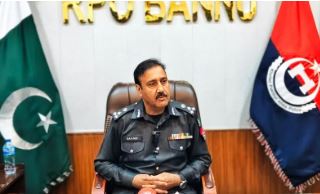
BANNU: Bannu Deputy Inspector General (DIG) Sajjad Khan said on Wednesday that 27 cops were martyred in 134 terrorist attacks targeting personnel in the district in 2025.

He made the remarks while addressing a press briefing at his office, where he gave a detailed breakdown of the overall law and order situation in the district and operations carried out against terrorist elements.

According to the DIG, Bannu police conducted comprehensive, well-organised and result-oriented operations against militants.

He said the data showed that during 2025, a total of 134 terrorist attacks targeted police stations, police posts, checkpoints, police mobiles and police parties.

In these attacks, 27 police personnel were martyred, while 79 sustained injuries. In retaliatory action by police, 53 terrorists were killed and 163 were injured, he said.

The DIG said that Bannu police carried out 168 intelligence-based operations across the district, resulting in the arrest of 105 terrorists and the elimination of 65 terrorists. Overall, successful action was taken against 170 terrorists, he said.

He further stated that police and security forces jointly conducted successful operations in the areas of Miryan, Haved, Daud Shah, Mamand Khel and Domel. During these joint operations, one police constable was martyred while 11 police personnel and five civilians were injured, he said.

As a result of these operations, 22 terrorists were killed and four were arrested, and several terrorist hideouts and houses were also demolished.

He also said that terrorists had carried out 20 drone attacks targeting police installations and civilian populations, in which 19 police personnel were injured. Further, nine civilians were martyred and 33 were injured, he said.

However, following the installation of an anti-drone system on July 18, a significant improvement was observed, with over 300 drone attacks thwarted and four drones neutralised.

DIG Khan said that despite limited resources, various security measures were implemented to protect police installations, including the installation of barriers, bunkers, double boundary walls, bullet-proof gates and CCTV cameras.

He said that work had also begun on the Safe City Project to further enhance the safety of both police personnel and the general public.

He added that for coordinated action against terrorists, jirgas were held with local elders in different areas, yielding positive results, and peace committees were formed.

With public cooperation, militant attacks on several police stations and checkposts were successfully thwarted, while effective operations were carried out in Kakki, Bharath, Khojri, Bargantu, Sheikh Landak, and other areas, he said.

According to the DIG, in order to align Bannu police with modern requirements, the force had been equipped with drones, anti-drone guns, sniper rifles, armoured personnel carriers (APCs), thermal imaging systems, tactical helmets and bullet-proof vehicles.

He reaffirmed his commitment that Bannu police would continue its struggle to maintain law and order in the district, efforts to eliminate terrorism, and ensure the protection of the lives and property of the public.

Public holiday in Islamabad on December 26

Public holiday in Islamabad on December 26

Saifullah Ansar

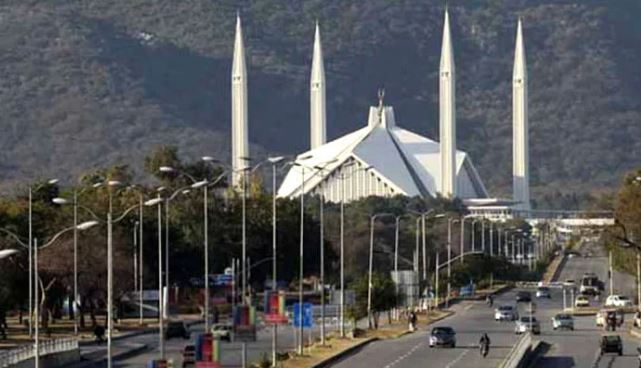
ISLAMABAD, DEC 24 /DNA/ – The Islamabad district administration has declared a public holiday in the federal capital on December 26 in view of the arrival of a high-level foreign delegation led by the President of the United Arab Emirates (UAE). The decision was taken to facilitate security arrangements and official engagements during the high-profile visit.

According to official sources, the UAE president will arrive in Islamabad with a large delegation comprising senior government officials and business leaders. During the visit, several bilateral agreements and memorandums of understanding are expected to be signed, aimed at further strengthening cooperation between Pakistan and the UAE in key sectors including investment, energy, defence, and infrastructure.

The visit comes at a significant time in regional diplomacy and follows the recent overseas engagements of Pakistan’s army chief, including his visit to Libya. Diplomatic observers note that regional security and defence cooperation are likely to feature prominently in discussions, particularly in the context of emerging geopolitical developments.

Reports circulating in international media have also linked the timing of the visit to broader regional defence dynamics, including a reported multi-billion-dollar arms deal involving Libya. The UAE is known to support General Khalifa Haftar’s faction in Libya, a factor analysts say adds strategic importance to ongoing diplomatic engagements.

Security across Islamabad will be tightened, with special traffic and security plans to be implemented during the visit. Authorities have advised citizens to cooperate with law enforcement agencies and follow official advisories.

Ambassador Jiang Zaidong highlights media’s role in advancing CPEC

Ambassador Jiang Zaidong highlights media’s role in advancing CPEC

Saifullah Ansar

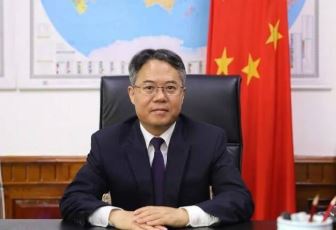
ISLAMABAD: Chinese Ambassador to Pakistan Jiang Zaidong on Tuesday underscored the vital role of media in strengthening China-Pakistan relations and promoting the China-Pakistan Economic Corridor (CPEC), while addressing the 9th CPEC Media Forum. He said the Forum has emerged as an influential platform for bilateral media exchanges, contributing significantly to mutual understanding and the successful advancement of CPEC.

Addressing media professionals and representatives from various sectors, Ambassador Jiang recalled that since its inception in 2015, the CPEC Media Forum has grown alongside the flagship corridor project, helping create a favourable public opinion environment for its development. He expressed gratitude to journalists and stakeholders from both countries for their continued support to China-Pakistan cooperation.

The ambassador noted that President Xi Jinping’s historic visit to Pakistan in 2015 laid the foundation of the “1+4” cooperation framework for CPEC, while the launch of the Media Forum in Islamabad the same year provided an institutional platform to communicate CPEC’s vision and achievements. Over the past decade, he said, CPEC has evolved into a comprehensive cooperation project spanning multiple sectors and has played a major role in Pakistan’s economic and social development, becoming a flagship initiative of the Belt and Road Initiative (BRI).

Highlighting the Forum’s contributions, Ambassador Jiang said it has effectively shared cooperation stories, countered misleading narratives such as the so-called “debt trap” theory with facts and data, and supported CPEC builders against unfounded criticism. He added that the Forum has also taken practical steps to enhance media collaboration, including the establishment of the “Golden Anchor Award for CPEC Communication” and initiatives such as the Journalists’ Fellowship Program.

Referring to economic performance, the Chinese envoy said China’s economy has shown resilience and innovation despite global pressures, with GDP growth of 5.2 percent year-on-year in the first three quarters and strong expansion in high-tech manufacturing and new energy vehicles. He said China’s GDP is expected to reach RMB 140 trillion this year, with steady progress toward long-term modernization goals.

Ambassador Jiang also welcomed Pakistan’s improving economic indicators, noting that Pakistan’s GDP grew by 3.04 percent in the last fiscal year, fiscal revenues increased significantly, foreign exchange reserves crossed USD 20 billion for the first time, and international rating agencies upgraded the country’s sovereign outlook. He said these positive trends in both economies provide strong momentum for bilateral cooperation and have elevated CPEC into a new phase of “CPEC 2.0”.

Looking ahead, the ambassador said next year will mark the 75th anniversary of diplomatic relations between China and Pakistan. He reaffirmed China’s commitment to working with Pakistan to deepen all-weather strategic cooperation and build a closer China-Pakistan community with a shared future. He stressed that enhanced media cooperation will be an integral part of upgrading CPEC, calling on journalists from both countries to act as interpreters of development, communicators of CPEC achievements, and promoters of the enduring China-Pakistan friendship.

Mystery shrouds death of Libyan Army Chief

Mystery shrouds death of Libyan Army Chief

DNA

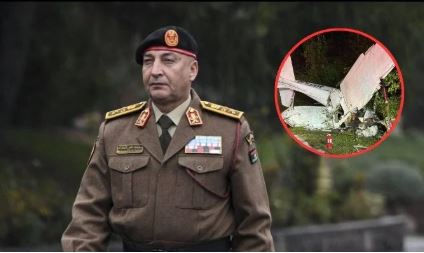
TRIPOLI: The sudden death of Libya’s army chief of staff, General Mohammed Ali Ahmed Al-Haddad, in a plane crash near Turkey’s capital has sparked shock, grief and growing speculation across the war-torn North African country, with questions multiplying over whether the incident was a tragic accident or something far more sinister.

General Haddad, a senior military figure aligned with Libya’s UN-recognised Government of National Unity (GNU) based in Tripoli, died on Tuesday when the jet he was travelling in crashed shortly after departing Ankara. According to Libyan Prime Minister Abdulhamid Dbeibah, the aircraft went down while returning from an official visit to Turkey, killing all five people on board.

“This followed a tragic and painful incident,” Dbeibah said in a statement, describing the loss as a major blow to Libya’s military institution and the nation as a whole. Alongside Haddad, the victims included the commander of Libya’s ground forces, the director of the military manufacturing authority, an adviser to the chief of staff, and a photographer from Haddad’s office.

Turkish authorities confirmed that the Dassault Falcon 50-type jet took off from Ankara’s Esenboga Airport at around 1710 GMT, en route to Tripoli. Radio contact was lost roughly 40 minutes later while the aircraft was flying over the Haymana district of Ankara province. Turkish Interior Minister Ali Yerlikaya said the plane had requested an emergency landing, but communication could not be re-established. The wreckage was later found near the village of Kesikkavak.

Despite official caution, speculation has intensified within Libya and among regional observers. Several Libyan sources, speaking privately, have suggested that the possibility of foul play cannot be ruled out. Some have even hinted that forces loyal to eastern Libya’s strongman, General Khalifa Belqasim Haftar, may have had an interest in eliminating a key military figure of the Tripoli government. No evidence has been presented publicly to support these claims, but the long-running rivalry between Libya’s eastern and western factions has kept such theories alive.

Libya has remained deeply divided since the 2011 overthrow of Muammar Qaddafi, with rival administrations and armed groups competing for power, territory and international recognition. General Haddad was a prominent figure within the GNU’s military structure and played a key role in coordination with foreign allies, particularly Turkey.

Pakistan, for its part, is seen as backing General Haftar’s eastern-based forces, reflecting Islamabad’s broader regional alignments and strategic considerations. This contrasts sharply with Turkey’s long-standing support for the Tripoli government, underlining how Libya’s internal conflict has become a theatre for competing regional and international interests.

The GNU has declared three days of official mourning across Libya, but the atmosphere is far from calm. Social media platforms and local outlets are rife with rumours, theories and accusations. Many Libyans recall a history of assassinations, sabotage and mysterious deaths that have marked the country’s post-Qaddafi era, fuelling scepticism toward official explanations.

Chairman HEC visits tech university to review rapid progress

Chairman HEC visits tech university to review rapid progress

ISLAMABAD, DEC 24 /DNA/ – Chairman, Higher Education Commission (HEC), Nadeem Mahbub visited the National University of Technology (NUTECH) on the invitation of its Rector Lt. Gen. (R) Moazzam Ejaz. The visit aimed to review the University’s rapid progress in technical education and its contributions to national industrial growth. He was accompanied by Executive Director HEC Dr. Zia Ul Haq.

The Chairman was given a comprehensive presentation highlighting the University’s strategic milestones, research initiatives, and recent achievements. Following the presentation, the Chairman and Executive Director visited various academic departments, laboratories, and specialized sections of the University.

Chairman HEC Mr. Nadeem Mahbub commended NUTECH’s commitment to quality education and its efforts in producing a skilled workforce that meets international standards. He noted that the University’s focus on applied research and industry integration is vital for the economic development of Pakistan. He lauded the institution’s infrastructure and its dedication to fostering an environment of creativity and technical proficiency.

RCCI welcomes privatisation of PIA as a positive step towards economic revival

RCCI welcomes privatisation of PIA as a positive step towards economic revival

RAWALPINDI, DEC 24 /DNA/ – The Rawalpindi Chamber of Commerce and Industry (RCCI) has hailed the successful privatisation of Pakistan International Airlines (PIA), terming it a commendable and much-needed step towards economic revival and fiscal discipline.

RCCI President, Usman Shaukat, in a statement said that the privatisation of low-performing state-owned enterprises had long been a burden on the national exchequer, and the government’s decision to offload such entities was both timely and appreciable. “For years, loss-making SOEs have drained public resources. This decision reflects the government’s seriousness in addressing inefficiencies and reducing its commercial footprint,” he said.

“This privatisation deal is a beacon of hope for Pakistan’s economy. We are confident that new ownership will bring professional management, fresh investment, and operational efficiency to PIA, enabling it to regain competitiveness in the global aviation market,” he added.

The successful bidding process, culminating in the Arif Habib consortium’s winning bid of Rs. 135 billion, marks a significant milestone in Pakistan’s reform agenda. Shaukat expressed optimism that the bleeding of public finances through PIA would now be halted and that the move sends a strong and positive signal to local and foreign investors.

RCCI further expressed hope that this development would pave the way for the swift privatisation of other loss-making state-owned enterprises. “We urge the government to expedite the privatisation process of other bleeding SOEs to ease the burden on the economy and channel public funds towards development priorities,” Shaukat emphasized.

The Chamber also commended the government’s efforts to improve the business climate and reiterated its support for continued structural reforms aimed at attracting domestic and foreign investment, strengthening investor confidence, and ensuring sustainable economic growth.

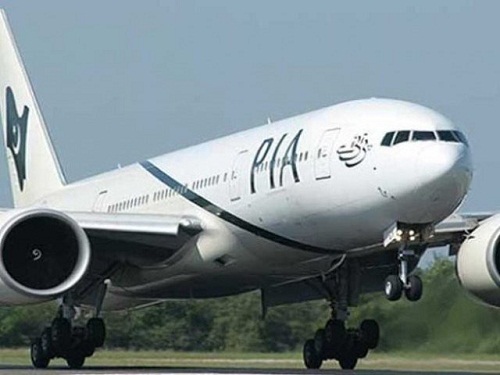
PIA finally privatised: a bold economic step or another costly gamble?

After decades of debate, failed reform attempts and mounting financial losses, Pakistan International Airlines (PIA) has finally been privatised, marking one of the most significant economic decisions taken by the government in recent years. The national flag carrier was sold for a bid of Rs 135 billion, with the Arif Habib Group emerging as the successful bidder. According to Arif Habib, the Fauji Foundation will also join the consortium, a move that, in the view of many observers, adds considerable strength to the deal due to the institutional and military-backed presence of the Fauji Foundation.

The government has expressed immense satisfaction over the transaction. Federal ministers and senior officials have openly celebrated the sale, describing PIA as a “white elephant” that had been draining national resources for years. According to official figures, the airline had accumulated massive losses, relied heavily on government bailouts, and was unable to compete with regional and international carriers. For the government, privatisation represents a long-awaited relief for the national exchequer and a step toward fiscal discipline.

Government leaders argue that the sale reflects economic pragmatism rather than ideological preference. They maintain that the state’s role is not to run commercial enterprises but to focus on governance, regulation, and public welfare. In their view, PIA’s privatisation will end political interference, improve efficiency, and enable professional management to turn the airline into a profitable and world-class carrier. Both the government and the buyers have projected optimism, promising that PIA will be given a new corporate identity, its fleet will be expanded and modernised, and service standards will be raised to international levels.

The inclusion of the Fauji Foundation in the consortium has been highlighted as a stabilising factor. Supporters believe its presence will bring discipline, credibility, and long-term commitment, addressing concerns about governance and sustainability. The consortium has assured that PIA’s revival plan includes fleet enhancement, route expansion, better customer service, and restoration of the airline’s global reputation.

However, the decision has also triggered strong criticism from various quarters. Many citizens, labour unions, and political commentators have slammed the privatisation, calling it the sale of a national asset and a clear admission of state failure. According to critics, selling PIA means the government has effectively acknowledged its inability to run public sector institutions. They see the move as evidence of bad governance, chronic mismanagement, and lack of political will to reform state-owned enterprises.

For many Pakistanis, PIA is not just an airline but a symbol of national pride, once regarded as one of Asia’s finest carriers. Critics argue that instead of privatising, the government should have focused on internal reforms, accountability, and professional management. They fear that public interest may be compromised in the pursuit of short-term financial relief.

Scepticism is further fuelled by Pakistan’s past experience with privatisation, particularly the case of Pakistan Telecommunication Company Limited (PTCL). Almost 19 years ago, PTCL was handed over to the UAE-based Etisalat group. That deal remains controversial to this day. The UAE company is still alleged to owe money to Pakistan, while Etisalat maintains that the Pakistani government failed to hand over certain assets promised under the agreement. More importantly, public perception of PTCL has deteriorated sharply since privatisation. Service quality declined, customer support weakened. As a result, millions of users abandoned landlines in favour of mobile phones and alternative service providers.

Another major concern relates to human resources. After PTCL’s privatisation, many skilled and experienced employees left the company, either due to retrenchment policies or dissatisfaction with the new management’s attitude. Critics fear a similar scenario at PIA, where thousands of employees may face layoffs or choose to leave, leading to a loss of institutional knowledge and operational expertise. Labour unions have already voiced concerns about job security, working conditions, and the future of employees under private management.

There is also apprehension that aggressive cost-cutting measures may undermine service quality, at least in the short term. Aviation experts caution that turning around a struggling airline is a complex process that requires not just capital injection but also strategic planning, regulatory support, and sustained commitment.

Despite these fears, some analysts believe that privatisation was inevitable. They argue that PIA had reached a point where continued state ownership was no longer viable. Chronic political interference, overstaffing, poor decision-making, and mounting debt had crippled the airline. From this perspective, private ownership offers the only realistic chance for revival, provided the process is transparent and well-regulated.

Ultimately, PIA’s privatisation represents both hope and risk. It could mark the beginning of a successful turnaround story, transforming a loss-making airline into a competitive global player. Alternatively, it could repeat past mistakes, deepening public distrust in privatisation policies. The real test will lie in implementation: how the new consortium manages the airline, protects employees’ rights, improves services, and delivers on its promises. Only time will tell whether this historic decision brings good news for Pakistan’s aviation sector or becomes another cautionary tale in the country’s economic history.

Stay Connected

64FansLike
60FollowersFollow

Latest Reviews

Exchange Rates

USD - United States Dollar
EUR
1.17
GBP
1.35
AUD
0.67
CAD
0.72