Home Blog Page 249

Norway former PM charged with corruption

Norway former PM charged with corruption

DNA

OSLO: Former Norwegian Prime Minister Thorbjørn Jagland has been charged with “gross corruption” over his ties with the US sex offender Jeffrey Epstein, police have said.

The charge was brought after the Council of Europe lifted Jagland’s immunity, which he enjoyed because of his past diplomatic role. He denies criminal liability and is willing to cooperate, his lawyer says.

Emails released by the US government are thought to show that Jagland planned solo and family visits to Epstein’s homes in Paris, New York and Palm Beach after the billionaire was convicted of a child sex offence.

Three of Jagland’s properties were searched by Norwegian crime unit Økokrim and he is now expected to be questioned. As well as serving as prime minister from 1996 to 1997, Jagland is also a former head of the Norwegian Nobel Committee and spent a decade as secretary general of the Council of Europe.

Jagland had diplomatic immunity from heading the Council, Europe’s watchdog for democracy and human rights, for alleged acts carried out during his 2009 to 2019 tenure.

Økokrim requested the Council revoke his immunity after it launched an investigation earlier this month into allegations of gross corruption made against him between 2011 and 2018.

The so-called Epstein files appear to show instances where the late financier covered the travel expenses to his properties for Jagland and his family.

The former leader had planned a family trip to Epstein’s private Caribbean island in 2014, but it was ultimately cancelled after Epstein fell ill.

China wants ‘new level’ in Germany ties, Beijing’s FM tells Merz

China wants 'new level' in Germany ties, Beijing's FM tells Merz

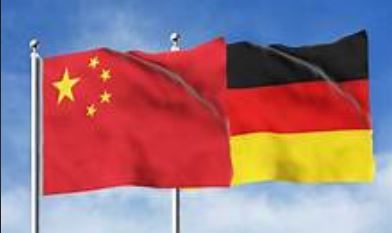
MUNICH, FEB 15: China’s top diplomat Wang Yi told German Chancellor Friedrich Merz that Beijing hoped to bring bilateral ties to a “new level”, as they met on the sidelines of the Munich Security Conference on Saturday.

Wang has been trying to present Beijing as a more reliable and stable partner of the European Union, as the bloc seeks to reduce its dependence on both China and an unpredictable United States.

  He told Merz that China hoped to work with Germany to bring the “all-round strategic partnership to a new level”, according to a readout from Beijing’s foreign ministry.

With Berlin’s support, Beijing also wanted to “prepare for the next stage of high-level exchanges”, Wang added.

Deep economic ties between the two countries have frayed in recent years over issues ranging from claims of unfair trade practices to protectionism.

Merz is reportedly preparing to make his inaugural visit to China this month, with a pressing issue being how to navigate evolving commercial ties.

Wang on Saturday affirmed support for Germany to play a greater role in retaining its “strategic autonomy and self-reliance” and to be a “driving force” for cooperation between China and Europe.

                  “China also expects Germany to become a… stabilising anchor for strategic relations,” he told Merz.

                  Germany’s foreign minister Johann Wadephul visited Beijing in December, pressing Chinese officials including Wang to use their influence to help end Russia’s war in Ukraine.

                  An earlier visit to China by Wadephul had been cancelled at the last minute, with Germany saying that meetings with key officials could not be arranged.

Govt forms medical panel for Imran Khan’s examination

Govt forms medical panel for Imran Khan’s examination

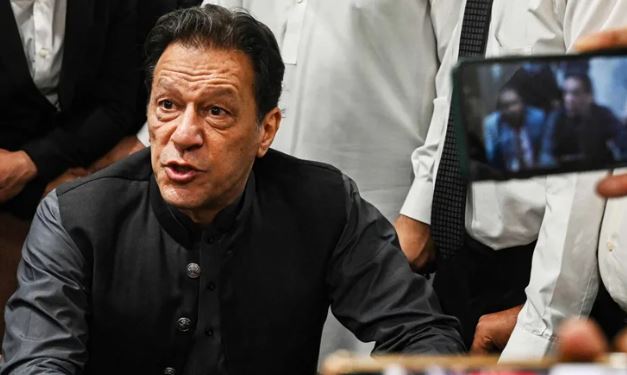
ISLAMABAD, FEB 15: The government has constituted a medical panel for the examination of Pakistan Tehreek-e-Insaf (PTI) founder Imran Khan.

Sources said the panel comprises Dr Amjad and Dr Nadeem Qureshi. The medical panel was expected to reach the jail on Saturday to conduct the examination. After the check-up, a decision on shifting Imran Khan to hospital will be taken in light of the recommendations of the medical board.

Sources said Dr Nadeem Qureshi serves as Head of the Retina Department at Shifa International Hospital, while Dr Amjad is also affiliated with Shifa International Hospital and is regarded as a specialist in retinal diseases.

Earlier, Federal Information Minister Atta Tarar, in a message posted on X, said that the deposed prime minister’s eye examination would be carried out by ophthalmic specialists at a specialised medical institution.

He added that a detailed report would also be submitted to the Supreme Court and urged restraint from speculation and attempts to give the matter a political colour.

All set for Pakistan-India high-voltage clash at ICC Men’s T20 World Cup

All set for Pakistan-India high-voltage clash at ICC Men's T20 World Cup

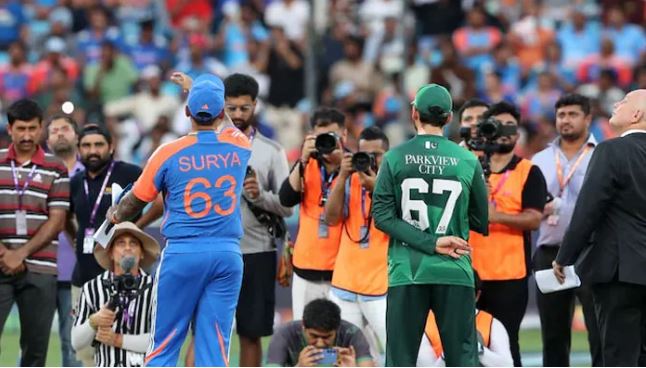
COLOMBO, FEB 15: Cricket’s iconic rivalry, arguably the most popular one, is set to reignite as Pakistan will take on arch-rivals India in a high-voltage T20 World Cup 2026 group stage match at R Premadasa Stadium in Colombo, Sri Lanka, today.

Both Pakistan and India have so far played two matches in the tournament, gaining four points each; however, the Indian side currently tops the points table courtesy of their net run rate, with Pakistan in the second spot.

The match will mark the first time both teams will be facing each other since last year’s Asia Cup final, a tense event staged following military conflict between India and Pakistan that nearly escalated into a fully-fledged war between the nuclear-armed neighbours.

The latest meeting comes against the backdrop of a tumultuous fortnight in which Pakistan’s boycott threat — later reversed — nearly blew a hole in the tournament’s marquee fixture.

With bilateral cricket emerging as a casualty of fraught relations, emotions run high whenever the neighbours lock horns in multi-team events at neutral venues.

India’s strained relations with another neighbour, Bangladesh, further tangled the geopolitics around the World Cup.

When Bangladesh were replaced by Scotland in the 20-team field for refusing to tour India over safety concerns, the regional chessboard shifted.

Pakistan decided to boycott the contest against India in solidarity with Bangladesh, jeopardising a lucrative fixture that sits at the intersection of sport, commerce, and geopolitics.

Faced with the prospect of losing millions of dollars in evaporating advertising revenue, the broadcasters panicked.

The governing International Cricket Council (ICC) held hectic behind-the-scenes parleys and eventually brokered a compromise to salvage the tournament’s most sought-after contest.

The biggest and most lucrative clash in world cricket has sold out the 35,000-capacity R Premadasa Stadium in Colombo, with hundreds of millions more expected to watch on television.

Authorities are expected to increase security around the stadium to curb illegal reselling, but experience suggests that controlling the underground ticket trade during a Pakistan-India encounter is no easy task.

Rain to be spoilsport?
With fans eagerly waiting for the much-anticipated fixture, weather forecasts had earlier warned of heavy rain between Sunday afternoon and evening, casting fresh doubts over the match.

However, the prospects of rain affecting the match are decreasing with Sri Lanka’s meteorological department forecasting that a cloud cover will remain over Colombo’s skies.

The possibility of a rain-curtailed encounter has prompted team management to consider a tactical reshuffle, with conditions likely to dictate the final combination.

The Men in Green may bolster their pace arsenal if overcast and damp conditions prevail. Express pacer Naseem Shah and left-arm quick Salman Mirza are firmly in contention for inclusion. Salman, who did not feature against the US, could be drafted in alongside Naseem to exploit any assistance on offer from a moist surface.

While the team management has kept its cards close to the chest, indications are that up to four changes in the playing XI are under consideration.

If Pakistan opt for a pace-heavy attack, at least two spinners could make way, depending on how the pitch shapes up closer to match time. Usman Khan’s place may also come under scrutiny as management weighs experience, form, and tactical balance.

Game’s spirit
Pakistan captain Salman Ali Agha, while addressing a pre-match presser on Saturday, said that he expects the game to be played in the spirit that it has always been played since its inception.

“It has been the norm in cricket for years but whatever way they want, we will only know tomorrow,” he said while speaking on the handshake controversy between the two teams, where the Indian side refused to engage in the customary handshake with the Pakistani players — including at toss between the captains.

India had faced Pakistan in the Asia Cup 2025, including in the September 28 final in Dubai, but refused to shake hands with their opponents before or after any of the matches — resulting in a controversy and uproar among cricket fans and fraternity.

“This is a very big game, and the magnitude is huge,” said Agha.

“We were always ready for the game, whatever be the decision.”

“We are in good momentum and I hope that being in Colombo since the start will help us in terms of conditions. We have to play good cricket to win the match,” noted the Pakistani skipper.

The winner will be guaranteed of thier berth in the next Super Eights round.

India have a doubt over explosive opener Abhishek Sharma, who has been suffering with a stomach biug.

“I hope he plays tomorrow. I hope he’s recovering well,” said Agha. “We want to play against the best, good luck to him.”

What to look out for?
Both teams have opened their World Cup campaigns with back-to-back wins.

For Pakistan, opener Sahibzada Farhan has looked in fine form but Babar Azam’s strike rate continues to polarise opinion.

Captain Agha will bank on spin-bowling all-rounder Saim Ayub, but the potential trump card is off-spinner Usman Tariq, whose slinging, side-arm action has intrigued opponents and fans alike.

Meanwhile, for India, opener Sharma and spinner Varun Chakravarthy currently top the batting and bowling rankings, respectively.

Ishan Kishan has reinvented himself as a top-order linchpin, skipper Suryakumar Yadav has regained form, while Rinku Singh has settled into the finisher’s role in India’s explosive lineup.

Mystery spinner Chakravarthy and the ever-crafty Jasprit Bumrah anchor the spin and pace units, while Hardik Pandya’s all-round spark is pivotal.

Open to compromises to reach nuclear deal with US: Iranian minister

Open to compromises to reach nuclear deal with US: Iranian minister

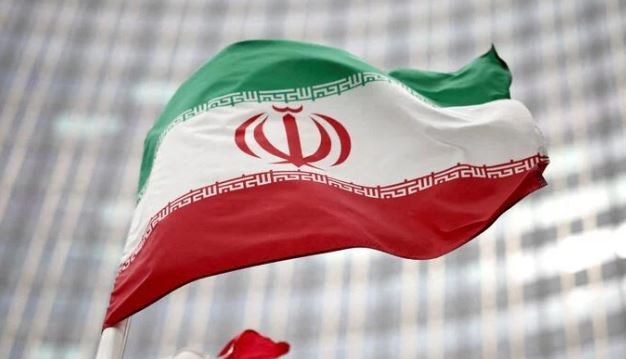
TEHRAN, FEB 15: Iran is ready to consider compromises to reach a nuclear deal with the United States if Washington is willing to discuss lifting sanctions, Iran’s Deputy Foreign Minister Majid Takht-Ravanchi told the BBC in an interview published on Sunday.

Iran has said it is prepared to discuss curbs on its nuclear programme in return for the lifting of sanctions, but has repeatedly ruled out linking the issue to other questions, including missiles.

Takht-Ravanchi confirmed that a second round of nuclear talks would take place on Tuesday in Geneva, after Tehran and Washington resumed discussions in Oman earlier this month.

“[Initial talks went] more or less in a positive direction, but it is too early to judge,” Takht-Ravanchi told the BBC.

A US delegation, including envoys Steve Witkoff and Jared Kushner, will meet with the Iranians on Tuesday morning, a source had told Reuters on Friday, with Omani representatives mediating the US-Iran contacts.

Iran’s atomic chief said on Monday the country could agree to dilute its most highly enriched uranium in exchange for all financial sanctions being lifted. Takht-Ravanchi used this example in the BBC interview to highlight Iran’s flexibility.

The senior diplomat reiterated Tehran’s stance that it would not accept zero uranium enrichment, which had been a key impediment to reaching a deal last year, with the US viewing enrichment inside Iran as a pathway to nuclear weapons.

Iran denies seeking such nuclear weapons.

During his first term in office, Trump pulled the US out of a 2015 Iran nuclear agreement, known as the Joint Comprehensive Plan of Action, the signature foreign policy achievement of former Democratic President Barack Obama.

The deal eased sanctions on Iran in exchange for Tehran limiting its nuclear programme to prevent it from being able to make an atomic bomb.

Recovery of cash amounting to 5.3 million – Motorway Police sets example of integrity

Recovery of cash amounting to 5.3 million - Motorway Police sets example of integrity

IG NHMP, Addl. IG announce reward for concerned officers

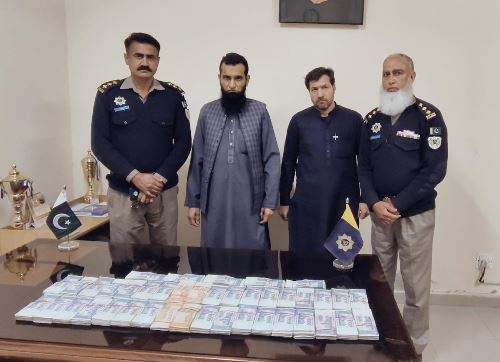
ISLAMABAD, FEB 15 /DNA/ – National Highways and Highways Police recovered a valuable bag with Rs 5.3 Million cash inside from the Kallar Kahar Service Area and safely returned it to the owner.

According to the details, a passenger plying in a bus from Peshawar to Faisalabad, Shafaqatullah, told the Motorway Police patrol vehicle that he had left a valuable bag worth Rs 53 lakh in Kallar Kahar Service Area.

The police officers informed the concerned beat administration and patrol officers immediately through wireless. Motorway Police contacted the complainant and immediately reached the service area while keeping the complainant on video call, and after a tiring search operation, the said bag was recovered from a fast food restaurant.

 The owner of the bag was then reached and after thorough inspection and legal formalities, the bag was safely handed over to him with all the valuables inside.

The bag owner praised and thanked the Motorway Police for their speedy response. Meanwhile, National Highways and Motorway Police Inspector General; Sultan Ahmed Chaudhry and Additional IG Muhammad Wisal Fakhar Sultan praised the officers involved in bag recovery and announced a reward for them.

Vigilance Under the Banner of Peace

Vigilance Under the Banner of Peace

by Muhammad Mohsin Iqbal

When Pakistan, alongside several Islamic nations, affixed its signature to the agreement at Davos to join the Peace Board for the reconstruction of Gaza, in the presence of the President of the United States, a wave of criticism arose from various quarters. Some questioned the necessity of such a forum, arguing that the United Nations already exists for purposes of peacekeeping and reconstruction. Others suspected hidden motives or feared diplomatic entanglements. Yet those who study history with sobriety rather than sentiment understood that participation in such a platform is neither naïve compliance nor symbolic alignment; it is a calculated engagement shaped by memory, experience, and vigilance.

Pakistan, in particular, does not approach international commitments with historical amnesia. Its leadership—civil and military alike—remains acutely conscious of past tragedies in which lofty assurances of international protection dissolved into silence at the decisive hour. The present global attention upon Pakistan, and upon the leadership of its armed forces is not without reason. Pakistan has long contributed to United Nations peacekeeping missions across continents. It knows both the nobility of peacekeeping and the perils of misplaced reliance. This balanced awareness shapes its current stance; engaging without being misled, working together while staying alert.

The memory of Bosnia stands as a solemn testament to why caution must accompany every promise of protection. In July 1995, in the town of Srebrenica—declared a “safe area” by the United Nations—the world witnessed one of the darkest chapters of post–Second World War Europe. The enclave had been placed under the protection of Dutch peacekeepers, operating as part of the United Nations Protection Force (UNPROFOR). This Force, was established in 1992 to ensure peace and security during the Yugoslav Wars, particularly in Bosnia and Croatia. Its responsibilities included monitoring zones of separation and weapons control points, as well as overseeing weapons exclusion zones. The mandate was clear in language, yet ambiguous in execution. The Dutch battalion was tasked with safeguarding tens of thousands of Bosnian Muslim civilians who had sought refuge from advancing Serb forces.

On the evening before the catastrophe, a photograph was taken that would later become emblematic of tragic irony; the Dutch UN commander, Lieutenant Colonel Thom Karremans, raising a glass in conversation with General Ratko Mladić, the Serb military commander. Diplomacy, in that fleeting moment, seemed to prevail over hostility. Assurances were exchanged. Confidence was projected. Yet beneath the veneer of negotiation lay a calculated design.

Earlier, Bosnian Muslim defenders within Srebrenica had managed, despite limited resources, to resist repeated assaults. But under international pressure and in deference to the promise of UN protection, they were urged to surrender their weapons. Commander Karremans assured them that the United Nations would ensure their safety. Trusting in the credibility of the international community, many complied. Arms were laid down. Defensive positions were relinquished. The population believed that the blue helmets symbolized an inviolable shield.

At dawn, the illusion shattered. Serb forces entered Srebrenica with methodical precision. Appeals for NATO air support were delayed and diluted. Limited airstrikes, when finally authorized, proved insufficient and were soon halted under threat to UN personnel. At the moment, the Dutch peacekeepers chose not to resist with force. Instead, they supervised the separation of men and boys from women and children under the guise of “screening.” In heartbreaking scenes, families were split apart right before the eyes of those meant to protect them.

Over the next four days, more than eight thousand Bosnian Muslim men and boys were systematically executed. Mass graves were filled in secrecy and later exhumed in sorrow. The massacre of Srebrenica was not a sudden frenzy but a calculated campaign of extermination carried out in the presence of an international force that neither intervened decisively nor prevented the unfolding atrocity. Subsequent investigations and judicial proceedings would recognize it as genocide. Years later, Dutch courts acknowledged partial responsibility of the Netherlands for failing to protect certain victims who had sought refuge within the UN compound.

The tragedy wasn’t just about the attackers’ brutality; it was also the devastating failure of a system that had promised to protect their lives but ultimately didn’t. The disarming of a vulnerable population under assurances of protection remains one of the most haunting lessons of that episode.

 It echoes the Qur’anic warning: “The disbelievers wish that you would neglect your arms and your baggage so they could descend upon you in one attack” (Surah An-Nisa 4:102). The verse is not an incitement to aggression; it is a call to vigilance. It counsels preparedness even in moments that appear secure.

To recall Srebrenica is not to imprison ourselves in grievance, but to remain awake. Real protection resides not in signatures alone, nor in ceremonial gatherings, but in preparedness, unity, and unshaken trust in Allah. International cooperation has its place; diplomacy is indispensable; reconstruction efforts must proceed. Yet no nation, particularly one conscious of the vulnerabilities of the Muslim world, can afford complacency.

Pakistan’s engagement with the Peace Board for Gaza must therefore be understood through this prism. It seeks a seat at the table where decisions are shaped, not as a passive recipient of outcomes but as an active guardian of its principles. Islamic countries, having witnessed how the language of peace was once manipulated while a massacre unfolded, cannot allow the market of bloodshed to be reheated under the banner of humanitarian concern.

History does not demand perpetual suspicion, but it does command informed vigilance. The lesson of Bosnia is neither isolation nor surrender; it is balanced strength. A nation that remembers Srebrenica signs agreements with open eyes, keeps its defences intact, and places its ultimate reliance not on fragile guarantees, but on preparedness guided by faith.

The Epstein Files Set Imran Khan Apart

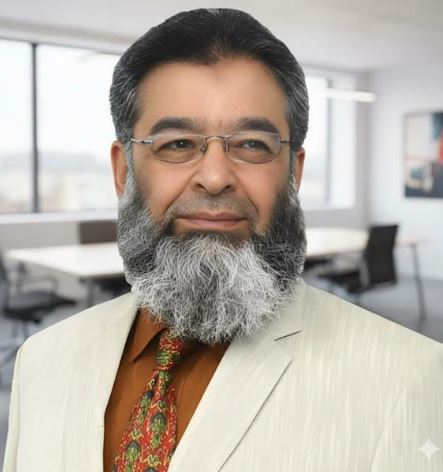
Qamar Bashir

Qamar Bashir

When the latest waves of documents connected to the Jeffrey Epstein investigation began surfacing, most of the names that appeared followed a familiar and uncomfortable pattern. The references revolved around social proximity, elite networks, reputational damage, and questions of judgment. Against that backdrop, one name stood apart — not because of scandal, but because of how it was framed.

Imran Khan’s reported mention was different. According to summaries that emerged from the broader document releases, he was not linked to misconduct or impropriety. Instead, he was described in private correspondence as “really bad news” and a “greater threat.” The tone was political rather than personal, strategic rather than social. In a collection of files that cast shadows over many reputations, his distinction appeared to lie in geopolitical discomfort rather than scandal.

That difference matters because it shifts the conversation from morality to strategy. A leader described as a threat is not being accused of vice but of independence. The question then becomes: dangerous to whom, and for what reason? To understand why that framing resonates so strongly in Pakistan, one must revisit a moment that altered the country’s political trajectory. That moment arrived in early March 2022.

On August 9, 2023, The Intercept published a classified Pakistani diplomatic cable documenting a March 7, 2022 meeting between Pakistan’s ambassador to Washington and U.S. Assistant Secretary of State Donald Lu. The document, labeled “Secret,” recorded Washington’s displeasure with Khan’s visit to Moscow on February 24, 2022 — the very day Russia invaded Ukraine. According to the cable, Lu stated that if a no-confidence vote against Prime Minister Khan succeeded, “all will be forgiven in Washington.” Otherwise, he warned, it would be “tough going ahead,” and the prime minister could face “isolation” from Europe and the United States.

The language recorded in the cable is unmistakably conditional, tying bilateral warmth to a specific political outcome. Forgiveness if he is removed; difficulty if he remains.

The sequence that followed intensified scrutiny. The meeting took place on March 7, procedural steps toward a no-confidence vote began on March 8, and by April 10, Khan had been removed from office. Correlation does not prove orchestration, and political transitions are rarely explained by a single document. Nevertheless, the cable demonstrates that diplomatic pressure was applied at a sensitive moment. It also reveals that Washington viewed Khan’s neutrality on Ukraine as a personal policy choice rather than institutional consensus.

Khan’s foreign policy posture had consistently emphasized strategic independence. He refused to grant U.S. military basing rights after America’s withdrawal from Afghanistan, publicly declaring “Absolutely not” when asked about hosting foreign forces. He defended Pakistan’s abstention at the United Nations on Ukraine and rejected public pressure from European diplomats, asking pointedly at a rally whether Pakistan was expected to behave as a subordinate state. He argued that engagement with Russia was necessary to secure affordable energy and food for Pakistan’s struggling population.

Beyond Ukraine, Khan elevated the issue of Islamophobia on the global stage, pressing the United Nations to recognize anti-Muslim discrimination and urging respect for religious dignity. He framed Pakistan as a country that would engage with all powers without entering rigid alliances. Supporters viewed this as sovereignty in action, while critics considered it diplomatic miscalculation. What cannot be denied is that his posture disrupted established expectations about alignment in a polarized global environment.

Following his removal, Pakistan’s external positioning shifted noticeably. Military-to-military engagement with the United States regained momentum, and reports surfaced of Pakistani-manufactured ammunition appearing in Ukraine. Diplomatic warmth between Islamabad and Western capitals returned, and new defense cooperation frameworks were discussed. These developments do not conclusively prove that pressure determined political outcomes, but they align with the cable’s suggestion that a change in leadership would ease tensions and remove the “dent” in relations.

It is within this broader context that the contrast with the Epstein-related references acquires symbolic weight. Many powerful men whose names appeared in those documents faced reputational questions because of association with a disgraced financier. Imran Khan’s distinction, by contrast, was reportedly rooted in strategic apprehension rather than personal scandal. He was not depicted as compromised; he was characterized as disruptive.

The cable published by The Intercept reinforces that interpretation. Its “assessment” section records the Pakistani ambassador’s view that Lu could not have delivered such a strong message without approval from higher authorities. Whether or not that assessment was accurate, it underscores how the exchange was perceived inside Pakistan’s diplomatic apparatus. The document captures a moment when international expectations and domestic politics collided.

Since Khan’s removal, Pakistan has experienced deep polarization, economic strain, and intensified debate over the balance of civilian and military authority. His critics argue that his governance record warranted parliamentary removal and that institutional checks functioned as designed. His supporters argue that his defiance of geopolitical alignment invited external pressure that altered the course of domestic politics. The truth may reside in the interplay of both internal and external forces.

What the documentary record shows is not a signed directive of regime change, but evidence of diplomatic leverage. In international politics, leverage often operates through incentives and signals rather than commands. The phrase “all will be forgiven” is not an order; it is a conditional promise. Such language does not prove conspiracy, but it does demonstrate expectation.

That is why the distinction matters. The Epstein files, as publicly discussed, did not place Imran Khan among scandal-tainted elites. Instead, they appear to reflect concern about his independent trajectory. The March 7 cable then provides context for why that concern may have existed, showing that his policies generated friction at the highest levels of diplomacy. In a world structured around predictable alignments, independence can be unsettling.

Imran Khan’s story, therefore, is not merely about allegations or denial. It is about how sovereignty interacts with global power. He was not framed in those documents as morally compromised; he was framed as politically inconvenient. Whether that inconvenience contributed to his removal remains debated, but the documentary evidence confirms that it was noticed.

In the end, what set him apart was not scandal but stance. In a system accustomed to compliance, saying no can carry consequences. The documents do not resolve the debate over his ouster, but they illuminate the pressures surrounding it. And in doing so, they explain why, among many powerful names, one stood apart.

Qamar Bashir

Press Secretary to the President (Rtd)

Former Press Minister, Embassy of Pakistan to France

Former Press Attaché to Malaysia

Former MD, SRBC | Macomb, Michigan

Australia unveils initial US$2.8 billion for new nuclear subs facility

Australia unveils initial US$2.8 billion for new nuclear subs facility

SYDNEY, FEB 15: Australia unveiled AU$3.9 billion (US$2.8 billion) in spending on Sunday as a “down payment” on a new facility to build nuclear submarines under the tripartite AUKUS security pact with Britain and the United States.

The AUKUS pact aims to arm Australia with a fleet of cutting-edge submarines from the United States and would provide for cooperation in developing an array of warfare technologies.

The submarines, the sale of which will begin in 2032, lie at the heart of Australia’s strategy of improving its long-range strike capabilities in the Pacific, particularly against China.

The deal could cost Canberra up to US$235 billion over the next 30 years, and also includes the technology to build its own vessels in the future.

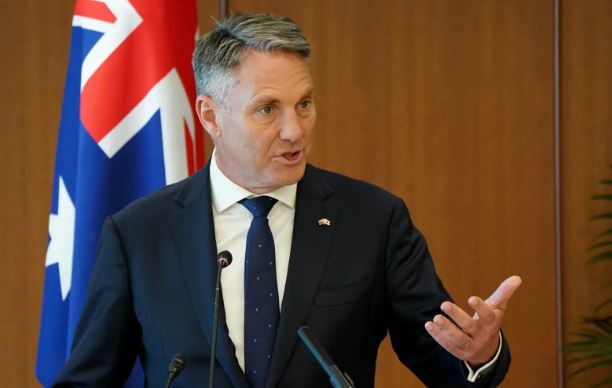
Defence minister Richard Marles said the facility in Osborne, near the southern city of Adelaide, would be at the heart of that.

In the long term, an estimated AU$30 billion is expected to be spent on the facility.

“The transformation underway at Osborne shows Australia is on track to deliver the sovereign capability to build our nuclear-powered submarines for decades to come,” he said.

                  The investment in the Submarine Construction Yard is critical to delivering Australia’s conventionally-armed, nuclear-powered submarines”, Prime Minister Anthony Albanese said in a statement.

                  “We are accelerating AUKUS opportunities to secure Australia’s future defence capability and create lasting prosperity and jobs for the state,” he added.

                  In September, Canberra also revealed a US$8 billion investment to be spent over a decade to transform a shipbuilding and maintenance precinct in Perth, Western Australia, into facilities for a future fleet of nuclear-powered submarines.

                  Australia had a major bust-up with France in 2021 when it cancelled a multi-billion-dollar deal to buy a fleet of diesel-powered submarines from Paris and went with the AUKUS programme instead.

                  The pact was thrown into doubt last June when Washington said it was launching a review into whether it aligned with President Donald Trump’s “America First” agenda.

                  In December, the Pentagon said it had cleared that hurdle and that Trump had ordered it “full steam ahead”.

President Zardari reaffirms commitment to economic recovery, unity

President Zardari reaffirms commitment to economic recovery, unity

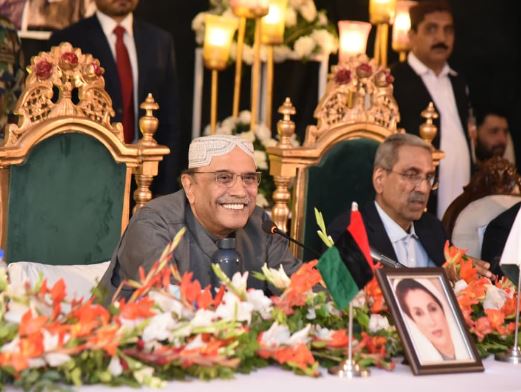
RAHIM YAR KHAN, Feb 14: /DNA/ – President Asif Ali Zardari reiterated his resolve to steer the country toward economic recovery, strengthen national unity, and uphold the ideological legacy of the Pakistan Peoples Party (PPP).

Speaking to the local leadership and former ticket holders of the party from South Punjab, he said that being there felt like being in his home province Sindh, noting that the culture across both regions reflected unity and shared traditions and heritage.

He expressed pride in having spent around 14 years in prison, stating that he endured those years with courage, thanks to the unwavering support and indomitable will of the party workers.

In an apparent reference to a political rival now in opposition , he remarked that true leadership was tested in difficult times, contrasting his long imprisonment with others who, despite spending a shorter period behind bars and having enjoyed all facilities, could not withstand the pressure.

The President acknowledged that the country was facing economic hardships and inflation but attributed the situation to the mismanagement of the previous four-year government. He said the current Prime Minister was making sincere efforts to stabilize the economy and ensure smooth governance despite numerous challenges.

Highlighting national security concerns, Zardari pointed to tensions along international borders and said that hostile forces remained active. He criticised Indian Prime Minister Narendra Modi, stating that their recent defeat last year did bring sense on the other side of the border. He praised Pakistan’s armed forces for their continued sacrifices in Khyber Pakhtunkhwa and Balochistan, emphasising that they have always defended the country with courage and faith.

He stressed the importance of providing modern facilities to farmers to accelerate agricultural growth, ensure food security and national progress.

President Zardari also appreciated the services of senior political figures from South Punjab, including Makhdoom Ahmed Mahmood and the Gillani family, stating that their contributions have strengthened the region’s political landscape.

Reaffirming the party’s ideological foundations, he said the vision initiated by Zulfikar Ali Bhutto was carried forward by Shaheed Mohtarma Benazir Bhutto and continued under the leadership of Bilawal Bhutto Zardari.

He expressed optimism that economic conditions would improve soon and pledged that the party would continue striving to secure a better future for the nation’s youth.

Earlier, President PPP South Punjab, Makhdoom Ahmed Mahmood warmly welcomed President Asif Ali Zardari on his arrival in South Punjab and expressed gratitude for his visit to the region.

He mentioned that all those present at the gathering were mobilised by Bilawal Bhutto Zardari’s hard work and commitment. He added that the party chairman had formed a strong and effective team purely on merit. He emphasised that the Pakistan Peoples Party (PPP) has always been built on peoples’ ideology, and its workers remained loyal to the vision of Shaheed Zulfikar Ali Bhutto later carried forward by Shaheed Benazir Bhutto.

He stated that party workers were ideological and committed individuals who have witnessed the time of Zulfikar Ali Bhutto and Benazir Bhutto, and even today they stand firmly with President Asif Ali Zardari and Bilawal Bhutto Zardari.

“Our workers are not driven by greed or personal interests; they are motivated by principles and ideology,” he added.

Makhdoom Ahmed Mahmood further remarked that it reflects President Zardari’s broad vision and political maturity that he chose to leave the President House to visit a small town to personally meet party workers and local leadership.

He maintained that it was not an easy task for a sitting President to step out of the Presidency and come among the grassroots workers, but this gesture showed his connection with the people.

He expressed confidence that President Zardari’s visit to South Punjab would have a highly positive impact and would further boost the morale and enthusiasm of the party workers across the region.

Governor Punjab Sardar Saleem Haider, MNAs, MPAs, and other local leaders were also present in the meeting.

Stay Connected

64FansLike
60FollowersFollow

Latest Reviews

Exchange Rates

USD - United States Dollar
EUR
1.14
GBP
1.34
AUD
0.70
CAD
0.71