Home Blog Page 241

Washington weighing strike on Iran as Tehran says draft deal coming soon

Washington weighing strike on Iran as Tehran says draft deal coming soon

PARIS, FEB 20: US President Donald Trump said he was considering a limited strike on Iran after ordering a major naval buildup in the Middle East aimed at heaping pressure on Tehran to cut a deal to curb its nuclear programme.

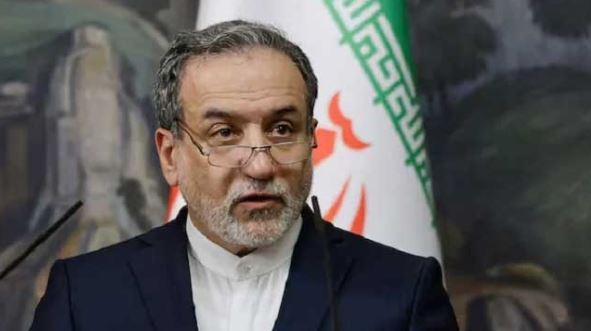
The latest threat came after Iran’s foreign minister said a draft proposal for an agreement with Washington would be ready in a matter of days following negotiations between the two sides in Geneva earlier this week.

Trump had suggesting on Thursday that “bad things” would happen if Tehran did not strike a deal within 10 days, which he subsequently extended to 15.

Asked by a reporter on Friday whether he was contemplating a limited military strike, Trump answered: “The most I can say — I am considering it.”

After the talks in Geneva, Tehran said the two sides had agreed to submit drafts of a potential agreement, which Iranian Foreign Minister Abbas Araghchi told US media would be the “next step”.

“I believe that in the next two, three days, that would be ready, and after final confirmation by my superiors, that would be handed over to Steve Witkoff,” he said, referring to Trump´s main Middle East negotiator.

Araghchi also said US negotiators had not requested that Tehran end its nuclear enrichment programme, contradicting statements from American officials.

“We have not offered any suspension, and the US side has not asked for zero enrichment,” he said in an interview released Friday by US TV network MS NOW.

“What we are now talking about is how to make sure that Iran’s nuclear programme, including enrichment, is peaceful and would remain peaceful forever,” he added.

His comments stand in contrast to information relayed by high-ranking US officials, including Trump, who has repeatedly said Iran must not be allowed to enrich uranium at any level.

Western countries accuse the Islamic republic of seeking to acquire nuclear weapons, which Tehran denies, though it insists on its right to enrichment for civilian purposes.

Iran, for its part, is seeking to negotiate an end to sanctions that have proven to be a massive drag on its economy.

Economic hardships sparked protests in December that evolved into a nationwide anti-government movement last month, prompting a crackdown from authorities that left thousands dead, rights groups say.

‘No ultimatum’
The two foes held an initial round of discussions on February 6 in Oman, the first since previous talks collapsed during the 12-day Iran-Israel war last June, which the US joined by striking Iranian nuclear facilities.

Washington has pursued a major military build-up in the region in tandem with the talks, and both sides have traded threats of military action for weeks.

On Thursday, Trump again suggested the US would attack Iran if it did not make a deal within the timeframe he laid out.

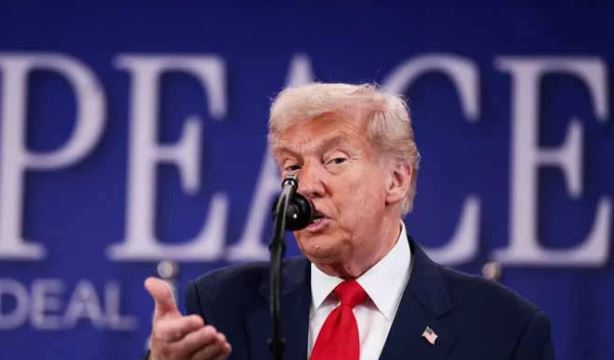
“We have to make a meaningful deal otherwise bad things happen,” Trump told the inaugural meeting of the “Board of Peace”, his initiative for the post-war Gaza Strip.

Iran’s ambassador to the UN, Amir Saeid Iravani, warned that US bases, facilities and assets would be “legitimate targets” if the United States followed through on its threats.

Araghchi, however, insisted that “there is no ultimatum”.

“We only talk with each other how we can have a fast deal. And a fast deal is something that both sides are interested about,” he said.

“We are under sanctions, (so) obviously any day that sanctions are terminated sooner it would be better for us,” he said, adding Iran had “no reason to delay”.

US Supreme Court rejects Trump’s global tariffs

US Supreme Court rejects Trump's global tariffs

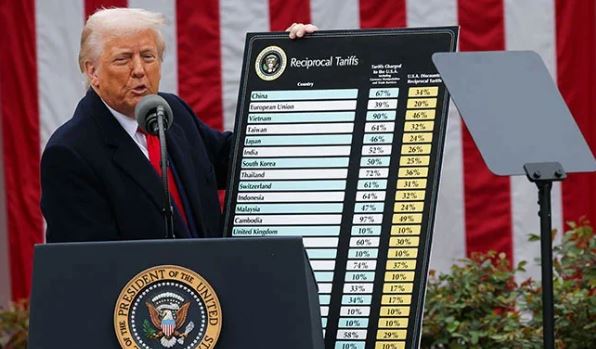
WASHINGTON: The US Supreme Court struck down on Friday President Donald Trump’s sweeping tariffs that he pursued under a law meant for use in national emergencies, rejecting one of his most contentious assertions of his authority in a ruling with major implications for the global economy.

The justices, in a 6-3 ruling authored by conservative Chief Justice John Roberts, upheld a lower court’s decision that the Republican president’s use of this 1977 law exceeded his authority.

The court ruled that the Trump administration’s interpretation that the law at issue — the International Emergency Economic Powers Act, or IEEPA — grants Trump the power he claims to impose tariffs would intrude on the powers of Congress and violate a legal principle called the “major questions” doctrine.

The doctrine, embraced by the conservative justices, requires actions by the government’s executive branch of “vast economic and political significance” to be clearly authorised by Congress. The court used the doctrine to stymie some of Democratic former President Joe Biden’s key executive actions.

Roberts, citing a prior Supreme Court ruling, wrote that “the president must ‘point to clear congressional authorisation’ to justify his extraordinary assertion of the power to impose tariffs,” adding: “He cannot.”

Trump has leveraged tariffs — taxes on imported goods — as a key economic and foreign policy tool. They have been central to a global trade war that Trump initiated after he began his second term as president, one that has alienated trading partners, affected financial markets and caused global economic uncertainty.

The Supreme Court reached its conclusion in a legal challenge by businesses affected by the tariffs and 12 US states, most of them Democratic-governed, against Trump’s unprecedented use of this law to unilaterally impose the import taxes.

The three dissenting justices were conservatives Clarence Thomas, Samuel Alito and Brett Kavanaugh. Joining Roberts in the majority were conservative Justices Neil Gorsuch and Amy Coney Barrett, both of whom Trump appointed during his first term in office, along with the three liberal justices.

The Supreme Court, which has a 6-3 conservative majority, previously had backed Trump in a series of other decisions issued on an emergency basis since he returned to the presidency in January 2025 after his policies were impeded by lower courts.

Trump’s tariffs were forecast to generate over the next decade trillions of dollars in revenue for the United States, which possesses the world’s largest economy.

Trump’s administration has not provided tariff collection data since December 14. But Penn-Wharton Budget Model economists estimated on Friday that the amount collected in Trump’s tariffs based on IEEPA stood at more than $175 billion. And that amount likely would need to be refunded with a Supreme Court ruling against the IEEPA-based tariffs.

Powers of Congress
The US Constitution grants Congress, not the president, the authority to issue taxes and tariffs. But Trump instead turned to a statutory authority by invoking IEEPA to impose the tariffs on nearly every US trading partner without the approval of Congress.

Trump has imposed some additional tariffs under other laws that are not at issue in this case. Based on government data from October to mid-December, those represent about a third of the revenue from Trump-imposed tariffs.

IEEPA lets a president regulate commerce in a national emergency. Trump became the first president to use IEEPA to impose tariffs, one of the many ways he has aggressively pushed the boundaries of executive authority since he returned to office in areas as varied as his crackdown on immigration, the firing of federal agency officials, domestic military deployments and military operations overseas.

Trump described the tariffs as vital for US economic security, predicting that the country would be defenceless and ruined without them. Trump in November, told reporters that without his tariffs, “the rest of the world would laugh at us because they’ve used tariffs against us for years and took advantage of us.” Trump said the United States was abused by other countries, including China, the second-largest economy.

After the Supreme Court heard arguments in the case in November, Trump said he would consider alternatives if it ruled against him on tariffs, telling reporters that “we’ll have to develop a ‘game two’ plan.”

Treasury Secretary Scott Bessent and other administration officials said the United States would invoke other legal justifications to retain as many of Trump’s tariffs as possible.

Among others, these include a statutory provision that permits tariffs on imported goods that threaten US national security and another that allows retaliatory actions including tariffs against trading partners that the Office of the US Trade Representative determines have used unfair trade practices against American exporters.

None of these alternatives offered the flexibility and blunt-force dynamics that IEEPA provided Trump, and may not be able to replicate the full scope of his tariffs in a timely fashion.

Increased leverage
Trump’s ability to impose tariffs instantaneously on any trading partner’s goods under the aegis of some form of declared national emergency raised his leverage over other countries. It brought world leaders scrambling to Washington to secure trade deals that often included pledges of billions of dollars in investments or other offers of enhanced market access for US companies.

But Trump’s use of tariffs as a cudgel in US foreign policy has succeeded in antagonising numerous countries, including those long considered among the closest US allies.

IEEPA historically had been used for imposing sanctions on enemies or freezing their assets, not to impose tariffs. The law does not specifically mention the word tariffs. Trump’s Justice Department had argued that IEEPA allows tariffs by authorising the president to “regulate” imports to address emergencies.

The Congressional Budget Office has estimated that if all current tariffs stay in place, including the IEEPA-based duties, they would generate about $300 billion annually over the next decade.

Total US net customs duty receipts reached a record $195 billion in fiscal 2025, which ended on September 30, according to US Treasury Department data.

On April 2 on a date Trump labelled “Liberation Day,” the president announced what he called “reciprocal” tariffs on goods imported from most US trading partners, invoking IEEPA to address what he called a national emergency related to US trade deficits, though the United States already had run trade deficits for decades.

In February and March of 2025, Trump invoked IEEPA to impose tariffs on China, Canada and Mexico, citing the trafficking of the often-abused painkiller fentanyl and illicit drugs into the United States as a national emergency.

Trump has wielded his tariffs to extract concessions and renegotiate trade deals, and as a weapon to punish countries that draw his ire on non-trade political matters. These have ranged from Brazil’s prosecution of former president Jair Bolsonaro, India’s purchases of Russian oil that help fund Russia’s war in Ukraine, and an anti-tariffs ad by Canada’s Ontario province.

IEEPA was passed by Congress and signed by Democratic President Jimmy Carter. In passing the measure, Congress placed additional limits on the president’s authority compared to a predecessor law.

The cases on tariffs before the justices involved three lawsuits.

The Washington-based US Court of Appeals for the Federal Circuit sided with five small businesses that import goods in one challenge, and the states of Arizona, Colorado, Connecticut, Delaware, Illinois, Maine, Minnesota, Nevada, New Mexico, New York, Oregon and Vermont in another.

Separately, a Washington-based federal judge sided with a family-owned toy company called Learning Resources.

5.6-magnitude earthquake jolts Islamabad, Pindi, parts of KP

5.6-magnitude earthquake jolts Islamabad, Pindi, parts of KP

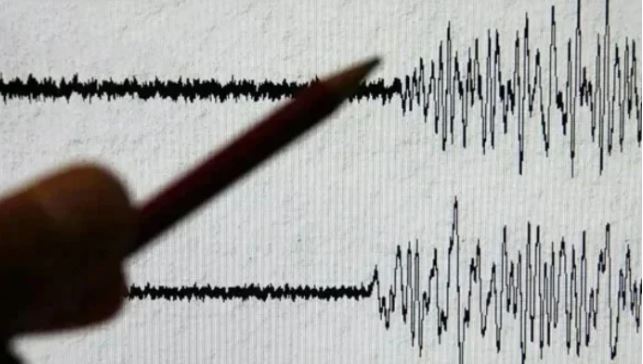
ISLAMABAD, FEB 20: A 5.6-magnitude earthquake struck parts of Khyber Pakhtunkhwa (KP) and Punjab on Friday, with tremors felt in several cities, including Peshawar and Islamabad.

The quake’s epicentre was located in Afghanistan’s Hindu Kush region at a depth of 73 kilometres, the seismological centre said.

There were no immediate reports of casualties or damage till the filing of this report.

In KP, tremors were also felt in Malakand and Lower Dir, while residents in Hangu, Kohat, Bajaur and Swat also experienced quake.

Tremors were also felt in Buner, Shangla and North Waziristan, Swabi and Upper Dir.

FBR orders installation of POS system in over 14 sectors

FBR orders installation of POS system in over 14 sectors

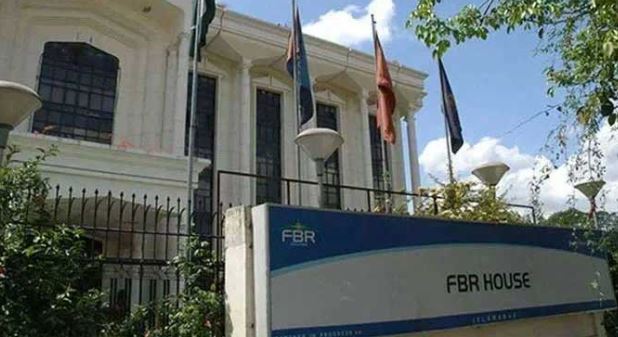
ISLAMABAD, FEB 20: The Federal Board of Revenue (FBR) has decided to introduce online monitoring of business activities across the country, mandating the installation of the point of sale (POS) system in more than 14 sectors, according to an official notification.

The directive was issued to hotels, restaurants, guest houses, marriage halls, marquees and race clubs to integrate with the POS system. However, facilities without air-conditioning will be exempted from the requirement.

Healthcare-related services — including dentists, physiotherapists, plastic and hair transplant surgeons, veterinary doctors, medical laboratories and X-ray, CT and MRI scan centres — have likewise been brought under the new regime.

Beauty parlours, massage and pedicure centres, and private hospitals have also been directed to implement POS systems, although hospitals charging consultation fees of less than Rs500 will be exempted.

Health clubs, gyms, swimming pools, multipurpose clubs, civil and non-civil polo clubs, as well as chartered and cost management accountants, have been directed to comply with the new order.

The FBR has also mandated POS installation at gymkhanas and clubs in major cities, including Lahore, Karachi and Islamabad. Retailers, manufacturers and importers must ensure full online integration with the tax authority’s system.

In addition, foreign exchange dealers, currency exchange companies, private educational institutions and vocational training institutes will be subjected to the POS requirement, though institutions charging monthly fees of up to Rs1,000 will be exempted.

Judges complete mediation training in Islamabad, Karachi

Pakistan hockey team not invited to Azlan Shah Cup 2025

ISLAMABAD, FEB 20 /DNA/ – Held across Sindh Judicial Academy, Karachi (9–13 February 2026) and Federal Judicial Academy, Islamabad (12–16 February 2026), the program brought together judges and professionals in a shared, practice-focused learning environment, including lawyers, in-house counsel, ADR practitioners, judicial officers, regulators, civil servants, HR professionals, and business leaders across career stages.

The training was delivered by a distinguished faculty of international and national experts, including Mr. James Macpherson, Hon. Judge Dr. Sheriff Elnegahy, and Dr. Emad Hussein as international faculty, alongside leading national practitioners. Through structured simulations, case-based exercises, and guided learning, participants engaged deeply with mediation theory and practice aligned with judicial expectations and international standards.

The Islamabad segment concluded with a dignified closing ceremony reflecting the growing institutional commitment to strengthening mediation as a core pillar of Pakistan’s justice delivery system.

In the Islamabad segment, the closing ceremony was graced by Justice Miangul Hassan Aurangzeb, Judge, Supreme Court of Pakistan and Advisor to the Board of Governors, Federal Judicial Academy, as Chief Guest, and Justice Arbab Muhammad Tahir, Judge, Islamabad High Court, as Guest of Honour.

In his keynote address, Justice Miangul Hassan Aurangzeb congratulated participants on completing the professional training and described mediation as a noble and deeply fulfilling responsibility. He emphasised its role in reducing court backlogs, fostering consensual outcomes, and strengthening public confidence in the justice system, commending the joint training of judicial officers and professionals as a forward-looking reform aligned with global best practices.

Hayat Ali Shah, Director General, Federal Judicial Academy, reaffirmed the Academy’s commitment to structured, practice-oriented mediation capacity building, while Dr. Nudrat E. Piracha, CEO, ICADRP, highlighted the importance of professional standards, ethical practice, and rigorous assessment in developing credible mediators.

The program combined intensive theory with practical simulations, advancing a shared goal to promote mediation as an effective, humane, and future-ready dispute resolution method in Pakistan. Completion of the 40-Hour Signature Mediation Training enables participants to apply for empanelment with the Ministry of Law & Justice and pursue further professional mediation recognition, subject to assessment. ICADRP, in collaboration with national judicial institutions, continues to strengthen professional mediation capacity and promote consensual dispute resolution within Pakistan’s justice system.

Jordan Ambassador greets Bangladesh counterpart

Jordan Ambassador greets Bangladesh counterpart

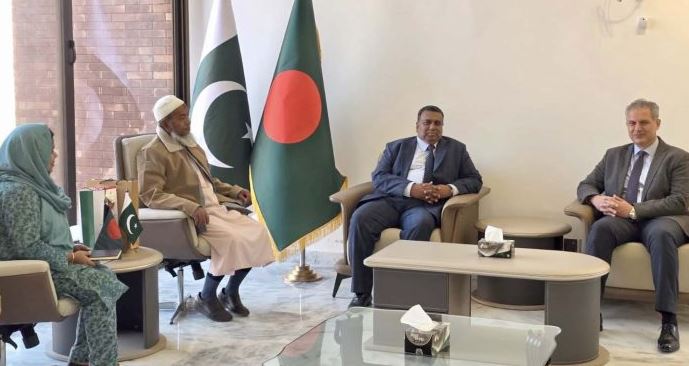
ISLAMABAD, 20 FEB (DNA) — The Jordanian Ambassador to Pakistan, Dr. Maen Khreasat, met with the High Commissioner of Bangladesh to Pakistan, H.E. Md. Iqbal Hussain Khan, in Islamabad. During the cordial meeting, Ambassador Khreasat extended warm congratulations to High Commissioner Khan on the successful conduct of Bangladesh’s general elections held on February 12, 2026, and the subsequent formation of the new government.

The elections marked a significant milestone following the 2024 political transition, with the Bangladesh Nationalist Party (BNP), led by Tarique Rahman, securing a landslide victory and a two-thirds majority in parliament. Tarique Rahman has since been sworn in as Prime Minister, heading the new administration.

The discussion highlighted the positive trajectory of bilateral relations and opportunities for enhanced cooperation between Jordan, Pakistan, and Bangladesh in areas of mutual interest, amid strengthening diplomatic ties in the region.The meeting underscores ongoing diplomatic engagement in Islamabad, where envoys frequently exchange views on regional developments and bilateral matters. — DNA

NA committee takes strong notice of hockey team issues

PHF announces squad for Azalan Shah Hockey Cup

ANSAR BHATTI

ISLAMABAD: The Sub-Committee of the National Assembly Standing Committee on Inter-Provincial Coordination (IPC) has taken strong notice of the issues faced by the national hockey team and announced that it will seek a detailed briefing on the matter.

The sub-committee meeting, held at Parliament House under the convenership of Mehreen Razzaq Bhutto, was attended by Pakistan Hockey Federation’s Ad-hoc President and Federal Secretary IPC Mohyuddin Wani, the Director General of the Pakistan Sports Board (PSB), and other committee members. Participants expressed deep concern over the current state of hockey in the country.

Mehreen Razzaq Bhutto said that what had happened to the national hockey team was unfortunate and that the committee would review who was actually responsible for the incompetence. “Our hearts beat for hockey just as they do for cricket. We will determine who is responsible for ruining our sports,” she remarked.

Committee member Khawaja Izhar ul Hassan stated that both the Pakistan Sports Board and the Pakistan Hockey Federation had failed in their responsibilities. He proposed that a meeting be arranged with the Prime Minister to discuss hockey-related matters and that the inquiry report submitted to the committee be presented.

During the session, PSB officials also briefed the committee on various development projects. They revealed that the Biomechanical Lab project, launched in 2014, is still incomplete. The hockey astroturf project in Gilgit took 15 years to complete, with its cost escalating from Rs35 million to Rs123 million.

The Narowal Sports City project, initiated in 2012, was halted in 2018. Its estimated cost surged from Rs732 million to Rs6 billion before being transferred to the Higher Education Commission. Officials said the increase in cost was due to efforts to upgrade the facility to international standards.

Reacting strongly, Mehreen Razzaq Bhutto termed the situation a “tragedy,” saying it was alarming that despite the passage of so many years, projects could not be completed. She noted that Narowal is the constituency of Ahsan Iqbal, yet the project remained unfinished. She added that despite having substantial funds, the Pakistan Sports Board had failed to complete key initiatives.

Trump sets 10-15 day deadline for Iran nuclear deal

Trump sets 10-15 day deadline for Iran nuclear deal

WASHINGTON, FEB 20: President Donald Trump has warned that Iran has no more than 10 to 15 days to strike a “meaningful” deal over its nuclear programme, or face what he described as “really bad things”.

Speaking in Washington, Trump signalled that the US could take action if talks fail, sharpening the stakes in an already tense stand-off.

His remarks come amid a major US military build-up in the Middle East, underscoring the urgency of the deadline and raising fears of fresh escalation if diplomacy falls short.

Amid a massive US military build-up in the Middle East that has fuelled fears of a wider war, Trump said negotiations with Iran to end the tense stand-off were going well but insisted Tehran has to reach a “meaningful” agreement.

“Otherwise bad things happen,” Trump, who has repeatedly threatened to attack Iran, told the first meeting of his Board of Peace in Washington.

Trump spoke of the US air strikes carried out in June, saying Iran’s nuclear potential had been “decimated”, adding “we may have to take it a step further or we may not.”

“You’ll be finding out over the next probably 10 days,” he said. Asked later to elaborate, he told reporters aboard Air Force One: “I would think that would be enough time, 10, 15 days, pretty much maximum.”

But he declined to be specific, except to warn again of “really bad things” and insist that Iran would have to make a deal one way or another.

‘Good talks’: Trump
Trump’s threats to bomb Iran, with the two sides far apart in talks on Tehran’s nuclear programme, have pushed up oil prices, and a Russian corvette warship on Thursday joined planned Iranian naval drills in the Gulf of Oman, a vital sea route for global energy.

Iranian and US negotiators met on Tuesday and Iranian Foreign Minister Abbas Araqchi said they had agreed on “guiding principles”. White House press secretary Karoline Leavitt said on Wednesday, however, that the two sides remained apart on some issues.

Trump said “good talks are being had”, and a senior US official said Iran would make a written proposal on how to address US concerns.

Trump called on Tehran to join the US on the “path to peace”.

“They can’t have a nuclear weapon, it’s very simple,” he said. “You can’t have peace in the Middle East if they have a nuclear weapon.”

Iran has resisted making major concessions on its nuclear programme, though insisting it is for peaceful purposes. The US and Israel in the past have accused Tehran of trying to develop a nuclear bomb.

Trump’s latest sabre-rattling came as he talked himself up as a man of peace in a long, meandering speech while hosting world leaders at the launch of his Board of Peace. He proposed the body in September when he announced his plan to end Israel’s war against Hamas in Gaza. He later expanded the board’s remit to tackle conflicts worldwide, prompting many key Western allies to stay away.

Earlier on Thursday, Russia warned against an “unprecedented escalation of tension” around Iran and urged restraint amid the US military build-up in the region, which a senior American official said should be complete by mid-March.

Threat of war
Trump has sent aircraft carriers, warships and jets to the region, raising the prospect of another attack on the Islamic Republic.

The United States and Israel bombed Iran’s nuclear facilities and some military sites last June. US Secretary of State Marco Rubio will meet Israeli Prime Minister Benjamin Netanyahu to discuss Iran on February 28, the senior US official said.

Washington wants Iran to entirely give up uranium enrichment, a process used to create fuel for atomic power plants but that can also provide material for a warhead.

The US and ally Israel also want Iran to give up long-range ballistic missiles, stop supporting groups around the Middle East and stop using force to quell internal protests.

Iran says it refuses to discuss issues beyond the atomic file, calling efforts to limit its missile arsenal a red line.

Satellite pictures have tracked both Iranian work to repair and fortify sites since last summer, showing work at both nuclear and missile sites, as well as preparations at US bases across the Middle East over the past month.

Iran’s joint exercise with Russia came days into an extended series of Iranian naval drills in the Gulf of Oman, with Iranian state television showing special forces units deployed on helicopters and ships.

In a sign of growing concern over the increased tensions, Poland on Thursday became the latest European country to urge its citizens to leave Iran, with Prime Minister Donald Tusk saying Poles may only have hours to evacuate.

Trump began threatening strikes on Iran again in January as Iranian authorities crushed widespread protests with deadly violence that left thousands dead across the country.

US thanks Pakistan for backing Trump’s Gaza plan and joining peace board

US thanks Pakistan for backing Trump's Gaza plan and joining peace board

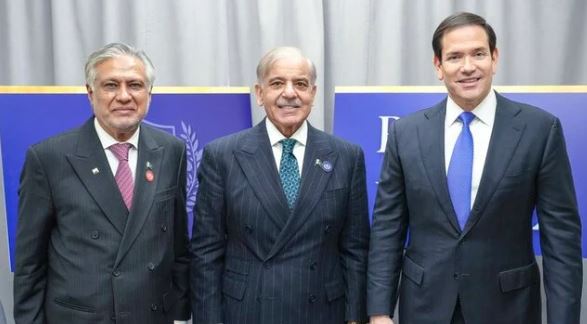
WASHINGTON, FEB 20: The United States has thanked Pakistan for supporting President Donald Trump’s Gaza peace plan and for joining the Board of Peace.

In a post on X, US State Secretary Marco Rubio shared an image with Prime Minister Shehbaz Sharif and Deputy Prime Minister and Foreign Minister Ishaq Dar.

Rubio mentioned in the post that he met PM Shehbaz to appreciate “Pakistan’s ongoing support of@POTUS’s Peace Plan for Gaza and for joining the Board of Peace.”

“In our meeting, we discussed the importance of our strategic relationship on critical minerals development and counterterrorism,” the state secretary added.

Responding to Rubio’s tweet, DPM Dar thanked the US secretary of State for what he described as productive discussions on key areas of mutual interest.

In a post on X, Dar said Pakistan values its longstanding relationship with the United States and appreciates the meaningful talks held on advancing peace, enhancing cooperation in counterterrorism efforts, and expanding bilateral economic and trade ties.

He added that Islamabad looks forward to further strengthening its strategic partnership with Washington across all areas of shared interest.

PM Shehbaz and other world leaders attended the inaugural meeting of the Trump-led BoP in Washington on Thursday.

Addressing the BoP meeting, PM Shehbaz described his participation as an honour and reaffirmed Pakistan’s commitment to lasting peace in Gaza.

The prime minister said the pursuit of sustainable peace in Gaza remains a shared mission, adding that the day marked a “golden chapter in history” for peace efforts in the Middle East.

He expressed hope that the initiative would succeed in achieving long-term stability in the war-hit region.

In his address, Trump also hailed PM Shehbaz and “tough, serious fighter” Chief of Defence Forces and Chief of the Army Staff Field Marshal Asim Munir.

“I like this man [PM Shehbaz] of Pakistan.”

Meanwhile, Federal Minister for Information Attaullah Tarar said Pakistan has received an extraordinary reception at the Board of Peace meeting in Washington.

In a video message, he said US President Trump appreciated Pakistan’s role in world peace, which increased Pakistan’s prestige at the global level.

The minister further said that due to a successful foreign policy, Pakistan is emerging as an important and effective player on the global stage.

The US president first proposed the board last September when he announced his plan to end Israel’s war in Gaza. He later made clear the board’s remit would be expanded beyond Gaza to tackle other conflicts worldwide.

PM holds cordial interactions with world leaders at BoP meeting
PM Shehbaz engaged in warm interactions with several world leaders, including US President Trump on the sidelines of the Board of Peace inaugural meeting.

In an informal meeting, Trump was seen cheerfully interacting with PM Shehbaz, as the two leaders expressed mutual goodwill and shook hands.

The US president also hugged the premier, highlighting that the exchange was exceptionally warm.

Moreover, PM Shehbaz also interacted with King of Bahrain Hamad bin Isa Al Khalifa, President of Azerbaijan Ilham Aliyev, President of Uzbekistan Shavkat Mirziyoyev, President of Kazakhstan Kassym-Jomart Tokayev and President of Indonesia Prabowo Subianto, who attended the event in Washington.

During the conversations, the leaders discussed important global and regional issues, displaying genuine warmth and and a spirit of close friendship.

Pakistan’s inclusion in the Board of Peace reflects the country’s growing success in diplomatic efforts and foreign policy, particularly its contributions toward establishing peace in Gaza, reconstruction efforts, and broader global peace initiatives.

Schoolboy dies after sudden nervous breakdown

Qazi Shoaib Khan

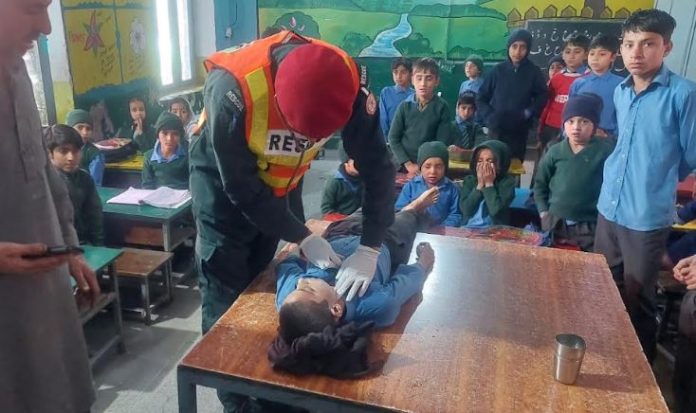
ATTOCK, FEB 20 /DNA/ – Ten year old primary school student died while studding in classroom at the outskirts primary school jalo within the jurisdiction of police station Hassanabdal on Friday morning.

The Spokesperson of rescue 1122 told media that 10 year old primary school student Abdul wahab was studying in the classroom when suddenly his nervous break down who was rushed to the Tehsildar Head quarter hospital Hassanabdal by the rescue 1122 in critical condition.

He was also provided first aid besides conducting his CPR but he couldn’t survive despite hectic efforts of the doctors. Later on, his dead body was handed over to his real heirs after getting his detailed autopsy.

Stay Connected

64FansLike
60FollowersFollow

Latest Reviews

Exchange Rates

USD - United States Dollar
EUR
1.14
GBP
1.34
AUD
0.70
CAD
0.71