Home Blog Page 240

Lahore seminar links Prophet’s “P.B.U.H” life with national cohesion goals

Lahore seminar links Prophet's

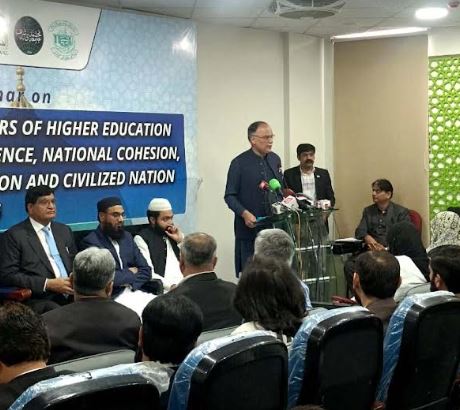
ISLAMABAD/LAHORE, FEB 21 /DNA/ – The Higher Education Commission (HEC), in collaboration with the Ministry of Planning, Development and Special Initiatives, University of Narowal, Islamic Research Institute of the International Islamic University Islamabad, and Jamia Muhammadi Sharif, organized a one-day seminar titled “The Role of National Seerah Chairs of HEC in Peaceful Co-Existence, National Cohesion, Solidarity, Social Reconstruction and Civilized National Building” at the Seerat Center, HEC, Lahore on Saturday.

The chief guest on the occasion was Federal Minister for Planning, Development and Special Initiatives, Prof. Ahsan Iqbal. Distinguished speakers who addressed the audience included Prof. Dr. Muhammad Zia Ul Haq, Vice Chancellor, University of Narowal; Prof. Dr. Ali Bin Khizran bin Muhammad Al ’Umri, Professor, King Khalid University, Abha, Saudi Arabia; Prof. Dr. Ahmed Saad Al Ahmed, President, International Islamic University Islamabad; Prof. Dr. Muhammad Akram, Director General, Islamic Research Institute; and Sahibzada Muhammad Qamar Ul Haq, President, Jamia Muhammadi Sharif.

Over 100 participants attended the seminar, including applicants for Seerah Chairs, professors from higher education institutions in Lahore, and faculty members from various colleges of the city.

The participants were divided into six thematic groups focusing on Leadership and Governance; Human Rights and Social Justice in the Perspective of the Seerah of the Holy Prophet (Peace be upon him); Business, Commerce and Property Rights in the Perspective of the Seerah; Education and Knowledge in the Perspective of the Seerah; Gender Studies, Women’s Rights, and Social Welfare in the Perspective of the Seerah; and Global Peace, Interfaith and Communal Harmony, and Sustainable Development in the Perspective of the Seerah.

In his keynote address, Prof. Ahsan Iqbal emphasized that solutions to contemporary challenges can be found in the light of the Seerah of the Holy Prophet Muhammad (Peace be upon him). He expressed the hope that the younger generation would not only study and admire the Seerah but would integrate its teachings into their daily lives.

The Minister shared that under each Seerah Chair, leadership campuses, research programs, and student forums would be established to institutionalize scholarly engagement. He noted that Seerah Chairs place a significant responsibility on universities to connect the teachings of the Seerah with contemporary global challenges, including interfaith harmony, social justice, and sustainable development.

Referring to national development frameworks such as Vision 2025 and Uraan Pakistan, the Minister stated that true advancement is not confined to infrastructure projects like motorways and power plants, but also encompasses social harmony, emotional stability, moral strength, and wisdom.

At the closing of the seminar, Dr. Muhammad Irfan Sheeraz, Deputy Director, Seerat Center Lahore, on behalf of the Higher Education Commission, expressed his sincere gratitude to all the distinguished guests and participants for their presence and valuable contributions to the event.

The seminar concluded with the exchange of souvenirs among the dignitaries, followed by a group photograph commemorating the occasion.

President, PM strongly condemn terrorist attack on security forces in Bannu

President, PM strongly condemn terrorist attack on security forces in Bannu

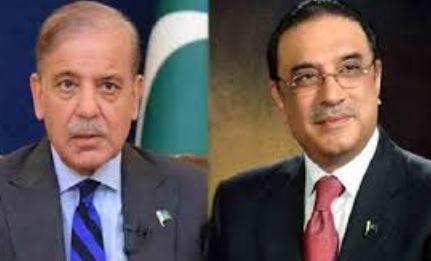
ISLAMABAD, Feb 21 (DNA): President Asif Ali Zardari and Prime Minister Muhammad Shehbaz Sharif, Saturday, strongly condemned a terrorist attack of Fitna al Khwarij on security forces’ convoy in District Bannu, Khyber Pakhtunkhwa.

The president and the prime minister expressed their deep sorrow and grief over the martyrdom of Lieutenant Colonel Shahzada Gul Faraz and Sepoy Karamat Shah.

The president said that the great sacrifices of their martyrs were a national asset, President’s Secretariat Media Wing said in a press release.

The president and the prime minister conveyed their heartfelt condolences to the families of the martyrs and prayed for the elevation of their ranks in Jannah and for grant of patience and strength to the bereaved families.

The president also reaffirmed the resolve that operations against Fitna al-Khwarij would continue without discrimination and with full force, emphasizing that the nation would be protected at all costs.

The president further said that terrorists who violated the sanctity of the holy month of Ramazan had no connection with Islam.
The prime minister commended the security forces for foiling the nefarious designs of Fitna al-Khwarij by eliminating five terrorists during the operation, PM Office Media Wing said in a press release.

He further observed that act of terrorism carried out by Fitna al-Khawarij, during the blessed month of Ramazan, was proof that terrorists had no religion.

The prime minister said that the security forces acted swiftly, saving the city from major destruction, adding that under the vision of Azm-e-Istehkam, the security forces were achieving major successes in the fight against terrorism.

He further said the entire nation stood with Pakistan’s armed forces in this war against terrorism.
The prime minister reaffirmed that they were determined to completely eradicate all forms of terrorism from the country.

Aurangzeb meets US Commerce Secretary in Washington

Aurangzeb meets US Commerce Secretary in Washington

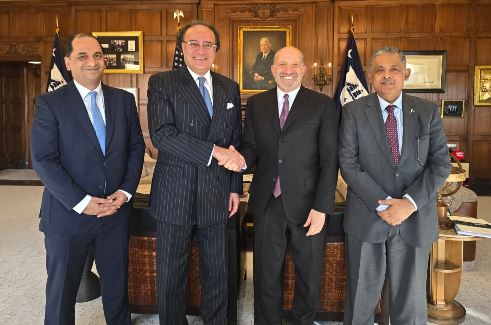
ISLAMABAD, FEB 21 /DNA/ – Pakistan and the United States have agreed to reset their economic partnership with a renewed focus on trade and investment, following a high-level meeting between Federal Minister for Finance and Revenue Senator Muhammad Aurangzeb and US Commerce Secretary Howard A. Lutnick in Washington D.C.

The meeting, held at the Department of Commerce, focused on deepening bilateral economic ties and exploring new avenues for cooperation. Senator Aurangzeb emphasized Pakistan’s commitment to structural reforms aimed at creating a business-friendly environment to attract foreign direct investment.

Discussions centered on diversifying Pakistan’s export base to the United States, moving beyond traditional textiles into sectors such as information technology, agriculture, and value-added manufacturing. The Pakistani delegation briefed the US side on recent improvements in the country’s macroeconomic indicators and the government’s priority areas for economic revival.

Commerce Secretary Lutnick acknowledged Pakistan’s potential as a trade partner and expressed interest in strengthening commercial linkages. Both sides agreed to work towards facilitating greater market access and enhancing private sector collaboration.

The meeting was also attended by the Commerce Secretary of Pakistan and Pakistan’s Ambassador to the United States. The delegation’s visit is part of a broader effort to engage with US policymakers and the business community to project Pakistan as an emerging investment destination.

25 Sri Lankan students arrive in Pakistan for higher studies

25 Sri Lankan students arrive in Pakistan for higher studies

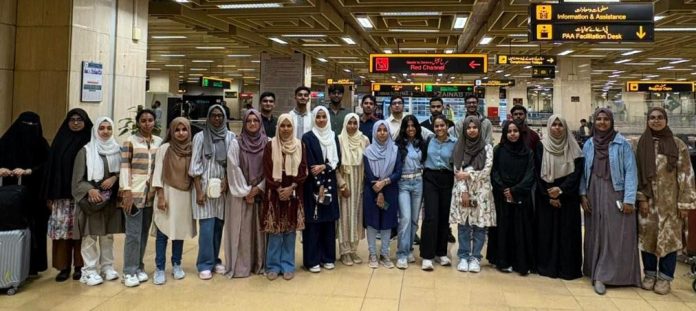
ISLAMABAD, FEB 21 /DNA/ – Twenty-five Sri Lankan students have arrived in Pakistan to pursue MBBS studies at leading medical universities under the Allama Iqbal Scholarships for Sri Lankan Students. The students were received upon their arrival at Jinnah International Airport, Karachi.

These fully funded scholarships form part of the broader Pak–Sri Lanka Higher Education Cooperation Programme, administered by the Higher Education Commission (HEC) of Pakistan.

Under this initiative, the students will undertake their medical education at premier institutions, including Dow University of Health Sciences (DUHS) Karachi and Liaquat University of Medical & Health Sciences (LUMHS), Karachi. Both institutions are duly accredited by the Sri Lankan Medical Council (SLMC), ensuring international recognition of the degrees.

In addition to the newly arrived cohort, over 430 Sri Lankan students are currently enrolled in Pakistani universities under this scholarship programme across a wide range of disciplines, including Medicine, Engineering, Business Studies, Natural Sciences, and Social Sciences.

All students have been selected through a rigorous and competitive process, in accordance with the eligibility criteria for admission to Pakistani higher education institutions. Under the same scholarship program, one hundred more Sri Lankan students are scheduled to arrive in Pakistan in the coming weeks.=DNA

==========

US envoy says it would be ‘fine’ if Israel takes over all of Middle East

US envoy says it would be 'fine' if Israel takes over all of Middle East

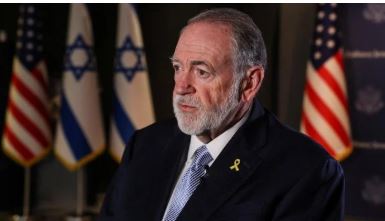
WASHINGTON, FEB 21: US envoy Mike Huckabee suggested he would not object if Israel expanded across much of the Middle East, framing the issue as what he called the Jewish people’s right to the land, Al Jazeera reported.

In an interview with conservative commentator Tucker Carlson aired on Friday, Huckabee was pressed on Israel’s geographical borders, which he said are rooted in the Bible.

Carlson cited a verse promising land to the descendants of Abraham, describing a span from the Euphrates River to the Nile River, a stretch that would include modern-day Lebanon, Syria, Jordan and parts of Saudi Arabia.

“It would be fine if they took it all,” Huckabee said, adding when challenged that Israel was not seeking to “take it over” and “they’re not asking to take it over.”

RCCI president urges US-Pakistan economic partnership push

RCCI president urges US-Pakistan economic partnership push

RAWALPINDI, FEB 21 /DNA/ – President of the Rawalpindi Chamber of Commerce & Industry (RCCI), Usman Shaukat, has emphasized the need to translate the current strong diplomatic relations between Pakistan and the United States into a comprehensive economic partnership. Speaking on a private television program, he stated that structural reforms can convert existing diplomatic goodwill into tangible economic outcomes.

He noted that an RCCI trade delegation recently concluded a highly productive visit to Washington, D.C., New York City, and New Jersey, aimed at advancing practical measures to expand bilateral trade, investment, and long-term commercial cooperation between Pakistan and the United States.

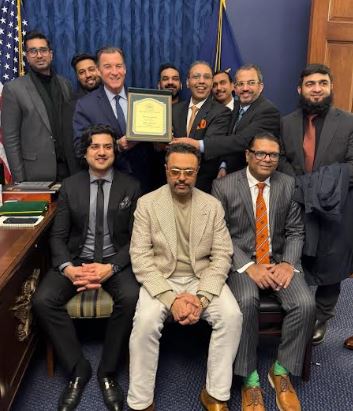
Led by RCCI President Usman Shaukat, the delegation held meetings with Congressional Pakistan Caucus Co-Chairs Jack Bergman and Tom Suozzi, as well as Hank Johnson, Jon Ossoff, and Chris Van Hollen. Key engagements with Greater New York Chamber of Commerce, Open NY, and Chamber of Industry Association New Jersey reflected strong mutual interest in deepening economic cooperation.

President Shaukat expressed appreciation for the support of Farooq Mughal for facilitating important engagements with U.S. Congressional representatives in Washington, D.C. He also acknowledged the efforts of Pak Steel CEO Hassan Farid in advocating for a transition toward an investment-driven bilateral partnership.

Highlighting the economic outlook, Shaukat noted that Pakistan–U.S. bilateral trade currently exceeds USD 10 billion, with textile exports serving as a backbone of trade. However, he emphasized that the existing volume remains far below potential and should be tripled through diversification into high-value sectors, regulatory reforms, and enhanced investor facilitation.=DNA

Trump Tariffs Ruled Unlawful

Qamar Bashir

Qamar Bashir

On February 20, 2026, the United States Supreme Court delivered a historic rebuke to presidential power, striking down the sweeping tariffs imposed under the International Emergency Economic Powers Act (IEEPA). By a 6–3 vote, the Court ruled that the 1977 law—designed to address extraordinary foreign threats during national emergencies—does not authorize a president to impose broad, open-ended tariffs. Chief Justice John Roberts wrote that while the president may “regulate” commerce under IEEPA, the statute contains no explicit reference to tariffs or duties. To read such vast taxing authority into two scattered words would, the Court concluded, represent a transformative expansion of executive power.

The decision did not touch tariffs imposed under other statutes, but it invalidated the most sweeping component of President Donald Trump’s tariff regime. Importantly, the Court declined to rule on whether or how the federal government must refund the enormous sums already collected. That question now looms as the most explosive consequence of the ruling.

For President Trump, tariffs were not merely policy—they were the centerpiece of his election campaign and a defining feature of his mandate. He framed them as a weapon to reclaim economic leverage from countries he argued had exploited American workers and industries. The message resonated with voters who felt the brunt of globalization. Tariffs were presented as a tool to rebuild manufacturing, force fair trade, and reassert American dominance.

Yet the mechanics of tariffs tell a different story. Tariffs are not paid by foreign governments; they are paid at U.S. ports by American importers. Over time, those costs either reduce corporate profit margins or are passed on to consumers in the form of higher prices. By late 2025 and early 2026, estimates suggested that more than $200 billion had been collected under the IEEPA-based tariffs alone. That staggering figure now hangs in legal limbo.

If the courts ultimately require refunds, the financial implications will be enormous. Even if a conservative estimate of $160–175 billion is used, the repayment obligation would constitute one of the largest refund processes in modern U.S. fiscal history. The U.S. Treasury would face a substantial budgetary shock. For small and medium-sized businesses, however, refunds could represent desperately needed relief.

Consider the arithmetic: if $160 billion were distributed across even 200,000 importing firms, the average recovery would approach $800,000 per business. For many small manufacturers, wholesalers, and retailers operating on thin margins, such sums could mean rehiring workers, paying down debt, restoring inventory levels, or reinvesting in domestic operations.

Consumers, too, stand to benefit—though less directly. If even half of the tariff burden was passed on through price increases, households may have absorbed tens of billions of dollars in higher costs across groceries, appliances, auto parts, clothing, and everyday goods. The removal of unlawful tariffs could reduce price pressures and contribute to a modest easing of inflationary strain. While not a silver bullet, it would remove a structural cost layer embedded in supply chains.

Internationally, the ruling has complex implications. Countries such as Canada, Mexico, China, and members of the European Union were among the largest trading partners affected by the IEEPA tariffs. While they will not receive refund checks—because tariffs were paid by U.S. importers—the decision reduces friction in trade relationships. Canada, whose political relationship with Washington had grown tense over tariff disputes, may see this as an opportunity to recalibrate economic ties. European officials have already emphasized stability and predictability as priorities.

China, the largest source of targeted tariff revenue, will interpret the ruling as a constraint on unilateral American economic pressure. However, the decision does not eliminate other statutory tools such as Section 232 or Section 301, which remain available for targeted trade actions. Thus, the global message is not that America is retreating from trade leverage, but that its use must operate within clearer legal boundaries.

Domestically, the political impact is profound. Trump’s tariffs symbolized strength to his supporters and disruption to his critics. Now, the Supreme Court has reframed the issue from policy preference to constitutional authority. Democrats are likely to argue that the president imposed an unlawful tax on American businesses and consumers. Republicans may counter that the Court has weakened the executive’s ability to defend national economic interests.

Midterm elections will test which narrative prevails. If businesses begin receiving refunds and consumer prices ease, opponents of the tariff strategy may gain momentum. If, however, the administration pivots successfully to alternative statutory authorities and reestablishes elements of its trade framework, Trump may argue that the Court merely required procedural adjustments rather than policy abandonment.

Financial markets reacted swiftly and positively to the ruling, with equities rising on expectations of reduced trade uncertainty. Investors interpreted the decision as a move toward stability. Markets favor predictability, and the invalidation of sweeping emergency tariffs reduces the risk of abrupt cost shocks.

The ruling may also ripple through broader geopolitical calculations. In disputes involving Iran, Ukraine, NATO commitments, and trade alignments, allies and adversaries alike will note that American executive power is subject to judicial limits. The image of unrestrained economic unilateralism has been tempered. That could encourage diplomatic recalibration on multiple fronts.

Yet this is far from the end of tariff politics. Several federal statutes still grant the president authority to impose tariffs under defined conditions. Congress itself could legislate new trade measures. Justice Brett Kavanaugh’s dissent emphasized that the ruling might not significantly constrain future tariff actions if grounded in other statutory frameworks. In other words, the strategy may evolve rather than disappear.

The broader lesson extends beyond trade. The Court’s decision underscores a foundational principle of the American constitutional system: Congress holds the power to tax, and any delegation of that power must be explicit and limited. Emergency authority cannot become a blank check for transformative economic policy.

This moment may serve as a wake-up call. For the presidency, it is a reminder that campaign mandates must operate within constitutional boundaries. For Congress, it is a challenge to reclaim and exercise its Article I powers responsibly. For the United States globally, it signals that even in matters of economic warfare, the rule-based system still functions.

Trade disputes, geopolitical tensions, and domestic political battles will continue. But the Supreme Court’s ruling has drawn a bright line: power, however forcefully claimed, must rest on lawful authority. In doing so, the Court has not merely reshaped a tariff regime. It has reaffirmed the principle that in the United States, economic strategy—no matter how popular—cannot outrun the Constitution.

Qamar Bashir

Press Secretary to the President (Rtd)

Former Press Minister, Embassy of Pakistan to France

Former Press Attaché to Malaysia

Former MD, SRBC | Macomb, Michigan

ICCI stands shoulder to shoulder with young entrepreneurs: Sardar Tahir Mehmood

ICCI stands shoulder to shoulder with young entrepreneurs: Sardar Tahir Mehmood

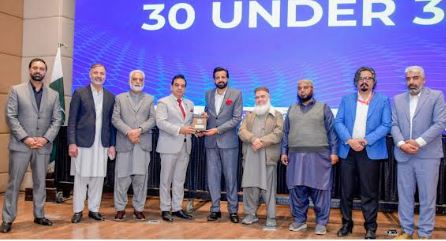
ISLAMABAD, FEB 20: /DNA/ – The Islamabad Chamber of Commerce and Industry (ICCI) hosted the “Connected Pakistan – 30 Under 30” ceremony, celebrating the achievements of young innovators and reaffirming its strong commitment to empowering youth-driven entrepreneurship and advancing Pakistan’s digital future.

The  young honorees were lauded as ambassadors of a progressive, tech-driven, and globally competitive Pakistan. Their achievements were termed not only personal milestones but valuable national assets contributing to economic growth and global recognition.

Addressing the closing session, ICCI leadership expressed immense pride and optimism, stating that the event was not merely a celebration of individual excellence but a celebration of a powerful movement driven by bold ideas, fearless actions, and unwavering belief in Pakistan’s limitless potential.

The ceremony highlighted exceptional young change-makers who are redefining Pakistan’s landscape in technology, entrepreneurship, digital transformation, and social enterprise. It was emphasized that these achievers are not waiting for change but actively creating it, proving that youth, when equipped with innovation and vision, is a national strength.

Reaffirming the Chamber’s commitment to innovation-led growth, Sardar Tahir Mehmood outlined the ongoing initiatives, including strengthening chamber-academia linkages to align universities with industry needs, facilitating incubation and mentorship platforms for startups, advocating policy reforms to enhance ease of doing business for young entrepreneurs, and building sustainable ecosystems where ideas can transform into thriving enterprises.

The ICCI President  also commended the key contributors who played a pivotal role in organizing the successful event, including Chaudhry Muhammad Javed Iqbal, Vice Chairman of Computer Hardware Association Pakistan;  Abrar ul Haque, Executive Director of Computer Hardware Association of Pakistan;  Aizaz Mohammad, Convener ICCI IT, Telecom & Computer Hardware Committee; Dr. Muhammad Usman, Convener ICCI Software Development Committee; and Syed Arslan Ali Shah, CEO and Founder of Connected Pakistan.

ICCI Vice President Irfan Chaudhry, Executive member Zulqurnain Abbasi and a large number of young entrepreneurs attended the event.

Mohsin Naqvi’s leadership accelerates development across Islamabad

Mohsin Naqvi's leadership accelerates development across Islamabad

ISLAMABAD, FEB 20 /DNA/ – Mohsin Naqvi has emerged as a man of action whose dynamic leadership at the Ministry of Interior and oversight of the Capital Development Authority (CDA) has accelerated Islamabad’s transformation into a modern, efficient, and sustainable capital. Popularly termed “Mohsin Speed,” his governance style reflects decisiveness, strict monitoring, and timely completion of projects yielding tangible improvements in planning, infrastructure, service delivery, and law enforcement.

Islamabad holds immense importance as the federal capital of Pakistan, symbolizing the unity, faith and discipline, sovereignty, and administrative authority of the state. As the seat of the Government of Pakistan, it houses the Presidency, Parliament, Supreme Court, Prime Minister’s Office, and key federal ministries, making it the center of national decision making and governance.

Islamabad located strategically at the foothills of the Margalla Hills, which was purposefully developed to serve as a planned and modern capital of Pakistan. Unlike many organically grown cities, it was designed with a structured master plan that ensures organized sectors, green belts, and efficient infrastructure. This planned character reflects Pakistan’s vision for orderly development and institutional stability.

As a diplomatic hub, Islamabad hosts foreign embassies, international organizations, and global conferences representing Pakistan on the world stage. Major national institutions, policy-making bodies, reinforcing its role in safeguarding national interests and maintaining law and order.

Islamabad is also a symbol of cultural harmony and national identity. Citizens from all provinces and regions reside and work here, making it a microcosm of Pakistan’s diversity. Its educational institutions, research centers, and administrative academies contribute significantly to policy development and human resource capacity building.

Furthermore as the federal capital, Islamabad sets standards in governance, urban planning, environmental sustainability, and public service delivery for the rest of the country. Its development reflects the state’s commitment to progress, transparency, and modernization.

In essence, Islamabad is not merely a city; it is the heart of Pakistan, as well as diplomatic face, and administrative backbone of Pakistan, playing a pivotal role in shaping the nation’s present and future.

Under the dynamic and visionary leadership of Mohsin Naqvi’s approach has been revitalizing Islamabad’s master plan through focused sector development. Long-pending infrastructure gaps in developing sectors have been addressed through accelerated provision of roads, drainage systems, streetlights, and utility networks. Emphasis on planned expansion has ensured that new sectors as well as model projects like Margalla Enclave are not merely residential and commercial extensions but are being developed with full pace to make them fully functional urban units equipped with essential services.

Simultaneously, older sectors have undergone rehabilitation through road carpeting, sewerage upgrades, and restoration of parks, lakes, food streets, parking plazas, and construction of sports and recreational facilities especially construction of Cricket Stadium of international standards. This planned and innovated developed strategy has helped maintain Islamabad’s planned character while accommodating increasing population growth of Islamabad.

The Construction of Roads, Interchanges, underpasses, bridges and Pedestrian Infrastructure has been executed with unprecedented pace. Construction of new roads, widening of existing arteries, and remodeling of congested intersections have significantly improved traffic flow. Underpasses and interchanges at key junctions have reduced bottlenecks and commuting time.

The uplifting   and construction of

Pedestrian bridges have been enhanced safety and urban mobility, reflecting an inclusive planning philosophy. These projects not only facilitate smooth traffic movement but also contribute to economic productivity and public convenience.

Uplifting of Important Buildings and Public Spaces especially

Urban renewal has extended to the beautification and upgrading of prominent public buildings, including the iconic Jinnah Convention Centre. Renovation and modernization efforts have enhanced its functionality for national and international events, projecting Islamabad as a capable host city.

Public spaces, avenues, and roundabouts have been landscaped and illuminated, reinforcing the city’s aesthetic appeal. Such initiatives have elevated Islamabad’s international image and strengthened civic pride.

The Transformation of CDA Nursery into Gardenia Hub is a very

notable initiative under Mohsin Naqvi’s leadership which has been transforming the CDA nursery into a vibrant Gardenia Hub. This initiative has promoted horticulture, environmental awareness, and public engagement with green spaces. By integrating landscaping innovation with commercial and recreational value, the Gardenia Hub symbolizes Islamabad’s commitment to sustainability and environmental stewardship. Similarly,

the Solid Waste Management and Eid Operations were planned and executed very successfully which have been another key area of success. Modernized waste collection systems, mechanized cleaning, and strict monitoring have future ensured cleaner streets and neighborhoods. Special arrangements during religious ceremonies and festivals particularly Eid-ul-Fitr and Eid-ul-Adha—have demonstrated excellent administrative preparedness. During Eid-ul-Adha, when waste management becomes especially challenging, coordinated operations of CDA ensured swift disposal of animal remains, preventing health hazards and maintaining sanitation standards.

The

Establishment of Islamabad Water Agency is an other major step of CDA under the leadership of Mohsin Naqvi in

Recognising growing water demands.  This strategic step aims to address both present and future water needs through integrated planning, resource management, and infrastructure development.

The agency focuses on reducing leakages, improving supply networks, introducing modern metering systems, and exploring new water sources. By institutionalizing water governance, Islamabad is better positioned to achieve long term water security. Similarly,

Digitization and Computerization of Land Records of CDA and ICT will be further helpful in improving

Transparency and efficiency

through digitization initiatives. Computerization of land records will also help in improving performance as well as minimising fraud, expedited property transfers, and enhanced investor confidence. Online approval systems for building maps, approval of layout plans and issuances of NOC of buildings as well as other projects will also help in reducing bureaucratic delays and improved service delivery through CDA’s one window facilitation Center.  Moreover,

The digital transformation of CDA records and information further aligns with the broader vision of e-governance, ensuring that citizens can access essential services conveniently and transparently. Most importantly, there is

Zero Tolerance policy across the board policy and actions are on full pace against Illegal encroachment, Constructions and Societies on the directions of Mohsin Naqvi.

A strict, across-the-board policy against illegal buildings and unauthorized housing societies has been enforced. Under a zero-tolerance approach, enforcement operations have been conducted without discrimination, reinforcing rule of law. This decisive action has safeguarded urban planning integrity and protected citizens from fraudulent schemes.

The

Maintenance of Law and Order

is the top most priority of Interior Minister, Mohsin Naqvi for a safe, liveable, prosperous Islamabad. Enhanced coordination among law enforcement agencies, expansion of surveillance systems through safe city cameras across Islamabad and proactive policing and patrolling have contributed to a stable environment conducive to economic activity and diplomatic engagements.

The visible transformation of Islamabad under Mohsin Naqvi’s leadership has drawn appreciation from the Honourable Prime Minister of Pakistan and various stakeholders across society. The concept of “Mohsin Speed” has become synonymous with efficiency, accountability, and results-oriented governance

Through strategic planning, infrastructure development, environmental stewardship, digital reforms, and strict law enforcement, Mohsin Naqvi has demonstrated that decisive leadership can bring rapid and sustainable change. His stewardship of the Capital Development Authority (CDA) and the Ministry of Interior reflects a comprehensive vision for making and transforming Islamabad a beautiful, clean, green, safe and modern capital of the world. 

The Islamabad today stands not only as Pakistan’s administrative center but increasingly as a model of urban transformation, shaped by commitment, innovation, and the action-oriented governance widely recognized as “Mohsin Speed.”

Australia finish T20 WC 2026 campaign with victory over Oman

Australia finish T20 WC 2026 campaign with victory over Oman

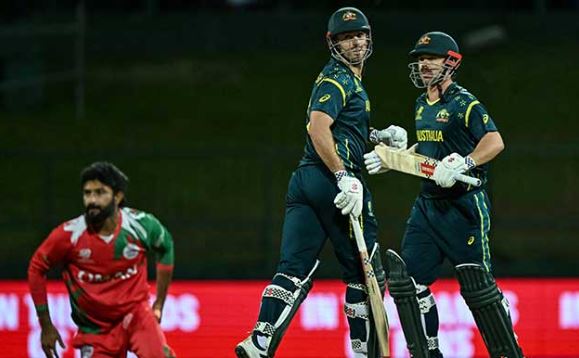
PALLEKELE, FEB 20: Australia grabbed a dominant nine-wicket win over Oman as both sides wrapped up their ICC Men’s T20 World Cup 2026 campaigns with today’s (Friday) group-stage match at the Pallekele International Cricket Stadium in Sri Lanka’s Kandy.

Adam Zampa’s four-wicket haul and Mitchell Marsh’s unbeaten half-century powered Australia to a convincing victory.

Set to chase a modest 105, Australia made light work of the target as they struck the winning runs for the loss of just one wicket and 62 balls to spare.

Leading the way for the 2021 champions was their captain, Marsh, who top-scored with an unbeaten half-century, making 64 off 33 deliveries, studded with seven fours and four sixes.

Marsh was significantly supported by opening partner Travis Head, who chipped in with a 19-ball 32, as the duo put together 93 runs in eight overs until the left-hander was caught and bowled by Shakeel Ahmed.

Following Head’s dismissal, Josh Inglis ensured a dominant finish by smashing 12 not out from just six deliveries.

Australia captain Mitchell Marsh’s decision to field first paid dividends as his team’s bowling unit booked Oman for a modest 104 in 16.2 overs.

Oman got off to a shaky start to their innings as they lost three wickets inside five overs with just 39 runs on the board.

Following the early stutter, middle-order batter Wasim Ali walked out to bat at No 5 and took the reins of Oman’s batting expedition with a cautious knock.

The left-handed batter oversaw Oman’s innings until the 16th over, which saw him fall victim to Glenn Maxwell after top-scoring with a 33-ball 32, featuring four fours.

Besides him, only captain Jatinder Singh (17), Hammad Mirza (16) and Karan Sonavale (12) could amass double figures against the disciplined Australia bowling attack, led by Zampa, who returned economical figures of 4/21 in his 3.2 overs.

Zampa’s efforts were backed by Maxwell and Xavier Bartlett, who bagged two wickets each, while Marcus Stoinis and Nathan Ellis chipped in with one scalp apiece.

Adam Zampa was named Player of the Match after taking four wickets for just 21 runs.

It is pertinent to mention that both Australia and Oman are already out of the Super Eights contention following equally disappointing campaigns.

The 2021 champions are fourth in Group B standings with just two points in three matches, suffering defeats at the hands of Zimbabwe and Sri Lanka, while Oman are at the bottom, having lost all three of their opening group-stage fixtures.

Stay Connected

64FansLike
60FollowersFollow

Latest Reviews

Exchange Rates

USD - United States Dollar
EUR
1.14
GBP
1.34
AUD
0.70
CAD
0.71