Home Blog Page 239

Islamabad, Dhaka commit to shared vision of regional prosperity

Islamabad, Dhaka commit to shared vision of regional prosperity

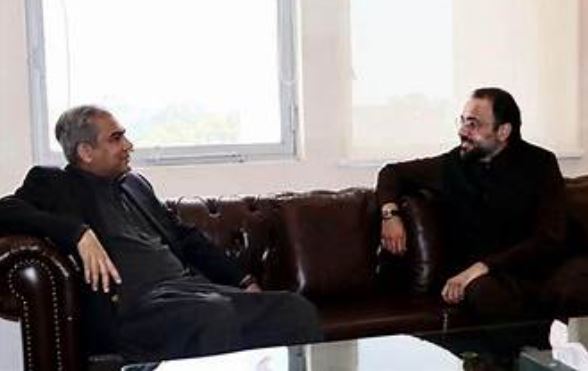
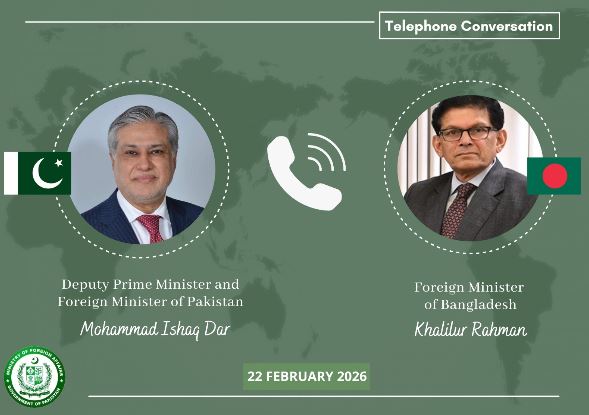
ISLAMABAD, Feb 22 /DNA/ – In a significant move to reset diplomatic ties, Deputy Prime Minister and Foreign Minister Senator Mohammad Ishaq Dar held a telephonic conversation with the newly appointed Foreign Minister of Bangladesh, Dr. Khalil ur Rehman, on Saturday.

During the call, Foreign Minister Dar extended his heartfelt felicitations to Dr. Rehman on assuming his new role. The discussion focused on the mutual desire of both nations to strengthen bilateral relations, rooted in a shared vision for regional peace, stability, and prosperity.

According to an official statement, the two Foreign Ministers agreed to expand cooperation across diverse sectors of mutual interest. They also resolved to work together more closely in multilateral fora, aiming to build a forward-looking and sustainable partnership for the peoples of Pakistan and Bangladesh.

Sadqa-e-Fitr fixed at Rs 300 minimum

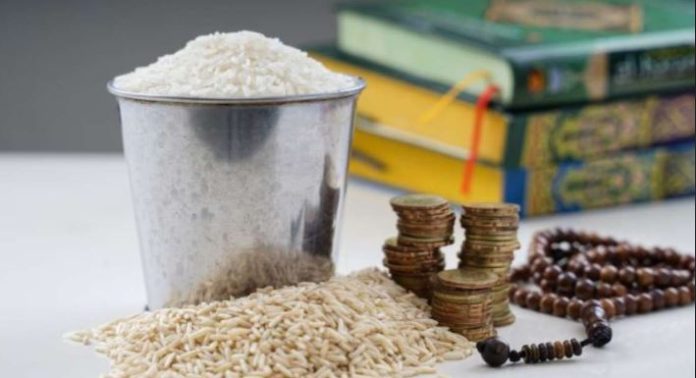
ISLAMABAD, 22 FEB (DNA) — The minimum amount of Sadqa-e-Fitr and Fidya for this year has been set at Rs 300 per person, with rates determined according to food categories and prevailing market prices.

For those opting to pay on the basis of government-subsidised flour, the amount is Rs 200, while Rs 1,100 applies on barley, Rs 1,600 on dates, Rs 3,800 on raisins, and Rs 5,400 on dried grapes (munqqa).

The fidya for 30 missed fasts has been set at Rs 9,000 on wheat, Rs 33,000 on barley, Rs 48,000 on dates, Rs 114,000 on raisins, and Rs 16,200 on dried grapes (munqqa). For those opting to pay on the basis of government-subsidised flour, the amount stands at Rs 6,000.

Chairman of the Council of Islamic Ideology (CII) Dr Raghib Hussain Naeemi, in a statement said the prescribed amounts were fixed in line with Shariah principles to facilitate the faithful in fulfilling their obligations ahead of Eid-ul-Fitr.

Dr Naeemi also explained the expiation for deliberately breaking a fast, stating that it requires either observing 60 consecutive fasts or feeding 60 needy persons with two meals each. He elaborated on the nisab in terms of weight, noting that for wheat it is half a sa‘a (approximately 2 kg as a precaution), while for barley, dates, and dried grapes (munqqa) it is one sa‘a (approximately 4 kg as a precaution).

The CII chief advised people living outside Punjab to calculate the amount of Sadqa-e-Fitr in keeping with the prices prevailing in their respective provinces.He emphasized that Sadqa-e-Fitr is obligatory upon every Muslim, underscoring its role in supporting the needy during the festive occasion. — DNA

Pakistan simplifies verification process for Spain residency applicants

Pakistan simplifies verification process for Spain residency applicants

ISLAMABAD, FEB 22 /DNA/ – ‎A high-level special meeting regarding the Spanish Resident Card was held at the Ministry of Interior, where important decisions were made. The meeting was co-chaired by Federal Minister for Interior Mohsin Naqvi and Federal Minister for Overseas Pakistanis Salik Hussain.

‎The Ministry of Interior reaffirmed its commitment to providing legal protection and facilities to overseas Pakistanis. The Ministry of Foreign Affairs assured full support for the implementation process of the Spanish Resident Card.

‎Pakistan’s Ambassador to Spain, Dr. Zahoor Ahmed, gave a detailed briefing on the Spanish Resident Card. It was clarified that this policy does not apply to individuals seeking political asylum. The provision of a character certificate and other required documents has been made mandatory.

‎According to the briefing, eligible individuals will initially be issued a resident card valid for one year. After completing seven to eight years, the pathway to permanent residency and citizenship will be opened.

‎During the meeting, it was decided that the document verification process will be expedited to prevent difficulties for applicants. Separate character certificates will not be accepted; instead, a single national character certificate will be issued by the National Police Bureau.

‎Federal Interior Minister Mohsin Naqvi directed that the verification process be simplified and accelerated to facilitate applicants and ensure complete support at every level.

‎Federal Minister for Overseas Pakistanis Salik Hussain welcomed the development, stating that granting legal status to thousands of Pakistanis is a positive step.

‎Pakistan’s Ambassador to Spain Dr. Zahoor Ahmed, the Consul General in Barcelona, and the Community Welfare Attaché participated in the meeting via Zoom.

‎Minister of State for Interior Talal Chaudhry, Secretary Interior, Secretary Overseas Pakistanis, Additional Secretary Interior, Chairman NADRA, Director General FIA, Director General Passports, and other senior officials also attended the meeting.

Pakistan carries out precision strikes on seven militant hideouts along Afghan border

Pakistan carries out precision strikes on seven militant hideouts along Afghan border

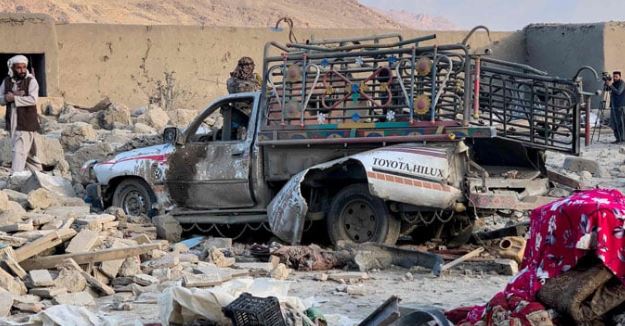
ISLAMABAD: Pakistan carried out intelligence-based strikes targeting seven terrorist camps and hideouts belonging to Fitna al Khawarij (FAK), its affiliates and the Daesh-Khorasan along the Pakistan-Afghanistan border in response to recent suicide attacks, the government said early Sunday.

According to the Ministry of Information, the operation was conducted “with precision and accuracy” as a retributive response to suicide bombing incidents in Islamabad, Bajaur and Bannu during the holy month of Ramadan.

“The suicide attacks were carried out by khawarij on the direction of Afghanistan-based leadership and handlers,” the ministry said, adding that responsibility for the attacks was also claimed by Afghanistan-based Tehreek-e-Taliban Pakistan (TTP) linked to FAK and Daesh.

The ministry said despite repeated requests urging the Afghan Taliban authorities to take verifiable measures to stop the use of Afghan territory by terrorist groups and foreign proxies, “no substantive action was taken.”

It said Pakistan has always worked for peace and stability in the region, but “the safety and security of our citizens remains our top priority.”

Pakistan expects the interim Afghan government to fulfil its obligations and prevent the use of its territory by terrorist groups against Pakistan, the statement said.

The ministry also called on the international community to play a constructive role by encouraging Afghan authorities to honour their commitments under the Doha Agreement to prevent the use of Afghan soil against other countries, saying such steps are vital for regional and global peace and security.

Sources say that an explosion targeted a militant hideout in the Barmal area of Afghanistan’s Paktika province, with jet aircraft carrying out an airstrike that destroyed militant infrastructure.

Following the strike in Paktika, another attack was reported in the Khogyani district of Nangarhar province, with further airstrikes later reported in the Ghani Khel, Behsud and Argoon areas. The number of possible militant casualties could not be confirmed, said Afghan media.

The airstrikes came hours after security forces gunned down five terrorists belonging to the India-backed Fitna al-Khawarij during an intelligence-based operation (IBO) in Khyber Pakhtunkhwa’s Bannu district, the military said.

However, two soldiers, including a lieutenant colonel, embraced martyrdom when their convoy was targeted by militants, according to the Inter-Services Public Relations (ISPR).

The military’s media wing stated on Saturday that the operation was conducted following reports of the presence of terrorists, including a suicide bomber.

A vehicle-borne suicide bomber was intercepted by the leading group, foiling his plan to target innocent civilians or law enforcement personnel in Bannu City and averting a major catastrophe, the military said.

During the operation, the terrorists were located, and after an intense exchange of fire, five militants were killed by the security forces. In a desperate act, the terrorists rammed an explosive-laden vehicle into one of the vehicles of the leading group.

“As a result, Lt Colonel Shahzada Gul Faraz (43), a resident of district Mansehra and a brave commanding officer known for his daring leadership at the front, embraced shahadat along with Sepoy Karamat Shah (28), a resident of district Peshawar,” the ISPR added.

It said that the Afghan Taliban regime has once again failed to prevent militants from using Afghan soil for terrorist activities inside Pakistan, even during the holy month of Ramadan.

“Pakistan will not exercise any restraint, and operations will continue against the perpetrators of this heinous and cowardly act, irrespective of their location,” the ISPR added.

Meanwhile, confirming the strikes inside Afghanistan, Federal Minister for Parliamentary Affairs Dr Tariq Fazal Chaudhry, in a post on X, said that “those who weave conspiracies against Pakistan have once again received a clear message that this land is not weak, it has been strengthened by the blood of martyrs”.

“The timely and effective action of the Pakistan Air Force on the hideouts of the Fitna al Khawarij, who were nurtured under Indian patronage in Afghanistan, is actually the revenge of those innocent lives that were thrown into the fire of terrorism.”

“This was not just an operation, it was the answer to the tears of every mother who sacrificed her son for the homeland, it was the defence of the dreams of every child who wants a safe Pakistan,” added the minister.

Islamabad-Kabul at odds
Pakistan’s latest strikes in the border region with Afghanistan come days after Defence Minister Khawaja Asif expressed Islamabad’s readiness to strike again if authorities in Kabul fail to provide credible assurances of peace.

Noting that Pakistan will not hesitate to conduct new strikes on Afghanistan, unless someone in Kabul can underwrite peace, Defence Minister Asif had stressed.

The two countries, back in October 2025, were engaged in border clashes after the Afghan Taliban and militants launched unprovoked attacks against Pakistan’s border posts.

The resulting clashes led to the killing of over 200 Taliban and affiliated militants, while 23 Pakistani soldiers were martyred defending the motherland.

Pakistan also conducted “precision strikes” deep inside Afghanistan, targeting terrorists in Kandahar province and Kabul. However, despite many rounds of talks, both countries failed to reach a ceasefire due to the Afghan Taliban regime’s reluctance to take action against terrorist outfits.

Since the Taliban regained control of Afghanistan in 2021, Pakistan has seen an increase in cross-border terrorist activity, particularly in the provinces of KP and Balochistan, which share a border with Afghanistan.

A terrorist attack in Bajaur district on February 17, carried out by Indian proxies, martyred 11 security personnel while 12 militants were gunned down by security forces.

In a press briefing on January 6, ISPR Director General Lieutenant General Ahmed Sharif Chaudhry revealed that law enforcement agencies carried out a total of 75,175 intelligence-based operations (IBOs) across the country in 2025.

Breaking it down regionally, he stated that KP witnessed 14,658 IBOs, Balochistan accounted for 58,778, and the remaining 1,739 operations took place across other parts of Pakistan.

Lt Gen Chaudhry reported that a total of 5,397 terrorist incidents occurred nationwide last year. KP accounted for the majority with 3,811 incidents, Balochistan recorded 1,557, and only 29 incidents were reported in the rest of the country.

He added that counterterrorism operations resulted in the elimination of 2,597 terrorists over the year. Highlighting the impact of these attacks, he detailed 10 major terror incidents targeting civilians and other soft targets, all of which involved militants operating from Afghanistan.

T20 World Cup: Sri Lanka win toss, opt to bowl first against England

T20 World Cup: Sri Lanka win toss, opt to bowl first against England

KANDY, FEB 22: Sri Lanka won the toss and opted to bowl first against England in the Super Eights stage of the ICC Men’s T20 World Cup 2026 at Pallekele International Cricket Stadium in Kandy on Sunday.

Co-hosts Sri Lanka and England are in Group 2 alongside Pakistan and New Zealand, whose match was washed out on Saturday.

The top two teams from each group will advance to the semi-finals, scheduled for March 4 and 5, following the conclusion of the Super Eights stage.

Playing XIs:
Sri Lanka: Pathum Nissanka, Kamil Mishara, Kusal Mendis(wk), Pavan Rathnayake, Kamindu Mendis, Dasun Shanaka(c), Dunith Wellalage, Dushan Hemantha, Dushmantha Chameera, Maheesh Theekshana, Dilshan Madushanka.

England: Philip Salt, Jos Buttler(wk), Jacob Bethell, Tom Banton, Harry Brook(c), Sam Curran, Will Jacks, Jamie Overton, Liam Dawson, Jofra Archer, Adil Rashid.

Water as a Weapon: The New Frontier of an Old Conflict

Water as a Weapon: The New Frontier of an Old Conflict

by Muhammad Mohsin Iqbal

The tragedy of the Sub Continent did not conclude with the lowering of the Union Jack in August 1947; it merely entered a new and turbulent phase. No sooner had Pakistan emerged upon the map of the world than mistrust and hostility clouded its eastern horizon. The first test came almost instantly in the form of the Kashmir conflict of 1947–48, when forces clashed over the princely state of Jammu and Kashmir, and the dispute was carried to the United Nations. The ceasefire line that later became the Line of Control did not extinguish animosity; it institutionalised it.

In 1965, full-scale war again erupted between the two neighbours. The plains of Punjab and the valleys of Kashmir bore witness to fierce engagements before the guns fell silent under the Tashkent Declaration. Yet peace proved fragile. In 1971, amidst political turmoil in what was then East Pakistan, war once more broke out. The secession of East Pakistan and the birth of Bangladesh marked the most painful chapter in Pakistan’s history. While internal political errors, miscalculations, and failures of statesmanship undeniably contributed to that catastrophe, it is equally part of the historical record that India intervened militarily in support of the Mukti Bahini, transforming an internal crisis into a decisive international conflict. Thus Pakistan was dismembered, and a wound was carved into its national psyche that time has yet to fully heal.

The decades that followed did not bring repose. The Siachen conflict of 1984 opened yet another theatre of confrontation upon the world’s highest battlefield. In 1999, the Kargil episode rekindled open hostilities in the mountains of Kashmir, reminding both nations that the spectre of war remained ever present. Even in the twenty-first century, skirmishes along the Line of Control and episodes such as the Pulwama-Balakot crisis of 2019 underscored the volatility that persists between two nuclear-armed neighbours.

When conventional warfare failed to bend Pakistan to submission, accusations and counter-accusations of covert destabilisation intensified. Pakistan has long maintained that separatist elements in Balochistan have received external encouragement and material support, pointing to the arrest of Kulbhushan Jadhav in 2016 as evidence of Indian involvement in espionage and sabotage.

Parallel to the theatre of arms has been the subtler but no less consequential arena of water. The Indus basin is the lifeblood of Pakistan’s agriculture and, by extension, its economy. Recognising the potentially explosive nature of river disputes, the two countries, with the good offices of the World Bank, signed the Indus Waters Treaty in 1960. Under this agreement, the three eastern rivers—Ravi, Beas, and Sutlej—were allocated to India, while the three western rivers—Indus, Jhelum, and Chenab—were reserved largely for Pakistan, subject to certain uses by India. For decades, this treaty was hailed as a rare example of cooperation enduring even through war.

Yet controversies have arisen repeatedly over Indian hydroelectric projects on the western rivers. Pakistan has approached neutral experts and the Permanent Court of Arbitration over projects such as Baglihar on the Chenab and Kishanganga on the Neelum-Jhelum system, alleging design features inconsistent with treaty provisions. India has maintained that its projects conform to the letter of the agreement. The legal and technical disputes have reflected not merely engineering disagreements but deep-seated mistrust.

The Shahpur Kandi Dam on the Ravi River represents the latest focal point of anxiety. The Ravi, being one of the eastern rivers allocated to India under the Indus Waters Treaty, has long been subject to India’s right of unrestricted use after meeting certain transitional obligations. Nevertheless, developments that further regulate and utilise its waters inevitably affect downstream flows toward Pakistan, particularly in border areas historically dependent on residual supplies. Reports indicate that the dam’s operationalisation will enable irrigation in India’s Kathua and Samba districts in Jammu and Kashmir, as well as in Punjab. Pakistani observers fear that diminished flows will aggravate water scarcity in already drought-prone regions on their side of the border.

Water, unlike rhetoric, obeys the laws of gravity and geography, not of passion. Pakistan is among the most water-stressed countries in the world, with per capita availability declining sharply since independence due to population growth, climate change, and inadequate storage infrastructure. Any reduction in river inflows intensifies domestic vulnerability.

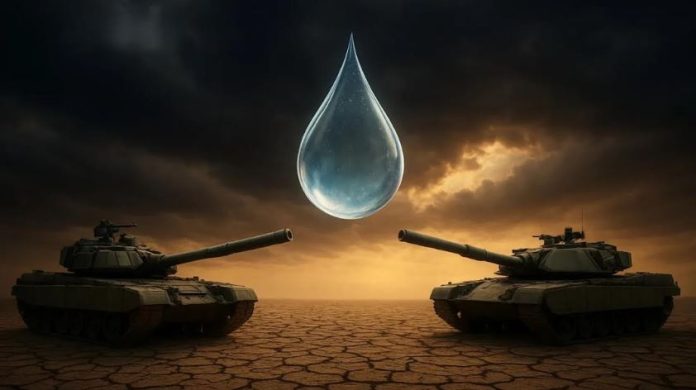
Yet the broader pattern from 1947 to the present reveals a rivalry that has shifted forms without losing intensity. From conventional wars to proxy allegations, from mountain skirmishes to hydraulic engineering, the contest has endured. Water, in this evolving equation, has emerged as a silent but potent instrument of influence. If mistrust continues to dominate relations, every dam will be perceived as a weapon and every canal as a conduit of coercion.

Rivers, by their nature, are symbols of continuity and interdependence. They traverse boundaries without regard for political divisions. If converted into tools of pressure, they imperil not only one nation but the ecological balance of an entire region already vulnerable to climate change. Pakistan must safeguard its rights under international agreements with vigilance and firmness. A befitting response to any perceived aggression lies as much in national discipline and foresight as in diplomatic protest. The chronicles of the past seven decades testify to endurance amidst adversity; the challenge of the future is to transform that endurance into sustainable strength.

The Future of the World

The Future of the World

Dr. Muhammad Akram Zaheer

The world stands at a difficult crossroads. Economic growth, once taken for granted as a natural outcome of globalisation, is now uneven, fragile and deeply contested. Wars persist, supply chains are fractured, climate pressures are mounting, and trust between states is eroding. Yet history shows that moments of uncertainty often create space for new ideas. The future of the world economy depends not on restoring old models, but on building a new platform for global growth one that is inclusive, balanced and resilient. This proposal is offered as an open dialogue rather than a fixed blueprint. The challenges facing humanity are too complex to be solved by a single ideology or institution. What is required instead is a shared conversation that recognises diversity while seeking common ground.

For decades, global growth was driven by liberalisation, free trade and financial integration. While this model lifted millions out of poverty, it also produced sharp inequalities within and between countries. The backlash is now visible in the form of protectionism, economic nationalism and regional blocs. Growth is no longer a purely economic question; it is tied to social stability, political legitimacy and national security. A new platform for global growth must therefore move beyond narrow indicators such as GDP. Economic expansion should be judged by its ability to generate decent employment, reduce inequality, protect the environment and strengthen social cohesion. Growth that benefits only a few is not sustainable; it ultimately undermines the very system that produces it.

Global economic governance is struggling to keep pace with contemporary realities. Institutions created after the Second World War no longer reflect the distribution of power in the twenty-first century. Emerging economies demand greater representation, while smaller states seek protection from market shocks they did not create. Rather than abandoning multilateralism, the task should be to reform it. International financial institutions must prioritise development lending over crisis management alone. Debt relief mechanisms should be predictable and fair, especially for countries burdened by climate-related disasters. Trade regimes need flexibility so that developing economies can protect infant industries while integrating into global markets. A reformed multilateral system would not impose uniform solutions but offer adaptable frameworks that respect national contexts. This balance between global cooperation and domestic autonomy is essential for restoring trust.

While global cooperation remains vital, regional platforms can play a decisive role in promoting growth. Economic corridors, cross-border infrastructure and regional value chains reduce dependence on distant markets and lower vulnerability to global disruptions. For South Asia, Central Asia, Africa and parts of the Middle East, regional integration remains underdeveloped despite immense potential. Political disputes, security concerns and weak institutions have limited progress. Yet investment in transport, energy and digital connectivity could transform these regions into engines of growth. Regional cooperation should be framed not as a zero-sum competition but as a shared opportunity. When neighbours trade more, they reduce conflict incentives and create mutual stakes in stability.

Technology is often presented as a neutral force of progress, but its benefits are unevenly distributed. Advanced economies dominate digital platforms, artificial intelligence and data flows, while many developing countries struggle with basic connectivity. A new growth platform must address the digital divide as a development priority. Affordable internet access, digital literacy and local innovation ecosystems are essential. Technology should empower small businesses, farmers and service providers, not merely large corporations. Equally important is digital governance. Data protection, fair taxation of digital firms and ethical use of artificial intelligence require global coordination. Without common rules, technology risks becoming another source of inequality rather than a driver of shared prosperity.

Climate change is no longer a distant threat; it is a daily economic reality. Floods, droughts and heatwaves disrupt production, destroy infrastructure and deepen poverty. For many developing countries, climate vulnerability is the single greatest obstacle to growth. Yet climate action also offers opportunities. Investment in renewable energy, climate-resilient agriculture and sustainable urban development can generate jobs and reduce long-term costs. The challenge lies in financing this transition. Developed economies, having contributed most to historical emissions, bear a moral and practical responsibility to support climate adaptation and mitigation in poorer states. Climate finance should be predictable, accessible and free from excessive conditions. Growth and sustainability must be treated as complementary goals, not competing ones.

No economic model can succeed without investing in people. Education, healthcare and social protection are not welfare expenses; they are productive investments. Societies with skilled, healthy populations are better equipped to adapt to technological change and economic shocks. The future platform for growth should prioritise skills relevant to changing labour markets. Vocational training, lifelong learning and research collaboration deserve greater attention. Migration, often framed as a threat, can be managed as a source of growth if labour mobility is regulated fairly and humanely.

Economic growth cannot flourish in the absence of security. Conflicts disrupt trade, deter investment and drain public resources. From Eastern Europe to the Middle East and parts of Africa, prolonged instability continues to impose global economic costs. Preventive diplomacy, conflict resolution and post-conflict reconstruction must therefore be seen as economic imperatives, not merely political goals. International efforts should focus on addressing root causes of conflict, including economic exclusion and governance failures. The future of the world economy cannot be dictated by a single power or ideology. It must emerge from sustained dialogue between states, regions, institutions and societies. Developing countries should not be passive recipients of policies designed elsewhere; they must be equal partners in shaping the rules of growth.

This proposed platform for global growth is not a finished product. It is an invitation to rethink assumptions, challenge inequalities and imagine an economic order that serves humanity rather than divides it. The stakes are high, but so is the opportunity. In choosing cooperation over confrontation and inclusion over exclusion, the world can still chart a path towards shared and durable prosperity.

Somalia negotiating to purchase 24 JF-17 Thunder jets from Pakistan

Somalia negotiating to purchase 24 JF-17 Thunder jets from Pakistan

Beyond military modernisation, acquisition could reshape security landscape of Horn of Africa

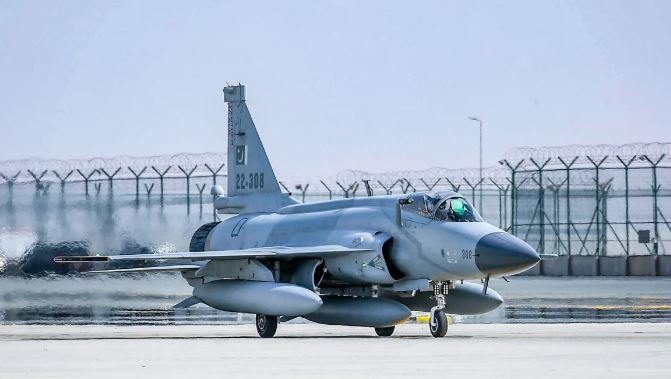
MOGADISHU, FEB 22 /DNA/ – Somalia is negotiating with Pakistan to purchase up to 24 JF-17 Thunder Block III fighter jets, signalling the nation’s most ambitious attempt since 1991 to reestablish a sovereign air combat capability and secure control over its skies and expansive coastline,.

The discussions accelerated following a February 2026 visit to Islamabad by Somali Air Force Commander Mohamud Sheikh Ali, reflecting the urgent need to rebuild a fixed-wing combat force that collapsed with the disintegration of Somalia’s central government decades ago.

“Our airspace must be protected by Somali hands,” a Somali defence ministry official said, portraying the acquisition not merely as a weapons procurement effort but as a statement of political sovereignty and institutional resurgence.

In a region where command of the skies directly translates into control over territory, trade routes and counterterrorism operations, airpower carries profound strategic weight.

Pakistan Defence Production Minister Raza Hayat Harraj highlighted the financial logic behind the potential deal. “While some Western options may be more technologically advanced, they cost more than three times as much as an approximately $30 million to $40 million JF-17,” he said, framing the aircraft as a cost-effective solution for a nation balancing strategic ambition with limited defence resources.

An Islamabad-based analyst underscored the JF-17’s appeal as a complete operational package. “The JF-17’s appeal is less about headline performance than the overall package, which includes lower price, flexible weapons integration, training, spares and generally fewer Western political strings, the expert said, noting that countries seeking independence from restrictive arms agreements find the platform especially attractive.

Former Pakistan Air Force air commodore Adil Sultan reinforced the aircraft’s operational credibility, observing, “The PAF demonstrated superior performance against much more expensive Western and Russian systems, which has made these aircraft an attractive option for several air forces,” citing the platform’s proven track record as a persuasive factor for sensitive defence markets.

Should the agreement materialise, the $900 million (approx Rs251 billion) deal would represent Somalia’s largest defence investment since the Cold War era, signalling a transformative expansion of its national defence capabilities along both its extensive coastline and inland territories.

Beyond military modernisation, the acquisition could reshape the security landscape of the Horn of Africa, reducing Somalia’s reliance on foreign airpower — particularly from the United States and Turkey — while enabling full sovereign control of its airspace, including over Somaliland, a self-declared autonomous region recently recognised by Israel.

Trump announces hike in US global tariff rate from 10% to 15%

Trump announces hike in US global tariff rate from 10% to 15%

WASHINGTON, FEB 21: President Donald Trump said on Saturday he will raise a temporary tariff from 10% to 15% on US imports from all countries, the maximum level allowed under the law, after the US Supreme Court struck down his previous tariff programme.

Trump had immediately announced a 10% across-the-board tariff on Friday after the court’s decision, which found the president had exceeded his authority when he imposed an array of higher rates under an economic emergency law.

The new levies are grounded in a separate but untested law, known as Section 122, that allows tariffs up to 15% but requires congressional approval to extend them after 150 days. No president has previously invoked Section 122, and its use could lead to further legal challenges.

Trade experts and congressional aides are skeptical the Republican-majority Congress would extend the tariffs, given polls that show growing numbers of Americans blame the duties for higher prices.

Trump eyes other ways to impose tariffs
In a social media post on Saturday, Trump said he would use the 150-day period to work on issuing other “legally permissible” tariffs. The administration intends to rely on two other statutes that permit import taxes on specific products or countries based on investigations into national security or unfair trade practices.

“I, as President of the United States of America, will be, effective immediately, raising the 10% Worldwide Tariff on Countries, many of which have been ‘ripping’ the US off for decades, without retribution (until I came along!), to the fully allowed, and legally tested, 15% level,” he wrote in a Truth Social post.

Attention Required!
The Section 122 tariffs include exemptions for certain products, including critical minerals, metals and energy products, according to the White House.

Wendy Cutler, a former senior US trade official and senior vice president at the Asia Society think tank, said she was surprised Trump had not gone for the maximum Section 122 rate on Friday, but that his rapid-fire change underscored the uncertainty trading partners faced.

Trump, who often describes tariffs as his favorite word, has attacked individual justices in personal terms and insisted he retained the power to impose tariffs as he sees fit.

Trade deals must be honored: Greer
Trump has used the tariffs, or the threat of imposing them, to extract trade deals from foreign countries.

After the court’s decision, Trump’s trade representative, Jamieson Greer, told Fox News on Friday that those countries must honor agreements even if they call for higher rates than the Section 122 tariffs.

Exports to the US from countries such as Malaysia and Cambodia would continue to be taxed at their negotiated rates of 19%, even though the universal rate is lower, Greer said.

The ruling could spell good news for countries like Brazil, which has not negotiated a deal with Washington to lower its 40% tariff rate but could now see its tariff rate drop to 15%, at least temporarily.

Trump’s approval rating on his handling of the economy has steadily declined during his year in office, with 34% of respondents saying they approve and 57% saying they disapprove in a Reuters/Ipsos poll that closed on Monday.

T20 World Cup: Rain washes out Pakistan vs New Zealand’s Super Eight clash

T20 World Cup: Rain washes out Pakistan vs New Zealand's Super Eight clash

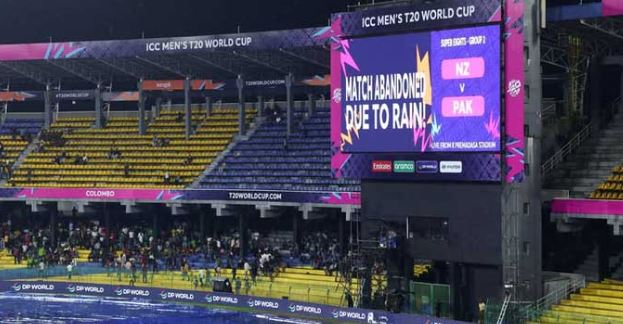
COLOMBO, FEB 21: The much-anticipated Super Eight clash between Pakistan and New Zealand in the ICC Men’s T20 World Cup 2026 was abandoned due to rain without a single ball being bowled, leaving both teams earning one point each, at R Premadasa International Cricket Stadium in Colombo on Saturday.

The rain interruption came soon after Pakistan captain Salman Ali Agha won the toss and opted to bat first, and it continued to downpour for another two-and-a-half hours until the match officials deemed it as abandoned.

For the unversed, the cut-off time for a five-over match was 9:46 PM as per Pakistan Standard Time (PST), but the crucial fixture was called off an hour before due to puddles in the field.

As a result, both Pakistan and New Zealand shared a point apiece, while the abandonment complicated Group 2 of Super Eights, which further features England and co-host Sri Lanka, set to lock horns on Sunday.

The 2009 champions next face England at the Pallekele International Cricket Stadium in Kandy on Tuesday, while New Zealand will take on co-host Sri Lanka the following day here.

It is pertinent to mention that the top two teams from each group, following the conclusion of the Super Eights stage, will qualify for the semi-finals, scheduled to be played on March 4 and 5, respectively.

Since Pakistan will play all of their T20 World Cup 2026 matches in Sri Lanka as per the ‘Fusion Formula’, the first semi-final will be played at the R Premadasa Stadium here, subject to their qualification, otherwise it will be hosted by Kolkata’s Eden Gardens.

Similarly, the venue for the summit clash, scheduled to be played on March 8, is subject to Pakistan’s qualification.

Stay Connected

64FansLike
60FollowersFollow

Latest Reviews

Exchange Rates

USD - United States Dollar
EUR
1.14
GBP
1.34
AUD
0.70
CAD
0.71