Home Blog Page 238

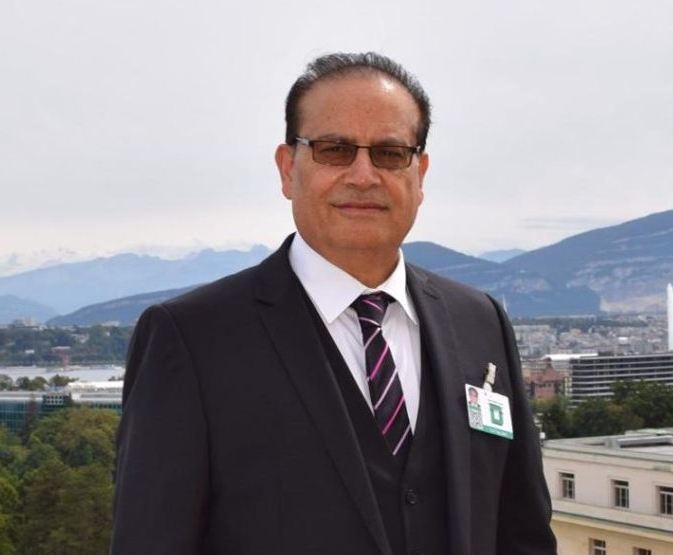
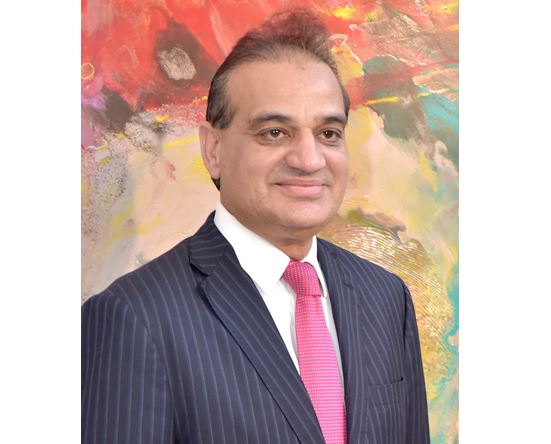
Business community demands extension for President FPCCI Atif Ikram Sheikh

Business community demands extension for President FPCCI Atif Ikram Sheikh

“Atif Ikram Sheikh has truly represented traders during these challenging times,” say Sajjad Sarwar and Qurban Ali.

ISLAMABAD, FEB 23 /DNA/ – A high-level delegation, comprising former Vice Presidents of the Federation of Pakistan Chambers of Commerce and Industry (FPCCI) and prominent business figures, met with President FPCCI Atif Ikram Sheikh. The meeting involved detailed discussions on the country’s economic situation, the challenges facing the trading community, and specifically the future of Small and Medium Enterprises (SMEs).

The delegation included former FPCCI Vice Presidents Sajjad Sarwar, Qurban Ali, and the President of the Gilgit Small Chamber, Arman Shah. During the meeting, the members paid rich tribute to Atif Ikram Sheikh for his courageous advocacy for the rights of the business community and his exemplary services. They noted that even in the most difficult economic circumstances, Atif Ikram Sheikh has served as a true representative for industrialists and traders alike.

To ensure the continuity of the ongoing reform agenda within FPCCI and in the broader interest of the business community, the delegation urged the Government of Pakistan to grant a two-year extension to Atif Ikram Sheikh’s tenure as President FPCCI, citing his extraordinary performance and immense popularity among traders.

During the discussion, Sajjad Sarwar, Qurban Ali, and Arman Shah briefed the President on the severe issues plaguing SMEs across the country. The delegation expressed deep concern over the negative impact of rising electricity and gas prices, as well as the heavy burden of taxes on small businesses. Representing the Gilgit Small Chamber, Qurban Ali and Arman Shah highlighted the specific logistical and administrative hurdles faced by traders in remote areas.

Responding to the delegation, President FPCCI Atif Ikram Sheikh thanked the members and assured them that he would continue his efforts to bring SME-related grievances to the highest levels of government. He emphasized that “the wheels of the national economy cannot turn swiftly until relief is provided to small-scale traders.”

He further added that the Federation is currently working in collaboration with all chambers to develop a comprehensive economic plan for the country.

KSrelief, PBM, Hayat Foundation start Ramadan food distribution

KSrelief, PBM, Hayat Foundation start Ramadan food distribution

MUZAFFARGARH, FEB 23 /DNA/ – In a significant move to support underprivileged families during the holy month of Ramadan 2026, the King Salman Humanitarian Aid and Relief Centre (KSrelief), in collaboration with Pakistan Bait-ul-Mal (PBM) and Hayat Foundation, has commenced the distribution of specialized food baskets across South Punjab.

During the ceremony held in Muzaffargarh, food kits were distributed to 300 deserving families. Each comprehensive food package, weighing approximately 97kg, included essential commodities: 80kg of flour, 5kg of cooking oil, 5kg of Chana dal, 5kg of sugar, and 2kg of dates.

The distribution process is being overseen by the Managing Director of Pakistan Bait-ul-Mal, Senator Captain Shaheen Khalid Butt, alongside Mr. Khalid Rahim, Country Head/Focal Person for Hayat Foundation. The initiative reflects the deep-rooted humanitarian ties and the immense trust KSrelief places in the leadership of Senator Shaheen Khalid Butt and the operational excellence of Pakistan Bait-ul-Mal.

To ensure transparency and efficiency on the ground, the process in Muzaffargarh was strictly monitored by Rana Muhammad Ramadan Tahir, Director of PBM South Punjab. The local arrangements were seamlessly executed by Syed Kashif Saleem, Assistant Director PBM Muzaffargarh, and Malik Zameer, District Coordinator,Hayat Foundation  ensuring that the kits reached the rightful beneficiaries in a highly organized manner.

Voices of Gratitude

The beneficiaries in Muzaffargarh expressed profound gratitude to Custodian of the Two Holy Mosques, King Salman bin Abdulaziz, and the Saudi leadership for their unwavering support. Many noted that these food kits provide a vital lifeline, ensuring their families can observe Sehri and Iftar with dignity and without the burden of food insecurity.

> “We are deeply thankful to King Salman and MD PBM Senator Shaheen Khalid Butt. This support means our children will not go hungry this Ramadan,” shared one of the kit recipients.

>

This Ramadan Food Security Support Project continues to be a testament to the brotherly relations between the Kingdom of Saudi Arabia and Pakistan, aiming to alleviate the hardships of the most vulnerable segments

NUML, Azerbaijan embassy inaugurate new language center

NUML, Azerbaijan embassy inaugurate new language center

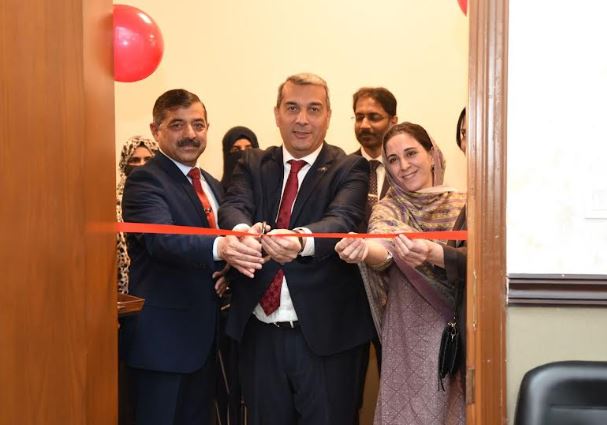
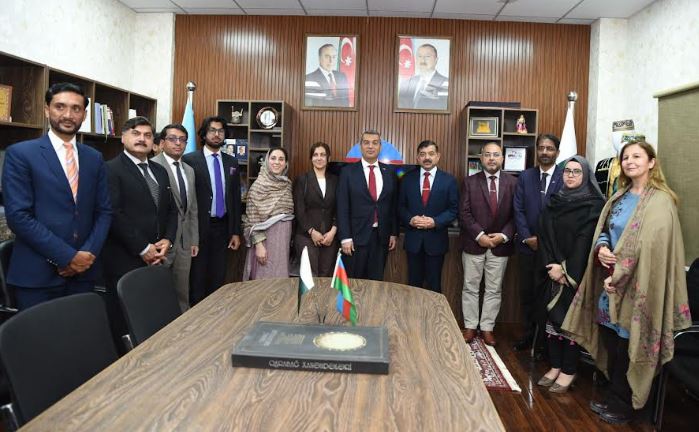
ISLAMABAD, FEB 23 /DNA/ – The National University of Modern Languages (NUML), in collaboration with the Embassy of the Republic of Azerbaijan, inaugurated the newly Azerbaijan Language and Culture Center here on Monday.

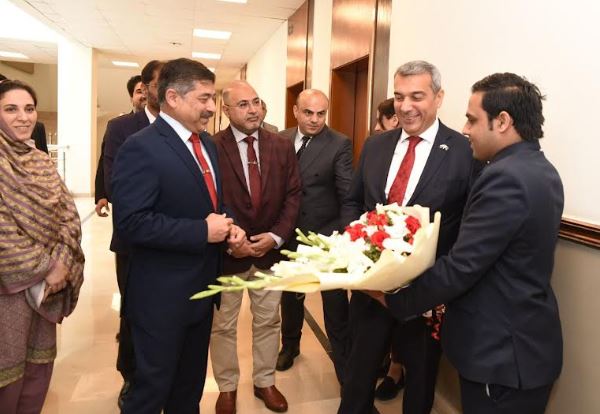
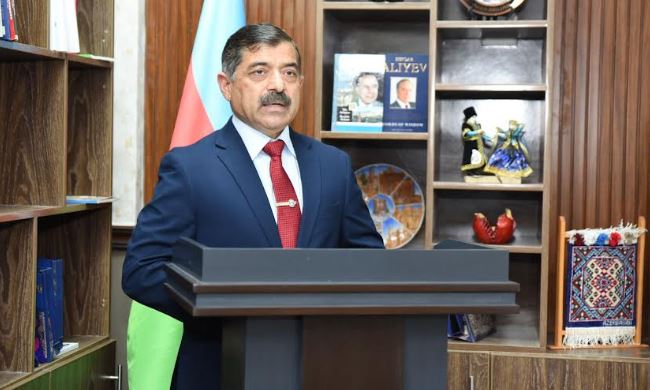
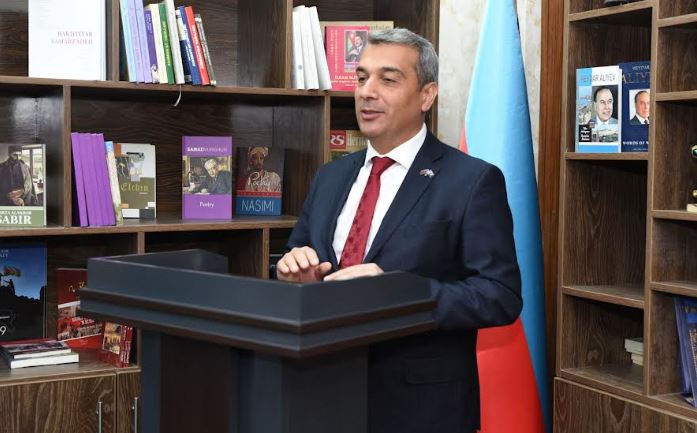
The inauguration ceremony was graced by His Excellency Khazar Farhadov, Ambassador of the Republic of Azerbaijan to Pakistan, as the Chief Guest. The Rector of NUML warmly welcomed the distinguished guests and underscored the significance of strengthening academic and cultural ties between Pakistan and Azerbaijan through sustained institutional collaboration.

The Rector expressed confidence that the newly inaugurated Center would provide students with valuable opportunities to learn the Azerbaijani language, explore Azerbaijani culture, and engage in joint academic and research activities. He emphasized that Pakistan and Azerbaijan share strong historical, cultural, and brotherly relations, and such initiatives further reinforce people-to-people connectivity and mutual understanding between the two nations.

The establishment of the Azerbaijan Language and Culture Center marks a significant milestone in promoting linguistic diversity, cultural understanding, and educational cooperation between the two brotherly countries. The Center will facilitate the teaching of the Azerbaijani language and serve as a hub for academic and cultural activities aimed at fostering mutual understanding and people-to-people connections.

In his address, Ambassador Khazar Farhadov appreciated NUML’s role in advancing cultural diplomacy and highlighted the longstanding friendship between Azerbaijan and Pakistan-rooted in shared values and consistent support at bilateral and international forums.

A video message from Kamal Abdullah, Rector of the Azerbaijan University of Languages, was also presented during the ceremony. He expressed gratitude to the leadership of NUML and the Embassy of Azerbaijan for their support in establishing the Center and reaffirmed his institution’s commitment to expanding academic collaboration between the two universities.

The Azerbaijan Language and Culture Center is expected to serve as a dynamic platform for academic exchange, cultural engagement, and future collaborative initiatives, further strengthening the enduring partnership between Pakistan and Azerbaijan.

Tucker Carlson’s Revolt Against America’s Israel Policy

Qamar Bashir

Qamar Bashir

If there is one American media figure who has done more than any other to rupture the long-standing conservative consensus on Israel, it is Tucker Carlson. A son of a diplomat and a deeply patriotic American, Carlson has positioned himself as the most relentless critic of Israel’s outsized influence over U.S. foreign policy, congressional decision-making, business networks and geopolitical strategy. In his telling, Washington’s reflexive alignment with Israel has drawn the United States into wars, drained its treasury and compromised its sovereignty.

That argument was on full display in February 2026 at Ben-Gurion Airport, where Carlson conducted a combative, two-and-a-half-hour interview with U.S. Ambassador to Israel Mike Huckabee. Carlson accused American officials of “prioritizing Israel” over their own country, pressing Huckabee over civilian casualties in Gaza, biblical rhetoric invoked by Israeli leaders, extradition disputes and the scale of U.S. military aid.

Carlson’s contention was blunt: if American taxpayers provide billions in assistance — at least $16.3 billion in direct military aid since October 2023, with broader estimates exceeding $21 billion — then American officials have a duty to ask hard questions. He framed the issue as a defense of U.S. sovereignty. Why, he asked, should a prosperous, technologically advanced nation with a strong per-capita income require continuous American subsidy?

During the interview, Carlson raised the issue of Christian casualties in Gaza and the West Bank, as well as the destruction of churches, hospitals, and schools operated by Christian communities. He questioned the ambassador about reports that Christian civilians had been killed and Christian institutions damaged during military operations. The ambassador acknowledged that such incidents had occurred, describing them as unintended consequences of war and stating that Israel had expressed regret over those events.

The debate intensified when the ambassador argued that Christians enjoy greater protection in Israel than in many Muslim-majority countries. Carlson challenged that assertion, claiming that there are more Christians in Qatar alone than in Israel. He further argued that Qatar has provided land for churches, schools, and hospitals and that Christians there live openly and peacefully. In contrast, Carlson alleged that Christians in Israel face intimidation and harassment and that their numbers have declined in recent years due to emigration.

While referring to the Epstein files that have been made public in the United States, Carlson raised the issue of connections between Jeffrey Epstein, the established paedophile and blackmailer and Israeli intelligence agency Mossad, and the present President and former prime ministers of Israel. He said that Israel used Epstein’s facility to compromise influential political figures, royalty, senators, and members of Congress through illicit activities involving minors and used their engagement as a blackmailing tool to garner support for Israel in the important decision making in Washington and other influential political capitals. He confronted the Ambassador to hold the Israelis accomplices of Epstein accountable. The Ambassador admitted the connection between Epstein and Mossad but evaded the question by stating  the responsibility for prosecuting crimes committed on U.S. soil lies with American authorities, since Epstein operated primarily within the United States.

During the interview, Carlson directly confronted a theological claim of Israel for the land promised to them by God “from the Nile to the Euphrates.” He pointed out that, if interpreted literally in contemporary geopolitical terms, such a claim would encompass parts of present-day Jordan, Syria, Iraq, Saudi Arabia, and beyond.

Carlson pressed the ambassador on whether this scriptural narrative could justify territorial expansion under the banner of a so-called “Greater Israel.” In response, the ambassador said that if Israel conquered those territories then why not. The tone and tenor of the Ambassador clearly suggested  that he was aligned with the Israel dream of greater Israel and was playing his part to pursue the elusive Israeli dream.

During the exchange, Carlson raised the issue of civilian casualties, specifically asking about how thousands of children had been killed during Israeli military operations. The ambassador acknowledged that large numbers of civilians, including thousands of children, have died in the conflict, but maintained that the Israel Defense Forces (IDF) attempt to minimize civilian harm even much better than the US army does.

Carlson then pressed further, asking whether the ambassador was implying that the U.S. military operates with lower moral standards than the IDF. In response, the ambassador cited historical examples of American warfare, including the atomic bombings of Hiroshima and Nagasaki and the flattening of the entire Germany during World War-IIduring and civilian casualties in Iraq, Libya and Afghanistan. The Ambassador seemed so bought up by Israel that in defence of the IDF that he blamed the US army as worse than the IDF, clearly reflecting where his loyalties are and how, instead of defending the interests of the US in Israel, he was defending Israel which was against the term of employment of an Ambassador.

Under the Vienna Convention an ambassador’s foremost duty is to represent and protect the interests of the sending state—not to advocate for the host country. In a high-profile interview, the ideal ambassadorial posture would have re-centered the discussion on U.S. interests rather than theological or expansionist narratives.

Now the question has been raised as to why Israel has strengthened its regional deterrence capabilities while the United States has borne significant costs—deploying troops, maintaining military bases across the region, committing naval assets to protect sea lanes and allied interests, and providing substantial financial and military assistance. They argue that this burden has placed American personnel and infrastructure at heightened risk while increasing fiscal and geopolitical strain.

As a result of Carlson’s crusade against Israel’s tyranny in Gaza, West Bank, Lebanon, Syria, Qatar and Iran and its support based in Congress, Senate and White House, according to Pew Research Center, the public’s views of Israel have turned more negative over the past three years. More than half of U.S. adults (53%) now express an unfavorable opinion of Israel, up from 42% in March 2022 – before the Hamas attack of Oct. 7, 2023, and the ensuing Israeli invasion of the Gaza Strip.

What began as a series of interviews has now evolved into a defining ideological confrontation within American conservatism. Carlson is not merely questioning battlefield tactics or diplomatic language; he is challenging the moral, financial, and strategic foundations of America’s unconditional alignment with Israel. By forcing senators and ambassadors to defend casualty figures, regime-change rhetoric, and billions in aid, he has exposed a widening rift between interventionist orthodoxy and nationalist restraint. Whether one views his campaign as courageous accountability or destabilizing provocation, it has undeniably shattered the illusion of consensus. The Republican Party may still stand institutionally with Israel, but the grassroots conversation has changed — and once a foreign policy doctrine is dragged into open public trial, it rarely returns to unquestioned authority.

Qamar Bashir

Press Secretary to the President (Rtd)

Former Press Minister, Embassy of Pakistan to France

Former Press Attaché to Malaysia

Former MD, SRBC | Macomb, Michigan

Crossroads of crisis: Can Pakistan reset its course?

Crossroads of crisis: Can Pakistan reset its course?

Ansar Mahmood Bhatti

Pakistan today stands at a defining moment in its turbulent history. The challenges confronting the country are neither new nor unexpected, yet their intensity has deepened to a level that demands urgent introspection. Poverty is increasing, corruption remains entrenched, governance indicators are slipping, and public trust in institutions continues to erode. According to the latest reports by the World Bank and Transparency International, Pakistan faces mounting economic strain alongside persistent governance and corruption challenges. These are not abstract statistics; they represent the lived realities of millions of citizens.

Punjab, the country’s largest province, mirrors these national anxieties. Education remains in crisis. Official data and independent assessments over the years have repeatedly shown millions of children out of school nationwide, with Punjab accounting for a significant share. Even if one takes conservative figures, the scale of the problem is staggering. A country aspiring to compete in a knowledge-based global economy cannot afford such neglect. Each child out of school is a lost opportunity, a diminished future, and a potential contributor to social instability.

Equally distressing is the continued lack of access to clean drinking water. In many rural and urban areas, safe water remains a luxury rather than a basic right. Health experts have long linked contaminated water to widespread diseases, burdening already strained healthcare systems. The contradiction is painful: while citizens struggle for fundamental necessities, those in power often appear insulated from such hardships.

The policing system, once envisioned as a pillar of public safety and rule of law, has deteriorated further. Public complaints of inefficiency, politicization, and lack of accountability are common. Trust between citizens and law enforcement is thin. Without institutional reform, rule of law cannot prevail, and without rule of law, economic progress and social cohesion remain elusive dreams.

Amidst these challenges, controversy has erupted over the reported purchase of an expensive aircraft for the ‘personal use’ of the Chief Minister of Punjab. Reports suggest the aircraft’s cost runs into billions of rupees. At a time when the country is battling fiscal deficits and seeking loans and deposits from friendly countries to stay afloat, such spending sends a troubling message. Pakistan’s economy is heavily dependent on assistance from institutions like the International Monetary Fund and financial support from allies including UAE and Saudi Arabia. In such circumstances, lavish expenditures appear politically damaging.

Leadership, especially in difficult times, demands example. Citizens tighten their belts when they see their leaders doing the same. Conversely, when austerity is preached but extravagance practiced, cynicism deepens. The ruling party in Punjab, Pakistan Muslim League (N) (PML-N), is already confronted with a challenging political landscape. The optics of an aircraft purchase could further dent its standing, particularly in Punjab, its traditional stronghold. This becomes even more significant given that the current Chief Minister is widely seen as a potential future candidate for the prime minister’s office. Political miscalculations at this juncture could have long-term consequences, possibly eclipsing broader ambitions.

On the foreign policy front, the government finds itself under scrutiny over its stance on Gaza. While it is commendable that the government decided not to send military troops abroad, reports that police personnel might be considered instead could prove equally counterproductive. Pakistan’s internal security environment remains fragile. Diverting manpower externally may not only strain domestic capacities but also complicate diplomatic positioning. Prudence demands avoiding any such move.

Economic diplomacy presents another pressing test. Pakistan must meet the conditions attached to the European Union’s GSP+ trade scheme, granted by the European Union. GSP+ status provides critical trade concessions, especially for textile exports. However, the scheme is contingent upon compliance with international conventions, including those related to human rights. Reports of human rights violations have drawn concern from European quarters. The recent case of Imaan Mazari has reportedly attracted attention in European forums. While it is possible that relief in high-profile cases may be considered ahead of review processes, the broader question remains: will isolated measures translate into systemic reform? Sustainable compliance requires long-term institutional change, not temporary adjustments.

Pakistan’s internal cohesion is equally critical. With tensions persisting on both eastern and western borders, national unity is not a luxury but a necessity. Political polarization has weakened the national fabric. The significant opposition force, Pakistan Tehreek-e-Insaf (PTI), led by Imran Khan, continues to command significant public support despite political setbacks. There are indications of growing realization within establishment circles that PTI cannot be permanently sidelined. Yet bringing it into a constructive political framework is easier said than done.

Any perceived softening towards PTI risks alienating ruling coalition partners, including PML-N and the Pakistan Peoples Party (PPP). The political chessboard is complex. However, the alternative perpetual confrontation is far more damaging. Economic recovery, institutional reform, and national security cannot advance amid continuous political warfare.

Perhaps the only viable path forward is the formation of a broad-based government of national consensus. Such an arrangement would require extraordinary statesmanship. It would mean prioritizing national survival over partisan gain. It would demand dialogue among rivals who currently view each other with suspicion and hostility. Yet history shows that nations facing existential crises often find renewal through inclusive political settlements.

Pakistan’s crises are interlinked. Poverty fuels instability; corruption undermines development; political fragmentation weakens governance; and external vulnerabilities compound internal fragilities. Piecemeal solutions will not suffice. What is needed is a comprehensive reset  one that addresses economic reform, social investment, institutional accountability, and political reconciliation simultaneously.

The people of Pakistan have shown resilience through decades of upheaval. What they now require is leadership that mirrors that resilience with integrity and foresight. Symbolic gestures of austerity, genuine commitment to reform, respect for human rights, and inclusive political dialogue could collectively begin restoring public confidence.

Without a shift in direction, Pakistan risks remaining mired in cycles of crisis management. With courage and consensus, however, it can still chart a path toward stability and progress. The crossroads is real. The choice, ultimately, lies with those entrusted to lead.

Assembly resolution unlawful: MQM

Assembly resolution unlawful: MQM

DNA

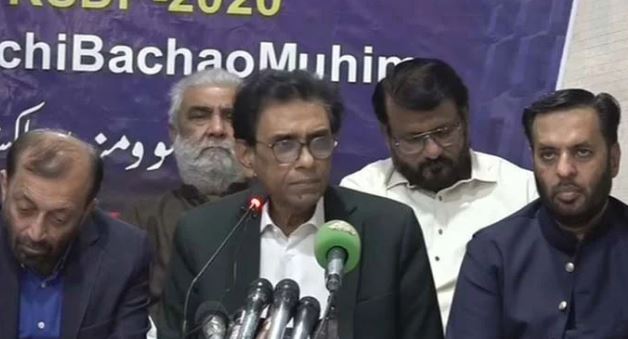
KARACHI: Muttahida Qaumi Movement Pakistan (MQM-P) on Sunday termed a resolution passed by the Sindh Assembly against the creation of Karachi province “unconstitutional”, saying that Article 239 of the 1973 Constitution allows the creation of new provinces.

The remarks came a day after the provincial assembly adopted the resolution rejecting any move to carve out Karachi as a separate province, declaring the metropolis an “integral part” of Sindh.

Addressing a joint press conference, MQM-P Chairman Khalid Maqbool Siddiqui — flanked by Farooq Sattar, Mustafa Kamal and Senator Faisal Subzwari and others — said: “Yesterday, a resolution against the Constitution of Pakistan was passed by the Sindh Assembly.”

MQM-P leader and Federal Education Minister Khalid Maqbool Siddiqui said Article 48(6) of the Constitution even allows for a referendum.
Slamming the provincial government, the MQM-P leader said, “PPP has passed this resolution under the shadow of some fear”.

Without naming Sindh, he said: “A province acts as if it is above the Constitution of Pakistan.” Referring to the alleged rigging in the 2024 general elections, he said that PPP, with an “artificial majority”, has taken control of Sindh.

The MQM-P leader said that the ruling PPP was not even ready to give powers to its own mayor in Karachi. “We have entered a crucial juncture, and we have to decide,” he warned.

Siddiqui further said that dialogue is the only solution to any issue and emphasised that his party seeks to live in peace.

“Sindh is the most multilingual province in Pakistan, and injustice has been happening in urban areas for the last 20 years,” he added.

T20 World Cup: South Africa inflict humiliating defeat on India in Super Eight clash

T20 World Cup: South Africa inflict humiliating defeat on India in Super Eight clash

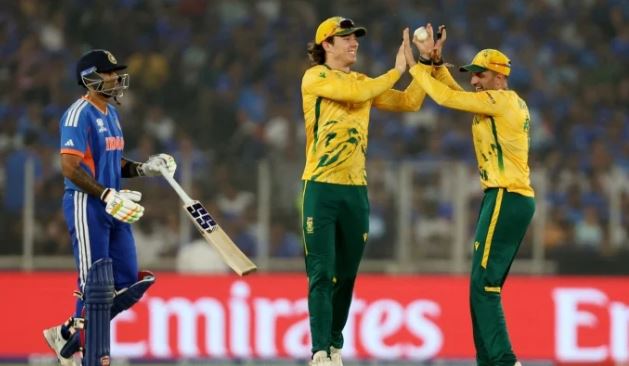
AHMEDABAD, FEB 22: A disciplined bowling effort after David Miller’s fiery half-century helped South Africa crush India by 76 runs in their Super Eight match of the ICC Men’s T20 World Cup 2026 at the Narendra Modi Stadium on Sunday.

The defeat marked India’s first in the ongoing 20-team tournament and ended their 13-match unbeaten streak in T20 World Cups since their gruelling 10-wicket defeat at the hands of England in the semi-final of the 2022 edition.

In all ICC tournaments, however, it was the first defeat for the Men in Blue in 18 matches, with their last setback dating back to the ICC Men’s Cricket World Cup 2023 final against Australia, which coincidentally came at the same venue.

Set to chase a daunting 188-run target, the home side could accumulate 111 before getting bowled out in 18.5 overs despite Shivam Dube’s gutsy knock.

The all-rounder waged a lone battle for the home side and top-scored with a valiant 42-run knock, but his efforts were insufficient for steering the defending champions to extend their unbeaten streak to 14 matches in the T20 World Cups.

Besides him, fellow all-rounder Hardik Pandya and captain Suryakumar Yadav, 18 each, followed by opener Abhishek Sharma (15) and middle-order batter Washington Sundar (11) could amass double figures against the disciplined South Africa bowling attack.

Jansen spearheaded South Africa’s bowling charge with a four-wicket haul, followed by experienced spinner Keshav Maharaj with three wickets, all of which came in the pulsating 15th over.

They were supported by Corbin Bosch, who bagged two wickets, while skipper Aiden Markram chipped in with one scalp.

Opting to bat first, the Proteas accumulated 187/7 in their 20 overs, courtesy of a defiant 97-run partnership for the fourth wicket between Miller and Dewald Brevis.

South Africa, however, had a contrasting start to their innings as India’s pace duo of Jasprit Bumrah and Arshdeep Singh ran through their top order, comprising captain Aiden Markram, wicketkeeper batter Quinton de Kock and Ryan Rickelton, inside four overs with just 20 runs on the board.

Following the early setback, Miller joined Brevis in the middle, and the duo batted valiantly to force an astounding recovery by putting together 97 runs for the fourth wicket off just 49 deliveries.

The threatening stand was eventually broken by Shivam Dube in the 13th over when he got Brevis caught at deep mid-wicket by Abhishek Sharma.

Brevis walked back after scoring a crucial 45 off 29 deliveries with the help of three sixes and as many fours.

Miller was then involved in a 35-run partnership for the fifth wicket with Tristan Stubbs until eventually falling victim to Varun Chakravarthy in the 16th over and walking back after top-scoring for South Africa with a 35-ball 63, laced with seven fours and three sixes.

His dismissal halted the flow of runs for South Africa as Indian bowlers tightened the grip and were ultimately rewarded on the second delivery of the 18th over when Arshdeep got rid of Marco Jansen, who could muster two off six deliveries.

Stubbs, on the other hand, batted until the end and added valuable runs to South Africa’s total with an unbeaten 44 off 24 deliveries, featuring three sixes and a four.

Bumrah spearheaded India’s bowling charge with three wickets for just 15 runs in his four overs, followed by Arshdeep with two, while Chakravarthy and Dube made one scalp apiece.

ECB warns The Hundred teams against snubbing Pakistan stars in upcoming auction

ECB warns The Hundred teams against snubbing Pakistan stars in upcoming auction

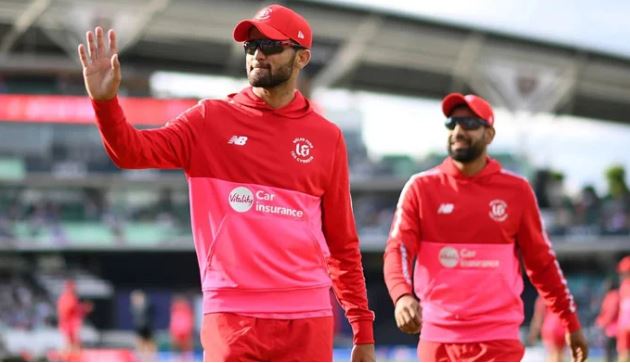
LONDON, FEB 22: The England and Wales Cricket Board has written to every team in The Hundred to remind them of their responsibilities amid claims Pakistan players could be frozen out by the Indian-owned franchises.

It was reported by the BBC earlier this week that Manchester Super Giants, MI London, Southern Brave and Sunrisers Leeds would not consider any Pakistan cricketers at The Hundred auction from March 11-12.

But it is understood that the ECB sent an email to the eight sides on Sunday, warning them that action would be taken if there is any evidence of discrimination, including ignoring players based on nationality.

If any proof is forthcoming, then the matter will likely be referred to the independent Cricket Regulator, although the ECB, which oversees the 100-ball competition, may take separate action, too.

Longstanding geopolitical tensions between the two Asian nations have cast a shadow over cricket for many years, with an effective blanket ban on Pakistan players at the Indian Premier League being in place since 2009.

Opportunities for Pakistan players have been squeezed further by several IPL owners taking charge of domestic franchises abroad – such as South Africa’s SA20 and the ILT20 in the United Arab Emirates.

A total of 67 Pakistan players – 63 men and four women – have submitted themselves for next month’s auction in The Hundred, including Shaheen Shah Afridi, Shadab Khan, Haris Rauf and Naseem Shah.

There are 964 players in the auction, from which the franchises must submit a list of 75-100 they are keen on, with the ECB on Thursday putting forward a shortlist of around 200 to go under the hammer.

There were no Pakistan players selected at last year’s auction – before the new investors assumed control – although left-arm seamer Mohammad Amir and all-rounder Imad Wasim featured as replacements.

That was largely down to Pakistan’s busy summer schedule, rendering their high-profile players unavailable for some of the tournament, and it is a similar situation this year.

Pakistan have two Tests in the West Indies during the tournament, which is set to run from July 21 to August 16, and then play the first of three Tests against England three days after The Hundred final.

Man trying to access Trump Florida estate killed

Man trying to access Trump Florida estate killed

News Desk

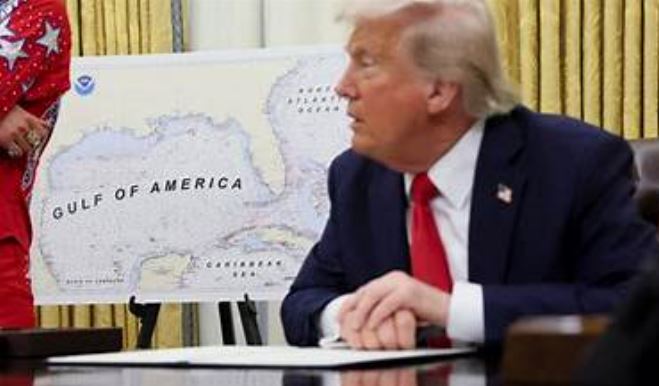
WASHINGTON: The US Secret Service said Sunday its agents had shot and killed an armed man who illegally entered the premises of President Donald Trump´s Mar-a-Lago estate in Florida.

Trump was in Washington at the time of the incident, which officials said happened around 1:30am (0630 GMT).

“An armed man was shot and killed by US Secret Service agents after unlawfully entering the secure perimeter at Mar-a-Lago early this morning,” agency spokesman Anthony Guglielmi said in a post on X.

The suspect, a man in his early 20s, was observed by the north gate of the Mar-a-Lago property carrying what appeared to be a shotgun and a fuel can,” the agency said in a statement.

Earlier this month, Ryan Routh, 59, who plotted to assassinate the president at a Florida golf course in September 2024, two months before the US election, was sentenced to life in prison.

Routh’s planned attack on Trump came two months after an assassination attempt on the Republican leader in Pennsylvania, where 20-year-old Matthew Crooks fired several shots during a rally, one of them grazing Trump´s right ear.

That attack, in which a rallygoer was killed, proved to be a turning point in Trump’s return to power. Crooks was immediately shot and killed by security forces and his motive remains unknown.

The incident was the latest in a series of episodes of political violence in a highly polarised country.

The name of the suspect in the Sunday incident has not been released while officials attempt to contact his relatives.

Khawaja Junaid appointed Head Coach of Pakistan Hockey Team

Khawaja Junaid appointed head coach of Pakistan Hockey Team

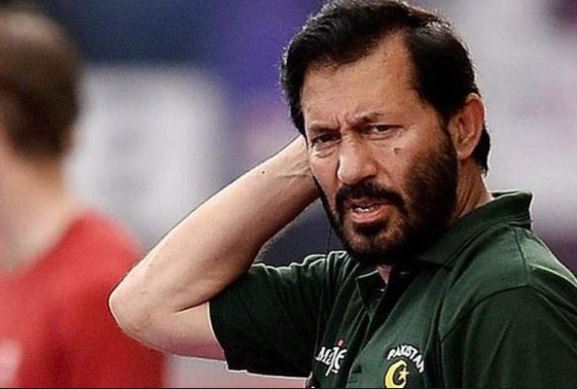
ISLAMABAD, FEB 22 /DNA/ – In a major reshuffle, the Pakistan Hockey Federation (PHF) has appointed Olympian Khawaja Junaid as the new head coach of the senior national hockey team.

According to official sources, the new management setup has been finalized. Khawaja Junaid has been summoned to Islamabad, where the formal announcement will be made.

Sources confirm that former international player Aafir Yaqoob will serve as the assistant coach, while Sultan Ashraf has been assigned the role of video analyst. Meanwhile, Farooq Atiq Khan will take over the responsibilities of team manager.

The Pakistan Hockey Federation’s Interim President, Mohi-ud-Din Wani, will address a press conference in Islamabad tomorrow to officially unveil the new coaching staff and management.

Stay Connected

64FansLike
60FollowersFollow

Latest Reviews

Exchange Rates

USD - United States Dollar
EUR
1.14
GBP
1.34
AUD
0.70
CAD
0.71