Home Blog Page 236

Remembering Khojaly is a moral obligation

The Khojaly genocide, which has left an indelible mark on the historical memory of the Azerbaijani people, remains one of the gravest crimes against humanity of the twentieth century. This tragedy was a bloody act that proved an entire city—and, in essence, an entire nation—had been deliberately targeted. What occurred in February 1992 was a blatant violation of the laws of war, international law, and the most basic principles of humanism. Khojaly was a civilian-populated settlement of strategic importance. For a long period, the city had been under siege, with its residents deprived of food, medicine, and humanitarian assistance. On the night of the attack, the city was subjected to massive and indiscriminate fire using heavy weapons, armored vehicles, and artillery. Civilians attempting to flee were brutally murdered in forests, ravines, and open fields. Women, children, and the elderly were killed with particular cruelty; hundreds were taken hostage, and the fate of many remains unknown to this day. This tragedy was not accidental. The Khojaly genocide was an integral part of Armenia’s long-standing policy of ethnic cleansing and occupation against Azerbaijan. The objective was to erase the Azerbaijani presence in the Karabakh region, instill fear, and force the population into mass displacement. The atrocities committed in Khojaly were a clear manifestation of this intent.

Brief statistical overview:

  • Date of the incident: 26 February 1992
  • Location: Khojaly, Nagorno-Karabakh region, Azerbaijan
  • Victims: approximately 613 killed, including 63 children, 106 women, and 70 elderly persons
  • Injured: approximately 487 people
  • Hostages and captives: 127 people
  • Destruction of homes and infrastructure: most of the city destroyed; 1,275 houses burned or demolished
  • Displaced population: approximately 8,000 people forced to flee to safer areas

For many years after the tragedy, justice could not be restored at the international level. Nevertheless, the Azerbaijani state began to pursue a consistent and purposeful policy aimed at bringing the truth about Khojaly to the world. The first political and legal assessment of the tragedy is associated with the National Leader, Heydar Aliyev. At his initiative, the Khojaly tragedy was officially recognized as genocide, and 26 February was declared a National Day of Mourning—demonstrating a state-level commitment to this issue. This political course has been consistently continued in subsequent years. The international recognition of Khojaly, the commemoration of its victims, and the dissemination of truth became one of the key priorities of state policy. In this context, the projects, international events, and awareness campaigns carried out by the Heydar Aliyev Foundation played a significant role. The true manifestation of historical justice occurred in 2020. During the 44-day Patriotic War, the Azerbaijani Army liberated the occupied territories. This victory was not merely a military achievement; it was also a response addressed to the souls of the Khojaly victims. During the war, Armenia’s missile attacks on Ganja, Barda, Tartar, and other civilian settlements once again demonstrated that violence against civilians is an integral part of its military-political approach. In October 2023, President Ilham Aliyev raising the National Flag in the city of Khojaly marked the symbolic culmination of this process. Today, the commemoration of the Khojaly genocide is no longer framed by a psychology of defeat, but by restored justice and achieved victory.

The Khojaly tragedy is often recalled as a headline or a footnote. But headlines do not freeze. Footnotes do not hear the cries of children in the dark. What happened there cannot be confined to numbers or diplomatic language. The victims of that night were fleeing. They carried children in their arms, not weapons. They were not seeking victory—they were seeking warmth. What makes Khojaly unbearable is not only the cruelty inflicted there, but the silence that followed. The world had words. It had international institutions. It had cameras. Yet the world hesitated. And with that hesitation, something profoundly important was lost. Silence is never neutral. Silence chooses sides. When the suffering of civilians is measured against political convenience, humanity diminishes. When empathy depends on geography, justice becomes conditional. And when the death of a child requires explanation, a moral boundary has already been crossed.

Khojaly poses a simple yet deeply unsettling question to the world:

If the victims had been from somewhere else, would this silence have lasted so long?

Why was so much pain met with so much silence?

Why did the deaths of the innocent disappear between diplomatic phrases?

Why did human rights fall silent when they reached Khojaly?

The world must understand this: forgetting is participation. On that night, humanity was tested—and it failed by remaining silent. Why do we continue to remember Khojaly and reopen our wounds? Because the wound has never healed. Remembering is how humanity remains whole. Khojaly must be remembered so that the cold of that night does not become the normal temperature of our moral world, and so that indifference never finds a place to live again. Writing about Khojaly is difficult. But not writing is a far greater crime. Silence is a second killing. Silence is consent. That is why Khojaly must always be spoken of—quietly, but resolutely; emotionally, but justly; with the full weight of truth.

https://justiceforkhojaly.org/az/index

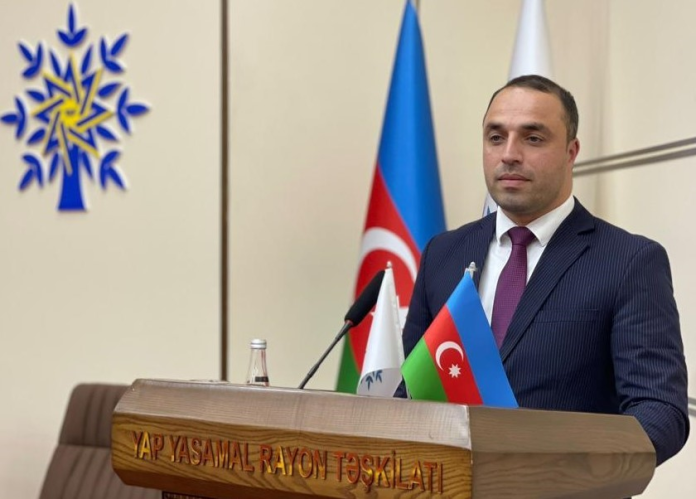
Farid  MUSTAFAYEV

Deputy Chairman of the Territorial Party Organization of YAP Yasamal District under the Ministry of Science and Education at the Institute of Soil Science and Agrochemistry, Member of the Western Azerbaijan Community.
Gandapur says security withdrawn, KP govt denies claim

Gandapur says security withdrawn, KP govt denies claim

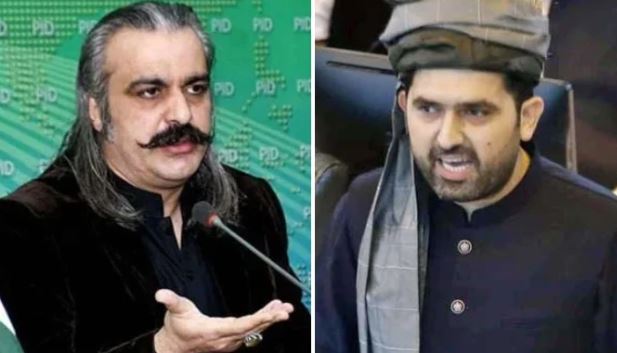
ISLAMABAD, FEB 24: Former Khyber Pakhtunkhwa (KP) chief minister Ali Amin Gandapur on Tuesday said he would not accept the return of his government-provided security, claiming it had been withdrawn by the provincial administration.

Gandapur, who resigned from the top provincial post in October last year, said that KP Chief Minister Sohail Afridi’s deputy chief security officer (CSO) called his security personnel at around 11pm, informing him that the CSO had ordered them to return.

The former KP CM added that he had been provided a provincial government jammer and a double-cabin vehicle, accompanied by 14 personnel.

He described how the security personnel had approached him, and he instructed them to “just close up”.

Gandapur emphasised that even if the government restores his protection, he would refuse it. “I want to inform the chief minister that there is no need to return my security. I do not require it,” he said.

A spokesperson for the KP CM House, however, denied reports that Gandapur’s security had been withdrawn, saying no such decision had been made.

No instructions have been issued to relevant authorities regarding this matter, the spokesperson added.

Gandapur — a firebrand Pakistan Tehreek-e-Insaf (PTI) leader — stepped down from the post of KP CM on October 8 last year, hours after party leaders announced Sohail Afridi’s nomination for the post.

“In respectful compliance of the orders of my leader, and founding PTI chairman, Imran Khan, it is my honour to tender my resignation from the Office of the Chief Minister, Khyber Pakhtunkhwa,” he wrote in a post on X at the time.

At the time, Member National Assembly Sher Afzal Marwat claimed that one of the main reasons for Gandapur’s resignation was his inability to secure the release of PTI founder Imran Khan from jail.

Following Gandapur’s resignation, Afridi was elected as the new chief executive of the province on October 13, and took the oath on October 15.

T20 World Cup: England secure semi-final spot after Pakistan win

T20 World Cup: England secure semi-final spot after Pakistan win

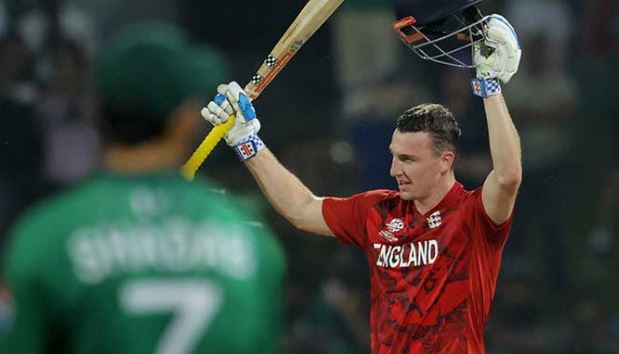
PALLEKELE, FEB 24: Captain Harry Brook’s unbeaten century propelled England to a convincing two-wicket victory over Pakistan in the high-stakes Super Eights match of the ICC Men’s T20 World Cup 2026 here at the Pallekele International Cricket Stadium on Tuesday.

The victory, which marked England’s second in as many matches in the Super Eights, helped them become the first team to qualify for the semi-finals of the ongoing 20-team tournament as they consolidated top spot in Group 2 with four points.

Set to chase a daunting 165-run target, the two-time champions amassed the target for the loss of eight wickets and five balls to spare, courtesy of Brook’s captain’s knock.

The Three Lions had a contrasting start to their innings as Shaheen Shah Afridi struck thrice, dismissing Phil Salt (zero), Jos Buttler (two) and Jacob Bethell (eight), inside five overs with just 35 runs on the board.

But Brook stood his ground firm and kept the scoreboard ticking singlehandedly as he registered one-sided partnerships with Tom Banton (two) and Sam Curran (16), which yielded 23 and 45 runs, respectively.

The England captain eventually found ample support from the other end when Will Jacks walked out to bat at No.7 as the duo pulled the game away out of Pakistan’s grasp by putting together 52 runs for the sixth wicket until the set batter was eventually cleaned up by Shaheen on the final delivery of the 17th over.

Brook walked back after top-scoring with a 51-ball 100, studded with 10 fours and four sixes.

Jacks, on the other hand, followed suit an over latter as he was bowled by Mohammad Nawaz on 28 when England needed five runs off 12 deliveries.

Nawaz struck again in the same over, getting Jamie Overton stumped to cause a stir in England’s pursuit.

The equation came down to three runs required off the final over with two wickets in hand, and Jofra Archer smashed Salman Mirza for a boundary on the first delivery to clinch a hard-earned victory for England.

Shaheen was the pick of the bowlers for Pakistan as he picked up four wickets for just 30 runs in his four overs, while Usman Tariq Nawaz bagged two each.

Opting to bat first, the 2009 champions accumulated 164/9 in their 20 overs, courtesy of Farhan’s anchoring knock.

Pakistan got off to a shaky start to their innings as their left-handed opener Saim Ayub (seven) and captain Salman Ali Agha (five) perished inside the first four overs with just 27 runs on the board.

Following the early setback, star batter Babar Azam joined Farhan in the middle, and the duo batted cautiously to launch a recovery by putting together 46 runs off 44 deliveries.

Jamie Overton eventually broke the budding partnership in the 11th over by cleaning up Babar, who walked back after scoring 25 off 24 deliveries with the help of two fours.

Farhan was then involved in another crucial partnership for Pakistan – a 49-run stand for the fourth wicket with Fakhar Zaman – until eventually falling victim to Overton in the 16th over.

The right-handed opener remained the top-scorer for Pakistan with a 45-ball 63, studded with seven fours and two sixes.

Fakhar followed suit in the next over, falling prey to Adil Rashid after scoring a 16-ball 25, comprising two sixes and as many fours.

Liam Dawson added to Pakistan’s woes in the next over as he dismissed wicketkeeper batter Usman Khan (eight) and all-rounder Mohammad Nawaz (zero) in successive deliveries and brought the total down to 146/7 in 17.5 overs.

Shadab Khan then added valuable runs at the backend with a handy 23-run cameo, which came off 11 deliveries and featured four boundaries.

Dawson was the standout bowler for England, taking three wickets for just 24 runs in his four overs, followed by Jofra Archer and Overton with two each, while Adil chipped in with one.

PM Shehbaz meets Qatari counterpart to boost ties

PM Shehbaz meets Qatari counterpart to boost ties

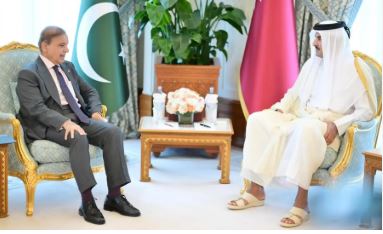
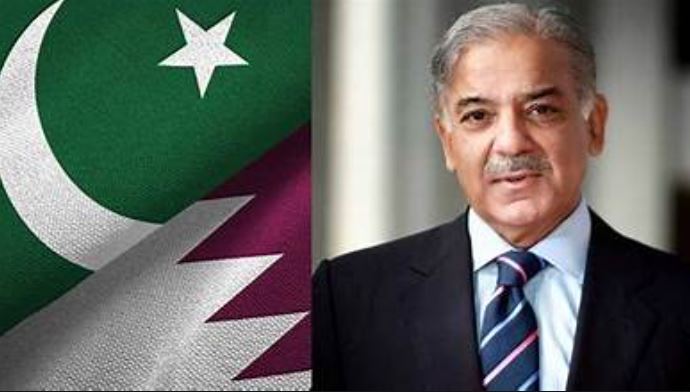
DOHA, FEB 24 /DNA/ – Prime Minister of Pakistan, Muhammad Shehbaz Sharif, during his official visit to Doha, met with the Prime Minister and Minister for Foreign Affairs of the State of Qatar, His Excellency Sheikh Mohammed bin Abdulrahman bin Jassim Al Thani. Deputy Prime Minister Ishaq Dar, Chief of the Army Staff and Chief of Defence Forces Field Marshal Syed Asim Munir, Federal Minister for Information and Broadcasting and Special Assistant to the PM Tariq Fatemi were also present.

The two leaders held discussions on bilateral relations and exchanged views on regional and international developments. They reaffirmed the strong fraternal ties between Pakistan and Qatar and expressed satisfaction over the growing momentum in political, economic and institutional engagement.

Discussions focused on enhancing cooperation in trade and investment, energy, defence, labour mobility and cultural collaboration and joint task force of both countries mandated to accelerate the cooperation in all these areas. Both sides emphasized the importance of implementing decisions taken during recent high-level engagements and institutional mechanisms, including the Joint Ministerial Commission and Bilateral Political Consultations.

Regional issues, including developments in Gaza and broader Gulf security dynamics, were also discussed. The Prime Minister appreciated Qatar’s constructive diplomatic efforts in promoting dialogue and de-escalation in the region. Both leaders underscored the importance of peaceful resolution of disputes and adherence to international law including the UN charter.

The meeting reaffirmed the shared commitment of Pakistan and Qatar to further strengthen their strategic partnership and to remain engaged and in-contact on bilateral, regional and international current issues. 

Iran to buy cruise missiles from Chian

Iran nears deal to buy supersonic anti-ship missiles from China: report

“It’s a complete gamechanger if Iran has supersonic capability to attack ships in the area,” said Danny Citrinowicz, a former Israeli intelligence officer

Centreline Report

TEHRAN: Iran is close to a deal with China to purchase anti‑ship cruise missiles, according to six people with knowledge of the negotiations, just as the United States deploys a vast naval force near the Iranian coast ahead of possible strikes on the Islamic Republic.

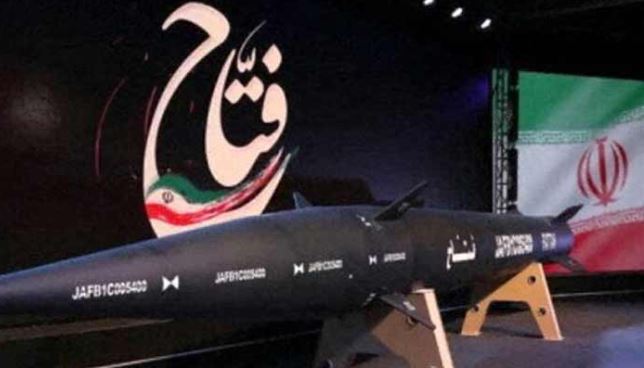
The deal for the Chinese‑made CM‑302 missiles is near completion, though no delivery date has been agreed, the people said. The supersonic missiles have a range of about 290 kilometres and are designed to evade shipborne defences by flying low and fast. Their deployment would significantly enhance Iran’s strike capabilities and pose a threat to US naval forces in the region, two weapons experts said.

Negotiations with China to buy the missile weapons systems, which began at least two years ago, accelerated sharply after the 12‑day war between Israel and Iran in June, according to the six people with knowledge of the talks, including three officials who were briefed by the Iranian government as well as three security officials.

As talks entered their final stages last summer, senior Iranian military and government officials travelled to China, including Massoud Oraei, Iran’s deputy defence minister, according to two of the security officials. Oraei’s visit has not been previously reported.

“It’s a complete gamechanger if Iran has supersonic capability to attack ships in the area,” said Danny Citrinowicz, a former Israeli intelligence officer and now senior Iran researcher at Israel’s Institute for National Security Studies think tank. “These missiles are very difficult to intercept.”

Reuters could not determine how many missiles were involved in the potential deal, how much Iran had agreed to pay, or whether China would go through with the agreement now given heightened tensions in the region.

“Iran has military and security agreements with its allies, and now is an appropriate time to make use of these agreements,” an Iranian foreign ministry official told Reuters.

The Chinese delegation to the United Nations directed Reuters to seek comment from the Foreign Ministry in Beijing. The foreign and defense ministries did not respond to requests for comment.

Govt amends ID card rules

Govt amends ID card rules

Mahnoor Ansar

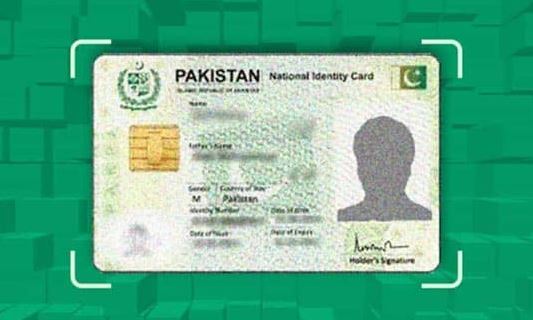
ISLAMABAD, FEB 24 /DNA/ – The government on Tuesday notified amendments to the National Identity Card Rules, 2002 and the Pakistan Origin Card Rules, 2002 to modernise the country’s identity document framework by legally embedding QR-based verification, strengthening authentication controls across digital services, expanding biometric recognition, and updating card formats for key citizen categories.

According to a handout by the National Database and Registration Authority (Nadra), a core reform is the statutory introduction of the QR code — a scannable barcode containing horizontal and vertical lines, dots, and patterns — as a defined security and verification feature.

The rules now legally define QR codes as a secure, machine-readable, two-dimensional barcode capable of storing encoded information and converting it into usable identity verification data when scanned.

The amendments further authorise the use of a QR code or “any other technological feature,” in lieu of the current microchip, enabling Nadra to adopt evolving verification technologies without repeated rule amendments.

In operational terms, this establishes a robust legal basis for quick and secure verification of identity credentials in both offline and online environments. This will also enable all citizens to carry a similar card instead of the currently prevalent two types of national identity cards, one of which comes with a microchip and the other without.

This QR-enabled capability directly strengthens Pakistan’s Digital ID ecosystem and supports interoperability through the National Data Exchange Layer.

PRCS, TRCS sign MoU, launch Ramadan relief for vulnerable families

PRCS, TRCS sign MoU, launch Ramadan relief for vulnerable families

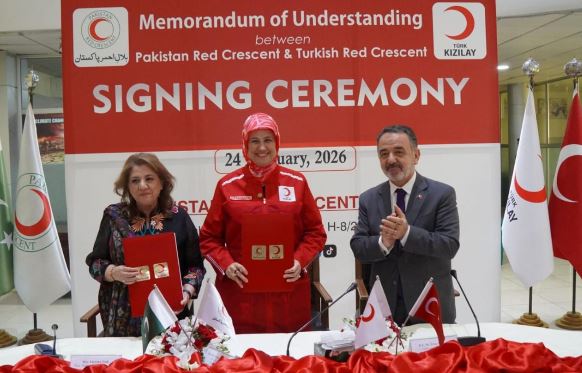
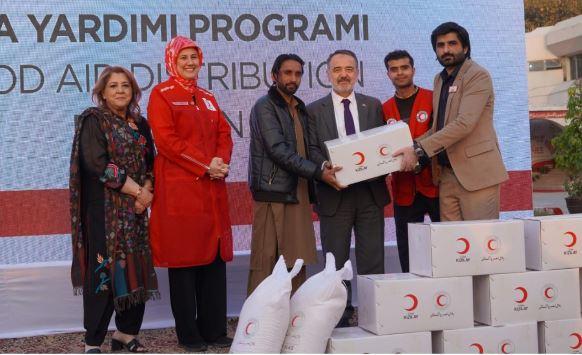
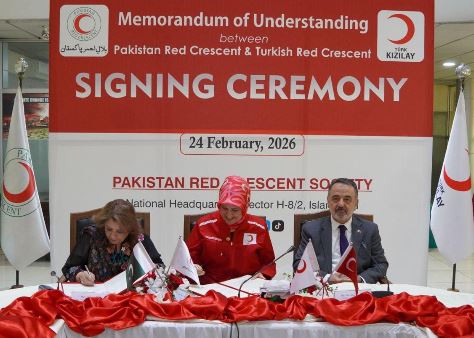
ISLAMABAD, FEB 24 /DNA/ – Prof. Dr. Fatma Meriç Yılmaz, President of the Turkish Red Crescent Society along with Alper Kucuk,Director General for International Affairs and Migration led a high-level delegation from Türkiye on an official visit to the National Headquarters of the Pakistan Red Crescent Society, reaffirming the longstanding, trusted and brotherly humanitarian partnership between the two sister National Societies.

During the visit, H.E. Prof. Dr. Yılmaz held a cordial courtesy meeting with Honorable Chairperson PRCS Mrs. Farzhana Naek. The two sides discussed ways to further deepen cooperation, expand joint humanitarian programmes, and enhance outreach to vulnerable communities across Pakistan, reflecting the historic bonds of friendship between the peoples of Pakistan and Türkiye.

A major milestone of the visit was the signing of a Memorandum of Understanding (MoU) between PRCS and TRCS to institutionalize cooperation over the next five years. The agreement focuses on capacity building, information and experience sharing, joint humanitarian operations, training exchanges, and coordinated emergency response initiatives.

The visit culminated in a Ramadan food parcel distribution ceremony and Iftar programme at PRCS Headquarters, attended by His Excellency Dr Irfan Neziroğlu, Ambassador of the Republic of Türkiye to Pakistan along with the representatives Turkish Cooperation and Coordination Agency (TIKA), Yunus Emre Institute, Turkish Airline, International Maarif School, Albayrak Pakistan,Anadolu Ajansi and ASELSAN.Under this joint initiative, 3,000 food packages will be distributed to conflict-affected and vulnerable families, including those in hard-to-reach areas of Tirah and Kurram Valley. In commemoration of world orphans day, Iftaar meals will also distributed among 1,000 individuals, including children in orphanage centres in Rawalpindi and Islamabad.

Speaking on the occasion, Chairperson PRCS Mrs Farzhana Naek said that the partnership between PRCS and TRCS stands as a powerful symbol of brotherhood between Pakistan and Türkiye, forged through decades of cooperation in times of crisis and need. She expressed PRCS’s commitment to further strengthening this collaboration to expand humanitarian outreach and deliver multiple life-saving interventions for vulnerable communities across the country, while noting that the Ramadan relief effort reflects shared compassion and solidarity.

President TRCS Prof. Dr Fatma Meriç Yılmaz reaffirmed Türkiye’s steadfast solidarity with the people of Pakistan and emphasized that the Turkish Red Crescent will continue to work closely with PRCS to support humanitarian action and resilience-building initiatives.

H.E. Dr Irfan Neziroğlu highlighted that cooperation between the two National Societies reflects the deep historical ties and mutual trust between Pakistan and Türkiye, translating friendship into tangible support for those in need.

A key highlight of the visit was the ceremony titled “Celebrating Commitment to Service” at the PRCS Fatimah Jinnah Auditorium, attended by representatives of partner National Societies including the Turkish Red Crescent, ICRC, IFRC, German Red Cross and Norwegian Red Cross, along with PRCS staff and volunteers.

The delegation also visited the Disaster Management and Logistics Centre, constructed by the Turkish Red Crescent and inaugurated in 2009, symbolizing Türkiye’s enduring support to Pakistan’s disaster preparedness and response capacity. In a gesture of friendship and environmental stewardship, President TRCS planted a commemorative tree at the PRCS lawns alongside Chairperson Mrs. Farzhana Naek and Ambassador Dr. Irfan Neziroğlu.

T20 World Cup: Pakistan win toss, elect to bat first against England

T20 World Cup: Pakistan win toss, elect to bat first against England

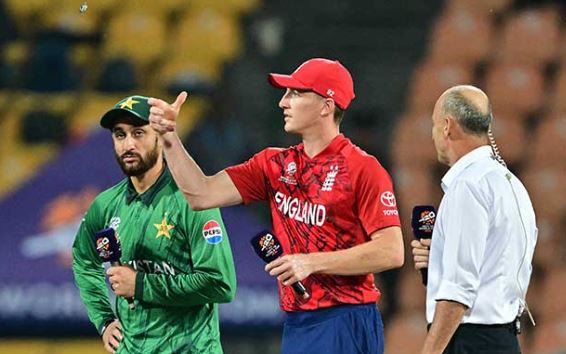
PALLEKELE, FEB 24: Pakistan opted to bat first after winning the toss against England in the high-stakes Super Eights match of the ICC Men’s T20 World Cup 2026 at the Pallekele International Cricket Stadium, Kandy, on Wednesday.

Playing XI
Pakistan: Sahibzada Farhan, Saim Ayub, Salman Ali Agha (capt), Babar Azam, Fakhar Zaman, Shadab Khan, Usman Khan (wk), Mohammad Nawaz, Shaheen Afridi, Salman Mirza, and Usman Tariq

England: Phil Salt, Jos Buttler (wk), Jacob Bethell, Tom Banton, Harry Brook (capt), Sam Curran, Will Jacks, Liam Dawson, Jamie Overton, Jofra Archer, and Adil Rashid

Head-to-head
Historically, England and Pakistan have faced each other 31 times in T20 cricket. The Three Lions have won 21 encounters, while the Men in Green have emerged victorious on nine occasions. One match ended without a result.

In T20 World Cup history, the sides have met three times, with England winning all three games and Pakistan yet to register a victory.

Matches: 31
England: 21
Pakistan: 9
No Result: 1
Form Guide
Pakistan and England enter the fixture with equally decent momentum in their favour as both teams have just one defeat in their last five T20Is.

In Super Eights, however, the 2009 champions had their opening match against New Zealand washed out due to persistent rain in Colombo, while the two-time winners edged past co-hosts Sri Lanka to make a triumphant start to the stage.

England: W, W, W, L, W (most recent first)

Pakistan: NR, W, L, W, W

Iran nears deal to buy supersonic anti-ship missiles from China: report

Iran nears deal to buy supersonic anti-ship missiles from China: report

TEHRAN, FEB 24: Iran is close to a deal with China to purchase anti‑ship cruise missiles, according to six people with knowledge of the negotiations, just as the United States deploys a vast naval force near the Iranian coast ahead of possible strikes on the Islamic Republic.

The deal for the Chinese‑made CM‑302 missiles is near completion, though no delivery date has been agreed, the people said. The supersonic missiles have a range of about 290 kilometres and are designed to evade shipborne defences by flying low and fast. Their deployment would significantly enhance Iran’s strike capabilities and pose a threat to US naval forces in the region, two weapons experts said.

Negotiations with China to buy the missile weapons systems, which began at least two years ago, accelerated sharply after the 12‑day war between Israel and Iran in June, according to the six people with knowledge of the talks, including three officials who were briefed by the Iranian government as well as three security officials.

As talks entered their final stages last summer, senior Iranian military and government officials travelled to China, including Massoud Oraei, Iran’s deputy defence minister, according to two of the security officials. Oraei’s visit has not been previously reported.

“It’s a complete gamechanger if Iran has supersonic capability to attack ships in the area,” said Danny Citrinowicz, a former Israeli intelligence officer and now senior Iran researcher at Israel’s Institute for National Security Studies think tank. “These missiles are very difficult to intercept.”

Reuters could not determine how many missiles were involved in the potential deal, how much Iran had agreed to pay, or whether China would go through with the agreement now given heightened tensions in the region.

“Iran has military and security agreements with its allies, and now is an appropriate time to make use of these agreements,” an Iranian foreign ministry official told Reuters.

The Chinese delegation to the United Nations directed Reuters to seek comment from the Foreign Ministry in Beijing. The foreign and defense ministries did not respond to requests for comment.

The White House did not directly address the negotiations between Iran and China over the missile system when asked by Reuters. US President Donald Trump has been clear that “either we will make a deal or we will have to do something very tough like last time,” a White House official said, referring to the current standoff with Iran.

The missiles would be among the most advanced military hardware to be transferred to Iran by China and defy a United Nations weapons embargo that was first imposed in 2006. The sanctions were suspended in 2015 as part of a nuclear deal with the US and allies, and then reimposed last September.

US forces gathering near Iran
The potential sale would underscore deepening military ties between China and Iran at a moment of heightened regional tension, complicating US efforts to contain Iran’s missile programme and curb its nuclear activities. It would also signal China’s growing willingness to assert itself in a region long dominated by US military might.

While hosting Iranian President Masoud Pezeshkian for a military parade in Beijing in September, Chinese President Xi Jinping told the Iranian leader that “China supports Iran in safeguarding sovereignty, territorial integrity and national dignity.”

China joined Russia and Iran in a joint letter on October 18 to say they believed the decision to reimpose sanctions was flawed.

“Iran has become a battlefield between the US” on one side and Russia and China on the other, said one of the officials who was briefed by Iran’s government on the missile negotiations.

The deal comes as the US assembles an armada within striking distance of Iran, including the aircraft carrier USS Abraham Lincoln and its strike group. The USS Gerald R. Ford and its escorts are also heading to the region. The two ships together can carry more than 5,000 personnel and 150 aircraft.

“China does not want to see a pro-Western regime in Iran,” said Citrinowicz, the Israeli specialist on Iran. “That would be a threat to their interests. They are hoping that this regime will stay.”

Trump said on February 19 he was giving Iran 10 days to reach an agreement over its nuclear programme or face military action. The US is preparing for the possibility of sustained, weeks-long operations against Iran if Trump orders an attack, Reuters reported on February 13.

A depleted arsenal
The CM-302 purchase would be a significant improvement in an Iranian arsenal depleted by last year’s war, said Pieter Wezeman, a senior researcher at the Stockholm International Peace Research Institute.

China’s state-owned China Aerospace Science and Industry Corporation (CASIC) markets the CM-302 as the world’s best anti-ship missile, capable of sinking an aircraft carrier or destroyer. The weapons system can be mounted on ships, aircraft or mobile ground vehicles. It can also take out targets on land.

CASIC did not respond to a request for comment.

Iran is also in discussions to acquire Chinese surface‑to‑air missile systems, so-called MANPADS, anti‑ballistic weapons, and anti-satellite weapons, the six people said.

PM keen to enhance Pakistan’s exports to Qatar

PM keen to enhance Pakistan's exports to Qatar

DOHA, FEB 24: Prime Minister Muhammad Shehbaz Sharif on Tuesday emphasized the importance of enhancing bilateral trade

volumes and diversifying Pakistan’s exports to Qatar, particularly in agricultural products, food items and value-added goods.

The prime minister was talking to Minister of State of Qatar on Foreign Trade Dr. Ahmed bin Mohammed Al-Sayed who called on him during his official visit to Doha. Dr. Al-Sayed is also the chairman of Pak-Qatar Joint business task force.

During the meeting, the two sides reviewed bilateral trade and economic cooperation and expressed satisfaction over the growing momentum in Pakistan–Qatar relations.

Both sides discussed follow-up to the 6th Session of the Pakistan–Qatar Joint Ministerial Commission and reaffirmed their commitment to implementing agreed decisions.

The prime minister also highlighted Pakistan’s investment-friendly reforms and the role of the Special Investment Facilitation Council (SIFC) in facilitating foreign investment.

Dr. Ahmed bin Mohammed Al-Sayed reiterated Qatar’s interest in expanding economic cooperation and strengthening private-sector and business linkages between two countries.

The two sides also agreed to convene a meeting of the task force, comprising  relevant officials of both countries, within the month of Ramazan, to discuss concrete investment proposals for Qatari investment in Pakistan.

The meeting underscored the shared resolve to further deepen trade, investment and industrial collaboration between Pakistan and Qatar.

Deputy Prime Minister and foreign minister Ishaq Dar, Federal Minister for Information and Broadcasting Attaullah

Tarar and Special Assistant to the PM Tariq Fatemi were also present in the meeting.

Stay Connected

64FansLike
60FollowersFollow

Latest Reviews

Exchange Rates

USD - United States Dollar
EUR
1.14
GBP
1.34
AUD
0.70
CAD
0.71