Home Blog Page 234

Operation launched against Taliban govt

Beyond swift retort to the relentless rise of Pakistan’s Air Power

Pakistan forces

inflict heavy

blows on Taliban

Official sources confirmed that scores of Afghan Taliban soldiers were killed in the operation; “Pakistan is taking decisive measures to respond to these unprovoked actions by the Afghan Taliban along our border. No one will be allowed to take away Pakistan’s peace.”

Staff Report/DNA

ISLAMABAD, February 26, 2026 — Pakistan’s security forces have mounted an immediate, effective, and punishing response to unprovoked firing initiated by the Afghan Taliban regime along multiple points of the Pakistan-Afghanistan border in Khyber Pakhtunkhwa province.

The Ministry of Information and Broadcasting, in an official statement posted on X, described the Taliban’s actions as a grave miscalculation, confirming that Pakistani troops are actively delivering severe punishment to regime forces across the Chitral, Khyber, Mohmand, Kurram, and Bajaur sectors.

Early reports from the ministry indicate heavy casualties on the Afghan side, with multiple Taliban posts and military equipment destroyed in the exchanges. Pakistan has emphasized its unwavering commitment to safeguarding territorial integrity and the safety of its citizens, vowing to take all necessary measures to counter such provocations.

The latest escalation follows recent intelligence-based airstrikes conducted by Pakistan days earlier, which targeted seven camps and hideouts linked to Fitna al-Khawarij (the banned Tehreek-e-Taliban Pakistan or TTP) in Afghanistan’s Nangarhar, Paktika, and Khost provinces. Those operations reportedly eliminated over 100 militants responsible for recent suicide attacks and terrorist activities inside Pakistan.

In a strong rebuttal to Taliban propaganda, Pakistani officials dismissed as completely false the regime’s claims of capturing numerous Pakistani border posts and inflicting major losses. Taliban spokespersons, including Zabihullah Mujahid, had asserted on X that their forces launched large-scale offensives, seized several outposts in areas like Nangarhar and Kunar, and captured or killed Pakistani soldiers. Independent accounts and Pakistani military sources categorically rejected these assertions, labeling them as baseless disinformation aimed at misleading the public and inflating Taliban capabilities.

Pakistan’s defenses proved highly effective, with security forces successfully downing all projectiles and munitions fired by Taliban positions during the clashes. In a coordinated retaliatory effort dubbed Operation Ghazbul Haq, Pakistani troops launched precise counterstrikes, destroying enemy positions and inflicting significant damage.

 Official sources confirmed that more than 30 Afghan Taliban soldiers were killed in the operation, underscoring the one-sided nature of the outcome despite the regime’s exaggerated narratives.

Minister of State for Interior Talal Chaudhry, reiterated Pakistan’s resolute stance: “Pakistan is taking decisive measures to respond to these unprovoked actions by the Afghan Taliban along our border. No one will be allowed to take away Pakistan’s peace.” He drew parallels to past conflicts, referencing the May confrontation with India: “What happened to India, which had armies, planes, and weapons?” Chaudhry condemned civilian-targeted terrorism, stating that bomb blasts in markets and mosques are intolerable.

He affirmed, “Pakistan will go to any extent for the safety and peace of its people,” while stressing the urgent need for Afghanistan to become a responsible and peaceful neighbor under all circumstances.

The border tensions highlight ongoing challenges stemming from the Taliban regime’s alleged failure to curb cross-border militant activities, particularly by TTP elements using Afghan soil. Pakistan has repeatedly urged verifiable actions to prevent such threats, but provocations persist.

As clashes subsided, Pakistan maintained heightened vigilance along the Durand Line, with forces on high alert to deter further aggression. The government reiterated that while it seeks peaceful relations, it will not hesitate to defend its sovereignty decisively.

This incident serves as a stark reminder of the fragile security dynamics along the 2,600-kilometer border, where mutual accusations continue amid deep-rooted mistrust. Pakistan remains committed to protecting its people and territory while calling for de-escalation and responsible behavior from Kabul.
Khojaly Genocide: A bloody chapter in 20th-century history

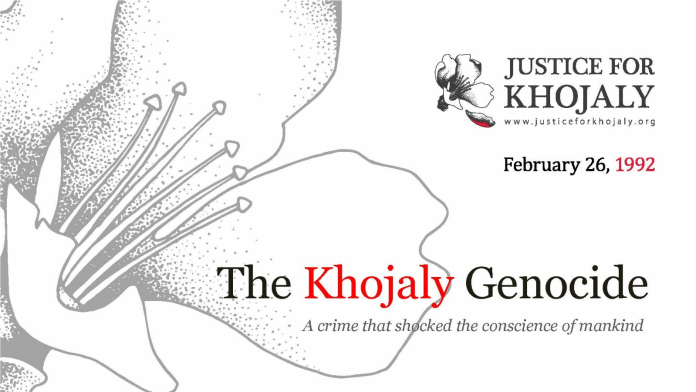
34 years ago, on the night of 25–26 February, Khojaly genocide, one of the most horrific crimes against humanity of the past century, was committed by Armenia against Azerbaijani civilians with particular brutality and cruelty. On the 34th anniversary of the Khojaly genocide, with profound sadness, we commemorate the victims of this horrible crime, which took the lives of 613 people, including 106 women, 70 elderly people, and 63 children in a single night.

 The chronology of massacres committed in the course of Armenia’s aggression, particularly in the villages of Baghanis Ayrim, Imarat-Garvand, Tugh, Salakatin, Akhullu, Khojavand, Jamilly, Nabilar, Meshali, Hasanabad, Karkijahan, Gaybaly, Malibayli, Yukhari and Ashaghi Gushchular, Garadaghli, where the majority of the population were Azerbaijanis, reveals how the Khojaly genocide was an integral part of Armenia’s policy of ethnic hatred and intolerance against Azerbaijanis.

 The Siege of Khojaly since 1991, transport communication and electricity cut-off, massive shelling, and unprecedented atrocities on the night of 25-26 February 1992, committed by the armed forces of Armenia against the civilian population with the assistance of the 366th Motorized Rifle Regiment of the former USSR attest to the fact that this massacre was, at its core, a planned and intentional genocide. During the Khojaly genocide, 8 families were completely wiped out, 130 children lost one of their parents, and 25 children lost both of their parents, 1275 people, including 68 women and 26 children, were taken hostage.

Characteristics of the Khojaly genocide, including the slaughter of civilians with particular cruelty, inhuman treatment, torture, and humiliation of the corpses were all contrary to international humanitarian law, human rights law, and international conventions in this field, including the Convention for the Prevention and Punishment of the Crime of Genocide, Convention against Torture and Other Cruel, Inhuman or Degrading Treatment or Punishment, Convention on the Elimination of All Forms of Racial Discrimination, and implies international legal responsibility.

Confessions from perpetrators of the Khojaly genocide, especially the statement of Monte Melkonian, whose identity was also revealed by witnesses, that “Khojaly was a strategic goal, as well as an act of revenge,” as well as acknowledgment of Serzh Sargsyan, former President of Armenia, who was one of the masterminds of the genocide that “Armenians was able to break the stereotype that they could not raise their hand against the Azerbaijani civilians” and “absolutely no regrets regarding this” prove that the Khojaly genocide was purposefully committed and that Armenia bears international legal responsibility.

As a result of the international community’s disregard for the facts and evidence of the Khojaly genocide, Armenia continued its war crimes against Azerbaijanis throughout the former occupation period and during the 44-day Patriotic War, particularly attacking civilian targets.

The restoration of Azerbaijan`s territorial integrity as a result of the Patriotic War and Azerbaijan`s sovereignty as a result of the counter-terrorism measures of 19-20 September 2023, the liberation of Khojaly, and the legal prosecution of war criminals are the embodiments of historical justice.

It should be emphasized that Pakistan has consistently demonstrated its support for the territorial integrity, sovereignty, and inviolability of Azerbaijan’s borders, in accordance with the demands of the aforementioned UN Security Council resolutions. The principled position displayed by Pakistan during the Patriotic War of Azerbaijan and the continuous political and moral support provided to Azerbaijan’s just position were a true manifestation of the brotherly relations between the fraternal countries.

Furthermore, Pakistan was one of the first countries to recognize the Kohajaly Genocide. In this context, it should be noted that over the past periods, the National Assembly and the Senate of Pakistan have adopted various resolutions condemning the Khojaly genocide.

Immediately after the historic Victory of the Republic of Azerbaijan, large-scale restoration and reconstruction work, including key infrastructure projects, were launched in the Karabakh and East Zangezur regions, and thousands of people have returned to their native lands. Like in other liberated territories, today life returns to Khojaly, which remains one of the incurable wounds of the Azerbaijani people, and the state and people of Azerbaijan do not forget the victims of the genocide and keep their memories alive.

Azerbaijan has always advocated a peace agenda and actively pursued measures to achieve lasting peace and stability in the region. Currently, significant progress has been made in this regard. On August 8, 2025, a Joint Declaration was signed between Azerbaijan and Armenia in the witness of the US in Washington. Thus, an important historic step was made towards ending the long-lasting conflict between the countries. Initialing of a peace agreement between Azerbaijan and Armenia creates favorable opportunities not only for the region but also for the wider geography. The full instauration of prosperity in the South Caucasus will open up opportunities not only for the region but also for the regions beyond.

 On the 34th anniversary of the Khojaly genocide, we once again honor the memory of the innocent victims of the tragedy.

 May Allah rest their souls in peace!

Khojaly Genocide: A bloody chapter in 20th-century history

34 years ago, on the night of 25–26 February, Khojaly genocide, one of the most horrific crimes against humanity of the past century, was committed by Armenia against Azerbaijani civilians with particular brutality and cruelty. On the 34th anniversary of the Khojaly genocide, with profound sadness, we commemorate the victims of this horrible crime, which took the lives of 613 people, including 106 women, 70 elderly people, and 63 children in a single night.

 The chronology of massacres committed in the course of Armenia’s aggression, particularly in the villages of Baghanis Ayrim, Imarat-Garvand, Tugh, Salakatin, Akhullu, Khojavand, Jamilly, Nabilar, Meshali, Hasanabad, Karkijahan, Gaybaly, Malibayli, Yukhari and Ashaghi Gushchular, Garadaghli, where the majority of the population were Azerbaijanis, reveals how the Khojaly genocide was an integral part of Armenia’s policy of ethnic hatred and intolerance against Azerbaijanis.

 The Siege of Khojaly since 1991, transport communication and electricity cut-off, massive shelling, and unprecedented atrocities on the night of 25-26 February 1992, committed by the armed forces of Armenia against the civilian population with the assistance of the 366th Motorized Rifle Regiment of the former USSR attest to the fact that this massacre was, at its core, a planned and intentional genocide. During the Khojaly genocide, 8 families were completely wiped out, 130 children lost one of their parents, and 25 children lost both of their parents, 1275 people, including 68 women and 26 children, were taken hostage.

Characteristics of the Khojaly genocide, including the slaughter of civilians with particular cruelty, inhuman treatment, torture, and humiliation of the corpses were all contrary to international humanitarian law, human rights law, and international conventions in this field, including the Convention for the Prevention and Punishment of the Crime of Genocide, Convention against Torture and Other Cruel, Inhuman or Degrading Treatment or Punishment, Convention on the Elimination of All Forms of Racial Discrimination, and implies international legal responsibility.

Confessions from perpetrators of the Khojaly genocide, especially the statement of Monte Melkonian, whose identity was also revealed by witnesses, that “Khojaly was a strategic goal, as well as an act of revenge,” as well as acknowledgment of Serzh Sargsyan, former President of Armenia, who was one of the masterminds of the genocide that “Armenians was able to break the stereotype that they could not raise their hand against the Azerbaijani civilians” and “absolutely no regrets regarding this” prove that the Khojaly genocide was purposefully committed and that Armenia bears international legal responsibility.

As a result of the international community’s disregard for the facts and evidence of the Khojaly genocide, Armenia continued its war crimes against Azerbaijanis throughout the former occupation period and during the 44-day Patriotic War, particularly attacking civilian targets.

The restoration of Azerbaijan`s territorial integrity as a result of the Patriotic War and Azerbaijan`s sovereignty as a result of the counter-terrorism measures of 19-20 September 2023, the liberation of Khojaly, and the legal prosecution of war criminals are the embodiments of historical justice.

It should be emphasized that Pakistan has consistently demonstrated its support for the territorial integrity, sovereignty, and inviolability of Azerbaijan’s borders, in accordance with the demands of the aforementioned UN Security Council resolutions. The principled position displayed by Pakistan during the Patriotic War of Azerbaijan and the continuous political and moral support provided to Azerbaijan’s just position were a true manifestation of the brotherly relations between the fraternal countries.

Furthermore, Pakistan was one of the first countries to recognize the Kohajaly Genocide. In this context, it should be noted that over the past periods, the National Assembly and the Senate of Pakistan have adopted various resolutions condemning the Khojaly genocide.

Immediately after the historic Victory of the Republic of Azerbaijan, large-scale restoration and reconstruction work, including key infrastructure projects, were launched in the Karabakh and East Zangezur regions, and thousands of people have returned to their native lands. Like in other liberated territories, today life returns to Khojaly, which remains one of the incurable wounds of the Azerbaijani people, and the state and people of Azerbaijan do not forget the victims of the genocide and keep their memories alive.

Azerbaijan has always advocated a peace agenda and actively pursued measures to achieve lasting peace and stability in the region. Currently, significant progress has been made in this regard. On August 8, 2025, a Joint Declaration was signed between Azerbaijan and Armenia in the witness of the US in Washington. Thus, an important historic step was made towards ending the long-lasting conflict between the countries. Initialing of a peace agreement between Azerbaijan and Armenia creates favorable opportunities not only for the region but also for the wider geography. The full instauration of prosperity in the South Caucasus will open up opportunities not only for the region but also for the regions beyond.

 On the 34th anniversary of the Khojaly genocide, we once again honor the memory of the innocent victims of the tragedy.

 May Allah rest their souls in peace!

Moscow-Islamabad link explores global challenges

Moscow-Islamabad link explores global challenges

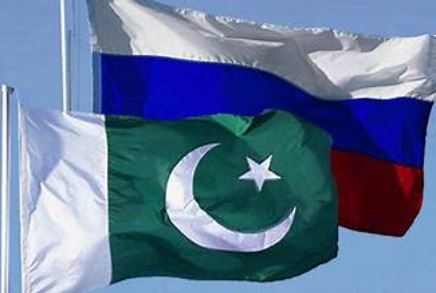
MOSCOW, FEB 25: /DNA/ – The Moscow—Islamabad Media Forum will be held on February 27, 2026, to coincide with the official visit of the Prime Minister of the Islamic Republic of Pakistan, H.E. Shehbaz Sharif, to Moscow, scheduled for the first week of March 2026.

The forum will serve as a platform for journalists, political experts, and diplomats from Pakistan and Russia to discuss the current state of bilateral relations, explore future opportunities, and analyze how the Russia-Pakistan partnership impacts global politics, the economy, and the media landscape today.

Distinguished Speakers:

In Moscow:

11:00 – 12:30 (MSK)

Session I. «Global Challenges and Perspectives in the Changing World: Overview from Moscow and Islamabad»

Moderator in Moscow:

Peter Lidov, Counselor, Rossiya Segodnya Media Group

Moderator in Islamabad:

Agha Iqrar Haroon, an international award winning journalist, analyst and political scientist, Chief Editor DND News Agency Islamabad

Speakers in Moscow:

− Maria Zakharova, Director of the Information and Press Department, Russian Ministry of Foreign Affairs of the Russian Federation

− Dr. Roxolana Zigón, geopolitical analyst, expert in diplomacy and international relations, head of the Scientific Center of the International and Strategic Studies «diplomacy of the nations, partnership of civilizations», University of World

Civilizations; founder & host of the FOREIGN POLICY PUBLIC FORUM «Diplomat speaks », honorary member of the Advisory Board of the Consortium for Asia Pacific & Eurasian Studies (CAPES), Islamabad, Pakistan; founder of the Russia-Pakistan Eurasian Forum (est. 2025), political observer of the TV «Zvezda» (Russia), PTV (Pakistan), SUNO TV (Pakistan), writer

Speakers in Islamabad:

− Mushahid Hussain Syed, Senator, Chair of the Committee on Defense and Security, Senate of Pakistan

− H.E. Mr. Albert Khorev, Ambassador of the Russian Federation to the Islamic Republic of Pakistan – video address

12:40 – 14:00 (MSK)

Session II. «The Perspectives of the Bilateral Relations Development Between Russia and Pakistan»

Moderator in Moscow:

Peter Lidov-Petrovsky, Counselor, Rossiya Segodnya Media Group

Moderator in Islamabad:

Almas Haider Naqvi, senior journalist, Dunya News Group as Foreign Policy and Diplomatic Correspondent, awarded by Aghahi Awards in 2026

Speakers in Moscow:

− H.E. Mr. Faisal Niaz Tirmizi, Ambassador of the Islamic Republic of Pakistan to the Russian Federation

− Dr. Irina Serenko, Senior Research Fellow, Center for Middle Eastern Studies, Institute of Oriental Studies, Russian Academy of Sciences (RAS)

− Sergei Strokan, Moscow-based geopolitical analyst and observer, Russia’s “Kommersant” Publishing House

Speakers in Islamabad:

− Dr. Ms. Sarwat Rauf, Head, Department of International Relations, National University of Modern Languages (NUML)

− Mr. Iftikhar Shirazi, Bureau Chief, Dawn

− Mr. Shaukat Piracha, a senior journalist, anchor and News analyst, a special correspondent for foreign and diplomatic affairs, AAJ News

14:10 – 15:30 (MSK)

Session III. «New Trends in the International Journalism»

Moderator in Moscow:

Peter Lidov-Petrovsky, Counselor, Rossiya Segodnya Media Group

Moderator in Islamabad:

Ms. Tanzeela Mazhar, journalist, public speaker, head of programming at GTV and host the prime time talk show «News Today with Tanzeela Mazhar»

Speakers in Moscow:

− Dimitri Alexander Simes, Head, Sputnik International, Rossiya Segodnya Media Group

− Dmitry Leontiev, Executive content producer, RT

− Artyom Chibarov, Head of online projects, Rossiya SegodnyaMedia Group

Speakers in Islamabad:

− Mateen Haider, Journalist/Anchor/Analyst with focus on defense, foreign affairs, Associated Press of Pakistan

− Dr Maria Sultan, advisor to Pakistan’s Ministry of Defense on Strategic and Military Affairs, Chairperson, South Asian Strategic Stability Institute (SASSI) University, Pakistan

− Mr. Anas Malick, Bureau Chief, Asia One

− Amir Ilyas Rana, Bureau Chief, Express News

Beyond swift retort to the relentless rise of Pakistan’s Air Power

Beyond swift retort to the relentless rise of Pakistan’s Air Power

by: Izmi Herlani

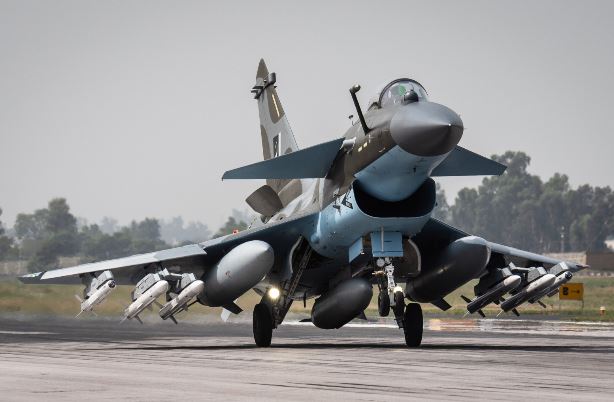
Nations are not secured by rhetoric; they are secured by resolve. From the earliest days of Pakistan’s statehood, the architects of its defence understood a stark truth: survival in a hostile neighbourhood demands mastery of the skies. It was not enough to possess aircraft; Pakistan required an air arm animated by conviction, sharpened by discipline and immune to coercion. The vision articulated by Muhammad Ali Jinnah was not poetic flourish—it was strategic foresight. An Air Force “Second to None” was not a slogan; it was an imperative. That imperative has shaped the institutional DNA of Pakistan Air Force. Over decades, it cultivated a culture where preparation is habitual and excellence is compulsory. Its officers, airmen and civilian staff were schooled to think beyond the immediate horizon, to anticipate rather than react, and to convert adversity into advantage. In this crucible of discipline, the modern PAF was forged.

The world witnessed the manifestation of that ethos on 27 February, 2019 during Operation Swift Retort. Much has been written about that day, but its true significance lies beyond the headlines. It was not merely a retaliatory maneuver in a tense crisis; it was a calculated demonstration of credibility. In a matter of hours, PAF dismantled the illusion that escalation could be imposed upon Pakistan without consequence. Precision strikes, calibrated messaging and deliberate restraint combined into a seamless orchestration of power. The skies did not erupt in chaos; they were commanded with clarity. Operation Swift Retort was, in essence, a doctrinal declaration. It signaled that Pakistan’s aerial shield was neither reactive nor brittle. It was agile, networked and confident. Years of quiet modernization, relentless training and operational introspection converged into a display of synchronized force. The message resonated far beyond the region: deterrence, when backed by capability and will, is unmistakable.

Yet Air Power, like history, does not stand still. The character of warfare has transformed with breathtaking speed. Today’s battlespace is not confined to altitude and speed; it extends into the electromagnetic spectrum, cyber corridors and orbital pathways. Recognizing this, PAF leadership has embarked this dynamic organization on a profound transformation; one that transcends hardware acquisitions and embraces conceptual evolution. Advanced combat platforms now operate as nodes within an interconnected ecosystem. Unmanned systems complement manned aircraft; electronic warfare units contest invisible frontiers; cyber capabilities shield and probe simultaneously. Artificial intelligence augments decision cycles, compressing the time between detection and action. In this architecture, dominance is not achieved by numbers alone but by integration—by the seamless fusion of sensors, shooters and strategists into a unified Kill Chain.

This transformation was not theoretical. In May 2025, when confronted with renewed provocation, the PAF responded under unified command with a clarity that underscored its maturation. Multi Domain Operations unfolded with surgical precision. Adversarial assets were neutralized not in isolation but as part of a coordinated matrix of kinetic and non-kinetic effects. The response was calibrated yet decisive, reaffirming that deterrence remains credible only when it is demonstrably enforceable. What distinguishes the contemporary PAF is not merely its inventory but its intellectual capital. Technology, however advanced, is inert without mastery. The lifeblood of air power remains training; rigorous, unforgiving and continuous. From basic flight instruction to high-end multinational exercises, PAF air warriors are conditioned to operate in complex, contested environments. They are trained to absorb ambiguity, to make split-second decisions under immense pressure and to execute with clinical accuracy. Education and innovation are no longer peripheral pursuits; they are strategic enablers. PAF Leadership Development programs cultivate commanders who are as comfortable with algorithms as they are with aerodynamics. Exposure to international best practices broadens horizons, while indigenous research grounds ambition in national capability. This synthesis of global insight and local ingenuity has ensured that PAF remains adaptive in an era defined by disruption.

Parallel to operational refinement runs a determined march toward self-reliance. For too long, developing nations have equated security with dependence. Pakistan has chosen a different path. Through a burgeoning aerospace ecosystem and expanding science & technology parks, the foundations of sustainable air power are being laid at home. Indigenous maintenance, avionics upgrades and system integrations are reducing vulnerabilities while strengthening strategic autonomy. Self-reliance is not isolation; it is resilience. By embedding innovation within national industry, PAF under the astute command of Air Chief Marshal Zaheer Ahmed Baber is cultivating a virtuous cycle—military requirements stimulate technological growth, which in turn enhances national capacity. The dividends extend beyond defence, invigorating sectors that underpin economic vitality and scientific advancement.

Seven years after Swift Retort, the security of Pakistan’s skies rests not on chance but on determination of our Men & Women in Blues. PAF stands today as a fully integrated,
Multi-Domain Force capable of shaping outcomes across the spectrum of conflict. Its doctrine is refined in peace, validated in crisis and informed by the unyielding pursuit of excellence. Deterrence, however, is a dialogue. It communicates through capability and credibility. PAF’s recent operations have reiterated that Pakistan’s sovereignty is neither negotiable nor vulnerable. PAF leadership has ensured that by development of it’s home grown Kill Chain any miscalculation by the adversary will encounter swift correction. The calculus for any adversary is therefore stark: escalation invites consequences that are immediate and proportionate. Air power is as much about spirit as it is about steel. Aircraft may patrol the skies, but it is conviction of our Shaheens that anchors them. Pakistan Air Force embodies a tradition where professionalism is sacred, preparation is perpetual and patriotism is instinctive. It has evolved from a force that answered challenges to one that shapes the strategic environment. From Operation Swift Retort to Marka e Haq and beyond, PAF’s journey has been neither accidental nor easy. It has been earned through sacrifice, foresight and steadfast resolve. As regional dynamics grow increasingly complex, one reality endures: the guardians of Pakistan’s skies remain vigilant, capable and unbowed. For a nation that values its sovereignty, that assurance is priceless.

IMF team arrives in Karachi, talks on third review to begin on Monday: FinMin

IMF team arrives in Karachi, talks on third review to begin on Monday: FinMin

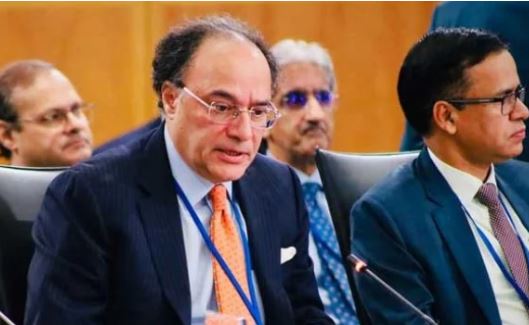
KARACHI, FEB 25: A delegation of the International Monetary Fund (IMF) has arrived in Karachi to begin discussions on the third review of Pakistan’s Extended Fund Facility (EFF) programme, Finance Minister Muhammad Aurangzeb said on Wednesday, adding that formal talks are scheduled to start on Monday.

Speaking to the media in Islamabad, he said that talks with the IMF delegation would begin in the federal capital, adding the third economic review would include a performance review.

The finance czar was of the view that Pakistan was in a good position regarding tax collection by the Federal Board of Revenue, saying tax revenue would also come under discussion during the talks with the IMF delegation.

Aurangzeb said that there were no issues regarding the rollover of deposits from the United Arab Emirates (UAE), adding that Islamabad remained in regular contact with the Gulf state in this regard.

Prior to the finance minister’s confirmation, sources had said that the IMF delegation held a meeting with officials from the State Bank of Pakistan (SBP) in Karachi soon after their arrival in the provincial capital.

The SBP officials will also brief the IMF team on anti-money laundering measures and anti-terror financing efforts, they added.

Sources said that Pakistan was expected to receive $200 million under the Resilience and Sustainability Facility (RSF) programme if the talks on the third review under the EFF concluded successfully.

The IMF delegation’s visit comes more than two months after the global lender released $1.2 billion to Pakistan under the EFF programme and the climate-focused RSF.

In a statement on December 11, 2025, the State Bank of Pakistan said that it received the funds following the IMF Executive Board approval.

The funds were reflected in the central bank’s foreign exchange reserves for the week ending December 12, 2025.

The disbursement followed a series of review meetings in Islamabad, held between September 24 and October 8, 2025, led by Iva Petrova, assessing Pakistan’s progress under its ongoing economic programmes.

PM Shehbaz hints at reducing direct taxes in upcoming budget to support businesses

PM Shehbaz hints at reducing direct taxes in upcoming budget to support businesses

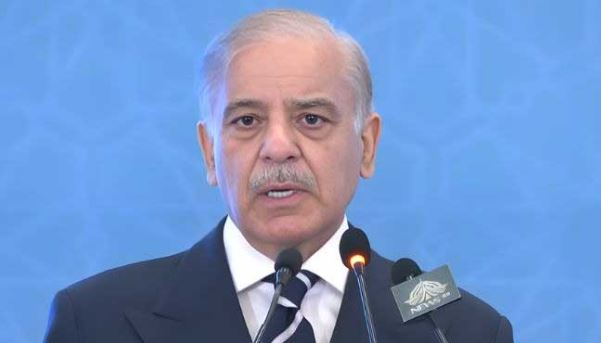
ISLAMABAD, FEB 25: Prime Minister Shehbaz Sharif on Wednesday stressed the need to reduce direct taxes in the forthcoming federal budget, acknowledging that sustainable economic growth cannot be achieved by increasing the tax burden.

“How long can we keep stretching this?” the prime minister said. “[…] Unless there is growth and unless production and exports increase, and unless you invest and attract foreign direct investment, how much more tax can you continue to impose?”

The premier stated this while addressing the inaugural session of the Pakistan Governance Forum 2026 in Islamabad today.

PM Shehbaz emphasised that in the upcoming budget, expected in the coming months, the government would need to cut direct taxes across the board. The objective, he noted, was to facilitate the business community and provide confidence to investors.

He added that entrepreneurs and investors should feel assured that their capital would not be eroded by excessive taxation.

The prime minister also underlined the need to enhance tax net and said currently due to different initiatives, the country’s tax to GDP had reached to 10.5%.

He also highlighted the importance of growth and production, exports and investment, foreign direct investment (FDI) and across the board reduction in indirect taxes in the upcoming fiscal budget.

The prime minister regretted that indirect taxes taken from the consumers and end users were not being deposited with the government which was a huge injustice with the nation.

He underlined the significance of the whole of the government’s approach to tackling pending economic challenges, and urged all stakeholders to move ahead on the path of economic growth with collective endeavours.

The prime minister said in June 2023, Pakistan was at the verge of default, but with the grace of Allah Almighty and with collective efforts, the government pulled the country back, and within two years, macro economic situation was stabilised due to the great teamwork of the federal, provincial governments and the military hierarchy.

The galloping inflation, which was hovering around 35% at that time, had been capped under 7%, the policy rate was brought to 10.5%, he said, adding that they had to further increase their exports in a gradual manner, as it had immense capacity to excel.

The prime minister said that certain reforms introduced by the government were home grown and the IMF had no role in it as it was their requirement and need of the time to avert the boom and bust cycle.

He further said in the power sector, the price of power per unit had been slashed by Rs9 while the solar investment was protected and commended the minister for power and his team for making efforts in this regard.

The prime minister regretted that the country was enduring Rs200 billion power theft and only the whole of the government approach could tackle this issue.

He also highlighted the necessity of closure of Utility Stores, which according to him, was “a den of corruption and theft”.

The prime minister also cited the Pakistan Works Department (PWD) and said it was a department tainted with corruption, and the closure of these entities saved billions of the nation.

With PM’s Ramazan Package, an amount of Rs38 billion was being distributed to the deserving people through digital wallets in a dignified and transparent manner, he added.

The ceremony was attended by chief ministers, ministers, provincial ministers, experts, diplomats, investors, businessmen, traders and officials.

Emphasising the need for collective efforts in the economic sector, the prime minister said: “Though the journey can be a long, arduous and thorny one, but we have accepted the challenge. Pakistan will carve its due place soon.”

The prime minister further reiterated that it was not the job of the government to do businesses rather it had to facilitate the private sectors, exporters and investors and support their efforts in the productivity and growth.

The government was encouraging the exporters, investors and businessmen with diverse incentives, he added.

Special students showcase talent at PNCA exhibition “Silent Expressions II”

Special students showcase talent at PNCA exhibition “Silent Expressions II”

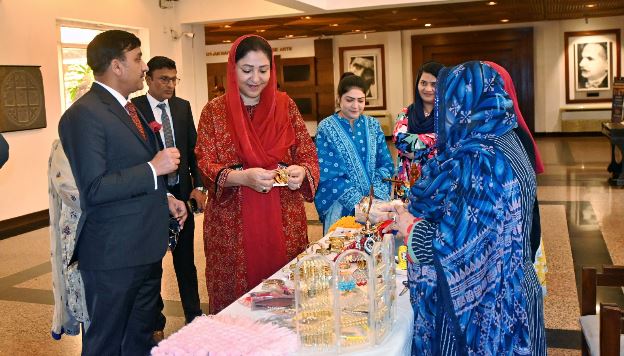
ISLAMABAD, FEB 25 /DNA/ – The Directorate General of Special Education, under the Ministry of Federal Education & Professional Training, organized the inaugural session of the three day Art and Craft Exhibition titled “Silent Expressions II – Dream, Feel & Create” at the Pakistan National Council of the Arts (PNCA), F-5/1, Islamabad.

The ceremony was held under the patronage of Mr. Nadeem Mahbub, Federal Secretary, Ministry of Federal Education & Professional Training. Ms. Wajiha Qamar, Minister of State for Federal Education & Professional Training, graced the occasion as Chief Guest.

In her address, the Minister of State highly appreciated the exceptional talent, creativity, and resilience demonstrated by students with special needs. She commended the dedicated efforts of Capt. (Retd.) Asif Iqbal Asif, Director General Special Education, for his holistic approach in nurturing and refining the abilities of these students and for providing them with meaningful platforms to express themselves.

Highlighting the government’s commitment to Special Education, she stated that Prime Minister Muhammad Shehbaz Sharif takes a keen interest in the promotion and development of Special Education. Referring to the establishment of the Center of Excellence for Autism, she shared that despite financial constraints, the Prime Minister has directed that the project be completed on priority to ensure the timely provision of quality facilities and services for children with autism spectrum disorder. She further noted that Dr. Khalid Maqbool Siddiqui, Federal Minister for Federal Education & Professional Training, has prioritized the revamping of Special Education in the Islamabad Capital Territory as part of the Government’s broader vision for inclusive and equitable education.

Earlier, in his opening remarks, Capt. (Retd.) Asif Iqbal Asif highlighted the wide range of services and facilities being provided by the Directorate General of Special Education for children with special needs. He elaborated on ongoing development projects and new initiatives aimed at strengthening professional training, skill development, and rehabilitation services.

He emphasized that the primary objective of the Directorate is to equip special children with professional and vocational skills, enabling them to become self-reliant and economically independent members of society.

The three day exhibition, which will continue until Friday, features a diverse collection of paintings, handicrafts, and creative artworks prepared by students from various special education institutions. A key highlight of the exhibition is the display of 59 exclusive thematic paintings created by deaf and hearing impaired female students. These remarkable artworks beautifully reflect the theme “Dream, Feel & Create,” portraying imagination, emotion, and artistic excellence.

The Ministry of Federal Education & Professional Training reaffirmed its strong commitment to promoting inclusive education and to providing meaningful platforms that celebrate the abilities, creativity, and immense potential of every child.

TİKA, Pakistan Bait-ul-Mal distribute Ramazan relief package among the needy

TİKA, Pakistan Bait-ul-Mal distribute Ramazan relief package among the needy

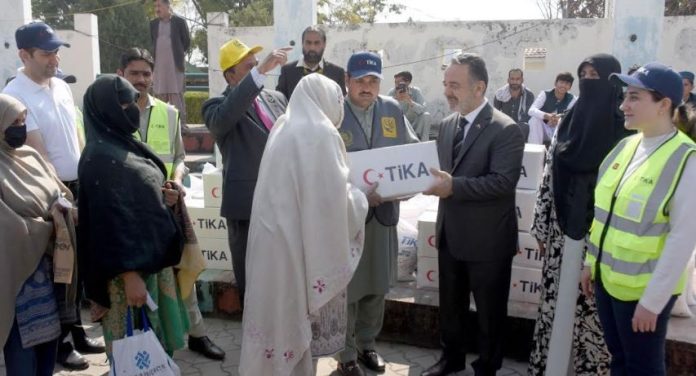
ISLAMABAD, FEB 25 /DNA/ – In a demonstration of enduring brotherhood and humanitarian cooperation, H.E. Dr. İrfan Neziroğlu, the Ambassador of the Republic of Türkiye to Pakistan, joined Pakistani officials to distribute Ramadan relief packages among underprivileged families.

The special distribution ceremony was held in Islamabad, where the Ambassador was accompanied by Senator Mr. Shaheen Khalid Butt, Managing Director of Pakistan Bait-ul-Mal, and the Head of the TİKA (Turkish Cooperation and Coordination Agency) Islamabad Office, Mme Saliha TUNA.

The relief packages, containing essential food items, were distributed among deserving families to help ease their hardships during the month of fasting. The presence of senior officials from both countries at the grassroots level was widely appreciated as a symbol of the solidarity that defines the Pakistan-Türkiye relationship.

Prayer ceremony held at NPC for the late father of T.M. Awan

Prayer ceremony held at NPC for the late father of T.M. Awan

DNA

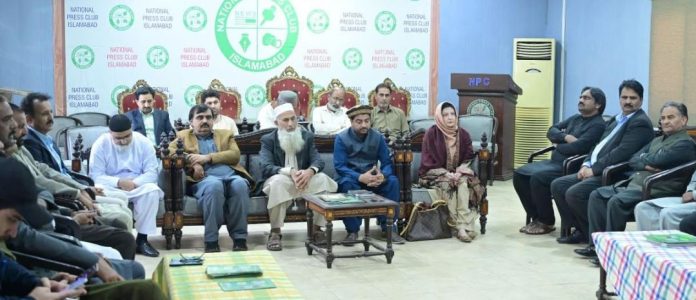
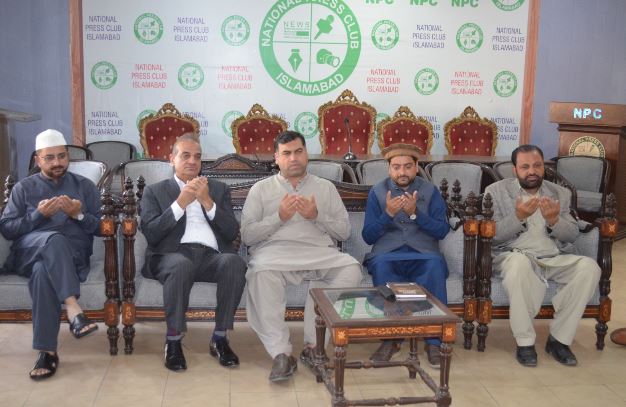
ISLAMABAD, FEB 25: A prayer ceremony was held at the National Press Club Islamabad for the late Muhammad Latif, father of senior journalist, columnist, and member of the National Press Club T.M. Awan. A large number of people from various walks of life attended the ceremony to offer prayers for the departed soul.

Among those who attended the ceremony were Director General of the Press Information Department Ayesha Tseddaq, Director Shahid Ranjha, President of the National Press Club Azhar Jatoi, former President of the Rawalpindi-Islamabad Union of Journalists (RIUJ) Tariq Virk, President Pakistan Federal Union of Journalist ( Workers) Dr Sadia Kamal , Senior Journalist Javaid Malik, Director General at the Ministry of Foreign Affairs Ahmed Ali Sehrohi, Minister Counsellor for Public Diplomacy at the Embassy of the Republic of Indonesia Mr. Rahmat Hindiarta, Head of the Department of Social Sciences at ZABIST University Dr. Tariq Waheed, representative of the Department of Public Policy at Riphah University Kashif Zaheer Kamboh, Civil Judge Mian Azhar Nadeem, Professor Wasim Anwar of the Urdu Department at Punjab Colleges, Director News ABN News Mohsin Nawaz, Director Chinese News Service at Associated Press of Pakistan (APP) Rab Nawaz Bajwa, Editor-in-Chief of Daily Islamabad Post Ansar Ali Bhatti, Chief Editor of Daily Shehr Nama Raja Javed, Editor Friday News Sabir Ali Baloch, President of Pakistan Awami Tehreek North Punjab Qazi Shafiq, and Media Coordinator Ghulam Ali, along with journalists, writers, intellectuals, government officials, diplomats, lawyers, teachers, and representatives of political and social organizations.

Addressing the gathering, Maulana Abu Bakar Madani said that death is an inevitable reality from which no one can escape. He stated that this world is temporary while the Hereafter is eternal, therefore every individual must continuously prepare for life after death. He emphasized the importance of preparing for the grave through righteous deeds, particularly by adopting good character. He noted that honesty, integrity, truthfulness, and fulfilling the rights of others are the true measures of success in both this world and the Hereafter.

At the conclusion of the ceremony, collective prayers were offered for the forgiveness and elevation of the late Muhammad Latif’s ranks in Jannat-ul-Firdous. Prayers were also offered for patience and strength for the bereaved family.

Speaking on the occasion, T.M. Awan thanked all participants for their presence and support. He said that the passing of his father was a profound personal loss, but the solidarity, prayers, and encouragement from friends and the journalistic community had given him strength during this difficult time.

Stay Connected

64FansLike
60FollowersFollow

Latest Reviews

Exchange Rates

USD - United States Dollar
EUR
1.14
GBP
1.34
AUD
0.70
CAD
0.71