Home Blog Page 231

Pakistan condemns unwarranted attacks against Iran, calls for halt to escalation

Pakistan condemns unwarranted attacks against Iran, calls for halt to escalation

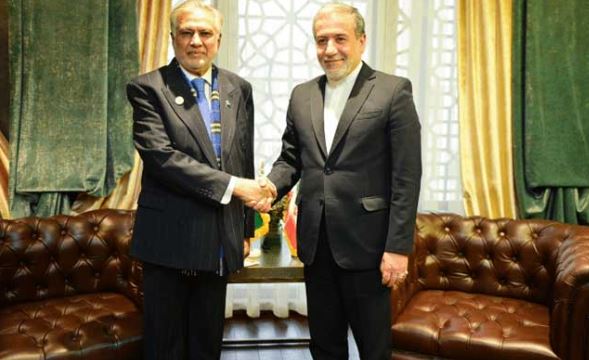
ISLAMABAD, FEB 28: Deputy Prime Minister and Foreign Minister Senator Ishaq Dar on Saturday received a telephone call from his Iranian counterpart Abbas Araghchi during which he strongly condemned the unwarranted attacks against Iran and urged an immediate halt to the escalating tensions.

The Ministry of Foreign Affairs said that the two leaders reviewed the rapidly evolving situation in Iran and the broader regional landscape.

During the conversation, Dar stressed the need for urgent resumption of diplomatic engagement, calling for de-escalation and a peaceful, negotiated resolution to the crisis.

Israel and the United States launched strikes on Iran on Saturday, plunging the Middle East into a renewed military confrontation as President Donald Trump vowed to destroy Tehran’s missile arsenal and prevent it from developing a nuclear weapon.

Tehran responded with a sweeping barrage of missiles targeting Gulf states and Israel, marking a sharp escalation in regional hostilities.

Iran’s Islamic Revolutionary Guard Corps (IRGC), the ideological arm of the republic, said the strikes targeted the US Fifth Fleet headquarters in Bahrain, additional American assets across the Gulf, and sites in Israel.

Explosions and air defence activity were reported across Saudi Arabia, Bahrain, Qatar and the United Arab Emirates (UAE), as well as in Israel and Iraq, in the hours following the initial launch. The missile salvo came after Tehran had repeatedly vowed a forceful retaliation in the event of an attack.

Several Gulf Arab states confirmed they were targeted. Kuwait, Qatar, the UAE and Jordan said their air defence systems intercepted incoming Iranian missiles. The UAE’s state media reported that one person was killed in Abu Dhabi.

A strike on a school in Iran killed 24 people, an Iranian provincial official said, while in Israel, the army deployed search and rescue teams to multiple locations following reports of fallen projectiles.

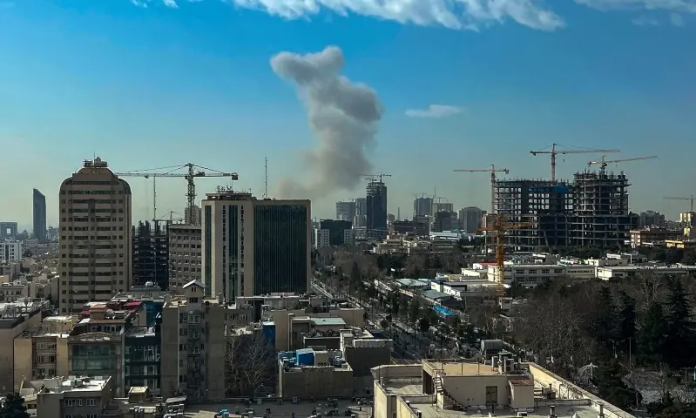
Smoke was rising over Tehran’s Pasteur district, the site of the home of Khamenei, and there was a huge security deployment in the capital.

Israeli media reported that Iranian Supreme Leader Ayatollah Ali Khamenei and President Masoud Pezeshkian were among the targets of the attack.

Iranian state television said Pezeshkian was “safe and sound”, while the Fars news agency said “missile impacts were reported in the Keshvardoost and Pasteur districts” of Tehran.

US-Israel attack violates UN Charter, Iran’s Foreign Ministry says

US-Israel attack violates UN Charter, Iran's Foreign Ministry says

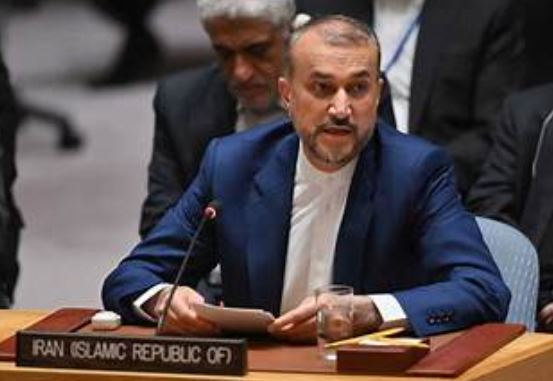
TEHRAN, FEB 28 /DNA/ — The Islamic Republic of Iran has issued a fiery condemnation of the United States and Israel, accusing them of launching a coordinated military attack on Iranian territory and vowing to retaliate with “all their might.”

In an official statement released Saturday, the Ministry of Foreign Affairs claimed that American and Israeli forces struck “defense infrastructures and civilian sites” in multiple cities early this morning. The attack comes, according to the statement, on the eve of the Persian New Year (Nowruz) and during the holy month of Ramadan.

The Iranian government framed the strikes as a profound betrayal, asserting that they occurred while Tehran and Washington were engaged in a “diplomatic process.” The statement suggests Iran entered these negotiations anticipating potential aggression, aiming to demonstrate its commitment to peace and expose the “illegitimacy” of any military action against it.

“Now the Iranian people are proud that they did everything necessary to prevent war,” the statement reads. “Now is the time to defend the homeland and confront the enemy’s military aggression.”

Legal Condemnation and Call for International Action

Tehran is branding the operation a violation of international law, specifically citing Article 2(4) of the United Nations Charter, which prohibits the threat or use of force against the territorial integrity of any state. Consequently, Iran asserts its “legal and legitimate right” to respond under Article 51 of the UN Charter, which enshrines the right to self-defense.

The Ministry has issued an urgent appeal to the United Nations, demanding that the Security Council and Secretary-General intervene immediately. It also called upon regional and Islamic countries, as well as members of the Non-Aligned Movement, to “firmly condemn this act of aggression.”

A Pledge of Retaliation

The statement concludes with a stark warning to Washington and Jerusalem. Drawing on nationalistic and religious rhetoric, it declares that Iran’s armed forces are “more prepared than ever for defense” and will make the “aggressors regret their criminal act.”

“History testifies that Iranians have never surrendered to foreign aggression and hegemony,” the statement declared. “This time too, the response of the Iranian nation will be decisive and determining.”

FO issues travel advisory for Pak nationals regarding Iran

FO issues travel advisory for Pak nationals regarding Iran

ISLAMABAD, FEB 28 (DNA): For their safety and security, Pakistani nationals are advised to avoid all non-mandatory travel to the Islamic Republic of Iran.

The Foreign Office Spokesperson, in a press statement on Saturday, said that Pakistani nationals currently residing in Iran must exercise caution, remain vigilant, minimize non-essential travel, and stay in regular contact with the Pakistani Missions using the contact details provided below:

Embassy of Pakistan in Iran

 Tehran

+98-21-66-9413-88/89/90/91 (landline)

+98-21-66-9448-88/90 (landline)

 +98 990 6824496 (mobile)

 Zahidan:

+98 54 33 22 3389 (landline)

 +98 90 46 145412 (mobile)

 Mashhad:

+98 910 762 5302 (mobile)

+98 937 180 7175 (mobile)

+98 902 709 3994 (mobile).=DNA

Pak-Russia forum calls for stronger strategic, media ties

Pak-Russia forum calls for stronger strategic, media ties

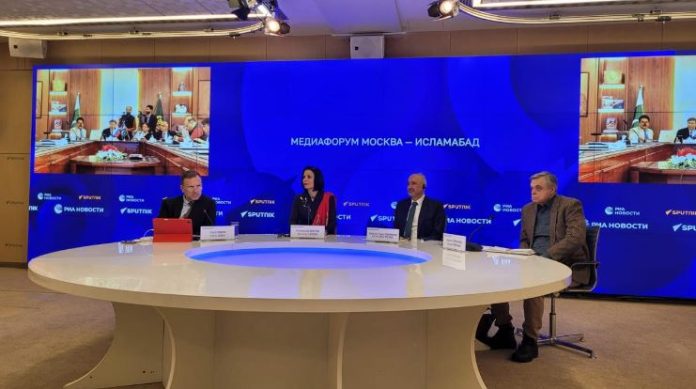
ISLAMABAFD, FEB 28 /DNA/ – Senior diplomats and experts from Pakistan and Russia at the Pakistan–Russia Media Forum emphasized strengthening strategic engagement, expanding economic and defence cooperation, and enhancing media collaboration to further consolidate the growing partnership between the two nations.

Speaking from Moscow during the first session of the forum, titled “Global Challenges and Perspectives in the Changing World: Overview from Moscow and Islamabad,” Pakistan’s Ambassador to the Russian Federation, Faisal Niaz Tirmizi, said the event reflects a deep mutual interest between the intellectuals of both nations. “Notably, the upcoming summit in Moscow will mark the fifth meeting between Prime Minister Shehbaz Sharif and President Vladimir Putin, highlighting a high level of diplomatic engagement,” he added.

He announced that Pakistan is organizing the Pakistan-Russia Business Forum, with over 100 leading Pakistani companies engaging their Russian counterparts during the Prime Minister’s visit. Highlighting growing bilateral momentum, he emphasized opportunities in education, trade, agriculture, and cultural exchanges, and the importance of strengthening people-to-people contacts. “We aim to increase Pakistani students in Russia to 13,000 and welcome Russian scholars to Pakistan for academic exchange,” he said. He also noted regular ‘Druzhba’ military exercises and joint naval drills, reaffirming Pakistan’s commitment to peace, dialogue, and diplomacy to promote regional and global stability.

Director of the Information and Press Department of the Russian Ministry of Foreign Affairs of the Russian Federation Maria Zakharova said the forum was a good opportunity to promote media cooperation between Russia and Pakistan. It reflects an innovative vision in the field of information exchange. She noted that information has become a strategic resource and a key dimension for measuring national power and sovereignty, though it presents certain challenges alongside its benefits. She further observed that new forms of hybrid conflicts are emerging, which employ political, economic, and non-military measures rather than conventional military means.

She spoke about the alarming rise in the quantity of fake news, saying it has exceeded all limits. Millions of people are led to believe that nothing significant is happening, as the international media landscape enters a new era. Maria Zakharova criticized the efforts in the past in shaping public opinion prior to military interventions. She questioned how people were deceived nearly 20 years before through media which, she said, resulted in horrible consequences in different parts of the world.

She also expressed solidarity by supporting March 15 as the International Day to combat Islamophobia. She stressed the need to prove who truly represents culture and faith, noting that all doctrines advocate freedom of speech and freedom of religion. However, she observed that some countries, despite claiming to uphold these values, fail to notice the contradiction between their principles and actions. She emphasized the importance of working together through dialogue and constructive engagement.

Chairman Pakistan China Institute and former Parliamentarian Syed Mushahid Hussain appreciated the proactive role of Pakistan’s Ambassador and said that the upcoming visit of the Pakistan Prime Minister to Russia in March is expected to be a landmark event.

Highlighting the growing alignment between the two countries, he stressed that Pakistan and Russia share no fundamental conflicts of interest. Drawing on his personal experience dating back to his first visit to the Soviet Union in 1984, he recounted decades of professional and personal linkages with Russian media, including collaborations with outlets such as Russia Today (RT) and sporting news networks.

Syed Mushahid Hussain also emphasized the importance of addressing media perception and misinformation. He highlighted persistent double standards in media coverage, pointing to situations such as Palestine, where humanitarian crises are often overshadowed by geopolitical interests. He advocated for the creation of a new, rules-based international order anchored in inclusivity, equality, international law, and the principles of the United Nations Charter. “Pakistan and Russia are aligned in this vision,” he said, emphasizing the importance of joint efforts to uphold global norms and implement cooperative solutions to challenges such as climate change, poverty alleviation, and regional security.

Syed Mushahid Hussain called for sustained media bridges, strengthened people-to-people connections, and strategic cooperation to advance Pakistan – Russia relations and promote a stable, prosperous, and multipolar global order.

Ambassador of the Russian Federation to Pakistan, Albert Khorev, highlighted the expanding partnership between Islamabad and Moscow, emphasizing public diplomacy, people-to-people engagement, and strengthened strategic collaboration in the Eurasian region.

Ambassador Khorev highlighted Russia’s proactive engagement since 2010, which has accelerated closer cooperation across various sectors, including diplomacy, media, and cultural exchanges.
He commended Pakistan for tackling security challenges and contributing to regional stability despite border escalations with Afghanistan and ongoing terrorism threats, and praised its responsible management of conflicts, including the recent incident with India, which avoided escalation between two nuclear powers.
Looking ahead, he stressed the importance of expanding bilateral collaboration through trade, technological cooperation, business engagement, and public diplomacy.

Bilawal condemns US attack on Iran

Chairman Bilawal strongly condemns terror attack in Khuzdar, Balochistan

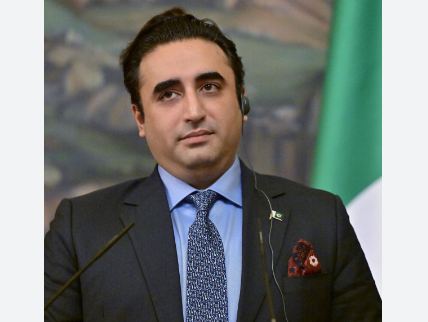
KARACHI / ISLAMABAD / LAHORE, Feb 28: Chairman Pakistan Peoples Party (PPP) Bilawal Bhutto Zardari has strongly condemned Israel’s attack on Iran.

According to the press release issued by the Media Cell Bilawal House, the PPP Chairman termed the Israeli aggression against Iran a grave escalation with dangerous implications for regional peace and stability. He said the Israeli attack appeared to be an attempt to divert global attention from the ongoing atrocities in Gaza.

Chairman Bilawal Bhutto Zardari called upon the international community to take notice of the blatant violation of Iran’s sovereignty and territorial integrity committed by Israel. He urged the United Nations (UN) and the Organisation of Islamic Cooperation (OIC) to take all possible measures to halt Israeli aggression against Iran.

ICCI President, South African envoy firm to promote trade and investment ties

ICCI President, South African envoy firm to promote trade and investment ties

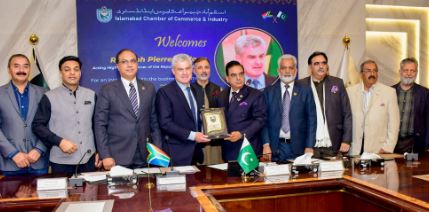
The Acting High Commissioner of South Africa to Pakistan, H.E. Rudolph Pierre Jordaan has said that South Africa is a land of infinite possibilities and one of Pakistan’s largest trading partners in Africa, offering an investor-friendly environment supported by progressive policies and a young, energetic workforce.

He expressed these views while addressing an interactive session at the Islamabad Chamber of Commerce and Industry (ICCI), which was attended by ICCI Executive Members and representatives from the trade and industrial sectors.

Highlighting the historic and cordial relations between Pakistan and South Africa since the establishment of diplomatic ties in 1994, the Acting High Commissioner underscored the vast potential for expanding bilateral trade and investment. He showcased South Africa’s diversified economy and pointed to promising opportunities in renewable energy, mining technology, automotive manufacturing, agro-processing, logistics, pharmaceuticals, tourism, metal products, machinery, and equipment.

He noted that as Africa’s most industrialized economy, South Africa enjoys preferential access to major global markets through multiple trade agreements, offering a strategic gateway for Pakistani businesses seeking expansion into the African continent. Emphasizing that “the sky’s the limit,” he called for enhanced sector-specific collaboration through business-to-business (B2B) linkages, exchange of trade delegations, and institutional partnerships to unlock untapped potential.

In his welcome address, President ICCI, Sardar Tahir Mehmood, stated that South Africa, being one of the leading and most diversified economies in Africa, holds a central place in Pakistan’s “Look Africa” Policy. He remarked that Pakistan views South Africa not only as a valued trade partner but also as a gateway to the broader African market.

He observed that while bilateral trade between the two countries has shown encouraging growth trends, it remains well below its true potential. At present, trade is largely concentrated in sectors such as textiles, rice, pharmaceuticals, chemicals, machinery, and agricultural products. However, given the size, diversity, and complementarities of both economies, there exists substantial scope to enhance trade volumes through diversification, value addition, and stronger private-sector collaboration.

He further emphasized that improved connectivity and deeper engagement with the African region under Pakistan’s Look Africa Policy would enable Pakistani exporters and investors to establish a stronger and more sustainable footprint across the continent. He expressed ICCI’s commitment to working closely with the South African High Commission to organize sector-specific interactions, webinars, trade delegations, and business matchmaking initiatives to facilitate meaningful partnerships.

Senior Vice President Tahir Ayub termed the session highly productive, stating that it provided valuable insights into South Africa’s investment climate, trade priorities, and areas of mutual cooperation. Vice President Irfan Chaudhry, in his vote of thanks, described the visit as reflective of the growing importance of economic engagement between Pakistan and South Africa and their shared commitment to strengthening bilateral cooperation.

The participants, including former President Mian Shaukat Masood, actively engaged in a question-and-answer session. Prominent attendees included Executive Members Sanaullah Khan, Zulqurnain Abbasi, Imran Minhas, Ishaq Sial, Ms. Shumaila Siddiqui, Chairman Inter-Regional Coordination Committee Kashif Zahir, and Chairman ICCI Standing Committee on ASEAN Affairs Chaudhry Mohammad Ali, along with other members of the business community.

How China and Russia will react to the Iran war

A demarche too far? Norway, the Supreme Court, and Pakistan’s diplomatic dilemma

China, Iran’s top trading partner and a major buyer of its oil, adopts an even more restrained stance. Beijing has supplied drones and negotiated missile deals but avoids overt involvement. Direct support would risk confrontation with the U.S. and Israel, potentially escalating into a third world war scenario

By Ansar Mahmood Bhatti

On February 28, 2026, the United States and Israel launched coordinated airstrikes on Iran, codenamed Operation Shield of Judah, targeting military installations, nuclear-related sites, and regime assets across Tehran, Isfahan, and other cities. President Donald Trump announced the start of “major combat operations,” framing the assault as necessary to eliminate imminent threats from Iran’s nuclear program and ballistic missiles, following failed negotiations and Tehran’s refusal to dismantle key facilities.

The strikes mark a sharp escalation from the 12-day Israel-Iran air war in June 2025, which degraded but did not eliminate Iran’s capabilities. U.S. and Israeli officials have signaled broader aims, with Trump repeatedly stating that regime change in Iran “would be the best thing that could happen.” Reports indicate discussions of options ranging from limited punitive strikes to more aggressive actions targeting leadership, amid ongoing domestic unrest in Iran.

These intentions appear designed not merely to curb nuclear ambitions but to fundamentally alter or topple the Islamic Republic’s government, capitalizing on its perceived weakness after protests, economic strain, and prior military setbacks.

Iran has vowed a strong response, though its capacity remains questionable after successive degradations to air defenses and missile stocks. Retaliation could involve proxies, ballistic missiles, or asymmetric tactics, but sustaining a prolonged fight against U.S.-Israeli superiority poses challenges.

Russia, a key ally, has provided covert support to Iran, including a €500 million arms deal for advanced Verba anti-aircraft systems, with some deliveries possibly accelerated. However, Moscow’s deep entanglement in Ukraine now in its fourth year has exhausted resources, manpower, and stockpiles.

Expect rhetorical condemnation, diplomatic backing at the UN, and perhaps additional covert arms flows, but direct military intervention or large-scale aid is improbable. Russia’s priority remains survival in its own conflict, limiting contributions to Iran’s defense.

China, Iran’s top trading partner and a major buyer of its oil, adopts an even more restrained stance. Beijing has supplied drones and negotiated missile deals but avoids overt involvement. Direct support would risk confrontation with the U.S. and Israel, potentially escalating into a third world war scenario.

 Unlike China’s open backing of Pakistan in India-Pakistan tensions—where U.S. involvement was absent and strategic ties with Islamabad were clear—the Iran case pits Beijing against Washington directly. Chinese interests favor stability for energy supplies and trade routes; escalation could disrupt global markets.

 Beijing has urged evacuation of citizens, called for de-escalation, and will likely limit responses to diplomatic protests, UN vetoes, and behind-the-scenes mediation prioritizing long-term gains from diverted U.S. attention over risking direct entanglement.

Pakistan’s position is delicate. Recent warming ties with the U.S., including high-level visits and economic cooperation, complicate open condemnation of the strikes despite geographic proximity and Muslim solidarity with Iran. Islamabad may offer quiet mediation but is unlikely to take sides overtly.

This conflict tests great-power alliances. Russia and China will provide limited, deniable support without full commitment, hedging to protect their core interests. The regime-change dimension raises the stakes, but miscalculation remains the greatest risk in an already volatile region.

United States, Israel commence strikes against Iran

DNA

Israel and the United States have launched a “pre-emptive attack” against Iran, pushing the Middle East into a renewed military confrontation and further dimming hopes for a diplomatic solution to Tehran’s long-running dispute with the West.


What we know so far:

  • Israel launched a pre-emptive attack on Iran
  • US strikes on Iran reportedly underway, according to a US official
  • Explosions and smoke observed in Tehran, suggesting a missile attack
  • Iran’s Supreme Leader Khamenei moved to a secure location for safety

“The State of Israel launched a pre-emptive attack against Iran to remove threats to the State of Israel,” Defence Minister Israel Katz said.

Katz has “declared a special and immediate state of emergency throughout the country”, read a statement from his ministry.

The New York Times, citing a US official, reported that US strikes on Iran were underway as well. A US official told Reuters that US strikes were being carried out by air and sea.

An Israeli defence official also told Reuters that the operation was being carried out in coordination with the US.

The attack, coming after Israel and Iran engaged in a 12-day air war in June, follows repeated US-Israeli warnings that they would strike again if Iran pressed ahead with its nuclear and ballistic missile programmes.

An Israeli defence official said the operation had been planned for months in coordination with Washington, and that the launch date was decided weeks ago.

Explosions were heard in Tehran, Iranian media reported.

Two loud blasts were heard in Tehran by AFP journalists, and two plumes of thick smoke were seen over the centre and east of the Iranian capital.

“The type of explosions suggests that this is a missile attack,” the Fars news agency reported, without immediately providing further details.

Meanwhile, an official confirmed to Reuters that Iran’s Supreme Leader Khamenei was not in Tehran and had been transferred to a secure location.

Following the attack, Israel closed its airspace to civilian flights, their defence ministry said.

Iran has also closed its airspace following multiple explosions, Civil Aviation Organisation spokesperson Majid Akhavan told state media IRNA.

Akhavan said that the airspace will be closed for six hours.

Iraq’s transport ministry said it closed the national airspace after Israel attacked Iran, Reuters quoted the state news agency as saying.

Pakistan issues travel advisory

In the wake of the attack, the Foreign Office (FO) issued a travel advisory for Pakistani nationals in Iran, urging them to “avoid all non-mandatory travel” to the country for their safety and security.

FO stated, “Pakistani nationals currently residing in Iran must exercise caution, remain vigilant, minimise non-essential travel, and stay in regular contact with the Pakistani Missions.”

The contact details are provided below:

Embassy of Pakistan in Iran

Tehran

+98-21-66-9413-88/89/90/91 (landline)

+98-21-66-9448-88/90 (landline)

+98 990 6824496 (mobile)

Zahidan:

+98 54 33 22 3389 (landline)

+98 90 46 145412 (mobile)

Mashhad:

+98 910 762 5302 (mobile)

+98 937 180 7175 (mobile)

+98 902 709 3994 (mobile)

Renewed talks

The US and Iran renewed negotiations in February in a bid to resolve the decades-long dispute through diplomacy and avert the threat of a military confrontation that could destabilise the region.

Israel, however, insisted that any US deal with Iran must include the dismantling of Tehran’s nuclear infrastructure, not just stopping the enrichment process, and lobbied Washington to include restrictions on Iran’s missile programme in the talks.

Iran said it was prepared to discuss curbs on its nuclear programme in exchange for lifting sanctions, but ruled out linking the issue to missiles.

Tehran also said it would defend itself against any attack.

It warned neighbouring countries hosting US troops that it would retaliate against American bases if Washington struck Iran.

In June, the US joined an Israeli military campaign against Iranian nuclear installations, in the most direct American military action ever against the Islamic Republic.

Tehran retaliated by launching missiles toward the US Al Udeid air base in Qatar, the largest in the Middle East.

Western powers have warned that Iran’s ballistic missile project threatens regional stability and could deliver nuclear weapons if developed. Tehran denies seeking atomic bombs.


This is a developing story that is being updated as the situation evolves. Initial reports in the media can sometimes be inaccurate. We will strive to ensure timeliness and accuracy by relying on credible sources, such as concerned, qualified authorities and our staff reporters.

Strategic Siege: Is Pakistan Being Surrounded

Qamar Bashir

Qamar Bashir

Geopolitics has never been governed by sentiment. Not religion, not shared history, not cultural brotherhood—only interests. The unfolding realignments across South Asia and the Middle East illustrate this truth with striking clarity. Alliances are shifting, rivalries are recalibrating, and Pakistan finds itself increasingly positioned at the intersection of competing strategic designs.

The roots of today’s complexity stretch back to 1979, when the Soviet Union invaded Afghanistan. Pakistan became the frontline state in a U.S.-backed campaign to counter Moscow. Billions of dollars in American and Saudi assistance flowed through intelligence networks to arm and train Afghan fighters. The mobilization of religious ideology was not incidental—it was strategic. Fighters from across the Muslim world converged in Afghanistan. By 1989, the Soviet withdrawal marked a Cold War victory for Washington and its partners.

But militant infrastructures rarely dissolve once their immediate utility ends. The Taliban emerged in the 1990s from the ashes of war, establishing control over Kabul in 1996. Pakistan was among the few nations to recognize their regime. Following the attacks of September 11, 2001, however, the same Taliban became the primary target of American military intervention. The subsequent 20-year war cost over $2 trillion and claimed more than 170,000 lives before the U.S. withdrawal in August 2021.

The Taliban’s return to power reshaped the region yet again. Instead of ushering in stability for Pakistan, however, cross-border militancy intensified. The Tehrik-i-Taliban Pakistan (TTP), operating from Afghan soil, escalated attacks in Khyber Pakhtunkhwa and Balochistan. Islamabad responded with cross-border airstrikes against militant sanctuaries. While tactically decisive, these actions strained relations with Kabul and risked civilian backlash.

Instead, Pakistan with its deep intelligence roots in Afghanistan, had the option to adopt the same tactics  which Afghanistan is using by infiltrating Pakistani Taliban in Pakistan and killing innocent people mostly by detonating human bombs in Mosque. This could have been a more discrete way to weed out the menace of TTP. History suggests that purely kinetic responses can produce unintended strategic consequences. Airstrikes may eliminate immediate threats, but they can also deepen mistrust and create diplomatic openings for rival powers.

In geopolitics, tactical victories can sometimes yield strategic setbacks. By intensifying overt military pressure, Islamabad may have inadvertently accelerated Kabul’s search for diversified partnerships.

That diversification is perhaps the most striking development. The Taliban government, ideologically committed to Islamic governance, has increasingly explored diplomatic and economic engagement beyond traditional Islamic partners. India reopened diplomatic channels in Kabul and expanded humanitarian assistance. Israel has pledged billions of dollars of aid to Kabul in alignment with India. This is a  profound geopolitical entanglement: an Islamic Emirate seeking expanded engagement with a Hindu-majority India and a Jewish-majority Israel, even as tensions simmer with neighboring Muslim Pakistan.

This underscores a fundamental principle of realpolitik: states pursue survival and leverage, not theological alignment. Religious brotherhood and shared culture matter, but only when they coincide with national interest calculations. Facing economic collapse, frozen reserves, and diplomatic isolation, Kabul seeks diversification. India offers infrastructure and access. Israel offers technological cooperation and strategic outreach. Ideology yields to necessity.

For Pakistan, however, the optics intensify concerns of encirclement. On its eastern border, India remains a strategic competitor, particularly over Kashmir. On its western frontier now stands an Afghanistan willing to engage Islamabad’s rivals. To the southwest lies Iran, itself navigating tense relations with the United States. This evolving geometry fuels perceptions of a tightening strategic ring.

An additional dimension complicates matters further: Bagram Airbase. During the U.S. presence in Afghanistan, Bagram served as the largest American military installation in the country, with dual runways capable of handling heavy aircraft and advanced surveillance platforms. Its geographic location—approximately 500 kilometers from China’s Xinjiang region—made it strategically significant.

U.S. President Donald Trump publicly criticized the abandonment of Bagram in 2021, arguing that retaining the base would have preserved American leverage, particularly in the context of intensifying U.S.-China rivalry. Bagram’s proximity to Central Asia, Iran, and western China positions it as more than a counterterrorism platform—it is a potential springboard in great-power competition.

While direct American military reentry into Afghanistan appears unlikely in the near term, evolving regional alignments could create indirect pathways of influence. The strengthening of India’s presence in Kabul, combined with Israel’s strategic engagement in broader Asian geopolitics, introduces analytical possibilities. Washington maintains deep defense partnerships with both New Delhi and Tel Aviv. If Afghanistan continues diversifying toward these actors, space may gradually reopen for U.S. strategic leverage—without formal troop deployments.

Interestingly, geopolitics often unfolds through indirect channels. For Washington, containing China remains a central strategic priority. For India, Afghanistan offers westward strategic depth. For Israel, expanded regional engagement broadens diplomatic influence. For Kabul, diversified partnerships reduce isolation. For Pakistan, however, these convergences heighten strategic anxiety.

For Israel, extending its engagement with Kabul through India would provide a strategic foothold in South Asia and enhance its capacity to deter Pakistan from aligning with Turkey and Saudi Arabia in any configuration perceived as intimidating to Israel. Such cooperation could be viewed as a counterweight to a potential alignment involving Turkey, Saudi Arabia, and nuclear-armed Pakistan, which some analysts argue might aim to exert strategic pressure or encirclement against Israel.

Simultaneously, the Persian Gulf remains heavily militarized. The U.S. Fifth Fleet in Bahrain deploys advanced naval assets, while Iran has invested in ballistic missiles, drones, and anti-ship systems designed to offset conventional asymmetry. China, importing substantial Gulf energy supplies, and Russia, expanding ties with Tehran, both observe carefully.

Any escalation between Washington and Tehran would reverberate in Pakistan. The country already hosts approximately 1.3 million registered Afghan refugees. A major Iran conflict could trigger further displacement, compounding economic strain amid IMF-backed reforms and domestic political polarization.

Internally, Pakistan faces political turbulence, including debates surrounding the incarceration of former Prime Minister Imran Khan and federal-provincial tensions. External pressure combined with internal division magnifies vulnerability.

Yet one broader truth emerges from this complex web: strategic encirclement is not solely a product of adversarial design. It can also arise from miscalculation, overreliance on hard power, and insufficient diplomatic agility. States that rely exclusively on military tools risk narrowing their strategic options.

This is a defining moment. Great-power rivalry, regional insecurity, and ideological contradictions intersect at fragile fault lines. Afghanistan’s outreach beyond traditional religious alignments demonstrates the primacy of interest over identity. Bagram symbolizes the enduring shadow of great-power competition. India and Israel’s evolving engagement in Kabul reflects the fluidity of modern alliances.

But history offers a sobering lesson. From the Soviet-Afghan war to the U.S. intervention, military campaigns have reshaped borders without resolving deeper grievances. Stability requires not merely deterrence but diplomacy.

Encirclement strategies may promise leverage. Hybrid doctrines may promise precision. Yet sustainable security demands cooperation grounded in mutual recognition of vulnerabilities.

Geopolitics may be ruthless in its calculations, but peace remains the only enduring strategic victory.

Qamar Bashir

Press Secretary to the President (Rtd)

Former Press Minister, Embassy of Pakistan to France

Former Press Attaché to Malaysia

Former MD, SRBC | Macomb, Michigan

T20 World Cup: England victory over New Zealand keeps Pakistan in semi-final race

T20 World Cup: England victory over New Zealand keeps Pakistan in semi-final race

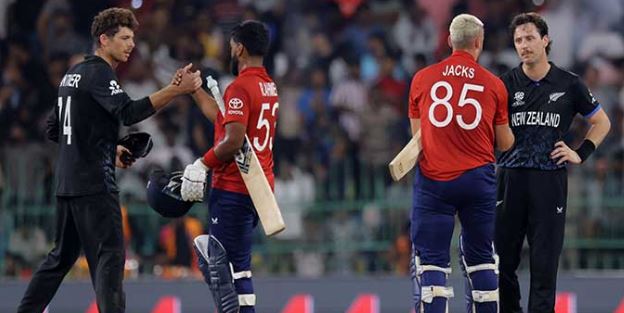
COLOMBO, FEB 27: England defeated New Zealand by four wickets in the Super Eight thriller of the ICC Men’s T20 World Cup 2026 at the R Premadasa Stadium, Colombo, on Friday, keeping Pakistan’s hopes alive to reach the semi-finals.

All-rounder Will Jacks’s swashbuckling cameo at the backend led England to a hard-earned victory over the Kiwis.

Set to chase a daunting 160-run target, the two-time champions amassed the target for the loss of six wickets and three balls to spare, courtesy of a blazing partnership between Jacks and Rehan Ahmed.

England got off to a disastrous start to the pursuit as they lost both their openers, Phil Salt (two) and Jos Buttler (two), inside two overs with just two runs on the board.

https://www.instagram.com/reel/DVRNuPNEvu4/embed/?cr=1&v=14&wp=648&rd=https%3A%2F%2Fwww.geo.tv&rp=%2Flatest%2F653258-t20-world-cup-2026-new-zealand-win-toss-elect-to-bat-first-against-england#%7B%22ci%22%3A0%2C%22os%22%3A3392.4000000059605%7D

Following the early setback, Jacob Bethell and captain Harry Brook launched a recovery as they put together 48 runs at a brisk pace.

Glenn Phillips broke the budding partnership on the first delivery of the eighth over by dismissing Brook, who made an anchoring 24-ball 26, comprising three fours and a six.

Bethell followed suit in the next over, falling victim to Rachin Ravindra after making 21 off 16 deliveries, courtesy of a sensational catch by Phillips in the deep, and England, as a result, were reduced to 58/4.

Tom Banton and Sam Curran then attempted to stabilise the innings by putting together 42 runs for the fifth wicket before both perished in quick succession.

https://www.instagram.com/p/DVROcQ8DWqm/embed/?cr=1&v=14&wp=648&rd=https%3A%2F%2Fwww.geo.tv&rp=%2Flatest%2F653258-t20-world-cup-2026-new-zealand-win-toss-elect-to-bat-first-against-england#%7B%22ci%22%3A1%2C%22os%22%3A3397%7D

Banton remained the top-scorer for England with a 24-ball 33, while Curran made a cautious 24 off 22 deliveries.

With the scoreboard reading 117/6, Jacks was joined by Rehan, and the duo turned the game on its head with belligerent hitting, putting together 44 runs off just 16 deliveries and led England to a sensational victory.

Jacks made an unbeaten 32 off just 18 deliveries, smashing four fours and a six, while Rehan scored 19 not out from seven balls with the help of two sixes and a four.

Rachin Ravindra was the standout bowler for New Zealand, taking three wickets for 19 runs in his four overs, while Matt Henry, Lockie Ferguson and Phillips could bag one apiece.

Opting to bat first, the Blackcaps could accumulate 159/7 in their 20 overs despite a flamboyant start.

https://www.instagram.com/reel/DVRHix1Ei2M/embed/?cr=1&v=14&wp=648&rd=https%3A%2F%2Fwww.geo.tv&rp=%2Flatest%2F653258-t20-world-cup-2026-new-zealand-win-toss-elect-to-bat-first-against-england#%7B%22ci%22%3A2%2C%22os%22%3A3400.5%7D

New Zealand’s opening pair of Tim Seifert and Finn Allen put together a blazing 64-run partnership until Adil Rashid struck on the final delivery of the seventh over to give England a much-needed breakthrough by dismissing the former, who made 35 off 25 deliveries with the help of three fours and two sixes.

Allen followed suit in the next over, falling victim to Will Jacks, after scoring a 19-ball 29, comprising three sixes, resulting in New Zealand slipping to 66/2.

Following the back-to-back setback, Glenn Phillips walked out to bat at No.4 and took the reins of New Zealand’s batting expedition with a gutsy knock.

The right-handed batter remained the top-scorer for the Blackcaps with a brisk 39 off 28 deliveries, featuring four fours and a six.

He also shared crucial partnerships with Rachin Ravindra (11) and Mark Chapman (15) until eventually falling victim to Will Jacks in the 18th over as New Zealand slipped to 135/6.

All-rounder Cole McConchie then added valuable runs at the backend with a 14-run cameo, coming off 12 deliveries and featured two fours.

For England, Adil Rashid, Rehan Ahmed and Will Jacks picked up two wickets each, while Liam Dawson chipped in with one scalp.

Stay Connected

64FansLike
60FollowersFollow

Latest Reviews

Exchange Rates

USD - United States Dollar
EUR
1.14
GBP
1.34
AUD
0.70
CAD
0.71