Home Blog Page 230

A Narrow Corridor between War and Talks

A Narrow Corridor between War and Talks

Dr. Muhammad Akram Zaheer

The steady arrival of American warships, aircraft and missile defence systems in the Gulf has stirred familiar unease in Tehran. Yet this time, the anxiety is accompanied by a sharper, more layered reading of Washington’s intentions. Iranian officials and analysts no longer see the buildup as theatre or mere signalling. Nor do they expect a ground war. The prevailing assessment is that the United States is preparing the ground for a short, punishing military operation designed to degrade Iran’s missile capabilities, weaken its deterrence, and recalibrate the regional balance after the brief but consequential confrontation with Israel in June 2025.

From Tehran’s perspective, the issue extends beyond the nuclear file. The strikes that followed Iran’s direct attack on Israel marked a turning point. For the first time, the Islamic Republic crossed a line it had long avoided, and while the costs were not negligible, the regime emerged with its core military infrastructure intact. Iranian strategists believe this outcome alarmed Washington and Tel Aviv alike. In their reading, the present military deployments are meant to reverse that outcome and restore a measure of deterrent dominance that was dented by Iran’s ability to strike and survive.

Iranian commentary has grown unusually candid. Analysts close to the establishment now describe American objectives as layered and cumulative: first, to impose fresh limits on enrichment; second, to erode Iran’s missile arsenal; third, to constrain its network of regional partners; and finally, to leave the Islamic Republic structurally weaker over the long term. In Tehran’s telling, Israel’s role in this equation is central. Israeli leaders, they argue, no longer view the American presence as leverage for diplomacy but as the opening phase of a wider campaign to undermine Iran’s capacity to strike back in any future conflict.

Each new deployment, whether in the Gulf or the eastern Mediterranean, is interpreted through this lens. Yet despite the pressure, there is little appetite in Tehran for capitulation. The lesson drawn from the June war is not that restraint spared Iran, but that the ability to impose costs forced an early halt to hostilities. The idea that the Islamic Republic might accept far-reaching concessions under threat of force cuts against the grain of the worldview of Ali Khamenei and the security establishment that surrounds him. With the country already under severe domestic strain, from economic hardship to social discontent, yielding under pressure is framed not as prudence but as an invitation to deeper vulnerability.

Against this backdrop, Iran’s strategic debate has taken a striking turn. For decades, its leaders spoke the language of defence even as they built tools for retaliation. Now, senior military figures are openly describing a shift towards a more forward-leaning posture. The emphasis is no longer solely on absorbing a blow and responding in kind, but on shaping the battlefield from the outset. This rhetoric is matched by hints that Tehran may not confine any future confrontation to narrow, bilateral exchanges. Instead, the leadership has begun to signal that a new conflict would be met with region-wide pressure, spreading the costs across multiple theatres.

This shift carries obvious risks. Some Iranian politicians and commentators caution against treating war lightly, warning that bravado can become a substitute for strategy. Others argue that Washington’s aim is not prolonged confrontation but a limited show of force, and that misreading such intentions could trigger a spiral that neither side controls. Yet these warnings sit uneasily alongside a broader sense within the regime that the present moment is unusually perilous. In past crises, Tehran balanced maximalist rhetoric with careful calibration. Today, the leadership appears more willing to accept risk, convinced that survival itself is at stake.

Diplomacy, meanwhile, continues in a narrow corridor. Indirect talks in Geneva have produced what officials describe as guiding principles for further engagement, and there are signs of cautious movement on technical issues. Iran has indicated a willingness to consider limited steps on enrichment levels and to permit selective access to sites. But the red lines remain firm. The missile programme, which Tehran credits with preventing far greater damage in the last conflict, is deemed non-negotiable under duress. Nor is there any readiness to dismantle regional partnerships to meet American or Israeli demands.

For a broader opening to emerge, Iranian officials argue, the United States would need to offer meaningful sanctions relief backed by assurances that go beyond past experience. In return, Tehran would have to accept intrusive monitoring by an international body it increasingly distrusts. That body, the International Atomic Energy Agency, occupies an awkward place in the current standoff. Its director-general, Rafael Grossi, has presented the Geneva process as a fragile but real opportunity, stressing that technical verification can still provide a foundation for wider agreement.

In Tehran, however, perceptions have hardened. The strikes on Iranian nuclear facilities in June, followed by American action against three sites, have reinforced the belief that inspections and technical disputes can be used to justify pressure rather than build confidence. While the IAEA’s leadership insists on its neutrality, many within Iran now view the agency as part of a political choreography that leads, ultimately, to coercion. This suspicion has narrowed the space for compromise, even on matters where technical accommodation might once have been possible. The scenario that many analysts now consider most plausible is therefore a short, intense confrontation: larger in scale than the June fighting but still limited in duration and scope. Such an outcome, fraught as it would be, carries a bleak logic for both sides. Washington could claim to have degraded Iran’s military and missile capabilities without becoming mired in a prolonged war. Israel could argue that Iran’s capacity to strike back has been curbed. Tehran, for its part, could absorb significant damage, retaliate enough to demonstrate resolve, and avoid concessions it considers politically fatal.

This grim equilibrium reflects the political calculus in Washington as well. For Donald Trump, a brief but forceful campaign could be presented as decisive action, followed by renewed pressure for negotiations on terms more favourable to the United States. The risk, of course, is that even a limited exchange can escape its intended boundaries. Once missiles fly and ships are struck, the logic of escalation takes on a momentum of its own. Hovering over all of this is the fear in Tehran that military pressure will be paired with efforts to deepen internal strain. Iranian elites speak openly of a blended approach in which covert action, economic pressure and information campaigns are combined with targeted strikes to exploit moments of vulnerability. In such a scenario, the threat is not merely physical damage but internal fragmentation. Deterrence becomes harder to manage when the battlefield extends into society itself.

This is the narrow passage in which diplomacy now struggles to survive. On one side stand military preparations and hardened red lines; on the other, a deep reservoir of mistrust shaped by years of broken agreements and punitive measures. Technical fixes may still offer temporary pauses, but the underlying confrontation remains unresolved. Both Washington and Tehran appear to be preparing for a clash they claim not to seek, convinced that the costs of yielding are greater than the costs of risking a short war. In that calculation lies the most unsettling lesson of the current moment: the space for restraint is shrinking, even as the dangers of misjudgement grow.
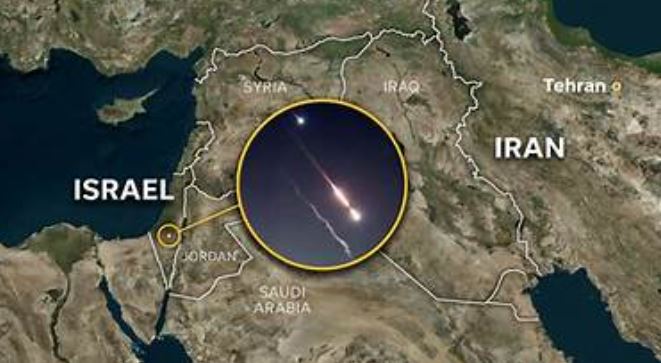
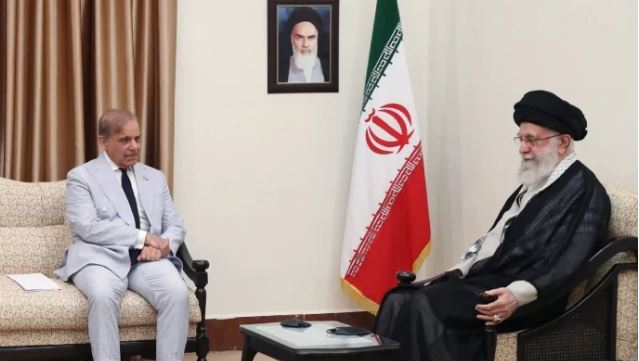
US-Israel Aggression Against Iran Raises Regional Tensions

US-Israel aggression against Iran raises regional tensions

Shamim Shahid

The recent US-Israel military actions against the Islamic Republic of Iran have intensified tensions across the Islamic world, particularly impacting smaller regional states. While proponents argue potential justifications, the coordinated attacks by Washington and Tel Aviv are widely viewed as a clear act of aggression, raising fears of broader instability in South and Central Asia.

Prior to these developments, Iran had already been placed in a complex regional situation, compounded by Pakistan’s involvement in Afghanistan. Senior Pakistani journalist Hamid Mir highlighted that a US-aligned Gulf country played a role in fuelling the conflict, suggesting that the aggression against Iran followed a premeditated plan. Israel’s Prime Minister has reportedly indicated that Pakistan could be the next target, citing concerns over its nuclear capabilities and the presence of hardliner elements.

Meanwhile, the United States has expressed strategic interest in Bagram Air Base and has previously supported Pakistan in its campaign against the Taliban regime in Afghanistan. These actions indicate broader ambitions by Washington to consolidate influence across the region.

International reactions have varied. Russia has denounced the US-Israel aggression against Iran, while China issued a restrained statement, focusing on sovereignty and territorial integrity rather than directly condemning the attacks. Most Arab nations, aside from Yemen, have aligned with the United States, citing their cooperation on hosting American military installations. Yemen, however, has publicly condemned the attacks and pledged support for Iran.

 Pakistan’s stance remains ambiguous, as its leadership has yet to clearly articulate a position that satisfies either Washington or Tehran.

The human toll of the attacks has been severe. Reports indicate hundreds of casualties, including prominent Iranian spiritual figures such as Ayatollah Khamenei. The scale of the conflict has sparked fears of a potential third world war, particularly given the involvement of nations possessing chemical weapons and advanced information technologies. Analysts warn that multilateral forums such as the UN have been weakened and are struggling to respond effectively.

At the grassroots level, widespread protests have erupted across Pakistan, including in Karachi, Lahore, Skardu, Gilgit, Parachinar, Kurram, and Peshawar. Demonstrators have targeted installations such as the US Consulate in Karachi and UN offices in Skardu and Gilgit. Reports suggest at least eight fatalities in Karachi and three in Skardu as security forces intervened to control the unrest.

The ongoing volatility poses a direct threat to Pakistan’s internal stability. Observers argue that the government, led by Premier Shehbaz Sharif, must act swiftly to achieve political reconciliation. An early all-parties conference is needed to discuss the current scenario and formulate a cohesive regional strategy.

 Furthermore, restoring cordial relations with neighboring countries, particularly Afghanistan, is critical to mitigating the broader fallout.

Without prompt and decisive action, analysts warn that Pakistan could face severe economic, political, and security consequences amid the escalating regional conflict.

PM Shehbaz terms Khamenei’s martyrdom ‘violation of international law’

PM Shehbaz terms Khamenei's martyrdom 'violation of international law'

ISLAMABAD, MAR 1: Prime Minister Shehbaz Sharif on Sunday denounced the targeting of Iran’s Supreme Leader Ayatollah Ali Khamenei in joint strikes by the United States and Israel, saying such actions were a “violation of the norms of international law”.

The Iranian government, early on Sunday, confirmed that Khamenei had been martyred in joint Israeli and US air strikes that began on February 28.

In a post on X, PM Shehbaz said that it was an age-old convention that the heads of state or government should not be targeted.

The premier expressed condolences to Iran over the martyrdom of Khamenei, calling it a grave loss for the nation.

“The Government and the people of Pakistan join the people of Iran in their hour of grief and sorrow and extend the most sincere condolences on the martyrdom of His Eminence Ayatollah Seyyed Ali Khamenei,” he said.

“We pray for the departed soul. May Allah Almighty grant patience and strength to the Iranian people to bear this irreparable loss,” the premier added.

UK joins ‘regional defensive operations’ as Iranian missiles shake Gulf cities after US, Israeli strikes

UK joins 'regional defensive operations' as Iranian missiles shake Gulf cities after US, Israeli strikes

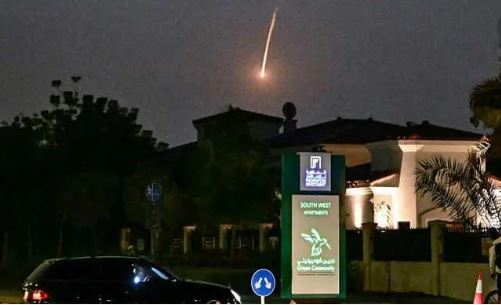
TEHRAN, FEB 28: Tensions in the Middle East have spiraled dramatically, with Iran reporting over 80 fatalities in a strike on a girls’ school in the south, just as the United Kingdom announced its involvement in “regional defensive operations” following a volley of Iranian missiles toward Gulf cities.

The developments mark a significant escalation in a conflict that has been simmering since recent US and Israeli strikes in the region.

The atmosphere in Tehran was one of mourning and fury on Sunday as officials confirmed that a strike hit a girls’ school in southern Iran, killing more than 80 people. The Iranian government did not immediately assign blame for the attack but pointed to the “criminal nature” of its adversaries. The incident threatens to become a rallying point for further retaliation, with state media broadcasting images of the destruction and grieving families.

In a letter to the United Nations, Iran’s mission stated that it “will continue to exercise its inherent right to self-defence” under international law. The communication asserted that recent actions by the US and Israel have violated the country’s sovereignty, and while Iran remains committed to regional stability, it reserves the right to respond decisively to any threat or attack.

In a rapid response, the UK Ministry of Defence confirmed that British forces had joined “regional defensive operations” to protect assets and allies in the Gulf. While stressing that the UK is not seeking confrontation with Iran, a spokesperson said, “We stand with our partners against further attacks and will continue to provide air defence support to preserve peace and prevent broader instability.”

The UK’s involvement signals a widening of the international footprint in the conflict, raising concerns of a proxy war drawing in global powers.

Sri Lanka shatters Pakistan’s semifinal dream in run-fest

Sri Lanka shatters Pakistan's semifinal dream in run-fest

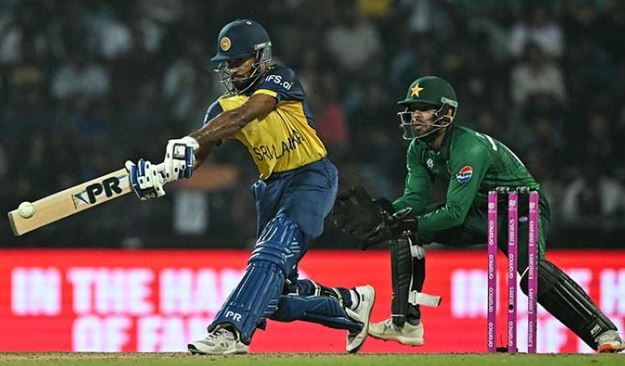
KANDY, FEB 28: Pakistan’s T20 World Cup campaign came to an end after Sri Lanka crossed the decisive 147-run threshold during their 213-run chase in the Super Eight clash at Pallekele Cricket Stadium, Kandy, on Saturday.

Despite taking early wickets, Pakistan struggled to stem the flow of runs as Sri Lanka built momentum.

Sri Lanka scored 168 for six after the completion of 18 overs.

Abrar Ahmed claimed three crucial wickets in his four-over spell, dismissing Kamil Mishara, Charith Asalanka and Kamindu Mendis.

Naseem Shah chipped in by removing Pathum Nissanka in his three overs, while Mohammad Nawaz accounted for Janith Liyanage in the 12th over.

Earlier, Sahibzada Farhan’s sensational century, backed by Fakhar Zaman’s fifty, propelled Pakistan to a massive total of 212 runs against Sri Lanka.

Sri Lanka captain Dasun Shanaka’s decision to field first backfired as his team’s bowling unit conceded a daunting 212/8 in 20 overs.

Pakistan’s new opening pair of Farhan and Fakhar gave them a flamboyant start as they raised a monumental 176-run partnership, which saw both openers scoring blistering half-centuries.

Dushmantha Chameera eventually broke the threatening partnership by cleaning up Fakhar, who walked back after scoring 84 off 42 deliveries, laced with nine fours and four sixes.

Pakistan then suffered another setback to their batting expedition in the next over when Dilshan Madushanka got Khawaja Nafay (two) caught at long-on and were thus slipped further to 179/2.

Farhan was then involved in a brief 21-run partnership for the third wicket with Shadab Khan, who contributed with a five-ball seven after getting run out in the 18th over.

Skipper Shanaka pulled things back for Sri Lanka in the penultimate over by dismissing all-rounder Mohammad Nawaz and Pakistan captain Salman Ali Agha for ducks, and thus brought the total down to 199/5.

Farhan, on the other hand, eventually fell victim to Madushanka on the first delivery of the final over and walked back after top-scoring for Pakistan with 100 off 60 deliveries, studded with nine fours and five sixes.

Madushanka struck again in the pulsating final over, trapping Shaheen Shah Afridi lbw and thus halting the flow of runs for Pakistan at the backend.

Madushanka was the standout bowler for Sri Lanka, taking three wickets for 33 runs in his four overs, followed by Shanaka with two, while Chameera claimed one.

Pakistani citizens in Iraq advised to remain vigilant

Pakistani citizens in Iraq advised to remain vigilant

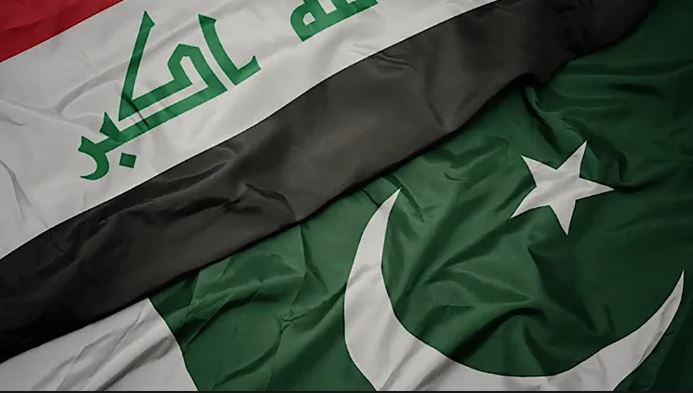
BAGHDAD, Feb 28: In view of the prevailing security situation in the region, Pakistan’s embassy in Iraq advised all Pakistani nationals residing in or visiting Iraq to remain vigilant and exercise utmost caution.

In a press release, Pakistan’s embassy asked its citizens to closely monitor developments through reliable sources and avoid all non-essential travel until the situation stabilizes.

It has been reported that Iraqi airspace has also been closed due to the evolving circumstances.
The embassy said, “Pakistani nationals planning to travel are strongly advised to regularly check updates issued by the Iraqi Civil Aviation Authority and their respective airlines before proceeding to the airport.”

Travelers should keep their passports and other essential documents readily accessible and ensure that their contact details are up to date. All community members are encouraged to: Avoid large gatherings and sensitive areas, follow instructions issued by local authorities, maintain contact with family members, inform them of their whereabouts, and keep sufficient essential supplies as a precautionary measure.

In case of any emergency or urgent consular assistance, citizens should contact the embassy at the following numbers:
+9647834950311 +9647846192482 +9647834950183 +9647839800899

In phone call with MBS, PM Shehbaz slams ‘serious regional escalation’

In phone call with MBS, PM Shehbaz slams ‘serious regional escalation'

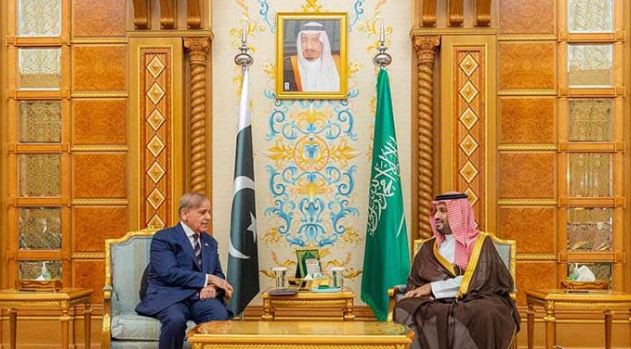
ISLAMABAD, FEB 28: Prime Minister Shehbaz Sharif on Saturday held a telephonic conversation with Saudi Crown Prince Mohammed bin Salman this evening as tensions escalated in the Middle East following Israel-USA attack on Iran.

A statement issued by the PMO said the premier condemned the serious regional escalation that had taken place as a result of the Israeli attack on Iran today, followed by the regrettable attacks on other Gulf countries.

While assuring the Saudi leadership of Pakistan’s full solidarity and support in the current situation, the PM said that Pakistan would always stand with its Saudi brothers and sisters, at all times to come, and under all circumstances.

PM Shehbaz said that Pakistan was ready to play a constructive role at this difficult time and prayed that the blessings of the holy month of Ramadan would bring peace to the region at the earliest, the statement added.

Separately, PM Shehbaz also spoke with UAE President Sheikh Mohamed bin Zayed Al Nahyan to convey Pakistan’s strong condemnation of the dangerous regional escalation following the Israeli attack on Iran and the regrettable strikes against the UAE and other Gulf countries.

“I expressed my deep sorrow over the tragic loss of a Pakistani national in Abu Dhabi. Pakistan stands in full solidarity with the UAE, and we will always stand by our Emirati brothers and sisters in these difficult times,” the premier said in X post.

Earlier today, Deputy Prime Minister and Foreign Minister Senator Ishaq Dar on Saturday received a telephone call from his Iranian counterpart Abbas Araghchi during which he strongly condemned the unwarranted attacks against Iran and urged an immediate halt to the escalating tensions.

The Ministry of Foreign Affairs said that the two leaders reviewed the rapidly evolving situation in Iran and the broader regional landscape.

During the conversation, Dar stressed the need for urgent resumption of diplomatic engagement, calling for de-escalation and a peaceful, negotiated resolution to the crisis.

Israel and the United States launched strikes on Iran on Saturday, plunging the Middle East into a renewed military confrontation as President Donald Trump vowed to destroy Tehran’s missile arsenal and prevent it from developing a nuclear weapon.

Tehran responded with a sweeping barrage of missiles targeting Gulf states and Israel, marking a sharp escalation in regional hostilities.

Iran’s Islamic Revolutionary Guard Corps (IRGC), the ideological arm of the republic, said the strikes targeted the US Fifth Fleet headquarters in Bahrain, additional American assets across the Gulf, and sites in Israel.

Explosions and air defence activity were reported across Saudi Arabia, Bahrain, Qatar and the United Arab Emirates (UAE), as well as in Israel and Iraq, in the hours following the initial launch. The missile salvo came after Tehran had repeatedly vowed a forceful retaliation in the event of an attack.

Several Gulf Arab states confirmed they were targeted. Kuwait, Qatar, the UAE and Jordan said their air defence systems intercepted incoming Iranian missiles. The UAE’s state media reported that one person was killed in Abu Dhabi.

A strike on a school in Iran killed 24 people, an Iranian provincial official said, while in Israel, the army deployed search and rescue teams to multiple locations following reports of fallen projectiles.

Smoke was rising over Tehran’s Pasteur district, the site of the home of Khamenei, and there was a huge security deployment in the capital.

Israeli media reported that Iranian Supreme Leader Ayatollah Ali Khamenei and President Masoud Pezeshkian were among the targets of the attack.

Iranian state television said Pezeshkian was “safe and sound”, while the Fars news agency said “missile impacts were reported in the Keshvardoost and Pasteur districts” of Tehran.

Malaysia condemns West Asia attacks, urges UN action

Malaysia condemns West Asia attacks, urges UN action

PUTRAJAYA, FEB 28 /DNA/ – Malaysia has issued a strong condemnation of a series of military strikes that rocked West Asia on Friday, targeting the Islamic Republic of Iran and several other nations in the region. The Ministry of Foreign Affairs described the attacks as a grave violation of international law that threatens to plunge an already volatile region into deeper chaos.

In an urgent statement released this evening from Wisma Putra, the ministry confirmed it was reacting to attacks against Iran and subsequent retaliatory strikes affecting Saudi Arabia, Bahrain, the United Arab Emirates, Kuwait, and Qatar.

“Malaysia strongly condemns the attacks against Iran and the subsequent retaliatory attacks against several countries in the region… on 28 February 2026,” the statement read.

Putrajaya framed the military actions as a direct affront to the foundational principles of international order, arguing they violate the sovereignty and territorial integrity of the affected nations. The ministry specifically pointed to the prohibition on the use of force enshrined in the Charter of the United Nations.

“Such unilateral military measures risk further destabilising an already fragile region and endangering civilian lives,” the press release stated, emphasizing the potential for the conflict to spiral out of control.

With tensions at a critical peak, the Malaysian government made an urgent appeal to all parties involved to exercise maximum restraint. The ministry warned that any further escalation could have consequences far beyond West Asia, potentially destabilizing global security and economic stability.

Reiterating its longstanding foreign policy principles, Malaysia stressed that disputes between nations must be resolved through peaceful means. “Disputes must be resolved through dialogue and diplomacy, in full respect of international law,” the statement affirmed.

In a call to action for the world body, Malaysia urged the international community, particularly the United Nations, to intervene without delay. It called for “urgent and decisive action to de-escalate the situation, and restore peace and stability in the region.”

The swift and unequivocal response from Malaysia places it among the first nations in Southeast Asia to formally react to the rapidly unfolding crisis in West Asia.

Pakistan regrets middle east talks collapse, urges restraint

FO issues travel advisory for Pak nationals regarding Iran

ISLAMABAD, FEB 28: DNA/ – Pakistan has voiced serious concern over the collapse of diplomatic efforts in the Middle East following a recent escalation of hostilities, condemning attacks on both the Islamic Republic of Iran and several Gulf nations while urging maximum restraint from all parties involved.

In an official statement, Pakistan expressed regret over the failure of negotiations and the subsequent outbreak of violence. The Foreign Office specifically condemned what it described as “unwarranted attacks against the Islamic Republic of Iran,” noting that the strikes occurred precisely when diplomatic initiatives were underway to reach a peaceful resolution.

“Such a course of action will undermine the peace and stability of the entire region, with far-reaching consequences,” the statement warned.

Solidarity with Gulf Nations
Simultaneously, Pakistan strongly condemned attacks targeting brotherly countries including Saudi Arabia, Bahrain, Jordan, Kuwait, Qatar, and the United Arab Emirates (UAE). The statement affirmed Pakistan’s solidarity with these nations while emphasizing the need for all sides to exercise maximum restraint.

The Foreign Office characterized the actions against Gulf states as “unprovoked attacks” constituting “blatant violations of their sovereignty.”

Pakistani National Killed in UAE
In a tragic development, Pakistan also confirmed the death of a Pakistani national in the UAE during the recent attacks. The Foreign Office condemned the “unfortunate death,” describing the incident as part of a “dastardly attack.”

Call for Restraint and Diplomacy
Warning against further military action, Pakistan urged all sides to refrain from any steps that may compromise the security and territorial integrity of regional countries.

Reaffirming its commitment to international norms, Pakistan called for the upholding of international law and the principles of the UN Charter. The statement emphasized the urgent need for all parties to resume diplomatic engagement and find a peaceful, negotiated solution to the escalating crisis.

“We urge all sides to refrain from any further actions that may undermine the security and territorial integrity of other regional countries,” the Foreign Office added, underscoring the importance of dialogue in de-escalating tensions.

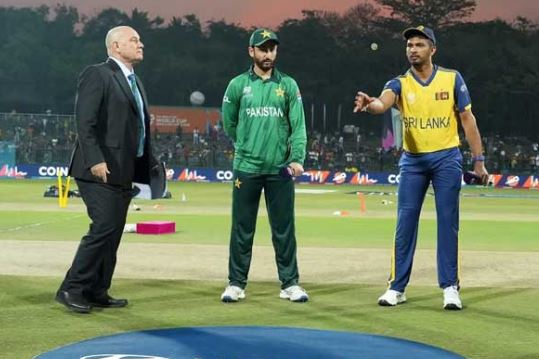
T20 World Cup: Sri Lanka win toss, opt to bowl first against Pakistan

T20 World Cup: Sri Lanka win toss, opt to bowl first against Pakistan

Pallekele: Sri Lanka elected to field first after winning the toss against Pakistan at Pallekele Cricket Stadium, Kandy, in a must-win Super Eight match for the Green Shirts to advance into the ICC Men’s T20 World Cup 2026 semi-finals.

Playing XIs
Pakistan: Sahibzada Farhan, Fakhar Zaman, Salman Agha(c), Khawaja Nafay, Usman Khan(w), Shadab Khan, Mohammad Nawaz, Shaheen Afridi, Naseem Shah, Abrar Ahmed and Usman Tariq.

Sri Lanka: Pathum Nissanka, Kamil Mishara(w), Charith Asalanka, Pavan Rathnayake, Kamindu Mendis, Dasun Shanaka(c), Janith Liyanage, Dunith Wellalage, Maheesh Theekshana, Dushmantha Chameera and Dilshan Madushanka.

Head-to-head
Pakistan and Sri Lanka have come face-to-face 24 times in T20Is, with the former dominating the head-to-head, having claimed 14 victories.

However, the head-to-head record in T20 World Cups is perfectly balanced.

In their four previous encounters in the tournament, both teams have secured two wins apiece, adding an extra layer of intrigue to tonight’s high-pressure showdown.

Matches: 24
Pakistan: 14
Sri Lanka: 10
Form Guide
Pakistan and Sri Lanka enter the fixture with equally disappointing momentum as both teams have just two victories in their last five T20Is and are yet to taste a triumph in the ongoing Super Eights stage.

The home side, however, are already out of the semi-final qualification race as they are at the bottom of Group 2 standings with zero points in two matches.

Pakistan, on the other hand, are placed third with one point, courtesy of their washout against New Zealand, and thus still have the chance to qualify for the knockouts.

The 2009 champions need to beat Sri Lanka by around 65 runs or chase down the target in 13 overs to surpass New Zealand in terms of net run rate.

Pakistan: L, NR, W, L, W (most recent first)

Sri Lanka: L, L, L, W, W

Stay Connected

64FansLike
60FollowersFollow

Latest Reviews

Exchange Rates

USD - United States Dollar
EUR
1.14
GBP
1.34
AUD
0.70
CAD
0.71