Home Blog Page 23

Encroachments turn Islamabad’s Sector G-8 into a chaotic place

Encroachments turn Islamabad’s Sector G-8 into a chaotic place

In stretches such as G-8 Markaz and G-8/4, pedestrians are forced onto the roads as footpaths remain blocked by vehicles. Residents complain that CDA enforcement teams routinely turn a blind eye, allowing businesses to operate freely in violation of municipal by-laws

Saifullah Ansar

ISLAMABAD, DEC 28 /DNA/ – Encroachments in Islamabad’s Sector G-8 have reached alarming proportions, transforming once orderly streets into congested corridors of chaos. Despite repeated complaints from residents, the Capital Development Authority (CDA) and Islamabad Traffic Police (ITP) appear to be doing little beyond issuing hollow statements and conducting superficial operations that fail to tackle the root of the problem.

Over the past several years, open spaces, service roads, and even footpaths in G-8 Markaz and adjoining areas have been overtaken by car showrooms, workshops, and informal businesses. What was originally envisioned as a balanced commercial and residential hub has now morphed into a sprawling encroachment zone, where nearly every inch of public space has been commercialized.

The most glaring violations are visible outside car showrooms that have virtually taken over service roads and sidewalks, using them as parking lots and display areas. In stretches such as G-8 Markaz and G-8/4, pedestrians are forced onto the roads as footpaths remain blocked by vehicles. Residents complain that CDA enforcement teams routinely turn a blind eye, allowing businesses to operate freely in violation of municipal by-laws.

“The situation has become unbearable,” said one resident of G-8. “We cannot even park our own cars near our homes because showrooms and workshops occupy every available space. The CDA only wakes up when the media highlights the issue, and even then, they remove a few temporary setups while leaving the main violators untouched.”

The Islamabad Traffic Police have also come under fire for what locals describe as “lip service” and “cosmetic actions.” Despite visible traffic chaos in and around the Markaz, ITP’s response has largely been limited to placing cones or posting officers for a few hours. Vehicles parked illegally on footpaths, greenbelts, and double lanes remain unchecked.

Traffic congestion during peak hours has become routine, particularly around the main commercial areas and near government offices in G-8/4 such as AGPR, PEMRA, PTCL, and the Post Office. Commuters often find themselves trapped in long lines of traffic, worsened by haphazard parking and unauthorized roadside businesses. “Every other day there’s a traffic jam here. Instead of clearing the encroachments, the authorities just fine a few drivers and move on,” complained a shopkeeper.

Urban planners and civic activists argue that unchecked encroachments reflect a deeper governance failure. “The CDA’s enforcement wing is either under pressure from commercial interests or simply lacks the will to act. This neglect not only ruins the city’s aesthetics but also discourages law-abiding citizens,” remarked a former CDA official on condition of anonymity.

Residents have demanded immediate and meaningful measures, not symbolic drives. They are calling for strict enforcement of building and parking regulations, removal of illegal car showrooms, and continuous monitoring to prevent re-encroachment.

Until such steps are taken, Sector G-8 risks losing its planned urban character altogether, turning instead into another congested and unlivable commercial sprawl — a stark symbol of administrative apathy in the heart of Pakistan’s federal capital.=DNA

==============
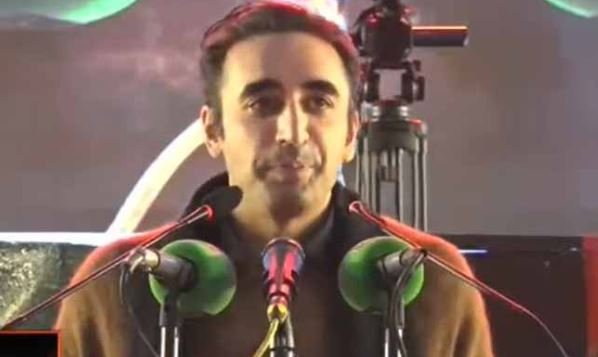
‘King of reconciliation’: Bilawal says only Zardari can end political polarisation in country

'King of reconciliation': Bilawal says only Zardari can end political polarisation in country

ISLAMABAD, DEC 27: Pakistan Peoples Party (PPP) Chairman Bilawal Bhutto-Zardari has stressed the need for reconciliation to steer the country out of political and economic crises, saying President Asif Ali Zardari is the only leader capable of bringing an end to political polarisation in the country.

“There is one person who can take Pakistan out of political polarisation — the king of reconciliation — and that person is Asif Ali Zardari,” the scion of Bhutto family said while addressing a public gathering held to commemorate the 18th death anniversary of slain leader Benazir Bhutto in Gari Khuda Baksh.

During the address, he pointed out that political polarisation was damaging democracy, the economy and national security. “If Pakistan is to be pulled out of the political crisis, it will automatically help the country emerge from the economic crisis as well,” he said.

He emphasised that solutions to the country’s challenges lay in political engagement rather than confrontation. “If we want to resolve our problems, political forces will have to find a political way forward,” he said, urging opposition parties to practice responsible politics and calling on ruling parties to act in line with national interests.

Recalling past events, Bilawal said that after the assassination of former prime minister Benazir Bhutto, the entire country was engulfed in turmoil and slogans of “Pakistan na khappay” were being raised.

“It was Asif Ali Zardari who saved the federation by raising the slogan of ‘Pakistan khappay’ and also removed a dictator,” he added.

Referring to Benazir Bhutto’s legacy, Bilawal said his mother had consistently rejected the politics of revenge and extremism, even in the most difficult moments. “Bibi never demanded revenge. Her final message was reconciliation,” he said, noting that her last book was also written around the theme of political harmony.

The PPP chairman warned that political extremism had once again begun to take root in the country, urging all sides to stop attacking state institutions. “Abusing institutions and incidents like May 9 do not fall within the boundaries of democratic politics,” he said.

He was referring to the events took place following the arrest of Pakistan Tehreek-e-Insaf (PTI) founder Imran Khan in May 2023, which included attacks on military installations and government buildings.

Touching on regional security, Bilawal hailed Pakistan’s armed forces for what he described as a decisive response to Indian aggression earlier this year. “In May, our armed forces defeated India. This victory was not just Pakistan’s — it was the victory of the entire nation,” he said, also praising the Pakistan Air Force for its role.

He noted India was still struggling to accept the defeat, saying Prime Minister Narendra Modi had “disappeared from the global stage” following the confrontation. “Even hearing the name of our Field Marshal [Asim Munir] makes Modi hide,” he remarked.

Bilawal also credited President Zardari with strengthening Pakistan’s strategic partnership with China, saying he laid the foundation of CPEC and facilitated defence cooperation that enhanced Pakistan’s deterrence capabilities.

On constitutional matters, the PPP chairman defended the 27th Constitutional Amendment, calling it a victory for the people and saying it fulfilled the vision of both Zulfikar Ali Bhutto and Benazir Bhutto.

He said the party rejected controversial amendments but supported those aligned with national interest and its manifesto, including the establishment of a constitutional court.

‘Greater provincial autonomy’
Addressing economic governance, Bilawal reiterated the PPP’s longstanding demand for greater provincial autonomy, arguing that provinces should be given more responsibility instead of having powers taken away.

“We can collect more taxes than the FBR [Federal Board of Revenue] if provinces are empowered,” he said, adding that taxation reforms should be undertaken in coordination with the provinces.

He also called for the devolution of power over electricity distribution companies such as Sepco, Hesco and Fesco, saying provincial governments were better placed to manage them efficiently.

While acknowledging that inflation remained a major concern for the public, Bilawal said the rate of inflation had declined compared to the previous PTI government, though he conceded that people had yet to feel the impact. “The public asks us: if the economy is improving, why don’t we feel it?” he said.

Highlighting the PPP-led Sindh government’s initiatives, Bilawal said free and quality healthcare was being provided across the province, including at NICVD for cardiac treatment and Gambat for kidney and liver diseases. “Not only Sindh, but people from other provinces also receive free treatment at our hospitals,” he added.

He said the Sindh government was constructing two million homes for flood victims and had granted ownership rights to affected women. He also thanked Prime Minister Shehbaz Sharif for announcing an agricultural emergency on the PPP’s recommendation, saying farmers had received relief following the move.

Bilawal concluded by urging both the government and the opposition to act responsibly and prioritise national interest over political point-scoring. “The federation survives when politics is based on reconciliation, not revenge,” he said.

‘Pakistan to respond decisively to aggression’
Addressing the public gathering, President Zardari warned India that Pakistan would respond decisively to any act of aggression. “India may be a bigger power, but it does not possess the courage that Pakistan has,” he said.

He said Modi had now realised that Pakistan was fully capable of defending itself. “India should be thankful that we showed restraint; otherwise, many more of their aircraft could have been brought down,” he remarked.

The president said anyone casting an “evil eye” on Pakistan should remember that “Zardari is sitting here,” adding that the PPP and its workers remained ready to defend the country at all costs.

He added that India lacked the resolve shown by Pakistan’s president, prime minister and army chief during moments of crisis. “We could have shot down more jets, but we exercised restraint,” he reiterated.

Warning against future hostilities, Zardari said Pakistan remained fully prepared if war was imposed again. “India could not stand on its feet even for four days,” he said, referring to the recent conflict.

He recalled being advised by his military secretary to move to a bunker after the outbreak of war. “I told him we fight and die in the open — we are ready,” Zardari said.

Naval Academy passes out 90 midshipmen and 34 SSC cadets

Naval Academy passes out 90 midshipmen and 34 SSC cadets

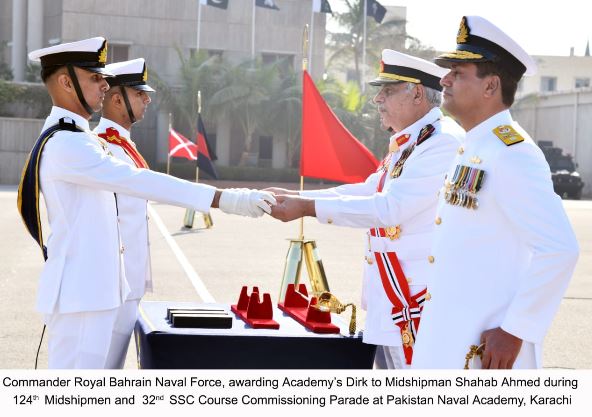
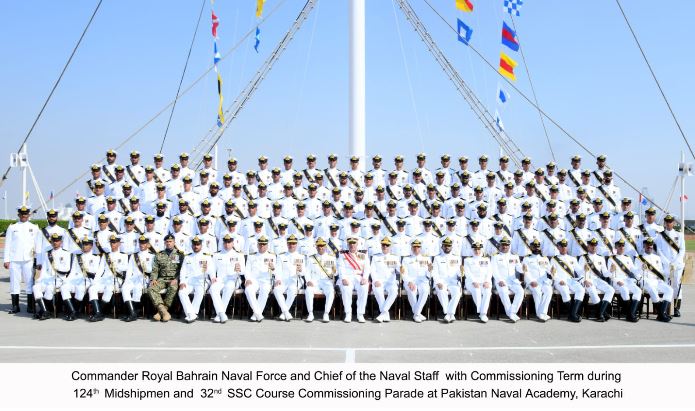
KARACHI, DEC 27 /DNA/ – The Commissioning Parade of 124ᵗʰ Midshipmen and 32ⁿᵈ Short Service Commission Course (SSC) was held at Pakistan Naval Academy, Karachi, marking the passing out of 90 Midshipmen and 34 SSC cadets.

Commander Royal Bahrain Naval Force, Rear Admiral Ahmed Mohamed Ebrahim Al Bin Ali, graced the occasion as Chief Guest. Upon arrival, the Chief Guest was received by Chief of the Naval Staff, Admiral Naveed Ashraf.

The Chief Guest, himself an alumnus of Pakistan Naval Academy, expressed pride in reviewing the Commissioning Parade at his alma mater and lauded professional competence of Pakistan Navy as a key regional force.

He highlighted Pakistan Navy’s longstanding tradition of imparting high quality training to cadets from friendly countries, with cadets from Bahrain, Iraq, the Republic of Djibouti, Sri Lanka and Türkiye in the parade. The Chief Guest also reaffirmed the enduring bonds, shared values and commitment to mutual progress between Pakistan and Bahrain.

Later, the Chief Guest gave away prizes to the winners. Midshipman Muhammad Uzair Abbas was declared winner of the coveted Sword of Honour for overall best performance whereas Midshipman Shahab Ahmed won the Academy’s Dirk. Officer Cadet Umar Mukhtar from Pakistan and Officer Cadet Aldhahabi Fahad Husam Fareed from Iraq won Chief of the Naval Staff Gold Medals and Officer Cadet Syed Saad Shahid from SSC Course clinched the Commandant Gold Medal. Proficiency Banner was claimed by Quarterdeck Squadron.

The ceremony was attended by military officers, dignitaries and parents of cadets.=DNA

Naqvi pays rich tribute to Shaheed Benazir Bhutto

Naqvi pays rich tribute to Shaheed Benazir Bhutto

ISLAMABAD, DEC 27 /DNA/ – Federal Interior Minister Mohsin Naqvi paid rich tribute to the remarkable services of Shaheed Mohtarma Benazir Bhutto on her martyrdom anniversary. He said that Shaheed Benazir Bhutto represents an era that will remain alive forever. Her national and political services for Pakistan will always be remembered.

‎Mohsin Naqvi said that Shaheed Benazir Bhutto’s personality was a symbol of hope, resilience, and unwavering commitment to the principles of democracy. She had complete faith in the power of the people. Shaheed Benazir Bhutto sacrificed her life for a peaceful, progressive, and democratic Pakistan.

‎Interior Minister said that Shaheed Benazir Bhutto’s vision remains a guiding light for all democratic forces. She considered workers, farmers, and marginalized segments of society as the foundation of national development. Benazir Bhutto dreamed of a Pakistan where the dignity and respect of every individual are ensured and democracy is strengthened.

‎Mohsin Naqvi added that today President Asif Ali Zardari and Chairman Pakistan Peoples Party Bilawal Bhutto Zardari are carrying forward the legacy of Shaheed Benazir Bhutto.

‎“The ideology of Shaheed Benazir Bhutto is alive today and will remain alive in the future as well.”

Pakistan rejects Israel’s move recognizing breakaway Somaliland region

Pakistan backs Saudi Arabia, UAE's efforts for peace, stability in Yemen

ISLAMABAD, DEC 27 /DNA/ – Pakistan strongly condemned any attempts to undermine the sovereignty, unity, and territorial integrity of Somalia, and rejects, in this regard, the announcement made by Israel recognising the independence of the so-called Somaliland region of the Federal Republic of Somalia.

Such illegal and provocative actions constitute a flagrant violation of international law and not only threaten the peace and stability of the brotherly country of Somalia, but also that of the entire region. The international community must step in to reject any such actions, and prevent and deter Israel from undermining the ongoing efforts for peace and stability in the broader region.

Pakistan reiterates its complete support for the sovereignty, unity, and territorial integrity of the Federal Republic of Somalia, as well as for all efforts aimed at achieving lasting peace and stability in the country.

Pakistan also reiterates its unequivocal rejection of any steps aimed at the forced displacement of Palestinians from their land under any circumstances, and reaffirms its unwavering support for the Palestinian people in their just struggle for self-determination and for a sovereign, independent Palestinian state based on pre-1967 borders, with Al-Quds Al-Sharif as its capital.=DNA

Recalling May victory against India, Dar calls for making Pakistan an economic power

Recalling May victory against India, Dar calls for making Pakistan an economic power

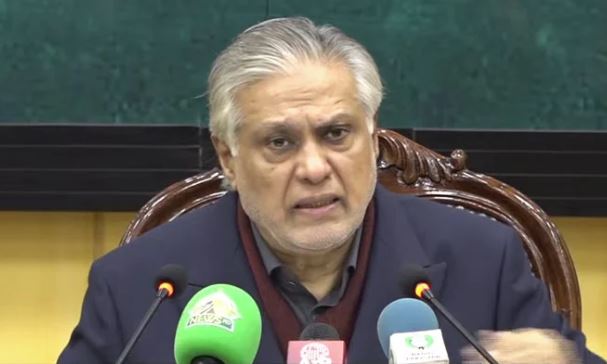
ISLAMABAD, DEC 27: Recalling military victory against India in May this year, Deputy Prime Minister and Foreign Minister Ishaq Dar on Saturday said that Pakistan must now be transformed into an economic power, stressing that the government is pursuing a coordinated strategy to achieve stability and growth.

“We now have to make Pakistan an economic power,” said DPM Ishaq Dar while addressing a yearly news conference in Islamabad.

DPM Dar said Pakistan’s foreign policy stature had improved globally and the country’s position was being heard and acknowledged at international forums.

Dar also credited Prime Minister Shehbaz Sharif for efforts aimed at strengthening the economy, saying the government was working to ensure long-term financial stability.

“Prime Minister Shehbaz Sharif is making continuous efforts to stabilise the country economically,” he said

Dar welcomed the visit of the UAE president to Pakistan, saying, “The UAE president had promised the prime minister a visit to Pakistan this year, and his visit is a positive development.” He said discussions during the visit focused on “bilateral trade, investment and the energy sector.”

He went onto say that Saudi Arabia had supported Pakistan in securing the International Monetary Fund programme, adding, China has deposited $4 billion in Pakistan, while the UAE has placed $3 billion.

Referring to tensions with India, Dar said Pakistan had shot down Indian aircraft during recent hostilities. “We shot down seven Indian aircraft during the war,” he said, adding that “Pakistan did not ask anyone for a ceasefire.”

Pakistan backs Saudi Arabia, UAE’s efforts for peace, stability in Yemen

Pakistan backs Saudi Arabia, UAE's efforts for peace, stability in Yemen

ISLAMABAD, DEC 27: The Foreign Office has said that Pakistan is closely monitoring the recent developments in Yemen, while expressing its full support for the diplomatic initiatives being led by Saudi Arabia to restore peace and stability in the country.

Pakistan also lauded the United Arab Emirates for its role in the peace-seeking efforts.

In a statement issued on Saturday, the FO said,” Pakistan is closely following the recent developments in Yemen. We underscore the need for upholding the unity and territorial integrity of Yemen, and express the hope that the Yemeni stakeholders will avoid any unilateral steps that may result in further escalation of the situation.”

“Pakistan expresses its full support for the diplomatic efforts being undertaken by the Kingdom of Saudi Arabia for ensuring peace and stability in the Republic of Yemen. We also commend the efforts of the UAE in this regard.

“We also call on all Yemeni parties to engage constructively and in good faith towards an inclusive, negotiated political solution based on the agreed parameters,” it added.

Islamabad also expressed hope that these ongoing diplomatic efforts would translate into concrete steps to end the conflict and alleviate the suffering of the Yemeni people.

On Friday, the UAE welcomed Saudi efforts to support security in Yemen, as the two Gulf allies sought to present a united front despite backing different sides in the fighting.

Mediator Oman called for “engaging in a comprehensive political dialogue”.

The Houthis pushed the government out of the capital Sanaa in 2014 and secured control over most of the north.

Houthis have been at war with the government in a conflict that has killed hundreds of thousands of Yemenis.

Fighting has decreased since a UN-negotiated truce in 2022.

— With additional information from AFP

England need 175 to win chaotic 4th Ashes Test

England need 175 to win chaotic 4th Ashes Test

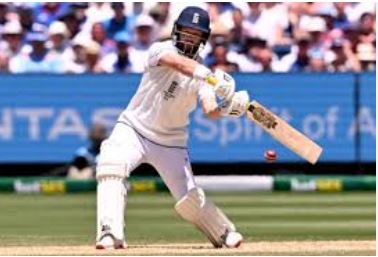
MELBOURNE, DEC 27 – A pumped-up England dismissed Australia for 132 on another chaotic day at the fourth Ashes Test Saturday to leave themselves needing 175 to win a seesawing contest.

All 10 Australian wickets tumbled inside the first two sessions of day two in front of another bumper crowd at the Melbourne Cricket Ground, following the 20 that were taken on day one.

Travis Head top-scored with 46 while Bryson Carse took 4-34.

Australia lost nightwatchman Scott Boland (6), Jake Weatherald (5), Marnus Labuschagne (8), and Travis Head (46), Usman Khawaja (0) and Alex Carey (4) in the first session with England down a bowler after pace spearhead Gus Atkinson hobbled off.

Steve Smith weathered the storm, but ran out of partners and was not out 24 as the bowlers cleaned up after the break.

Australia resumed on 4-0 after an explosive opening day of searing pace saw 20 wickets fall with the hosts dismissed for 152 and England just 110.

It was the most wickets to tumble on the first day of an Ashes Test since 1909, and eclipsed the 19 on day one of the series opener in Perth.

With 10 millimetres of grass on the track it was a bowler’s dream, but a series of former greats criticised the pitch for “doing too much” and being “unfair for the batters”.

Boland began on four with Head yet to score after they negotiated a single over before stumps on Friday.

                  Head got going with a boundary off Atkinson and Boland added two, but his time was always going to be limited and he edged Atkinson to wicketkeeper Jamie Smith.

                  Atkinson left the field soon after clutching what appeared to be his left hamstring.

                  Josh Tongue came into the attack on a hat-trick after bagging the last two Australia wickets on day one, but Weatherald whipped his full ball for three.

                  Weatherald needed a decent knock to cement his spot at the top of the order, but he failed again, bowled by Ben Stokes for five leaving a delivery that nipped back.

                  Head, who was dropped on 26 by Will Jacks, was joined by Labuschagne but he only made eight, caught by Joe Root in the slips off Tongue.

                  Despite living dangerously, Head was in good touch before being bowled by a peach of a delivery from Carse that beat the outside edge.

                  And when Khawaja and Carey were removed by Tongue and Carse respectively in the space of nine balls, the momentum was back with England who had taken 3-6 in less than three overs.

                  After reaching lunch at 98-6, Cameron Green (19) became the seventh wicket to fall with the score on 119, edging a rising ball off Stokes to Harry Brook at slip.

                  Carse bagged Michael Neser and Mitchell Starc without scoring and Jhye Richardson fell to Stokes as the tail collapsed with the last four wickets tumbling for 13 runs.

                  Australia have already retained the Ashes after crushing eight-wicket victories in Perth and Brisbane and an 82-run win in Adelaide.

Trump’s War Paradox

Qamar Bashir

Qamar Bashir

Donald Trump has long styled himself as a man of peace, a leader determined to end America’s “forever wars.” Yet the reality of his second term tells a very different story. From Africa to the Middle East to the Caribbean, U.S. military power is being projected more aggressively than at any time in recent years, often outside clear multilateral mandates and sometimes against the wishes of the nations affected. The paradox is striking: a president who boasts of stopping wars now presides over an expanding web of military strikes, naval seizures, economic blockades, and strategic pressure campaigns that are reshaping how the world sees the United States.

In late December 2025, U.S. airstrikes in northwest Nigeria targeted militants linked to alleged ISIS. The operation was presented as a counter-terror measure, with Washington emphasizing the need to hit extremist networks before they metastasize. American firepower raining down on a sovereign African nation on Christmas Day, reinforcing the impression that the United States reserves the right to strike anywhere it perceives a threat, whether or not there is a public, formal mandate from international bodies. For many Nigerians, the attack stirred anger and unease, highlighting how fragile sovereignty can become when global superpowers decide their security extends into another nation’s airspace.

Just days earlier, the United States had already intensified air operations in Syria following the deaths of American personnel in an attack blamed on Islamic State affiliates. What was once framed as a limited U.S. footprint in Syria has quietly evolved into a semi-permanent military presence, supported by regular offensive strikes. Trump may describe these operations as decisive anti-terror action, but to much of the world they appear as continued involvement in a foreign conflict with no end in sight, in a country where the United Nations never authorized an open-ended U.S. role.

Somalia tells a similar story. Throughout 2025, U.S. drone and air operations there continued against alleged ISIS-Somalia and other militant groups. These strikes are often coordinated with Somali authorities, yet they form part of a much longer, largely undeclared military engagement that has persisted across multiple administrations. Trump campaigned on ending such interventions. Instead, the map of U.S. kinetic action has only widened, blurring the line between targeted counter-terrorism and perpetual low-grade war.

The Western Hemisphere—historically considered America’s strategic backyard—has not been spared this assertiveness. In December, the United States intensified its maritime campaign against Venezuela, intercepting and seizing tankers accused of violating sanctions. For Washington, these are enforcement actions. For Caracas, they are economic warfare—moves designed to choke off the country’s primary source of foreign revenue and weaken the government. The optics of U.S. ships stopping sovereign vessels in international waters evoke images of a superpower imposing its will far beyond its shores. To many observers, this resembles coercive regime-pressure more than a narrowly targeted law-enforcement effort.

Overlaying all this is Trump’s revived fixation on Greenland. He has again stressed its strategic importance to U.S. security, hinting at deeper American control or acquisition. To the people of Greenland and Denmark, such language is unsettling. It suggests a view of sovereignty as negotiable when strategic interests are at stake, reinforcing fears that U.S. policy is moving away from partnership and toward an overtly transactional and hegemonic posture.

This growing pattern of unilateral action sits uneasily with America’s post-war legacy. The United States was not only central to the creation of the United Nations; it championed the concept that the use of force should be governed by collective legitimacy. Even when Washington bent those principles in the past, it generally paid lip service to them. Today, the tone has shifted. The U.S. frequently vetoes UN resolutions on conflicts such as Gaza, insulating allies from accountability while asserting its own right to strike elsewhere without global consent. To critics, this makes Washington appear less like the guardian of a rules-based order and more like an exception-claiming power that enforces rules on others while exempting itself.

For much of the world, this has accelerated the erosion of U.S. soft power. Soft power rests not on aircraft carriers or sanctions, but on trust, perceived fairness, and moral authority. It once enabled Washington to lead coalitions, shape norms, and attract global goodwill. But each unilateral strike, each tanker seizure, each veto against widely supported humanitarian resolutions chips away at that intangible asset. Allies increasingly hedge their bets. Neutral nations edge closer to alternative power centers. And countries hit by U.S. pressure look elsewhere for protection or partnership.

China in particular benefits from this shift. Beijing projects itself—rightly or wrongly—as a power that avoids military entanglement and prefers development-based engagement. When Washington acts as global enforcer, and when those actions are seen as destabilizing or self-serving, it pushes many states into China’s orbit almost by default. The message becomes simple: if partnership with the United States carries risk, unpredictability, or coercion, perhaps alternative relationships offer greater stability, even if they come with their own compromises.

The tragedy of this trajectory is that it is not inevitable. U.S. leadership historically derived its strength from a mix of capability and consent. It was powerful, but also persuasive. It spoke the language of international law, legitimacy, and collective decision-making, even imperfectly. Today that balance is tipping. The more the United States acts alone, the more alone it may ultimately find itself.

There is also a domestic contradiction at play. Trump continues to present himself as a peace-first president, the man who avoids wars others might start. Yet the record of strikes, seizures, and escalating pressure tells a different story. The actions may be justified individually as tactical necessities. But collectively they signal a strategy of global projection, not global restraint. The rhetoric of peace is being used to mask a footprint of expanding conflict.

If this trajectory continues, America’s reputation risks hardening into something damaging and enduring: not the indispensable nation, but the unpredictable enforcer. That perception would not only undermine its moral authority but weaken its alliances, constrain its influence, and embolden rivals. Nations do not abandon superpowers overnight—but over time, they recalibrate.

The alternative path is still open. It lies in rediscovering the principle that force abroad should carry a legitimacy beyond national assertion alone, and that the institutions America helped build should not be dismissed when inconvenient. When diplomacy is prioritized over coercion, when multilateral consent tempers unilateral action, and when sovereignty is respected even in the face of threat, U.S. leadership strengthens rather than diminishes.

Donald Trump’s presidency will ultimately be judged not by how forcefully America acted, but by how wisely. Ending the paradox between the rhetoric of peace and the practice of war is the first step toward restoring global trust. Only then can the United States reclaim the soft power and moral authority that once made it a leader in both name and spirit.

Qamar Bashir

Press Secretary to the President (Rtd)

Former Press Minister, Embassy of Pakistan to France

Former Press Attaché to Malaysia

Former MD, SRBC | Macomb, Michigan, USA

Four clinics sealed in Anti-Quackery drive

Four clinics sealed in Anti-Quackery drive

GUJRAT, DEC 26 (APP/DNA): The Health Department on Friday sealed four clinics in Kharian and Lalamusa  for illegal medical practices.

According to report, inspections revealed quackery activities at Hidayatullah Medical Store and Adnan Homeopathic Clinic, where used syringes and injections were found.

Both clinics were sealed and cases were referred to the Punjab Healthcare Commission (PHC).

Minor violations were found at Aun ,Musa and Moon medical stores, resulting in warnings and challans.

Anti-quackery raids in Lalamusa also led to the sealing of Shahid Homeopathic Clinic and Hamza Homeo Clinic, with banned medicines and used syringes seized.

The crackdown aims to protect public health and ensure compliance with medical laws.

Stay Connected

64FansLike
60FollowersFollow

Latest Reviews

Exchange Rates

USD - United States Dollar
EUR
1.16
GBP
1.34
AUD
0.67
CAD
0.72