Home Blog Page 23

Centre vows ‘every possible support’ for Balochistan against terrorism

Centre vows 'every possible support' for Balochistan against terrorism

ISLAMABAD, JUL 25: Interior Minister Mohsin Naqvi on Saturday affirmed that the federal government would continue extending every possible support to ensure sustainable peace in Balochistan, terming a coordinated operational approach “indispensable” in the fight against terrorism.

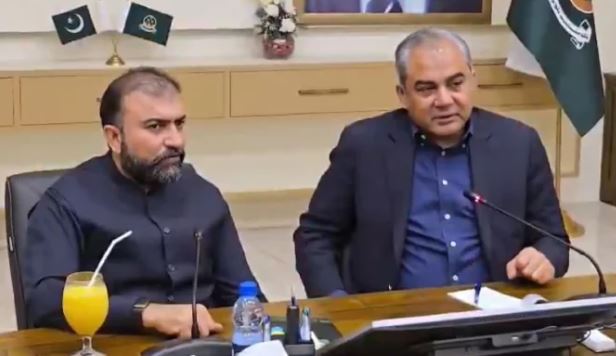
The security czar made the remarks while co-chairing a high-level meeting with Balochistan Chief Minister Sarfraz Bugti in Quetta to review the province’s law and order situation.

During the meeting, the two officials reaffirmed their commitment to strengthening security and ensuring lasting peace across the province.

The meeting comes as security operations are underway against foreign-backed proxies amid a sharp spike in terrorist attacks in the province.

According to a Centre for Research and Security Studies (CRSS) report, Khyber Pakhtunkhwa (KP) and Balochistan were the epicentres of violence during the second quarter of 2026.

Jointly, they accounted for almost 96% of all violence-linked fatalities, with over 61% (475) recorded in KP and 34% (265) in Balochistan.

During today’s meeting, CM Bugti provided a detailed briefing on the overall security environment in the province, ongoing counterterrorism measures, and the government’s future strategy for maintaining peace and stability.

The meeting decided to further enhance the professional capacity of the Balochistan Counter Terrorism Force (CTF) and the provincial police.

Participants also agreed to accelerate progress on previously approved measures aimed at strengthening the police force.

The interior ministry assured the Balochistan government of its full cooperation in providing the resources required to improve the province’s security infrastructure.

Interior Minister Naqvi said that the federal government would continue extending every possible support to ensure sustainable peace in Balochistan.

He emphasised that the immediate and effective implementation of the province’s peace restoration master plan was the need of the hour.

Naqvi also stressed that the government’s security strategy should benefit from the experience and expertise of former Balochistan police chiefs, saying that modern technology, enhanced intelligence capabilities, and a coordinated operational approach were indispensable in the fight against terrorism.

According to the security czar, the federal and provincial governments were moving forward with complete unity and coordination to establish lasting peace.

He asserted that collective efforts would strengthen the state’s ability to counter evolving security challenges.

‘State’s writ to be enforced’

The Balochistan chief executive reaffirmed the provincial government’s resolve to remain ahead of terrorist elements on every front, saying that no pressure would deter the state’s campaign against terrorism.

He said the writ of the state would be enforced at all costs and that there would be no space for terrorists in Balochistan.

CM Bugti maintained that creating opportunities for young people through education, skills development, employment, and positive engagement remained one of the government’s highest priorities.

The chief minister added that promoting meritocracy was essential to restoring the confidence of the youth and ensuring equal opportunities for their advancement.

He emphasised that peace, development, and prosperity were closely interconnected and pledged that the provincial government would continue making simultaneous progress on both security and development.

The implementation of peace initiatives and development projects across Balochistan would be further accelerated with the continued support of the federal government, he concluded.
Pakistan, Uzbekistan explore joint pharma ventures and investment

Pakistan, Uzbekistan explore joint pharma ventures and investment

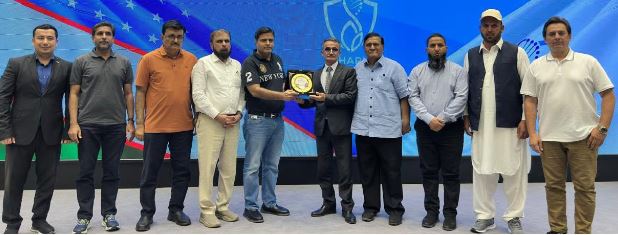
ISLAMABAD, JUL 25 /DNA/ – A Pakistani business delegation led by Ahsan Zafar Bakhtawari, Patron-in-Chief of the Azerbaijan-Pakistan Joint Chamber of Commerce and Industry and CEO of D. Watson Group, visited the Pharmaceutical Industry Development Agency of Uzbekistan to explore opportunities for cooperation in pharmaceuticals, medical supplies, healthcare services, research and investment.

Representatives of the Chamber of Commerce and Industry of Uzbekistan also attended the meeting, demonstrating the commitment of both sides to strengthening private-sector engagement and expanding economic relations between Pakistan and Uzbekistan.

Welcoming the delegation, Mirjalal, Chief Specialist at the Pharmaceutical Industry Development Agency,
informed the delegation that Uzbekistan’s market for medicines and medical devices was valued at approximately US$2.5 billion and said the country was working to strengthen its position as a major pharmaceutical manufacturing and investment hub in Central Asia.

He said the pharmaceutical sector had a portfolio of 32 investment projects and assured Pakistani companies interested in establishing manufacturing facilities or entering into joint ventures of the Agency’s full facilitation and support.

Mirjalal further stated that, 58 medicine-manufacturing companies in Uzbekistan held national Good Manufacturing Practice certificates, while pharmaceutical products produced in the country were being supplied to 55 international markets.

He also briefed the delegation on Uzbekistan’s investment policies, including the general corporate income-tax rate of 15 percent and the incentives available to qualifying investors in specialised pharmaceutical economic zones.

He highlighted the government’s efforts to develop modern research and manufacturing infrastructure, promote technology transfer, attract foreign investment and strengthen cooperation with international pharmaceutical companies, hospitals and healthcare institutions.

Speaking on the occasion, Saidnazirkhanov Saidkamil, Director of the Department of Foreign Economic Activity at the Chamber of Commerce and Industry of Uzbekistan, welcomed the Pakistani delegation and said Pakistan and Uzbekistan enjoyed close and strategic relations.

He said the Chamber regularly facilitated Pakistani business delegations and helped connect them with relevant companies, government institutions and business organisations in Uzbekistan. He described pharmaceuticals as one of the most promising areas of bilateral cooperation and said Uzbekistan could become an important market and investment destination for Pakistani pharmaceutical manufacturers.

Saidnazirkhanov assured the delegation that the Chamber of Commerce and Industry of Uzbekistan was ready to assist Pakistani companies in identifying suitable local partners, establishing commercial contacts and benefiting from the facilities available in the country’s free economic and specialised pharmaceutical zones.

He said there was considerable potential for cooperation in medicines, medical equipment and supplies, including injection needles and other healthcare products.
Speaking on the occasion, Ahsan Zafar Bakhtawari said Pakistan had a well-developed pharmaceutical industry with significant capacity to meet Uzbekistan’s growing demand for quality medicines, medical supplies and healthcare products. He said Uzbekistan offered strong potential for Pakistani investors due to its expanding domestic market, strategic location in Central Asia, investor-friendly policies and increasing focus on local pharmaceutical manufacturing.

Ahsan Zafar Bakhtawari expressed interest in exploring investment opportunities, joint ventures and the establishment of pharmaceutical manufacturing facilities in collaboration with Uzbek business partners.
He emphasised the need to establish institutional linkages between the Pharmaceutical Industry Development Agency, the Chamber of Commerce and Industry of Uzbekistan and relevant pharmaceutical associations, chambers and companies in Pakistan.

He said regular exchange of business delegations, market information and investment proposals would help transform the strong political relations between Pakistan and Uzbekistan into mutually beneficial economic and commercial partnerships.

Zafar Bakhtawari, Secretary General of the United Business Group-FPCCI, said closer cooperation between the private sectors of Pakistan and Uzbekistan was essential for increasing bilateral trade and investment in pharmaceuticals and other priority sectors. He proposed that the Chamber of Commerce and Industry of Uzbekistan establish formal cooperation with leading chambers of commerce and industry in Pakistan.

India youth protesters agree to end protests after talks with government

India youth protesters agree to end protests after talks with government

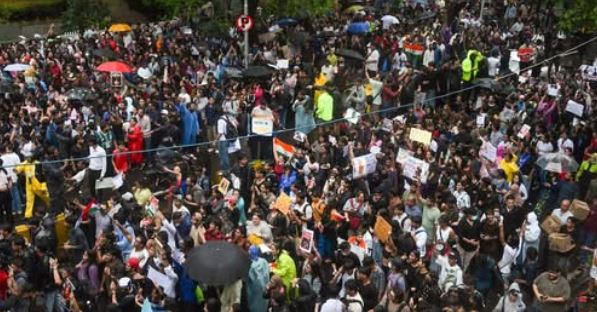
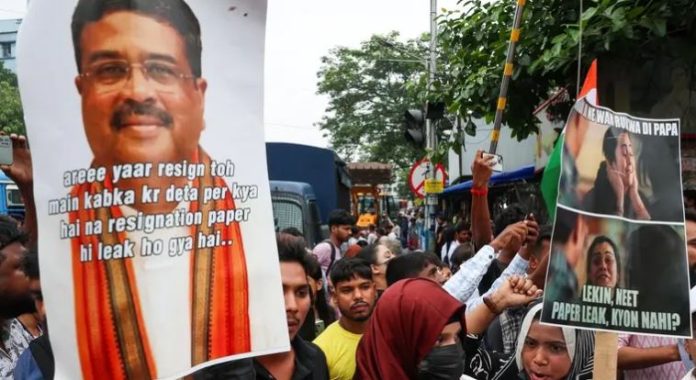
NEW DELHI, JUL 25: India’s youth protesters have agreed to end their demonstration, a spokesperson of the ‘cockroach’ movement told reporters after talks with the government on Saturday.

The announcement came hours after the education minister resigned following the weeks-long protests demanding he quit over exam leaks.

India’s education minister resigned on Saturday, handing a major victory to youth protesters who had demanded he quit to take responsibility for examination paper leaks, and who erupted in celebration on news of his departure.

“We have done it,” said Abhijeet Dipke, founder of the Cockroach Janta Party that led the protests, to loud cheers at the Jantar Mantar protest site in New Delhi.

India’s biggest street protests of recent years have become a political flashpoint, posing one of the biggest challenges to Prime Minister Narendra Modi as politicians joined youngsters’ calls to demand action.

“Considering the situation that has arisen at Jantar Mantar (protest site) and across the country, so that anti-national forces do not take advantage of this situation … I have sent my resignation letter to the Prime Minister,” Dharmendra Pradhan wrote in his post.

“I deeply respect the aspirations, feelings, and legitimate expectations of the country’s youth.”

The minister announced his resignation on X just as police fired tear gas to scatter young protesters in New Delhi, hours before their leaders were set to hold another round of talks with ministers.

Youngsters at the Jantar Mantar site shouted “Jai Hind,” a patriotic slogan meaning “Victory to India”.

Thousands of supporters of India’s youth-led “cockroach” movement had been protesting since June, but anger boiled over since police on Monday injured dozens of students, launching baton charges and firing tear gas to deter crowds of protesters marching on parliament.

The protests, led largely by young people and triggered by discontent over leaks of question papers for high-stakes entrance exams, reflect anger over job scarcity, corruption and government accountability.

Federal authorities even on Saturday restricted access to the internet and to 18 metro stations to try to limit the protest in the capital, the latest day of such restrictions.

Maharashtra bandh hits normal life over Dalit rights grievances

Maharashtra bandh hits normal life over Dalit rights grievances

MUMBAI, JUL 25 /DNA/  – A state-wide shutdown in Maharashtra, backed by Dalit student groups and community organizations, brought normal life to a halt on Thursday as protesters voiced deep-seated frustration over the erosion of equal opportunities, delayed justice, and systemic discrimination. The bandh, the latest in a series of escalating demonstrations, laid bare the simmering anger within marginalized communities over what they describe as the state’s inadequate response to their long-standing grievances.

From early morning, protestors blocked key roads and railway tracks in cities like Nagpur, Pune, and Mumbai’s eastern suburbs, while marketplaces remained shuttered in solidarity. At the epicenter of the agitation in Nagpur, thousands of students marched under a sea of blue flags, chanting slogans demanding the protection of constitutional rights and harsher penalties for hate crimes targeting Scheduled Castes.

“These demonstrations are not just about one incident; they reflect broader frustrations about discrimination, unequal treatment, and the failure of authorities to protect our community,” said Priya Sonkamble, a law student and protest organizer. “When marginalized communities take to the streets to defend their rights and future, our voices deserve to be heard—not silenced.”

The immediate trigger for the unrest stems from recent legal battles over reservation policies in education and public employment, which protesters argue are being systematically diluted. However, activists stress that the agitation runs much deeper, fueled by a surge in caste-based violence and perceived institutional apathy. Students claim that campuses remain hostile environments where access to equal opportunities is blocked by tacit discrimination, and complaints are routinely ignored.

Throughout the day, protest leaders listed key demands, including the strict enforcement of the Scheduled Castes and Tribes (Prevention of Atrocities) Act, an increase in scholarships and hostel facilities for Dalit students, and an unequivocal guarantee that existing reservation quotas will not be revised through judicial or executive intervention. They also demanded an immediate halt to what they term the “criminalization of protest,” citing cases where peaceful demonstrators were detained.

The bandh, though largely peaceful, caused significant disruption. Internet services were suspended in several sensitive districts to prevent the spread of rumors, while police personnel in riot gear were deployed outside university campuses. State Home Ministry officials reported minor incidents of stone-pelting in Latur district, but no major injuries.

In a short statement, the state government appealed for calm and assured that the chief minister is “sensitive to the concerns of the student community.” However, critics argue that official assurances ring hollow without concrete action.

Political analysts note that the Maharashtra bandh is symptomatic of a wider national trend where Dalit-Adivasi communities are increasingly resorting to mass mobilizations to make themselves heard. “The frustration is palpable,” said Dr. Anand Teltumbde, a scholar on caste and social movements. “When the legal and political system fails to deliver justice, the street remains the only platform for the disenfranchised. Ensuring equal access to education and protecting the right to peaceful protest are not concessions; they are essential to upholding the rule of law.”

As evening fell and the bandh officially ended, student leaders vowed to continue their struggle. With the monsoon session of the state legislature approaching, the protests serve as a stark reminder that without meaningful dialogue and reform, the chasm between India’s marginalized communities and the state is poised to widen.

Mali reiterates support for Morocco’s territorial integrity, sovereignty over Sahara & for autonomy plan as only credible & realistic solution

Mali reiterates support for Morocco’s territorial integrity, sovereignty over Sahara & for autonomy plan as only credible & realistic solution

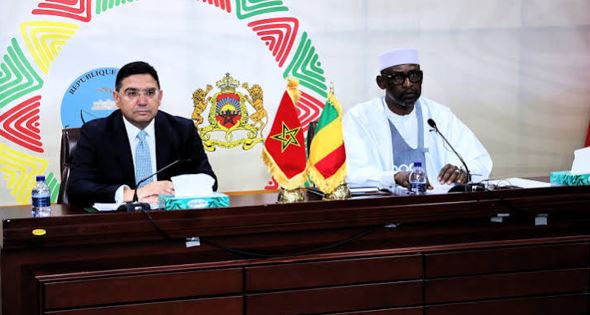
BAMAKO, JUL 25 /DNA/ – The Republic of Mali has reiterated its “position in favor of Morocco’s territorial integrity and sovereignty over its entire territory, including the Sahara region,” while reaffirming its support for the Autonomy Plan presented by Morocco as “the only credible and realistic solution for resolving this regional dispute”. This stance was expressed in the Joint Communiqué adopted at the close of the 4th High-Level Joint Commission on Morocco-Mali Cooperation, which concluded Friday in Bamako under the co-chairmanship of Minister of Foreign Affairs, African Cooperation, and Moroccan Expatriates Nasser Bourita, and Mali’s Minister of Foreign Affairs and International Cooperation Abdoulaye Diop.

The Joint Communiqué “reiterated the Republic of Mali’s support for the efforts of the United Nations Secretary-General and his Personal Envoy, as well as for the Autonomy Plan presented by the Kingdom of Morocco, as the only credible and realistic solution for resolving this regional dispute, in accordance with Resolution 2797 adopted on October 31, 2025, by the United Nations Security Council”. This position follows on from the Malian government’s Declaration of April 10, 2026, announcing the Republic of Mali’s official withdrawal of its recognition of the so-called separatist entity “Polisario”.

The 4th session of the Joint Cooperation Commission between the Kingdom of Morocco and the Republic of Mali was held on July 21-24 in Bamako.

India’s education minister resigns after youth protests

India's education minister resigns after youth protests

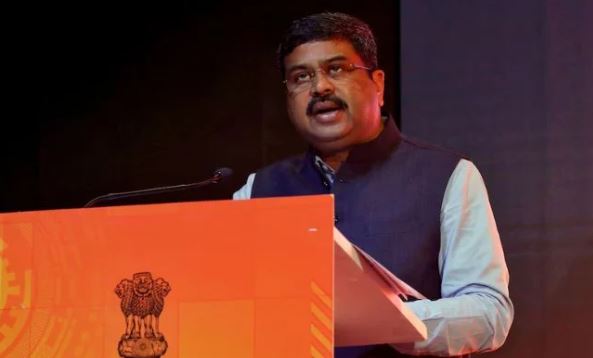
NEW DELHI: Indian Education Minister Dharmendra Pradhan said on Saturday he had resigned, handing a major victory to youth protesters nationwide who had demanded that he quit to take responsibility for examination paper leaks.

The minister announced his resignation on X just as police fired tear gas to scatter young protesters in the Indian capital, hours before their leaders were set to hold another round of talks with ministers to push for the move.

“Considering the situation that has arisen at Jantar Mantar and across the country, so that anti-national forces do not take advantage of this situation … I have sent my resignation letter to the Prime Minister,” Pradhan wrote in his post.

“I deeply respect the aspirations, feelings, and legitimate expectations of the country’s youth.”

“We have done it,” said Abhijeet Dipke, founder of the Cockroach Janta Party that led the protests, to loud cheers at the Jantar Mantar protest site in New Delhi.

Cheers erupted among the thousands of protesters who have been rallying in central Delhi and elsewhere as the news spread.

India’s biggest street protests of recent years have become a political flashpoint, posing one of the biggest challenges to Prime Minister Narendra Modi as politicians joined youngsters’ calls to demand action.

Thousands of supporters of India’s youth-led “cockroach” movement had been protesting since June, but anger boiled over since police on Monday injured dozens of students, launching baton charges and firing tear gas to deter crowds of protesters marching on parliament.

The protests, led largely by young people and triggered by discontent over leaks of question papers for high-stakes entrance exams, reflect anger over job scarcity, corruption and government accountability.

Federal authorities even on Saturday restricted access to the internet and to 18 metro stations to try to limit the protest in the capital, the latest day of such restrictions.

Petrol price up by Rs3.66, HSD by Rs4.80 as govt revises fuel rates

Petrol price hiked by Rs3.66, diesel up Rs4.80 per litre

ISLAMABAD, JUL 25: The government on Friday increased the prices of petrol and high-speed diesel (HSD) by Rs3.66 and Rs4.80 per litre, respectively, passing on the impact of fluctuating global oil prices following renewed hostilities in the Persian Gulf.

Following the changes, the price of petrol stands at Rs335.18 per litre, while that of HSD stands at Rs383.46 per litre. The government is charging a total of Rs110 per litre in taxes and duties on petrol and Rs96 on diesel.

The Petroleum Division’s notification said the new prices would be applicable for July 25 (Saturday).

The diesel price has come down from a peak of Rs520.35 recorded on April 3. Its price had started rising from Rs281 per litre after the US-Iran war broke out on February 28.

The petrol price had peaked at Rs458.41 on April 3 after beginning its upward trajectory from Rs266 in the first week of March.

Earlier, Petroleum Minister Ali Pervaiz Malik announced that fuel prices would now be fixed on a daily basis due to fluctuations in international market prices following renewed hostilities between Iran and the US.

The government had been announcing weekly revisions to fuel prices since early March, alongside measures for the conservation of fuel amid possible oil supply disruptions due to the ongoing conflict in the Middle East. The federal government in April also announced targeted relief measures to provide subsidised fuel.

The petroleum minister stated that the cabinet and the prime minister had decided to give the Oil and Gas Regulatory Authority (Ogra) the responsibility of deciding fuel prices on a daily basis based on international market trends.

The daily pricing decision was rejected by the All Pakistan Dealers Association, which said it would consider a protest plan this week.

Petrol is mainly used in private transport, small vehicles, rickshaws and two-wheelers, and changes in its price affect the middle and lower-middle classes.

Similarly, changes in diesel prices also impact the public at large, as it is mainly used in the heavy transport sector, power plants and large generators.

Petrol and high-speed diesel (HSD) are the major revenue earners, with monthly sales of about 700,000 to 800,000 tonnes, compared to just 10,000 tonnes of monthly demand for kerosene.

Parts of Karachi receive rain as PMD predicts more showers on weekend

Parts of Karachi receive rain as PMD predicts more showers on weekend

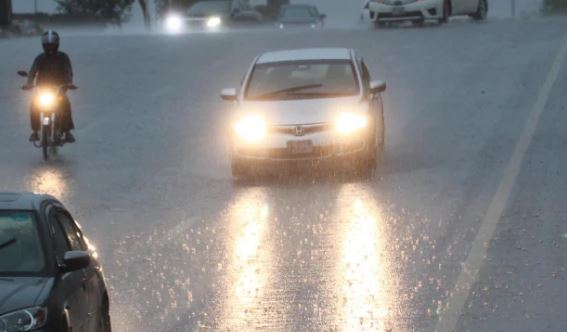
KARACHI, JUL 24: Rain and drizzle were reported in several parts of Karachi on Friday night, with the Pakistan Meteorological Department (PMD) predicting more showers in the port city over the weekend.

Heavy rain lashed Shahrah-e-Faisal and its surrounding areas, while Sohrab Goth also received intense rainfall.

Defence Housing Authority (DHA) Phase 6, North Nazimabad and Gulshan-e-Maymar, along with adjoining localities, witnessed rain during the spell, while light drizzle was reported on II Chundrigar Road and nearby areas.

Earlier, the PMD forecast widespread rain, windstorms and thundershowers, with isolated heavy falls, in southern and central parts of the country from tomorrow (Saturday) to July 27.

In an advisory, the Met Office said a low-pressure area was causing monsoon currents to penetrate southern and central Pakistan, bringing widespread rainfall to Sindh, Punjab, Khyber Pakhtunkhwa, Azad Jammu and Kashmir (AJK), Gilgit-Baltistan and parts of Balochistan.


The Met Office predicted rain, windstorms and thundershowers, accompanied by isolated heavy falls in Islamabad, Lahore, Sheikhupura, Okara, Sahiwal, Pakpattan, Vehari, Khanewal, Multan, Dera Ghazi Khan, Rajanpur, Kot Addu, Muzaffargarh, Bahawalpur, Bahawalnagar, Rahim Yar Khan and Khanpur through July 27.

Meanwhile, partly cloudy to cloudy weather with rain and thundershowers is likely in Rawalpindi, Murree, Galliyat, Attock, Chakwal, Jhelum, Mandi Bahauddin, Gujrat, Gujranwala, Hafizabad, Wazirabad, Faisalabad, Khushab, Sargodha, Sialkot, Narowal, Jhang, Toba Tek Singh, Nankana Sahib and Chiniot through Saturday with occasional gaps.

In Sindh, rain and thundershowers with a few heavy falls are expected in Tharparkar, Umerkot, Mirpurkhas, Badin, Sanghar, Tando Muhammad Khan, Tando Allahyar, Hyderabad, Matiari, Jamshoro, Shaheed Benazirabad, Ghotki and Kashmore through July 27 with occasional gaps.

Jacobabad, Shikarpur, Sukkur, Qambar Shahdadkot, Larkana, Khairpur, Naushahro Feroze and Thatta are also likely to experience similar weather pattern during the forecast period.

Karachi is expected to experience mostly cloudy weather with chances of rain and thundershowers on Saturday and Sunday.

Isolated rain, windstorms and thundershowers are expected in AJK’s Neelum Valley, Muzaffarabad, Rawalakot, Poonch, Hattian, Bagh, Haveli, Sudhanoti, Kotli, Bhimber and Mirpur through July 28 with occasional gaps.

In KP, partly cloudy to cloudy weather with rain and thundershowers is expected in Upper and Lower Dir, Chitral, Swat, Kohistan, Malakand, Nowshera, Charsadda, Karak, Tank, Lakki Marwat, Swabi, Shangla, Battagram and Buner through July 27.

Kohat, Kurram, Dera Ismail Khan, Bannu, North and South Waziristan, Bajaur, Mohmand, Khyber, Orakzai, Mansehra, Abbottabad, Haripur, Peshawar, Mardan and Hangu are also expected to experience similar weather patterns till July 27.

The PMD predicted partly cloudy to cloudy weather with rain and thundershowers in GB’s Diamer, Astore, Ghizer, Skardu, Hunza, Gilgit, Ghanche and Shigar through Saturday with occasional gaps.


It said that partly cloudy to cloudy weather with rain and thundershowers, including isolated heavy falls, is expected in Balochistan’s Zhob, Sherani, Loralai, Kohlu, Sibi, Naseerabad, Jhal Magsi, Jaffarabad, Barkhan, Dera Bugti, Awaran and Khuzdar through July 27.

The Met Office warned that heavy rains may cause urban flooding in Gujranwala and Lahore on Saturday.

Bahawalpur, Rahim Yar Khan, Sukkur, Shaheed Benazirabad, Hyderabad, Thatta, Badin, Sanghar, Khairpur, Mithi, Mirpurkhas, Umerkot, Tando Muhammad Khan, Tando Allahyar, Sialkot, Multan and Faisalabad may experience urban flooding.

The department warned that windstorms and lightning may damage vulnerable structures, including solar panels, electric poles and billboards, during the forecast period.

The PMD advised tourists and travellers to remain cautious throughout the forecast period.

It also urged farmers to plan crop activities according to the weather conditions and ensure proper care of their livestock.

Trump warns China, Russia against involvement in Iran war

Trump warns China, Russia against involvement in Iran war

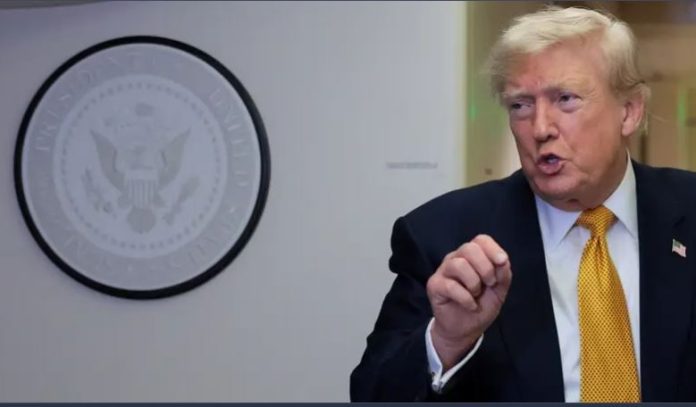
WASHINGTON, JUL 24: US President Donald Trump said on Friday that he does not believe China or Russia are “participating” in the ongoing Iran conflict but warned that if they did get involved “it would be very bad for them.”

“President Xi, at our recent meeting in Beijing, China, told me that he would not, under any circumstances, give or sell Weapons to the Islamic Republic of Iran — And that statement included Chinese Companies,” he wrote on Truth Social.

Trump said Putin had also told him that he would not sell weapons to Iran and that he believed Russia and China were not participating in the Iran conflict.

“If they did, it would be very bad for them — Certainly not in their best interests,” Trump posted.

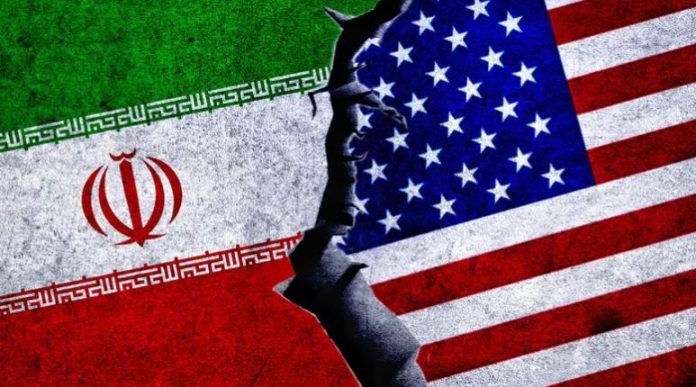
The United States and Iran have been at war since the US and Israel launched strikes in February, killing senior Iranian officials, including the country’s supreme leader.

Four people familiar with US intelligence said Iranian strikes on CIA targets in the Gulf earlier in the war had prompted US intelligence to investigate whether Russia was assisting Iran with targeting information or drone technology. The Kremlin on Thursday declined to comment on the report.

The United States has sanctioned individuals and companies in Russia and China for helping Iran buy weapons.

Pakistan, Iran explore path toward new talks with US in China-initiated push, sources say

Pakistan, Iran explore path toward new talks with US in China-initiated push, sources say

ISLAMABAD/TEHRAN/BEIJING, JUL 24: Pakistan is exploring a path toward a resumption of stalled US-Iran talks over ending their nearly five-month-old war, three Pakistani sources said, following a push initiated by China.

Exploratory discussions took place during a visit by Iran’s Interior Minister Eskandar Momeni to Islamabad this week – his second within the last 10 days, the sources said.

Momeni, who is considered close to Iran’s Revolutionary Guard Corps, met with Pakistani government leaders and army chief Asim Munir this week, according to Pakistani government statements.

All three sources cautioned that the obstacles to any talks with the US remain high.

Pakistan’s Foreign Minister, Ishaq Dar, also discussed the new Middle East effort with Chinese officials when he visited China last week, all three Pakistani sources said. They spoke on the condition of anonymity because they were not authorized to discuss the issue publicly.

“The Chinese are unhappy because Iran’s attacks on other Gulf states and the closure of the Strait of Hormuz are hitting their interests,” a Pakistani government official said.

Disruptions in the Red Sea would hit another key trade route Beijing relies on.

Dar and the Pakistani military’s public relations wing did not respond to requests for comment.

In a statement, China’s foreign ministry said “China supports the mediation efforts made by Pakistan and other parties.”

It added that China will continue to “play an active role in restoring peace and tranquillity in the Middle East Gulf region as soon as possible.”

Halt in attacks needed, says official
Beijing is Iran’s largest trading partner and primary buyer of its exported crude oil despite international sanctions on Tehran, benefiting from a steep discount on the energy source.

Over the years, China has also increased support for Iran’s security through dual‐use components, chip equipment and satellite navigation systems, even though China has not overtly provided military aid to Iran since the war began.

Beijing has consistently backed Pakistan’s mediation efforts and had in March dispatched its special envoy to lead a shuttle-diplomacy trip around the Middle East.

The US and Iran signed a Memorandum of Understanding in June to move toward ending the war after mediation by Pakistan and Qatar. It was intended to provide a 60-day window for negotiations on a permanent agreement.

But indirect talks yielded no progress. Both sides blamed each other for violations, and the conflict resumed.

Stay Connected

64FansLike
60FollowersFollow

Latest Reviews

Exchange Rates

USD - United States Dollar
EUR
1.15
GBP
1.35
AUD
0.71
CAD
0.71