Home Blog Page 228

Hockey World Cup qualifying round; Pakistan beat Malaysia 5-3

Hockey World Cup qualifying round; Pakistan beat Malaysia 5-3

Sports Desk

CARIO: In the second match of the FIH Men’s World Cup Qualifier round, held from March 1st to 7th, Pakistan defeated Malaysia with a score of five goals to three, successfully qualifying for the semi-finals.

For Pakistan, Rana Waheed Ashraf, Zakariya Hayat, Ahmed Nadeem, Muhammad Sufyan Khan, and Muhammad Ammar scored one goal each. On the Malaysian side, Abdul Rauf, Ahkamullah, and Fitri Saari each scored one goal.

Pakistan Hockey Federation President Mohyuddin Ahmed Wani, Ad-hoc Governance and Management Chairmen Olympian Islahuddin Siddiqui and Olympian Hassan Sardar, and Chief Selector Samiullah Khan have congratulated the national team on their victory in the qualifier round.

The national team will play its third match of the World Cup Qualifier round against Austria on March 4th.

Crackdown against Afghan nationals intensifies in KP

Crackdown against Afghan nationals intensifies in KP

Members of the Afghan community say fear of arrest has confined many families to their homes. Some allege that adults and teenagers are being detained, and in certain cases women have also been taken into custody. There are complaints that detainees face difficulties contacting relatives and arranging basic necessities

Shamim Shahid

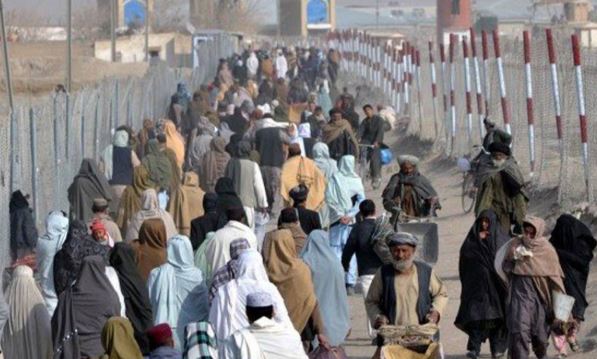
PESHAWAR: The Khyber Pakhtunkhwa police have intensified action against Afghan nationals across the province, particularly in Peshawar, amid renewed tensions between Pakistan and Afghanistan.

According to sources, raids on rented houses, shops and markets have become routine, with police and other law enforcement agencies detaining Afghan nationals and shifting them to police stations for further processing and deportation. The crackdown reportedly gathered pace following recent armed clashes between security forces of the two countries and the temporary closure of border crossings, including Torkham.

Video messages circulating on social media purportedly show instructions to police officials to tighten enforcement measures. It is being claimed that police stations have been assigned daily targets for detentions, though officials have not publicly confirmed such directives.

Members of the Afghan community say fear of arrest has confined many families to their homes. Some allege that adults and teenagers are being detained, and in certain cases women have also been taken into custody. There are complaints that detainees face difficulties contacting relatives and arranging basic necessities.

Observers note that many Afghan nationals have lived in Pakistan for decades, running small businesses and maintaining close social ties with local communities. Critics of the ongoing operation argue that while repatriation may be a state policy decision, it should be carried out in a humane and orderly manner, allowing families reasonable time to settle affairs.

They also stress the need to ensure compliance with international norms relating to migration and asylum, and to avoid creating hardship during the holy month of Ramazan.

Officials maintain that measures are being taken in accordance with government directives and security considerations. The situation remains fluid as authorities continue enforcement actions across the province.

President Zardari addresses joint session of parliament

President Zardari addresses joint session of parliament

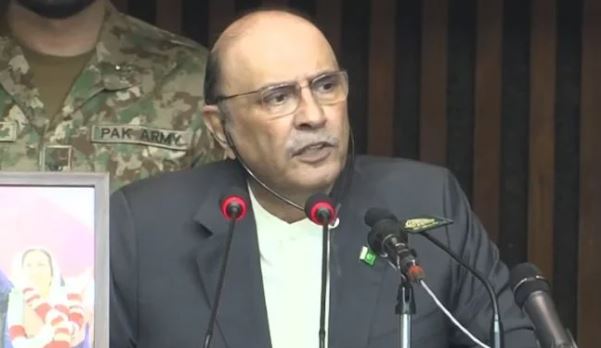
ISLAMABAD, MAR 2: President Asif Ali Zardari has addressed a joint session of parliament to mark the beginning of the parliamentary year.

Opposition lawmakers staged a protest during the president’s address, chanting, “Go, Zardari, go” slogans.

President Zardari said that addressing parliament for the ninth time — and for the second time as an elected head of state — was a reaffirmation of democratic continuity and constitutional responsibility.

In his address marking the commencement of the new parliamentary year, he said that nations were tested not only in times of crisis but also at defining moments.

He urged lawmakers to carry forward their commitment to safeguarding national sovereignty, upholding constitutional supremacy and advancing economic development.

He stressed the need to promote prosperity, peace, stability and sustainable growth for citizens, noting that Pakistan stands today on the foundations laid by the architects of its national struggle.

President Zardari said Muhammad Ali Jinnah had envisaged a democratic state rooted in constitutionalism and the rule of law.

He added that Zulfikar Ali Bhutto gave the nation a unanimous Constitution, while Benazir Bhutto strengthened the democratic process through sacrifice and exemplary leadership.

Turning to security matters, the president said Pakistani armed forces had transformed the Indian aggression into a historic strategic success during “Marka-e-Haq”.

He maintained that whenever national sovereignty was challenged on any front, Pakistan responded with resolve and unity.

Over the past ten months, he said, the nation had confronted complex challenges. He went on to say that the armed forces demonstrated professionalism and discipline in responding to unprovoked attacks on both eastern and western borders.

How Lifestyle Tech Brands Are Redefining Convenience for Pakistan’s Young Generation

How Lifestyle Tech Brands Are Redefining Convenience for Pakistan’s Young Generation

How Lifestyle Tech Brands Are Redefining Convenience for Pakistan’s Young GenerationThe young generation in Pakistan is living in a world where digital tools are not a choice but a part of life. From early morning alarms to late night scrolling, technology quietly shapes how they manage time, energy, and focus in a fast moving society.

Convenience is not simply a matter of luxury or even comfort in the modern world, but rather it is a matter of lessening friction in day-to-day life. Young users have come to expect that their devices should be adjusted to them and not that their lives should be altered according to the technology. Such a change has created an opportunity where brands such as Faster Pakistan are discussed in terms of utility in everyday life and not just image.

In Pakistan, access to smart phones among households has been at an all time high and the percentage of mobile or smart phone ownership in households has reached to approximately 96 percent. Internet access at the individual level increased 57 percent as compared to 17 percent in 2019 and household internet access doubled to 70 percent as per the last national survey (ProPakistani, 2026).

Why Convenience Has Become a Daily Requirement

The meaning of convenience has evolved alongside digital dependence. It is now linked to productivity, emotional ease, and control over time rather than just speed or appearance.

The telecom and digital consumption in Pakistan is dramatically shifting during the recent years. Mobile broadband connections now serve millions of people, almost 146 million 3G/4G mobile users were registered by mid 2025, reflecting the growing extent of high-speed access to data (Phoneworld, 2025).

With increased digital presence, young consumers evaluate technology based on its ability to help them lead personal, academic and professional lives without complicating or stressing them out.

The Real Problems Shaping Young Users’ Expectations

Convenience begins with understanding real world limitations rather than ideal conditions, especially in a diverse and developing country like Pakistan.

The most common challenges young users face today include:

  • Load shedding that disrupts study and work
  • Long commutes that waste productive hours
  • Budget constraints due to inflation
  • Limited access to premium global brands
  • Managing multiple roles within one day

These realities have shifted preferences away from luxury appeal toward practical and resilient solutions.

How Daily Routines Are Quietly Being Rewritten

Technology is no longer confined to desks or bedrooms but travels with users throughout their day. This mobility has transformed how young people learn, work, and interact with the world around them.

Students now revise coursework on buses, freelancers answer international client calls from cafés, and young professionals join remote meetings from hostels and co-working spaces. This everyday mobility changes how young people define productivity and presence.

The convenience today is about possessing the tools that assure a perfect fit in the changing surroundings and evolving priorities, and not about the fixed environment and strict time schedule.

Personal Sound and the Need for Mental Space

In crowded urban landscapes, noise pollution is unavoidable. Whether it is traffic, marketplaces, or packed lecture halls, external sound becomes a constant distraction for youth trying to focus.

In such conditions, personal audio shifts from being purely entertainment to a tool for attention management. Many young users now carry compact wireless audio devices to create private focus zones during work, study, or leisure hours.

In these everyday scenarios, products like Faster Earbuds are valued not for brand prestige but because they fit seamlessly into moving routines, offering clarity and comfort that supports sustained concentration and calm during long days.

Wearables and the Rise of Self Awareness

Health awareness among Pakistani youth is steadily on the rise, yet access to formal healthcare remains uneven, especially outside major cities. Wearable devices bridge this gap by helping users track physical activity, sleep quality, and other personal wellness indicators independently.

This self monitoring which is taken regularly transforms health to more proactive habits than a reactive need and leads to long term health, without having to visit a clinic every now and then.

Many young people find gadgets such as the Faster Nerv smartwatch intuitive and unobtrusive, as they support everyday health tracking without drawing constant attention or complexity, aligning with a lifestyle that values subtle but valuable digital assistance.

Why Trust Has Become Part of Convenience

Convenience does not end at the moment of usage but extends into after sales experience and long term support. Trust has quietly become part of the convenience equation for young buyers.

Before purchasing, users now actively compare reviews, warranty terms, and service availability. They want assurance that help will exist after the transaction.

Audio as a Productivity Tool, Not a Fashion Statement

Headphones were once seen mainly as accessories, but today they function as essential productivity tools in digital learning and remote work environments. Sound clarity is now directly linked to performance.

In environments such as study halls and shared workspaces, extended usability becomes a priority that directly impacts productivity and output.

Here, comfortable and functional options like Faster Headphones are often chosen for usability over flash, reflecting how youth now evaluate tech based on daily usefulness and comfortability rather than appearance.

How Lifestyle Tech Supports Digital Careers

Pakistan has seen a significant rise in digital professions, with freelancing, content creation, and remote work becoming viable income streams for many young people. Connectivity is no longer a luxury; it is inseparable from economic opportunity and financial stability.

Reliable audio, stable connectivity, and portable power are now essential tools rather than optional accessories. Even small technical failures can mean lost opportunities.

In this context, convenience gains value not just as comfort but as a contributor to income generation and career resilience in a competitive global environment.

What Young Users Expect From Tech Brands Today

Expectations from tech brands have evolved significantly among young users, moving beyond advertising messages toward meaningful performance and transparent communication.

Today, young users commonly expect:

  • Easy availability across cities
  • Fair pricing without hidden compromises
  • Durability for daily use
  • Clear warranty and service policies
  • Honest communication

Lifestyle tech brands that align with these values naturally build long term trust rather than short term attention.

Convenience Is Emotional, Not Just Functional

Beyond tangible performance, convenience now carries an emotional dimension, where technology that works reliably reduces stress and builds confidence over time. Knowing that a device will not fail during an important assignment, exam, or client call creates peace of mind.

These small but meaningful reassurances quietly improve overall life quality and psychological comfort, showing that convenience is both functional and emotional.

Lifestyle tech brands today shape emotional experiences as much as technical ones, which helps explain their growing influence in everyday life.

Visual Insight into Why Convenience Matters

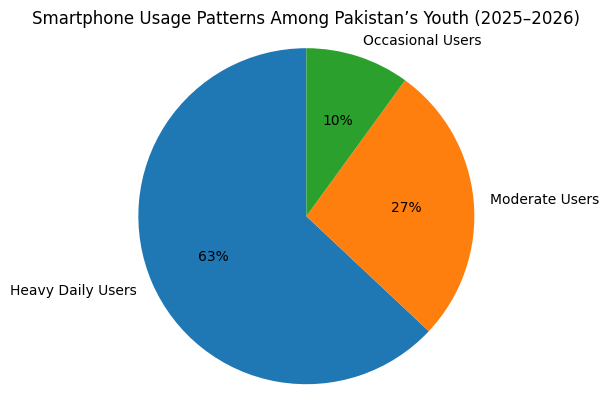
Understanding long-term digital engagement patterns helps explain why lifestyle tech has become essential rather than optional for young Pakistanis. The graph below visualizes Smartphone Usage Patterns Among Pakistan’s Youth (2025–2026) that underpin everyday tech reliance.

This chart highlights how deeply smartphones are embedded in the daily routines of Pakistan’s young generation. With nearly two thirds using their phones heavily every day, convenience has become a basic expectation rather than a luxury. This explains why lifestyle tech brands now design for constant mobility and ease.

Source:  Dunya News (2025), Pak Observer (2025), and TechMag (2025) 

The Broader Impact on Society

Easy access to digital tools extends beyond individual convenience and influences social structures as a whole. When more young people embrace digital platforms for learning, earning, and communication, the collective capacity for innovation and participation increases.

Digital inclusion enables broader access to education, financial services, and government programs, contributing to greater socioeconomic mobility and inclusion.

In this context, convenience becomes not only a personal benefit but a shared resource that supports community resilience and national progress.

The Quiet Transformation of Everyday Life

Lifestyle tech brands are not changing Pakistan loudly but steadily through routines and habits. That is what makes their impact sustainable rather than temporary.

For Pakistan’s young generation, convenience now means control over time and space, allowing them to work, learn, and relax on their own terms.

Lifestyle tech has become the invisible support behind this growing freedom.

US, Israel hit Hezbollah in Iraq

US, Israel hit Hezbollah in Iraq

News Desk

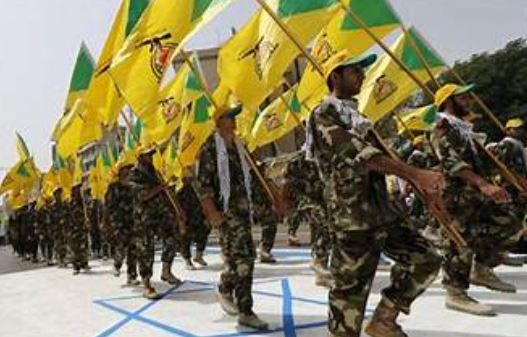
BAGHDAD: New strikes have hit a military base in Iraq housing the Iran-backed Kataeb Hezbollah group, while in the Kurdish city of Irbil air defenses intercepted drone attacks.

“Three strikes hit Jurf Al-Nasr,” a Kataeb Hezbollah source told AFP, referring to a military base that serves as one of the main bastions of the powerful armed group, which has been targeted several times since the start of the Israel-US campaign against Iran.

Iraq, which has recently regained a sense of stability but has long been a proxy battleground between the US and Iran, said it did not want to be dragged into the war.

But it has not been spared.

From the early hours of the campaign against Iran, strikes blamed on the US and Israel hit Iran-backed groups, which have vowed retaliation.

On Sunday, nine Iran-backed fighters were killed in separate strikes, including five from Kataeb Hezbollah.

The group announced it will bury its fighters Monday.

The Kataeb Hezbollah source told AFP that four fighters were killed in an attack near the Syria-Iraq border and another in a strike on the Samawa region in Iraq’s south.

Several Iran-backed Iraqi armed groups known as the Islamic Resistance in Iraq, including Kataeb Hezbollah, have said they will not stay “neutral” and would defend the Islamic republic.

A shadowy group called Saraya Awliyaa Al-Dam (Guardians of Blood), which claims to be part of the Islamic Resistance in Iraq, said on Telegram it was behind early Monday morning drone attacks on Baghdad airport.

Since the start of the US-Israel campaign on Iran, drones have repeatedly been intercepted over Irbil, the capital of the autonomous Kurdistan region, which hosts US-led coalition troops and a major US consulate complex.

China calls for ceasefire

China calls for ceasefire

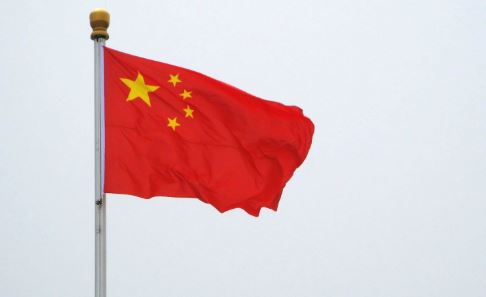
BEIJING: /DNA/ – China called on Monday for a ceasefire and diplomatic talks to end the conflict in the Middle East as it stretched into a third day.

“The most urgent task is a cessation of military operations and preventing a spillover of conflict,” foreign ministry spokeswoman Mao Ning told a news conference, urging “a resolution through dialogue and negotiation.”

One Chinese citizen was killed in Tehran, she said, where Israel and the United States have been carrying out strikes in an operation that killed the Islamic republic’s supreme leader.

PM Shehbaz, Oman’s Sultan discuss regional middle east tensions

PM Shehbaz, Oman's Sultan discuss regional middle east tensions

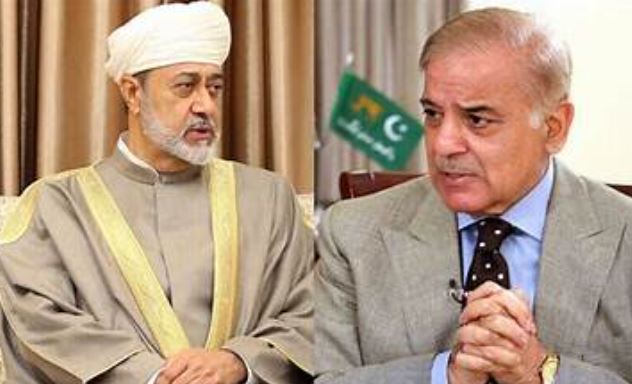
ISLAMABAD, MAR 2 /DNA/ – Prime Minister Muhammad Shehbaz Sharif held a telephone conversation with His Majesty Sultan Haitham bin Tariq, Sultan of Oman, today.

The two leaders discussed the prevailing regional situation that had aggravated following Israel’s attack on Iran as well as subsequent hostilities that had endangered the peace and security of the entire region.

The Prime Minister said that the escalation had taken place at a time when diplomatic efforts were underway to reduce U.S.-Iran tensions, facilitated by Oman. The attacks had not only derailed the delicate diplomatic process, but had also undermined efforts to promote dialogue and de-escalation in the region. He stressed upon the urgent need to prevent further escalation and to create space for resumption of diplomatic initiatives.

While conveying his deep appreciation for Oman’s mediatory role, the Prime Minister commended His Majesty Sultan Haitham bin Tariq for Muscat’s constructive efforts in facilitating dialogue and building trust among regional and international stakeholders. He acknowledged that Oman’s balanced and forward-looking diplomacy was a stabilizing force in the region.

Both leaders agreed to remain in close contact and to continue supporting diplomatic initiatives aimed at restoring calm and ensuring lasting regional stability.

Kuwait confirms ‘several’ US military aircraft ‘crashed’

Kuwait confirms 'several' US military aircraft 'crashed'

DNA

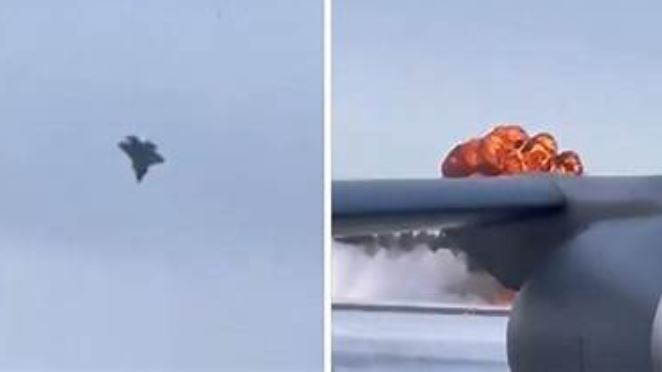
KUWAIT CITY: Kuwait’s Ministry of Defense has confirmed that several US military aircraft crashed in Kuwaiti territory on March 2, 2026, amid the escalating Middle East conflict.

All crew members survived the incidents, with pilots and other personnel ejecting safely via parachute before the crashes occurred. The affected crews were quickly rescued by local authorities, evacuated, and transported to hospitals where they remain in stable condition with no reported fatalities or serious injuries.

Videos circulating online and geolocated by outlets such as CNN show at least one fighter jet, identified as appearing to be an F-15E Strike Eagle, spiraling downward in a tailspin while on fire before impacting the ground near the US Ali Al Salem Air Base, roughly within 10 kilometers of the facility in areas like west of Al Jahra.

Separate footage captures a pilot descending safely under parachute, with some locals assisting upon landing in certain instances. The exact number of aircraft involved has not been specified beyond “several,” and the precise cause remains under joint investigation by Kuwaiti and US authorities.

Speculation includes potential Iranian missile or drone strikes as part of Tehran’s retaliatory actions against US-allied Gulf states following recent US and Israeli operations targeting Iranian assets, possible friendly fire in heavily contested airspace, or technical failures, though no official determination has been released yet. The US Central Command has not issued a formal statement on the matter as of the latest reports.

This development underscores the heightened risks to American air operations in the region as the broader conflict continues to intensify with spillover effects across the Gulf.

After Khamenei: Iran, America and the World

After Khamenei: Iran, America and the World

Dr. Muhammad Akram Zaheer

The spectre of a direct war between Iran and the United States has long haunted the Middle East. For decades, hostility has simmered through proxy conflicts, economic sanctions, covert operations and diplomatic brinkmanship. Yet the possibility of open confrontation once dismissed as too costly for both sides has resurfaced in moments of acute crisis. If such a war were to coincide with the death of Iran’s Supreme Leader, Ali Khamenei, the consequences would reverberate far beyond the region.

Ayatollah Khamenei has been at the helm of the Islamic Republic since 1989, shaping its ideological posture and foreign policy orientation. Under his stewardship, Iran positioned itself as the standard-bearer of “resistance” against American influence in the region. From Lebanon to Iraq, Syria to Yemen, Tehran cultivated alliances and armed networks that extended its reach while maintaining plausible deniability. The United States, for its part, relied on sanctions, diplomatic isolation and regional partnerships to contain Iranian influence.

An outright war would mark a rupture in this long-standing pattern of calibrated hostility. The Middle East, already fragile after years of upheaval, would be plunged into deeper instability. The Strait of Hormuz, through which a significant portion of the world’s oil supply passes, could become a flashpoint. Even limited disruption would rattle global energy markets, sending oil prices soaring and straining economies still grappling with inflation and debt.

For South Asia, including Pakistan, the fallout would be immediate. Higher oil prices would widen trade deficits and fuel domestic inflation. Remittances from expatriate workers in Gulf states could decline if regional economies falter. Moreover, sectarian tensions — often inflamed by regional rivalries — could find new expression, complicating internal security dynamics.

Yet the military dimension tells only part of the story. The death of Ayatollah Khamenei during such a conflict would introduce a profound layer of uncertainty. In Iran’s political system, the Supreme Leader wields ultimate authority over the armed forces, judiciary and key institutions. His passing would trigger a succession process overseen by the Assembly of Experts, but the outcome would not be merely procedural. It would shape the ideological and strategic trajectory of the Islamic Republic.

A leadership vacuum in wartime carries inherent risks. Competing factions within Iran’s political and security establishment could manoeuvre to assert influence. The Islamic Revolutionary Guard Corps, long a powerful actor in its own right, might consolidate its role. Alternatively, pragmatic elements could argue for de-escalation to preserve the state. The direction chosen would determine whether conflict intensifies or diplomacy regains ground.

For the United States, the optics and strategy would be complex. Washington has historically oscillated between pressure and engagement with Tehran. A war culminating in the death of Iran’s Supreme Leader could be interpreted by some as the collapse of a long-standing adversarial structure. Others, however, would warn that destabilising a nation of nearly 90 million people carries grave risks, including state fragmentation, refugee flows and the rise of extremist elements.

Regional actors would also recalibrate. Israel, Saudi Arabia and the United Arab Emirates each with distinct stakes would assess whether the weakening of Iran enhances their security or invites new uncertainties. Russia and China, both of which have deepened ties with Tehran in recent years, would weigh how to protect their interests while avoiding entanglement in a broader conflagration.

Beyond geopolitics lies the human cost. Iran’s population is young, urban and increasingly connected to the wider world. Years of sanctions have strained livelihoods, yet national pride remains strong. A war could unleash suffering on a scale unseen since the Iran-Iraq conflict of the 1980s. Civilian infrastructure, already under pressure, would be vulnerable. The international community, divided though it may be, would confront the challenge of delivering humanitarian relief amid hostilities.

The global economy would not remain insulated. Energy shocks would ripple across continents. Shipping lanes could become insecure. Financial markets, sensitive to geopolitical tremors, would react sharply. Developing economies especially those dependent on energy imports — would bear disproportionate pain. Multilateral institutions might urge restraint, but their leverage would depend on the willingness of major powers to prioritise stability over confrontation.

At a deeper level, the death of Ayatollah Khamenei would symbolise the end of an era. He embodied the continuity of Iran’s post-revolutionary order, bridging the fervour of 1979 with the complexities of the 21st century. His departure could open space for generational change. Whether that change tilts toward reform or retrenchment would hinge on internal dynamics as much as external pressures.

History suggests that wars rarely unfold as planned. What begins as a limited strike can spiral into protracted conflict. In the interconnected world of today, regional wars seldom remain confined. Cyberattacks, drone warfare and proxy engagements blur traditional battle lines. The Iran–US rivalry has already manifested in these domains; a full-scale war would expand them.

For Pakistan and other middle-income countries, the prudent course would be diplomatic engagement and neutrality. Islamabad has historically sought balanced relations with both Tehran and Washington. In a scenario of war and leadership transition in Iran, quiet diplomacy could serve regional stability. The Organisation of Islamic Cooperation and the United Nations might also attempt mediation, though success would depend on political will.

Ultimately, the prospect of an Iran–US war, compounded by the death of Ayatollah Khamenei, underscores the fragility of global order. It reminds policymakers that entrenched hostilities, left unresolved, carry latent dangers. The international community has witnessed the costs of miscalculation before in Iraq, Syria and beyond. Preventing another conflagration demands foresight, restraint and a willingness to pursue dialogue even amid distrust.

The stakes extend beyond two nations. They encompass energy security, regional equilibrium, economic stability and the aspirations of millions who yearn for peace. In a world already beset by crises, the last thing it needs is a war that could redraw the political map of the Middle East and unsettle the global system for years to come

Usman Wazeer knocks out Indian boxer Baljit Singh

Usman Wazeer knocks out Indian boxer Baljit Singh

By our correspondent

ISLAMABAD: Pakistan’s unbeaten boxing star Usman Wazeer delivered a stunning first-round knockout against India’s Baljit Singh, extending his flawless professional record to 18-0.

Wazeer dominated from the opening bell with sharp footwork and aggressive combinations. A powerful early punch sent Baljit Singh to the canvas, forcing the referee to stop the contest.

The victory marks his third consecutive win against an Indian opponent, further cementing his reputation as a clinical finisher on the international stage.

After the bout, Wazeer dedicated his triumph to the martyrs of Pakistan’s Armed Forces and thanked his sponsor ACTIVIT and its CEO, Rd. Rizwan Aftab Ahmed, for their continued support. He emphasized that structured and sustained sponsorship plays a decisive role in an athlete’s development, particularly in professional boxing where financial stability is crucial for competing internationally.

For the continued trust and backing, Wazeer expressed deep gratitude to Rd. Rizwan Aftab Ahmed for supporting his journey and career.

Beyond his own ambitions, Wazeer is also focused on grassroots development. Through his UW Box Academy, he is currently training six to seven young boxers from across Pakistan.

“Professional boxing is growing rapidly around the world, and it is progressing in Pakistan as well. The better our youth are trained and groomed, the stronger results they will deliver for Pakistan,” he said.

Stay Connected

64FansLike
60FollowersFollow

Latest Reviews

Exchange Rates

USD - United States Dollar
EUR
1.14
GBP
1.34
AUD
0.70
CAD
0.71