Home Blog Page 225

Minister applauds ramadan gathering for fostering national unity

Minister applauds ramadan gathering for fostering national unity

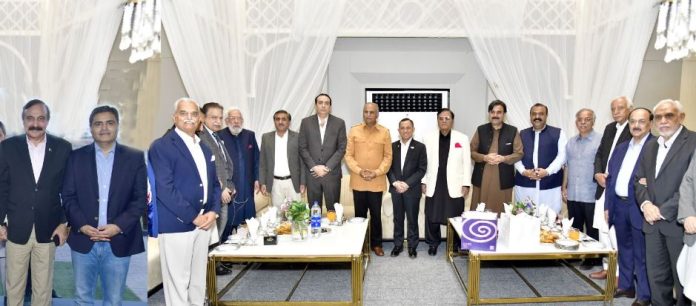
ISLAMABAD, MAR 4 /DNA/ – Federal Minister for Parliamentary Affairs Dr. Tariq Fazal Chaudhry said that the business community is the backbone of Pakistan’s economic development. He stated that the government is taking practical steps to promote business-friendly policies, encourage investment, and ensure economic stability. He expressed these views while addressing an Iftar dinner hosted in his honor by UBG Secretary General Zafar Bakhtawari, Ahsan Bakhtawari, and Waqar Bakhtawari.
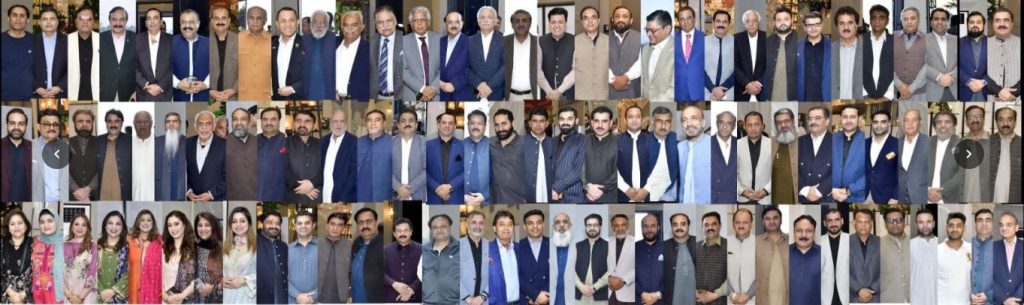
On this occasion, the guest of honor, President of FPCCI Atif Ikram Sheikh, along with Senator General Abdul Qayyum, MPA Malik Iftikhar, ICCI Council Members Zubair Ahmed Malik, Khalid Javed, Khalid Iqbal Malik, Ejaz Abbasi, Aamir Waheed, Mian Akram Fareed, Chaudhry Masood, Shaukat Masood, Chaudhry Waheed-ud-Din, Senior Vice President of ICCI Tahir Ayub, Zahid Bakhtawari, Abid Bakhtawari, Haris Bakhtawari, Executive Members of ICCI Malik Mohsin Khalid, Roheel Anwar Butt, Ishaq Sial, Malik Abdul Aziz, Naveed Satti, Nasir Chaudhry, Imran Minhas, Shamaila Siddiqui, President of Islamabad Chamber of Small Traders and Small Industries Owais Satti, Chairman Saqib Abbasi, President of Talagang Chamber Malik Shabbir Awan, Group Leader Chakwal Chamber Khawaja Arif, President Women Chamber Samina Fazil, Naima Ansari, Fatima Azeem, Sadaf Abbasi, Wajid Ayoob, Babar Chaudhry, Nisar Mirza, Khalid Chaudhry, former President ICCI Shakeel Munir, Yousaf Rajput, Tahir Abbasi, Asad Aziz, Zargham Shah, Zahir Abbasi, Ahmed Khan, Altaf Shah, Naeem Akhtar Awan, Aftab Gujjar, Yasir Jameel Abbasi, Imran Bukhari, Najeeb Elahi Malik, Ameer Hamza, Saif-ur-Rehman, Raja Faizan Shehzad, Naveed Malik, Rana Qaiser, Ras Faisal, Imtiaz Abbasi, Raja Safeer, and other distinguished personalities from the business community and various walks of life were present.

In his address, Federal Minister Dr. Tariq Fazal Chaudhry said that such gatherings play an important role in strengthening mutual relations and promoting national unity. He appreciated the hospitality of the Bakhtawari family and termed it commendable.

Chairman of the Clean and Green Islamabad Movement Ahsan Zafar Bakhtawari, on behalf of his family, thanked all the honorable guests for attending. He said that the holy month of Ramadan teaches us unity, brotherhood, and service, and prayed that Allah Almighty grant Pakistan progress, prosperity, and stability. He reaffirmed the commitment that the business community will continue to play its full role, in cooperation with the government, for strengthening the national economy, promoting investment, and stabilizing business activities.
Ambassador Azhar offers Malaysia’s condolences to Iran in Islamabad

Ambassador Azhar offers Malaysia's condolences to Iran in Islamabad

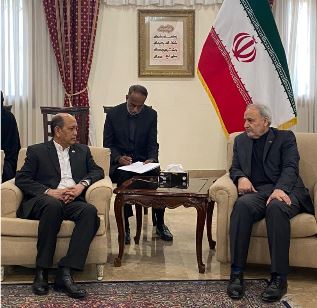
ISLAMABAD, MAR 4 /DNA/ – Malaysia’s High Commissioner to Pakistan, Ambassador Dato’ Mohammad Azhar Mazlan, visited the Embassy of the Islamic Republic of Iran in Islamabad on Wednesday to offer his country’s official condolences on the passing of Iranian Supreme Leader Ali Khamenei.

During his visit, the High Commissioner signed the Book of Condolence opened at the Iranian diplomatic mission. Ambassador Azhar conveyed Malaysia’s deepest sympathies to the Iranian government and its people during this period of national mourning.

He acknowledged the late Supreme Leader’s pivotal and enduring role in shaping the political trajectory of Iran and its regional standing over several decades.

Against the backdrop of a sensitive regional climate, the Malaysian High Commissioner also used the occasion to reiterate his nation’s consistent foreign policy stance. He advocated for restraint, meaningful dialogue, and the peaceful resolution of disputes, expressing Malaysia’s hope for calm and stability throughout the Middle East during this transitional phase.

“Developments in Iran carry broader implications for the peace and security of the region and beyond,” Ambassador Azhar stated.

Reaffirming Malaysia’s diplomatic position, he emphasized the country’s commitment to constructive engagement with both Iran and the wider international community. This commitment, he noted, is guided by the principles of mutual respect and non-interference, alongside a firm respect for national sovereignty and territorial integrity.

Afghan instability costs Pakistan billions in trade losses: IRS

Afghan instability costs Pakistan billions in trade losses: IRS

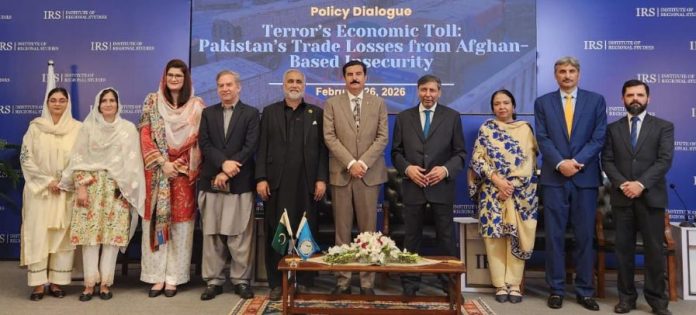
ISLAMABAD, MAR 4 /DNA/ – Speakers at a policy dialogue hosted by the Institute of Regional Studies (IRS) warned that Afghan-based insecurity and recurring border closures are inflicting multi-billion-dollar losses on Pakistan’s trade, transit potential and regional connectivity plans. The dialogue—“Terror’s Economic Toll: Pakistan’s Trade Losses from Afghan-Based Insecurity”—was held at IRS, Islamabad, on February 26, 2026.

IRS President Ambassador Jauhar Saleem said Pakistan’s geographic advantage as a bridge between South and Central Asia can deliver growth only if border operations remain predictable and reliable. He noted that repeated disruptions at Torkham and Chaman have strained supply chains, eroded investor confidence, and risk diverting traders to alternative long-term routes.

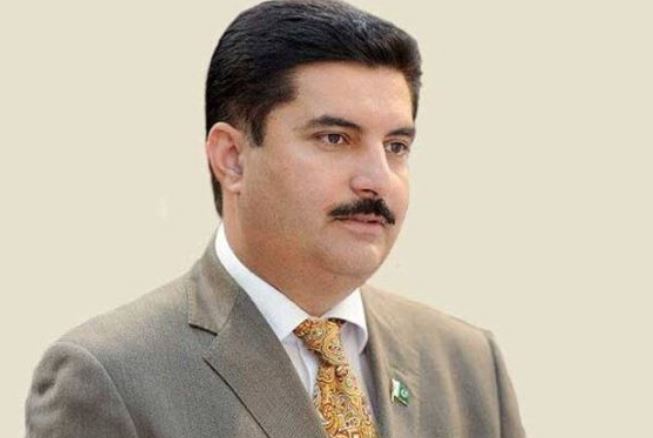
Governor Khyber Pakhtunkhwa Faisal Karim Kundi, the chief guest, stressed that “a secure border must also be a functional border,” calling for stronger federal–provincial coordination, infrastructure readiness and policies that turn frontier pressures into economic opportunity.

In the keynote, Maria Kazi (Joint Secretary, Ministry of Commerce) reported corridor trade fell from USD 7.5 billion (2022–23) to USD 4 billion (2024–25) amid closures. She said escalations on October 11–12, 2025 led to extended shutdowns at multiple crossings, leaving 7,000+ transit containers stranded and undermining USD 500 million in terminal investments. Losses were estimated at ~USD 3 billion annually for Pakistan and over USD 6 billion for the region, with transport cost and time rising 2.5 times.

Panelists urged restoring border predictability, protecting livelihoods, and aligning security measures with trade facilitation.

Ambassador Varga highlights strong potential for bilateral trade growth

Ambassador Varga highlights strong potential for bilateral trade growth

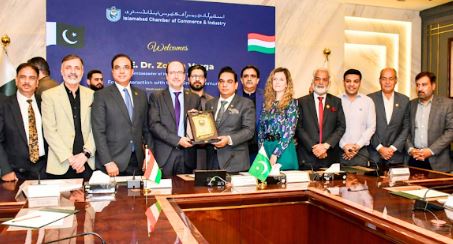
ISLAMABAD, MAR 4 /DNA/ – Ambassador of Hungary Dr. Zoltan Varga has said that Hungary and Pakistan enjoy traditionally friendly diplomatic relations and both countries have significant potential to enhance bilateral trade and investment cooperation.

He expressed these views while addressing an interactive session at the Islamabad Chamber of Commerce and Industry (ICCI) on Wednesday.

The ambassador said that Pakistan and Hungary celebrated the 60th anniversary of the establishment of diplomatic relations last year, which was marked by a number of business engagements between the two countries. He said that the Pakistan–Hungary Joint Economic Commission (JEC) also held its meeting last year and expressed hope that the next session would take place in Budapest next year to further promote economic cooperation.

Dr. Zoltan Varga noted that the current bilateral trade volume between Pakistan and Hungary stands at around 100 million dollars, which indicates strong potential for further growth. He said Hungary’s major economic presence in Pakistan is through MOL Group, the Hungarian oil and Gas Company, which has been successfully operating in the country for the past 26 years with mutual benefits for both sides.

He described Pakistan as a large and vibrant market of over 250 million people with enormous economic potential and said the Hungarian Embassy would be happy to facilitate business linkages and contacts between companies of the two countries.

The ambassador also informed the participants that the EU–Pakistan Business Forum scheduled next month would provide another opportunity to promote economic cooperation and strengthen business relations.

Earlier, in his welcome address, President ICCI Sardar Tahir Mehmood said that Pakistan and Hungary share a long history of cordial diplomatic relations and the business communities of both countries can benefit greatly from stronger economic engagement.

He said that the current bilateral trade between the two countries is approximately USD 100–120 million, with Pakistan exporting mainly textiles, leather goods and food products, while Hungary exports machinery, pharmaceuticals and specialized industrial products to Pakistan.

Sardar Tahir Mehmood said that despite the existing trade relations, there is substantial potential to expand cooperation in areas such as energy, information technology, pharmaceuticals, infrastructure development, agricultural machinery and technology-based industries.

He reaffirmed ICCI’s commitment to facilitating interaction between Pakistani and international businesses and said that the ambassador’s visit to the Chamber would help identify new opportunities for trade and investment collaboration between the two countries.

Senior Vice President ICCI Tahir Ayub also spoke and highlighted potential areas of cooperation, while appreciating Hungary for its economic progress and technological advancement.

Those prominent among the attendees included  Deputy Head of the Mission  Dr. Dora Gunsberger, Vice President Irfan Chaudhry, former President Shakeel Munir, executive members, Malik Mohsin Khalid, Zulqurnain abbasi, Ishaq Sial, Imran Minhas, Mirza Mohammad Ali, ,  Chairman Inter-Regional Coordination Committee ICCI Kashmir Zahir, former SVP Khalid Chaudhry, former  executive members  Chaudhry Mohammad Ali, Akhtar Abbasi and other.

Gwadar Smart Port City Master Plan to build 14 towns in phases

Gwadar Smart Port City Master Plan to build 14 towns in phases

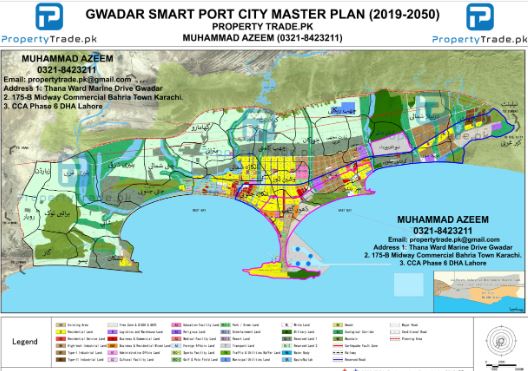
GWADAR, 04 MAR (DNA) —    Under the Gwadar Smart Port City Master Plan 2026, Gwadar Development Authority GDA has finalized the planning framework that consists of 14 neighborhoods (towns), which will be developed in phases, Gwadar Pro reported on Wednesday.

GDA officials have revealed this planning framework in an important meeting on micro-planning and land use for the Gwadar Smart Port City Master Plan 2026.  The meeting was held under the chairmanship of Moin ur Rehman Khan, Director General of the Gwadar Development Authority on March 3, and attended by the Chief Engineer GDA, Haji Syed Muhammad, and the Director Town Planning, Shahid Ali.

GDA official told Gwadar Pro that five implementation models for executing the Master Plan were presented in the meeting, including land acquisition and compensation, land pooling and sharing, land-provider partnerships, land development collaboration, and a private schemes framework. 

Meanwhile, he said that new planning framework allocates designated land for residential, commercial, mixed-use areas, roads, and public facilities. The Director General stated that private-sector participation would be encouraged to ensure effective implementation of micro-planning. 

He emphasized that the GDA is committed to developing a modern, smart, and sustainable port city in line with international standards. Practical measures are being undertaken to provide investors with secure and profitable opportunities, particularly in the real estate, tourism, and trade sectors, and to maintain a climate of confidence. — DNA

President Trump threatens to cut off all trade with Spain

President Trump threatens to cut off all trade with Spain

Experts note that implementing a full trade cutoff with an EU member state would face significant legal and practical hurdles, as U.S.-EU trade is governed by broader agreements

DNA

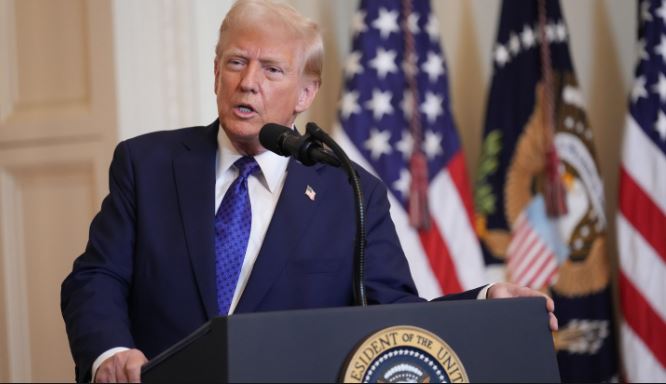
MADRID:  In a heated Oval Office meeting on March 3, 2026, with German Chancellor Friedrich Merz, U.S. President Donald Trump sharply criticized Spain, calling it a “terrible” and “very uncooperative” ally. The outburst stemmed from Spain’s refusal to permit U.S. forces to use jointly operated military bases—such as those at Rota and Morón—for operations related to ongoing U.S. and Israeli strikes against Iran.

Trump declared: “We’re going to cut off all trade with Spain. We don’t want anything to do with Spain.” He directly instructed Treasury Secretary Scott Bessent to “cut off all dealings” with the country, framing the decision as a response to Spain’s stance on the Iran conflict and its failure to meet higher NATO defense spending targets (Trump has pushed for levels beyond the standard 2% of GDP, even suggesting 5%).

The comments were made during a press interaction in the Oval Office alongside Merz, where Trump praised Germany and NATO leadership but lambasted Spain and also took shots at the UK for similar “uncooperative” behavior.

Spain’s government, led by Prime Minister Pedro Sánchez, has condemned the strikes on Iran as “unjustified” and “dangerous,” emphasizing adherence to international law. Spanish Foreign Minister Jose Manuel Albares reiterated that the bases, while jointly used, remain under Spanish sovereignty and would not be authorized for such actions. Madrid has responded by stressing that trade relations fall under EU competence and must respect bilateral agreements and international law, pushing back against unilateral U.S. threats.

Experts note that implementing a full trade cutoff with an EU member state would face significant legal and practical hurdles, as U.S.-EU trade is governed by broader agreements. The U.S. has reportedly relocated some aircraft from Spanish bases amid the tensions. This escalation highlights strains within NATO amid the Iran conflict, with Trump linking military support to trade and defense spending commitments.

Pakistan seeks alternative oil supply route via Saudi Arabia after Hormuz Strait closure

Pakistan seeks alternative oil supply route via Saudi Arabia after Hormuz Strait closure

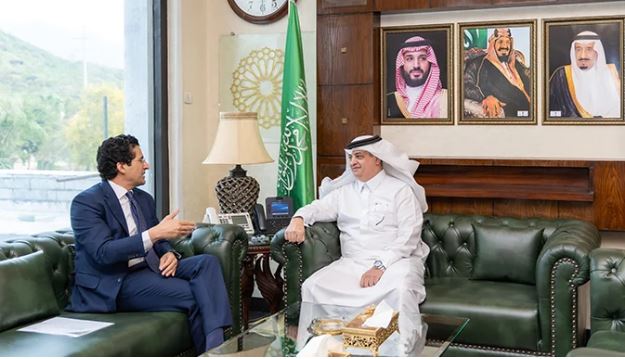
ISLAMABAD, MAR 4: Pakistan on Wednesday sought an alternative oil supply route through Saudi Arabia’s Red Sea port of Yanbu after Iran announced the closure of the Strait of Hormuz, a development that threatens a major portion of global energy flows.

The request was made by Federal Minister for Petroleum Ali Pervaiz Malik to the Saudi ambassador to Pakistan, Nawaf bin Said Al-Malki, during a meeting, according to a statement by the petroleum division.

The minister briefed the ambassador on the fast-evolving regional situation and its implications for international energy markets, noting that the bulk of Pakistan’s oil and energy supplies normally pass through the Strait of Hormuz.

He said the government is closely monitoring developments on a daily basis and making active efforts to ensure the continuity of the country’s energy supply chain, adding that support from brotherly countries, particularly Saudi Arabia, is critical for Pakistan in the current circumstances.

According to the minister, Saudi authorities have assured Pakistan that oil supplies can be facilitated through the port of Yanbu on the Red Sea to help meet the country’s energy needs.

He said Saudi Arabia is already extending practical support, and that one vessel has been assured dispatch from Pakistan to the port of Yanbu for lifting crude oil for Pakistan. The minister also expressed hope that oil supplies from Yanbu would be prioritised for Pakistan.

Malik thanked the Kingdom for its continued assistance and said Pakistan deeply valued Saudi Arabia’s cooperation during the ongoing crisis.

The Saudi ambassador, for his part, said the Kingdom was fully aware of the regional developments and reaffirmed that Saudi Arabia would stand firmly with Pakistan to meet any emergency energy requirements. He described Pakistan and Saudi Arabia as brotherly nations and said both would continue to support each other, particularly in testing times.

The move follows a stark warning from Iran after a senior official of the Islamic Revolutionary Guards announced that the Strait of Hormuz had been closed and that any vessel attempting to pass through the waterway would be targeted following the United States-Israel attack.

Iranian state media quoted Ebrahim Jabari, a senior adviser to the Guards’ commander-in-chief, as saying the strait was shut and that Revolutionary Guards and naval forces would attack any ship attempting transit.

This was Tehran’s most explicit warning after it indicated that it would close the key export route, a step that risks choking a significant share of global oil supplies and driving crude prices sharply higher.

The Strait of Hormuz is regarded as the world’s most vital oil export corridor, linking major Gulf producers — including Saudi Arabia, Iran, Iraq and the United Arab Emirates — to the Gulf of Oman and the Arabian Sea.

By announcing the closure, Tehran acted on long-standing threats to block the narrow waterway in retaliation for any military action against the Islamic Republic.

Roughly one-fifth of the world’s daily oil consumption passes through the Strait of Hormuz, which narrows to about 33 kilometres at its tightest point.

UNDP, Syria launch media training diploma initiative

UNDP, Syria launch media training diploma initiative

DAMASCUS, Mar 4: Syria’s Ministry of Information has signed an agreement with the United Nations Development Program (UNDP) aimed at enhancing professional skills and institutional performance across media sector.

The agreement was signed by Minister of Information Hamza al-Mustafa and UNDP Deputy Resident Representative in Syria Mohamed Siddiq Madawi.

The initiative focuses on building technical and professional capacities through a series of specialized diploma programs to be delivered by the Ministry’s Media Training Institute. The courses will cover artificial intelligence in media, graphic design, photography, journalism and editing, radio and television presentation, and official spokesperson training.

Over a six-month period, the program is expected to benefit more than 775 employees working across the Ministry of Information and its affiliated institutions and directorates in most governorates.

UNDP operates in nearly 170 countries, supporting sustainable development initiatives and institutional capacity-building programs.

Kundi condoles with Iran over martyrdom of Supreme Leader

Kundi condoles with Iran over martyrdom of Supreme Leader

ISLAMABAD, Mar 04 /DNA/: Governor of Khyber Pakhtunkhwa Faisal Karim Kundi on Wednesday visited the Embassy of the Islamic Republic of Iran in Islamabad along with former federal minister Sajid Hussain Turi to express condolences over the martyrdom of Iranian Supreme Leader Ali Khamenei.

The governor recorded his remarks in the visitors’ book at the embassy, paying tribute to Ayatollah Syed Ali Khamenei and other Iranian martyrs, said a news release.

He also offered Fateha for the departed souls and prayed for the elevation of their ranks.

During the visit, Kundi met with Iranian Ambassador Reza Amiri Moghaddam and conveyed heartfelt sympathies on behalf of himself and the people of Khyber Pakhtunkhwa.

He said that the people of the province, as well as the entire nation of Pakistan, were deeply saddened and grieved over the martyrdom of the Iranian Supreme Leader.

“The martyrdom of Ayatollah Khamenei is a great loss for the Muslim Ummah,” the governor said, adding that he stood in solidarity with the government and people of Iran in this hour of grief.

He said the late leader was a courageous figure who embraced martyrdom for a noble cause and said that every eye in Pakistan was tearful over the tragic incident.

Kundi also paid tribute to the resilience, unity, and spirit of the Iranian people, reaffirming that Iran is a brotherly Islamic country and that Pakistan stands with its people in times of sorrow and joy alike.

He emphasized the importance of safeguarding Iran’s sovereignty and territorial integrity.

Reza Amiri Moghaddam thanked the governor for visiting the embassy and sharing in Iran’s grief.

He expressed appreciation for the solidarity shown by the people of Khyber Pakhtunkhwa and Pakistan, saying that the Muslim world was deeply anguished over the martyrdom of Ayatollah Khamenei.

PIDE, ECP join forces for electoral training programs

PIDE, ECP join forces for electoral training programs

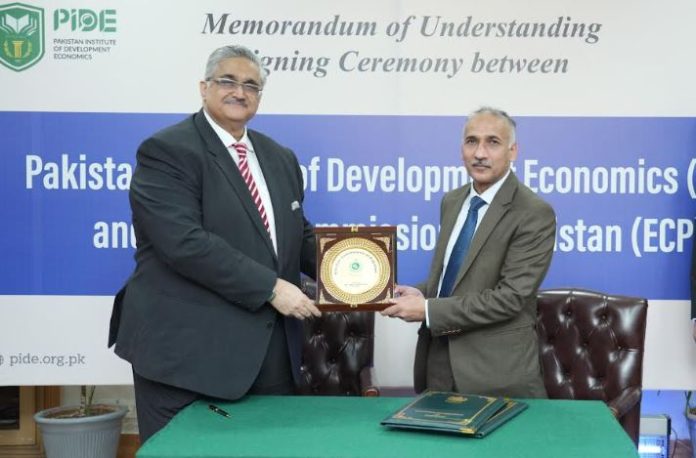
ISLAMABAD, MAR 4 /DNA/ – The Pakistan Institute of Development Economics (PIDE) and the Election Commission of Pakistan (ECP) have signed a Memorandum of Understanding (MoU) to collaborate on research, training, capacity building, and youth civic engag

ement initiatives aimed at strengthening democratic governance, electoral awareness, and evidence-based policymaking in Pakistan.

The MoU was signed at the ECP Secretariat in Islamabad. The PIDE delegation was led by Dr. Nasir Iqbal, Professor of Economics and Registrar, PIDE, while the ECP delegation was led by Mr. Omer Hamid Khan, Secretary, Election Commission of Pakistan.

Under the MoU, both institutions will pursue joint research projects and publications focusing on electoral processes, governance, institutional performance, voter behaviour, and related public policy areas.

The partnership also includes Training of Trainers (ToT), workshops, seminars, and short courses for educators, researchers, and professionals, alongside youth-focused civic engagement initiatives, including digital tools and educational content to promote democratic participation.

The collaboration further envisions opportunities for placing graduate and doctoral students for research, policy analysis, and institutional support, and for enabling data sharing and analytical support for policy recommendations, in line with applicable laws and confidentiality requirements.

The MoU will remain effective for five years from the date of signature, with the provision for extension by mutual consent.

Speaking on the occasion, Dr. Nasir Iqbal said the partnership reflects PIDE’s commitment to connecting rigorous research and capacity development with national priorities, and to supporting stronger democratic institutions through evidence, learning, and practical collaboration. He noted that the MoU will create meaningful avenues for research-driven insights, professional training, and civic education that can contribute to a more informed and participatory democratic culture.

Mr. Omer Hamid Khan stated that the collaboration aligns with the ECP’s mandate to promote public awareness and voter education, while supporting continuous improvements in institutional performance through knowledge exchange and targeted capacity-building initiatives. He emphasized that sustained engagement with research and policy institutions helps strengthen democratic participation and contributes to the credibility and effectiveness of electoral processes.

As outlined in the MoU, activities under this collaboration will be implemented through written agreements between nominated focal persons from both institutions and will be subject to the availability of resources, with each party bearing its own costs unless otherwise agreed.

For coordination and official correspondence, the focal persons are Dr. Nadeem Khan, Assistant Professor and Director, Executive Development Center (EDC), PIDE, and Mr. Nazar Abbas, Additional Director General (Media Coordination and Outreach Wing), ECP.

Stay Connected

64FansLike
60FollowersFollow

Latest Reviews

Exchange Rates

USD - United States Dollar
EUR
1.14
GBP
1.34
AUD
0.70
CAD
0.71