Home Blog Page 223

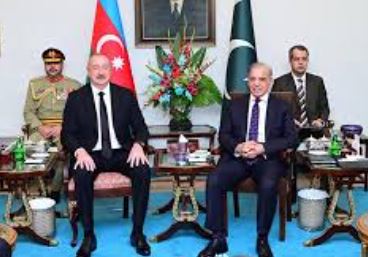
PM Shehbaz, President Aliyev stress need for regional De-escalation

PM Shehbaz, President Aliyev stress need for regional De-escalation

ISLAMABAD, MAR 6 /DNA/ – Prime Minister Muhammad Shehbaz Sharif held a telephone conversation with Ilham Aliyev, President of the Republic of Azerbaijan, earlier today.

During their conversation, the Prime Minister condemned, in the strongest terms, the drone attacks on Nakhchivan exclave of Azerbaijan yesterday that targeted innocent civilians. He assured the Azerbaijani leadership that Pakistan stands in complete solidarity and support with the brotherly people of Azerbaijan at this difficult time.

He apprised President Aliyev of Pakistan’s diplomatic outreach efforts in the aftermath of the ongoing crisis in Iran and the Gulf region.

President Aliyev thanked the Prime Minister for the telephone call and appreciated the sentiment of solidarity and support of the people of Pakistan at this challenging time.

The two leaders stressed on the need for de-escalation and restoration of peace in the region. They agreed to remain in touch.

HEC’s higher study opportunities for Baloch, Ex-FATA students yield results

HEC

8,343 Students Avail Scholarships; 4,583 Complete Studies and Contribute to National Growth

ISLAMABAD, MAR 6 /DNA/ – In line with the mandate to expand access to quality higher education, the Higher Education Commission (HEC) Pakistan is awarding a large number of scholarships to Balochistan and erstwhile FATA students under the project entitled, Provision of Higher Education Opportunities for Students of Balochistan and FATA, through a rigorously meritorious process. Till date, HEC has awarded 8,343 scholarships to the talented students of underprivileged areas of Balochistan and erstwhile FATA.       

As many as 4,583 students from Balochistan and erstwhile FATA have completed their studies and are now contributing to the socio-economic development of Pakistan. The remaining are scholars are currently on board and soon will complete their studies and play active role in socio-economic development of the country.   

The selection of 1000 undergraduate scholarships for the session 2025-26 is in final stage and will be finalised soon. Moreover, for the academic session 2026-27, another 1,000 undergraduate scholarships will be awarded.

The project “Provision of Higher Education Opportunities for Students of Balochistan & FATA (President Directives)”, approved in October 2007, was launched to provide 2,000 scholarships to talented and deserving students from Balochistan and FATA. Of these scholarships, 1,300 were allocated for undergraduate (BS four/five years) programmes and 700 for postgraduate (MSc two years) studies. The project was successfully completed, and PC-IV has been duly submitted. The initiative played a significant role in expanding access to higher education for the youth of these underserved regions, contributing to human resource development and socio-economic uplift of Balochistan and erstwhile FATA.

The project phase-II, approved by CDWP in October 2015, aimed to award 3,500 (2500 Undergraduate and 1000 Postgraduate) scholarships. Since 3,341 (2517 undergraduate and 824 postgraduate) energetic and deserving scholars have benefited from this phase, 2,581 (1957 undergraduate and 624 postgraduate) have successfully completed their studies and are contributing to the overall economic and social growth of the country. Besides, 760 (570 undergraduate and 190 postgraduate) scholars are currently enrolled and are expected to graduate by June 2027.

The project Phase-III, approved in January 2023, aims to award 5,000 undergraduate scholarships to talented and motivated youth from these underserved regions. To date, 3,000 scholarships have been awarded, with 2,531 energetic scholars currently pursuing their studies. The award of 1,000 additional scholarships (Batch-IV) is in process. Moreover, additional 1,000 scholarships will be advertised for the Academic Session 2026-27.

The initiative reaffirms the Government of Pakistan commitment through HEC to empowering meritorious and underprivileged youth of Balochistan and erstwhile FATA.

War: Gulf states may rethink about US investments

War: Gulf states may rethink about US investments

Monitoring Desk

NEW YORK: The escalating US-Israeli war against Iran has entered its 8th day on March 7, 2026, with intensified airstrikes targeting Iranian regime infrastructure in Tehran and Hezbollah assets in southern Beirut, while Iran’s retaliatory missile and drone attacks have significantly declined.

In the Gulf, three of the region’s four major economies—Saudi Arabia, the UAE, Kuwait, and Qatar (with one unnamed)—have jointly discussed severe budgetary strains from the war. A Gulf official told that this could prompt reviews of overseas investments, including pledges to foreign states or companies, sports sponsorships, business contracts, and potential sales of holdings.

 Countries are also examining force majeure clauses in existing deals to alleviate economic pressure, as Iranian drone and missile strikes have hit regional targets, including US bases, Amazon cloud facilities in the UAE and Bahrain, and energy assets, heightening global concerns over oil supply stability.

Mishal Pakistan to conduct survey in Pakistan

Mishal Pakistan to conduct survey in Pakistan

DNA

ISLAMABAD, MAR 6: Mishal Pakistan, the Country Partner Institute of the World Economic Forum (WEF), has announced the launch of the Executive Opinion Survey (EOS) 2026 in Pakistan. The survey will be conducted from March to May 2026 and will gather perception-based insights from Pakistan’s business leaders regarding the country’s economic environment, governance, competitiveness, and institutional performance.

The survey is being implemented in Pakistan by Mishal Pakistan in its capacity as the official Country Partner Institute of the World Economic Forum, responsible for coordinating the survey process, outreach to the business community, and ensuring the quality and integrity of the national dataset.

First launched by the World Economic Forum in 1979, the Executive Opinion Survey is conducted annually in more than 150 economies and collects responses from approximately 15,000 senior business executives worldwide each year. It is widely regarded as one of the most comprehensive global perception surveys on the business environment, capturing insights that often cannot be measured through traditional statistical indicators.

The survey includes over 80 questions covering key pillars of national competitiveness, including institutional quality, corruption, judicial independence, infrastructure, macroeconomic stability, innovation capability, labor markets, financial systems, gender equality, and business dynamism. Executives assess these areas based on their real-world experience of operating in their respective economies.

Commenting on the launch of the survey, Amir Jahangir, Chief Executive Officer of Mishal Pakistan, said “This year’s Executive Opinion Survey is particularly significant for Pakistan. The country is undergoing a period of economic recalibration, institutional reforms, and policy adjustments aimed at strengthening competitiveness and governance. Capturing the perceptions of business leaders during this phase is essential. These insights help global institutions understand the realities of Pakistan’s business environment and ensure that the country’s reform trajectory and economic potential are accurately reflected in international datasets.”

Data from the Executive Opinion Survey (EOS) feeds into several major global reports and analytical publications produced by the World Economic Forum and other international institutions. The survey findings contribute to the development of influential global assessments including the Global Competitiveness Report, Global Risks Report, Global Gender Gap Report, Travel & Tourism Development Index, Future of Jobs Report, and the Global Growth Report. In addition, elements of the perception data collected through the EOS are also used by other organizations in global benchmarking exercises, such as the Corruption Perceptions Index Report, helping policymakers, researchers, and investors better understand governance quality, economic competitiveness, and institutional performance across countries.

Beyond the World Economic Forum, the survey dataset is widely used by international organizations, research institutions, and academic bodies for governance and economic analysis. Institutions that draw upon EOS data include the World Bank, United Nations Development Programme (UNDP), Organisation for Economic Co-operation and Development (OECD), and Transparency International. Leading research organizations and think tanks such as the Brookings Institution, Carnegie Endowment for International Peace, Chatham House, and various universities also rely on EOS data for economic and governance research.

Japan Supports Pakistan Red Crescent Blood Services in Islamabad

The Government of Japan provides grant assistance to the Pakistan Red Crescent Society for strengthening blood donation services in Islamabad

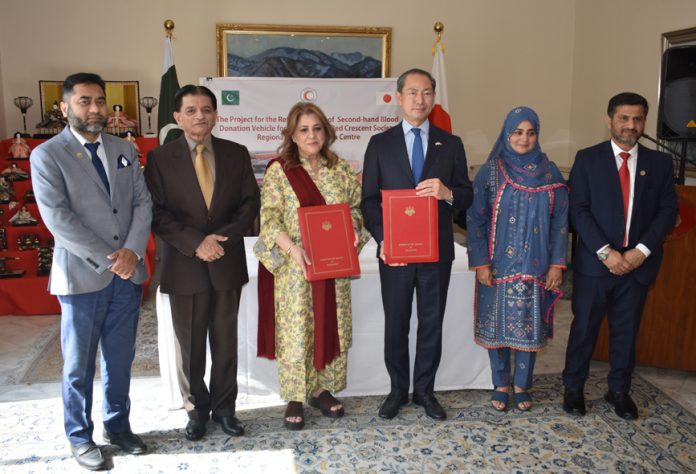
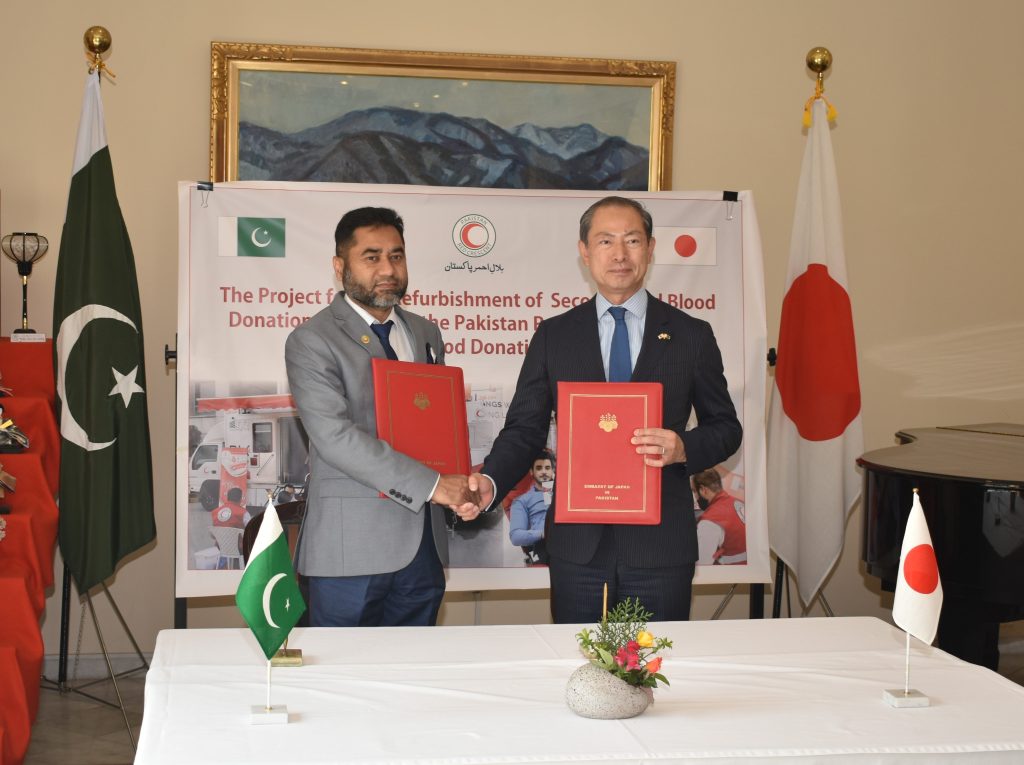
ISLAMABAD: MAR 6 /DNA/: The Government of Japan, under its Grant Assistance for Grassroots Human Security Projects (GGP) Program, has decided to provide grant assistance of USD 65,470(equivalent to PKR 18 million) to the Pakistan Red Crescent Society (PRCS) for a project to enhance blood donation services in capital region.

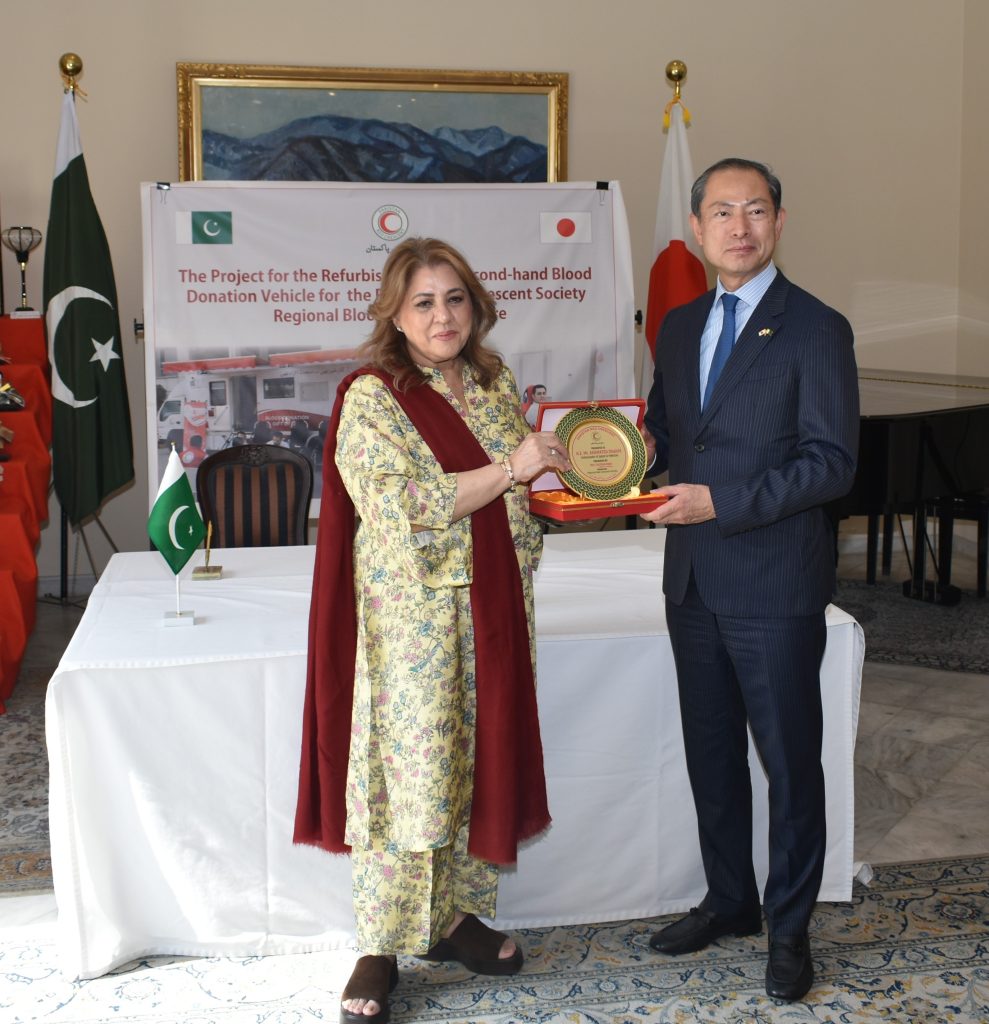
The grant contract was signed between His Excellency Mr. AKAMATSU Shuichi, Ambassador of Japan to the Islamic Republic of Pakistan and representatives of PRCS at the Embassy of Japan in Islamabad on March 6, 2026. The project, titled “The Project for the Refurbishment of Second-hand Blood Donation Vehicle for the Pakistan Red Crescent Society Regional Blood Donation Center,” aims to strengthen the capacity of Regional Blood Donation Center to collect and supply safe blood to vulnerable patients and emergency cases.

Established in 1947, PRCS is the leading humanitarian organization in Pakistan and operates nationwide in disaster management, health, and community services. The PRCS Regional Blood Donation Centre in Islamabad relies exclusively on voluntary non-remunerated blood donors and has steadily increased its annual blood collection over the past decade. However, limited outreach capacity and operational challenges have constrained its ability to meet growing demand.

Through this grant, PRCS will procure the refurbished second-hand blood donation vehicle from Japan. This vehicle will enable PRCS to conduct blood donation drives at universities, workplaces, public spaces, and mosques in Islamabad and surrounding region.

The project is expected to increase blood collection capacity by around 30 percent and contribute to saving the lives of approximately 12,000 patients suffering from thalassemia, hemophilia, cancer, and for victims of road traffic accidents. It will also improve the preparedness for natural disasters and other emergencies.

At the signing ceremony, Ambassador Akamatsu emphasized that human security begins with protecting each individual life which is fundamental of Japan’s assistance policy. Securing blood stocks is directly linked to saving people’s lives and the better access to medical treatment.

As an enduring friend of Pakistan, the Government of Japan will continue to support for capable local NGOs through grant assistance to achieve the human security in Pakistan. Ambassador Akamatsu wished this project would reflect the strong and longstanding friendship between Japan and Pakistan.

MOTORWAY COPS REWARDED OVER RECOVERY OF STOLEN VEHICLE

DSP Khurram Shehzad, Inspector Rai Imtiaz and Constable Zeeshan recovered a stolen vehicle

ISLAMABAD, MAR 6 /DNA/ Additional Inspector General of Police, National Highways and Motorway Police (NHMP), Muhammad Wisal Fakhar Sultan Thursday awarded Commendation Certificates and cash awards to NHMP officers in recognition of their exceptional performance and dedication towards official duties.

According to details, DSP Khurram Shehzad, Inspector Rai Imtiaz and Constable Zeeshan Irfan recovered a snatched vehicle from their area of responsibility. Motorway Police received information regarding a stolen Alto car from Sialkot. Upon receiving the information, displaying intense efforts and professional skills, the Motorway police officers were able to recover the vehicle from Muridke. In recognition of their efforts, the Additional Inspector General Muhammad Wisal Fakhar Sultan awarded the officers with commendation certificates and suitable cash rewards. Meanwhile, Inspector Bilal and Inspector Saeed Nadir had recovered a bag worth Rs 5.3 Million from Kallar Kahar rest area, and returned it to owner safely. Inspector Mushahid, Inspector Zaki Hassan, Inspector Ehtisham and Inspector Allah Ditta were awarded the same on their exceptional duty during road safety awareness sessions, which helped spread the awareness messages of NHMP more effectively. Furthermore, Inspector Nadeem, Sub Inspector Shabana and Photographer Wajid Hussain were also awarded certificates and cash prize in acknowledgment of their versatile approach in conducting briefing sessions at toll plazas. Also, Sub Inspector Taj Nabi was awarded the commendation certificate and cash prize on actively responding to road closures and subsequently working to navigate commuters safely.

The officers were awarded with certificates during a ceremony by Additional Inspector General (North Region), Muhammad Wisal Fakhar Sultan.

         On the occasion, the Additional Inspector General of Police, Muhammad Wisal Fakhar Sultan commended the officers on their exceptional performance. He further hoped that the officers will further contribute in keeping the bar high.

Leather & Footwear Sector Raises Export, Regulatory Issues With Minister Jam Kamal Khan

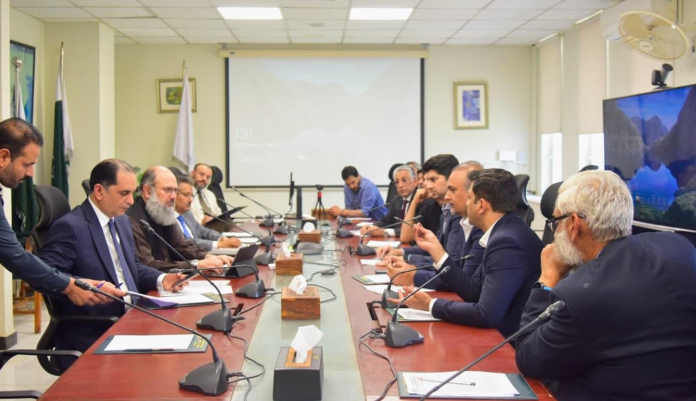
ISLAMABAD: MAR 5 /DNA/: A delegation representing Pakistan’s leather and footwear industry called on Federal Minister for Commerce Jam Kamal Khan to discuss key issues affecting the sector, including export growth opportunities, domestic industry challenges, and regulatory concerns related to the import of used footwear.

During the meeting, the delegation highlighted the strong potential of Pakistan’s footwear industry to expand exports and contribute more significantly to the country’s export basket. Industry representatives noted that Pakistan possesses substantial manufacturing capacity and skilled labor, which can support increased production for both domestic consumption and international markets.

The delegation emphasized that Pakistan’s annual footwear consumption is estimated at around 550 million pairs, while the country has an installed production capacity of nearly 700 million pairs annually, indicating significant potential for both domestic supply and export expansion. However, they noted that a considerable portion of this capacity remains underutilized due to market distortions created by the growing influx of used footwear imports.

Industry representatives informed the Minister that approximately 30–40 percent of the domestic market is currently being met through imports of used footwear. Many of these imports, they explained, include branded shoes entering the market at extremely low declared values under the category of used clothing, which creates unfair competition for local manufacturers.

In this context, the delegation proposed the introduction of a separate Harmonized System (HS) code for used footwear, which is currently classified under the broader category of used clothing and accessories. They explained that the existing classification makes it difficult for regulators to properly track footwear imports, assess accurate valuation, and implement sector-specific regulatory measures.

During the discussion, the Joint Secretary (Tariff) of the Ministry of Commerce apprised the Minister that the proposal to create a separate HS code for used footwear has been placed on the agenda of the upcoming meeting of the Tariff Policy Board. It was further shared that, following consultations and approvals, the proposal may ultimately become part of the upcoming federal budget.

Responding to the delegation’s concerns, Federal Minister Jam Kamal Khan acknowledged the importance of the leather and footwear sector as a high-potential export industry and reiterated the government’s commitment to supporting local manufacturing while promoting export-led growth.

The Minister encouraged industry stakeholders to enhance export performance and strengthen Pakistan’s presence in international footwear markets, while also emphasizing the need for locally produced footwear to remain reasonably priced and accessible in the domestic market.

The meeting also discussed broader measures to improve customs valuation practices, address regulatory challenges associated with used imports, and encourage investment in export-oriented footwear manufacturing.

Both sides agreed to maintain close coordination between the government and industry stakeholders to fully unlock the sector’s potential for employment generation, increased domestic production, and higher exports in the coming years.

UK minister warns Iran crisis could last months

LONDON, ‌Mar 5 /DNA/: British foreign ​office minister Hamish Falconer said on Thursday there ‌were ‌indications the ​Iranian ‌crisis ⁠could ​run into ⁠weeks or possibly months.

“The situation ⁠is evolving, ‌but ‌there ​are ‌indications ‌that this is a crisis, not ‌of days, but of weeks ⁠and ⁠possibly months,” Falconer told parliament.

China boosts defence spending 7% in drive to modernise by 2035

DNA

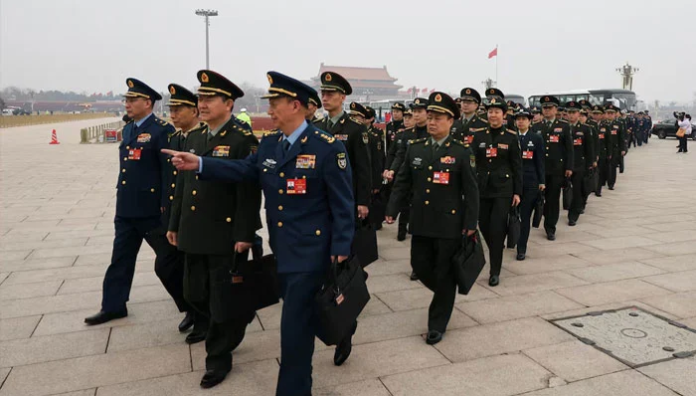
China will boost defence spending by 7% in 2026, it said on Thursday, the lowest rate in five years but still outpacing wider economic growth targets and the rest of Asia at a time of growing regional tension, including over Taiwan.

Security analysts and regional military attaches are watching China’s budget closely as it scrambles to modernise the military by 2035, while stepping up deployments across East Asia and purging the top brass to tackle graft.

China will improve combat readiness and accelerate the development of “advanced combat capabilities”, Premier Li Qiang said at the opening of parliament’s annual meeting, at which he unveiled a broader GDP growth forecast of 4.5% to 5%.

“All these steps will boost our strategic capacity to safeguard China’s sovereignty, security, and development interests,” Li said in his work report, adding that President Xi Jinping held ultimate command responsibility.

The figure of 7%, which follows three years of annual rises of 7.2% and is the lowest since 6.8% in 2021, is part of a spending campaign in which China’s military has developed new advanced missiles, ships, submarines and surveillance methods.

This year’s increase showed Beijing was keeping to a long-held principle of balancing economic growth with national defence goals, said James Char of the S. Rajaratnam School of International Studies in Singapore.

“Essentially, the People’s Liberation Army budget has been growing at a fairly consistent rate as a percentage of GDP … roughly the rate of GDP growth plus inflation,” added Char, a China defence scholar.

It comes amid the highest-profile purge of upper military ranks in decades, with the two most senior generals ensnared in disciplinary investigations.

Zhang Youxia, a veteran military ally of Xi, was placed under investigation in January, while another, He Weidong, was expelled in October last year.

The purge leaves just two members of the usual seven on the supreme Central Military Commission, Xi himself as its chair, and a newly promoted vice chairman, Zhang Shengmin.

The corruption crackdown showed “Beijing will keep a tighter watch on military spending,” said Wen-Ti Sung, a security analyst based in Taiwan, although it was clear all levels of government were getting more frugal.

The government remains committed to the ruling Communist Party’s “absolute leadership over the armed forces”, Li added.

“Guided by the principle of ensuring political loyalty in the military, we will continue to improve military political conduct and make major strides towards the centenary goals of the People’s Liberation Army.”

Some regional analysts believe the founding anniversary, which falls next year will bring further increases in military drills and deployments around Taiwan, the democratically-governed island that Beijing views as its territory.

‘Reunification with Taiwan’

China would “resolutely fight against separatist forces aimed at ‘Taiwan independence’ and oppose external interference”, Li vowed, virtually reprising comments of last year.

That would “promote the peaceful development of cross-Strait relations and advance the cause of national reunification”, he added.

Taiwan says only the island’s people can decide their future. Its government said it did not see any major policy changes towards Taiwan in Li’s comments, but was concerned about China’s defence spending.

“Even under conditions of an unstable economy and weak private consumption, they are still willing to allocate a very large budget to military spending,” said Liang Wen-chieh, a spokesperson of the Mainland Affairs Council in Taipei.

“And of course, that poses a threat to Taiwan,” the spokesperson told reporters.

International environment

Li toned down a warning about the international environment from a year ago, calling it “complex and challenging” rather than “increasingly complex and severe” in comments that had cited “changes unseen in a century”.

In Tokyo, Japan’s Chief Cabinet Secretary Minoru Kihara said China was not sufficiently transparent about its continued high level of defence spending and stronger capabilities.

Despite China’s efforts to change the status quo in the East and South China Seas by “force or coercion”, Japan would keep up efforts to build constructive, stable ties with it, Kihara told a press briefing.

While the graft crackdown left gaps in the PLA’s command structure and dented short-term readiness, it was expected to keep improving capabilities and broaden modernisation, the International Institute of Strategic Studies said.

Growth in Chinese military spending was consistently outpacing the rest of Asia amid a global surge in defence budgets, the London-based IISS said in a report last month.

China’s share of Asia’s total military expenditure grew to almost 44% in 2025, up from an average of 37% between 2010 and 2020, it added.

China gives no breakdown of defence spending, though its budget of 1.91 trillion yuan ($277 billion) is just about a quarter of a $1-trillion defence bill US President Donald Trump signed into law in December.

Iran is pummeled by airstrikes as it launches a new wave of attacks against Israel and US bases

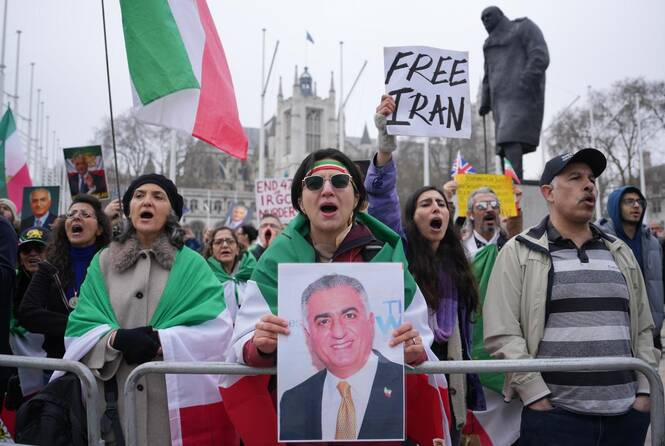
DUBAI, United Arab Emirates, MAR 5 /DNA/: Iran launched a new wave of attacks against Israel, American bases and countries around the region Thursday, while warning the U.S. would “bitterly regret” torpedoing an Iranian warship. Tehran’s expanding retaliatory strikes and increasing shows of defiance came even as Israel and the U.S. hammered Iran for a sixth day.

The war has escalated each day, affecting an additional 14 countries across the Middle East and beyond. On Thursday, Azerbaijan accused Iran of attacking it with drones — though Tehran denied that. A day earlier, the U.S. said it sank an Iranian frigate in the waters off Sri Lanka.

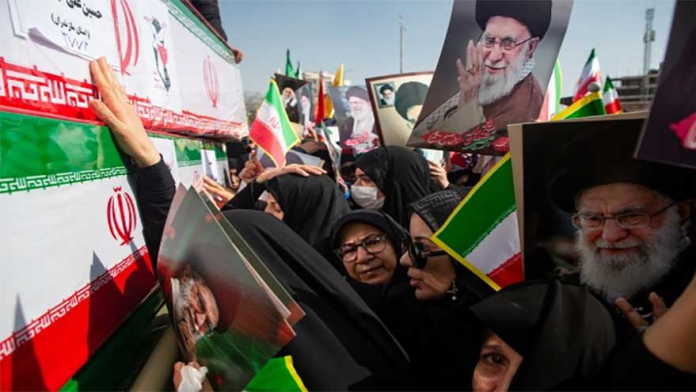
All the while, the U.S. and Israel have battered Iran with nationwide strikes, targeting their military capabilities leadership and nuclear program. Israeli and American leaders have also suggested that toppling the government was a goal — and Iranian Supreme Leader Ayatollah Ali Khamenei was killed when they launched the war Saturday. But the exact aims and timelines have repeatedly shifted, and the conflict increasingly appeared to be open-ended.

Iran’s attacks have targeted their Arab neighbors, disrupted oil supplies and snarled global air travel.

The war has killed at least 1,230 people in Iran, more than 70 in Lebanon and around a dozen in Israel, according to officials in those countries. Six U.S. troops have been killed.

“Mark my words: The U.S. will come to bitterly regret (the) precedent it has set,” he said on social media.

An Iranian cleric later called on state television for the shedding of both Israeli and “Trump’s blood.”

The statement from Ayatollah Abdollah Javadi Amoli represented a rare call for violence by an ayatollah, one of the highest ranks within the clergy of Shiite Islam. There are dozens in Iran.

Israel announced multiple incoming missile attacks and air sirens sounded in Tel Aviv and Jerusalem, while Gulf countries also reported coming under fire.

In Abu Dhabi, United Arab Emirates, a drone was shot down near the Al Dhafra Air Base, which hosts U.S. forces, and shrapnel fell to the ground, authorities said. Six people were wounded.

Qatar evacuated residents near the U.S. Embassy in Doha as a temporary precaution and later reported a missile attack on the city. Saudi Arabia said it destroyed a drone in its province bordering Jordan.

Israel appeared to be preparing to step up its attacks on Lebanon, where it is targeting the Iranian-backed Hezbollah militant group. The Israeli military also said a wave of strikes on Iran hit long-range ballistic missile launch sites and other targets.

Azerbaijan’s President Ilham Aliyev accused Iran of carrying out “a groundless act of terror and aggression” after a drone crashed Thursday near the airport in Nakhchivan, a region bordering Iran that is separated from the rest of the country by Armenia. Another drone fell near a school and two civilians were injured, Azerbaijan’s Foreign Ministry said.

Aliyev said the military had been instructed “to prepare and implement retaliatory measures.”

Iran’s general staff of the armed forces denied it had launched drones toward Azerbaijan. The denial comes as Iran has repeatedly denied targeting oil infrastructure and other civilian targets during the war, despite its drone and missile fire hitting those sites.

A tanker apparently came under attack off the coast of Kuwait early Thursday, expanding the area where commercial shipping was in danger, according to the United Kingdom Maritime Trade Operations Center run by the British military. It said there was an explosion but did not offer a cause.

Since the war began Saturday, ships have been attacked in the Gulf of Oman and the Strait of Hormuz, through which about a fifth of the world’s oil is shipped. That has caused oil prices to soar — though they briefly came down Wednesday, before resuming their climb Thursday.

Israel issued an evacuation notice calling for all residents of Beirut’s southern suburbs to “save your lives and evacuate your homes immediately,” apparently signaling plans for heavy bombardment of the area.

Since the resurgence of hostilities between Israel and Hezbollah militant group, which struck Israel in the opening days of the war, Israel has hit sites in Beirut’s suburbs and issued a blanket warning for residents of southern Lebanon to evacuate. But it had not issued such a warning for areas near the country’s capital.

Among the 80 targets in Lebanon the Israel military said it hit over the past 24 hours were “several command centers” used by Hezbollah in Beirut. It showed video footage of a building being hit, but provided no further details.

Iranian warship was hit on its way home from multinational exercises

The Iranian ship sunk by the U.S. Navy was returning from an exercise hosted by the Indian navy that the U.S. also joined.

Sri Lankan authorities said 32 crew members were rescued, while its navy recovered at least 87 bodies.

Araghchi said it had been carrying “almost 130” crew.

Sri Lanka’s media minister and government spokesman, Nalinda Jayatissa, told parliament Thursday that another Iranian ship had arrived in its waters. Jayatissa did not provide further details about the ship.

Stay Connected

64FansLike
60FollowersFollow

Latest Reviews

Exchange Rates

USD - United States Dollar
EUR
1.14
GBP
1.34
AUD
0.70
CAD
0.71