Home Blog Page 222

SAPM Haroon reviews Pakistan–Uzbekistan trade cooperation

SAPM Haroon reviews Pakistan–Uzbekistan trade cooperation

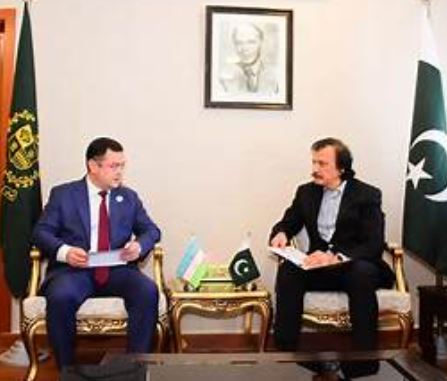
ISLAMABAD, Mar 6 (DNA): Special Assistant to the Prime Minister (SAPM) on Industries and Production Haroon Akhtar Khan on Friday chaired a meeting of the Pakistan–Uzbekistan Joint Working Group and reviewed progress on bilateral economic cooperation and explore new avenues for expanding trade between the two countries.

The meeting marked the second session of the joint working group on trade, aimed at strengthening economic engagement and enhancing bilateral trade, said a news release.

Secretary Commerce Jawad Paul, along with representatives from various ministries and the Special Investment Facilitation Council (SIFC), attended the meeting.

During the session, participants reviewed progress on previously agreed Memorandums of Understanding (MoUs) and discussed measures to promote trade, improve trade routes, and expand cooperation in multiple sectors.

Speaking on the occasion, Haroon said that under the prime minister’s vision, a Five-Year Roadmap (2026–2030) would be presented to significantly increase trade between Pakistan and Uzbekistan, said adding that the implementation of agreed protocols would also be carried out through the strategic roadmap.

 Haroon said both countries were entering a new phase of economic partnership that would create fresh opportunities for bilateral trade and investment.

To prepare sector-specific strategies, eight working groups have been established, each tasked with developing detailed roadmaps for their respective sectors, which were presented during the meeting.

Haroon also highlighted that an alternative trade route through China for Uzbekistan could prove shorter and more efficient, and a comprehensive plan is currently under development.

Both sides agreed to enhance cooperation in key sectors including energy, transport, agriculture, and industry. The meeting also discussed expanding regional connectivity and exploring new trade opportunities to improve access to Central Asia.

Participants stressed the importance of accelerating joint initiatives to significantly increase the volume of bilateral trade between the two countries.

Haroon reiterated that Pakistan remains committed to strengthen economic and diplomatic engagement with Central Asian states to promote regional connectivity, trade, and investment.

Ambassador Khalil Hashmi shares insights into China’s two sessions

Ambassador Khalil Hashmi shares insights into China’s two sessions

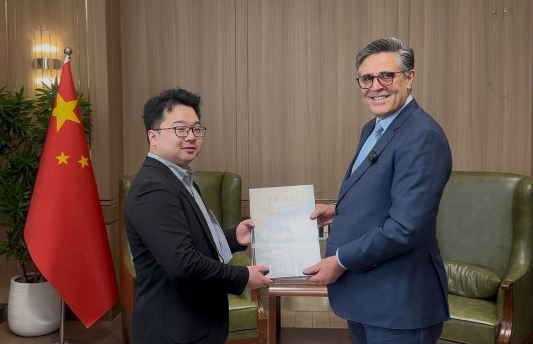
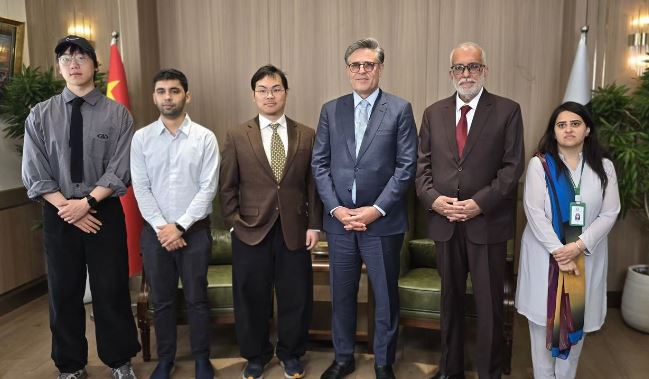
BEIJING, MAR 6 /DNA/ – Ambassador of Pakistan to China, Khalil Hashmi, shared his thoughts on China’s Two Sessions, the 15th Five Year Plan, and the Government Work Report which have been presented this week. He shared his views during interviews with People’s Daily, People’s Daily Haiwainet, Xinhuanet, and Guangxi TV.

Responding to a question about his views on whole-process people’s democracy, Ambassador Hashmi noted that this inclusive, people-centered consultation process lay at the heart of the country’s governance system which had delivered remarkable development dividends in the shortest time ever in human history. He highlighted that China’s five year plan was an important planning blueprint which represented continuity, flexibility, predictability, and stability within its governance framework.

Ambassador Hashmi also emphasized that the plans and priorities outlined in China’s 15th Five-Year Plan align closely with Pakistan’s National Economic Transformation Plan—Uraan Pakistan, and that both countries are pursuing joint efforts to cooperate, coordinate, and advance national priorities such as agriculture, ICT, science and technology, education, AI, and digital and green development.

Commenting on the salience of 75th anniversary of diplomatic relations between Pakistan and China, Ambassador Hashmi characterized this milestone as an occasion to celebrate the unique bonds of friendship that had withstood the test of time and continued to deepen and expand. He expressed high confidence in the continued growth and upward trajectory of bilateral ties between the two countries across government-to-government, business-to-business and people-to-people planks.

Launch of 11th Ramadan Quran memorization competition in Hodeidah

Launch of 11th Ramadan Quran memorization competition in Hodeidah

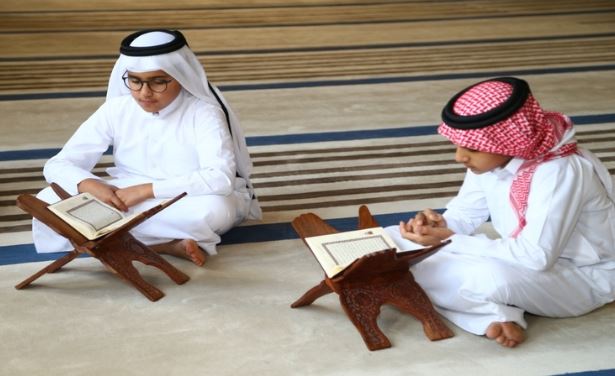
HODEIDAN, Mar 6: The Endowments Office and the Scholars Unit in Hodeidah launched the 11th edition of the “Martyr of the Quran” Ramadan competition, with the participation of 100 male and female memorizers from various districts. The competition lasts for 10 days in the category of memorizing the entire Quran.

The First Deputy Governor affirmed that the competition enhances faith identity and nurtures a conscious Quranic generation, praising the Endowments’ efforts in organizing it annually. Meanwhile, the Deputy Governor for Services Affairs pointed out the importance of contemplating the Quran and acting upon it. The official of the Scholars Unit considered that the competition consolidates principled positions in supporting the nation’s causes.

Federal Ombudsman secures Rs850,000 pension dues for retired Post Office employee

Federal Ombudsman secures Rs850,000 pension dues for retired Post Office employee

FAISALABAD, Mar 06: The Federal Ombudsman Secretariat, Regional Office Faisalabad, secured payment of Rs.850,000 in outstanding pension dues for a retired employee of Pakistan Post Office, providing long-awaited relief.

According to the spokesperson, retired employee Abdul Ghafoor had approached the Federal Ombudsman Regional Office with a complaint that his pension arrears had not been paid despite repeated visits to the offices concerned over the past two years.

He sought intervention after exhausting departmental channels without success.

Upon receipt of the complaint, the Regional Office took formal notice of the matter, summoned the relevant parties and initiated scrutiny of the official record.

During hearing, it emerged that administrative delays and certain technical issues had resulted in non-payment of the legitimate dues to the complainant.

Acting on the directions of the Federal Ombudsman, the department concerned was instructed to take immediate corrective measures. Following compliance, the pension arrears were recalculated and a total amount of Rs.850,000 was released to the complainant.

The spokesperson said that Federal Ombudsman Secretariat provides a prompt, free and effective forum for redressal of complaints against federal government departments, ensuring timely justice and relief to citizens.

The complaints received at Regional Office Faisalabad are being resolved on priority to prevent unnecessary delay and hardship.

He said that the institution hears cases related to maladministration, delay and injustice within federal departments and directs corrective action within its legal mandate.

The pension case was resolved expeditiously, enabling the complainant to receive his lawful entitlement without resorting to prolonged court proceedings, he added.

Expressing satisfaction over the outcome, Abdul Ghafoor appreciated the performance of the Federal Ombudsman Secretariat and said that timely payment had significantly eased his financial difficulties. Other citizens should approach the forum for protection of their legitimate rights, he added.

Naveed Baloch assumes charge as Wafaqi Mohtasib

Naveed Baloch assumes charge as Wafaqi Mohtasib

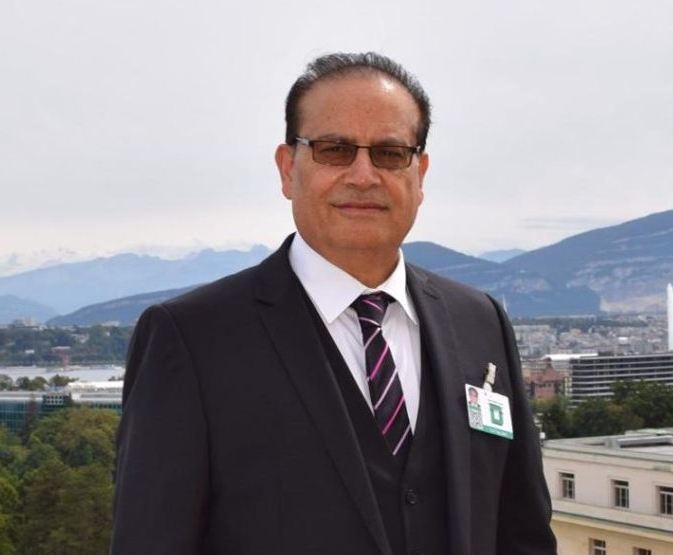
ISLAMABAD, Mar 6: Naveed Kamran Baloch has assumed charge as the ninth regular Wafaqi Mohtasib and urged officers and staff of the institution to intensify efforts for the swift resolution of public complaints related to maladministration.

Addressing officers and staff of the Wafaqi Mohtasib Secretariat for the first time after taking office, Naveed Baloch emphasized the importance of dedication and professionalism in maintaining public trust in the institution.

Officials from regional offices across the country also participated in the meeting through an online link, said a press release issued on Friday.

Naveed Baloch described the Ombudsman’s office as a model national institution that has been rendering valuable services to citizens. He stressed that all members of the organization must continue working with the same devotion and commitment that has long been the hallmark of the institution.

Referring to the significance of assuming office during the holy month of Ramazan, he said the position was both an honour and a responsibility bestowed by Almighty, adding that he would make every effort to justify the trust placed in him.

He underlined the need to focus not only on increasing the number of complaints processed but also on maintaining the quality of decisions and services delivered. “Merely increasing the number of complaints resolved is not enough; the quality of output must also be ensured,” he said.

The newly appointed Mohtasib also stressed improving service delivery, particularly in remote and underserved areas of the country. He noted that providing administrative justice at the doorstep of citizens should remain a top priority for the institution.

During his address, Baloch paid tribute to the outgoing Ombudsman, Ejaz Ahmad Qureshi, who completed his four-year tenure a few months ago, acknowledging his role in setting high standards of public service.

Earlier in the day, Baloch received detailed briefings on the functioning of various sections and branches of the Secretariat.

It is noteworthy that Baloch took the oath of office as Wafaqi Mohtasib on March 4, 2026.

A senior officer of the Pakistan Administrative Service, Baloch has held several key positions in the federal government. His previous assignments include serving as Federal Secretary Finance, Secretary Cabinet Division, and Chief Secretary of Khyber Pakhtunkhwa. He also served as Executive Director at the World Bank.

Naveed Kamran Baloch holds a master’s degree in Social Policy and Planning from the London School of Economics and brings extensive administrative experience to his new role.

ECC Approves TSGs, Education Relief, Disaster Funding and Power Sector Reforms

ECC Approves TSGs, Education Relief, Disaster Funding and Power Sector Reforms

ISLAMABAD, MAR 6 /DNA/ – The Economic Coordination Committee (ECC) of the Cabinet met today at the Finance Division under the chairmanship of the Federal Minister for Finance and Revenue, Senator Muhammad Aurangzeb.

The ECC approved a summary submitted by the Petroleum Division seeking a Technical Supplementary Grant (TSG) of Rs. 13.1 million to meet Pakistan’s annual contribution to the International Energy Forum (IEF). The Committee was informed that continued membership in the IEF remains important for Pakistan’s participation in global energy dialogue and cooperation.

The ECC also approved another summary from the Petroleum Division seeking a TSG of Rs. 3 billion for provision of gas supply schemes in villages located within a five-kilometer radius of gas production fields. The schemes are being implemented through Sui Southern Gas Company Limited (SSGCL) and Sui Northern Gas Pipelines Limited (SNGPL).

The ECC further approved a summary submitted by the Ministry of Federal Education and Professional Training for a TSG of Rs. 200 million during FY 2025–26 to facilitate payment of outstanding dues to teachers of Basic Education Community Schools (BECS). The financial liability arises from court directives regarding payment of salary differentials in accordance with notified minimum wages for the period from August 2017 to June 2021.

The Committee also considered another summary from the same Ministry seeking exemption from relending terms for an additional USD 4 million allocated to the Higher Education Commission (HEC) under the restructured Higher Education Development in Pakistan (HEDP) Project. The ECC was informed that the World Bank reallocated these funds to the Investment Project Financing/Technical Assistance component, thereby increasing HEC’s share beyond the previously exempted USD 77 million.

The ECC further approved a summary submitted by the National Disaster Management Authority (NDMA) seeking a TSG of Rs. 3.63 billion for reimbursement of expenditures incurred during Monsoon Response 2025 operations and overseas humanitarian assistance.

The ECC also approved a summary submitted by the Power Division seeking a TSG of Rs. 1.3 billion for implementation of Sustainable Development Goals Achievement Programme (SAP) schemes during FY 2025–26.

The ECC also considered a proposal submitted by the Ministry of Energy (Power Division) regarding a comprehensive reform package aimed at reducing electricity generation costs, addressing legacy payment obligations, and easing pressures arising from circular debt in the power sector. The Committee was informed that the proposed measures are the outcome of negotiations with a number of power producers and are intended to rationalize tariff structures, streamline payment arrangements, and resolve outstanding financial liabilities through mutually agreed settlements. The ECC approved the reform package and related financial measures, noting that the initiative is expected to contribute to improved sustainability of the power sector, reduce tariff pressures on consumers, and support broader sectoral reforms.

In addition to the regular agenda items, the ECC considered a summary submitted by the Ministry of Information and Broadcasting seeking a TSG of Rs. 2.231 billion to clear outstanding liabilities related to federal public information and awareness campaigns. The Committee approved the grant to the extent of Rs. 1.47 billion and directed the Ministry to present the remaining requirement in the next quarter.

The meeting was attended by Federal Minister for Petroleum Mr. Ali Pervaiz Malik, Federal Minister for Commerce Mr. Jam Kamal Khan, Federal Minister for Planning, Development and Special Initiatives Mr. Ahsan Iqbal Chaudhry, Federal Minister for Investment Mr. Qaiser Ahmed Sheikh (virtually), Special Assistant to the Prime Minister on Industries and Production Mr. Haroon Akhtar Khan, along with federal secretaries and senior officials from the concerned ministries, divisions and regulatory bodies.

Japan and Indonesia in the Indo-Pacific

Japan and Indonesia in the Indo-Pacific

Dr. Muhammad Akram Zaheer

The Indo-Pacific has emerged as the defining geopolitical theatre of the 21st century. Stretching from the eastern shores of Africa to the western Pacific, it is home to vital sea lanes, rising economies and a delicate balance of power. As rivalries intensify and economic interdependence deepens, middle and major powers alike are recalibrating their strategies. In this evolving landscape, Japan and Indonesia two maritime democracies with distinct histories but converging interests are steadily shaping the region’s future.

For Japan, the Indo-Pacific is not merely a geographic expression but a strategic vision. Tokyo was among the first to articulate the idea of a “Free and Open Indo-Pacific”, underscoring respect for international law, freedom of navigation and rules-based connectivity. As a trading nation dependent on sea routes for energy and commerce, Japan’s security and prosperity are closely tied to the stability of the South China Sea and the broader Pacific. In recent years, Japan has moved beyond its traditionally cautious post-war posture. It has expanded defence cooperation with regional partners, enhanced maritime capacity-building assistance, and deepened its alliance with the United States while also diversifying partnerships across Southeast Asia. This shift does not signal a departure from its pacifist principles but reflects a pragmatic reading of strategic realities. The war in Ukraine and rising tensions in East Asia have reinforced Tokyo’s belief that deterrence and diplomacy must go hand in hand.

Indonesia’s position is equally pivotal, though its approach differs in tone and emphasis. As the world’s largest archipelagic state and Southeast Asia’s biggest economy, Indonesia sits astride some of the world’s busiest shipping lanes. Its strategic geography makes it both a beneficiary of and a guardian over Indo-Pacific stability. Yet Jakarta has consistently avoided formal alignments, preferring instead a doctrine of “free and active” foreign policy. Indonesia’s leadership within the Association of Southeast Asian Nations (ASEAN) amplifies its influence. ASEAN centrality remains a cornerstone of Jakarta’s diplomacy, even as external powers compete for leverage in the region. By advocating dialogue, inclusive cooperation and adherence to international law, Indonesia seeks to prevent the Indo-Pacific from hardening into rival blocs. Its stewardship during regional summits has often reflected a careful balancing act — engaging major powers without becoming entangled in their disputes.

The convergence between Japan and Indonesia lies in their shared commitment to maritime security and economic resilience. Japan is one of Indonesia’s largest investors and development partners, financing infrastructure, transport networks and energy projects. These initiatives are not merely commercial ventures; they serve as strategic anchors that bind the two countries together in a web of mutual interest. Infrastructure development, particularly in ports and connectivity, strengthens Indonesia’s maritime ambitions while offering Japan reliable economic footholds. Security cooperation has also gathered momentum. Joint naval exercises, coast guard collaboration and defence dialogues signal a maturing partnership. For Indonesia, Japanese assistance in maritime domain awareness and capacity building enhances its ability to patrol its vast waters, including areas around the Natuna Islands where tensions occasionally flare. For Japan, closer ties with Indonesia reinforce a networked approach to regional security — one that complements but does not replicate its alliance system.

Economically, both countries are navigating a world of supply chain disruptions and protectionist impulses. Japan’s push to diversify manufacturing bases has dovetailed with Indonesia’s ambition to move up the value chain, particularly in sectors such as electric vehicles and critical minerals. Indonesia’s vast nickel reserves have drawn Japanese investment, reflecting the intersection of resource security and green transition strategies. In this sphere, cooperation offers a template for how middle and major economies can align development goals with strategic considerations. Yet challenges persist. The South China Sea remains a flashpoint, with competing territorial claims and frequent maritime incidents. While Japan is not a claimant, it has consistently voiced concern over unilateral actions that alter the status quo. Indonesia, though not formally party to the main disputes, has faced encroachments in its exclusive economic zone. Both countries thus share an interest in upholding the United Nations Convention on the Law of the Sea and resisting coercive behaviour.

At the same time, neither Tokyo nor Jakarta seeks confrontation. Their policies reflect an understanding that China is both a strategic competitor and an indispensable economic partner. Managing this duality requires diplomatic dexterity. Japan has maintained high-level engagement with Beijing even as it strengthens deterrence. Indonesia, for its part, has welcomed Chinese investment while insisting on sovereignty and non-interference. This calibrated approach underscores a broader regional preference for stability over zero-sum rivalry. Climate change and disaster resilience offer another arena for collaboration. The Indo-Pacific is acutely vulnerable to rising sea levels, extreme weather and environmental degradation. Japan’s technological expertise and Indonesia’s ecological stewardship can converge in projects that address sustainability. From renewable energy to coastal protection, such cooperation carries both humanitarian and strategic dividends, reinforcing resilience in a volatile region.

Importantly, the partnership between Japan and Indonesia reflects a broader shift in regional order. The Indo-Pacific is no longer shaped solely by great-power competition. Middle powers are asserting agency, crafting flexible coalitions and championing multilateral norms. Japan’s outreach to Southeast Asia and Indonesia’s insistence on ASEAN centrality exemplify this trend. Together, they illustrate how strategic autonomy and principled engagement can coexist. For Pakistan and other South Asian states observing these dynamics, the lesson is instructive. The Indo-Pacific’s future will not be determined by rivalry alone but by the capacity of regional actors to uphold inclusive frameworks. Economic connectivity, maritime cooperation and adherence to international law remain essential pillars of stability. Japan and Indonesia, in their respective ways, are investing in these pillars.

Looking ahead, the durability of their roles will depend on domestic resilience as much as external alignment. Japan faces demographic pressures and fiscal constraints, while Indonesia must balance growth with governance reforms and social cohesion. Yet both possess political capital and diplomatic credibility that enable them to punch above their weight. The Indo-Pacific stands at a crossroads. Whether it evolves into a theatre of managed competition or hardened confrontation will hinge on the choices of its principal actors. In charting a course that blends strategic caution with proactive engagement, Japan and Indonesia are helping to shape an order that prizes openness, balance and cooperation. Their partnership, though understated, may well prove to be one of the quiet determinants of regional stability in the years to come.

UK and France Join U.S.–Israel War Against Iran

Qamar Bashir

Qamar Bashir

When the first strikes were launched against Iran, the British government attempted to create distance from the unfolding conflict. Prime Minister Keir Starmer initially told the public that the United Kingdom was not involved in the attacks and would not participate in offensive military operations against Iran. The message was clear: Britain would support stability, protect its citizens, and avoid becoming another direct participant in a Middle Eastern war.

Yet within days that narrative began to unravel. Standing before reporters at Downing Street, Starmer revealed that Britain had in fact been preparing for the crisis long before the war formally began. Throughout January and February, the United Kingdom had already moved fighter jets, air-defense systems, radar installations, and other military assets to bases in Cyprus and Qatar, placing the country in what he described as a “heightened state of readiness.” Shortly after the strikes began, British aircraft reportedly intercepted drones approaching a base housing British personnel. Additional deployments followed quickly: four more fighter jets were dispatched to Qatar, helicopters equipped with anti-drone capabilities were sent to Cyprus, and the Royal Navy destroyer HMS Dragon was ordered into the eastern Mediterranean.

These developments revealed a deeper reality. Once aircraft, warships, missile defenses, and surveillance systems are placed inside a conflict zone, a country cannot convincingly claim to be merely watching events unfold. Whether described as defensive or not, those assets become part of the military architecture of war.

That reality became evident almost immediately. A drone strike targeted the British air base at Akrotiri in Cyprus, prompting criticism from Cypriot officials who said they had not been adequately informed of the risks surrounding British military activity on the island. The attack demonstrated how quickly military installations become targets in an expanding conflict. Even if Britain insists it is not directly participating in offensive strikes, its bases, personnel, and equipment are already inside the operational theatre.

Meanwhile the war has also strained relations between London and Washington. President Donald Trump publicly criticized Starmer for hesitating to provide full support for American operations, particularly after the British government initially resisted allowing the United States to use the Diego Garcia base in the Indian Ocean for strikes against Iran. Although Britain later permitted certain defensive uses of British facilities, the episode exposed unusual tension in what both governments continue to call the “special relationship.”

Starmer now finds himself walking a political tightrope. On one side lies Britain’s long-standing strategic alliance with the United States. On the other lies deep domestic skepticism about another Western intervention in the Middle East. Memories of Iraq remain powerful in British politics, and public opinion reflects that caution. Recent polling suggests that nearly half of British voters oppose the U.S. strikes on Iran, while only a minority support them.

Yet while Western leaders frame the war as necessary for stability and security, critics point to the familiar language that has accompanied earlier interventions. Iraq was presented as a mission of liberation. Libya was described as a humanitarian necessity. Afghanistan was framed as a campaign to rebuild a nation. In each case the promises of stability and prosperity ultimately gave way to fractured societies, weakened economies, and prolonged instability.

Now Iran faces a similar concentration of Western military power. The combined strength of the United States, Britain, and France vastly exceeds Iran’s conventional capabilities. France has already moved the aircraft carrier Charles de Gaulle and accompanying naval forces toward the Mediterranean, while Britain has reinforced its regional presence through aircraft, missile defenses, and naval deployments.

The imbalance of power is obvious. Iran has lived for decades under sanctions that have restricted access to modern aircraft and advanced military systems. Its air force and defense infrastructure cannot easily match the technological superiority of the Western coalition now gathering around it. In that context, triumphant declarations of military superiority begin to sound less like strategic analysis and more like expressions of overwhelming force against a far weaker adversary.

Another striking contradiction lies in the moral justification being offered for the war. Western leaders frequently argue that their actions are intended to protect the Iranian people from repression. Yet the human cost of the conflict already raises uncomfortable questions.

Reports emerging from the region indicate that more than a thousand people have been killed since the beginning of the strikes. Many of those casualties are civilians — the same ordinary citizens whose protection is repeatedly cited as one of the war’s objectives. Bridges, hospitals, economic facilities, and military installations have all been hit in the course of the expanding campaign, leaving ordinary Iranians to endure the consequences of decisions made far beyond their control.

The rhetoric surrounding regime change has also revealed a troubling attitude toward those who were once seen as potential political partners. During a press interaction, President Trump was asked whether any names existed to replace Iran’s current leadership. His response was stark. According to his remarks, many of the individuals once considered potential alternatives had already been killed, and others who might replace them could also be eliminated in the course of the conflict.

The statement highlighted a grim reality of modern geopolitical struggles. Individuals cultivated as future allies or political alternatives can quickly become expendable once military escalation takes precedence over diplomacy. The very people once viewed as assets capable of shaping a post-conflict political landscape can disappear in the fog of war.

Beyond the immediate battlefield, the strategic stakes extend even further. The Strait of Hormuz — through which a significant portion of the world’s oil supply passes — remains one of the most important chokepoints in global trade. Any escalation in the region risks disrupting the flow of energy to markets across Europe and Asia. At the same time, an expanded Western naval presence in the region would effectively place one of the world’s most vital maritime corridors under heavy military oversight.

Such developments inevitably raise questions about the broader geopolitical objectives of the war. While the official narrative emphasizes security and stability, the strategic implications of controlling key maritime routes and supply chains cannot be ignored.

Inside Britain, the government continues to emphasize that its role remains defensive and limited. Yet the pattern is familiar to anyone who has observed the early stages of past conflicts. Wars rarely appear all at once. They arrive gradually: a deployment here, a protective mission there, a logistical necessity followed by a defensive authorization. Each step appears modest when viewed individually. Taken together, they reveal a steady movement toward deeper involvement.

History offers many examples of this process. Afghanistan, Iraq, Libya, and Syria all began with limited objectives and carefully framed justifications. Over time those conflicts expanded beyond their original scope, leaving behind societies struggling to rebuild amid political fragmentation and economic devastation.

The danger today is not simply that another war is unfolding. The deeper concern is that the lessons of previous interventions seem to fade each time a new crisis emerges.

Modern societies possess extraordinary scientific knowledge, technological capability, and access to information. Yet the same nations that lead the world in education and innovation often find themselves repeating patterns that history has already judged harshly.

Perhaps the most sobering conclusion is that history itself rarely lacks clear warnings. The tragedies of past wars remain visible for anyone willing to examine them. What often disappears is the willingness to listen.

When power becomes intoxicating and strategic dominance appears irresistible, the lessons of history are easily dismissed as relics of another era. And when that happens, humanity does not move forward through wisdom. It moves in circles — rediscovering through destruction what it once knew through memory.

Qamar Bashir

Press Secretary to the President (Rtd)

Former Press Minister, Embassy of Pakistan to France

Former Press Attaché to Malaysia

Former MD, SRBC | Macomb, Michigan

ICCI President leads delegation in meeting with DG Tax

ICCI President leads delegation in meeting with DG Tax

ISLAMABAD, MAR 6 /DNA/ – A delegation of the Islamabad Chamber of Commerce and Industry (ICCI) led by its President Sardar Tahir Mehmood held a meeting with Dr. Najeeb Ahmed Memon, Director General Tax Policy at the Ministry of Finance, and submitted the Chamber’s budget proposals for the fiscal year 2026–27 aimed at facilitating businesses and promoting economic growth.

Dr. Najeeb Ahmed Memon said that the budget-making process is being carried out in close consultation with stakeholders to ensure that the tax regime does not place an undue burden on taxpayers.

He assured the delegation that the proposals submitted by the Islamabad Chamber would be carefully reviewed and considered for incorporation in the upcoming budget proposals.

Sardar Tahir Mehmood said that a stable and business-friendly taxation framework is essential for strengthening economic activity, promoting documentation of the economy and supporting productive sectors. He said that the Chamber had prepared its recommendations after consultation with various segments of the business community. He added that the proposals have been formulated by keeping in mind the  facilitation  for the business community, especially the small traders all over the country.

ICCI recommended that digital payments made by Tier-1 retailers should be exempted or granted relief from additional taxes in order to encourage the use of POS systems, banking channels and digital wallets, while discouraging excessive reliance on cash transactions.

It proposed facilitation for the handicrafts and carpet sector through relaxation in input invoice requirements and the introduction of a fixed GST rate of up to 3 percent, stating that the sector largely consists of small traditional businesses and simplified taxation would help promote exports and preserve traditional crafts.

For the jewellery sector, the ICCI suggested that gold stock of jewellers should be assessed in weight (grams/tolas) instead of monetary value. The delegation explained that fluctuations in international gold prices artificially increase the value of stock without reflecting actual income, as jewellers often work on gold provided by customers for making or redesigning jewellery.

ICCI further proposed exemption of GST on optical frames, glasses and lenses at both import and retail levels, highlighting that optical products are essential medical devices used for vision correction and should be treated as healthcare necessities rather than luxury retail items.

 The delegation included ICCI Senior Vice President Tahir Ayub, former Senior Vice President Abdul Rehman Siddiqui, and Finance Secretary of Islamabad Jewelers Association Ibrar Ahmed.

Iran at the Crossroads: Survival, Strategy, and the Future of the Middle East

Iran at the Crossroads: Survival, Strategy, and the Future of the Middle East

Ali Raza Momand

The Middle East once again finds itself at a delicate geopolitical moment, with Iran occupying the center of regional strategic calculations. For decades, tensions between Iran on one side and the United States and Israel on the other have shaped the region’s security environment. Today, analysts increasingly debate whether the pressure on Tehran is evolving from long-term containment toward a more accelerated strategy aimed at weakening or transforming the Iranian political system.

Unlike earlier approaches that relied primarily on sanctions and diplomatic isolation, contemporary strategic thinking appears to emphasize a more calibrated approach. Rather than triggering a direct large-scale war, external pressure on Iran could unfold gradually, combining internal political pressure, technological warfare, and limited military actions. The objective of such an approach would be to weaken the Iranian state while avoiding a sudden regional escalation that could draw in other global powers.

Iran’s strategic importance explains why any confrontation involving the country carries global implications. With a population of nearly 90 million and some of the world’s largest reserves of oil and natural gas, Iran remains a critical player in global energy markets and regional security.

Despite decades of sanctions, Tehran has maintained significant political influence across the Middle East through diplomatic ties and regional alliances.

Because of these realities, analysts argue that any effort aimed at destabilizing Iran would likely unfold in phases rather than through a conventional invasion. The first stage would involve intensifying internal pressure. Economic hardship, political dissatisfaction, and tensions among various ethnic communities could become focal points of instability. In such a scenario, cyber operations, covert influence campaigns, and limited strikes on strategic facilities might be used to undermine confidence in the central government without immediately triggering a full-scale conflict.

The second phase could involve intensified military pressure once internal strains begin to weaken state authority. However, modern conflict would likely remain largely aerial and technological.

Missile strikes, drone warfare, cyber attacks, and targeted sabotage of key installations would dominate the battlefield. Over the past two decades Iran has significantly expanded its missile and drone capabilities, creating a deterrent designed to discourage direct intervention by adversaries.

The ultimate objective of such pressure, according to many observers, would be political transformation in Tehran. Yet the history of regime-change efforts in the Middle East demonstrates that outcomes rarely unfold as planned. The experiences of Iraq after 2003 and Libya after 2011 illustrate how the collapse of centralized authority can lead to prolonged instability rather than immediate political reform.

From Iran’s perspective, therefore, survival itself represents strategic success. Iranian leadership is likely to respond through a combination of internal consolidation, diplomatic outreach, and military deterrence. Domestically, Tehran may attempt to maintain stability through strict security measures while simultaneously offering limited political accommodation to groups willing to operate within the system.

On the diplomatic front, Iran may seek to strengthen its narrative within the Muslim world by linking its position to the broader Palestinian issue and presenting itself as a defender of regional sovereignty against foreign intervention. At the same time, improving relations with European states and reviving negotiations over its nuclear program could help Tehran ease international isolation and reduce pressure.

Nevertheless, Iran’s strategic environment is complex. Two major conflicts already dominate its broader neighborhood: the Russia–Ukraine war and ongoing tensions in South Asia. Russia’s deep involvement in Ukraine limits its ability to openly support Tehran, while China must carefully balance its strategic partnership with Iran against its extensive economic ties with Arab states in the Gulf.

The stakes extend far beyond Iran itself. If Tehran manages to withstand sustained external pressure, it could emerge more militarized and more determined to strengthen its deterrence capabilities. Conversely, if Iran were to descend into state collapse, the consequences could be severe for the entire region. A breakdown of state authority could trigger refugee flows, economic disruption, and the resurgence of militant groups similar to those that emerged after the Iraq conflict.

For this reason, many observers argue that the international community—particularly global institutions and European diplomacy—should prioritize de-escalation. Preventing a wider conflict may ultimately serve the interests of all regional and global actors. In geopolitics, survival often defines victory. For Iran, enduring the current pressures may prove more decisive than any battlefield triumph, while for the region the real success would lie in avoiding another prolonged and destabilizing war.

Ali Raza Momand, Assistant Professor of Political Science at Higher Education Department Government of Khyber Pakhtunkhwa Pakistan.

Email: [email protected]

Stay Connected

64FansLike
60FollowersFollow

Latest Reviews

Exchange Rates

USD - United States Dollar
EUR
1.14
GBP
1.34
AUD
0.70
CAD
0.71