Home Blog Page 221

Airfares to go up as jet fuel price hiked by Rs154 per litre

Airfares to go up as jet fuel price hiked by Rs154 per litre

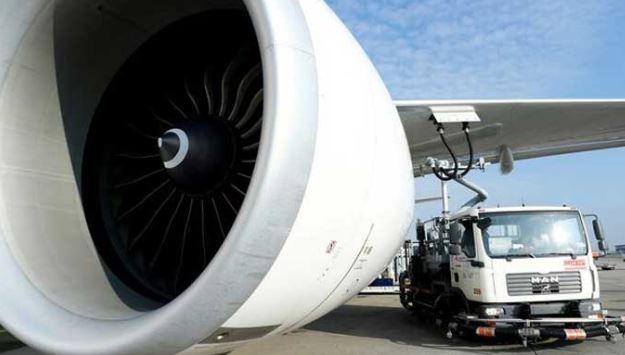
ISLAMABAD/LAHORE/KARACHI: The government has significantly increased the price of jet fuel used by commercial aircraft, raising it by Rs154 per litre in one of the largest hikes in recent years.

Following the increase, jet fuel prices have surged from Rs188.93 to a record Rs342.37 per litre, marking an increase of about 82%.

The sharp rise comes after the government recently raised petrol and diesel prices by Rs55 per litre amid growing concerns over global fuel supply disruptions.

The move follows the US-Israeli attack on Iran and Tehran’s subsequent announcement of the closure of the Strait of Hormuz, a key global oil shipping route.

The steep increase in aviation fuel costs is expected to raise operational expenses for airlines, which could lead to an increase of airfares by up to Rs5,000.

Railway fares go up
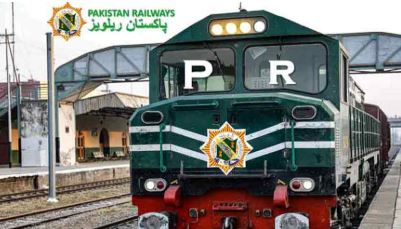
Meanwhile, Pakistan Railways has also announced fare adjustments after diesel prices increased by nearly 20%.

According to a spokesperson, fares for economy class passenger trains have been raised by 5%, while air-conditioned class fares have increased by 10%.

The spokesperson added that the railways department will bear additional operational costs for passenger services, while freight train charges have been increased by 20%.

The revised fares will come into effect from March 9 for both freight and passenger trains. However, the changes will not apply to tickets that have already been booked.

Pakistan has begun to feel the first direct economic impact of the war involving the United States, Israel and Iran, as tensions in the Gulf push global oil prices higher and threaten energy supply routes.

The country, heavily reliant on imported fuel, faces rising costs amid fears of disruptions to shipments through the Strait of Hormuz.

— Reporter
— Reporter
Amid the uncertainty, Pakistan has sought an alternative supply route through Saudi Arabia’s Red Sea port of Yanbu Port after Iran announced the closure of the key oil transit corridor.

The request was made by Petroleum Minister Ali Pervaiz Malik during a meeting with Saudi Ambassador to Pakistan Nawaf bin Said Al-Malki, who assured that supplies could be facilitated through the port.

KU announces online classes
In another development, the University of Karachi decided to shift morning classes online to facilitate students amid potential transport disruptions following a sharp rise in petroleum prices.

In a notification issued on Saturday, the university said the decision was taken to ensure students’ convenience as transportation constraints likely to arise due to the recent increase in petroleum prices.

It also stated that the administration decided to conduct morning classes from March 9, until the conclusion of the Ramadan month.

‘Goal is to silence the crowd’: Santner makes bold statement ahead of World Cup final

'Goal is to silence the crowd': Santner makes bold statement ahead of World Cup final

AHMEDABAD: New Zealand will “not mind breaking a few hearts” in the T20 World Cup final against defending champions and hosts India, captain Mitchell Santner said on Saturday.

Santner’s side will face India on Sunday in Ahmedabad with over 100,000 home fans expected to fill the Narendra Modi Stadium.

New Zealand reached the 2021 final, losing to Australia, and has never won a white-ball World Cup.

“I wouldn’t mind winning a trophy,” Santner said.

He added: “It’s going to be obviously a challenge where everyone knows we’re probably not the favourites.

“But yeah, I wouldn’t mind breaking a few hearts to lift the trophy for once.”

New Zealand have blown hot and cold.

They hammered South Africa — unbeaten until then — by nine wickets in the semi-finals after Finn Allen blasted the fastest-ever century at the tournament.

But they also lost to South Africa and England earlier in the competition.

They face an India side on a roll with three straight wins.

In 2023, Australia, led by Pat Cummins, silenced the home crowd in Ahmedabad in the final of the ODI World Cup.

“I guess that’s the goal, is to silence the crowd,” said Santner.

“T20 cricket is fickle at times. We’ve seen South Africa playing very good cricket all the way through and then had a little hiccup against us and out.

“So I think for us, it’s taking confidence from that, and if we go about our business the same way, we can upset another big team.”

Top-ranked India are attempting to become the first team to win back-to-back T20 World Cups and the first to lift the trophy on home soil.

They would also be the first to win the title three times.

But they will have to withstand the expectations of a packed house plus hundreds of millions more watching on TV.

Santner feels that the level of expectation could weigh heavily on them.

“So I think that comes with a lot of added pressure as well,” said Santner. “So if we can go out there and try and put, I guess, that added pressure on them and see what happens.”

Pakistan Railways increases train fares

Pakistan Railways increases train fares

LAHORE, Mar 7: The Pakistan Railways has decided to increase train fares following a 20 per cent rise in diesel prices, a spokesperson for the department said on Saturday.


Economy class fares have been increased by 5 per cent, while fares for AC classes have been raised by 10 per cent.
The spokesperson added that Pakistan Railways will bear the additional operational cost of passenger trains itself despite the increase in fares.


Meanwhile, freight train charges have also been increased by 20 per cent.
The revised fares will come into effect from March 9 and will apply to all passenger and freight trains. However, the decision will not apply to tickets that have already been booked.


The spokesperson said that the increase in train fares became unavoidable after the significant rise in diesel prices.

HEC

71 students benefit from HEC’s law graduate scholarships programme for Balochisan

ISLAMABAD, MAR 7 /DNA/ – Committed to achieving professional excellence, 71 students from various parts of Balochistan have so far won scholarships under the Law Graduate Scholarships Programme for Balochistan for Study Abroad.        

The Higher Education Commission (HEC) Pakistan is executing the scholarship programme, initiated on the direction of the Prime Minister of Pakistan to strengthen the judicial system in Balochistan. The initiative was started in 2018-19 for award of 100 scholarships in view of the shortage of senior lawyers, following the tragic August 2016 terrorist blast in which more than 60 lawyers were martyred.

The programme offers fully-funded study opportunities to law students from Balochistan at top national and international institutions in different level of studies including LLB, LLM and PhD. So far, 56 students have completed their degrees while 15 others are currently studying in local and foreign universities. 

As many as 465 students applied for the award of scholarship against HEC’s latest call for applications. The scholarship aptitude test was held in February-mid. Currently scrutiny is under process.

The initiative, one of the HEC’s efforts for uplift of higher education in Balochistan, continues to foster professional excellence and educational advancement in the province.

Iran War: The Energy Trap for China and Russia

Qamar Bashir

Qamar Bashir

This war may be presented as a fight over nuclear fear, missiles, or regime behavior, but beneath the headlines lies a far larger strategic contest: who will command the chokepoints through which the lifeblood of the global economy flows.

Wars are often sold to the world in moral language, but fought for strategic outcomes. The ongoing confrontation centered on Iran is no exception. To the United States, Israel, Britain, France, and much of the Western media, the war is projected as a campaign of necessity: a preemptive effort to stop an alleged nuclear threat, weaken Iranian missile power, and restore security to a volatile region. In that narrative, Western force is disciplined, purposeful, and increasingly successful, while Iran is portrayed as cornered, degraded, and losing ground.

But from Tehran, and from those across the world who reject the Western reading of the conflict, the war appears entirely different. There, it is seen as a story of one nation, battered yet unbowed, resisting the most powerful military coalition on earth and still retaining the capacity to impose pain, uncertainty, and strategic cost. In this second narrative, Iran’s endurance itself becomes a kind of victory. A nation under siege is not expected to dominate the skies, but merely to survive, retaliate, and deny its enemies a clean triumph. That denial carries military, political, and moral weight.

Both sides choose facts that flatter their case. Both highlight only those developments that fit their desired conclusion. Yet when the smoke of propaganda begins to clear, a deeper question emerges: what, in truth, is this war really about?

The official Western justifications do not fully satisfy the scale of the conflict. If the primary objective were truly to destroy an imminent Iranian nuclear bomb, then the argument remains weaker than the rhetoric suggests. Iran has long been accused of standing only days or weeks away from weaponization, yet no public evidence has shown an actual nuclear test, a declared bomb, or the unmistakable operationalization of such a weapon. If Tehran had already crossed that threshold, the world would likely have seen far clearer proof by now. The gap between nuclear capability and an actual deliverable bomb is vast, and it is precisely within that gap that political narratives are often built.

The second argument, that Iran must be attacked because of its ballistic missile capability, has greater strategic logic but also exposes a double standard. Yes, Iran’s missiles threaten U.S. bases, allied infrastructure, shipping routes, and Israel. But many states possess missile capabilities without becoming targets of such an overwhelming multinational military design. North Korea, for example, is more isolated, more repressive, and openly nuclear-armed, yet it has not been subjected to this kind of sustained Western-Israeli military pressure. Why? The answer is not found in moral principle. It is found in geography.

Iran sits beside the Strait of Hormuz, one of the most critical energy chokepoints in human history. According to the U.S. Energy Information Administration data you provided, about 20.9 million barrels per day of oil moved through Hormuz in the first half of 2025. That amounts to roughly one-fifth of global petroleum liquids consumption and about one-quarter of globally traded maritime oil. In the same period, around 11.4 billion cubic feet per day of LNG also transited the strait, representing more than one-fifth of global LNG trade. These are not marginal figures. They are the circulatory system of the industrial world.

That is what makes Iran categorically different from North Korea. Iran does not merely possess missiles, a controversial nuclear program, or an adversarial ideology. Iran sits astride a waterway through which the economic oxygen of Asia and much of the wider world must pass. China, India, Japan, and South Korea together accounted for nearly three-quarters of Hormuz crude and condensate flows in the first half of 2025. In other words, the great Asian engines of growth remain heavily dependent on the uninterrupted movement of Gulf energy through waters adjoining Iran.

Now consider the wider maritime map. The Strait of Malacca handled 23.2 million barrels per day in the first half of 2025, even more than Hormuz, making it the largest oil chokepoint in the world by volume. It is the shortest and most efficient route connecting Middle Eastern energy suppliers with East and Southeast Asia. China alone accounted for 48% of the import volumes passing through Malacca in that period. Meanwhile, the Cape of Good Hope, though not a chokepoint, carried 9.1 million barrels per day as rerouted shipping avoided attacks and instability around the Red Sea. Bab el-Mandeb and the Suez-SUMED route, once central arteries to Europe, saw their flows nearly halved from 2023 levels due to insecurity and rerouting. The global energy system is therefore not merely about production; it is about maritime passage, route vulnerability, insurance cost, naval reach, and the ability to protect or disrupt the channels through which supply moves.

If the United States, through military presence, alliance architecture, naval supremacy, and regional basing, were able to dominate the security environment around Hormuz while retaining influence across the broader chain of maritime corridors stretching toward Bab el-Mandeb, the Red Sea, the Cape route, and onward to Asia’s receiving lanes, then Washington would possess extraordinary leverage over the global energy order. It would not legally “own” these waterways, nor permanently command every vessel that crosses them, but it could shape the conditions under which oil moves, slows, detours, becomes more expensive, or becomes politically hostage to security calculations.

And that leverage would be immense. The United States today is itself a top oil producer and far less dependent on Gulf imports than in previous decades. By contrast, Asia remains far more exposed to disruptions in Gulf exports. This asymmetry matters. A power less dependent on a chokepoint but more capable of militarily policing it enjoys a structural advantage over powers whose economies rely heavily on its uninterrupted use. Such an arrangement would allow Washington to pressure adversaries not necessarily by stopping every cargo physically, but by raising risk, insurance, delay, and uncertainty to levels that alter trade behavior. In global energy markets, fear itself is a weapon.

Venezuela adds another layer to this picture. It possesses the world’s largest proven crude reserves, and while sanctions, infrastructure decay, and underinvestment have kept production far below its potential, the country remains a massive latent energy asset in the Western Hemisphere. If Washington can tighten its grip over western supply sources while also exerting naval and strategic influence over eastern chokepoints, then it is not difficult to imagine a future in which energy becomes an even sharper geopolitical instrument. That would not mean total American control of global oil, but it would mean an ability to influence supply routes, pricing pressure, and economic vulnerability in ways few empires in history have ever possessed.

Such a scenario would place China in particular under long-term strategic stress. Its factories, transport networks, petrochemical industries, and export machine all depend on steady access to imported energy. Russia too would face increasing pressure if maritime and sanctioned routes became narrower, longer, costlier, or more politically constrained. Even U.S. allies would not be immune. Any state that disobeyed Washington on key matters could face indirect coercion through a security system that determines how safely and cheaply energy reaches world markets.

That, then, is the terrifying possibility hidden beneath the daily headlines. The war on Iran may not simply be about uranium enrichment, missiles, democracy, or the suffering of the Iranian people. It may be about who commands the valves of the global economy. It may be about transforming maritime geography into a mechanism of strategic obedience. It may be about giving one power the ability, in moments of crisis, to squeeze rivals, discipline allies, and bend energy-dependent economies toward submission.

And that is why this conflict is so dangerous. If Russia and China conclude that Iran is not merely a regional partner but the front line of a broader struggle over the future control of Eurasia’s energy lifelines, then the war may not remain confined to Iran at all. It could widen not because anyone desires world war, but because the consequences of inaction may appear even more catastrophic than the risks of confrontation.

The world therefore stands before a historic choice. Either the major powers step back and preserve a plural, negotiated, and open energy order, or they continue down a path in which chokepoints become instruments of domination and commerce becomes a hostage of force. If the second path prevails, then the attack on Iran will be remembered not as a regional war, but as the opening move in a far larger campaign to place the world’s economic bloodstream under strategic command. And if that day comes, nations will discover too late that oil was never just a commodity. It was power, mobility, sovereignty, and survival. Whoever controls its pathways does not merely influence the market. They hold a hand on the throat of the modern world.

Qamar Bashir

Press Secretary to the President (Rtd)

Former Press Minister, Embassy of Pakistan to France

Former Press Attaché to Malaysia

Former MD, SRBC | Macomb, Michigan

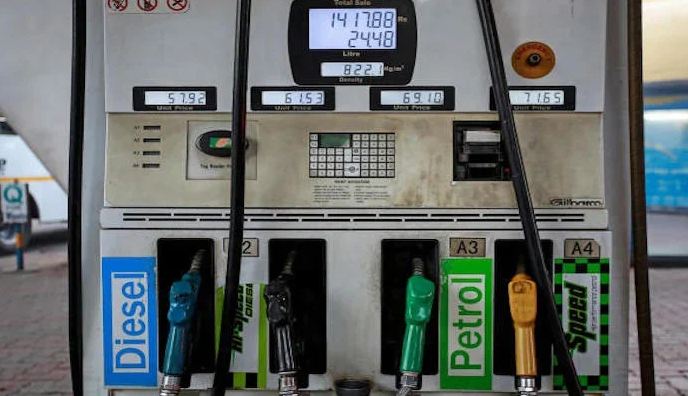
Petrol, Diesel prices jump by Rs.55 per litre

Govt slashes petrol price by Rs15.39 per litre for next fortnight

ISLAMABAD, MAR 6 /DNA/ – In an emergency press conference today, the Pakistani government announced a massive increase in petroleum prices, hiking petrol and high-speed diesel by Rs 55 per litre each—the steepest single-day adjustment in recent history.

Deputy Prime Minister and Foreign Minister Ishaq Dar, Finance Minister Muhammad Aurangzeb, and Minister for Energy Ali Pervaiz Malik jointly revealed the decision, effective immediately. Petrol now stands at Rs [previous +55], while diesel has risen to Rs [previous +55].

The government attributed the abnormal surge directly to the ongoing US-Israeli war against Iran, now in its second week, which has disrupted global oil supplies, spiked international crude prices, and strained Pakistan’s import-dependent economy. Officials warned that further volatility in the Middle East could necessitate additional adjustments.

The move has triggered immediate public outcry, with transport unions and traders warning of widespread inflation, higher transport fares, and hardship for daily-wage earners. The decision comes amid already fragile economic conditions and IMF-mandated reforms.

WPC and UN Women Unveil Pakistan Women’s Parliamentary Leaders Portal

WPC and UN Women Unveil Pakistan Women’s Parliamentary Leaders Portal

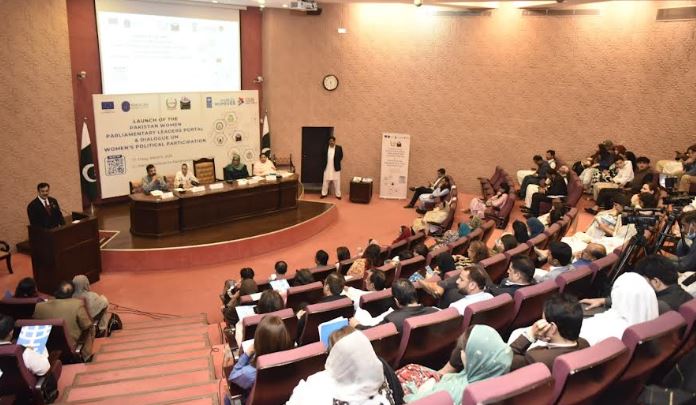
ISLAMABAD, MAR 6: /DNA/ – Ahead of the International Women’s Day 2026, the Women’s Parliamentary Caucus (WPC), with financial support from the European Union (EU) and in partnership with UN Women Pakistan , unveiled the Pakistan Women’s Parliamentary Leaders (PWL) Portal in Islamabad. Launched under the EU-funded Pakistan Women Leaders (PWL) project, the portal will strengthen coordination between the National and Provincial Assemblies and serve as a centralised digital repository of pro-women legislation and related data, enabling more informed, evidence-based and gender-responsive lawmaking across Pakistan.

The event commenced with welcome remarks by Dr. Shahida Rehmani, Secretary Women’s Parliamentary Caucus, who underscored the importance of institutionalising knowledge and collaboration among women legislators.

“International Women’s Day reminds us that women’s political participation is essential for inclusive governance. This portal represents more than a digital platform; it is a collective commitment to strengthening women’s leadership across assemblies and ensuring that pro-women laws are informed by evidence, coordination and shared learning,” she stated.

In his remarks, H.E. Philipp Oliver Gross, Deputy Chief of Mission, the European Union Delegation to Pakistan, reaffirmed the EU’s long- standing commitment to gender equality and democratic governance.

“International Women’s Day is a powerful reminder that democracy is strongest when women participate fully in decision-making. The European Union remains a steadfast partner in supporting women’s political leadership in Pakistan, and the Pakistan Women’s Parliamentary Leaders Portal is an important step towards strengthening democratic institutions and inclusive policymaking,” he stated.

Delivering opening remarks at the event, Mohamed Yahya, United Nations Resident Coordinator in Pakistan, emphasized the global significance of International Women’s Day in advancing gender equality.

“On International Women’s Day, we recognize that strengthening women’s participation in political and legislative processes is central to achieving inclusive and sustainable development. Initiatives such as the Pakistan Women’s Parliamentary Leaders Portal demonstrate how digital innovation can support accountability, transparency and gender-responsive policymaking,” he noted.

Addressing the gathering as the Honorable Chief Guest, Hon. Syed Yousaf Raza Gilani, Chairman of the Senate of Pakistan, emphasised the importance of strengthening institutional systems that support women’s leadership in politics.

“International Women’s Day reminds us that women’s representation is fundamental to the strength of democracy. Strengthening the systems that enable women to enter, remain and lead in politics is critical for Pakistan’s democratic future. The Pakistan Women’s Parliamentary Leaders Portal is a forward-looking step that will institutionalize knowledge, enhance transparency and support evidence-based decision-making across assemblies,” he stated.

The event included a High-Level Panel Discussion on Strengthening Women’s Political Participation in Pakistan, which brought together parliamentarians and policy experts to reflect on practical pathways for reform. The discussion drew on findings from recent national consultations that identified gaps in the current quota framework and oversight mechanisms related to reserved seats.

The conversation centered on bridging implementation gaps, strengthening accountability within political parties and establishing clearer benchmarks for women’s effective representation in parliament. Participants underscored that women’s political participation is not only a constitutional guarantee but also a critical pillar for strong, credible and inclusive democratic institutions.

Representatives from provincial assemblies and the Women’s Parliamentary Caucus were also present at the event, including Ms. Ghazala Gola Begum, Deputy Speaker and Chairperson of the Women’s Parliamentary Caucus, Balochistan; Ms. Tanzila Umi Habiba, MPA and Convener of WPC Sindh; Ms. Farah Sohail, MPA and General Secretary of WPC Sindh; Ms. Suriya Bibi, Deputy Speaker from Khyber Pakhtunkhwa; and Ms. Ishrat Arshraf, Convener of WPC Punjab.

The Pakistan Women Leaders (PWL) project, funded by the European Union and jointly implemented by UN Women and the United Nations Development Programme (UNDP), continues to support efforts to advance women’s political participation in Pakistan by addressing structural barriers that limit women’s leadership in public life. Through institutional partnerships, capacity strengthening, policy dialogue and support to women leaders across federal and provincial levels, the initiative promotes more inclusive, accountable and gender-responsive governance.

For further information about the Pakistan Women’s Parliamentary Leaders (PWL) Portal and the Pakistan Women Leaders (PWL) project, please contact

Erum Fareed, Communications Officer, UN Women Pakistan, at [email protected] or +92 326 8474546.

Samar Saeed Akhtar, Communications, Press and Information Officer,

PM orders monitoring of petroleum products’ movement amid hoarding fears

PM orders monitoring of petroleum products' movement amid hoarding fears

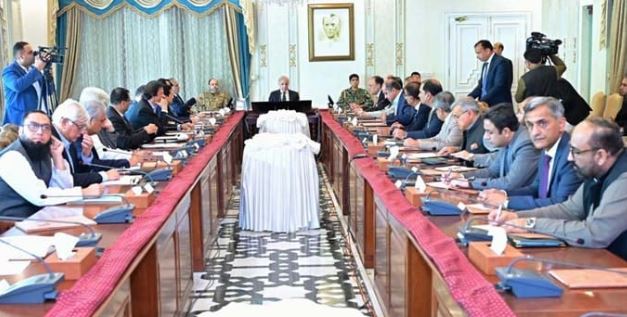
ISLAMABAD, MAR 6: Prime Minister Shehbaz Sharif on Friday directed authorities to develop a dashboard to monitor the movement of petroleum products in Pakistan and share real-time data with provinces.

He issued the directions during a meeting in Islamabad, convened to review the supply and storage of petroleum products in the country amid the disruption of the supply chain due to the conflict in the Middle East.

During the meeting attended by federal ministers and other high-ranking officials, PM Shehbaz ordered authorities to take swift and strict action against hoarders and immediately shut petrol pumps involved in creating artificial shortages of petroleum products.

Officials from the Ministry of Petroleum told the meeting that the country currently had sufficient reserves of petroleum products to meet domestic requirements.

The prime minister instructed the Oil and Gas Regulatory Authority (Ogra) to cancel the licences of petrol pumps involved in hoarding and initiate legal proceedings against them.

He also directed the petroleum minister to visit provinces and work with provincial governments to make a strategy for conserving petroleum products and ensuring uninterrupted supply to the masses.

In this regard, PM Shehbaz directed authorities to develop a dashboard that would help ensure effective monitoring of the transportation and supply of petroleum products across the country.

Deputy Prime Minister Ishaq Dar, federal ministers Ahsan Iqbal, Muhammad Aurangzeb, Attaullah Tarar, Jam Kamal Khan, Ali Pervaiz Malik and Awais Leghari attended the meeting.

The State Bank of Pakistan (SBP) governor and chief secretaries of all four provinces, Azad Jammu and Kashmir, and Gilgit Baltistan, also participated in the meeting.

The high-level meeting was convened amid concerns from market experts that petroleum product prices could rise in the country after the conflict between Iran, the United States and Israel spread across the Middle East.

Speaking to The News, industry officials had said the situation could become “worse than imagined” for both supplies and prices of energy products if the Strait of Hormuz remains blocked.

The concerns stem from Iran’s announcement earlier in the week that no vessels belonging to the US, Israel, European countries or their allies would be allowed to pass through the Strait of Hormuz, after US and Israel launched an assault on Tehran on February 28.

Amid concerns over a possible fuel shortage in the country, Ogra on Thursday warned of strict action against the illegal hoarding of petroleum products.

In a statement, an Ogra spokesperson said: “Any premises found involved in the illegal storage of petroleum products will be sealed.”

In view of the prevailing geopolitical situation, the official said that the authorities are closely monitoring the petroleum supply chain to ensure the uninterrupted availability of products across the country.

ISSI hosts roundtable on “Evolving situation in Iran and Pakistan’s policy response”

ISSI hosts roundtable on “Evolving situation in Iran and Pakistan’s policy response”

ISLAMABAD, Mar 06 (DNA): The Centre for Afghanistan, Middle East and Africa (CAMEA) at the Institute of Strategic Studies Islamabad (ISSI) organised a roundtable discussion on “Evolving Situation in Iran and Pakistan’s Policy Response” on Friday.

Former diplomats, leading academics and prominent practitioners joined the discussion, which focused on the evolving situation in Iran, its regional implications, and Pakistan’s current and future policy outlook, said a press release.

Participants noted that the situation in Iran remains highly tense following the recent United States and Israeli strikes and Iran’s subsequent retaliatory actions. These developments have heightened tensions across the Middle East and raised concerns about regional stability and security. The importance of dialogue and diplomatic engagement to prevent further escalation was also underlined, while safeguarding regional stability and Pakistan’s security and foreign policy interests.

Pakistan’s role as a potential mediator in promoting diplomatic engagement and regional stability amid growing uncertainties in the Middle East was also highlighted. The meeting was held under the Chatham House Rule.

Pakistan Hockey Team qualifies for World Cup 2026

Pakistan Hockey Team qualifies for World Cup 2026

LAHORE, MAR 6 /DNA/ – In a spectacular display of skill and determination, the Pakistan Hockey team has officially qualified for the Hockey World Cup 2026.

The Green Shirts earned their place in the prestigious tournament after overcoming Japan in a high-voltage semi-final of the World Cup Qualifier. In a match that kept fans on the edge of their seats until the final whistle, Pakistan clinched a 4-3 victory, thereby advancing to the final of the qualifier tournament.

The goal-scoring duties for Pakistan were shared among four players: Muhammad Umar, Abu Bakr Mehmood, Sufyan Khan, and Afraz. For his exceptional contribution on the field, Muhammad Umar was awarded the title of best player of the match.

Pakistan has been in formidable form throughout the competition, remaining unbeaten and winning all their matches en route to the final.

Following the historic win, the President of the Pakistan Hockey Federation (PHF), Mohi-ud-Din Wani, extended his heartfelt congratulations to the team. He lauded the players for their composure and excellence, particularly praising their performance in what he described as a “tense and difficult match.”

The victory has also sparked celebrations among legends of the game. Renowned former Olympians, including Islahuddin, Hassan Sardar, and Samiullah Khan, expressed their joy and extended their best wishes to the squad for future endeavors.

With this emphatic win, Pakistan has not only secured a spot in the final of the qualifiers but has also punched its ticket to the Hockey World Cup 2026, bringing pride and joy to the nation.

Stay Connected

64FansLike
60FollowersFollow

Latest Reviews

Exchange Rates

USD - United States Dollar
EUR
1.14
GBP
1.34
AUD
0.70
CAD
0.71