Home Blog Page 220

London’s billionaire faces allegations of over 600 mass evictions

London’s billionaire faces allegations of over 600 mass evictions

Monitoring Report

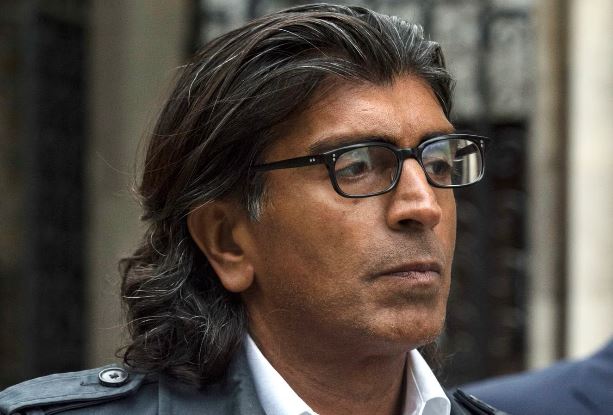
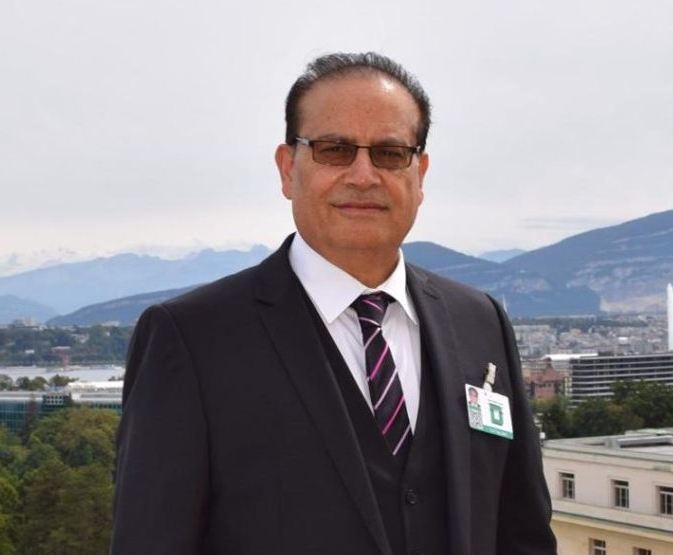
LONDON: Mayor of London Sadiq Khan has written to billionaire Asif Aziz over allegations that his property firm is carrying out “mass evictions” of London residents through the use of soon-to-be banned Section 21 notices at over 600 flats in several parts of London to escape an upcoming law which will favour tenants.

Criterion Capital, a real estate company which also owns the Trocadeo building in Leicester Square, said it was inaccurate to state that hundreds of residents had been served eviction notices but declined to share exactly how many eviction notices had been given.

A Mayor of London spokesperson said Mr Khan is “appalled” at the reports and has written to Criterion Capital asking the company to “urgently explain their actions”as “it is unacceptable to force Londoners out of their homes for no good reason – it leaves residents in an awful position, scared about the future for themselves and their family.”

Through The Aziz Foundation, his family’s charity, the Malawi-born Mr Aziz has collaborated with the Mayor of London every year since 2023 to sponsor the official Ramadan Lights switch on, taking place as recently as 14 February.

In a letter sent directly to Mr Aziz, the mayor wrote: “No such explanation has been forthcoming, and you have failed to provide assurances at all about the security of residents. This has created an increasingly worrying and uncertain situation for tenants, particularly now that further allegations have been put to us about evictions already underway. The right to a good, safe and stable home is fundamental and I am steadfast in my opposition to the use of Section 21 no-fault evictions, let alone their potential use on a mass scale.”

Section 21 notices grant landlords the power to evict tenants from their properties at two months’ notice without needing to give any reason. They will be banned from May under Labour’s flagship Renters’ Rights Act. Housing campaigners fear the notices could be use more frequently ahead of the clampdown. Housing charity Shelter has called the notices “one of the leading causes of homelessness” because they give tenants little notice to find a new property to rent and often come without warning.

A spokesperson for Criterion Capital said stories about the alleged evictions had been “materially misrepresented and politicised routine and lawful tenancy matters”.

The Aziz Foundation was founded in 2015 and funds grants and internships to support British Muslims. Mr Aziz was previously appointed on the board for Mosaic, a leadership programme set up by King Charles in 2007.

Recently, one of the former senior most Scotland Yard officers Tariq Ghaffur CBE announced he has started a criminal investigation into the multi-billionaire Mayfair landlord over the complaints made by the residents of Fountain House, a posh Mayfair block of apartments on the main Park Lane owned by one of Aziz’s companies – in the neighborhood of Shahrukh Khan and the Sharif family.

Asif Aziz – who calls himself Mr Mayfair and Mr West End – is a multi-billionaire landlord who runs an organization called Aziz Foundation and owns hundreds of high-net-worth properties in London.  His company that manages Fountain House is called Parkgate Aspen.

Tarique Ghaffur said: “We are conducting a criminal investigation into Fountain House over several matters concerning Asif Aziz and his management company and cohorts. The investigation has risen due to several complaints from leaseholders and information I have subsequently received and reviewed. In our opinion due to the serious concerns regarding matters that have occurred, it merits a criminal investigation. We have started to collect evidence to prove criminal offences and thereafter we shall report our findings to the relevant authorities.” Asif Aziz’s company got into the current dispute with the residents – who are all rich and millionaires – over the way the residents have been made to pay service charges and a whole range of other complaints. Residents have shown concern at the way the company has failed to provide them with reasonable services.

Ambassador praises China’s planning for bilateral collaboration guide

Ambassador praises China’s planning for bilateral collaboration guide

BEIJING, Mar 8: As China’s Two Sessions are underway, the 15th Five-Year Plan and the Government Work Report have laid out a clear and actionable roadmap for high-quality development and social stability, unlocking profound opportunities for China-Pakistan cooperation.

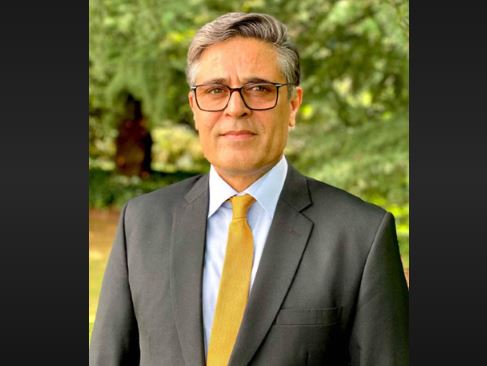
Pakistani Ambassador to China Khalil Hashmi emphasized that China’s five-year planning system, characterized by continuity, flexibility and predictability, has underpinned its extraordinary development over recent decades and now serves as a key guide for deepening bilateral collaboration.

This was stated by Prof Cheng Xizhong, Senior Research Fellow at the Charhar Institute, a non-governmental Chinese think-tank on diplomacy and international studies based in Beijing.

He remarked that strategic alignment between China’s 15th Five-Year Plan and Pakistan’s Uraan Pakistan (National Economic Transformation Plan 2024–2029)creates pivotal synergy for shared progress. Key cooperation areas include agriculture, ICT, artificial intelligence, digital transformation and green development, all of which are central to Pakistan’s “5Es” framework. This strategic integration extends far beyond traditional economic cooperation, helping Pakistan address long-term structural challenges and achieve sustainable and inclusive growth.

China’s commitment to high-quality development directly benefits Pakistan through mutually beneficial cooperation. Joint initiatives in technology, education and digital transformation enhance Pakistan’s human capital, upgrade agricultural productivity and strengthen digital infrastructure. Industrial zones developed with Chinese investment create stable employment, improve public services and expand access to green energy, bringing tangible benefits to the Pakistani people, he added.

Prof Cheng said that the 75th anniversary of diplomatic relations in 2026 further injects strong momentum into bilateral cooperation. The longstanding “iron-clad” friendship has evolved into a comprehensive all-weather strategic cooperative partnership, supported by close government-to-government coordination, business-to-business links and vibrant people-to-people exchanges. Ambassador Hashmi’s confidence reflects the shared resolve of both countries to implement Action Plan to Foster an Even Closer China-Pakistan Community with a Shared Future in the New Era (2025–2029).

In summary, China’s Two Sessions and national development plans serve as a powerful catalyst for Pakistan’s socio-economic advancement. By aligning development strategies and leveraging complementary strengths, China and Pakistan achieve win-win results, deepen their enduring friendship and set a positive example for South-South cooperation. This partnership will continue to promote regional peace, stability and sustainable development for years to come, he said.

India eye T20 history, New Zealand hunt maiden World Cup

India eye T20 history, New Zealand hunt maiden World Cup

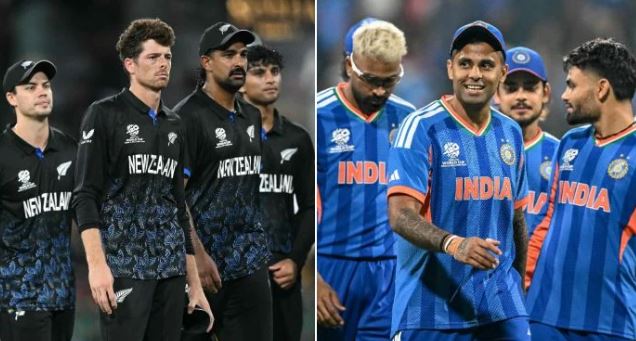
AHMEDABAD: India’s bid to become the first team to retain the Twenty20 World Cup will collide with New Zealand’s quest for a maiden global white-ball crown when the finalists step on to the field at the world’s largest cricket stadium on Sunday.

The 20-team tournament will end in an Ahmedabad amphitheatre where more than 100,000 fans will expect a gladiatorial slugfest and most will hope for a home triumph.

The stands will transform into a sea of blue for Suryakumar Yadav’s men but India do not have particularly sweet memories of their rivals or the venue in recent global finals.

Personnel have since changed, but in New Zealand, India face opponents who got the better of them in the World Test Championship final in 2021 in England.

Two years later, Australia stunned the cavernous Narendra Modi Stadium when they humbled India, previously unbeaten in the tournament, in the 50-over World Cup final.

Still, it is a testament to India’s consistency that reaching finals has become almost habitual.

This home campaign has not been flawless, but they are where it matters — one win from becoming the first host nation to lift a T20 World Cup.

As the world’s top-ranked T20 side, they have the means to do it.

Sanju Samson has reinvigorated the top order with back-to-back match-winning knocks to fire the hosts into the final.

His elevation has added a valuable left-right variety at the top, and India have shown tactical flexibility to rejig their batting order whenever needed.

With the ball, Jasprit Bumrah has led superbly, earning plaudits for strangling batters in the game’s most unforgiving format for bowlers.

Seam-bowling all-rounder Hardik Pandya has been on point too, though the leakage of no-balls and wides from Arshdeep Singh and Shivam Dube – especially at the death – remains a concern.

The Kiwi pride

Frontline spinner Varun Chakravarthy has not been at his best but Axar Patel’s steady returns as a spin-bowling all-rounder have been a major plus.

New Zealands Rachin Ravindra (L) celebrates with teammates after taking the wicket of South Africas David Miller during the 2026 ICC Mens T20 Cricket World Cup semi-final match between New Zealand and South Africa at the Eden Gardens in Kolkata on March 4, 2026. — AFP
New Zealand’s Rachin Ravindra (L) celebrates with teammates after taking the wicket of South Africa’s David Miller during the 2026 ICC Men’s T20 Cricket World Cup semi-final match between New Zealand and South Africa at the Eden Gardens in Kolkata on March 4, 2026. — AFP
New Zealand’s path to the final was hardly serene either and they only reached the last four after Pakistan failed to win big against Sri Lanka.

Then came a thunderclap — a nine-wicket demolition of previously unbeaten South Africa in the first semi-final that left fans and pundits rubbing their eyes in disbelief.

Finn Allen, who smashed a record 33-ball hundred in that match, and Tim Seifert form arguably the most explosive opening pair in T20 cricket.

Rachin Ravindra’s ability to tailor his batting to any situation and Glenn Phillips’ natural aggression make it a formidable batting lineup.

Matt Henry leads a sharp pace attack and New Zealand also have plenty of variety in their spin department, which has been bolstered by the late introduction of off-spinner Cole McConchie.

While there is no lack of skill and talent in their squad, New Zealand pride themselves on resilience.

“It just shows that us as a team, we get up for the fight,” Allen said.

“Those important fixtures, we really get up for them as a team. We’re prepared to fight till the end.”

New Zealand want to ‘break a few hearts’
Captain Mitchell Santner said his side were unfazed by India’s status as favourites and the prospect of playing in front of a huge partisan crowd.

Fans wave Indias national flag before the start of the 2026 ICC Men´s T20 Cricket World Cup Super Eights match between India and West Indies at the Eden Gardens in Kolkata on March 1, 2026. — AFP
Fans wave India’s national flag before the start of the 2026 ICC Men´s T20 Cricket World Cup Super Eights match between India and West Indies at the Eden Gardens in Kolkata on March 1, 2026. — AFP
“I wouldn’t mind winning a trophy,” Santner said.

“It’s going to be obviously a challenge where everyone knows we’re probably not the favourites.

“But yeah, I wouldn’t mind breaking a few hearts to lift the trophy for once.”

Santner said New Zealand would aim to draw confidence from their upset of South Africa and try to repeat the feat against another heavyweight opponent.

“I guess that’s the goal, is to silence the crowd,” he said.

“T20 cricket is fickle at times. We’ve seen South Africa playing very good cricket all the way through and then had a little hiccup against us and out.

“So I think for us, it’s taking confidence from that and if we go about our business the same way, we can upset another big team.”

He also suggested the weight of expectation could work against India.

“So I think that comes with a lot of added pressure as well,” Santner said. “So if we can go out there and try and put, I guess, that added pressure on them and see what happens.”

New Zealand, who lost the 2021 T20 World Cup final to Australia, are still chasing their first white-ball world title. Yet their belief has grown as the knockout stage has unfolded.

‘There will be nerves’
Suryakumar, who succeeded Rohit Sharma as T20 captain after India’s 2024 triumph in Barbados, said leading the side into a home final was a special moment despite the weight of expectation.

Indias Tilak Varma, captain Suryakumar Yadav, Axar Patel, Varun Chakravarthy and Arshdeep Singh gather during the 2026 ICC Mens T20 Cricket World Cup semi-final match between India and England at the Wankhede Stadium in Mumbai on March 5, 2026. — AFP
India’s Tilak Varma, captain Suryakumar Yadav, Axar Patel, Varun Chakravarthy and Arshdeep Singh gather during the 2026 ICC Men’s T20 Cricket World Cup semi-final match between India and England at the Wankhede Stadium in Mumbai on March 5, 2026. — AFP
“Leading such a wonderful side into a final that (is also on) home soil, it’s always a special feeling,” Suryakumar told reporters on Saturday.

“Of course there are nerves, there will be butterflies in the stomach but as I always say, ‘if there is no pressure, there is no fun’. All the boys and the support staff and I am sure the whole of India is excited for tomorrow.”

He had earlier acknowledged the strain of the occasion after India’s seven-run semi-final win over England.

“There will definitely be pressure and nerves, especially playing in India and going for the title,” Suryakumar said.

“But the boys and the whole support staff are excited as well.”

Suryakumar said India’s experience in major tournaments could prove vital.

“There’s a lot of benefit because there are a lot of players in this team who have played a lot of ICC events right from our coach (two-time World Cup winner Gautam Gambhir),” he said.

“So their experience is also important. And there are a lot of players, like Bumrah, Hardik (Pandya), Axar (Patel), there are a lot of players who have played in ICC events, in pressure situations.”

He also credited predecessor Rohit Sharma, who retired from T20 internationals alongside Virat Kohli after last year’s World Cup win.

“The way, where he left, I got to learn a lot of things from him when I was playing under him,” Suryakumar said.

“I tried to implement the same things with a few thoughts of mine as well. And it’s worked really well.”

The Presidency and the Politics of Global Intervention

The Presidency and the Politics of Global Intervention

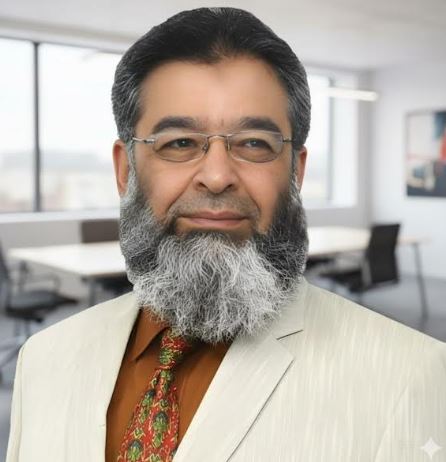
by Muhammad Mohsin Iqbal

Power has always tested the character of those who possess it. When authority falls into the hands of an individual, the desires rooted deep within human nature often grow stronger. Yet history also bears witness to personalities who restrained their ambitions, controlled their impulses, and earned respect not through the display of power but through its careful limitation. The exercise of authority, therefore, has long remained a measure of moral discipline as much as political capability.

The history of the presidency of the United States offers an illuminating reflection of this enduring tension between power and restraint. Since the independence of the United States in 1776, forty-seven individuals have occupied the office of president. In the early decades of the republic, American leaders were primarily preoccupied with the consolidation of their young nation. But as the country gradually emerged from internal struggles and global conflicts with increasing economic and military strength, a profound transformation occurred. The United States began to perceive itself not merely as a sovereign state but as a power with global responsibilities and influence.

With this transformation came a new dimension to presidential authority. American presidents increasingly found themselves shaping not only domestic policy but also the political and military affairs of distant regions. As the twentieth century unfolded, many of them began to act with the conviction that global stability and international order could be influenced—or even directed—through American leadership. In certain moments this sense of responsibility inspired constructive engagement, but in other instances it encouraged the use of military power in ways that critics later questioned both politically and morally.

Historically, the United States has formally declared war only eleven times, all of them concentrated within five major conflicts. The authority to declare war constitutionally rests with Congress, yet the decisions leading to those declarations were shaped by presidential leadership. The first such declaration occurred during the presidency of James Madison, when the War of 1812 was declared against the United Kingdom. Decades later, President James K. Polk led the nation into the Mexican–American War in 1846, a conflict that ultimately ended with the Treaty of Guadalupe Hidalgo and dramatically expanded American territory.

At the close of the nineteenth century, President William McKinley presided over the Spanish–American War, which marked the beginning of America’s emergence as an overseas power. The early twentieth century brought even larger responsibilities when President Woodrow Wilson led the United States into the First World War in 1917, declaring war on Germany and later on Austria-Hungary. The final and most expansive declarations of war came under President Franklin D. Roosevelt following the attack on Pearl Harbor in December 1941, drawing the United States fully into the Second World War against Japan, Germany, and Italy, along with several allied states of the Axis powers.

Yet formal declarations of war represent only a fraction of the military engagements undertaken by the United States. Over the course of its history, the country has participated in dozens of armed conflicts without issuing an official declaration. Particularly after the Second World War, the pattern of military involvement changed significantly. Presidents increasingly relied on congressional resolutions, international mandates, or executive authority to deploy American forces abroad.

President Harry S. Truman’s decision to intervene in the Korean War in 1950 stands as a notable example. The conflict was described not as a war but as a “police action” conducted under the auspices of the United Nations, yet it involved large-scale combat against North Korean forces. His successor, Dwight D. Eisenhower, oversaw the conclusion of that conflict while also initiating early American involvement in Vietnam.

The Vietnam War later expanded dramatically under President Lyndon B. Johnson following the Gulf of Tonkin Resolution in 1964, which authorized extensive military operations against North Vietnam. President Richard Nixon continued the war until the Paris Peace Accords of 1973 brought an end to direct American involvement. These years illustrated how military engagements could evolve into prolonged conflicts even without formal declarations of war.

Later decades witnessed further examples of presidential military authority. President George H. W. Bush led the international coalition during the Persian Gulf War of 1990–1991 against Iraq following its invasion of Kuwait. His son, President George W. Bush, launched the war in Afghanistan in 2001 after the attacks of September 11 and later initiated the Iraq War in 2003. President Barack Obama continued military operations in both countries while authorizing intervention in Libya in 2011 against the forces of Muammar Gaddafi.

Beyond these major conflicts, numerous smaller-scale interventions have occurred. President Ronald Reagan ordered the invasion of Grenada in 1983 and conducted airstrikes against Libya in 1986. President Bill Clinton authorized NATO’s bombing campaign in Kosovo in 1999 and several operations against Iraq. President Donald Trump later ordered missile strikes against Syrian government targets in 2017 and 2018. These actions, often described as interventions rather than wars, nonetheless demonstrated the expanding scope of presidential authority in military affairs.

The pattern of engagement has continued into the present era. A significant escalation occurred on February 28, 2026, when the United States, alongside Israel, initiated large-scale military operations against Iran. The campaign, known as Operation Epic Fury by the United States and Operation Roaring Lion by Israel, followed weeks of mounting tensions, stalled nuclear negotiations, and allegations concerning Iran’s regional military activities. Coordinated airstrikes employing advanced weaponry—including cruise missiles, stealth aircraft, strategic bombers, and drones—targeted Iranian leadership compounds, missile installations, air defense systems, naval assets, and military infrastructure across several regions, including the capital, Tehran.

The military campaign soon ignited an intense constitutional debate in Washington. Several members of Congress argued that the United States Constitution grants the authority to declare war exclusively to Congress and that sustained military operations required explicit legislative approval. In response, a bipartisan group of lawmakers introduced resolutions under the War Powers framework seeking to restrict the continuation of the conflict unless formally authorized by Congress.

However, both chambers of Congress ultimately rejected these efforts. The United States Senate voted by a margin of 53 to 47 against a resolution intended to limit the president’s authority to continue military operations against Iran, effectively allowing the campaign to proceed. Shortly afterward, the House of Representatives also rejected a similar war powers measure by a narrow vote of 219 to 212, declining to compel the administration to halt military action.

These decisions reflected the deep political divisions within American politics over questions of war powers, national security, and presidential authority. Supporters of the administration argued that restricting military action during an ongoing confrontation could weaken American deterrence and endanger allied forces in the region. Critics, however, warned that bypassing Congress risked eroding constitutional safeguards designed to prevent unilateral decisions that might draw the nation into prolonged conflict.

Meanwhile, the military confrontation itself has already widened. Iran responded with missile and drone attacks against American military facilities and regional partners across the Gulf, including installations in Bahrain, Kuwait, Qatar, and the United Arab Emirates, while also directing strikes toward Israel. The cycle of action and retaliation has heightened fears that a regional crisis could gradually evolve into a broader and more destructive conflict.

Such developments once again revive enduring questions about the relationship between power and restraint. The presidency of the United States remains one of the most influential political offices in the modern world. Decisions taken in the Oval Office can alter the strategic balance of entire regions and shape the fate of millions far beyond American shores. History suggests that while power may tempt leaders toward decisive action, the true test of leadership lies in the wisdom to distinguish between necessity and ambition. The legacy of any statesman is ultimately measured not merely by the wars he wages, but by the peace he preserves.

The Uncertain Endgame of the Iran War

Qamar Bashir

Qamar Bashir

The war between the United States–Israel alliance and Iran has entered a complex phase where battlefield destruction has not translated into political collapse. The campaign began with clearly articulated objectives: dismantle Iran’s nuclear capability, destroy its ballistic missile infrastructure, degrade its naval forces, and eliminate the networks through which Iran projects power across the Middle East. In the early stages of the conflict, large-scale aerial operations targeted missile depots, drone launch facilities, naval installations, command centers, and strategic infrastructure deep inside Iranian territory, including several high-value targets around Tehran.

Weeks into the war, however, the central political objective—the collapse or surrender of the Iranian regime—has not occurred. Iran’s military capacity has unquestionably been damaged. Missile sites, storage depots, air defense systems, and drone manufacturing facilities have been hit repeatedly. Thousands of targets have reportedly been struck, and casualties have included civilians, senior officials, and military commanders. Yet the Iranian state itself remains intact.

The leadership vacuum created by early strikes has been quickly filled. Replacement commanders have taken control of military units, administrative institutions continue to function, and the constitutional process for confirming or selecting national leadership is underway. This rapid institutional continuity reflects a fundamental design feature of the Iranian political system: it was built to withstand external shocks.

The result is a strategic paradox. Iran’s military infrastructure has been degraded, but its governing system survives. Wars aimed primarily at destroying weapons systems can achieve impressive tactical results while failing to achieve strategic victory if the political structure directing those weapons remains functional.

Iran’s history over the past four decades illustrates this resilience. The country has endured sanctions, economic isolation, technological restrictions, and sustained geopolitical pressure. During that period, Iran invested heavily in domestic industrial capabilities, scientific research, and decentralized defense production. The destruction of physical facilities therefore does not eliminate the technical knowledge, engineering expertise, or human capital that produced them. As long as these capabilities remain embedded within the state’s institutions, rebuilding remains possible.

The Islamic Revolutionary Guard Corps continues to function as the backbone of Iran’s defense system. With hundreds of thousands of personnel and extensive logistical networks, it represents both a military force and a political institution deeply integrated into the country’s governance. Even if several of its facilities have been damaged, the organization itself remains intact and committed to defending the state.

Because of this resilience, the center of gravity in the war is gradually shifting away from purely military objectives toward economic pressure—particularly control over global energy routes.

The Strait of Hormuz has become the most critical strategic flashpoint. This narrow waterway connects the Persian Gulf to global markets and carries a substantial share of the world’s oil supply. Under normal circumstances, millions of barrels of crude oil move through the strait every day, fueling industries, transportation systems, and national economies across multiple continents. Disruption in this corridor sends immediate shockwaves through global markets.

Oil is the lifeblood of modern economies. Transportation networks, manufacturing industries, agricultural systems, and global logistics chains all depend on stable energy supplies. When oil flow is threatened, the consequences extend far beyond the battlefield.

The current conflict has already produced visible economic effects. Oil prices have risen significantly across international markets, and the impact is being felt across the United States, Europe, the Middle East, Africa, and Asia. Higher energy prices are increasing transportation costs, raising manufacturing expenses, and placing upward pressure on inflation.

Even countries that produce their own oil cannot fully escape these effects. Modern economies are deeply interconnected. Rising shipping costs, higher insurance premiums for maritime transport, and disruptions in global supply chains raise the cost of goods and services almost everywhere.

As fuel prices rise, the cost of living rises with them. Transportation becomes more expensive. Food prices increase because agriculture depends heavily on fuel for machinery and distribution. Industrial production costs rise. Consumers experience declining purchasing power.

This economic pressure may ultimately become the most powerful force influencing the war’s outcome. Democratic societies are especially sensitive to such economic shocks. In the United States and across Europe, populations are politically active and economically demanding. When citizens begin to experience sustained increases in living costs—whether through gasoline prices, heating bills, or inflation in essential goods—they inevitably question the policies responsible for those conditions.

Public debate intensifies. Legislatures face scrutiny. Opposition movements gain momentum. Citizens begin asking whether the objectives of a war justify the economic hardship imposed upon them.

If energy prices continue rising for a prolonged period, domestic pressure within Western societies could grow rapidly. Protest movements, political opposition, and electoral pressures may begin pushing governments toward negotiation or de-escalation.

Energy-importing nations across Asia, Africa, and Latin America may also demand stability in global markets. Many developing economies are extremely vulnerable to energy price spikes. Rising fuel costs strain national budgets, accelerate inflation, and threaten economic stability. These countries may therefore use diplomatic channels to push for an end to hostilities.

Interestingly, Iran itself may be relatively better positioned to endure prolonged energy disruptions. As a major oil producer with experience surviving decades of sanctions, the country has developed economic coping mechanisms that wealthier societies rarely face. This does not mean Iran is immune to economic pain, but its population has historically endured hardship more frequently than populations in highly industrialized economies. In a prolonged conflict, this difference in economic tolerance may influence political dynamics.

Another critical dimension of this war is unfolding beyond the immediate battlefield. Major global powers such as China and Russia are watching the conflict extremely closely. While not directly involved in the fighting, both countries are observing every stage of the conflict with strategic interest.

Modern wars serve not only as military confrontations but also as real-time laboratories of technological and strategic knowledge. China and Russia are likely analyzing every aspect of the conflict: the deployment of U.S. naval forces, the logistics of long-distance power projection, the performance of advanced missile defenses, the effectiveness of cyber warfare techniques, and the coordination between allied military forces. They are also observing the economic tools used in the conflict—sanctions, financial restrictions, and trade disruptions.

By studying these dynamics, both countries can refine their own strategic planning. Every weapon system used in the war provides valuable data. Every military maneuver reveals operational strengths and weaknesses. Every cyberattack or defensive response demonstrates new capabilities.

In effect, the war provides China and Russia with a rare opportunity to observe the full spectrum of American and allied military power in real-world conditions. This information can then be incorporated into their own military development programs. Lessons drawn from the conflict may influence the design of future missile systems, air defense networks, naval strategies, and cyber warfare capabilities. In the long term, this means the conflict could unintentionally accelerate the military modernization of America’s strategic competitors.

By revealing operational methods, logistical patterns, and technological performance under battlefield conditions, the war offers insights that might otherwise take decades to obtain. From this perspective, the geopolitical consequences of the conflict extend far beyond the Middle East.

The war is simultaneously reshaping energy markets, testing political resilience within democratic societies, and providing valuable strategic intelligence to rival global powers.

These multiple pressures may ultimately shape the war’s conclusion.

Military power alone rarely determines the final outcome of conflicts involving resilient states. Economic pressure, political legitimacy, and international strategic calculations often play equally decisive roles. Iran has absorbed significant military damage but remains politically intact. The United States and Israel possess overwhelming military capability but face increasing economic and geopolitical complications as the conflict continues.

Meanwhile, global powers observing from the sidelines are quietly gathering knowledge that could reshape future strategic balances. In the end, the decisive factor may not be the destruction of missiles or military bases. The outcome may instead be determined by the economic strain of rising energy prices, the political pressure of public opinion, and the strategic calculations of global powers watching closely from afar.

The war’s endgame therefore remains uncertain. What began as a campaign to destroy military capabilities may ultimately evolve into a broader contest involving economics, diplomacy, and the shifting balance of global power.

Qamar Bashir

Press Secretary to the President (Rtd)

Former Press Minister, Embassy of Pakistan to France

Former Press Attaché to Malaysia

Former MD, SRBC | Macomb, Michigan

Pakistan’s fuel price debacle: a ruthless assault on the poor

Pakistan's fuel price debacle: a ruthless assault on the poor

EDITORIAL

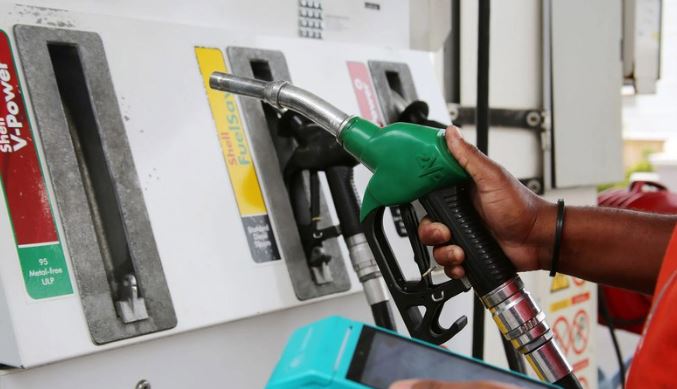
In a move that has ignited widespread fury across Pakistan, the government has hiked petroleum prices by an staggering Rs 55 per liter, pushing petrol to Rs 321.17 and diesel to Rs 335.86 effective March 7, 2026.  This abnormal surge, amid escalating Middle East tensions involving Iran, Israel, and the US, has been slammed by citizens as profoundly unfair, exacerbating the economic hardships of the common man while the elite remain insulated. The decision comes at a time when global oil prices have spiked due to the closure of the Strait of Hormuz and broader geopolitical instability, with crude hitting levels that could soon breach $100 per barrel.

Yet, the government’s rationale rings hollow to many. Officials, including Petroleum Minister Ali Pervaiz Malik, have claimed the increase is “under compulsion” due to international market volatility.   But critics point out that Pakistan’s existing fuel stocks, purchased at pre-surge prices, are sufficient until the end of March—roughly four weeks from the hike’s announcement.

 If the reserves were bought cheaply, why pass on the pain now? This premature adjustment feels like a calculated betrayal, designed to fleece the populace before necessity demands it. Adding fuel to the fire is the International Monetary Fund’s (IMF) role. The lender, in ongoing virtual negotiations, has demanded immediate price alignments to boost revenue and eliminate subsidies, tying these measures to Pakistan’s bailout program.

 With inflation already at a 16-month high and the government struggling to meet fiscal targets, this seemed like the “right time” to burden the poor.  Instead of exploring alternative austerity measures—such as trimming bloated administrative costs or reforming inefficient state enterprises—the regime opted for the easiest path: slaughtering the vulnerable through higher fuel costs. This shortsighted strategy ignores the ripple effects, from inflated transport fares to rising prices of essentials, which disproportionately hammer low-income households.

What’s particularly galling is the government’s hypocrisy on expenses. While ordinary Pakistanis grapple with this “inflation bomb,” as opposition leaders have dubbed it, there’s no cut in the lavish perks enjoyed by politicians, bureaucrats, and military officers.

 Free petrol allocations for these elites remain untouched, symbolizing a system where the powerful thrive at the expense of the powerless. The petroleum development levy has been jacked up to Rs 82 per liter on petrol, ostensibly to offset subsidies elsewhere, but this cross-subsidization from car and bike owners to diesel users in agriculture and transport does little to address core inequities.

The regime knows full well that mass protests are unlikely. Pakistan, in this view, isn’t a unified nation but a “huddle of people”—fragmented by ethnic, sectarian, and economic divides, making collective action rare. Social media is ablaze with outrage, with users decrying the move as economic terrorism, but street demonstrations remain sparse.

 This complacency stems from decades of disillusionment; governments come and go, but the cycle of exploitation persists. Looking ahead, the pattern is predictable. Next week, the government might lower prices by a token few rupees to placate the masses, only to spike them again when new, costlier stocks arrive.

 This yo-yo pricing isn’t new—fortnightly adjustments have long been manipulated for political optics. Governments worldwide engage in similar tactics during crises, but Pakistan’s example is uniquely insidious. Here, authorities seize every opportunity to hoodwink and fleece their own, often under the guise of external pressures like IMF dictates or global events.

A populace so alienated that when political regimes are ousted—frequently by military intervention—no one sheds a tear. Consider the late 1990s: Nawaz Sharif enjoyed a two-thirds majority in parliament, wielding immense power. Yet, when the military decided to send him packing in 1999, not a single person took to the streets in his defense. The reason? During his tenure, he did little for ordinary people, prioritizing cronyism over public welfare. History is repeating itself today. The current administration, much like Sharif’s, appears indifferent to the plight of the masses, focusing instead on survival amid economic woes and geopolitical storms. This is the real pity: a cycle of governance that breeds apathy and instability. With fuel stocks dwindling and no alternative pipelines—blocked by US sanctions—the future looks bleak.

 Unless the government pivots to genuine reforms, like slashing elite privileges and investing in sustainable energy, Pakistan risks deeper divisions. The Rs 55 hike isn’t just a price tag; it’s a symptom of systemic failure, where the poor pay the price for the powerful’s incompetence.

DPM, Iranian FM discuss regional situation

DPM, Iranian FM discuss regional situation

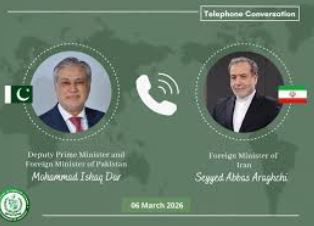
ISLAMABAD, Mar 7 (DNA): Deputy Prime Minister / Foreign Minister Muhammad Ishaq Dar, Saturday, spoke with Iranian Foreign Minister Abbas Araghchi on the evolving regional situation.

The two leaders exchanged views on recent developments and agreed to remain in touch.

Iran set to name new supreme leader within ‘one day’ as Middle East conflict worsens

Iran set to name new supreme leader within 'one day' as Middle East conflict worsens

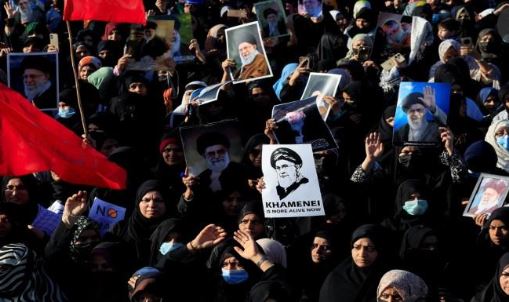
TEHRAN, Iran to suspend strikes on neighbours unless attacks from them; Israel and Tehran trade attacks as the war enters second week.

CDA, MCI launch special bazar for women traders

CDA, MCI launch special bazar for women traders

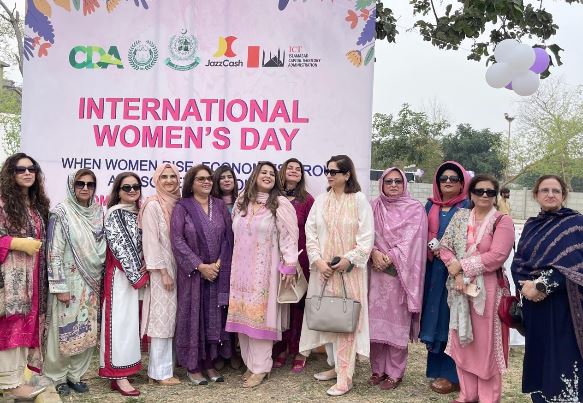
ISLAMABAD, MAR 7 /DNA/ – A special event was held on Saturday at the Women’s Ramdan Sahulat Bazar established in Sector G-11 of the Federal Capital, Islamabad, to mark International Women’s Day. This special event was organized in collaboration with the Capital Development Authority (CDA), Metropolitan Corporation Islamabad (MCI) and the Islamabad Women Chamber of Commerce and Industry.

The objective of this event is to highlight the business capabilities of women and provide them with opportunities to embark on the path to economic independence and empowerment. A large number of women customers, in addition to women traders and business women, participated in this special event organized on the occasion of International Women’s Day.

On this occasion, in accordance with the vision of the Prime Minister of Pakistan, Shehbaz Sharif and Federal Interior Minister, Mohsin Naqvi, a completely cashless system was implemented in the Women’s Ramdan Sahulat Bazar. Special arrangements were made in this event to encourage women traders.

Women are displaying their products at various stalls designated for women in the Women’s Ramdan Sahulat Bazar. In collaboration with the Women Chamber of Commerce, the Ramdan Sahulat Bazar has been specially organized for women in Sector G-11 till the Eid-ul-Fitr.

Women traders and business personalities appreciated this initiative by the CDA and the MCI, said that such opportunities play a vital role in making women economically independent. They said that the sale of goods at very reasonable prices for women is being ensured in the Women’s Bazar.

Business woman Ms. Shazia Imran, said that organic, natural, chemical-free, fresh, and healthy food items and other products are also specially available in the Women’s Bazar.

Vice President of the Islamabad Women Chamber of Commerce and Industry, Rabia Farhan, said that this special Bazar, organized in collaboration with the CDA and MCI, is nothing less than a gift for us women on this International Women’s Day, and there are immense business opportunities for women in this Bazar. She further said that we are extremely grateful to the CDA and MCI for organizing this special Bazar on the occasion of International Women’s Day.

Customers expressed hope that the CDA will continue to regularly organize such events in the future for the independence and empowerment of women.

CDA administration said that, like other Ramdan Sahulat Bazars, a strict monitoring system for price control has been put in place in the Women’s Ramdan Bazar as well. CDA administration said that, in line with the direction of Chairman CDA and Chief Commissioner Islamabad, Muhammad Ali Randhawa, the Women’s Ramdan Bazar established in Sector G-11 is equipped with modern facilities for women consumers and traders where food items and other essential commodities are available at reasonable rates. CDA administration further said that the establishment of such a Bazar for women in the Federal Capital, Islamabad, will prove to be a milestone for the economic well-being of women.

WPC, UN Women unveil Pakistan women’s parliamentary leaders portal

WPC, UN Women unveil Pakistan women’s parliamentary leaders portal

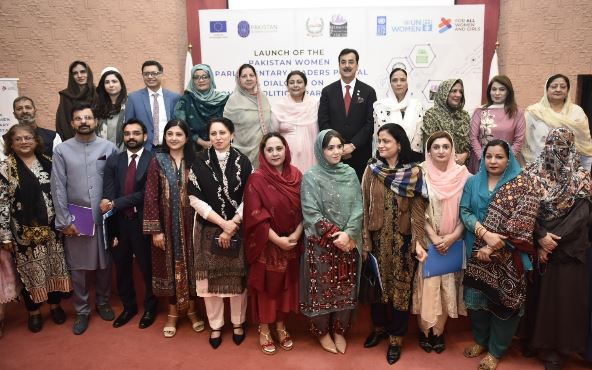
ISLAMABAD, MAR 7 /DNA/ – Ahead of the International Women’s Day 2026, the Women’s Parliamentary Caucus (WPC), with financial support from the European Union (EU) and in partnership with UN Women Pakistan , unveiled the Pakistan Women’s Parliamentary Leaders (PWL) Portal in Islamabad. Launched under the EU-funded Pakistan Women Leaders (PWL) project, the portal will strengthen coordination between the National and Provincial Assemblies and serve as a centralised digital repository of pro-women legislation and related data, enabling more informed, evidence-based and gender-responsive lawmaking across Pakistan.

The event commenced with welcome remarks by Dr. Shahida Rehmani, Secretary Women’s Parliamentary Caucus, who underscored the importance of institutionalising knowledge and collaboration among women legislators.

“International Women’s Day reminds us that women’s political participation is essential for inclusive governance. This portal represents more than a digital platform; it is a collective commitment to strengthening women’s leadership across assemblies and ensuring that pro-women laws are informed by evidence, coordination and shared learning,” she stated.

In his remarks, H.E. Philipp Oliver Gross, Deputy Chief of Mission, the European Union Delegation to Pakistan, reaffirmed the EU’s long- standing commitment to gender equality and democratic governance.

“International Women’s Day is a powerful reminder that democracy is strongest when women participate fully in decision-making. The European Union remains a steadfast partner in supporting women’s political leadership in Pakistan, and the Pakistan Women’s Parliamentary Leaders Portal is an important step towards strengthening democratic institutions and inclusive policymaking,” he stated.

Delivering opening remarks at the event, Mohamed Yahya, United Nations Resident Coordinator in Pakistan, emphasized the global significance of International Women’s Day in advancing gender equality.

“On International Women’s Day, we recognize that strengthening women’s participation in political and legislative processes is central to achieving inclusive and sustainable development. Initiatives such as the Pakistan Women’s Parliamentary Leaders Portal demonstrate how digital innovation can support accountability, transparency and gender-responsive policymaking,” he noted.

Addressing the gathering as the Honorable Chief Guest, Hon. Syed Yousaf Raza Gilani, Chairman of the Senate of Pakistan, emphasised the importance of strengthening institutional systems that support women’s leadership in politics.

 “International Women’s Day reminds us that women’s representation is fundamental to the strength of democracy. Strengthening the systems that enable women to enter, remain and lead in politics is critical for Pakistan’s democratic future. The Pakistan Women’s Parliamentary Leaders Portal is a forward-looking step that will institutionalize knowledge, enhance transparency and support evidence-based decision-making across assemblies,” he stated.

The event included a High-Level Panel Discussion on Strengthening Women’s Political Participation in Pakistan, which brought together parliamentarians and policy experts to reflect on practical pathways for reform. The discussion drew on findings from recent national consultations that identified gaps in the current quota framework and oversight mechanisms related to reserved seats.

The conversation centered on bridging implementation gaps, strengthening accountability within political parties and establishing clearer benchmarks for women’s effective representation in parliament. Participants underscored that women’s political participation is not only a constitutional guarantee but also a critical pillar for strong, credible and inclusive democratic institutions.

Representatives from provincial assemblies and the Women’s Parliamentary Caucus were also  present at the event, including Ms. Ghazala Gola Begum, Deputy Speaker and Chairperson of the Women’s Parliamentary Caucus, Balochistan; Ms. Tanzila Umi Habiba, MPA and Convener of WPC Sindh; Ms. Farah Sohail, MPA and General Secretary of WPC Sindh; Ms. Suriya Bibi, Deputy Speaker from Khyber Pakhtunkhwa; and Ms. Ishrat Arshraf, Convener of WPC Punjab.

The Pakistan Women Leaders (PWL) project, funded by the European Union and jointly implemented by UN Women and the United Nations Development Programme (UNDP), continues to support efforts to advance women’s political participation in Pakistan by addressing structural barriers that limit women’s leadership in public life. Through institutional partnerships, capacity strengthening, policy dialogue and support to women leaders across federal and provincial levels, the initiative promotes more inclusive, accountable and gender-responsive governance.

Stay Connected

64FansLike
60FollowersFollow

Latest Reviews

Exchange Rates

USD - United States Dollar
EUR
1.14
GBP
1.34
AUD
0.70
CAD
0.71