Home Blog Page 22

India funding elements in Kashmir, says Tarar

India funding elements in Kashmir, says Tarar

The minister highlighted that election rallies organized by the PPP and PML-N drew massive crowds, demonstrating public support for mainstream politics

Saifullah Ansar/DNA

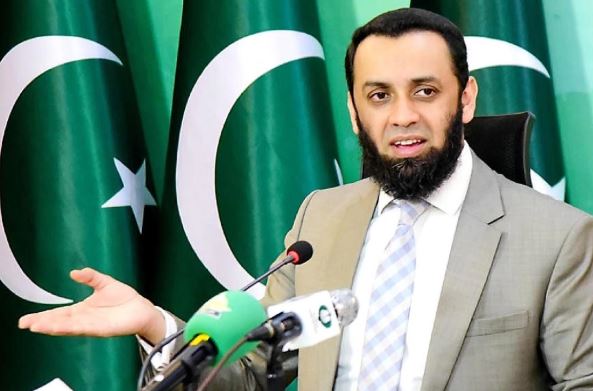
ISLAMABAD, JUL 26 — Federal Information Minister Attaullah Tarar has accused India of being behind the recent unrest in Azad Jammu and Kashmir (AJK), alleging that New Delhi sought to destabilize the region and damage relations between the Kashmiri people and Pakistan. Speaking to reporters, Tarar said that the people of AJK have “rejected violent trends” and stood firmly with Pakistan’s democratic process.

The minister highlighted that election rallies organized by the PPP and PML-N drew massive crowds, demonstrating public support for mainstream politics. He claimed that India has been funding certain elements in Kashmir to spread chaos, pointing to the activities of the Joint Action Committee and its social media campaigns, which he said were “proven to be financed by India.” According to Tarar, those involved must answer to the nation for “taking money from the enemy to malign Pakistan and its leadership.”

Tarar emphasized that Pakistan’s adversaries are “not happy with the country’s progress,” but insisted that Pakistan now stands tall on the global stage as a peace-maker through diplomacy. He stressed that “no one can weaken Pakistan,” adding that the nation remains united behind its armed forces and leadership.

The minister’s remarks come amid heightened political activity in AJK, where elections are underway. His statement reflects Islamabad’s broader narrative that external forces are attempting to interfere in Pakistan’s internal affairs, but that the resilience of the people and institutions will prevail.

First Test: Bad light forces early stumps on opening day of Pakistan-West Indies clash

First Test: Bad light forces early stumps on opening day of Pakistan-West Indies clash

Kavem Hodge struck an unbeaten 83 to guide West Indies to 194-3 at stumps on the opening day of the first Test against Pakistan at the Brian Lara Cricket Academy in Trinidad on Saturday.

Resuming the final session at 127-3 after 43 overs, West Indies continued their recovery before bad weather and fading light brought proceedings to an early close. The hosts finished the day on 194-3 after 67 overs.

Kavem Hodge and Shai Hope carried forward West Indies’ fightback, adding a 50-run partnership for the fourth wicket as the duo took the team’s total past the 150-run mark.

However, the final session was interrupted once again as fading light forced players and officials off the field. Pakistan’s players waited briefly before following Hodge and Hope back to the pavilion.

A few minutes later, the umpires officially called off play for the day. Hodge will resume on day two unbeaten on 83 from 181 deliveries, having struck nine boundaries, while Hope is 39 not out from 91 balls, including two fours.

Earlier, after electing to bat first, West Indies came under early pressure from Pakistan’s disciplined bowling attack as openers Brandon King and Tagenarine Chanderpaul struggled to score freely during their brief 13-run opening stand.


Mohammad Abbas was eventually rewarded for his relentless accuracy on the second ball of the ninth over when King chopped a wide delivery onto his stumps and departed for a scratchy 12 off 29 balls, which included a solitary boundary.

Following King’s dismissal, Hodge joined Chanderpaul at the crease, but the pair also found runs difficult to come by, adding just 10 runs for the second wicket from 35 deliveries before rain interrupted play.

The second session resumed after rain had forced an early lunch with West Indies on 23-1 in 14.1 overs. Hodge then anchored the innings with a patient knock, bringing up his fourth Test half-century.

Chanderpaul and Hodge added 51 runs for the second wicket, steadily rebuilding the innings by rotating the strike and keeping the scoreboard ticking.

However, Aamer Jamal made the breakthrough by dismissing Chanderpaul for a composed 21 off 77 deliveries, including one boundary, reducing West Indies to 64-2 in the 26th over.

Amir Jangoo then arrived at the crease and scored fluently, receiving valuable support from Hodge as the pair guided the hosts past the 100-run mark.

Abbas struck again to claim his second wicket, removing Jangoo for 21 from 32 balls, featuring two fours and a six.

The second session ended after the 43rd over, with Abbas bowling the final over before the interval. West Indies were 127-3, with Hodge unbeaten on 56 from 100 deliveries and Hope unbeaten on 11 from 25 balls.

The pair carried their momentum into the final session, frustrating Pakistan’s bowlers with disciplined batting before rain and bad light brought an early end to the opening day’s play.

‘Blood and Toil’ launched at IoBM

'Blood and Toil' launched at IoBM

Muhammad Omar Iftikhar 

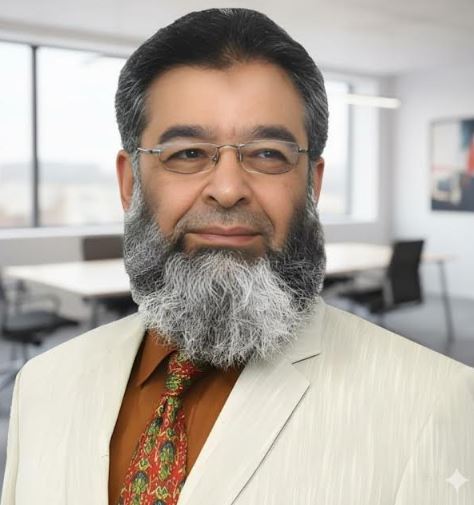
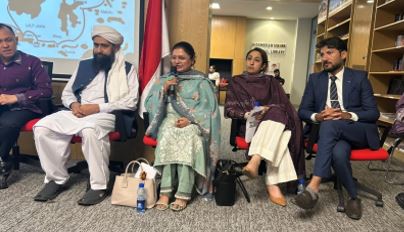
The Global and Regional Studies Center (GRSC) at the Institute of Business Management (IoBM) hosted the launch of Blood and Toil, authored by Brigadier Tariq Khalil, SJ, SI(M), IS Gallantry (Bar), (Retired), on Saturday, July 26, 2026. Blood and Toil is a memoir that chronicles Brigadier Tariq Khalil’s military career while highlighting the values of discipline, sacrifice, resilience, ethical leadership, and national duty. Drawing on his personal experiences, the book offers readers a firsthand perspective on military life and a deeper understanding of Pakistan’s armed forces and the principles that underpin effective leadership. The event brought together academics, professionals, retired military officers, and students to discuss the book and its reflections on leadership, service, governance, and national responsibility. A panel of distinguished reviewers comprising Lt. Gen. (R) Moinuddin Haider, Col. (R) Mukhtar Butt, Syed Manzar Naqvi, and Dr. Zaituna Shah shared their perspectives on the book.

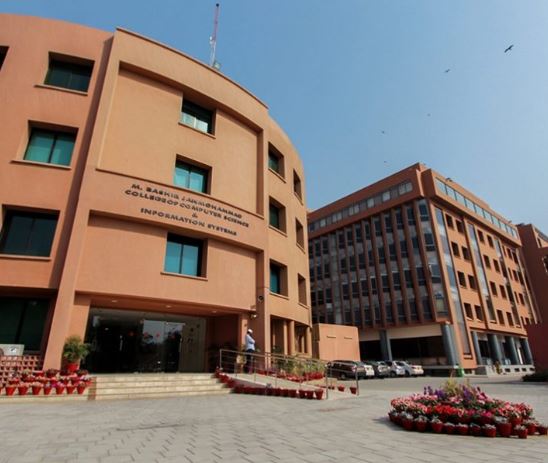
Representing IoBM at the event were Talib Karim, President; Prof. Dr. Tariq Rahim Soomro, Rector; Prof. Dr. Muhammad Kashif, Dean, CBM; Prof. Dr. Muhammad Abbas, Dean, CCSIS, and Ambassador G. R. Baluch, Director GRSC, along with faculty members, heads of departments, and students.

Speaking on the occasion, Talib Karim said Blood and Toil would enrich research and learning at IoBM by offering valuable insights into leadership, governance, and national affairs. Referring to developments in South Asia, he said the book encourages reflection on leadership, governance, and the role of young people in national development. He added that such experiences offer valuable lessons for policymakers and future leaders.

Brigadier Tariq Khalil (Retired) described Blood and Toil as the story of his life, beginning in the pre-Partition era and covering his experiences during Pakistan’s conflicts with India, including the 1971 war. He said the book is a compilation of articles and reflections documenting different phases of his military career and the country’s history, making it a useful reference for historians, researchers, and professionals. He also spoke about the changing geopolitical environment, observing that Pakistan is navigating a transition towards an emerging multipolar world and must prepare itself for the challenges ahead.

Reviewing the book, Lt. Gen. (R) Moinuddin Haider said the generation that witnessed Partition and Pakistan’s early wars is gradually fading, making it essential to preserve their experiences for future generations. He noted that Brigadier (R) Tariq Khalil’s experience in the military, public service, and the corporate sector gives the book a distinctive perspective. He observed that many of the issues raised in the author’s newspaper columns nearly five decades ago remain relevant today and appreciated his efforts to encourage informed national debate.

Col. (R) Mukhtar Butt said the global order has shifted from a unipolar to a multipolar system, creating new geopolitical realities. Stressing the importance of regional cooperation, he said Pakistan must strengthen relations with neighbouring countries while promoting national unity, internal stability, and effective governance to address future challenges. Syed Manzar Naqvi, described Blood and Toil as an important historical account that documents Pakistan’s journey through the author’s personal experiences. He praised Brigadier Tariq Khalil for preserving significant moments in the country’s history and expressed his appreciation for the author’s continued contributions. Dr. Zaituna Shah said the book presents a comprehensive account of the regional and geopolitical developments that have shaped Pakistan’s history. She noted that it provides readers with valuable insights into national and international affairs through the author’s personal observations and experiences.

Earlier, in his welcome address, Ambassador G. R. Baluch said that by hosting book launches, IoBM continues to uphold the vision and values on which the Institute was founded. Referring to the late founder of IoBM, Mr. Shahjehan S. Karim, he said universities should not only impart education but also promote critical thinking, knowledge creation, and meaningful contributions to society. He added that IoBM’s book launch programme provides a platform for scholars, diplomats, policymakers, military professionals, journalists, and students to engage in intellectual dialogue and exchange ideas. Referring to the author, Ambassador Baluch said Brigadier Tariq Khalil writes from firsthand experience, enabling readers to gain a deeper understanding of the events, decisions, and historical developments that have shaped Pakistan. He added that Blood and Toil is not merely a memoir but a valuable contribution to the country’s intellectual discourse. The event concluded with an interactive question-and-answer session, during which participants discussed the book and exchanged views with the author on Pakistan’s evolving geopolitical environment and contemporary national challenges.

The Privatization of National Imagination: AI, Advertising and the Synthetic Pakistan

The Privatization of National Imagination: AI, Advertising and the Synthetic Pakistan

By S Shujahat Ali

Turn on TV or go to youtube, Ads have been increasingly using AI and AI generated advertising does not merely sell products. Increasingly, it sells realities.

And those realities are constructed from the data on which algorithms are trained , not necessarily from the emotions, experiences and lived realities of the people they claim to represent.

The danger is not only misinformation in the traditional sense. It is subtler.

AI can slowly manufacture a synthetic Pakistan: polished, homogenized, algorithmically optimized and emotionally manipulative. A Pakistan that looks like suburban Spain, a global metropolis, or even a utopia, but not necessarily like the country itself. Corporations and algorithms are beginning to decide what Pakistan looks like.

The marketing director is becoming, in effect, the country’s unofficial minister of national heritage and cultural imagination. Which homes are shown? Which accents are considered acceptable? Which skin tones appear aspirational? Which cities look modern? Which citizens are visible, and which disappear into the background?

The Pakistan increasingly presented in AI-generated advertisements often resembles an abstract global metropolis more than the country we actually inhabit. Its streets are impossibly clean. Its cafés look Scandinavian. Its families speak in carefully neutralized accents. Its young people dance at open-air concerts beneath neon skies. Everyone is attractive, emotionally articulate, upper-middle-class and permanently well-adjusted.

But this is not merely harmless fantasy.

Advertising has always idealized reality. AI changes the scale and credibility of that idealization.

Over time, this has consequences.

A nation begins to internalize synthetic standards of beauty, success and belonging. AI systems trained largely on globalized datasets can reproduce the same visual hierarchies repeatedly: lighter skin, elite urban aesthetics, minimalist interiors, Westernized body language, imported lifestyles and sanitized emotional cultures.

AI has not merely accelerated the death of the internet. It may be contributing to the death of reality and of diversity. And, the result is not representation. It is the algorithmic filtering of national identity. Entire populations risk becoming culturally invisible.

Does an AI system know anything about the Hindko spoken around Qalandarabad, KP? Does it understand the cultural world of the Kalash valleys? Can it represent the working-class commuter travelling from College Road to Saddar in Rawalpindi? Does it know what life looks like in Pattoki, or the humour of a small-town wedding, or the particular chaos of a Pakistani roadside market?

The small town disappears because it is absent from the data. Regional textures disappear. Older faces disappear. Local humour disappears. Traditional, imperfect architecture disappears, unless it is aestheticized for elite consumption.

This is why the debate around AI advertising is not merely about technology.

It is about sovereignty over imagination. It is about societal representation and national identity. And, ultimately, it is about who gets to define what a country looks like to itself.

Who gets to define Pakistani modernity and identity?

If left entirely to corporations and optimization algorithms, national imagination itself becomes privatized. And unlike elected governments, algorithms are not accountable to citizens. Their incentives are engagement, aspiration and consumption, not cultural balance, psychological health or social cohesion.

This does not mean Pakistan should reject AI. Nor should art be reduced to state propaganda or rigid nationalism. Creativity requires freedom and freedom without awareness can slowly become dependency.

Pakistan urgently needs a broader public conversation around AI-generated advertising and synthetic media.

At a minimum, AI-generated and substantially AI-enhanced visuals in major advertisements should be transparently labelled. Regulatory bodies such as PEMRA should begin developing ethical standards around synthetic realism, manipulated representation and deceptive imagery.

But regulation alone will not be enough.

Pakistan also needs to begin collecting, preserving and organizing its own cultural data.

We need indigenous datasets that capture the country’s linguistic, regional and social diversity. We need to encourage the ethical collection and labelling of local images, voices, accents, architecture, clothing, music, humour and everyday life.

The answer to biased global datasets cannot simply be to import more technology.

We must also build the data that allows our own realities to be represented.

To this end, Pakistan should begin formulating national guidelines for AI-generated advertising and synthetic media.

These guidelines should establish clear standards for the labelling of AI-generated and substantially AI-enhanced advertisements. They should encourage transparency where synthetic imagery could materially mislead audiences. They should promote responsible data collection and the development of indigenous cultural datasets.

Most importantly, they should encourage media institutions and advertisers to ask a basic question:

Are we using AI to better represent Pakistan or to replace it?

Pakistan possesses extraordinary cultural diversity, linguistic richness and social complexity. AI should help preserve, explore and expand these realities. It should not flatten them into a generic algorithmic aesthetic imported from elsewhere. Because nations are eventually shaped by the stories they repeatedly tell themselves. And if Pakistan stops imagining itself honestly, someone else, or something else, will do the imagining for us.

By S Shujahat Ali
Civil Servant (Fulbright Scholar)

Shocks and Aftershocks

Rise, Reign and Reminder

by Muhammad Mohsin Iqbal

In the autumn of 2005, the earth rose in wrath against the ancient hills of Kashmir. On the eighth day of October, a violent convulsion of 7.6 magnitude tore through the region, its epicentre lying a mere 19 kms northeast of Muzaffarabad. The tremor was felt far beyond Pakistan’s borders, reverberating through Afghanistan and Tajikistan, across the valleys of India, and even into the remote expanses of Xinjiang. It proved one of the deadliest natural disasters of that decade, claiming thousands of lives and reducing entire villages to rubble. For months the ground refused to rest; careful records later counted no fewer than 497 aftershocks between October and the following March. During such uncertainty a sobering lesson emerged; buildings erected with care and strength stood firm against the repeated tremors, while those raised hastily or without conscience crumbled into dust and despair.

A parallel drama of sudden upheaval and lingering aftershocks has unfolded more recently, though this time the forces at work have been those of human conflict rather than nature’s blind fury. Late in February 2026, long-simmering tensions between Iran and USA erupted into open warfare, with Israel joining the fray in decisive fashion. Large-scale aerial and missile assaults struck hundreds of targets across Iran, homing in upon military bases, nuclear facilities, and centres of leadership. The loss of Iran’s Supreme Leader, Ayatollah Ali Khamenei, in the opening strikes sent shockwaves through the region and beyond. Tehran responded with barrages of missiles and swarms of drones that lit the night skies and struck at targets across several countries. For several weeks in March and April the fighting intensified, leaving thousands dead—most of them in Iran and Lebanon—and threatening to engulf wider circles of involvement involving Hezbollah and other actors. Shipping in the Strait of Hormuz, that vital artery of global energy, faced grave peril, and the world watched anxiously as oil supplies trembled on the edge of disruption.

A measure of relief arrived around the middle of June when a MOU was concluded between the United States and Iran. The accord promised a halt to major combat operations, the reopening of the strait to peaceful navigation, and the beginning of serious negotiations concerning Iran’s nuclear program. For a brief season hope flickered that reason might yet prevail. Yet by the seventh and eighth of July the ceasefire had fractured. Iranian forces struck at merchant vessels in the Hormuz passage; the United States answered with fresh waves of airstrikes and the reimposition of a naval blockade. Iran, in turn, launched retaliatory attacks upon American and coalition positions in Bahrain, Kuwait, Jordan, and elsewhere. As July draws toward its close, the pattern of nocturnal American strikes and Iranian counterblows continues, holding the Gulf in a state of restless tension.

Though the principal theatre of war lies distant from our frontiers, its aftershocks have travelled with merciless swiftness to the streets and bazaars of Pakistan. The initial convulsion in global oil markets followed hard upon the early phase of hostilities. Petrol prices in Pakistan surged to an unprecedented four hundred and fifty-eight rupees and forty-one paise per litre on the third of April—a record born of disrupted supplies and fevered speculation. Diesel climbed still higher, touching five hundred and twenty rupees and thirty-five paise. The consequences touched every corner of national life; transporters raised their fares, farmers faced higher costs for machinery and transport, and ordinary households tightened their belts as inflation rippled outward. For a time, as diplomatic channels—including Pakistan’s own quiet mediation efforts—bore fruit and the strait began to function once more, prices eased and a measure of stability returned. Yet the renewed outbreak of fighting in July has shattered that fragile calm. Oil prices have again become uncontrollable, climbing under the pressure of uncertainty and fresh speculation. The government, its options narrowed by heavy reliance on international loans and a vulnerable economy, has found itself compelled to adjust domestic fuel rates almost daily, basing decisions as much upon forecasts of future trouble as upon present realities.

Thus, the nation has endured a great initial shock followed by persistent aftershocks, much like the Kashmir earthquake two decades earlier. Each fresh tremor in the Gulf sends another wave through our foreign exchange reserves, our transport sector, and the fragile purchasing power of the common citizen. Industries dependent upon steady fuel supplies have curtailed operations; the cost of everyday commodities has risen in sympathy; and the burden has fallen most heavily upon those least able to bear it. Pakistan’s economy, long accustomed to navigating external storms while standing upon borrowed foundations, feels these disturbances with particular acuity.

Even in these challenging times, the dry wit of everyday Pakistanis remains unshaken. One recalls an incident from the days when the Daily Pakistan newspaper was under the ownership of Akbar Bhatti. A reporter rushed into the newsroom one afternoon declaring that Bhatti Sahib’s car had met with an accident. Before concern could fully form, another veteran journalist remarked with a knowing smile that this surely meant salaries would not arrive on time that month. The quip, though light, spoke volumes about the precariousness of life and livelihood when those at the helm encounter misfortune.

Pakistan has passed through many such seasons of trial—political upheavals, economic tempests, and natural calamities alike. Each time the nation has gathered its scattered strength, mended what could be mended, and pressed onward. The present difficulties arising from the conflict in the Gulf, with their daily toll upon fuel prices and economic confidence, constitute yet another test of our collective endurance. The strong institutions and resilient spirit of the people have served as anchors in the past; they remain our surest hope today. God willing, this too shall pass, and Pakistan shall emerge from these aftershocks steadier and more united, its foundations reinforced by hardship and its future secured by the unyielding will of its citizens.

D-8, African nations boost agricultural cooperation

D-8, African nations boost agricultural cooperation

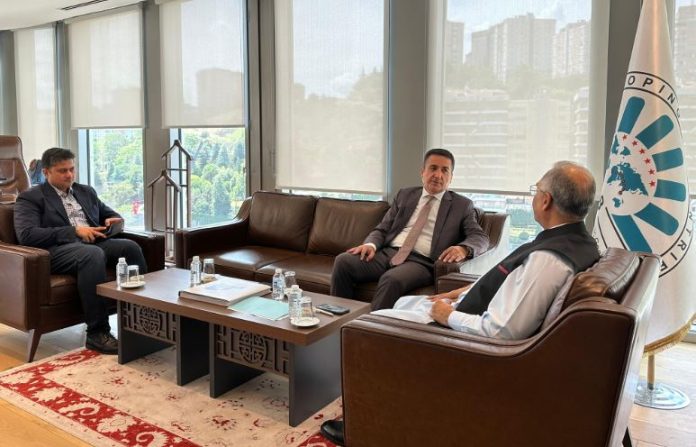
ISTANBUL, JUL 25 /DNA/ – A high-level meeting was held today to discuss the strengthening of agricultural cooperation between the D-8 Organization for Economic Cooperation and African nations.

Ambassador Sohail Mahmood, Secretary General of the D-8, met with a visiting delegation to exchange views on enhancing collaboration in the agri-food sector, with the discussion highlighting the critical need for sustainable agricultural development to feed a combined population of over 1.3 billion people across the D-8 Member States.

The D-8 recognizes agriculture and food security as strategic priorities for economic growth and stability, and during the meeting both sides explored concrete opportunities to bridge institutional frameworks and foster stronger private sector engagement. Key areas of discussion included encouraging cross-border investments in agricultural infrastructure and processing, sharing innovative farming techniques and digital tools to increase yields through technology transfer, and promoting climate-smart agricultural practices to ensure long-term environmental and economic resilience.

The dialogue focused on creating a robust pipeline for cooperation between D-8 Member States, which include Bangladesh, Egypt, Indonesia, Iran, Malaysia, Nigeria, Pakistan, and Turkey, and the broader African continent. By leveraging the D-8’s expertise in industrial agriculture and Africa’s vast agricultural potential, the partnership aims to create new value chains and bolster food self-sufficiency.

Secretary General Mahmood reiterated the D-8’s commitment to multilateralism and economic solidarity, stating that such partnerships are essential to achieving the Sustainable Development Goals, particularly Zero Hunger. Both parties agreed to form technical working groups to map out specific projects, identify investment gaps, and facilitate business-to-business matchmaking events to turn today’s discussions into tangible outcomes.

The meeting concluded with a shared vision for a resilient agricultural future that benefits both regions economically and socially. The D-8 is an intergovernmental organization that aims to improve the developing countries’ position in the world economy, diversify and create new opportunities in trade relations, enhance participation in decision-making at the international level, and improve standards of living.

Security Forces foil terror attack in South Waziristan

Security forces kill four terrorists in D.I.Khan

ISLAMABAD, JUL 25 /DNA/ – A cowardly terrorist attack was attempted on Security Forces Check Post in South Waziristan District by khwarij belonging to Indian-sponsored, Fitna Al Khwarij. Same was successfully foiled killing all four khwarij including a suicide bomber and destroying an explosive laden vehicle.

The khwarij sought to breach the check post security; however, their nefarious designs were checked and decisively foiled by the vigilant and resolute response of security forces. The attackers explosive-laden vehicle was successfully engaged and destroyed outside the perimeters of post killing one suicide bomber in it, which failed to cause any damage.

Displaying unwavering courage and professional excellence, Security personnel engaged the remaining intruders, forcing three khwarij in a nearby compound, who were later neutralized in a deliberate clearance operation with precision; without any casualty on forces side.

Sanitization operation is being conducted to eliminate any other Indian sponsored kharji found in the area, as relentless Counter Terrorism campaign under vision “Azm e Istehkam” (as approved by Federal Apex Committee on National Action Plan) by Security Forces and Law Enforcement Agencies of Pakistan will continue at full pace to wipe out the menace of foreign sponsored and supported terrorism from the country.

Aurangzeb launches FBR Training Programme to boost tax system

Aurangzeb launches FBR Training Programme to boost tax system

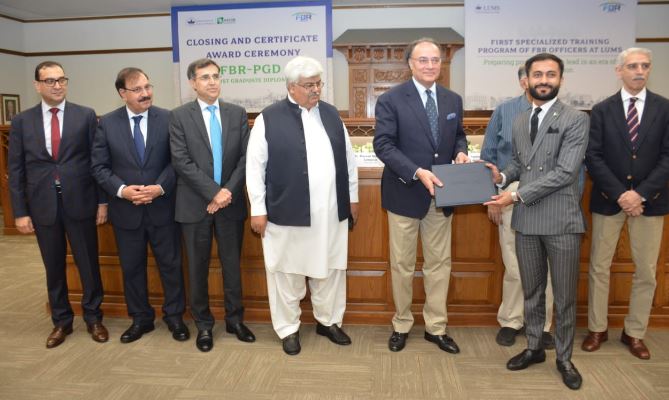
LAHORE, JUL 25 (DNA): Federal Finance Minister Muhammad Aurangzeb said on Saturday that the government, under the leadership of Prime Minister Shehbaz Sharif, is taking vigorous steps to strengthen the country’s financial system through fundamental reforms in the tax system, increasing the efficiency of the Federal Board of Revenue (FBR), promoting a cashless economy and using modern technology.

The government aims to create convenience for the public, restore the confidence of taxpayers and establish a transparent system that can become the basis for Pakistan’s sustainable economic development.

He expressed these views while addressing the closing and certificate distribution ceremony of the FBR’s Postgraduate Diploma Programme here at Lahore University of Management Sciences (LUMS). A large number of faculty members and officers who completed the diploma programme, and FBR Chairman Muhammad Rashid Langrial were present.

The Federal Finance Minister said that he has been receiving full support from Prime Minister Muhammad Shehbaz Sharif at every stage and the government is working in a coordinated manner to improve tax policy and tax administration. He said that a new model is being introduced in the FBR, which will significantly improve the transparency and efficiency of the institution.

Muhammad Aurangzeb, while congratulating the officers who completed the training programme, said that now the responsibility falls on them to bring about positive change in the institution with their professional skills, integrity and modern knowledge. “I am  confident that these officers will play an important role in making the FBR a modern, effective and people-friendly institution,” he added.

When Pakistan completes 100 years of independence in 2047, he said, this programme launched in 2026 would be remembered as a milestone that laid the foundation for institutional reforms and change. He said that where Pakistan would stand in the future depends on the decisions which are being taken today, so all the relevant institutions and officers would have to work with a sense of national responsibility.

The Federal Minister said, the Prime Minister is focusing especially on FBR reforms and promotion of cashless economy so that the economy can be documented, the tax net can be expanded and financial transparency can be promoted. He argued that no country can develop with tax evasion, therefore the government is taking effective steps to eliminate tax evasion. At the beginning of the reform process, he said, Prime Minister had directed that the reform process should start from home first and the process of reform should be initiated from the sugar sector because the Prime Minister’s family business is also associated with this sector.

He said that after this, monitoring and reform measures were also taken in the cement sector.

Muhammad Aurangzeb said that government has detected major cases of sales tax evasion, which has resulted in increased tax collections and benefited the national exchequer. Government is working with various national institutions to develop databases on modern lines so that information exchange can be made effective, tax evasion can be prevented and policy making can be done in a better way, he explained.

He said that modern digital systems and integrated data are the basis of effective tax administration. He stressed that FBR officers would have to take full advantage of modern technology, especially artificial intelligence, because today is the era of AI. He said that keeping oneself constantly updated with changing technology is the need of the hour so that the performance of the institution can be made in line with world standards.

Federal Finance Minister said that FBR officers have a major responsibility to protect the trust of the country’s taxpayers and national resources as the government wanted the public confidence in the FBR to be restored; the industry and market environment to improve and the fruits of reforms to reach the common citizen.

Federal Minister said that the reform measures initiated by the government have started yielding positive results, asserting that this was the first programme of its kind which has been completed in collaboration with the Government of Pakistan and LUMS University. He thanked LUMS University and all the partner institutions and said that with their cooperation a quality training programme was possible, which will play an important role in enhancing the human resource capacity of the FBR.

He urged the officers, who completed the training, to perform their duties with honesty, integrity, professionalism and the spirit of national service and play a full role for the development, prosperity and strong economy of Pakistan. He said, “We all have to work together to build a better, stable and prosperous Pakistan.” Addressing the ceremony, FBR Chairman Muhammad Rashid Langrial said that enhancing the professional skills of FBR officers and training them in line with modern requirements is essential for establishing an effective tax system.

Under this objective, he said, such training programmes are being organized so that the performance of the institution can be further improved. The FBR Chairman congratulated all the officers who succeeded in the programme and said that the officers who could not succeed this time will achieve success with more hard work next year. He was of the view that secret of success lies in continuous hard work and dedication.

Langrial said that FBR is trying to ensure that its officers have such skills and abilities which would benefit not only the institution but also the country. He said that the tax system in the country is being made more effective, modern and transparent, while all the officers are performing their responsibilities with honesty and transparency under an organized system.

He said that he was proud of all the officers of FBR who were playing their role in the development of the country with the spirit of national service. He expressed his determination that all the institutions must be made strong and effective so that Pakistan could move further on the path of development. He stressed that we all have to work together for better governance and establishment of a strong system in the country.

At the end of the ceremony, awards and certificates were distributed among the officers who showed outstanding performance in the course.

IIRIS, Indonesian Embassy, and Mardan University host connectivity seminar

IIRIS, Indonesian Embassy, and Mardan University host connectivity seminar

ISLAMABAD, JUL 25 /DNA/ – The International Institute for Regional and International Studies (IIRIS), in collaboration with the Indonesian Corner, Embassy of the Republic of Indonesia, Islamabad, and Women University Mardan, successfully organized an international seminar titled “Reviving the Silk Road to Connect ASEAN and Pakistan: Unlocking Trade, Tourism, and Investment Potential.”

The seminar brought together diplomats, parliamentarians, academics, researchers, students, and policy experts to explore new avenues for strengthening Pakistan–ASEAN relations through enhanced economic cooperation, tourism, regional connectivity, and educational collaboration.

The event commenced with welcome remarks by Mr. Shafiqat Rasool, President of IIRIS, who warmly welcomed distinguished guests, members of the diplomatic community, scholars, students, and participants from across Pakistan. In his address, he emphasized the growing importance of ASEAN as one of the world’s most dynamic regional organizations and highlighted the immense opportunities for expanding Pakistan’s engagement with Southeast Asia.

Mr. Rasool underscored the significance of the upcoming ASEAN Summit in the Philippines, noting that the evolving regional and global geopolitical landscape presents new opportunities for Pakistan to strengthen partnerships with ASEAN member states. He stressed that deeper cooperation in trade, tourism, investment, education, and people-to-people exchanges would contribute to regional prosperity and sustainable development while reviving the historic spirit of the Silk Road.

The Speaker Dr. Sadia Sulaiman, Associate Professor at Quaid-i-Azam University, Islamabad, delivered the keynote address, emphasizing that effective regional connectivity requires not only sound economic policies but also strong political commitment, visionary leadership, and sustained institutional cooperation. She highlighted the importance of academic institutions and policy research in shaping practical strategies for regional integration.

Addressing the seminar, Guest of Honour  Maulana Nazim Ali Shah, Member of the National Assembly of Pakistan, discussed Pakistan’s growing engagement with ASEAN countries and emphasized the role of parliamentary diplomacy in promoting regional partnerships, economic cooperation, and sustainable development. He reaffirmed Pakistan’s commitment to expanding constructive relations with ASEAN member states.

Representing the Embassy of the Republic of Indonesia, Mr. Rahmat Hindiarta, Minister Counselor and Coordinator for Information, Social and Cultural Affairs, shared Indonesia’s perspective on ASEAN–Pakistan cooperation. He highlighted Indonesia’s continued commitment to strengthening collaboration with Pakistan in trade, investment, tourism, education, cultural exchange, and regional dialogue. He also reaffirmed Indonesia’s support for initiatives that promote greater connectivity between Pakistan and ASEAN.

Speaking Chief Guest, Prof. Dr. Razia Sultana, Vice Chancellor of Women University Mardan, emphasized the critical role of universities in promoting innovation, research collaboration, entrepreneurship, and international partnerships. She noted that higher education institutions serve as vital platforms for building mutual understanding and preparing future leaders capable of advancing regional cooperation.

The seminar was honored by the presence of distinguished members of the diplomatic corps, including:

  • H.E. Admiral (Retd.) Ravindra Chandrasiri Wijegunaratne, High Commissioner of Sri Lanka to Pakistan.
  • H.E. Munsoo Kurrimbaccus, Ambassador of the Republic of Mauritius to Pakistan.
  • Mr. R.A.L. Sewtohul, Deputy Head of Mission, Embassy of Mauritius.
  • Diplomats representing the Embassy of Vietnam in Islamabad.

Their participation reflected the growing international interest in strengthening regional dialogue and expanding multilateral cooperation between Pakistan and ASEAN countries.

During the interactive discussions, participants highlighted the strategic importance of reviving the Silk Road as a platform for enhancing regional connectivity, promoting sustainable tourism, facilitating investment, expanding trade corridors, encouraging cultural diplomacy, and strengthening educational partnerships between Pakistan and ASEAN member states.

The seminar concluded with closing remarks emphasizing that the revival of the Silk Road is not merely a historical aspiration but a practical pathway toward building stronger economic partnerships, expanding regional connectivity, and fostering lasting peace and prosperity across Asia. Speakers reaffirmed that closer collaboration among governments, academia, businesses, and civil society will be essential to unlocking the full potential of ASEAN–Pakistan relations.

The International Institute for Regional and International Studies (IIRIS) reaffirmed its commitment to promoting international dialogue, evidence-based policy research, and academic diplomacy by providing platforms that strengthen regional cooperation and contribute to sustainable development across Asia.

First Test: West Indies win toss, elect to bat first against Pakistan

First Test: West Indies win toss, elect to bat first against Pakistan

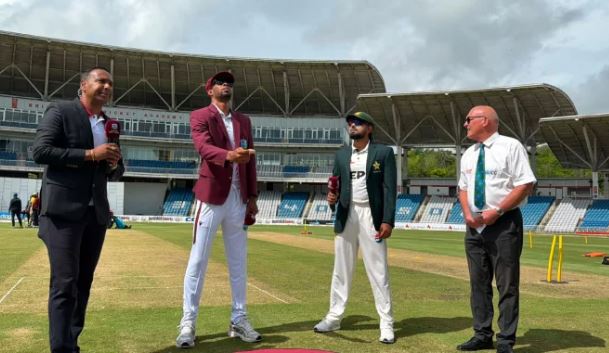
TAROUBA, JUL 25: West Indies won the toss and elected to bat first against Pakistan in the first Test of their two-match series at the Brian Lara Stadium in Tarouba on Saturday.

Playing XIs
Pakistan: Azan Awais, Imam-ul-Haq, Shan Masood, Babar Azam (c), Mohammad Rizwan, Salman Ali Agha, Aamir Jamal, Ali Usman, Khurram Shahzad, Mohammad Ali and Mohammad Abbas.

West Indies: Tagenarine Chanderpaul, Brandon King, Kavem Hodge, Shai Hope, Amir Janhoo, Justin Greaves, Roston Chase (c), Kemar Roach, Jomel Warrican, Shamar Joseph and Jayden Seales.

Pakistan and West Indies have come face-to-face 56 times in Test cricket, and the former dominate the head-to-head record with 22 victories. The Men in Maroon registered 19 triumphs, while 15 fixtures ended in a draw.

Stay Connected

64FansLike
60FollowersFollow

Latest Reviews

Exchange Rates

USD - United States Dollar
EUR
1.15
GBP
1.35
AUD
0.71
CAD
0.71