Home Blog Page 214

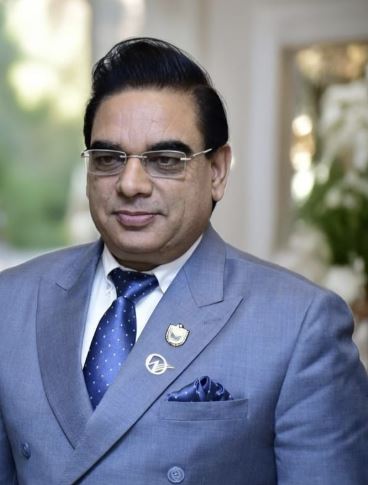
Atta Tarar commends MoIB for countering Afghan Taliban’s disinformation

Atta Tarar commends MoIB for countering Afghan Taliban’s disinformation

ISLAMABAD, Mar 14 (DNA): Federal Minister for Information and Broadcasting, Attaullah Tarar, commended his ministry on Saturday for its consistent efforts in countering the disinformation of the Afghan Taliban regime on social media networking sites.

The Minister’s remarks followed a recent rebuttal by the Ministry of Information and Broadcasting (MoIB) regarding claims made by official Taliban regime accounts on social media.

In a post on X, Tarar noted that another false claim by the Afghan Taliban had been exposed by the MoIB Fact Checker, adding that such allegations lack any foundation.

“On the other hand, all the damages and losses being incurred by the Afghan Taliban and their extension, Fitna Al Khawarij are updated by Ministry of Information with irrefutable pictorial and video evidence regularly,” he noted.

Laylatul-Qadr: A blessed night inspiring faith, mercy and reflection

Laylatul-Qadr: A blessed night inspiring faith, mercy and reflection

By Fakhar e Alam

PESHAWAR, Mar 14: As the holy month of Ramazan enters its final days, mosques across Pakistan are witnessing a deep sense of devotion as Muslims increased worship hoping to find spiritually significant Laylatul Qadr — a night filled with immense mercy, forgiveness and divine blessings.

The holy month of Ramazan is considered a time of spiritual purification and countless blessings for Muslims worldwide. But its last ten nights hold special importance because Muslims believe they include Laylatul Qadr, also called the Night of Power, which is better than a thousand months of worship.

“This night is so significant and honorable that Allah Almighty revealed an entire chapter of the holy Quran about it,” said Professor Dr Ghafoor Ahmed, former Director of the Sheikh Zaid Islamic Centre at the University of Peshawar while talking to APP on Saturday.

He explained that a complete chapter, known as Surah Al-Qadr in Para 30 in holy Quran, highlights the extraordinary value of the blessed night for the believers.

“Worship performes in Laylatul Qadr carries rewards greater than a thousand months,” he said.

“In simple terms, a believer who sincerely prays on this holy night can earn the spiritual reward equivalent to more than 83 years of devotion.”

Dr Ghafoor said it was evident from Islamic teachings that the revelation of the Holy Quran began on this night.

“The holy Quran was revealed during the month of Ramazan as mentioned in Surah Al-Baqarah, while Laylatul Qadr marks the moment when the first divine message was delivered.”

Religious scholars said that on this blessed night, angels led by Hazrat Jabrail AS descend to earth, bringing peace and blessings that continue until dawn.

Because its exact date is not known, Muslims are encouraged to seek it during the odd nights of the last ten days of Ramazan, when mosques remain filled with worshippers late into the night.

Dr Ghafoor said that holy Prophet Muhammad (PBUH) stressed on Muslims to find it during odds nights of last ten days of Ramazan and sought for mercy and forgiveness.

He said it was cleared from hadith that the blessed night can be sought on 21st, 23rd, 25th, 27th, or 29th Ramazan, with immense rewards promised for sincere worship for believers.

The holy Prophet Muhammad (PBUH) emphasized that whoever stands in prayer during this holy night with faith and seeking reward will have all previous sins forgiven.

Religious scholar, Maulana Tila Saddique said the final ten days of Ramazan known as the third Ashra are considered a sacred period when Muslims pray for salvation from hellfire and seek closeness to the God through devotion, charity, prayers and reflection.

He said Islamic teachings divide Ramazan into three spiritual phases as the first ten days symbolize mercy, the second represent forgiveness, and the final ten days to offer freedom from hellfire.

The holy Prophet Muhammad (PBUH) encouraged believers to devote themselves to prayer during these blessed nights and find Layaltul Qadar in odds night of the last ten days of Ramazan.

“The holy Prophet (PBUH) taught that whoever spends Laylat al-Qadr in prayer with faith and sincerity will have their past sins forgiven,” he said.

During the last Ashra, many Muslims observe Itikaf– a practice where worshippers remain in the mosque for last nine to 10 days of Ramazan, dedicating entirely to the prayer, seeking forgiveness and mercy besides achieving the immense blessings of Layaltul Qadar.

“In Itekaf, Muslims try to search Laylatul Qadar by performing prayers in it and recite the holy Quran.”

Tila Saddique said significance of the night can be judged from the fact that the holy Prophet Muhammad (PBUH) increased worship and spent long hours in prayer and remembrance of Allah, and encouraged his family members to participate in worship as well,” he said.

Hazrat Aisha bint Abu Bakr (RA) described that how the holy Prophet (PBUH) would stay awake throughout these blessed nights in devotion.

While prayer remains central to the holy month, scholars said Ramazan also encourages compassion, patience and generosity within society.

As the final nights of Ramazan continued, thousands of worshippers across Pakistan are spending long hours in prayer, hoping to find Laylatul Qadr.

For millions of Muslims in world including Pakistan, these sacred nights offer a rare opportunity for forgiveness, reflection, mercy and renewal of faith.

Believers are encouraged to increase prayers, recite the holy Quran, seek forgiveness and help those in need in the hope that their prayers, fasts and Itikhaf will be accepted and their lives transformed by the blessings of this extraordinary night granted only for the followers of Islam.

China urges Pakistan, Afghanistan to resolve tensions through talks, not force

China urges Pakistan, Afghanistan to resolve tensions through talks, not force

BEIJING/ISLAMABAD, MAR 14: Chinese Foreign Minister Wang Yi told his Afghan counterpart Amir Khan Muttaqi in a phone call that disputes between Afghanistan and Pakistan should be resolved through dialogue and consultation, not force, the foreign ministry said in a statement published on Friday.

Wang urged both sides to remain calm and exercise restraint, hold face-to-face talks as soon as possible, seek an immediate ceasefire and address differences through dialogue, according to the statement.

The further use of force would only complicate the situation and intensify tensions, Wang said.

The ministry’s statement came after Pakistan, during the night of March 12-13, bombed a fuel depot near Afghanistan’s Kandahar airport, stepping up the neighbours’ worst conflict in years, despite China’s efforts to mediate.

Security sources released video footage showing Pakistani military strikes on oil dump sites at Kandahar airfield.

According to security officials, the Pakistan Army targeted and destroyed oil storage facilities at the airfield that were being used by the Afghan Taliban and terrorist groups to support their operations.

The action was carried out under Operation Ghazab lil-Haq. Security sources have pledged to continue operations until the set objectives are achieved.

Wang and Muttaqi also exchanged views on the situation in the Middle East involving hostilities between US-Israel and Iran, the communique said.

Wang told Muttaqi, according to the statement, that Beijing is willing to work with the international community, including Afghanistan, to bring peace to Iran.

Operation Ghazab lil-Haq
Since the Taliban regained control of Afghanistan in 2021, Pakistan has seen an increase in cross-border terrorist activity, particularly in the provinces of KP and Balochistan, which share a border with Afghanistan.

Amid the rising terror incidents, Pakistan has launched “Operation Ghazab lil-Haq” during which over 650 Afghan Taliban fighters have been killed in Pakistan’s strikes along the border and within the neighbouring country.

According to Information Minister Attaullah Tarar, over 855 Afghan Taliban fighters have been injured, 243 checkposts destroyed, 42 captured, and 219 tanks, armoured vehicles, and artillery guns eliminated.

Before the operation, Pakistan had also struck seven terrorist camps and hideouts belonging to Fitna al-Khawarij (FAK), its affiliates and the Daesh-Khorasan along the Pakistan-Afghanistan border in response to recent suicide attacks.

The airstrikes were carried out in Nangarhar, Paktika and Khost provinces of Afghanistan, the security sources said, adding that more than 80 militants were killed in the airstrikes.

The two countries, back in October 2025, were also engaged in border clashes after the Afghan Taliban and militants launched unprovoked attacks against Pakistan’s border posts.

The resulting clashes led to the killing of over 200 Taliban and affiliated militants, while 23 Pakistani soldiers were martyred defending the motherland.

However, despite many rounds of talks, both countries failed to reach an agreement due to the Afghan Taliban regime’s reluctance to take action against terrorist outfits.

ICCI President urges govt to take proactive measures to shield economy amid Middle East conflict

ICCI President urges govt to take proactive measures to shield economy amid Middle East conflict

ISLAMABAD, MAR 14: /DNA/ – President Islamabad Chamber of Commerce and Industry (ICCI) Sardar Tahir Mehmood has urged the government to take timely and proactive measures to safeguard Pakistan’s economy in the wake of the evolving situation in the Middle East, which may have far-reaching implications for trade, remittances and overall economic stability.

 In a statement issued here on Saturday, he said that the Middle East is a vital economic partner for Pakistan, particularly in terms of energy supplies, employment opportunities for Pakistani workers and the inflow of foreign remittances. Any prolonged instability in the region could potentially disrupt economic activities and affect the steady flow of remittances sent by millions of overseas Pakistanis working in Middle Eastern countries.

Sardar Tahir Mehmood noted that remittances play a critical role in strengthening Pakistan’s foreign exchange reserves and supporting the national economy. Therefore, the government should remain vigilant and adopt contingency planning to minimize any possible economic repercussions arising from the situation.

The ICCI President emphasized that the government should consider utilizing the Export Development Fund (EDF) to support exporters, enhance trade promotion activities and strengthen Pakistan’s export sector during uncertain global economic conditions. He said that strategic use of the fund could help exporters explore new markets, improve competitiveness and sustain export growth.

He further stressed the need to ensure uninterrupted energy supplies, maintain strategic reserves of petroleum products and provide facilitation to industries so that economic activities continue without disruption.

Sardar Tahir Mehmood also highlighted that strengthening the export sector and supporting local industries would help offset any potential decline in remittances and external economic pressures. He called for close coordination between the government and the business community to develop policies that protect economic stability and promote sustainable growth.

He reaffirmed that the Islamabad Chamber of Commerce and Industry would continue to work closely with the government and relevant stakeholders to address economic challenges and safeguard the interests of the business community and the national economy.

BISP chairperson greets NPC new office-bearers

BISP chairperson greets NPC new office-bearers

DNA

Islamabad: March 14, 2026 — Senator Rubina Khalid, Chairperson of the Benazir Income Support Programme (BISP), has extended her heartfelt congratulations to the newly elected office bearers of the National Press Club (NPC) Islamabad following their recent elections.

In her message, Senator Rubina Khalid specifically congratulated Abdul Razzaq Sial on his election as President and Rao Furqan (Dr. Furqan Rao) on becoming the elected Secretary. She also felicitated Finance Secretary Abid Abbasi, Vice Presidents Usman Khan, Bashir Chaudhry, and Ihtisham-ul-Haq, as well as Joint Secretaries Awn Sherazi, Sheraz Gardazi, and Javed Bhagat.

She further congratulated Sahrish Qureshi on her election as Vice President (Women) and Shakeela Jalil on becoming the elected Joint Secretary (Women).Senator Rubina Khalid emphasized the vital role of a free and strong press in strengthening democracy, stating: “A free and strong journalism is the strength of democracy.

“She acknowledged the journalist community’s significant contribution to promoting democratic values and expressed hope that the new leadership would effectively address the issues faced by journalists.”Journalists are playing an important role in advancing democratic values,” she said, adding, “It is hoped that the new leadership will resolve the problems of journalists.

“The National Press Club elections, held recently, marked a notable shift as the Democrats Panel secured key positions, including the presidency and secretaryship, ending the long-standing dominance of the Journalist Panel in the club’s affairs.

Senator Rubina Khalid’s message underscores the importance of independent media in Pakistan’s democratic framework and highlights cross-institutional support for the newly elected NPC body.

World Powers: Burning Oil Fields are Burning Our Future

World Powers: Burning Oil Fields are Burning Our Future

Prof Dr Shujaul Mulk Khan

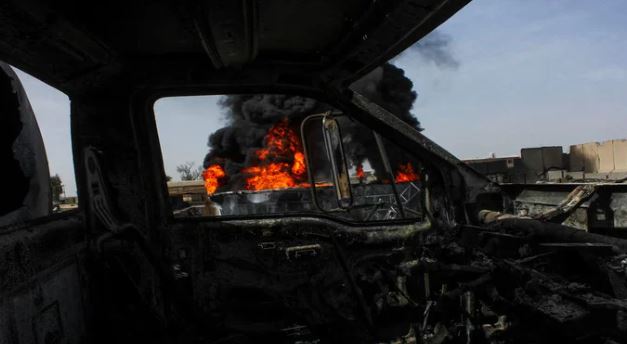
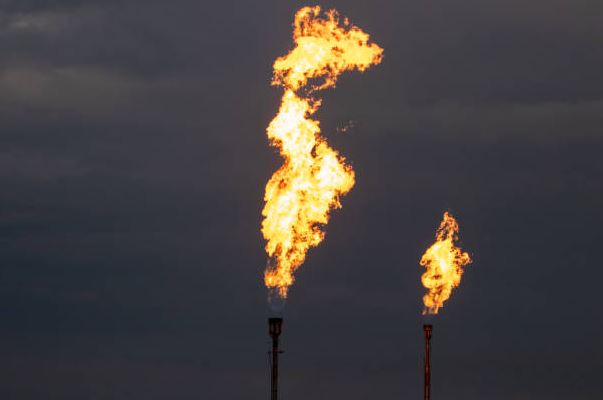
It’s a scene that obsess the imagination: endless rivers of black smoke twisting into the sky, flames consuming everything in their path, and families fleeing villages as if the world itself were on fire. From the deserts of the Middle East to the oil-rich plains of Africa, burning oil fields have become a tragic pattern of our times – a stark warning that the pursuit of power and profit is costing us our planet, our health, and our future.

The devastation is immediate and undeniable. Areas near burning oil fields are choked with toxic smoke, their skies darkened by thick clouds of soot. Children cough, eyes watering, as the acrid air makes it hard to breathe. Farmers watch helplessly as their crops wither under layers of pollution; their livelihoods destroyed in an instant. Rivers turn black, poisoned with oil and chemicals, while animals flee or die, unable to escape the flames. The Kuwaiti oil fires of 1991 were once the world’s most notorious example, but today, similar tragedies are unfolding quietly, away from headlines, leaving scars that may never heal.

Yet these fires are more than environmental disasters – they are the human cost of global politics and energy greed. Oil has long been a symbol of power. Nations that control it wield influence over economies, markets, and militaries. This power often comes at a deadly price. During conflicts, oil fields are burned deliberately – strategically destroyed to deny resources to enemies, to gain leverage in negotiations, or simply as a tool of war. But in these calculated acts, civilians pay the highest price. Families lose their homes, schools, and hospitals. Children grow up with lifelong respiratory illnesses, and communities are forced to abandon the only land they have ever known.

The consequences do not stop at borders. The smoke from these fires drifts across continents, bringing disaster to places far removed from the conflict zones. Burning oil fields release massive amounts of carbon dioxide, methane, and black carbon into the atmosphere, accelerating global warming. Scientists warn that each barrel of oil burned in conflict-driven fires contributes directly to the rising global temperatures that are already destabilizing weather systems around the world. Droughts intensify in East Africa, heatwaves scorch Europe and South Asia, and hurricanes grow stronger in the Atlantic. The flames that devastate a single region are, in effect, threatening the entire planet.

The long-term impacts of these fires on global warming are profound. Climate change is not a distant threat; it is unfolding here and now. Rising temperatures melt glaciers and polar ice caps, raising sea levels and threatening coastal cities from New York to Mumbai. Low-lying islands are already at risk of disappearing, and millions of people could become climate refugees in the coming decades. Ocean currents are disrupted, altering rainfall patterns and making storms more frequent and severe. Wildfires rage in regions that were once temperate, while deserts expand, rendering fertile land barren. Every flame that consumes an oil field contributes to a chain reaction that stretches far beyond the immediate crisis, threatening the stability of ecosystems, economies, and human societies globally.

The human cost cannot be overstated. Communities living near oil fields face chronic health risks from exposure to toxic smoke and contaminated water. Children are particularly vulnerable, suffering from asthma, developmental delays, and other long-term health problems. Beyond physical health, these communities often experience economic and social disruption. Farms and fisheries—the traditional lifelines of local populations—are destroyed, forcing families to migrate in search of safety and livelihood. This displacement fuels further instability, creating a cascade of humanitarian crises that are often overlooked in discussions of global energy security.

Consider the story of a mother in northern Iraq, her home reduced to ashes by an oil fire set during a skirmish. She holds her child tightly, struggling to breathe as soot and smoke fills the air. This is not a singular narrative; it is repeated thousands of times wherever oil fields are caught in the crossfire of human ambition. Behind every plume of smoke are real lives, real families, and real futures at stake.

The fires themselves are also a warning about humanity’s collective choices. For decades, global energy policy has prioritized short-term economic and political objectives over long-term sustainability. Fossil fuels remain the primary energy source for transportation, industry, and electricity generation worldwide. Even as renewable energy technologies have matured, the global economy remains tethered to oil, creating a strategic imperative for nations to control these resources at almost any cost. This reliance drives conflicts and entrenches destructive practices, such as environmental sabotage during war and reckless extraction methods in peacetime. The legacy of these choices is clear: rising global temperatures, collapsing ecosystems, and an uncertain future for the next generations.

Addressing the crisis of burning oil fields requires a multi-pronged approach. First, the international community must strengthen mechanisms to protect critical energy infrastructure during conflicts and enforce accountability for deliberate environmental destruction. Second, nations must accelerate the transition to renewable energy. Solar, wind, geothermal, and green hydrogen technologies are no longer experimental; they are viable, scalable alternatives that reduce the world’s strategic dependence on oil while mitigating environmental damage. Third, energy policy must integrate climate considerations into every decision, from production and consumption to conflict prevention and reconstruction. Only by aligning geopolitical strategy with sustainability can nations prevent the recurrence of catastrophic oil fires and the global damage they bring.

Public awareness and activism also play a critical role. The images of burning oil fields, often circulated through media and social platforms, are powerful symbols that can drive global demand for change. Citizens, environmental organizations, and civil society groups must hold governments and corporations accountable for energy practices that threaten both the climate and human life. Collective pressure has historically driven technological innovation, legislative reform, and international agreements—proof that global awareness can translate into tangible action.

The long-term global consequences extend beyond immediate human suffering. Burning oil fields amplify climate change, which, in turn, triggers a cascade of crises: rising seas swallow coastal cities, extreme heatwaves endanger lives and food systems, storms grow more powerful, and water scarcity intensifies conflicts over diminishing resources. Entire economies could collapse under the weight of climate-related disasters, from flooding of major ports to the loss of agricultural productivity. For many countries in the Global South, the impact is particularly severe, as limited resources constrain their ability to adapt to a rapidly changing climate. In this sense, burning oil fields are not merely a local catastrophe – they are a forewarning of a global emergency that demands immediate, collective action.

And yet, despite the urgency, the world continues down the same path. Oil remains central to modern life – from the fuel in our cars to the energy that powers industries and homes. This dependence gives oil-producing regions immense strategic importance, often turning them into battlegrounds where human lives and the environment are treated as expendable. The result is a cycle of conflict, destruction, and displacement: fires ignite, families flee, ecosystems collapse, and world powers move on, leaving devastation behind.

Ultimately, the flames are both literal and metaphorical. They are consuming lives today and warning of infernos that may engulf the planet tomorrow if we fail to act. Every plume of smoke is a cry for humanity, for foresight, for a chance to choose life over greed. They remind us that the choices of world powers are not abstract political maneuvers – they are moral decisions that will shape the health, safety, and survival of generations to come.

We can no longer afford complacency. Protecting our future requires leadership that values foresight over short-term gain, sustainability over dominance, and humanity over profit. Nations must commit to reducing dependence on oil, investing in renewable energy, and safeguarding both people and ecosystems from the destructive consequences of conflict. Citizens, too, must demand change, because each individual action – whether supporting clean energy, advocating for climate policies, or raising awareness – can contribute to altering this trajectory.

The burning oil fields are more than news stories – they are a mirror reflecting the unsustainable, human cost of our energy choices. If the world continues to treat oil as a weapon or a tool of dominance rather than a resource to manage responsibly, these fires are only the beginning. Our future is at stake. Every moment of inaction allows the smoke to spread further, the flames to climb higher, and the damage to grow deeper.

The time to act is now. The flames that consume oil fields today are burning our air, our health, and our planet. They are a call to rethink energy, prioritize life over power, and ensure that the mistakes of today do not consume the world of tomorrow. If we fail, it will not be history that judges us – it will be our children, our grandchildren, and the planet that sustains them.

The story of burning oil fields is ultimately the story of us all. It is about how we treat the planet, how we value human life, and whether we choose to rise above short-term gains to secure a future worth living. These fires are a wake-up call, and ignoring them is no longer an option. The world powers that hold the keys to oil reserves also hold the power to change the trajectory of the planet. The question is simple: will they act responsibly, or will they let the flames consume our future?

Petroleum dealers announce nationwide strike after Eid

Petroleum dealers announce nationwide strike after Eid

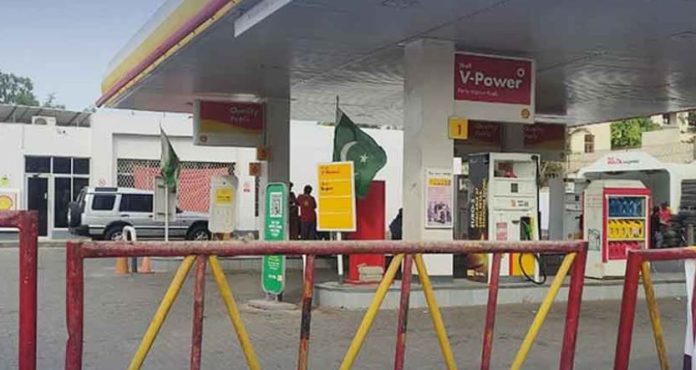
ISLAMABAD, MAR 13: Association threatens indefinite shutdown from March 26 if profit margins not increased. The Petroleum Dealers Association has announced a nationwide strike after Eid, warning that fuel pumps across the country may shut down if their profit margins are not increased.

The association says it will begin an indefinite strike from March 26 if the government fails to address their demands.

According to Petroleum Dealers Association leader Tariq Hassan, dealers will go on an indefinite nationwide strike starting March 26 if their margins are not revised.

He said petroleum dealers have repeatedly raised the issue with authorities but have not received a response despite promises made two years ago.

The association says the lack of action has left fuel dealers struggling to manage rising operational costs.

Rs55 price increase ‘embezzlement’
The association has described the Rs55 increase in petroleum prices as “embezzlement”, demanding a thorough investigation into the matter.

Petroleum dealers claim that billions of rupees were earned by oil marketing companies following the price increase.

They have urged authorities to take action against those who allegedly stocked oil before the Rs55 hike, arguing that some companies gained unfair financial advantages.

Rising fuel prices increase operational costs
Tariq Hassan said that the cost of purchasing fuel for dealers has increased significantly due to the Rs55 per liter rise in petroleum prices.

He emphasized that while fuel prices continue to rise, the dealers’ profit margin has remained unchanged, making it difficult for petrol pump owners to cover operational expenses.

Also Read: Petrol price in Pakistan likely to rise again today

The association insists that their margin was promised to be increased two years ago, but the matter has not yet been resolved.

The association also raised concerns about supply issues. According to Tariq Hassan, oil marketing companies have suddenly reduced the fuel quota for petrol pumps by half, creating further difficulties for dealers.

He said the move has added pressure on pump operators who are already facing financial challenges due to higher purchase costs.

Dealers demand investigation
The Petroleum Dealers Association has called on authorities to investigate the recent petroleum price increase and review the margin policy for dealers.

If their demands are not met, the association has warned that the nationwide strike after Eid could disrupt fuel supply across the country.

Pakistan aims to strengthen trade ties with ASEAN, Africa

Pakistan aims to strengthen trade ties with ASEAN, Africa

ISLAMABAD, Mar 13 (DNA): Prime Minister’s Youth Program for Overseas Pakistani Business and Trade Focal Person, Shahryar Memon, hosted a grand Iftar dinner at his residence in Islamabad, bringing together parliamentarians, ambassadors, diplomats from various countries, and prominent political and business leaders.

The event witnessed the participation of members of the National Assembly and Provincial Assembly, along with a large number of representatives from the business community, investors, and socio-political figures. The gathering served as a platform for discussions on promoting investment in Pakistan, enhancing business opportunities for overseas Pakistanis, and empowering the country’s youth economically.

Speaking to the media on the occasion, Chairman of the Prime Minister’s Youth Programme (PMYP), Rana Mashhood Ahmed Khan, stated that the event was not merely a religious gathering but also an important opportunity to bring together foreign diplomats and the local business community. He said the initiative aimed to strengthen bilateral business and trade relations between Pakistan and other countries.

Rana Mashhood emphasized that Pakistan needs to connect more effectively with the global supply chain. For this purpose, he said, local business chambers must be linked with international markets. He reiterated that the government is committed to an export-led growth policy and highlighted the crucial role of youth in promoting e-commerce and modern business practices.

He further stated that youth startups and Small and Medium Enterprises (SMEs) are currently among the government’s top priorities. The government, he added, is determined to provide all possible support to young entrepreneurs to enhance their capabilities and enable them to succeed in the modern business environment. He also highlighted the importance of women entrepreneurs in today’s economy, stressing that empowering women to participate fully in economic activities is essential for national development.

Addressing the gathering, Shahryar Memon said that encouraging young people to enter the business sector is essential to increasing Pakistan’s exports and attracting foreign investment. He noted that along with export diversification, Pakistan must also focus on strengthening regional trade, particularly with Central Asian and South Asian countries.

He added that Pakistan holds a vital position in global and regional trade due to its strategic location. Ports in Karachi, including Gwadar, play an important role in connecting regional countries to international markets, he said.

Shahryar Memon also highlighted the significance of the presence of ambassadors from ASEAN countries, the Middle East, Central Asia, Africa, Europe, and South Asia at the event. He said strengthening economic and trade ties with these regions is crucial for Pakistan’s economic growth.

On the occasion, Dean of the Diplomatic Enclave and Ambassador of Turkmenistan to Pakistan Atadjan Movlamov, Ambassador of Malaysia to Pakistan Azhar bin Mazlan, Ambassador of Tajikistan to Pakistan Yusuf Sharifzada Tahior, as well as ambassadors from Vietnam, Zimbabwe, Syria, Nepal, Rwanda, and Kenya, along with several European and Western diplomats, addressed the gathering.

The diplomats described Pakistan as an emerging market with significant potential due to its strategic geographical location. They said Pakistan could play a central role in global trade in the future, particularly in sectors such as agriculture, textiles, and information technology. They also noted that as a gateway to Central Asia, Pakistan holds great importance for regional and international trade.

President of the Rawalpindi Chamber of Commerce and Industry, Shaukat, also attended the event and emphasized that strengthening connections with the global supply chain is essential for advancing Pakistan’s economy. He noted that expanding regional trade would play a key role in achieving sustainable economic growth.

Among those present at the event were Federal Minister Rana Qasim Noor, Mubarik Zaib, Senator Waqar Ahmed Khan, Malik Habib, Senator Abdul Qayyum Soomro, Member of the National Assembly and PML-N leader Anjum Aqeel, and representatives from the Islamabad Chamber of Commerce and Industry.

Third Ashra of Ramazan: A golden time for Muslims to seek freedom from hellfire

Third Ashra of Ramazan: A golden time for Muslims to seek freedom from hellfire

By Fakhar e Alam

PESHAWAR, Mar 13: As the holy month of Ramazan has entered its final ashra, mosques across Peshawar and other cities of Pakistan filled with worshippers seeking forgiveness, freedom from hellfire and spiritual renewal.

The third Ashra (last ten days) of Ramazan is regarded as a sacred period for Muslims to pray for salvation from hellfire and draw closer to Allah Almighty through devotion, worship, alms, itikaf and charity.

Fasting during Ramazan, followed by the Muslims across the world, is among the five pillars of Islam alongside belief in the Oneness of Allah, prayer, charity and pilgrimage.

As the entire holy month is filled with numerous blessings, religious scholars said the final ten nights hold a unique spiritual significance for Muslims due to existence of Laylatul Qadar among it.

According to Islamic tradition, Ramazan is divided into three Ashras as the first is for mercy, second for forgiveness, and the last for freedom from hellfire.

Religious scholar Maulana Tayyab Qureshi, Central Khateeb of Khyber Pakhtunkhwa, said the holy Prophet Muhammad (peace be upon him) increased his worship during the last ten days of Ramazan.

“The Prophet (PBUH) would spend these blessed nights in prayer, remembrance of Allah and observed Itikaf,” he told APP. “He also encouraged his family members to wake up and join in worship especially during last 10 days of Ramazan.”

Narrated by Hazrat Aisha bint Abu Bakr (RA) described how the holy Prophet (PBUH) intensified his devotion in the last days of Ramazan, staying awake at night and dedicating himself fully to prayer.

One of the most significant practices during the third Ashra is Itikaf, a spiritual obligation in which Muslims stay in the mosque solely for worship seeking forgiveness and freedom from hellfire.

The holy Prophet (PBUH) regularly observed Itikaf during the last ten days of Ramazan and after his passing, his wives continued this religious custom.

During this period, worshippers spend their time in prayer, recitation of the Quran, avoiding worldly desires and seeking closeness to Allah.

Maulana Tayyab said in last ashra there is a blessed night of Laylat al-Qadr, the Night of Power.

The Quran described it as a blessed night better than a thousand months, when angels descend and divine mercy fills the earth until dawn.

The religious scholars explained that worship performed during this holy night carries rewards more than 83 years of devotion.

Narrated by Abu Hurairah (RA), the Prophet (PBUH) said that whoever spends Laylatul Qadr in prayer with faith and sincerity for the forgiveness of their past sins.

Muslims are therefore encouraged to seek the blessed night during the odd nights of the final ten days of Ramazan.

Beyond worship, Ramazan also taught patience, compassion and generosity, said

Professor Dr Hifazatullah, Chairman of Arabic Studies at Islamia College Peshawar, adding the concept of Sabr (patience) was emphasized repeatedly in Islamic teachings.

“The Quran mentions patience dozens of times,” he said, adding, “Believers are encouraged to endure hardships with faith and patience, trusting that Allah’s wisdom guides every situation.”

Medical experts also reiterated that fasting during Ramazan has great psychological benefits. Renowned psychiatrist Dr Khalid Mufti, former principal of Khyber Medical College, said research indicated that fasting promotes emotional balance, control anger, minimize depression, anxiety and create self-discipline as well as empathy.

“Ramazan cultivates compassion, unity, friendship, mutual coexistence and empathy that continue long after the month ends.”

He said charitable acts become more visible during Ramazan, particularly in Peshawar’s historic Qissa Khwani Bazaar, where community volunteers used to arrange free meals for fasting individuals till last day of the holy month.

For the past 12 years, local philanthropist Shahid Khan is arranging an Iftar Dastarkhwan, serving meals to the poor and also invites members of minority communities to join in last ashra of Ramazan.

Religious scholars emphasized that the third Ashra was not only about worship but also about personal transformation by encouraging Muslims to help the needy, strengthen bonds within society and cultivate patience and steadfastness.

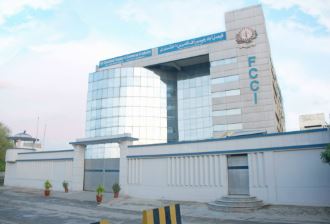
FCCI president stresses liaison between LSB, BIC

FCCI president stresses liaison between LSB, BIC

FAISALABAD, Mar 13: President Faisalabad Chamber of Commerce & Industry (FCCI) Farooq Yousaf Sheikh on Friday stressed the need for comprehensive and productive liaison between Lyallpur School of Business (LSB) and Business Incubation Centre (BIC) of Government College University Faisalabad (GCUF) to educate students about the success stories of the local business tycoons who started their career from scratch and raised their industrial and business empires.


He was talking to a four-member delegation from GCUF who visited FCCI under the leadership of Prof.Dr.Mohsin Bashir, Director LBS and BIC.


He said that the students must be equipped with knowledge of local entrepreneurs so that it could be included in the syllabus that how these business tycoons utilized their God-gifted qualities of entrepreneurship to become icons for the next generation.


Farooq Yousaf Sheikh said that bookish knowledge could yield positive results only when it is practically utilized. He assured that he will suggest leading businessmen to regularly visit Lyallpur Business School and explain their practical experience and success stories which could also be documented.


He also appreciated the objective of BIC and said that he would visit this innovative facility along with other businessmen to encourage young students and inspire them to excel in the field of business and industry.


Prof.Dr.Mohsin Bashir,Director Lyallpur Business School briefed the President FCCI about the aims and objectives of these institutions and said that currently 1500 students are enrolled in Lyallpur Business School and BIC.


He said that students from other faculties and departments propose 400 research ideas every year out of which selective, saleable and profitable projects were picked for students.


“Students are encouraged to start work on these projects in BIC and when these become mature,the industrialists and entrepreneurs are invited to evaluate their projects for their adoption”,he added.


Director BIC said that we want to teach the success stories of local entrepreneurs which could also be made an integral part of their syllabus.


Prof.Dr.Sharjeel Saleem,Dr.Rizwan Bashir and Dr. Farooq Rehan from BIC were also present during this discussion.

Stay Connected

64FansLike
60FollowersFollow

Latest Reviews

Exchange Rates

USD - United States Dollar
EUR
1.14
GBP
1.34
AUD
0.70
CAD
0.71