Home Blog Page 213

Pakistan win toss, opt to bowl first against Bangladesh in ODI series decider

Pakistan win toss, opt to bowl first against Bangladesh in ODI series decider

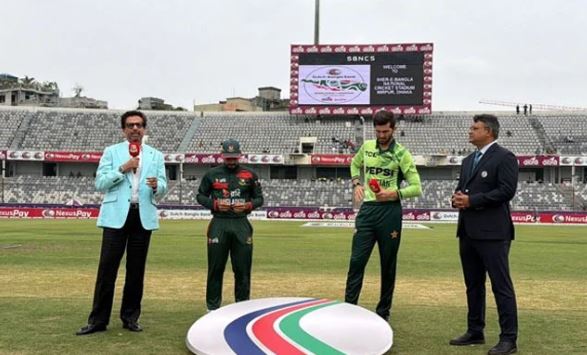
DHAKA, MAR 15: Pakistan on Sunday won the toss and decided to bowl first against Bangladesh in the third and final ODI of the three-match series currently levelled 1-1.

Speaking at the toss, Pakistan captain Shaheen Shah Afridi said that Shamyl Hussain and Hussain Talal were injured and therefore couldn’t be part of today’s playing XI.

Talat suffered a shoulder injured in the second ODI when he attempted to stop a backfoot punch by Litton Das off Mohammad Wasim Jr from reaching the deep cover boundary and crashed into the advertising holding during the effort.

Meanwhile, Shamyl, as per the team’s spokesperson, has suffered from a neck strain.

Two players are making their debut for the national side today namely Ghazi Ghori and Saad Masood.

Pakistan had beat Bangladesh by 128 runs in the rain-affected second ODI at the Sher-e-Bangla National Cricket Stadium on Friday.

Set to chase a revised target of 243 in 32 overs, instead of 275 in 50 overs, the home side could accumulate 114 before getting bowled out in 23.3 overs.

Meanwhile in the first ODI, the hosts routed the visitors and secured an eight-wicket win in the first ODI.

The hosts comfortably chased Pakistan’s 115-run target, losing just two wickets in 15.1 overs, powered by a stellar performance from the Tigers’ top order.

Playing XIs
Pakistan: Sahibzada Farhan, Maaz Sadaqat, Ghazi Ghori, Mohammad Rizwan (wk), Salman Ali Agha, Abdul Samad, Saad Masood, Faheem Ashraf, Shaheen Shah Afridi (c), Haris Rauf, Abrar Ahmed.

Bangladesh: Mehidy H Miraz (c), Saif Hassan, Tanzid Hasan Tamim, Najmul Hossain Shanti, Tawhid Hridoy, Litton Kumer Das, Afif Hossain, Mustafizur Rahman, Rishad Hossain, Taskin Ahmed, Nahid Rana.

Oil shock from ME war may cost Pakistan up to 1.5% of GDP, warns BMP

Oil shock from ME war may cost Pakistan up to 1.5% of GDP, warns BMP

Anjum Nisar says economic structure vulnerable to fluctuations in global energy markets


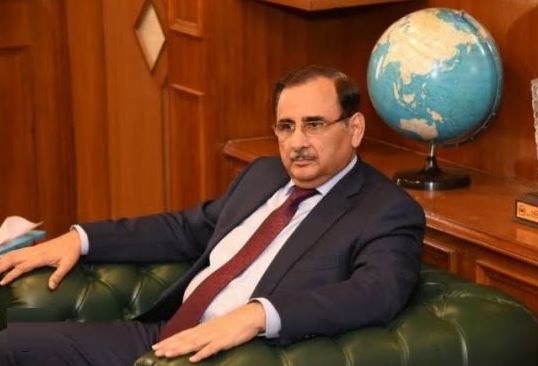
ISLAMABAD, MAR 15 /DNA/ – The Federation of Pakistan Chambers of Commerce and Industry’s Businessmen Panel (BMP) has warned that rising global oil prices amid escalating regional tensions could pose serious risks for Pakistan’s fragile economic recovery and may significantly increase pressure on the country’s external sector.

BMP Chairman and former FPCCI president Mian Anjum Nisar said that if the regional conflict continues and international oil prices remain around $100 per barrel or move higher, Pakistan could face a major economic setback in the coming months. According to economic assessments being discussed internationally, the country’s gross domestic product could suffer a loss of around one to one and a half percent if the crisis persists for a prolonged period.

He noted that Pakistan’s economic structure remains highly vulnerable to fluctuations in global energy markets because the country depends heavily on imported petroleum products and liquefied natural gas to meet its energy needs. Any sustained rise in oil prices therefore directly affects Pakistan’s import bill, inflation rate and overall economic stability.

Mian Anjum Nisar explained that the most immediate threat lies in the external sector. Pakistan could face an additional burden of nearly $12 to $14 billion over the next year as a result of higher petroleum imports, increasing shipping charges and rapidly rising insurance premiums linked to geopolitical risks in the region. The import bill for petroleum products alone could increase by 25 to 30 percent if global prices continue to climb.

He pointed out that Pakistan’s annual oil import cost rises sharply with every increase in international crude prices. Economists estimate that for every $10 increase in the global price of oil, Pakistan’s yearly import bill increases by around $1.5 billion. If prices remain about $20 above the earlier baseline of $80 per barrel, the economy could immediately face an additional burden of about $3 billion.

According to the BMP chairman, such developments would widen Pakistan’s current account deficit, which had recently come down to around $2 billion due to strict economic management and reduced imports. However, if oil prices remain high and external pressures intensify, the deficit could again expand to nearly $6 to $7 billion in the next fiscal year, placing renewed pressure on foreign exchange reserves.

Mian Anjum Nisar also expressed concern about the possible impact on overseas remittances, which remain a vital source of foreign exchange for Pakistan. Nearly 55 percent of Pakistan’s remittances originate from Middle Eastern countries that are closely tied to the oil economy. If regional instability disrupts oil exports or slows economic activity in Gulf states, demand for foreign labour may decline.

He warned that in such situations expatriate workers from countries like Pakistan and Bangladesh are often among the first to be affected. A slowdown in employment opportunities in the Gulf could potentially reduce Pakistan’s remittance inflows by an estimated $2 to $4 billion annually, further complicating the country’s balance of payments situation.

The BMP leadership also cautioned that higher oil prices could quickly translate into rising inflation in Pakistan. The impact of expensive fuel spreads across the entire economy, beginning with higher petrol and diesel prices and then moving through transport costs to increase the prices of food, manufactured goods and essential services.

Pakistan had recently succeeded in bringing inflation down to around seven percent earlier this year after experiencing extremely high price levels in the past. However, the latest global developments have already started pushing inflation back into double digits. If oil prices move toward the $120 levels witnessed during the Russia-Ukraine conflict, Pakistan could once again face severe inflationary pressures.

Mian Anjum Nisar noted that rising fuel costs would also slow down economic activity across several major sectors of the economy. The transport sector, which represents roughly ten percent of the national economy, would likely experience reduced demand as higher fuel costs make travel and freight movement more expensive.

Industrial activity could also come under strain, particularly in energy-intensive sectors such as fertiliser, cement and textiles. Disruptions in LNG supplies and rising fuel costs could force factories to cut production or increase prices, weakening the competitiveness of Pakistani exports.

Agriculture may also be affected if fertiliser production declines or becomes more expensive due to energy shortages. A reduction in fertiliser availability or rising input costs could lower agricultural productivity during the next crop cycle, which would further add to food inflation and economic pressure on rural communities.

The BMP chairman emphasized that the current situation highlights the urgent need for Pakistan to reduce its dependence on imported fuels and accelerate the development of indigenous energy resources. Pakistan possesses several domestic energy sources including hydropower, nuclear energy, local coal, domestic gas as well as wind and solar potential.

However, he said that many of these projects cannot contribute fully to the national energy mix due to limitations in transmission infrastructure and delays in policy implementation. Expanding transmission networks and integrating these domestic resources into the national grid could help Pakistan gradually reduce its reliance on costly imported energy.

Mian Anjum Nisar said the present crisis, though challenging, could also serve as an opportunity for policymakers to rethink the country’s long-standing import-driven energy model. By prioritizing domestic energy development and improving efficiency in energy consumption, Pakistan could strengthen its economic resilience against future global shocks.

Iconic Monal restaurant reopens with grand fanfare at Imarat Downtown

Iconic Monal restaurant reopens with grand fanfare at Imarat Downtown

By Saifullah Ansar

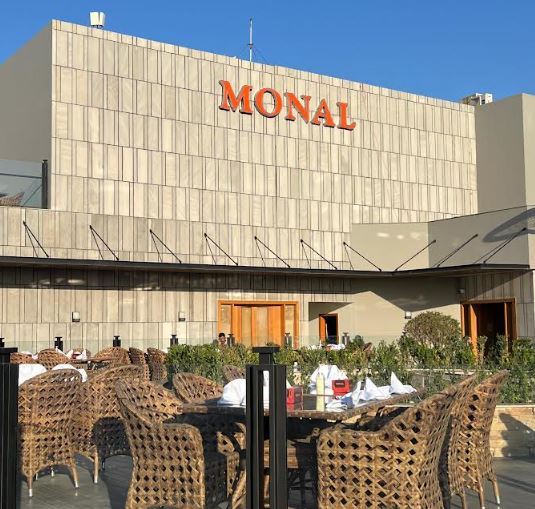
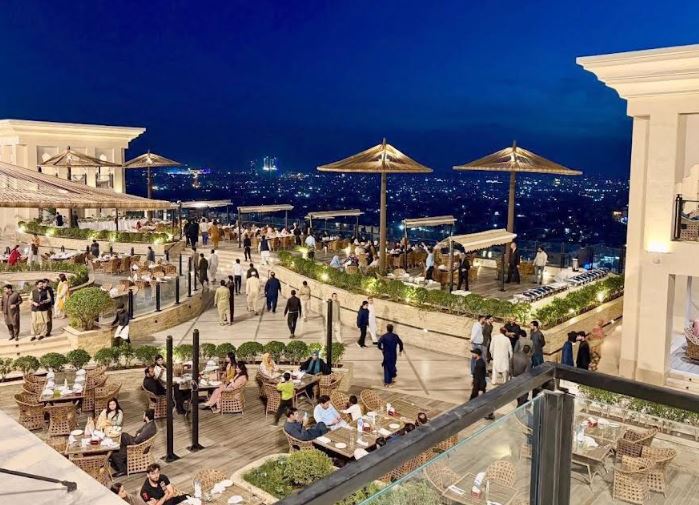
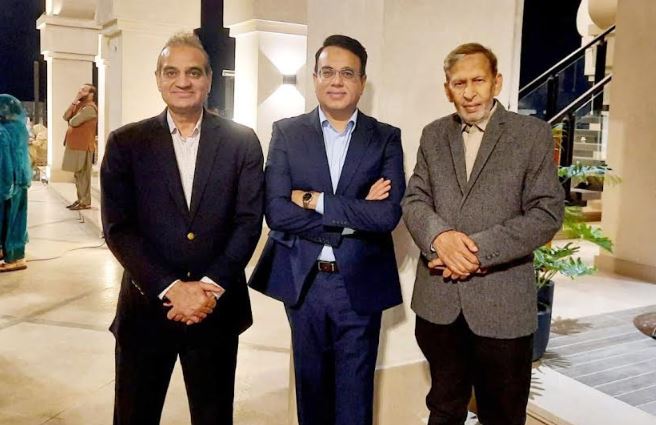
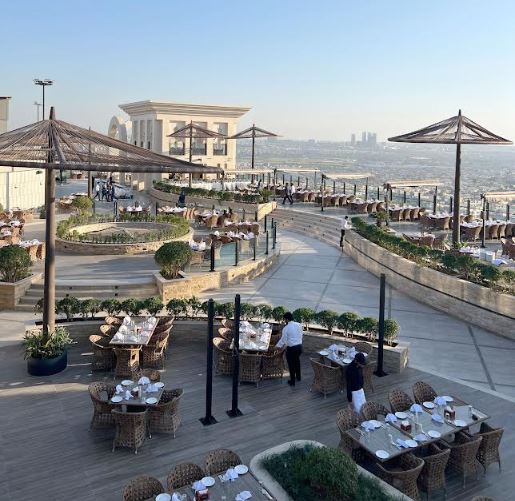
ISLAMABAD, MAR 15 /DNA/ – After months of anticipation following the controversial closure of its legendary Pir Sohawa location, the beloved Monal Restaurant has finally opened its doors at the stunning rooftop of Imarat Downtown (Mall of Imarat), drawing hundreds of enthusiastic food lovers on its inaugural day.

The grand opening, coinciding with the holy month of Ramadan, turned into a festive celebration as crowds flocked to enjoy iftar and dinner amid breathtaking panoramic views of Islamabad’s skyline. The venue was beautifully decorated with elegant Ramadan-themed accents, creating a warm and inviting atmosphere perfect for family gatherings and special outings.

Scores of signature Pakistani delicacies were served, delighting guests with traditional favorites including succulent kebabs, aromatic biryanis, rich curries, fresh naans, and an array of desserts that captured the essence of authentic local cuisine. The menu paid homage to Monal’s heritage while incorporating modern twists suited to the new urban setting.

Chairman of the Monal Group, Luqman Ali Afzal, personally greeted each and every guest on the opening day, warmly welcoming visitors and ensuring a memorable experience for all. In his remarks, he expressed optimism about the new chapter: “This venue will serve the culinary needs of the people of the twin cities Islamabad and Rawalpindi and even visitors from other parts of Pakistan. We are committed to delivering the same legendary hospitality and flavors that made Monal an icon.

“The relocation comes after the Supreme Court’s highly debated order in 2024 mandating the closure of eateries, including the original Monal at Pir Sohawa in Margalla Hills National Park, citing environmental and land-use concerns.

The decision left a void in the hearts of food enthusiasts who cherished the hilltop dining experience with its scenic vistas. The new Imarat Downtown branch, with its open-air terrace and modern ambiance, has quickly filled that gap, proving popular during Ramadan for iftar and sehri reservations.

Food lovers have hailed it as a triumphant return, blending nostalgia with fresh appeal in the heart of the capital. As bookings surge, Monal’s revival underscores the enduring demand for quality dining experiences in Pakistan’s twin cities.

51 years of Deewaar: Dubai gold man Anil Dhanak calls Amitabh Bachchan the greatest movie star

51 years of Deewaar: Dubai gold man Anil Dhanak calls Amitabh Bachchan the greatest movie star

Guinness record holder Anil Dhanak meets Bollywood icon Amitabh Bachchan

Monitoring Report 

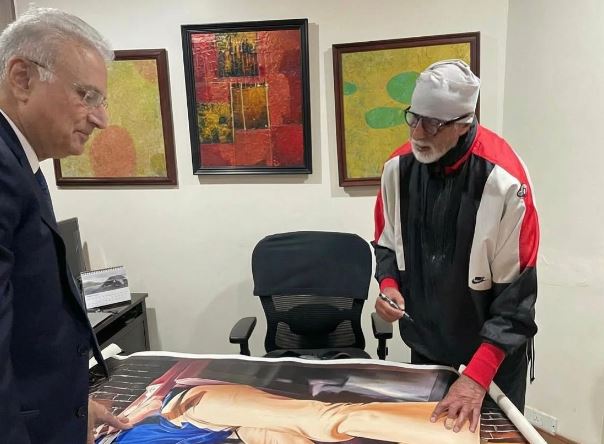
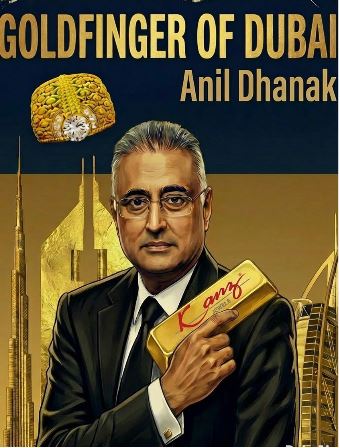
DUBAI: More than five decades after the iconic blockbuster Deewaar rewrote Bollywood history, the film found a full-circle moment when a die-hard fan and UAE gold business tycoon Anil Dhanak finally met Bollywood icon Amitabh Bachchan and walked away with a signed canvas of the movie’s iconic look.

Anil Dhanak’s meeting with the Big B coincided with the 51st anniversary of Deewaar, the film that sealed Bachchan’s status as Bollywood’s original “angry young man” and put him up to fame and fortune, creating new milestones and changing the shape of Indian cinema. Anil Dhanak owns the world’s largest gold ring, which is in the Guinness book of World Records.

The artwork, inspired by his unforgettable 1975 avatar, was presented to the actor, who signed it with quiet charm turning fan love into a collector’s dream. Anil Dhanak was struck by Bachchan’s no-fuss professionalism.

“He arrived exactly on time and was incredibly warm and grounded. For someone of his stature, that kind of discipline and simplicity is rare. He was kind and punctual,” said the Dubai-based businessman who brought the artwork.

The meeting at Bachchan’s Juhu home in Mumbai offered a look at how Indian cinema has changed — from strong stories of the 1970s to today’s slick, global productions.

Anil remarked that Amitabh Bachchan is more than a Bollywood superstar; he is an institution.

The businessman and Big B fan said: “With a career spanning over five decades, he has become the face of Indian cinema, commanding respect not just for his performances, but for his unwavering professionalism, humility, and sheer presence. Rarely does an actor combine mass appeal with critical acclaim the way Bachchan does, and his influence stretches across generations of filmmakers, actors, and audiences alike.

“It was Deewaar, that turned 51 last month, that truly cemented his place in cinematic history. The 1975 classic was not just a film; it was a portrait of rage and rebellion, capturing the frustrations of a generation grappling with inequality and injustice. Every line, every glare, every simmering silence became emblematic of a society demanding change and of a star willing to channel that collective anger on screen. Even today, the film’s energy and Bachchan’s intensity feel timeless. Deewaar remains a benchmark for powerful storytelling, and Bachchan’s towering presence continues to inspire both fans and fellow actors.”

For Anil Dhanak, there is little debate about who stands as the greatest movie star in the world. “It has to be Amitabh Bachchan,” he says. “Across generations and across continents, his impact on cinema is simply unmatched.”

Dhanak noted: “When someone has achieved the level of greatness, you expect a larger-than-life personality. But instead, you meet a man who is entirely grounded, approachable, and attentive. That humility is like a quiet strength, which makes him even more extraordinary.”

For Dhanak, the meeting also stirred memories of his own early journey in business and cinema. Decades ago, he owned Amruta Cinema in the town of Bagasara, Gujarat, where Bachchan’s films regularly transformed movie releases into town-wide events.

“When an Amitabh Bachchan film was released, it wasn’t just a movie — it was a celebration,” he said. “Crowds would gather from early morning, and the theatre would be house full for days. Everyone in town wanted to watch the film first.”

Those memories make the recent meeting especially meaningful.
“To go from screening his films in a small-town theatre to sitting with him at his home decades later is something I never imagined,” Dhanak reflected.

“Life sometimes creates moments that feel like miracles, and almost cinematic.” Anil Dhanak is a regular at the UAE royal family events. He has been providing gold to the royal family over several years and has friendship with many royals. He is a friend of Sheikh Ahmed bin Saeed Al Maktoum, Chairman & CEO Emirates Airline and Emirates Group.

Security forces destroy storage tunnel in Kandahar

Security forces destroy storage tunnel in Kandahar

The forces targeted the hideouts of the Afghan Taliban and Fitna al-Khawarij during the night between March 14 and 15

DNA

PESHAWAR: — Pakistani security forces have successfully destroyed a strategically important underground tunnel in Afghanistan’s Kandahar province used for storing sensitive and advanced technical equipment by militants, according to multiple security sources and state media reports.

The operation, conducted overnight between March 14 and 15 as part of the continuing Operation Ghazab lil-Haq, targeted hideouts and infrastructure linked to the Afghan Taliban and Fitna al-Khawarij (a designation used by Pakistani authorities for the banned Tehreek-e-Taliban Pakistan or TTP).

Sources described the tunnel as a major logistics and storage hub facilitating cross-border terrorist activities, where advanced equipment was stockpiled before distribution to militant networks.

Key details from official and media accounts:Pakistani forces struck multiple positions, including technical support infrastructure and an equipment storage facility in Kandahar, inflicting significant damage and disrupting militant operational capabilities.

A separate strike specifically neutralized the tunnel housing technical gear purportedly shared or used by both Afghan Taliban elements and TTP operatives.

The strikes are described as precise retaliatory actions in response to ongoing threats, including recent militant attacks inside Pakistan and alleged use of Afghan soil for staging.

This development follows a series of escalating cross-border operations since early 2026, with Pakistan repeatedly accusing the Taliban-led Afghan government of harboring TTP militants responsible for domestic violence. The Afghan side has consistently denied such claims and condemned Pakistani actions as aggression, often reporting civilian impacts from prior strikes (though Pakistani officials deny targeting non-military sites).Operation Ghazab lil-Haq, launched in response to a surge in terrorist incidents, shows no signs of immediate de-escalation. Security sources emphasized that operations will persist until core objectives—eliminating terrorist safe havens and infrastructure—are fully achieved.

If I Were the Dust of Madinah

If I Were the Dust of Madinah

by Muhammad Mohsin Iqbal

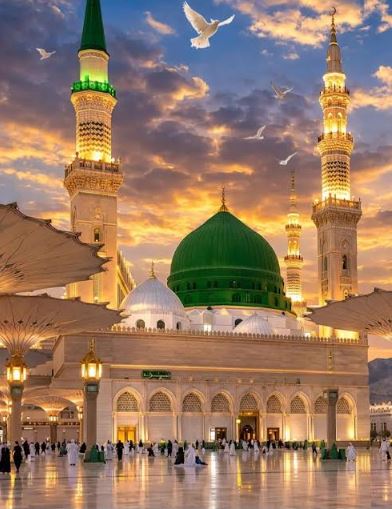
There are moments when imagination becomes an act of devotion, when the heart travels across centuries and finds itself resting upon the sacred soil of Madinah. In such moments I do not see myself as a traveler, a scholar, or a writer. I imagine myself as something far humbler—an unnoticed particle of dust lying quietly upon the blessed path where the beloved Messenger of Allah, Prophet Muhammad (Peace and blessings of Allah be upon him), once walked.

If I were that dust, I would not possess a voice, yet my silence would carry a story greater than words. My existence would be small and weightless, yet my fortune would be immeasurable. For what greater honour could there be than to rest upon the road of Madinah and wait with trembling anticipation for the moment when the footsteps of the Messenger pass over me?

Every morning in Madinah would be a dawn of longing. I would lie quietly upon the earth, feeling the gentle wind move across the streets. Around me the city would awaken—its people preparing for prayer, its hearts beating with love for the one whose presence had transformed a desert town into the centre of light. But my gaze, if dust could possess such a gaze, would remain fixed upon one hope; that the blessed feet of the Messenger would pass along this path.

Then, at last, the moment would arrive. The beloved Prophet (Peace be upon him) would emerge with the grace that history struggles to describe. His presence would carry both majesty and humility, light and tenderness. When his blessed foot would touch the ground, I myself, an insignificant grain of dust—would feel a joy that the heavens themselves might envy. I would cling to the sole of his sandal, trembling with gratitude, whispering silently to myself; “O my Almighty Allah, among all the particles of this vast earth, You chose me for this honour.”

If dust could weep, I would weep in that moment.

This is the emotion that resonates in the verses of the great lovers of the Prophet (Peace be upon him), much like the Sufi saint and poet Pir Mehr Ali Shah conveyed in a Punjabi poem that moves every devotee to tears. Similarly, Qudratullah Shahab, the renowned bureaucrat and devoted admirer of the Holy Prophet, upon arriving in Madina, humbly poured the dust of its streets into his eyes as an act of deep devotion.

How fortunate that dust would be which the wind might lift gently and place upon the blessed garment of the Prophet (Peace be upon him). How lucky that dust which might remain beneath his feet as he walked to the mosque, to the homes of the poor, or through the streets where children gathered with smiles.

Sometimes I imagine that the breeze of Madinah would carry me from the road to the threshold of the Prophet’s mosque. There I would rest quietly while the Companions gathered around him with love and reverence. Their hearts would overflow with devotion as they listened to his words—words that transformed hearts of stone into hearts of mercy.

At times the Prophet would smile, and that smile would illuminate the gathering like moonlight.  Embody the beauty that Jami described in his poems. At times he would speak with gentleness, guiding humanity away from darkness toward light. And I, a tiny particle of dust upon the ground, would listen in silent gratitude, knowing that even angels in the heavens longed for the blessings that filled that gathering.

The lovers of the Prophet in every age have tried to capture this feeling. In the heartfelt recitations of naats that echo through gatherings today, including those rendered with deep emotion by Abrar-ul-Haq, one hears the same longing; the longing to belong to the Prophet, to be near him, to be counted among those fortunate souls who walked in his presence.

Yet the greatest pride of that dust would not merely be touching his footsteps. It would be witnessing the humility and compassion that flowed from his noble character. The Messenger of Allah did not walk the earth like a king surrounded by pride. He walked like a servant of Allah, greeting the poor, comforting the weak, and forgiving those who wronged him. Even the dust beneath his feet would feel that mercy.

And when the sacred night of Isra and Mi’raj arrived, I imagine myself resting quietly in Madinah while the heavens prepared for a moment unlike any other in history. That night the beloved Messenger was invited beyond the realms of earth, ascending through the heavens in a journey granted to no other human being. The angels welcomed him, the prophets greeted him, and he was honoured with a nearness to the Divine presence that words cannot fully describe.

Yet after witnessing the splendour of the heavens, he returned again to the earth—to guide humanity, to pray for his Ummah, and to continue walking upon the humble soil of Madinah. And perhaps, by the mercy of Allah, he would once again walk upon the very dust that I imagined myself to be.

If I were that dust, I would not wish to rise higher than his footsteps. My pride would lie in remaining beneath them forever. For to be dust in Madinah beneath the feet of the beloved Prophet (Peace be upon him) would be a station greater than any throne of the world.

Such is the strange mystery of love: that the lover does not seek elevation but humility. The lover seeks not to rise above others but to fall into the dust of devotion. And if Allah were to grant even a fragment of that honour, then a particle of dust would become richer than kings—because it had once rested beneath the footsteps of Muhammad, the beloved Messenger of Allah (peace and blessings be upon him).

Climbing the Iran War Ladder

Qamar Bashir

Qamar Bashir

The war now unfolding between Iran on one side and the United States and Israel on the other did not begin merely as a confrontation over nuclear enrichment or missile development. Those issues were presented to the world as the immediate justification, but the deeper strategic objective has long been understood by many analysts: regime change in Tehran. The assumption guiding years of sanctions, covert operations, cyber warfare, and now open military confrontation was that if Iran’s leadership could be decapitated, its missile and drone infrastructure destroyed, its naval capabilities crippled, and its economy suffocated, the Iranian people would eventually rise against their own government and replace it with a system aligned with Western and Israeli interests.

This strategy reflects a strategic vision that Israeli leaders, particularly Prime Minister Benjamin Netanyahu, have advocated for decades. Netanyahu repeatedly warned that Iran represented the greatest existential threat to Israel and argued that Tehran’s nuclear ambitions must be stopped before they matured. Yet critics of this argument note an important historical reality: when the earliest calls for confronting Iran began more than four decades ago, Tehran possessed neither a meaningful missile arsenal nor sophisticated drone capabilities. Its nuclear program remained limited and subject to international monitoring through the International Atomic Energy Agency. From that perspective, many observers believe that the nuclear narrative became a strategic instrument used to justify a broader geopolitical goal—the weakening or transformation of Iran as an independent regional power.

The operational plan appeared straightforward. Remove key leaders, destroy strategic military facilities, and allow internal unrest to complete the process of political change. Early phases of the conflict seemed to follow that script. Massive air strikes targeted military installations, command centers, missile launch sites, and naval bases. Thousands of targets were struck in rapid succession, creating the impression that Iran’s military capabilities were collapsing and that the regime might soon lose control.

The United States soon escalated the campaign further. President Donald J. Trump announced that American forces had carried out one of the most powerful bombing raids of the war on Iran’s Kharg Island, the country’s most critical oil export terminal. The president stated that U.S. aircraft had destroyed every military target on the island while deliberately avoiding the destruction of the oil infrastructure itself. Kharg Island is the lifeline of Iran’s petroleum exports, handling roughly ninety percent of the country’s crude shipments. Trump warned, however, that if Iran interfered with maritime traffic through the Strait of Hormuz, the United States could reconsider its restraint.

Yet the expected political collapse inside Iran has not materialized. Instead, the external attacks appear to have triggered a powerful instinct for national cohesion. Iranian society, shaped by centuries of resistance to foreign intervention, has not rallied behind calls for externally driven regime change. The assumption that military pressure would spark a popular uprising has proven to be one of the central miscalculations of the conflict.

At the same time, Iran has responded by widening the battlefield beyond its own territory. Rather than fighting only within its borders, Tehran has attempted to redistribute the economic burden of the war across the entire Middle East and ultimately the global economy. Missile and drone attacks, threats against regional energy infrastructure, and disruptions to maritime routes have created an atmosphere of strategic uncertainty that extends far beyond Iran itself.

The global energy system lies at the center of this confrontation. The Strait of Hormuz remains one of the most critical maritime corridors in the world. Military planners have increasingly warned that reopening the Strait of Hormuz by force would be far more complicated than it appears in theory. Even if the navies of the United States, the United Kingdom, and France attempted to escort commercial tankers through the strait, analysts believe it would be extremely difficult to guarantee safe passage without Iran’s consent.  For this reason, many defense experts argue that reopening the corridor through purely military means would be risky and uncertain, and that stable navigation would likely require some form of diplomatic understanding with Iran.

The war has also exposed the vulnerability of even highly advanced military powers. Israel possesses one of the world’s most sophisticated intelligence networks and defense systems. Yet sustained missile and drone exchanges demonstrate that modern warfare imposes heavy economic and psychological costs on any society. Repeated missile alerts, damage to infrastructure, and disruptions to daily life illustrate the limitations of technological superiority when conflicts become prolonged.

Another important dimension of the conflict is the growing unease among Gulf Arab states hosting American military bases. Countries such as Qatar, Bahrain, and Kuwait have long relied on the U.S. security umbrella as a deterrent against regional instability. However, these bases now risk becoming direct targets in a wider confrontation. What was once viewed as protection increasingly appears to some regional leaders as a potential magnet for retaliation.

A notable geopolitical alignment has also emerged between Israel and India. Over the past two decades, India has become one of Israel’s closest defense partners, cooperating extensively in drone development, missile defense systems, surveillance technologies, and intelligence sharing. This partnership is not merely technological but also reflects a similar strategic worldview. Israel’s doctrine seeks to maintain overwhelming regional superiority so that no neighboring state can challenge its security. India’s concept of “Akhand Bharat,” or Greater India, imagines a restoration of influence across the broader South Asian subcontinent. While framed primarily in cultural terms, it reflects a desire to neutralize regional rivals and consolidate influence across neighboring territories. This parallel strategic outlook helps explain India’s diplomatic support for Israel during the current conflict.

Perhaps the most revealing aspect of the war is how dramatically the perception of victory has shifted since the first days of fighting. When hostilities began on February 28, many analysts predicted a rapid victory for the United States and Israel. Early strategic assessments informally estimated that Washington had roughly a 50–55 percent probability of determining the outcome, Israel around 30–35 percent, and Iran barely 10–15 percent. The reasoning was simple: overwhelming airpower, technological superiority, and intelligence dominance would quickly dismantle Iran’s military capacity.

After the war has entered into its third week, many strategic observers now estimate that the United States retains roughly 40–45 percent influence over the ultimate outcome, Israel about 25–30 percent, while Iran’s strategic position has risen to roughly 25–30 percent due to its ability to internationalize the consequences of the conflict. In essence, the war has evolved into two parallel contests: a tactical war dominated by American and Israeli military power, and a strategic war in which Iran attempts to raise the economic and geopolitical cost for its adversaries and the global system.

One of the greatest casualties of the conflict is the credibility of the international rules-based order as a result of a gradual shift toward a world governed less by international law and more by raw geopolitical power. Smaller states increasingly fear that they may become targets if they lack strong alliances or military capabilities. Arms races accelerate, mistrust deepens, and regional conflicts risk cascading into broader confrontations.

The Iran war therefore represents more than a regional crisis. It is a defining moment for the emerging global order. Whether diplomacy eventually prevails or escalation continues will shape not only the future of the Middle East but also the credibility of the institutions designed to preserve international stability.

For now, the battlefield remains active, the diplomatic channels remain fragile, and the outcome remains uncertain. What is clear, however, is that the war has already reshaped the geopolitical landscape—revealing the limits of military power, the resilience of national identity, and the profound risks of a world drifting away from international cooperation toward the harsher logic of power politics.

Qamar Bashir

Press Secretary to the President (Rtd)

Former Press Minister, Embassy of Pakistan to France

Former Press Attaché to Malaysia

Former MD, SRBC | Macomb, Michigan

Info Secretary, PIO felicitate new NPC office-bearers

Info Secretary, PIO felicitate new NPC office-bearers

ISLAMABAD, MAR 15 (DNA): Federal Secretary for Information and Broadcasting Ashfaq Ahmad Khalil, along with Principal Information Officer (PIO) Mobashir Hassan, has extended felicitations and best wishes to the newly elected office-bearers of the National Press Club (NPC).

In their message, they congratulated President Abdul Razzaq Sial, Senior Vice President Ehteshamul Haq, Vice Presidents Sehrish Qureshi, Usman Khan and Bashir Chaudhry, Secretary Furqan Rao, and other office bearers  Abid Abbasi, Sheraz Ali Gardezi, Aon Shirazi, Javed Bhagat and Shakeela Jalil.

Ashfaq Ahmad Khalil said the NPC stands as a strong voice for journalists, playing a prominent role in advancing professional values and safeguarding the rights of media practitioners.

Principal Information Officer Mubashir Hasan expressed confidence that the newly elected leadership will actively contribute to the welfare of journalists, enhance professional standards, and promote free and responsible journalism.

Federal Secretary, PIO extended their felicitations and best wishes to the newly elected leadership.

Rear window tint allowed up to 50pc

Rear window tint allowed up to 50pc

ISLAMABAD, MAR 15 (APP/DNA): Islamabad Traffic Police (ITP) has clarified the government’s policy regarding tinted vehicle windows, stating that 40 to 50 percent tint is allowed on rear windows, while front side windows must remain clear for security and identification purposes.

An official told APP that the clarification was issued to help citizens understand which types of window tinting were legal and which remained prohibited due to security concerns.

According to the Chief Traffic Officer (CTO) Islamabad, tinting of 40 to 50 percent is permissible on rear windows, while tinting on front side windows is not allowed because the driver must remain clearly visible during security checks.

He said that the ability to clearly identify the driver was important for both traffic management and security purposes, which was why tinting on front windows was considered a violation of existing regulations.

The CTO Hamzah further explained that most vehicles already have light factory-fitted tinting on rear windows, while fully dark windows were generally not provided by vehicle manufacturers.

He added that if a vehicle had factory-fitted tinted windows, the owner must possess import documents issued by the Ministry of Interior, which may be requested during routine checking.

The CTO Hamzah said that traffic police only enforce government laws, adding that police do not break or remove vehicle windows.

However, he clarified that tint sheets or paper applied on front windows are not permissible under the law.

“International Quds Day’’ is Voice of oppressed Muslims of world: Iranian Ambassador

“International Quds Day’’ is Voice of oppressed Muslims of world: Iranian Ambassador

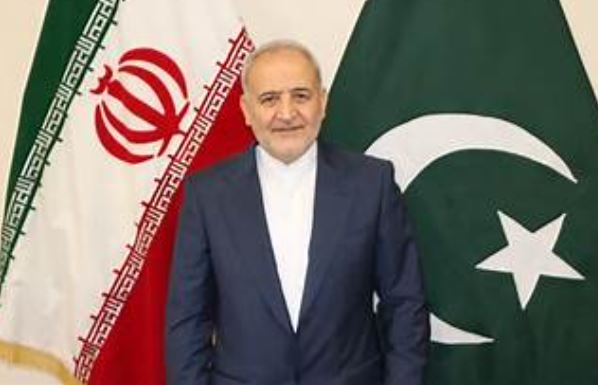
ISLAMABAD, Mar 14: Ambassador of the Islamic Republic of Iran to Pakistan, Dr. Reza Amiri Moghadam, has stated that International Quds Day represents the voice of oppressed muslims in Palestine and across the world.

Addressing a gathering organized by the Embassy of the Islamic Republic of Iran in Islamabad, the ambassador said that International Quds Day was initiated by Iran’s late Supreme Leader Ruhollah Khomeini and is observed every year on the last Friday of the holy month of Ramadan, known as Jumat-ul-Wida.

He said the day reminds the world of the sacrifices made by, Late Supreme Leader, Ayatollah Ali Khamenei (Shaheed), who raised his voice against Israeli oppression in Palestine, Lebanon, Syria, and Yemen.

According to him, Ayatollah Ali Khamenei sacrificed his life in the struggle for justice and freedom.
The ambassador welcomed political leaders, government representatives, and members of civil society who participated in the Quds Day event held in Islamabad.

He emphasized that the sacrifices of martyrs continue to inspire Muslims worldwide to stand against injustice.
Referring to regional developments, the ambassador said that several attempts were made to destabilize Iran during the past year, but they failed due to the unity and wise leadership of the Iranian nation.

He stated that the first attempt involved the martyrdom of senior Iranian military commanders, which adversaries believed would weaken Iran’s resolve, but the nation remained strong.
He further claimed that during certain demonstrations in Iran, miscreants attempted to create unrest and vandalism, but the situation was brought under control within a few days.

According to him, another attempt was based on the assumption that Iran’s system would collapse after the leadership transition, but that prediction also proved incorrect.
The ambassador said Iran’s political system is institutional and not dependent on a single individual. “Our leadership structure is strong and resilient, and the system continues to function effectively,” he added.

Speaking about Iran’s foreign policy, he said Iran’s disagreement with the United States is not limited to the nuclear issue, noting that dialogue had taken place previously but tensions persisted.

He stressed that Iran supports the Palestinian cause and the rights of Palestinians to self-determination.
The ambassador said that before the Iranian Revolution, Palestinians were already struggling for their rights, but after the revolution, Iran increased its support for the Palestinian cause as well as for resistance movements in the region.

He expressed pride in the resistance of groups such as Hezbollah and Hamas, claiming they have resisted Israeli military actions in Gaza and Lebanon.
The ambassador also questioned the effectiveness of international institutions, asking why the United Nations had not been able to prevent attacks in Gaza.

He reiterated that Iran does not intend to occupy any territory but will continue to support Islamic countries and oppressed communities.

Referring to the situation in the Middle East, he said that the idea of a Two-State Solution, proposed after the establishment of Israel in 1948, remains unresolved.

The ambassador concluded by saying that Iran seeks peaceful and cordial relations with regional and other Islamic countries and hopes that the region will eventually achieve stability and unity once external conflicts are resolved.
Speakers at an event marking “International Al-Quds Day” strongly criticized the policies of the Western powers and Israel, while expressing support for Iran and the Palestinian cause.

Addressing the gathering, Senator Allama Raja Nasir Abbas said that the enemies seek to destabilize the region to establish their dominance.

He argued that the ongoing tensions are not only a conflict involving Iran but part of a broader struggle affecting Muslim countries.
Abbas highlighted Iran’s historical civilization and resilience, saying that the Iranian nation has a strong cultural and intellectual tradition.

He noted that Iran has built stable institutions, pointing to its literacy rate, the participation of women in professional fields such as medicine and business, and the country’s educational development.

He also remarked that the philosophical ideas of Alkama Muhammad Iqbal are widely studied and appreciated in Iran.
Criticizing Western leadership, Abbas questioned the moral standing of Israeli policies under Prime Minister Benjamin Netanyahu, which he described as oppressive toward Palestinians.

Speaking on the occasion, Palestinian representative Khalid Khodoomi said that Muslim nations should unite in support of Palestine.

He praised the resistance of “Hamas” and stated that the struggle for Al-Quds (Jerusalem) continues.
He also said Iran has taken a firm stand against what he described as imperialism and oppression.

Independent analyst Abdullah Gul, said that the international community should implement “United Nations” resolutions concerning the Palestinian issue.

He added that Israel has lost credibility and moral authority in the Palestine conflict, particularly regarding developments in the Gaza Strip.

He also referred to the strategic importance of the “Strait of Hormuz”, noting Iran’s influence over the key waterway.
Speakers concluded by urging unity among Muslim countries and reaffirmed their support for the Palestinian cause and the status of Al-Quds.

Stay Connected

64FansLike
60FollowersFollow

Latest Reviews

Exchange Rates

USD - United States Dollar
EUR
1.14
GBP
1.34
AUD
0.70
CAD
0.71