Home Blog Page 211

Kelab STMI, PERWAKILAN host Bubur Lambuk event

Kelab STMI, PERWAKILAN host Bubur Lambuk event

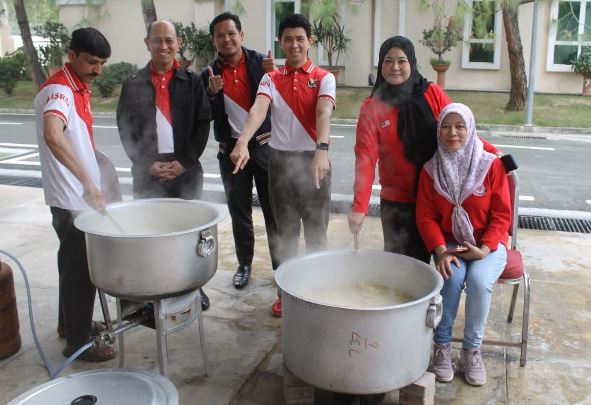
ISLAMABAD: /DNA/ – On Wednesday, 11 March 2026, Kelab STMI, together with PERWAKILAN Islamabad, organized a “Bubur Lambuk” event to celebrate the holy month of Ramadan. The programme was held to foster a sense of unity and togetherness among Home-Based Staff (HBS) and Locally Recruited Staff (LRS), while also embracing the spirit of giving during this blessed month.

Bubur lambuk is a flavourful rice porridge traditionally prepared and shared during Ramadan. The event aimed to highlight Malaysia’s rich food culture and strengthen the bond among staff members at the Malaysian High Commission.

At the end of the programme, His Excellency Ambassador Dato’ Mohammad Azhar Mazlan, High Commissioner of Malaysia to Pakistan, personally distributed the specially cooked bubur lambuk to the HBS and LRS, as well as to members of the diplomatic community in the diplomatic enclave. The food-sharing activity symbolized goodwill and friendship, reflecting the important values of unity, hospitality, and cultural sharing.

Deputy PM emphasizes regional peace to US Chargé d’Affaires

Deputy PM emphasizes regional peace to US Chargé d'Affaires

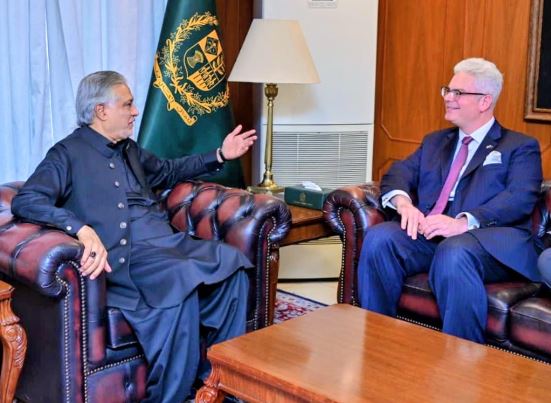
ISLAMABAD, MAR 16 /DNA/ – Deputy Prime Minister and Foreign Minister Senator Mohammad Ishaq Dar emphasized the urgent need for regional peace and stability during a meeting with Acting U.S. Chargé d’Affaires Zachary Harkenrider in Islamabad.

According to an official statement, the meeting focused on strengthening Pakistan-U.S. bilateral relations and reviewing ongoing regional developments.

During the discussions, the Deputy Prime Minister underscored the importance of sustained diplomatic engagement between the two countries. He highlighted the necessity of promoting peace and stability in the region, calling for collaborative efforts to address common challenges.

The Acting U.S. Chargé d’Affaires reaffirmed the United States’ commitment to a productive partnership with Pakistan.

APNS appreciates recovery of current, old dues

APNS appreciates recovery of current, old dues

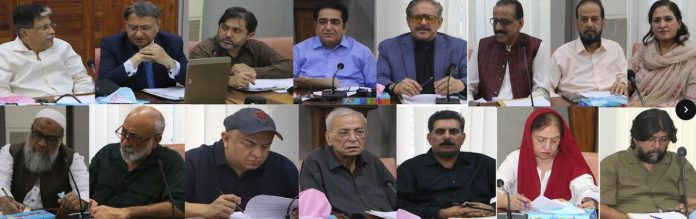
KARACHI, MAR 16 /DNA/ – The Executive Committee of the APNS at its meeting held on March 16, 2026 at Karachi adopted the Annual Report for the year 2025-26 as well as the annual Accounts for the year 2025. The Executive Committee appreciated the Secretariat’s efforts in recovering current and old dues. The members of the Executive Committee considered the state of print media and freedom of press in the country.

The meeting was attended by the following:

Senator Sarmad Ali, President, Mr. Shahab Zuberi, Vice President, Mr. Muhammad Athar Kazi, Secretary General, Mr. Bilal Farooqui (Aghaz), Ms. Fauzia Shaheen (Dastak) Mr. Najamuddin Sheikh (Deyanat), Mr. Muhammad Younus Mehar (Halchal), Kazi Asad Abid (Ibrat), Syed Akbar Tahir (Jasarat), Mr. Javed Mehr Shamsi (Kaleem), Mr. Aamir Malik (Mashriq Quetta), Mr. Tahir Qureshi (Naey Ufaq) Ms. Zahida Abbasi (Nau Sijj), Mr. Mubashir Mir (Pakistan), , Mr. Humayun Gulzar (Sayadat),

Following attended the meeting on Zoom:

Mr. Mohsin Bilal, Joint Secretary, Mr. Naveed Kashif, Finance Secretary, Mr. Mohsin Seyal (Aftab), Mr. Waseem Ahmed (Awam Quetta), Mr. Ansar Mahmood Bhatti (Centre Line), Mr. Naveed Chaudhry (City 42), Mr. Bilal Mahmood (Nawa-i-Waqt), Mr. Adnan Faisal (Jiddat), Mr. Imtinan Shahid (Khabrain), Mr. S.M. Munir Jilani (Paigham), Mr. Faisal Zahid Malik (Pakistan Observer), Mr. Muhammad Awais Khushnood (Sahafat), Mr. Irfan Athar (Tijarat).

Pakistan greets Kazakhstan on successful constitutional referendum

Pakistan greets Kazakhstan on successful constitutional referendum

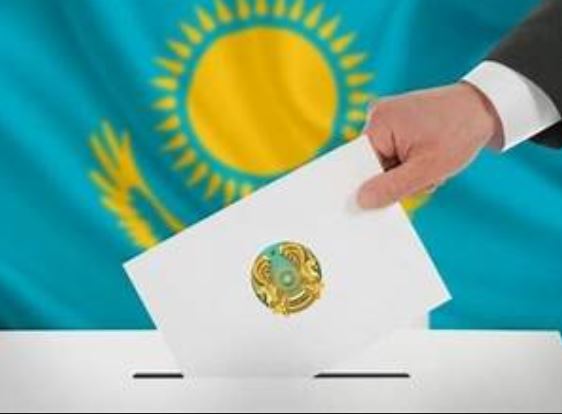
ISLAMABAD, MAR 16 /DNA/ – President Asif Ali Zardari has extended warm congratulations to the President of the Republic of Kazakhstan, Mr Qasym-Jomart Tokayev, and the people of Kazakhstan on the successful holding of the constitutional referendum.

The President noted that the strong participation of the people and the broad support expressed for the referendum reflect the confidence of the citizens of Kazakhstan in the continued progress and development of their country.

President Zardari reaffirmed Pakistan’s commitment to further strengthening bilateral relations and expanding cooperation in areas of mutual interest for the benefit of both countries.

He also emphasised that Pakistan greatly values its close and brotherly relations with Kazakhstan, which are rooted in mutual respect, shared aspirations for peace and development, and a tradition of constructive cooperation.

Cabinet committee briefed on comfortable fuel stocks and supply chain

Cabinet committee briefed on comfortable fuel stocks and supply chain

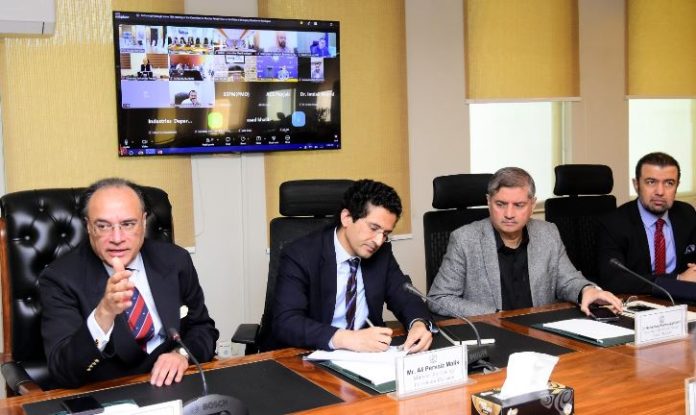
ISLAMABAD, MAR 16 /DNA/ – The Committee to Monitor Petrol Prices met again today at the Finance Division under the chairmanship of the Federal Minister for Finance and Revenue, Senator Muhammad Aurangzeb, as part of the Committee’s ongoing daily review of developments in the energy sector in light of evolving regional conditions.

The meeting was attended by Federal Minister for Petroleum Mr. Ali Pervaiz Malik, Federal Minister for Maritime Affairs Mr. Muhammad Junaid Anwar Chaudhry, the Governor State Bank of Pakistan, and federal secretaries and senior officials from the concerned ministries, divisions and regulatory authorities.

The Committee undertook a comprehensive review of petroleum product stock positions across the country and was briefed in detail on the current national inventory of crude oil and refined petroleum products, ongoing import arrangements, and supply chain logistics.

The Committee was informed that the country remains adequately positioned in terms of fuel availability, with March requirements fully secured. It was further noted that, based on current cargo planning and supply arrangements, coverage is available up to mid-April and efforts are underway to extend coverage further towards the end of April. Overall stock levels and scheduled imports indicate that the country maintains comfortable inventories of crude oil and key petroleum products for March, with sufficient planning in place to ensure continued availability during April.

The meeting also reviewed procurement patterns and maritime logistics in the context of ongoing regional developments. In this regard, the Committee emphasized the importance of further diversifying sources of supply to enhance resilience of the national energy supply chain. The meeting was informed that procurement strategies are already moving towards greater diversification, with efforts underway to broaden sourcing from the international market and reduce reliance on any single corridor, thereby strengthening Pakistan’s overall energy security.

Speaking during the meeting, the Finance Minister emphasized that the government remains fully focused on ensuring uninterrupted availability of petroleum products across the country. He noted that the current stock position and supply outlook remain stable and that, based on the reports presented, there is no basis for panic buying or unnecessary stockpiling of fuel.

The meeting directed the relevant authorities, in coordination with OGRA and the provincial governments, to closely monitor stock levels and market activity to check any incidence of hoarding. It was emphasized that any attempts to create artificial shortages or disrupt normal supply would be dealt with strictly in accordance with the law.

Reaffirming the government’s commitment to maintaining stability in the energy market, the Finance Minister directed all concerned ministries, regulators, and agencies to maintain close coordination and continue rigorous monitoring of stock levels and supply flows so that the fuel supply chain remains smooth and public confidence is maintained through timely and accurate information.

The Committee will continue to meet on a daily basis to review petroleum stocks, import flows, market conditions and supply chain developments to ensure uninterrupted availability of fuel across the country.

Governor Sindh calls for audit, youth opportunities

Governor Sindh calls for audit, youth opportunities

By Nazir Siyal

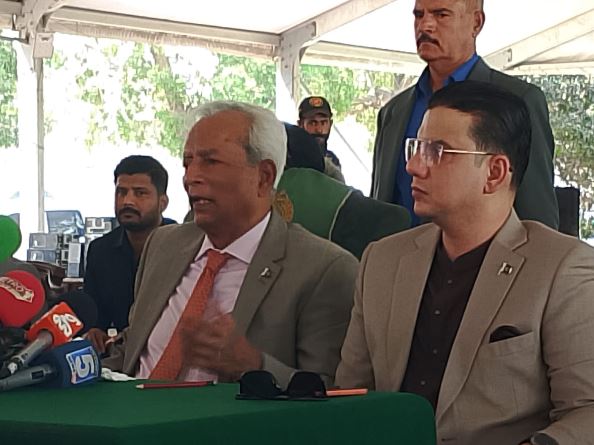
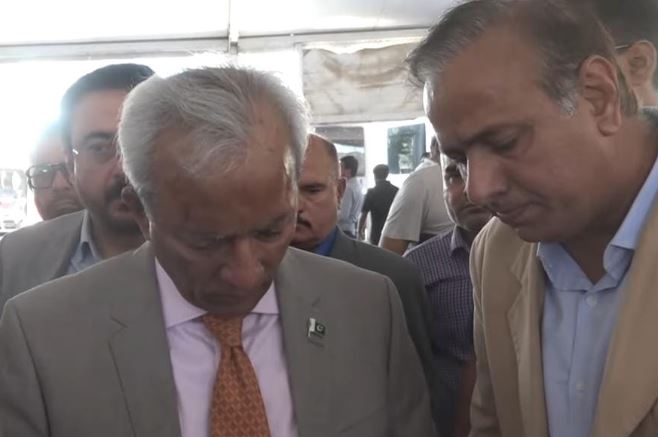
KARACHI: Newly appointed Sindh Governor Nihal Hashmi on Sunday stressed the need for a comprehensive audit of the Governor House’s past expenditures and budget allocations, stating that transparency and accountability would be ensured. Speaking at a press conference at the Governor House on the second day after taking oath, he said everyone would jointly review the audit and investigate any loopholes. “You can pick up the budget book and see how much money has been allocated to me and how much I spend,” he remarked, welcoming criticism based on performance.

Governor Sindh calls for audit, youth opportunities

The governor also emphasized that Pakistan comes first and praised the country’s armed forces as one of its strongest institutions. Referring to damaged lawns and broken furniture at a youth computer skills facility at the Governor House, he noted that even the next two years’ budget had not been left by the previous administration.

Hashmi announced that the federal government would expand employment opportunities and improve education for young people across Sindh. He said the Prime Minister’s Youth Programme would soon be introduced in the province in cooperation with its Sindh coordinator Fahad Shafiq to enhance training, education and job facilities for youth.

The governor assured that youth development and computer training would be strengthened while education-related initiatives would also be expanded. He said as governor his responsibility extended to “every individual and every child” in the province, especially in rural districts.

Encouraging public accountability, Hashmi asked people to criticize him if he failed to perform but also highlight positive work done at the Governor House. He said he would ensure that every project undertaken during his tenure was audited and hoped to leave the office in a better condition than he found it.

NGC achieves key milestones in transmission & grid system upgradation

NGC achieves key milestones in transmission & grid system upgradation

LAHORE, MAR 16 /DNA/ – National Grid Company of Pakistan (NGC) has achieved two significant milestones aimed at strengthening the country’s power transmission network and improving system reliability in Lahore and Hyderabad.

The up-gradation work of 220kV Transmission Line Sheikhupura–Bund Road Lahore CCT (I & II) has been successfully completed from Tower No. 01 to Tower No. 55, during approved shutdown period from 03 January to 14 March 2026. The transmission line has been energized on load on an interim basis, marking an important milestone in the project’s progress.

Under the project scope, a total of 84 new towers is being installed along a 28 km transmission line with Twin Bundle Rail conductor configuration. So far, 83 foundations and 70 tower erections have been completed. 18 km of conductor stringing, dismantling of 53 old towers and removal of 18 km of old conductor have also been carried out. During a recent site visit, DMD (AD&M) Engr. Rasheed A. Bhutto reviewed the ongoing activities and appreciated the progress of the project.

NGC has also energized a new 220/132 kV, 250 MVA Autotransformer at 220kV Grid Station Tando Mohammad Khan Road, Hyderabad, making another step forward in strengthening the national transmission infrastructure. The autotransformer has been installed by NGC’s Project Delivery South Formation under World Bank-funded National Transmission Modernization Project (NTMP-I). The addition of this autotransformer will enhance transformation capacity, improve system reliability and ensure a more stable voltage profile for consumers of Hyderabad Electric Supply Company (HESCO).

Managing Director NGC, Engr. Altaf Hussain Malik, appreciating the efforts of project teams, stated that timely completion of these works will strengthen the national transmission network and support reliable power supply to consumers.

AirSial signs agreement with DAE capital to acquire two airbus A320 aircraft

AirSial signs agreement with DAE capital to acquire two airbus A320 aircraft

SIALKOT, MAR 16: AirSial has achieved another milestone in its growth journey by signing a landmark agreement with DAE Capital in Dubai for the acquisition of two additional Airbus A320 aircraft.

According to AirSial,the signing ceremony was attended by Chairman Fazal Jillani,CEO Ameen Ahsan,COO Tariq Amin, Director Engineering Azhar Qayyum and President of DAE Capital David Houlihan.

The two new Airbus A320 aircraft are expected to join AirSial’s fleet in 2027,increasing the airline’s total fleet size to 15 aircraft.

The expansion was expected to further strengthen the airline’s operational capacity and enable it to serve more passengers while continuing to offer its signature hospitality and services.

AirSial expressed gratitude for the continued growth of the airline,stating that the addition of new aircraft will help the carrier expand its network and enhance travel convenience for its customers.

Trump Begs Global Help Against Iran

Qamar Bashir

Qamar Bashir

Wars between unequal adversaries often begin with certainty. The stronger power assumes that victory is inevitable, while the weaker opponent is expected to collapse under overwhelming force. Military superiority, economic dominance, and technological advantage create a powerful belief that resistance will be short-lived. Yet history repeatedly shows that when confidence turns into overconfidence, wars rarely unfold according to the plans of the stronger side. The ongoing confrontation between the United States, Israel, and Iran appears to be unfolding along exactly this trajectory.

At the outset of the conflict, the United States projected absolute confidence in its military strength. With a defense budget approaching nine hundred billion dollars, eleven aircraft carriers, hundreds of advanced fighter aircraft, and the most sophisticated intelligence network ever assembled, Washington believed that it possessed the ability to overwhelm any adversary. Iran, by contrast, was portrayed as economically exhausted and strategically isolated. Decades of sanctions had strained its economy, and it lacked the type of conventional naval and air power that defines Western military dominance.

This imbalance shaped the early expectations of the war. The assumption in Washington and Tel Aviv was that Iran would not be able to sustain a prolonged confrontation against the combined military capabilities of the United States and Israel. The expectation was not merely victory but rapid victory. In the early hours and days of the conflict, official statements emphasized that Iranian defenses had been destroyed and that Western forces had achieved decisive superiority in the air.

This early confidence was reflected in repeated public statements made by President Donald J. Trump and senior U.S. defense officials during the opening phase of the war. Within the first hours and days of the conflict, Washington announced that Iranian military infrastructure had been severely damaged. Statements claimed that Iran’s air force capability had been neutralized, its missile and defensive systems crippled, and key commanders eliminated in precision strikes. The impression presented to the world was that Iran’s ability to conduct either defensive or offensive operations had been largely destroyed. Only much later in the conflict—nearly two weeks into the fighting—did Trump issue another dramatic statement following new airstrikes on Iran’s Kharg Island oil export facilities, declaring that Iran had “no ability to defend anything that we want to attack.”

Yet the battlefield soon began to contradict these declarations. Instead of collapsing, Iran responded with a strategy that avoided direct conventional confrontation and instead relied on asymmetric warfare. Ballistic missiles, long-range drones, and coordinated regional pressure became the core elements of Iran’s response. Missile barrages began reaching targets across the region, forcing Israeli defense systems such as Iron Dome, David’s Sling, and Arrow interceptors to operate under sustained pressure.

As the conflict continued, the geographic scope of the war began to expand beyond Israel itself. Strategic infrastructure across the Middle East suddenly became vulnerable. Oil facilities, refineries, and shipping routes across the Gulf faced rising threats. The war was no longer limited to direct military engagement between two adversaries; it had begun to affect the economic lifelines of the entire region.

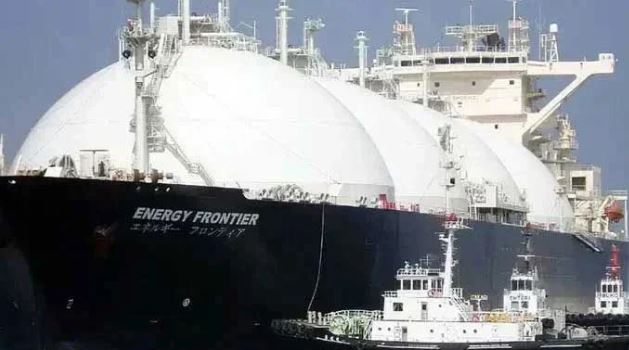
The most critical pressure point quickly emerged in the Strait of Hormuz, one of the most strategically important maritime corridors in the world. Nearly twenty percent of the world’s oil supply and massive volumes of liquefied natural gas pass through this narrow channel each day. Any disruption in this corridor immediately sends shockwaves through the global economy.

As tensions escalated, shipping companies began rerouting vessels away from the region to avoid potential attacks. Insurance premiums for oil tankers increased dramatically, and global oil prices climbed sharply. These developments triggered a chain reaction across global supply chains, affecting industries ranging from transportation and petrochemicals to agriculture and food production.

Countries heavily dependent on imported energy began facing serious economic pressure. Rising fuel costs pushed inflation higher, and governments introduced emergency measures to conserve energy. In some countries, businesses reduced operations and institutions shifted to remote work in order to limit energy consumption. The consequences of the war were no longer confined to the battlefield; they were spreading through the global economy.

Europe also found itself increasingly vulnerable to the unfolding crisis. After reducing its dependence on Russian natural gas following the Ukraine conflict, many European nations had turned to liquefied natural gas imports from Qatar. Those shipments, however, must pass through the Strait of Hormuz. Any prolonged disruption in that waterway therefore threatens European energy security as well.

As the crisis deepened, a development occurred that many observers considered extraordinary. Despite earlier declarations that Iran had been “decimated,” the United States began asking other countries to help secure the Strait of Hormuz and escort commercial shipping through the region. Washington appealed to several nations—including the United Kingdom, France, Australia, Japan, the Philippines, South Africa, and even China—to help ensure safe maritime navigation.

This appeal created an obvious contradiction. If Iran had truly been defeated, why would the world’s most powerful military require international assistance to secure the region’s most important shipping route? The request itself suggested that the conflict had become far more complicated than initially anticipated.

The shifting narrative of the war added further confusion. The conflict did not begin with a single clearly defined objective. Instead, the justification evolved repeatedly as the war progressed. Initially, the war was presented as a mission to liberate the Iranian people from their leadership. Shortly afterward, the stated objective shifted toward eliminating Iran’s nuclear program and forcing Tehran to surrender enriched uranium and nuclear infrastructure.

As the conflict continued, the goals expanded further. The mission was no longer limited to nuclear facilities; it now included dismantling Iran’s ballistic missile and drone capabilities. Factories, research laboratories, and technological facilities connected to military development became targets. Later still, the narrative shifted once again, framing the war as necessary to protect global trade and ensure safe shipping through the Strait of Hormuz.

Each shift expanded the scope of the conflict while simultaneously raising new questions about its ultimate purpose. Analysts, policymakers, and even allied governments struggled to understand what the final objective of the war had become. The absence of a consistent strategic goal created uncertainty about how or when the conflict might end.

Meanwhile, the global economic consequences continued to intensify. Energy-importing nations faced rising inflation as fuel prices climbed. Fertilizer shortages threatened agricultural production in several regions. Petrochemical industries dependent on Gulf oil and gas supplies began slowing or shutting down operations, adding further strain to global supply chains.

Ironically, the country benefiting economically from rising global energy prices appeared to be the United States itself. Over the past decade, America has emerged as one of the world’s largest exporters of oil and liquefied natural gas. As global prices surged due to instability in the Middle East, American energy exports became more profitable. Increased military production also boosted the U.S. defense industry.

However, economic gains abroad do not necessarily translate into political stability at home. American voters historically react strongly to rising gasoline prices and inflation. If the cost of fuel and basic goods continues to rise, domestic political pressure could intensify rapidly.

Yet the most revealing lesson of this conflict lies in a simple but powerful reality. Had the United States been decisively winning the war, it would not be asking other countries to help manage the consequences. A nation confident of victory does not appeal to the world for assistance against a supposedly weaker opponent.

When a superpower begins asking others to step in, the myth of guaranteed victory begins to collapse. The war that was expected to demonstrate overwhelming power instead reveals the limits of military supremacy. The battlefield has a way of rewriting narratives that were once presented as certainty.

The Iran conflict therefore illustrates a timeless geopolitical truth. Power can start wars, but resolve and strategy often determine how they unfold. The strongest army may enter a war with confidence, but history remembers the moment when that confidence turns into appeals for help.

And in the end, when victory is truly assured, no help is needed—but when help is requested, the battlefield tells a very different story.

Qamar Bashir

Press Secretary to the President (Rtd)

Former Press Minister, Embassy of Pakistan to France

Former Press Attaché to Malaysia

Former MD, SRBC | Macomb, Michigan

Pakistan’s LNG supplies to run out after April 14 amid Mideast tensions, Senate panel told

Pakistan's LNG supplies to run out after April 14 amid Mideast tensions, Senate panel told

ISLAMABAD: Liquefied natural gas (LNG) will no longer be available in Pakistan after April 14 due to supply disruptions linked to tensions in the Middle East, a Senate panel was told on Monday.

The meeting of Senate Standing Committee on Petroleum, chaired by Senator Manzoor Ahmed, was informed that LNG imports from Qatar had been completely suspended since March 2, raising concerns about gas availability for the power sector in the coming weeks.

The Middle East conflict threatens LNG shipments from Qatar, the world’s second-largest LNG exporter after the United States, which supplies the bulk of Pakistan’s imported LNG used to power electricity plants during peak demand.

Shipping through the narrow waterway has nearly come to a halt since the start of the US-Israeli war on Iran. The disruption has blocked the export of around one-fifth of the world’s oil supply and liquefied natural gas, pushing global oil prices to levels not seen since 2022.

The global price hike also led to the federal government raising petrol and diesel prices by Rs55 per litre as surging international prices, fuelled by the US-Israel war with Iran, put pressure on domestic energy costs.

During today’s briefing, the Ministry of Petroleum officials said Pakistan had two LNG supply agreements with Qatar, but shipments had been affected amid the ongoing regional conflict. Out of eight cargoes scheduled for March, only two arrived, while six cargoes expected in April are unlikely to reach the country.

As a result, officials warned that LNG would not be available in the country after April 14, adding that gas demand in the power sector would not be fully met in April.

They said alternative sources would be used to bridge the shortfall, including the possibility of purchasing LNG from Azerbaijan, although spot purchases could cost around $24 per unit compared with $9 under the Qatari contract, potentially leading to more expensive electricity generation.

The committee was also told that Sui Southern Gas Company had reduced gas supply by 50% to one fertiliser plant, while gas supply to the power sector had fallen from 300 mmcfd to 130 mmcfd. Officials assured the committee that domestic consumers would continue to receive a gas supply.

Secretary Petroleum Mirza Nasir-ud-Din Ahmad informed the panel that the supply of petroleum products had been affected by the escalating tensions in the Middle East, noting that around 70% of Pakistan’s petroleum imports originate from the region.

He added that shipping movement had been disrupted, affecting deliveries.

The secretary said global fuel prices had surged, with high-speed diesel rising from $88 per barrel to $187 per barrel, while petrol prices had increased from $74 per barrel to $130 per barrel.

Meanwhile, Senator Manzoor Ahmed questioned the government’s decision to raise fuel prices when reserves for up to 28 days were available, while Senator Saadia Abbasi alleged that the government had benefited by increasing prices on existing stock.

However, the secretary said petroleum products remained available across the country as imports continued despite the price surge, adding that the recent increase in domestic fuel prices was aimed at discouraging hoarding and ensuring uninterrupted supply.

He pointed out that Pakistan currently has crude oil reserves sufficient for 11 days, diesel stocks for 21 days, petrol reserves for 27 days, LPG stocks for nine days, and JP-1 aviation fuel reserves for 14 days, the committee was told.

Responding to the concerns, the secretary said the move did not benefit oil marketing companies, as the price adjustments helped maintain imports and ensured the availability of petroleum products nationwide.

According to the Oil and Gas Regulatory Authority (Ogra), diesel prices have increased by about 100% and petrol prices by around 70% since March 7.

The secretary said the government was also working on a relief package for motorcycle and rickshaw users, adding that measures had been taken to promote savings and provide relief to the public.

He further said efforts were underway to increase the utilisation of existing fuel reserves, while the government had temporarily allowed imports of oil below the Euro-5 quality standard to ease supply pressures.

The committee was informed that a ministerial committee formed by the prime minister reviews the petroleum supply situation on a daily basis.

Officials added that petroleum imports were continuing, noting that India had also been affected, with about 60% of its petrol imports disrupted due to the regional crisis.

Earlier, Energy Minister Awais Leghari said Pakistan’s growing reliance on domestic energy sources — including solar, wind, nuclear, coal and hydropower — has reduced the country’s exposure to global LNG supply disruptions.

Pakistan cancelled 21 LNG cargoes due in 2026-27 under a long-term deal with Italy’s Eni as domestic power and solar growth cut gas demand.

Stay Connected

64FansLike
60FollowersFollow

Latest Reviews

Exchange Rates

USD - United States Dollar
EUR
1.14
GBP
1.34
AUD
0.70
CAD
0.71