Home Blog Page 210

ICCI President hosts ‘Pakistan Investment Potential Summit’

ICCI President hosts ‘Pakistan Investment Potential Summit’

Pakistan possesses massive untapped investment potential: Sardar Yasir Ilyas Khan

Public-Private partnership vital to unlock Pakistan’s economic prospects: Chaudhry Abdul Majeed

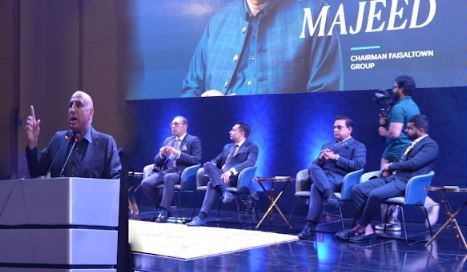
ISLAMABAD, MAR 17 /DNA/ – Prominent business leaders and policymakers highlighted Pakistan’s vast investment opportunities and emphasized the pivotal role of the real estate sector in driving economic growth at the Pakistan Investment Potential Summit held in Islamabad. The summit was hosted by President Islamabad Chamber of Commerce and Industry (ICCI) Sardar Tahir Mehmood, bringing together leading figures from the business community to deliberate on strategies for enhancing investment and economic development.

Advisor to the Prime Minister on Tourism and renowned business leader Sardar Yasir Ilyas Khan said that Pakistan possesses massive untapped investment potential, particularly in the real estate, tourism, and hospitality sectors. He noted that Pakistan’s diverse natural landscapes, cultural heritage, and historical treasures can significantly contribute to the national economy if properly promoted and supported with modern infrastructure. He stressed the need to build investor confidence through consistent policies, improved facilities, and investor-friendly regulations to attract both domestic and international investment.

Chief Guest Chaudhry Abdul Majeed, Chairman Faisal Town Group, said that Pakistan is a resilient and hardworking nation capable of achieving sustainable growth. He emphasized that policy stability, clarity of direction, and strong private sector participation are essential for unlocking the country’s economic potential. He noted that with effective collaboration between the government and the business community, Pakistan can harness its investment opportunities and move towards prosperity. He added that the sector also plays a vital role in employment generation and urban development while contributing significantly to economic activity and investment.

In his opening remarks, Sardar Tahir Mehmood, President ICCI, stated that Pakistan enjoys strong economic potential due to its strategic geographic location, young population, and expanding infrastructure network. He said the objective of the summit was to create a constructive dialogue among business leaders and policymakers to identify practical measures that could attract investment and accelerate economic growth.

Sardar Tahir Mehmood also presented a brief case study on the role of infrastructure corridors in shaping urban expansion and investment opportunities. He explained that around the world cities expand along major connectivity routes, and similar trends are emerging in Pakistan with the development of highways, airports, and economic corridors, creating new zones for investment and urban growth.

President Rawalpindi Chamber of Commerce and Industry, Usman Shaukat, stressed the importance of simplifying regulations, improving the ease of doing business, and encouraging overseas Pakistanis to play a more active role in the country’s economic development through investment.

Zohair Majeed, Director Faisal Town Group, highlighted the importance of the real estate sector as a major contributor to economic activity and employment generation in Pakistan. He stated that the sector not only provides housing solutions but also stimulates investment, supports numerous allied industries, and serves as a key driver of economic momentum.

The summit also featured a panel discussion on Pakistan’s investment climate, emerging sectors for economic growth, and the importance of infrastructure development in shaping new economic corridors across the country.

Participants observed that major infrastructure projects, expanding connectivity networks, and rapid urban development are creating new investment opportunities in sectors such as tourism, real estate, services, and industry. They emphasized that with consistent policies and investor-friendly reforms, Pakistan can attract both domestic and international investors and unlock its vast economic potential.

The summit was attended by a large number of renowned business leaders of the region, particularly from the real estate sector. Among others present were ICCI Senior Vice President Tahir Ayub, Vice President Irfan Chaudhry, and members of the ICCI Executive Committee.
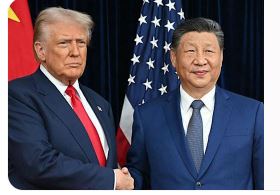
Trump seeks to delay his meeting with XI

Trump seeks to delay his meeting with XI

News Desk

WAHSINGTON: US President Donald Trump said on Monday that he is planning to delay a high stakes visit to China later in March by about a month because of the Iran war.

“We’ve requested that we delay it a month or so,” he told reporters at the White House, adding that it was important that he remained available to oversee the war.

The meeting between Trump and Chinese President Xi Jinping is currently set to take place between 31 March to 2 April, following their last face to face talks in October last year.

Chinese foreign affairs spokesman Lin Jian said on Tuesday that Beijing and Washington are in talks over “the timing and related matters of President Trump’s visit to China”.

China also rejected any connection between the delayed meeting and issues around the Strait of Hormuz – a critical waterway for global energy shipments from the Gulf.

“We have noted that the US side has publicly clarified these false reports by the media, stating that the relevant reports are completely wrong, and emphasised that the visit has nothing to do with the issue of the open navigation of the Strait of Hormuz,” Jian said.

On Sunday, Trump told the Financial Times he might postpone the meeting if China did not help unblock the Strait of Hormuz. But on Monday, he said he had proposed the delay solely to make sure he was around to manage the war.

“I’m looking forward to being with him,” he said, referring to Xi. “We have a very good relationship.”

“There’s no tricks to it either,” Trump added. “It’s very simple. We’ve got a war going on. I think it’s important that I be here.”

The Iran war has eclipsed most of Trump’s other foreign policy priorities, faced with an intensifying conflict and disruptions to the global oil supply, which has threatened to raise prices in the US.

US Treasury Secretary Scott Bessent said on Monday that the meeting’s delay would not be due to Washington’s request that Beijing help in the Gulf, or any trade disagreements.

Bessent said: “The President wants to remain in DC to coordinate the war effort… Travelling abroad at a time like this may not be optimal.”

Trump’s remarks come as frictions between the world’s two largest economies have grown, fuelled by the Iran war.

Beijing is a major buyer of Iranian energy exports and has criticised the US and Israeli strikes against the country.

Washington also announced it would investigate trade practices among a list of countries, including China, after Trump’s signature tariff policy was struck down by the Supreme Court in February.

Representatives from the US and China have met in Paris in recent days for negotiations, such as over investments, tariffs and economic sanctions.

The sides reached consensus on some issues and will carry on with negotiations, Chinese trade representative Li Chenggang was quoted as saying in state media outlet Xinhua on Monday.

US representatives briefed their Chinese counterparts on changes to Washington’s tariff measures, said Li.

India–Israel Nexus against Pakistan

India–Israel Nexus against Pakistan

Muhammad Fazeel

The historical development in the relationship of diplomacy between Israel and India is an incredible change in the scope of the international relations theory. The bilateral relations have shifted since the establishment of Israel in 1948 and independence of India in 1947, but have been changing to a more assertive relationship with each other, with increasing strength of strategic alliance. In the early Cold War period, India had a low level of contact with Israel, a policy of advocacy of Palestinian interests and embracing of the Non-Alignment policy. The end of the Cold War, however, brought about new geopolitical patterns that saw the two states re-evaluate their foreign policies. Diplomatic relations were established in 1992 hence establishing accessibility to collaborative relations in the areas of defence, technology, agriculture and trade. In the next decades, common security interests, technological stakes and strategicity have continued to bring the two states closer. However, currently the growing India-Israel relationship is often viewed by Pakistani analysts as a strategic nexus, with potential implications to the South Asian security relationship. Although the relationship is officially defined as the defence modernisation and collaboration in combating terrorism, it is rather contentious, considering the depth of this relationship and how it is likely to affect the security environment in Pakistan and its region in general.

The first policy that India adopted towards Israel was skepticism even though they noticed the State of Israel in 1950. The Nehru government was careful in forging any full diplomatic relationship on the basis of internal political reasons and also, it did not want to undermine its strong relationship with the Arab states and the entire Muslim world. The stand was also supported by the fact that India was sympathetic to the Palestinian cause, which was demonstrated by the support of the Palestinian Arabs by Mahatma Gandhi in his speech in India as well as his subsequent attacks at the partition of Palestine. As a result, India voted against the Partition Plan of 1947 by the United Nations and against admitting Israel to the United Nations. However, there was slow development of covert security cooperation. In 1962, Israel provided military aid to India, but quietly during the Sino-Indian War and the Indo-Pakistan War in 1965. Collaboration also grew in 1971 Indo-Pakistani conflict as India sought the help of Israel via diplomacy. Another landmark was reached in the year 1992 when India formed full diplomatic relations with Israel and since then bilateral relations between the two countries grew at a very fast rate. The high-level visits became common and in 2003, the Prime Minister of Israel Ariel Sharon paid a visit, and later, the further visits became even more intense with the leadership of Narendra Modi and Benjamin Netanyahu. In 2017, the historic visit of an Indian prime minister, Modi, to Israel was symbolic of the change of the relationship between the two countries, which had been mild cooperation to direct strategic partnership.

A defense relationship is the key to the relations between India and Israel. Israel today is one of the major suppliers of high end defence technology in India, with its offerings comprising of high end systems such as unmanned aerial vehicles, missile systems, radar networks and electronic warfare equipment. The notable such joint venture has been the Barak-8 surface-to-air missile system, a joint venture by the Defence Research and Development Organisation of India and Israeli Aerospace Industries. The system is designed to intercept aircrafts, drones and missiles and this is an example of a significant milestone in bilateral defence collaboration. Israel too has sold to India sophisticated unmanned aerial vehicles like the Heron and Searcher drones, which are used to gather intelligence information and spy. In addition, the Israeli technologies have been installed into the Indian fighters such as the Tejas Light Combat Aircraft, which has improved radar scanning, electronic warfare and the overall combat effectiveness. Besides procurement the relationship has grown to include joint production and technological co-operation. Through the policy of “ Make in India Indian Government and the policy of Atmanirbhar Bharat, Israeli companies have joined hands with Indian conglomerates to produce defence equipment in India. Joint ventures have been arranged to come up with aerospace electronics, missile systems and advanced radar systems and it also discussed plans on how to convert civilian aircrafts to multi-mission tanker-transport platforms with aerial refuelling capabilities, extending the range of Indian fighter jets.

The other important aspect of India-Israel cooperation that is critical is the aspect of intelligence sharing and counter-terrorism cooperation. The two states face similar security threats with regard to insurgency, militancy, and asymmetric warfare that has led to the evolution of intimate collaboration in the intelligence collection and internal security policies. There is a Joint Working Group on Counter-terrorism that promotes dialogue and exchange of information. Israeli experience in surveillance systems, border control systems and intelligence gathering has especially been useful to India in enhancing its internal security infrastructures. Deployments of Indian security forces like elite forces such as the National Security Guard have been trained in Israel about counter insurgency, urban warfare and intelligence based security management. In the recent years, collaboration has extended to the area of cybersecurity and technologies based on artificial intelligence and defence, where both parties are trying to protect critical infrastructure and the resilience against the changing digital threats.

The geopolitical convergence of India and Israel has its reflection in the strategic partnership. The country has a good relationship with the United States and is gradually adapting its security policies to the global counter-terrorism frameworks in both states. The India-Israel relations are a subset of the wider multi-alignment foreign policy of India in the Middle East that includes being involved with the states in the Gulf, Iran and Israel all at the same time. Indian officials insist that liaison between India and Israel is made without considering the connection of India with other parties in the region. However, the association has become more pronounced and politically obvious during the Modi government, replacing the previous set of interactions between the two in the paradigm of discreet interaction. Diplomatic visits, defence contracts and speeches highlight the increased strategic significance of this alliance in the global politics.

The changing relationship has also chosen to venture into the field of hybrid warfare especially through cyber war and information warfare. Cyber capabilities, such as hacking, digital surveillance, and manipulation of information, have turned into the tools that states use to control narratives and harm the opponents without having to face them in a military conflict. In this regard, it has been reported that Pakistani media houses have been targeted by hacking attacks to carry out disinformation and create internal unrest. Recent events involve an attack by hackers that has affected the live broadcast of the major Pakistani television channels including Geo News whereby the unauthorized information momentarily showed in the broadcast. Such incidences have been attributed by Pakistani security theorists to high-tech hacking attacks supposedly linked to Indian and Israeli cyber networks thus demonstrating how online warfare has turned out to be a relevant aspect of modern geopolitical enmity.

Another issue that is budding relates to the role that is growing in the use of drones and unmanned systems in the war. The Israeli drones like the Harop and Heron have been integrated into the military systems of India as a surveillance, reconnaissance and precision strike. Such systems were reported to be deployed close to sensitive borders during times when tensions are high in South Asia. Indian military sources have also reported that some of the drones manufactured by Israel and operated by Pakistan have been intercepted and neutralised, which highlights the growing importance of the unmanned technologies in the regional military rivalry. The development of drones has significantly changed the nature of the warfare as it has allowed remote operations, accuracy in targeting and intelligence collection and reduced the risk on human life.

In Pakistani perspective, the growing India-Israel relationship is raising concern over the possibility of a strategic relationship that may not be favorable to the interests of this country. Analysts in Islamabad argue that the handing over of hi-tech Israeli military technologies to India may change the traditional military calculus in the South Asian region. Other concerns are on intelligence cooperation and surveillance technologies that could be used in the disputed areas like Kashmir. There are reports that, in talks between India and Israel, can be of the common threat perceptions in case of Pakistan. Therefore, Pakistan has stepped up scrutiny on the changing relationship and is considering the significance of the relationship on national security and diplomatic policy.

Muhammad Fazeel

Student of International Relations in University of Okara

[email protected]

Pakistani tanker transits Strait of Hormuz on Iran-approved route amid Mideast tensions

Pakistani tanker transits Strait of Hormuz on Iran-approved route amid Mideast tensions

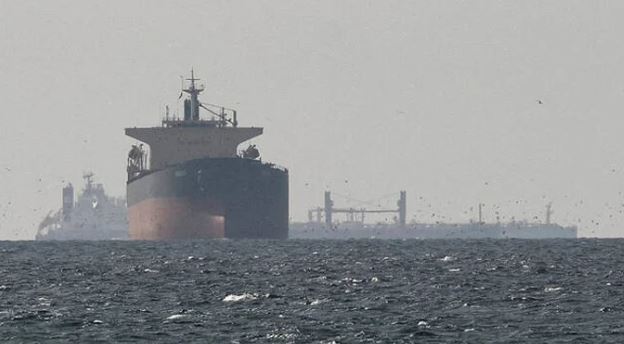
ISLAMABAD, MAR 17: A Pakistani-flagged tanker has become the latest vessel to navigate the Strait of Hormuz by sailing closely along the Iranian coastline, indicating that vessels may now require Tehran’s approval for safe passage through the world’s most critical oil chokepoint amid escalating regional tensions, Bloomberg reported on Tuesday.

The US-Israeli war on Iran is in its third week, with at least 2,000 people dead and no end in sight.

The Strait of Hormuz — which carries 20% of the world’s oil and liquefied natural gas — remains largely closed off, with US allies rebuffing President Donald Trump’s request for help to reopen the critical waterway, spiking energy prices and fears of inflation around the world.

According to vessel-tracking data compiled by Bloomberg, the Pakistani-flagged Karachi sailed through a narrow gap between the two Iranian islands of Larak and Qeshm with open signals on Sunday, before tracking the coast into the Gulf of Oman.

Meanwhile, two bulk carriers took the same route on Monday morning, openly signalling that they were transiting through the chokepoint even as other ships prefer to switch off transponders for safety.

Two India-flagged liquefied petroleum gas tankers also transit the strait in the early hours of Saturday, while a Gambia-flagged general cargo ship just exited the waterway on Tuesday.

“Sporadic signals placed the three vessels near Larak, but the full route could not be determined because of electronic interference that scrambles information coming from vessels in the region,” the publication reported.

Harrison Prétat, deputy director and fellow with the Asia Maritime Transparency Initiative at the Centre for Strategic and International Studies, believes that if the route continues to be used successfully, it could mean a traffic control system is being imposed by Iran.

“That could mean Tehran attacks vessels or uses mines on the traditional route — while maintaining a free channel for friendly tankers on the other side,” the publication stated.

Speaking to Bloomberg, Prétat said that the use of this route so far appears to be tied to Iran’s apparent approval of specific ships transiting the strait, which makes some sense, as this area would be easier for Iranian authorities to control.

Since US and Israeli attacks began more than two weeks ago, Iran has targeted several vessels in and around the Strait of Hormuz, effectively restricting traffic through the critical waterway. The disruption has left some ships stranded inside the Persian Gulf while others have been unable to enter, creating an unprecedented shock to energy trade.

“This creates a system in which the Strait is not formally closed, yet transit increasingly depends on political understandings with Tehran,” analysts at JPMorgan Chase & Co, including Natasha Kaneva, said in a note.

Under normal conditions, vessels rarely sail so close to Iran due to security concerns. Standard navigation routes also direct ships exiting the strait towards the opposite side of the channel, although at least one vessel using the traditional path was attacked last week.

“We could be seeing the start of a verification process by Iran, whereby ships must be approved to transit via the Strait of Hormuz by calling between Larak and Qeshm,” said Martin Kelly.

While these transits have provided some reassurance to oil traders, the route’s proximity to Iran continues to raise concerns for insurers and banks financing commodity shipments. Insurers typically classify high-risk zones in policy terms, while banks may issue compliance alerts when vessels they finance operate near Iranian waters.

However, the number of ships using the route remains a small fraction of normal traffic.

“These limited authorised passages fall far short of restoring typical shipping volumes or energy flows from the region,” Harrison Prétat added.

Al-Shifa Trust urges protective glasses as spring allergens surge

Al-Shifa Trust urges protective glasses as spring allergens surge

RAWALPINDI, MAR 17 /DNA/ – Pollen levels in Rawalpindi and Islamabad have climbed to dangerous levels, with Al-Shifa Trust Eye Hospital warning that the seasonal surge is driving a rise in painful eye allergies across the twin cities.

The Pakistan Meteorological Department has recorded 14,695 pollen particles per cubic metre of air in Islamabad’s H-8 sector. Counts in G-6 and E-8 stood at 5,510 and 5,391 respectively. Paper mulberry, the dominant allergen, accounted for 14,558 particles and was classified as very high. The pollen season typically runs from mid-March through April.

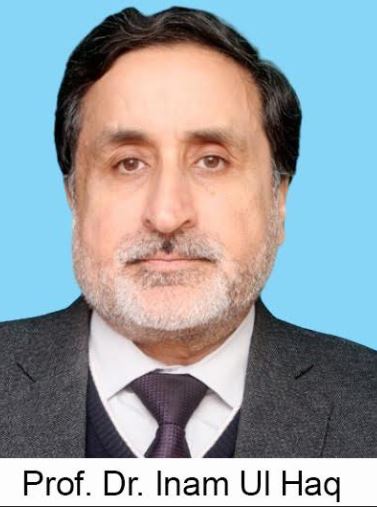
Prof. Dr. Inam Ul Haq, senior consultant at Al-Shifa Trust Eye Hospital, said the high concentration of airborne pollen is triggering allergic conjunctivitis, in which the eyes become red, itchy and inflamed. He advised residents going outdoors to wear protective or large-frame sunglasses to block pollen from reaching the eyes.

He said pollen allergies commonly cause burning, itching, redness, tearing, swelling and sensitivity to light. People with existing allergies or asthma should also consider using air purifiers indoors.

He added that pollen allergy is one of the most common conditions among patients visiting the hospital. The Ministry of Health estimates that around 120,000 residents, or about 30 percent of the population in the twin cities, suffer from allergic rhinitis. Hospitals, including Benazir Bhutto Hospital in Rawalpindi, report a sharp rise in allergy cases each year.

Prof. Inam Ul Haq said climate change is worsening the problem. Warmer springs and reduced rainfall allow pollen to remain in the air for longer periods. Summer has expanded from about 150 to 180 days, while spring has shrunk from roughly 45 days to nearly 10 days, reducing the rainfall that historically cleared pollen from the atmosphere.

A study published on February 2, 2026, in the International Journal of Biometeorology, analysing 16 years of pollen data in Islamabad, found that higher temperatures and rising air pollution are increasing pollen concentrations and extending the allergy season.

Doctors recommend staying indoors between mid-morning and early evening when pollen counts peak, keeping windows closed and using air conditioning. People with severe or persistent symptoms should consult a doctor before using eye drops.

HEC launches mentoring program for all universities

HEC launches mentoring program for all universities

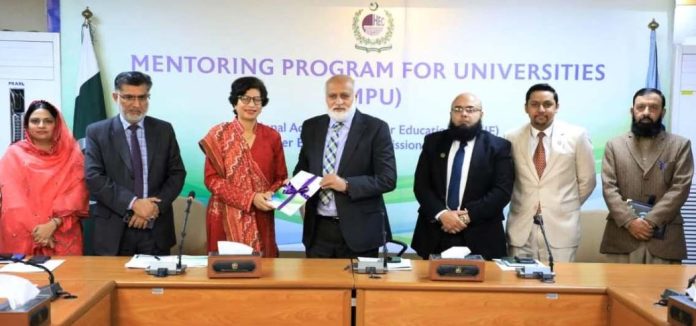
ISLAMABAD, MAR 17 /DNA/ – Building upon the success of its mentoring efforts for academia, the Higher Education Commission (HEC) Pakistan has launched Mentoring Program for Universities (MPU) to train leadership and faculty of higher education institutions across the country.           

Initiated through the National Academy of Higher Education (NAHE), the program is an expanded version of HEC’s Women Empowerment and Mentoring Program launched back in November 2024 for 18 women universities. 

The Mentoring Program for Universities is a nationwide initiative aimed at strengthening leadership capacity and professional development within the higher education institutions (HEIs). It is a gender-inclusive program designed to support faculty members and academic leaders from both public and private sector universities. The program seeks to foster a culture of mentorship, collaboration, and knowledge sharing across the higher education landscape of Pakistan.

Chairman HEC Engr. Prof. Dr. Niaz Ahmad Akhtar (S.I) graced the launch ceremony, held at HEC Secretariat on Tuesday, with his presence alongside the members of HEC’s senior management committee. Vice Chancellors of all the universities also joined the event virtually.

In his remarks, the Chairman HEC termed mentoring of academic leadership and faculty a crucial part of institutional development. Highlighting the significance of readiness for mentorship, he underlined that the country’s academia has no dearth of learned figures with high capability to deliver in this specific area. The program, he asserted, will help exploit the expertise of such senior academicians.

Dr. Niaz appreciated NAHE for the success of Women Empowerment and Mentoring Program and expanding the scope of this initiative to all the universities. “This was very much needed, and it was high time to further extend the program,” he asserted.

Speaking on this occasion, Managing Director NAHE Dr. Noor Amna Malik shed light on the program’s background. She underlined the achievements of Women Empowerment and Mentoring Program. “The initiative garnered huge success and repute, paving the way for its expansion to all the universities across the country,” she affirmed. She maintained that as many as 890 mentors and mentees were produced through the Women Empowerment and Mentoring Program. “The initiative proved to be a support system within our own ecosystem, as it has been institutionalised and internalised where people assist and uplift one another,” she emphasised.

Dr. Malik underscored that the Mentoring Program for Universities will help remove the interpersonal and psychological barriers facing the academic leadership and faculty. She said the program will provide guidance to its beneficiaries to deal with challenges in the institutions, develop leadership capacities, and enhance ability to contribute to their own growth alongside the growth and transformation of their respective academic institutions. She added that the initiative will support emerging leaders in higher education sector by maximising their potential, developing their skills and enhancing their performance. Dilating on the program modules, she said that NAHE has kept an open window for the universities to include need-based areas to solve their respective problems.

Vice Chancellor Lahore College for Women University (LCWU) Dr. Uzma Quraishi expressed her views on the impact of the Women Empowerment and Mentoring Program. She said the program established the need for mentorship in a professional setup, as it focused on personal and professional growth regardless of gender. She informed the audience that the program produced 240 mentors in three cohorts at LCWU who are now cascading their learning and making a difference. She revealed that the initiative enables universities to include new modules in line with their own needs. She asserted that the initiative has great potential to transform the entire academic ecosystem by empowering the academicians and learners.

EU distances itself from the Gulf war

EU distances itself from the Gulf war

Speaking at a press conference following the Foreign Affairs Council meeting in Brussels Kaja Kallas emphasized that there is “no appetite” among EU member states to expand the bloc’s existing naval mission, Aspides—currently focused on protecting shipping in the Red Sea from Houthi threats—to the Strait of Hormuz

DNA

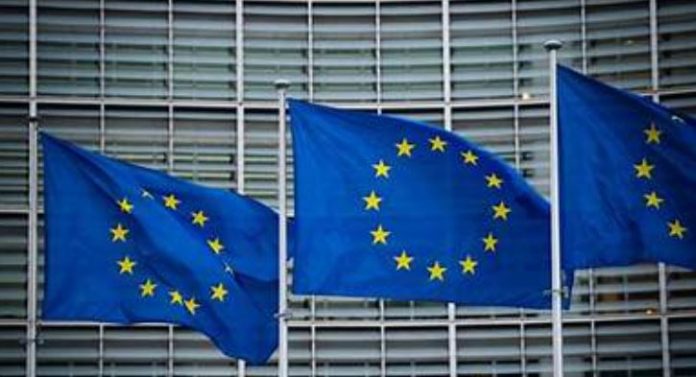
BRUSSELS: The European Union has firmly distanced itself from direct military involvement in the ongoing conflict involving Iran, with EU foreign policy chief Kaja Kallas declaring that “this is not Europe’s war.”

Speaking at a press conference following the Foreign Affairs Council meeting in Brussels Kaja Kallas emphasized that there is “no appetite” among EU member states to expand the bloc’s existing naval mission, Aspides—currently focused on protecting shipping in the Red Sea from Houthi threats—to the Strait of Hormuz.

 “Nobody wants to go actively in this war,” Kallas stated bluntly, adding that Europe has not initiated the conflict and remains unclear on its political objectives. She reiterated that while the EU is not a party to the war, “Europe’s interests are directly at stake,” particularly in safeguarding critical global energy and trade routes disrupted by tensions in the region.

The comments come amid mounting pressure, including from US President Donald Trump, for international allies to contribute to securing the Strait of Hormuz—a vital chokepoint for roughly one-fifth of the world’s oil supply—following Iran’s actions that have led to blockades and surges in energy prices.

Kallas noted discussions on alternative approaches, such as replicating a UN-brokered Black Sea grain deal model to restore oil and gas flows, and she had consulted UN Secretary-General António Guterres on the idea. However, she stressed that any shift in Aspides’ mandate requires unanimous support from the 27 member states, with several—including Germany and Italy—expressing strong reservations against offensive operations or deeper entanglement.

Kallas highlighted the EU’s priority as protecting citizens and preventing broader economic fallout, including risks to global food security from fertilizer shortages tied to energy disruptions. She called for de-escalation and diplomatic efforts to reopen key routes, warning against letting focus on other crises, like Ukraine, diminish amid the Middle East escalation.

The statement underscores growing transatlantic divergences, with Europe rejecting calls to join what some describe as an “open-ended war” while prioritizing defensive maritime security and multilateral solutions over military expansion.

Prime Minister Speaks with President of Kazakhstan

Shehbaz Sharif

DNA

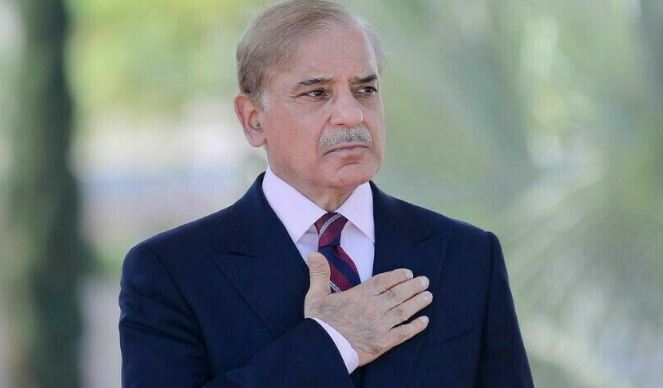
ISLAMABAD, MAR 17: Prime Minister Muhammad Shehbaz Sharif held a telephone conversation with the President of the Republic of Kazakhstan, Kassym-Jomart Tokayev this afternoon.

During their warm and cordial call, the Prime Minister congratulated President Tokayev on the success of the historic constitutional referendum held in Kazakhstan, on 15 March 2026.

The Prime Minister noted that the overwhelming turnout and support for the new Constitution reflected the trust and confidence of the people of Kazakhstan in President Tokayev’s visionary leadership and reform agenda. He expressed confidence that the reforms would further strengthen governance, institutional stability, and national development in Kazakhstan.

While fondly recalling President Tokayev’s visit to Pakistan last month, the Prime Minister assured the President that Pakistan was actively following up on the decisions taken during that visit.

 In this regard, he said that the two sides would meet soon, to firm up proposed MoUs and agreements. President Tokayev reiterated his invitation to the Prime Minister to undertake an official visit to Kazakhstan not later this year, which was accepted.

The two leaders also exchanged views on regional developments, particularly the situation in Afghanistan, and underscored the importance of promoting dialogue, cooperation, and connectivity for shared prosperity.

The Prime Minister also extended warm greetings to President Tokayev and the brotherly people of Kazakhstan on the auspicious occasion of Eid-ul-Fitr, and conveyed his best wishes for their continued peace, progress, and prosperity.

US, Israel want to divide Muslim nations: Russian envoy

US, Israel want to divide Muslim nations: Russian envoy

Ambassador Khorev noted that Pakistan has not yet formally approached Russia for the purchase of Russian oil. However, he indicated openness to future discussions, stating there is a possibility that Pakistan could seek Russian energy supplies to meet its growing needs, especially given Russia’s reliable export capacity and competitive pricing

Ansar Mahmood Bhatti

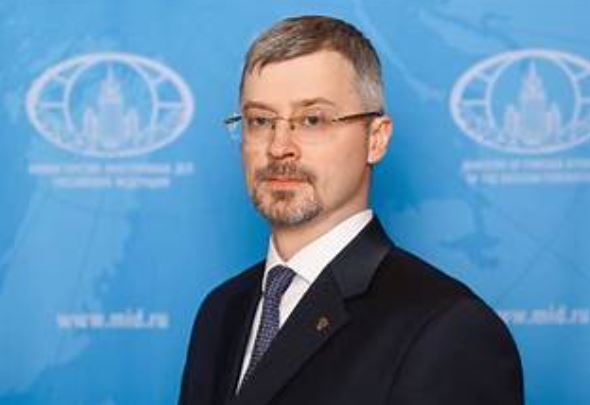
ISLAMABAD: The Russian Ambassador to Pakistan, H.E. Mr. Albert P. Khorev, held a press briefing at the Russian Embassy in Islamabad, addressing a range of regional and international issues amid escalating tensions in the Middle East and ongoing global conflicts.

Ambassador Khorev accused the United States and Israel of actively attempting to sow disorder and division among Muslim countries through provocative actions and policies that exacerbate regional instability. He emphasized that such efforts undermine peace and unity in the Muslim world, calling on all parties to exercise restraint.

On the Gulf crisis, the ambassador stated that Russia seeks an immediate end to the escalating tensions. He urged all involved nations to prioritize diplomatic channels and dialogue to resolve disputes peacefully, warning that continued confrontation could lead to broader instability with severe consequences for global security.

Regarding recent attacks on Iran, Ambassador Khorev described them as baseless and unjustified, particularly in light of clear statements from the IAEA Director General affirming that Iran is not pursuing nuclear weapons development.

 He reiterated Russia’s support for Iran’s right to peaceful nuclear energy under international safeguards and condemned any military actions that violate sovereignty.

Shifting to Afghanistan, the ambassador stressed that outstanding issues should be addressed exclusively through diplomatic channels. He highlighted the high risk of civilian casualties in any air strikes or military escalations, advocating for inclusive negotiations involving all stakeholders to ensure lasting stability.

On energy cooperation, Ambassador Khorev noted that Pakistan has not yet formally approached Russia for the purchase of Russian oil. However, he indicated openness to future discussions, stating there is a possibility that Pakistan could seek Russian energy supplies to meet its growing needs, especially given Russia’s reliable export capacity and competitive pricing.

Addressing the Ukraine conflict, the ambassador asserted that Russian military forces are in a significantly stronger position compared to Ukrainian forces. He described Russia’s actions as responsible and measured, despite massive financial and military support from Europe and the United States—amounting to billions of dollars and euros poured into Ukraine.

According to him, this extensive aid has failed to alter the battlefield dynamics meaningfully, underscoring the futility of prolonging the conflict through external intervention.

He added, as hadbeen noted on numerous occasions, Russia did not view the conflict in Ukraine as a standoff between Russia and Ukraine, but rather as an indirect confrontation with the “collective West,” which refuses to accept the loss of a world order based on colonial principles and Western dominance. Clearly, the conflict in Ukraine has become a powerful catalyst for a new multipolar world, the outcome of which will influence the global balance of power for years to come.

‘In my article published on February 24, 2026, in the Pakistani press on the occasion of the fourth anniversary of the launch of the special military operation in Ukraine, I described in detail the root causes of the crisis, as well as Russia’s peacekeeping efforts between 2014 and 2022. These causes include the Kiev regime’s determination to forcibly reintegrate Donbass at any cost, guided by the principle that “land is more important than people,” and against the will of the Russian- speaking residents of the region. I recommend reading it’, he added.

The ambassador said, the Alaska Summit was one of the few constructive moments of cooperation between the two largest nuclear powers, who bear a special responsibility for maintaining international peace and security.

‘Despite enormous external pressure, our Pakistani colleagues have maintained a balanced and consistent stance on the Ukrainian conflict. We hope they will join us in drafting this strategic document, which is intended to establish the political and legal foundation for an indivisible continental security architecture and a system of cooperation across Eurasia’, the ambassador concluded.

Energy to Plate: How Pakistan’s Fuel Crisis Threatens the Nation’s Food Supply

Energy to Plate: How Pakistan’s Fuel Crisis Threatens the Nation’s Food Supply

By: Dr. Hamid Masood DVM, MPhil, PhD

Pakistan currently maintains sufficient fuel reserves, but prolonged conflict could disrupt supply chains, threatening agricultural production and food availability. Ensuring energy stability is therefore critical to safeguarding the nation’s food security and preventing potential shortages.

Agriculture, the backbone of Pakistan’s economy, is highly energy intensive. Farmers rely on diesel and electricity for irrigation, running pumps, tractors, and other machinery. Livestock and poultry production also depend on consistent fuel supply for heating, ventilation, feed processing, and transport. When fuel becomes scarce or prohibitively expensive, operational costs soar, and productivity suffers.

For instance, a broiler or layer farm may see feed costs increase drastically because transportation of raw materials and finished products becomes erratic. Similarly, small-holder farmers struggle to irrigate crops efficiently, leading to lower yields and crop losses. The ripple effect extends to food processing industries, cold chains, and markets, ultimately hitting the consumer with higher food prices.

The fuel crisis also threatens Pakistan’s ability to achieve food self-sufficiency. With energy costs rising, farmers may reduce acreage, delay planting, or shift to less energy-intensive crops, compromising both quality and quantity. Poultry and dairy sectors, which already operate on thin margins, are particularly vulnerable. This could increase reliance on imports, putting further pressure on the economy and foreign reserves. Addressing this challenge requires a multi-pronged approach: prioritizing fuel supply for agriculture, promoting renewable energy solutions like solar-powered irrigation, and improving efficiency in transport and logistics. Policymakers must recognize that energy security and food security are inseparable. Failing to do so risks not just higher prices at the market but a long-term threat to the nation’s nutrition and economic stability.

In conclusion, Pakistan’s fuel reserves provide temporary relief, but prolonged conflict could jeopardize both energy and food security. Shifting toward sustainable, water-based energy—through projects like the Kalabagh Dam—offers a viable path to strengthen our energy independence and safeguard agricultural production. By investing in renewable infrastructure today, Pakistan can ensure a resilient and secure food future for generations to come.

Stay Connected

64FansLike
60FollowersFollow

Latest Reviews

Exchange Rates

USD - United States Dollar
EUR
1.14
GBP
1.34
AUD
0.70
CAD
0.71