Home Blog Page 207

Sentencing Kashmiri Women is Indian State Terrorism: Ali Raza Syed

Sentencing Kashmiri Women is Indian State Terrorism: Ali Raza Syed

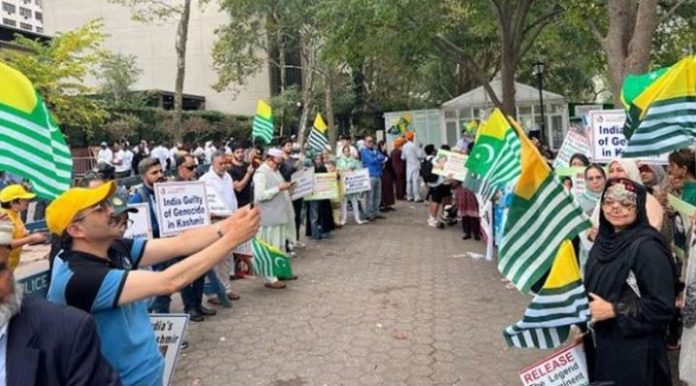
BRUSSELS, MAR 25 /DNA/ – Chairman of Kashmir Council Europe (KCEU) Ali Raza Syed has strongly condemned the sentencing of Kashmiri woman leader and head of the organization Dukhtaran-e-Millat, Asiya Andrabi, to life imprisonment by a court in Delhi, as well as the sentencing of her two associates, Fahmeeda Sofi and Nahida Nasreen, to 30 years in prison each.

In a statement, rejecting this baseless sentence, the Chair of KCEU described these punishments as an act of Indian state terrorism. Ali Raza Syed stated that the verdict represents a miscarriage of justice and reflects the continued violation of fundamental human rights in Indian Illegally Occupied Jammu and Kashmir.

International human rights organizations should take immediate notice of the conviction of Kashmiri women in the false case.

He said that this oppressive decision by the Indian court is part of broader Indian repressive measures aimed at silencing the voice of the people of occupied Kashmir. India has imposed draconian laws in occupied Kashmir and is using such tactics to suppress every voice raised for the legitimate rights of the Kashmiri people, specially right to self determination.

He said that at present, many political leaders and human rights activists, including Yasin Malik and Khurram Pervez, are imprisoned in Indian jails and steps should be taken at the international level for their immediate release.

Ali Raza Syed further stated that the Kashmiri people are steadfastly striving for their right to self-determination in accordance with the relevant resolutions of the United Nations Security Council, and that their struggle cannot be crushed through oppression and brutality.

He urged the international community to support the just and lawful struggle of the Kashmiri people and to play its role in the peaceful resolution of the Kashmir issue.

It is worth mentioning that the Indian court, described as biased, has sentenced Dukhtaran-e-Millat Chairperson Asiya Andrabi to life imprisonment in what has been termed a false case. The same court has also sentenced her two associates, Fahmeeda Sofi and Nahida Nasreen, to 30 years imprisonment each.
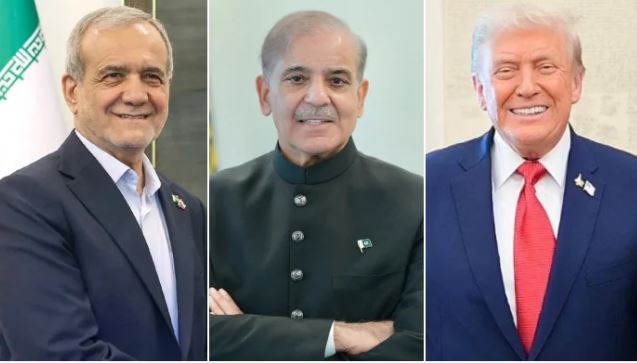
Malaysian President welcomes Pakistan’s peace endeavours

Malaysian President welcomes Pakistan’s peace endeavours

Anwar Ibrahim says Pakistan’s relationships with the relevant parties, and its standing as a credible voice in the Muslim world, place it in a strong position to help create the conditions for meaningful negotiations

DNA

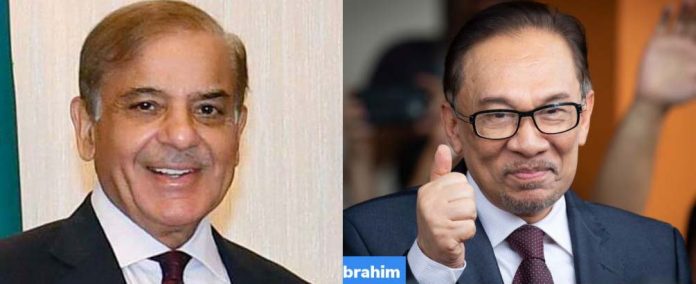
KUALUMPUR: Prime Minister of Malaysia Anwar Ibrahim has  welcomed Pakistan’s timely and constructive offer to host dialogue between the United States and Iran. ‘I commend Prime Minister Shehbaz Sharif and the leaders of other friendly nations for stepping forward at a moment of acute regional danger, following the earlier commendable efforts of the leadership of Oman and other friendly countries’.

Pakistan’s relationships with the relevant parties, and its standing as a credible voice in the Muslim world, place it in a strong position to help create the conditions for meaningful negotiations.

Malaysia supports this initiative and encourages in particular the United States and Iran to respond in the spirit in which it was offered. I note with cautious hope the signals, however incomplete, that suggest some space for diplomacy may still exist. That space should be treated with the seriousness it deserves.

He said, any negotiation must proceed on the basis of genuine intent: a clear commitment to ending the conflict, not managing its tempo for tactical advantage. The international community has seen too many ceasefires that function as pauses rather than conclusions. The region deserves something more durable.

Malaysia reaffirms Iran’s right to defend its sovereignty, as recognised under international law, particularly in the face of continued Israeli strikes in the country and in Lebanon. At the same time, we call on all parties to exercise maximum restraint and to ensure that civilian populations and the infrastructure of neighbouring states, namely the Gulf states, are not drawn further into a conflict they did not choose. The Gulf states, the region and the world have much at stake — economically, socially and in terms of long-term stability — and their peoples must not bear the consequences of decisions taken elsewhere.

The prime minister said, it was also a matter of concern that some of the strongest advocates of the rules-based international order appear to apply it unevenly. International law cannot be invoked selectively. It cannot shield one party from accountability while denying another its inherent right to self-defence. Its credibility depends on consistency.

‘In recent days, I have held discussions with leaders of the Gulf Cooperation Council, Türkiye, Egypt, Indonesia, Japan, Pakistan and other partners to better understand the situation and to advocate for de-escalation. Malaysia will continue to support every credible effort towards a just and lasting peace’, he concluded.

Pakistan ‘delivered’ US proposal to Iran ahead of possible talks to end war

Pakistan 'delivered' US proposal to Iran ahead of possible talks to end war

ISLAMABAD, MAR 25: Pakistan has delivered a US proposal to Iran, a senior Iranian source told Reuters on Wednesday, but the venue of any talks between Tehran and Washington to end the war has yet to be decided.

The source, who asked not to be named due to the sensitivity of the matter, did not disclose details of the proposal and whether it was the 15-point US framework proposal to end the war reported by news outlets.

The source also said Turkiye was helping to find ways to end the way and “either Turkiye or Pakistan are under consideration as the venue for such talks”.

The risk of a prolonged war in Iran spilling over into Pakistan is among Islamabad’s biggest fears, analysts and security officials say. Pakistan, ⁠which has been engaged in a conflict with the Afghan Taliban, has also suffered from fuel disruptions caused by the Iran war, which was started by the US-Israel on February 28.

The development comes two days after the Financial Times reported that Pakistan is positioning itself as the lead mediator trying to broker an end to the US and Israeli war against Iran.

Discover more
Journalism Workshops
International travel guides
Food delivery service
Chief of Defence Forces (CDF) and Chief of Army Staff (COAS) Field Marshal Asim Munir spoke with US President Donald Trump on Sunday, Reuters quoted the newspaper that cited two people briefed on the call.

It also reported that senior Pakistani officials were back-channelling communications between Tehran, Steve Witkoff and Jared Kushner.

The White House also confirmed Trump’s call with Field Marshal Asim Munir.

When asked about a possible visit by Witkoff and Kushner to Islamabad, White House spokesperson Karoline Leavitt said: “These are sensitive diplomatic discussions and the US will not negotiate through the press. This is a fluid situation, and speculation about meetings should not be deemed as final until they are formally announced by the White House.”

Over the past 48 hours, Pakistan, in close coordination with Turkiye and Egypt, has played a pivotal role in back-channel diplomacy, relaying messages between the US and Iran to prevent further conflict and maintain stability in the region.

On the other hand, CNN reported, Pakistan could host a meeting between the United States and Iran later this week under a proposal now being considered. The report said US Vice President JD Vance could attend the proposed meeting.

Prime Minister Shehbaz Sharif also took to X, saying that Islamabad was ready to host talks between the US and Iran to settle the conflict in the Middle East.

Trump’s change in tone marked a sharp shift after he warned on Saturday that he would hit Iran’s power plants if the Strait of Hormuz was not reopened within 48 hours. According to CNN, the move towards talks followed warnings from Gulf allies that striking civilian infrastructure in Iran could trigger a dangerous escalation.

Iran denies claims of talks
Even so, the prospect of diplomacy remains uncertain. Iran has denied any negotiations with the United States.

Speaking to India Today, Iran’s foreign ministry spokesperson Esmail Baghaei dismissed Trump’s claims of talks. “We have made it clear yesterday there is no talks or negotiations between Iran and the United States,” he said.

Discover more
Middle East conflict analysis
Political commentary books
International Politics Analysis
“We’ve had a very catastrophic experience, I should say, of the United States diplomacy. We were attacked two times within a span of nine months when we were in the middle of a negotiating process to resolve the nuclear issue. So this was a betrayal of diplomacy.”

Separately, Reza Amiri Moghadam — Iran’s ambassador to Pakistan — said that no direct or indirect talks between Tehran and Washington have taken place.

“Based on my information, contrary to Trump’s claim, no direct or indirect negotiations have taken place between the two countries so far,” he was quoted as saying.

He added that “friendly countries seek to lay the ground for dialogue between Tehran and Washington, which we hope will be fruitful in ending this imposed war”.

More than 2,000 people have been killed in the war that the US and Israel launched on February 28 against Iran, which has upended markets, driven up fuel costs, accelerated global inflation fears and convulsed the Western defence alliance.

Hanif Abbasi orders probe into Tezgam Express incident

Hanif Abbasi orders probe into Tezgam Express incident

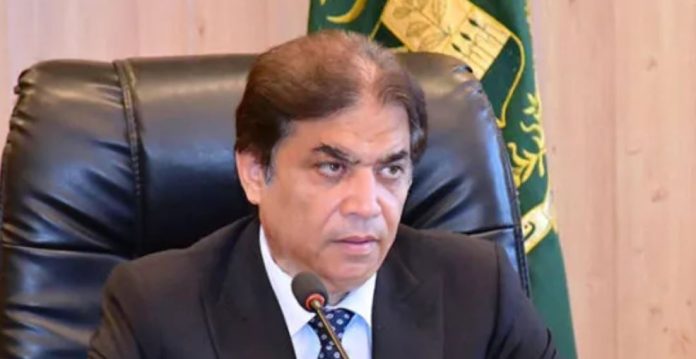
ISLAMABAD, Mar 25: Federal Minister for Railways Muhammad Hanif Abbasi has ordered a high-level inquiry to determine the exact cause of an incident involving the 8-Down Tezgam Express.

According to a spokesperson for Pakistan Railways, the investigation’s findings will help identify any lapses and ensure measures are taken to prevent similar incidents in the future.

The spokesperson said Pakistan Railways launched an immediate relief operation following the incident. The Multan Division responded swiftly by dispatching a relief train and trucks to the site.

He said the rescue teams, including Rescue 1122 personnel and railway medical staff, reached the location promptly and are actively engaged in assistance efforts.

He further confirmed that no casualties have been reported. Work is currently underway to restore the affected track at the earliest, aiming to resume normal train operations without delay.

UNICEF warns of rising child casualties as Middle East conflict intensifies

UNICEF warns of rising child casualties as Middle East conflict intensifies

WASHINGTON, Mar 25: Children across the Middle East are facing a “devastating price” since the US-Israeli war with Iran started last month, a senior official at UNICEF warned Monday.

“Twenty-three days into the escalating conflict in the Middle East, children across the region are paying a devastating price.

“A further descent into a wider or protracted conflict would be catastrophic for millions more,” Ted Chaiban, UNICEF’s deputy executive director for humanitarian action and supply operations, told reporters in New York.

Chaiban said more than 2,100 children have been killed or injured, including 206 children killed in Iran and 118 in Lebanon.

He also warned against rapid displacement across several countries driven by relentless bombardment and evacuation orders.

In Iran, he said the UN Refugee Agency (UNHCR) estimates that up to 3.2 million people have been displaced, including up to 864,000 children.

“We are calling for three immediate actions: a cessation of hostilities and protection of civilians and civilian infrastructure,” Chaiban said, reminding all parties of their obligations under international humanitarian law.

A regional escalation has continued to flare since the US and Israel launched a joint offensive on Iran on Feb. 28, killing over 1,340 people so far, including then-Supreme Leader Ayatollah Ali Khamenei.

Iran has retaliated with drone and missile strikes targeting Israel along with Jordan, Iraq and Gulf countries hosting US military assets, causing casualties and damage to infrastructure while disrupting global markets and aviation.

A

Petrol pump owners threaten countrywide shutdown if concerns go ‘unheard’

Petrol pump owners threaten countrywide shutdown if concerns go 'unheard'

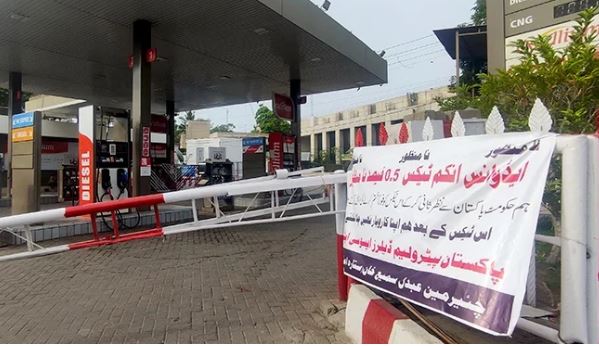
ISLAMABAD, MAR 25: The All Pakistan Petrol Pump Owners Association (APPPOA) has warned of a nationwide shutdown of petrol pumps if its concerns are not addressed, seeking an immediate meeting with Federal Minister for Petroleum Ali Pervez Malik.

In a letter addressed to the minister, Vice Chairman APPPOA Nouman Ali Butt maintained that petrol pump owners across the country are facing serious challenges related to operations, finance, pricing, and sudden disruptions caused by force majeure situations.

The development comes amid uncertainty over fuel prices due to ongoing Middle East tensions, which have prompted the government to increase fuel prices.

In his letter, Butt said that they had previously raised the same issues on March 6 but received no response. The association called on the government to include industry stakeholders in policymaking related to the petroleum sector.

The APPPOA also requested an urgent meeting with the minister to discuss the concerns of approximately 14,000 to 15,000 petrol pump owners, stating that these issues require immediate attention.

Discover more
Geographic Reference
Media Production Services
Real-time Event Updates
The letter also carried a warning that if their concerns continue to be ignored, petrol pump owners would be “compelled to shut down operations.

Such a move, the association cautioned, could trigger another fuel crisis in Pakistan.

While expressing hope for a constructive response, the association noted that responsibility for any resulting crisis would lie with the Petroleum Division if timely action is not taken.

It is pertinent to note that since the start of the Middle East conflict, the government has increased petrol and diesel prices by Rs55 per litre each, kerosene oil by over Rs200 per litre, and high-octane fuel by Rs200 per litre.

Earlier on Tuesday, a committee monitoring petrol prices was informed that Pakistan has “largely secured” petrol cargoes for March and April.

The meeting was chaired by Finance Minister Muhammad Aurangzeb, where participants reviewed the energy supply situation and assessed developments in global oil and gas markets, according to a statement issued by the finance ministry.

Sunshine-clouds interplay turn upper Swat into living canvas for spring tourists

Sunshine-clouds interplay turn upper Swat into living canvas for spring tourists

SWAT, MAR 25 (APP/DNA): As spring breathes new life into the lush green valleys of Swat valley, an enchanting dance between sunshine and drifting clouds is transforming the highlands into a dreamscape, which is nowhere more vividly than at Mahodand lake.

Perched at about 9,400 feet above sea level and stretching over two kilometers, the famous alpine lake sits cradled among towering deodar forests in the scenic Usho valley, attracting spring tourists in droves.

Here, spring unfolds like a living painting in Mahudhand where sunlight breaks through soft grey clouds that would be followed by a gentle drizzle, creating a rhythm that captivates every visitor.

“It feels like the sky is playing with the mountains and clouds take tourists into lap,” said Nasir Khan, a visitor from Nowshera who returned after five years with his family.

“We waited for the rain, and when it came, the whole valley changed colour in spring. It’s something you don’t just see but you feel it”, he added.

Alaike, birdsong through the tall trees add charm in Osho valley where fresh buds hint at the season’s bloom. Each raindrop seems to polish the landscape by deepening the greens of the forests and giving the lake’s waters a shimmering, emerald glow, he added.

Nasir’s children laugh as they toss lingering snowballs into the air, while tourists families gather along the banks to capture photographs against the shifting light.

“I have never seen my kids this excited by nature,” said Meena Gul, a schoolteacher visiting from Peshawar. “They’re running between sunshine and rain, chasing clouds as if it’s a game. For us, it’s a break but for them, it’s magic.”

As temperatures rise, snowmelt feeds the lake, swelling its bluish-white waters and enhancing its already breathtaking charm.

Visitors glide across the surface in small boats, a popular activity that offers a closer look at the changing reflections of sky and forest.

“The boating experience is unforgettable,” said Nasir Khan. “For just a small cost, you get a front-row seat to one of the most beautiful places in Pakistan.”

The charm of Mahodand is not just visual but it’s deeply sensory. The crisp mountain air carries the scent of pine and fresh earth, while local vendors serve freshly cooked trout, a specialty of the lake that draws food lovers as much as sightseers.

This spring spectacle has coincided with a surge in tourism across Khyber Pakhtunkhwa. During the recent Eid-ul-Fitr holidays, over 262,000 tourists visited the province, with Swat alone hosting more than 186,000 visitors, according to officials.

“We made special arrangements to ensure tourists could enjoy their travel without inconvenience,” said Usman Mehsud, Director General of the provincial tourism authority. “Swat continues to lead as a destination because of its unmatched natural beauty and improved access.”

Indeed, better infrastructure including the Swat Motorway has made the once-remote lake more accessible, opening it up to families and adventure seekers from across the country.

To accommodate the influx, authorities have expanded facilities under eco-tourism initiatives. Modern camping pods, equipped with essential amenities, now offer affordable stays in scenic locations.

“Each pod gives visitors comfort without taking away from the natural experience,” said Saad Khan, a spokesperson for the tourism authority.

“We want people to stay closer to nature and mountains especially in the lake vacinity, safely and affordably.”

Beyond convenience, safety has also been strengthened. Tourism police remain deployed at key points, and a 24/7 helpline ensures assistance is always within reach.

As infrastructure grows, Mahodand lake retains its quiet and timeless charm where serenity and beauty meets.

Standing by its shores as clouds roll over snow-dusted peaks, one realizes that the true appeal of this majical place lies not just in its beauty but in its ability to slow time.

As another light drizzle begins to fall, Nasir Khan smiles and looks toward the water of Mahudhand. “You don’t come here just to visit,” he said softly adding, “You come here to remember what peace feels like.”

Peace Is Not Claimed, It Is Earned

Peace Is Not Claimed, It Is Earned

by Muhammad Mohsin Iqbal

Power in the modern age seldom speaks in whispers; it announces itself with assertions, repetitions, and claims designed to shape perception as much as reality. In recent months, one such assertion has echoed persistently from Washington, where President Donald Trump has, on numerous occasions, declared that he prevented a full-scale war between Pakistan and India following the tense military exchange of May 2025. Repeated with striking frequency, this claim seeks not merely to inform but to construct a narrative in which the United States appears as the indispensable arbiter of peace in a volatile region.

Yet history, when examined with sobriety rather than spectacle, often reveals a more intricate truth. The brief but intense confrontation between Pakistan and India did not unfold in a vacuum, nor did its de-escalation hinge upon a single external intervention. Credible reports and observable developments indicated that the realities on the ground, particularly the balance of military response and the swift demonstration of technological capability, played a decisive role in shaping the trajectory of events. It became evident to impartial observers which side had sought external mediation and which had asserted control through measured but firm action.

Pakistan’s conduct during and after the confrontation offers a study in calibrated restraint. A nation often compelled by circumstance to defend its sovereignty, it has consistently articulated its preference for peace, not as a rhetorical device but as a strategic doctrine. However, peace, when mistaken for passivity, invites miscalculation. The response delivered by Pakistan’s armed forces was not only swift but precise, reaffirming a long-standing principle that restraint does not equate to weakness. The memory of aerial engagements, including the capture of Abhinandan Varthaman in an earlier episode, still lingers as a reminder of how quickly the dynamics of conflict can shift when resolve is tested.

What distinguishes Pakistan’s posture, however, is not merely its capacity to respond, but its refusal to succumb to triumphalism. Military success was not followed by chest-thumping rhetoric or theatrical displays of dominance. Instead, there emerged a quieter, more dignified expression of gratitude and humility, rooted in a consciousness that power, if left unchecked by moral restraint, can become self-defeating. This balance between strength and sobriety remains rare in a world where victories are often amplified beyond proportion for domestic or international consumption.

Beyond its immediate neighbourhood, Pakistan’s diplomatic engagements further underscore its commitment to stability. Its participation in international efforts concerning the crisis in Gaza Strip, despite the evident limitations of such initiatives, reflects a willingness to contribute to collective peace even when outcomes remain uncertain. The tragic reality, however, is that while forums are convened and declarations issued, the suffering in Palestine continues unabated, exposing the inadequacy of global mechanisms when confronted with entrenched power asymmetries and selective enforcement of international norms.

The unfolding tensions involving Iran, United States, and Israel have added yet another layer of complexity to an already fragile international order. Pakistan, adhering to its consistent approach, advocated dialogue at a time when diplomacy still held the promise of averting escalation. However, the subsequent military strikes altered the equation, transforming a negotiable dispute into a confrontation marked by unpredictability. Iran’s response, both strategic and resolute, challenged prevailing assumptions and demonstrated that even under pressure, nations retain the capacity to redefine the terms of engagement.

As the conflict edged towards a precarious equilibrium, the familiar question resurfaced: who can be trusted to mediate, to guarantee, to ensure that commitments are honoured? The credibility of traditional power brokers has been eroded by precedents that cast doubt on their impartiality. In this context, attention has once again turned towards Pakistan, not as a claimant of influence but as a practitioner of balanced diplomacy. Reports suggesting its quiet but active role in facilitating de-escalation point to a recognition that effective mediation requires not only strategic relevance but also a reputation for sincerity.

This evolving role, however, is not without its challenges. Mediation in contemporary geopolitics demands more than access; it requires trust, and trust is forged over time through consistency of conduct. Pakistan’s past and present efforts suggest an awareness of this responsibility, yet the ultimate test lies in whether conflicting parties perceive it as a credible guarantor in an environment where assurances are often viewed with scepticism.

The broader lesson emerging from these developments is both sobering and instructive. Peace in the twenty-first century cannot be sustained through unilateral claims or self-congratulatory narratives. It is shaped instead by a convergence of restraint, resilience, and responsible diplomacy. Nations that possess the capacity to wage war must also cultivate the wisdom to prevent it, and those who seek to mediate must demonstrate integrity beyond rhetoric.

In this delicate balance, Pakistan appears to be carving out a role that aligns with its professed ideals. It has shown that strength need not be loud, that victory need not be vaunted, and that the pursuit of peace, though often fraught with contradiction, remains the only viable path in a world perpetually on the brink. Whether this approach will yield enduring stability is a question that time alone can answer, but for the present, it offers a counter-narrative to the prevailing discourse of power—a reminder that true leadership lies not in claiming to stop wars, but in striving, quietly and consistently, to prevent them.

MBS lauds Pakistan’s peace diplomacy

MBS lauds Pakistan's peace diplomacy

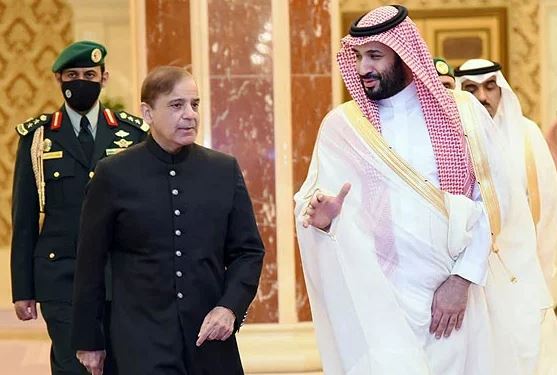
ISLAMABAD, Mar 25 (DNA): Prime Minister Shehbaz Sharif on Wednesday held a telephone conversation with Crown Prince and Prime Minister of Saudi Arabia Prince Mohammed bin Salman bin Abdulaziz Al Saud, and briefed him on Pakistan’s constructive diplomatic outreach to all parties, urging de-escalation and resolution of differences through dialogue and diplomacy.

During the “warm and cordial” conversation held early Wednesday morning, the crown prince deeply appreciated Pakistan’s peace efforts.

Prime Minister Shehbaz reiterated Pakistan’s strong condemnation of the recent attacks on Saudi Arabia and reaffirmed Pakistan’s complete solidarity and unequivocal support for the Kingdom and its people in these challenging times.

Appreciating the Saudi leadership for demonstrating remarkable restraint in the current crisis, the prime minister reassured the crown prince that Pakistan would always stand by the Kingdom and the brotherly people of Saudi Arabia, just as they had always supported Pakistan, through thick and thin.

Prime Minister Shehbaz called for an immediate end to hostilities and a return to normalcy so that the regional situation could be stabilized, besides calling for unity and harmony in the ranks of the Ummah, which was needed more than ever before.

The prime minister conveyed heartfelt Eid-ul-Fitr greetings to the Custodian of the Two Holy Mosques, King Salman bin Abdulaziz Al Saud, to the crown prince, and the Saudi people. The crown prince also reciprocated the sentiments.

Pakistan, 7 other UNSC members denounce Israel’s ‘forcible displacement’ of Palestinians

Pakistan, 7 other UNSC members denounce Israel's 'forcible displacement' of Palestinians

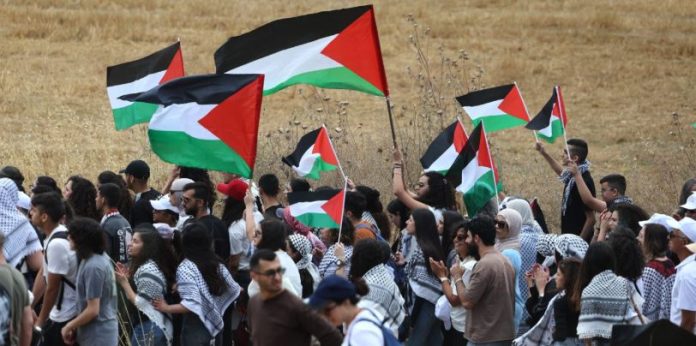
UNITED NATIONS, Mar 25: Pakistan and seven other members of the UN Security Council Tuesday condemned “escalating” Israeli settlers’ attacks against Palestinians in the occupied West Bank as “unacceptable,” and demanded accountability and the prosecution of perpetrators.

Delivering a part of the statement sponsored by Arab, OIC and European members of the 15-member Council, Pakistan’s UN Ambassador Asim Iftikhar Ahmad reiterated their firm opposition to annexation of any part of the Occupied Palestinian Territory, and to any forcible displacement of the Palestinian people.

The part read out by the Pakistani envoy dealt with the rejection of annexation and forcible displacement of Palestinians and was on behalf of his country as also Bahrain, Denmark, France, Greece, Latvia Somalia and United Kingdom.

“We recall that the Security Council has condemned all measures aimed at altering the demographic composition, character and status of the Palestinian Territory occupied since 1967, including East Jerusalem. Such measures violate international law, undermine ongoing peace efforts, run counter to the Comprehensive plan and jeopardize the prospect of achieving just and lasting peace,” Ambassador Asim Ahmad said.

“The Council has also demanded that Israel immediately and completely cease all settlement activities in the occupied Palestinian territory, including East Jerusalem, and that it fully respect all of its legal obligations in this regard, reaffirming its determination to examine practical ways and means to secure the full implementation of its relevant resolutions.

“This illegal settlement policy and Israeli settlers’ continuous and escalating attacks against the Palestinian civilian population, as well as the violence against Palestinian communities, including the recent killing of Palestinian children by Israeli forces, are unacceptable and must be brought to an immediate end and we call for those responsible to be held to account.”

The part on historic status quo (of Jerusalem), economic and humanitarian situation and New York declaration on ‘Peaceful Settlement of the Question of Palestine and the Implementation of the Two-State Solution’ was delivered by French Ambassador Jerome Bonnafont.

“We also reaffirm the Council’s call for the preservation of the historic Status Quo at the holy sites in Jerusalem,” he said.

“We express our deep concern regarding the grave humanitarian and economic situation unfolding in the Occupied Palestinian Territory, notably due to the severe restrictions on movement and access and to the withholding of Palestinian tax revenues by Israel. We call for these matters to be addressed urgently,” the French envoy said.

“We reaffirm the collective commitment reflected in the New York Declaration to take concrete measures, in accordance with international law, and in line with the relevant UN resolutions and the 19 July 2024 Advisory Opinion of the International Court of Justice, to help realize the right of the Palestinian people to self-determination and to counter policies and threats of forcible displacement and annexation throughout the Occupied Palestinian Territory.”

The part on ending occupation and two-State solution, with sovereign and independent Palestine, as only path to peace and security in the region delivered by Bahraini Ambassador Jamal Fares Alrowaiei.

“We reiterate our commitment towards achieving just and lasting peace on the basis of the relevant United Nations resolutions, the Madrid terms of reference, including the principle of land for peace, and the Arab Peace Initiative, ending the Israeli occupation and implementing the two-State solution, where two democratic States, an independent and sovereign Palestine and Israel, live side by side in peace and security within their secure and recognized borders on the basis of the 1967 lines, including with regard to Jerusalem, which remains the only viable path to ensure security, stability and sustainable peace in the region.”

Stay Connected

64FansLike
60FollowersFollow

Latest Reviews

Exchange Rates

USD - United States Dollar
EUR
1.14
GBP
1.34
AUD
0.70
CAD
0.71