Home Blog Page 206

Blasts reported near Pakistan embassy in Tehran: sources

Blasts reported near Pakistan embassy in Tehran: sources

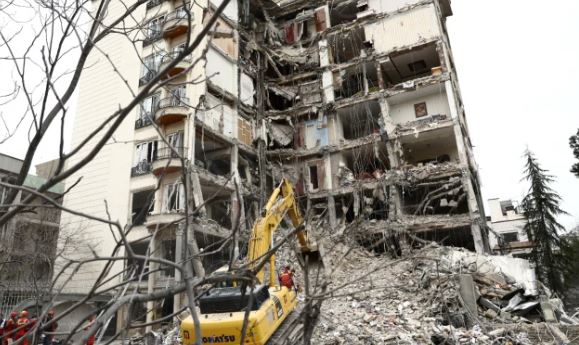
ISLAMABAD: Explosions were reported near the Embassy of Pakistan and the residence of the ambassador in Tehran, as the Iranian capital endured its 28th consecutive day of aerial bombardment, diplomatic sources confirmed on Friday.

All Pakistani diplomats were reported safe, though shaken by the blasts.

The incident comes as Islamabad, along with Turkiye and Egypt, continues shuttle diplomacy efforts aimed at securing a ceasefire between the United States and Iran.

The explosions occurred around 8pm on Thursday in areas close to both the embassy and the ambassador’s residence in Tehran’s Pasdaran district. Sources indicated that an Iranian military base located opposite the Pakistani Embassy may have been the target.

A senior diplomat told Geo News that although the explosions were loud, the embassy and residences of the staff remained intact. He said that diplomatic staff in the area were shaken by the incident.

“There were loud explosions, but our windows did not break,” the diplomat said, adding that personnel remain concerned due to the volatile situation.

According to sources, Pakistani diplomatic staff continue to carry out their duties despite the challenging and potentially dangerous environment.

The situation is being closely monitored. No casualties or structural damage have been reported so far.

The US-Israel war on Iran began on February 28 after US and Israeli strikes on Iran had claimed hundreds of lives, expanded into neighbouring Middle East countries, and shook the global economy through a surge in energy prices.

According to Iran’s Deputy Health Minister Ali Jafarian, at least 1,937 people, including 240 women and 212 children, were killed.

Over a dozen have been killed in Israel in Iran’s retaliatory strikes, according to Al Jazeera.

Who’s Hosting the Peace Table?

Who’s Hosting the Peace Table?

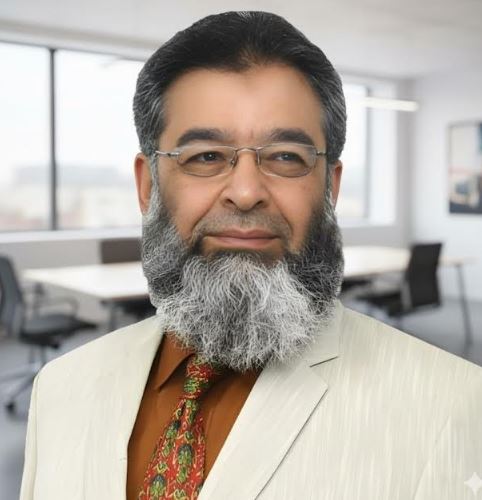
By Muhammad Mohsin Iqbal

In the civilizational tapestry of South Asia, customs and traditions have long held a place of quiet authority, shaping not merely social conduct but also the emotional grammar of life itself. No joy was deemed complete without the rituals that sanctified it, and no sorrow was fully expressed without the conventions that gave it form. Among these traditions, marriage stood as the most elaborate of all social occasions—an arena not only of celebration but also of reconciliation. Old grievances were set aside, estranged relatives were drawn back into the fold, and hearts, however reluctantly, were persuaded to soften in the face of collective happiness.

Yet beneath the surface of such harmony, there often lingered subtle tensions, the unspoken rivalries of kinship that found expression in curious ways. It was not uncommon, for instance, that even the arrangement of a wedding feast could become a matter of delicate contention. If the paternal uncle assumed the role of hosting, the maternal uncle might feel slighted; if the maternal aunt took charge, the paternal aunt might quietly resent her exclusion. Such grievances, though seemingly trivial, were deeply rooted in a sense of belonging and recognition. The lament, “Had I any standing in this house, I would have been asked,” was not merely a complaint but a reflection of an emotional economy in which honour and participation were intimately intertwined.

With the passage of time, many of these customs have faded into the background, softened by the forces of modernity and the changing rhythms of life. Urbanization, education, and a more pragmatic outlook have gradually eroded the rigidities of tradition. Yet, in certain quarters of the region, echoes of these old patterns persist, sometimes in altered forms but often with the same underlying impulses.

It is in this cultural context that one may find an illuminating metaphor for the conduct of nations. For just as families once vied for recognition in moments of celebration, so too do states seek acknowledgment and influence in the theatre of international affairs. The recent tensions in the Gulf have provided a telling example of this dynamic, revealing not only the anxieties of a troubled region but also the contrasting approaches of its neighbouring powers.

At a time when the world watches the Gulf with deep concern, fearing the escalation of conflict and its far-reaching consequences, Pakistan has once again articulated its long-standing commitment to peace and reconciliation. Rather than aligning itself with any camp of confrontation, it has urged all parties to seek dialogue and restraint. This posture is not born of expediency alone but is rooted in a consistent diplomatic philosophy that views stability as a shared responsibility and peace as a collective good.

What is particularly noteworthy is the response that this approach has elicited. The parties involved in the tension, recognising Pakistan’s balanced stance and its history of engagement, have shown a willingness to reach out and explore avenues of mediation. With the notable exception of Israel, Pakistan enjoys relations of varying degrees of warmth and trust with the principal actors in the region. This trust, painstakingly built over decades, has now translated into a moment of diplomatic relevance, placing Pakistan at the centre of international attention.

This is not without precedent. Pakistan’s role in facilitating the process that eventually led to the withdrawal of the United States from Afghanistan stands as a recent example of its capacity to act as a bridge in complex geopolitical situations. Such contributions, though often understated, have reinforced its image as a state that prefers conciliation over confrontation, and dialogue over discord.

Yet, as in the familial settings of old, where one relative’s prominence could stir unease in another, Pakistan’s emerging role has not been received with equanimity by all. In India, a country of considerable size and ambition, this development has provoked a visible discomfort. Sections of its political class and media have reacted with unusual candour, directing criticism towards their own leadership. According to them, the Indian Prime Minister Modi did nothing but forcefully hug world leaders.

Such reactions, though couched in the language of domestic critique, betray a deeper sentiment—a sense of having been left out of an important moment. The analogy to the wedding feast is difficult to ignore. There is, in the tone of some of these commentaries, an echo of that familiar grievance; that one was neither consulted nor accorded the recognition one believed oneself to deserve. Yet, in the realm of international relations, as in life, participation cannot be demanded merely by virtue of size or aspiration; it must be earned through consistent conduct and credible engagement.

India’s recent posture, marked at times by conflicting signals and selective alignments, has complicated its ability to present itself as a neutral or trusted interlocutor. Expressions of concern that appear disproportionate or insincere risk being perceived as performative rather than principled. In contrast, Pakistan’s measured and interest-free approach has found resonance precisely because it is seen as aligned with the broader desire for de-escalation.

It would, however, be a mistake to interpret this moment in purely competitive terms. The pursuit of peace is not a zero-sum game, nor is diplomatic relevance a finite resource to be hoarded. The challenges facing the Gulf—and indeed the wider world—are too grave to be reduced to questions of prestige or rivalry. What is required is a collective commitment to dialogue, a willingness to rise above narrow considerations, and an understanding that stability in one region contributes to stability in all.

In the final analysis, the lesson is both simple and profound. Whether in the intimate sphere of family or the vast arena of global politics, recognition flows not from assertion alone but from conduct that inspires trust. Just as the most respected member of a household is often the one who unites rather than divides, so too is the most valued state the one that brings others together in moments of uncertainty. In choosing the path of reconciliation, Pakistan has reaffirmed a principle that is as old as the traditions from which it draws its metaphor; that true honour lies not in being seen, but in being relied upon.

Power, Pause, and Pivot: A War Rewritten

Qamar Bashir

Qamar Bashir

The clock has been reset, but the tension has not. In a dramatic turn of events, Donald Trump has extended the deadline for potential U.S. strikes on Iran’s energy infrastructure to April 6, 2026, granting a critical 10-day window for diplomacy to prevail over destruction. What was initially framed as a five-day tactical pause has now evolved into a high-stakes diplomatic interlude—one that may determine whether the region descends into a broader war or steps back from the brink.

At the center of this unfolding drama stands an unlikely but increasingly pivotal actor: Pakistan. Quietly but assertively, Pakistan has emerged as a key mediator between Washington and Tehran, joined by regional players such as Egypt and Turkey. Their mission is as delicate as it is urgent—bring two deeply mistrustful adversaries to the negotiating table before military escalation becomes irreversible.

The extension itself did not come in a vacuum. It followed signals—subtle yet significant—that Iran may be willing to explore an “off-ramp” from the conflict. According to U.S. envoy Steve Witkoff, a 15-point framework has been conveyed to Tehran through backchannels, outlining a possible pathway toward de-escalation. While Iranian officials have publicly maintained a posture of defiance, behind the scenes there are indications of cautious engagement. The hesitation, however, is rooted in history. Tehran’s leadership remains deeply skeptical, fearing that diplomacy could once again be used as a prelude to military action—a pattern they believe has repeated itself in past engagements.

Pakistan’s role has not been limited to facilitating dialogue. In a move that underscores both the fragility and importance of ongoing talks, Islamabad reportedly urged Washington to restrain Israel from targeting Iran’s foreign minister. The reasoning was stark and pragmatic: eliminate the diplomatic channel, and negotiations collapse instantly. This intervention reflects Pakistan’s growing stature as a stabilizing force—one capable of understanding both the military calculus and the diplomatic necessity of preserving interlocutors during wartime.

Simultaneously, a curious and controversial narrative has emerged from Washington. President Trump hinted at receiving a “precious gift” from Iran—later described as oil shipments allegedly en route to the United States under a Pakistani flag. While this claim remains unverified, its strategic implication is profound. If true, it could signal a covert willingness by Iran to soften its stance and engage economically even as public rhetoric remains uncompromising. Whether symbolic or substantive, such gestures suggest that beneath the surface hostility lies a complex web of negotiation, signaling, and strategic ambiguity.

Markets, as always, have reacted swiftly. The announcement of the deadline extension came minutes after a sharp downturn in global equities, highlighting the deep interconnection between geopolitics and financial stability. Oil prices, already volatile, hovered above $100 per barrel amid fears surrounding the Strait of Hormuz—through which nearly one-fifth of the world’s oil supply flows. Any disruption here reverberates instantly across global markets. Ironically, while supply remains abundant due to sanctions relief on Russian and Iranian exports, much of it is effectively “trapped” by insecurity in transit routes. This paradox—plenty of oil but constrained delivery—has created a market environment driven more by fear than fundamentals.

Yet beyond diplomacy and economics lies a more profound transformation—one that this conflict has brought into sharp relief. The war between the United States and Iran is not merely a geopolitical contest; it is a technological and doctrinal inflection point. The traditional architecture of military power—aircraft carriers, fighter jets, tanks, and heavy artillery—appears increasingly inadequate against the realities of 21st-century warfare.

Iran, despite lacking the conventional superiority of its adversaries, has demonstrated a capacity to challenge them through asymmetric means. Its arsenal of ballistic missiles, drones, and unmanned systems has extended its reach far beyond its borders, reportedly capable of striking targets thousands of kilometers away, including strategic installations such as Diego Garcia. This shift from platform-based dominance to precision-strike capability represents a fundamental reordering of military hierarchies.

Even more striking is the hypothetical scenario often discussed in strategic circles: what if the United States were to seize control of Iran’s key energy nodes—particularly Kharg Island and the Strait of Hormuz itself? On paper, such a move would appear decisive, effectively placing Iran’s النفط lifeline under external control. In reality, however, the outcome could prove far less consequential than conventional doctrine suggests.

Iran’s doctrine of asymmetric warfare is designed precisely to neutralize such scenarios. Even if American forces were to physically occupy Kharg Island or secure maritime dominance over Hormuz, those positions would remain under constant threat. Iran possesses thousands of short-range missiles, loitering munitions, and cost-effective drones—many reportedly concealed in hardened underground facilities, dispersed across vast terrain, and engineered for survivability against even the most advanced bunker-busting munitions. These systems do not require air superiority or naval parity; they rely on saturation, precision, and persistence.

In such an environment, any occupying force would face a relentless cycle of attrition. Fixed installations on Kharg Island could be repeatedly targeted, supply lines disrupted, and naval assets harassed by swarms of unmanned systems. Commercial shipping—particularly vulnerable oil tankers—would remain exposed, making sustained control of the waterway economically and militarily burdensome. The very objective of securing energy flow could be undermined by the continuous threat environment created by these decentralized strike capabilities.

This explains a paradox observed throughout the conflict: despite repeated claims by the United States and Israel of degrading Iran’s missile and drone infrastructure, Iran continues to respond with sustained intensity and operational reach. The resilience lies not in singular high-value assets, but in the distributed nature of its arsenal—difficult to locate, harder to eliminate, and capable of rapid regeneration.

The implications are far-reaching. In this emerging paradigm, power is no longer defined solely by the size of fleets or the sophistication of aircraft, but by the accuracy, scalability, and survivability of missile systems and autonomous platforms. Even heavily defended naval assets become vulnerable when confronted with swarms of low-cost, high-precision projectiles. This reality has reportedly forced U.S. naval deployments to maintain greater distances from contested zones, altering long-standing doctrines of forward presence and deterrence.

The conflict also echoes lessons observed in regional dynamics involving Pakistan, where advancements in indigenous missile technology have reshaped deterrence equations. Precision, range, and reliability have become the new currency of power, enabling smaller or economically constrained nations to level the strategic playing field against traditionally dominant forces.

What emerges, therefore, is not simply a contest between nations, but between eras. The industrial-age war machine, forged in the crucible of the two World Wars, is confronting a digital-age battlefield defined by speed, precision, and decentralization. In this new landscape, asymmetry is not a weakness—it is an advantage.

Amid these shifting sands, Pakistan’s diplomatic initiative acquires added significance. It is not merely mediating a ceasefire; it is attempting to bridge two fundamentally different worldviews—one rooted in conventional dominance, the other in asymmetric resilience. The success or failure of this effort will have implications far beyond the immediate conflict, shaping perceptions of power, negotiation, and legitimacy in an increasingly multipolar world.

As April 6 approaches, the world watches with cautious anticipation. The extended deadline is both an opportunity and a warning. If diplomacy succeeds, it could mark the beginning of a new framework for conflict resolution—one that acknowledges the limits of force in an age of distributed power. If it fails, the consequences could be swift and severe, potentially triggering a chain reaction that engulfs the broader region.

For now, the pause holds. Negotiators continue their delicate work behind closed doors. Markets oscillate between hope and fear. And the battlefield, though momentarily silent, remains poised on a knife’s edge.

In this narrow window of time, the future of not just a conflict, but of warfare itself, hangs in the balance.

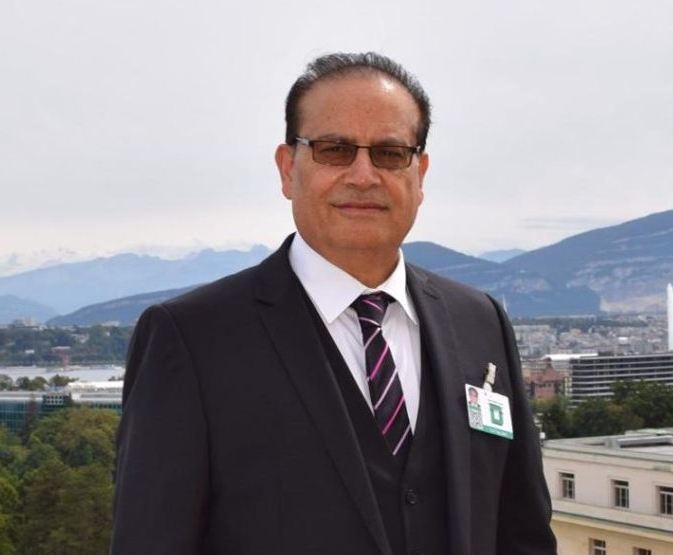
Qamar Bashir

Press Secretary to the President (Rtd)

Former Press Minister, Embassy of Pakistan to France

Former Press Attaché to Malaysia

Former MD, SRBC | Macomb, Michigan

Morocco hails Czech support for autonomy plan in Joint declaration signed

Morocco hails Czech support for autonomy plan in Joint declaration signed

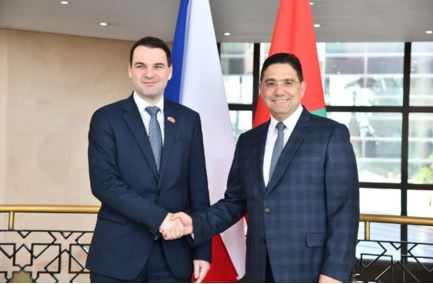
RABAT, MAR 27 /DNA/ – The Czech Republic considered on Thursday “that genuine autonomy under Moroccan sovereignty constitutes the most feasible solution” to the dispute over the Sahara, adding that it intends to act accordingly.

This position was expressed in the Joint Declaration, signed in Rabat (Morocco), following the meeting between Minister of Foreign Affairs, African Cooperation and Moroccan Expatriates, Nasser Bourita, and Czech Deputy Prime Minister and Minister of Foreign Affairs, Petr Macinka, who is visiting the Kingdom for the first time.

The Joint Declaration specifies that the Ambassador of the Czech Republic to Morocco will travel to the Sahara region to prepare visits by Czech entrepreneurs and support joint economic initiatives.

Furthermore, it underlines that the Embassy of the Czech Republic in Rabat will henceforth extend its consular coverage to the Sahara, as it does to the rest of the Kingdom’s territory, thereby acting in accordance with the Czech Republic’s position on the Moroccan Sahara at the diplomatic, economic and consular levels.

Welcoming the adoption of United Nations Security Council Resolution 2797 (2025), the Czech Republic “considers Morocco’s 2007 autonomy Proposal as the most appropriate, serious, credible and realistic basis for achieving a just, lasting and mutually acceptable political solution,” the Joint Declaration continues.

The two Ministers also reaffirmed their support for the Personal Envoy of the United Nations Secretary-General for the Sahara, as well as for his efforts to advance the political process with a view to reaching a definitive political solution to this regional dispute.

Zaidong, Naqvi agree on Special Protection Unit

Zaidong, Naqvi agree on Special Protection Unit

Interior Minister Mohsin Naqvi stated that a ‘Special Protection Unit’ is being established to ensure the security of foreign nationals. The unit will specifically ensure the safety of Chinese citizens in Islamabad

Saifullah Ansar

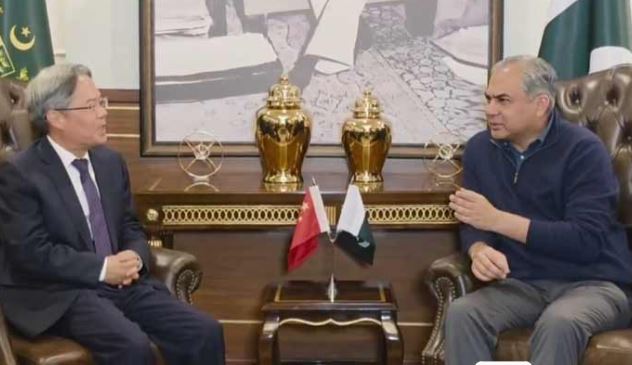
ISLAMABAD, MAR 27 /DNA/ – Federal Interior Minister Mohsin Naqvi met with Chinese Ambassador Jiang Zaidong. Upon arrival at the Chinese Embassy in the Diplomatic Enclave, the ambassador warmly received the Interior Minister.

During the meeting, discussions were held on counter-terrorism, security cooperation, police exchange programs, and other important matters. The overall regional situation also came under discussion.

It was decided to organize a business conference to address the security concerns faced by Chinese investors in Pakistan. In the first phase, meetings will be held with the Chinese business community currently present in Pakistan. In the second phase, engagements will take place with investors interested in investing in Pakistan.

‎Interior Minister Mohsin Naqvi stated that a ‘Special Protection Unit’ is being established to ensure the security of foreign nationals. The unit will specifically ensure the safety of Chinese citizens in Islamabad. Personnel of the Special Protection Unit will also be trained in the Chinese language as part of their training.

‘Very important neutral party’: Pakistan can play greater diplomatic role, says US lawmaker

‘Very important neutral party’: Pakistan can play greater diplomatic role, says US lawmaker

WASHINGTON, MAR 27 /DNA/ – As tensions surrounding Iran once again test regional diplomacy, Pakistan is emerging in Washington’s policy conversations as a potential intermediary — a shift that signals a broader reassessment of its strategic utility beyond the traditional security framework.

At an hour-long virtual briefing held on Thursday evening by the Congressional Pakistan Caucus, Congressman Tom Suozzi suggested that Islamabad’s geographic position, demographic weight and cross-regional ties give it space to play a more active mediatory role.

“And we see from this negotiation with Iran right now, and the role that it’s playing, Pakistan can play more and more of a role in international affairs as a mediator,” said Suozzi, the Democratic co-chair of the caucus. He described Pakistan as “a very, very important neutral party, with friends on both sides.”

The remarks come amid renewed diplomatic maneuvering around Iran, where Washington has relied on regional actors to maintain communication channels. Pakistan’s leadership has signaled willingness to facilitate dialogue if both sides desire it.

Suozzi noted that Pakistan has the fifth-largest population in the world and could soon become the largest Muslim-majority nation, which would further enhance its global significance. Demographics, he implied, are translating into diplomatic weight.

Pakistan’s Ambassador to the United States, Rizwan Sheikh, framed the country’s potential role as rooted in its long-standing multi-directional diplomacy.

“Yes, Pakistan actually has been uniquely placed for this role, because we have good terms with the United States. We have good neighbourly relations with Iran, and fraternal ties with the Gulf countries,” the ambassador said.

He added that Pakistan stood ready to assist if both sides sought its help.

“We would only be too honored if we are trusted by both sides to be a facilitator. Ultimately, the decision will have to be taken by the parties, but as a trusted partner, Pakistan will try to facilitate.”

The mediation discussion formed part of a wider conversation about recalibrating US-Pakistan ties beyond a purely security-driven framework. Both speakers acknowledged that while the relationship has experienced periodic strains, it remains strategically consequential.

Suozzi underscored Pakistan’s importance in US foreign policy, citing its nuclear capability, large military and location in what he called “one of the most important regions in the world.” He stressed that stability in Pakistan was critical not only for South Asia but for global security.

Security challenges within Pakistan remain central to this calculus. Ambassador Sheikh noted that Pakistan continues to rank among the countries most affected by terrorism and bears a heavy burden in combating extremist groups. The persistence of cross-border militancy and internal insurgency continues to shape both Pakistan’s domestic priorities and its external partnerships.

Yet Thursday’s discussion also reflected a desire to expand the relationship into economic and commercial domains.

The US lawmaker acknowledged that while many Pakistani Americans and US firms were interested in investing in Pakistan, concerns about security risks, bureaucratic obstacles and political uncertainty often deter potential investors.

He argued that increased trade and investment could help stabilise the relationship and deepen cooperation beyond counterterrorism.

Ambassador Sheikh pointed to Pakistan’s demographic dividend, low production costs and mineral resources as underutilised strengths. He noted that the United States remains Pakistan’s largest export destination and suggested that expanding trade could provide a more sustainable anchor for bilateral ties.

US-Iran ‘broader talks’ expected in Islamabad this weekend, says IAEA chief

US-Iran 'broader talks' expected in Islamabad this weekend, says IAEA chief

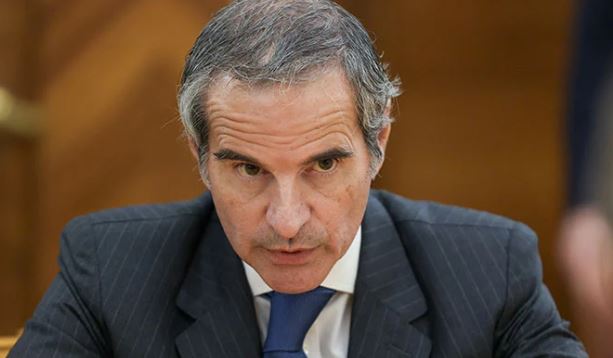
WASHINGTON, MAR 25: The United States and Iran are expected to hold negotiations covering issues “broader in scope” in Islamabad this weekend, International Atomic Energy Agency (IAEA) Director General Rafael Grossi said on Wednesday.

The nuclear watchdog chief said that the forthcoming discussions are expected to cover missiles, Iran-aligned militias and security guarantees for Tehran, Turkiye’s Anadolu Agency reported, citing Grossi’s interview with Italian newspaper Corriere della Sera.

He added: “This time, there will also be missiles, militias allied with the Islamic Republic, security guarantees for Iran on the table.”

Grossi suggested that a temporary resolution could be achievable, stressing that military options should be avoided.

“There are alternative diplomatic plans that would allow both a solution that says that at the moment there will be no more enrichment because the political, military, and trust situation does not allow it; and, in principle, to reassess the issue in five or ten years’ time,” he added.

The remarks come amid efforts to open a window for diplomacy to end the nearly month-long war between the US, Israel, and Iran, which began on February 28 and has affected the broader Middle East.

Pakistan, working closely with Turkey and Egypt, has played a key role in back-channel diplomacy, relaying messages between Washington and Tehran to prevent further escalation and maintain regional stability.

These efforts included direct contact between Chief of Defence Forces (CDF) and Chief of Army Staff (COAS) Field Marshal Asim Munir and US President Donald Trump on Sunday, confirmed by the White House.

Prime Minister Shehbaz Sharif also announced that Pakistan was ready to host talks between the US and Iran, a move acknowledged by President Trump, who reposted the statement on his Truth Social account.

Subsequently, Pakistan delivered a US proposal to Iran, a senior Iranian source told Reuters on Wednesday. The source did not reveal details of the proposal or confirm if it was the 15-point US framework reported by media outlets.

Turkey is also reportedly helping explore avenues to end the war, with either Pakistan or Turkey under consideration as the venue for talks, the source said.

In a latest development, Iran has rejected the US proposal, insisting it will end the ongoing “imposed war” on its own terms and timeline, a senior political-security official told Press TV.

The official compared the latest overture with two previous rounds of negotiations in spring and winter 2025, which were accompanied by US military operations, framing Tehran’s response as consistent with its longstanding caution.

Iran outlined five conditions for ending the war: a complete halt to “aggression and assassinations”; mechanisms to prevent the war from being reimposed; guaranteed payment of reparations; resolution across all fronts and resistance groups; and international recognition of Iran’s control over the Strait of Hormuz.

War has gone too far: UN chief

War has gone too far: UN chief

DNA

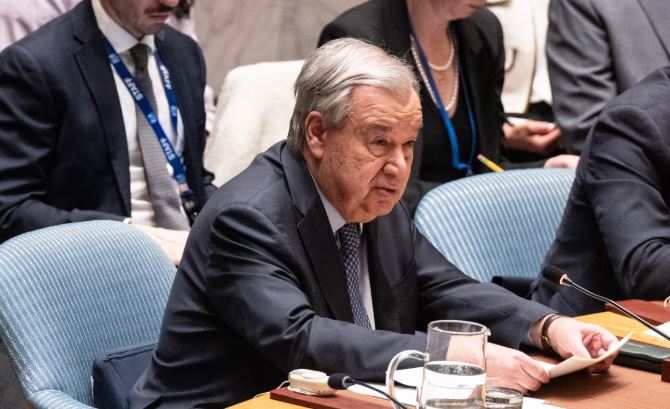
NEW YORK: The UN secretary-general on Wednesday warned that the war in the Middle East has spiraled “out of control.”

Antonio Guterres urged an immediate halt to hostilities, called on Iran to stop attacking its neighbors, urged the US and Israel to end the war, and stressed that diplomacy remains the only path out of the crisis.

Speaking at the UN headquarters in New York, he said the conflict has exceeded even the worst expectations and risks triggering a global catastrophe.

“Just hours into the outbreak of the war in the Middle East, I warned that the fighting risked triggering a chain reaction that no one could control. More than three weeks on, this war is out of control,” he added.

“The conflict has broken past the limits even leaders thought imaginable. The world is staring down the barrel of a wider war, a rising tide of human suffering, and a deeper global economic shock.”

Guterres said “my message to Iran is to stop attacking their neighbors,” adding that the UN Security Council has condemned such attacks and demanded they end, while reaffirming that navigational rights and freedoms must be respected in key maritime routes, including the Strait of Hormuz.

The prolonged closure of the strait is “choking the movement of oil, gas and fertilizer at a critical moment in the global planting season,” he said.

“My message to the United States and Israel is that it is high time to end the war as human suffering deepens, civilian casualties mount, and the global economic impact is increasingly devastating.”

Declaring that “this has gone too far,” Guterres said: “It is time to stop climbing the escalation ladder and start climbing the diplomatic ladder and return to full respect of international law.”

He added that he has remained in close contact with regional and global actors, with several peace initiatives underway that “must succeed.”

He announced the appointment of Jean Arnault as his personal envoy to lead efforts on the conflict and its consequences.

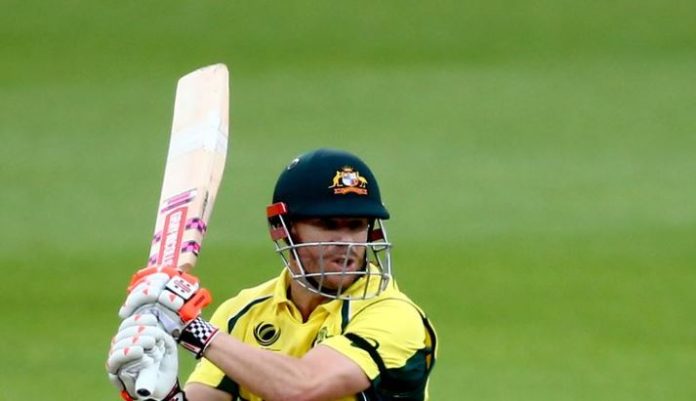
‘We can beat them all’: David Warner issues warning ahead of PSL 11

'We can beat them all': David Warner issues warning ahead of PSL 11

LAHORE: Karachi Kings captain David Warner has expressed confidence in his squad’s potential ahead of the 11th edition of the Pakistan Super League (PSL), emphasising the need to build on last season’s performances while seamlessly integrating new arrivals.

Speaking at a recent captains’ conference, Warner struck an optimistic tone about the campaign ahead.

“Yeah, look, it’s obviously good to have those guys as part of our group. For us, it’s about trying to emulate a little of what we did last year and see how we can improve from how we started last year,” Warner said.

The left-handed batter also addressed the challenges posed by reduced venues this season, stressing the need for quick adaptation and improved consistency compared to the previous campaign.

“We had five home games, and now we’re down to two venues here. There’s no excuse—we should get used to the venues and adapt as quickly as we can. Hopefully, we can progress better than we did last year,” he said.

He also praised the team’s efforts at the player auction, expressing confidence in the squad’s ability to compete strongly against other sides in the tournament.

“We’ve got a good group of players, and I think we did well at the auction too, giving us the chance to compete against these guys and beat them all,” he added.

The opening batter further reflected on his fitness and longevity, underlining his commitment to maintaining peak physical condition despite being in the later stages of his career.

“Yeah, look, at 39 years of age, I’m extremely fit. Probably fitter than most 39-year-olds around the world who are still playing this game. It’s just about a healthy diet, running off the field, training hard, and maintaining longevity. But to answer your question, hopefully, I can score some runs and put our team in a good position,” he concluded.

The forthcoming PSL season represents a landmark expansion, featuring eight teams for the first time.

The tournament is scheduled to run from 26 March to 3 May, with the newly added Hyderabad Kingsmen and Rawalpindiz franchise joining the competition across 44 matches in 39 days.

The Pakistan Cricket Board (PCB) has revised its logistical plans, confining matches to Karachi and Lahore behind closed doors, a departure from the initial schedule that included venues such as Multan, Peshawar, Rawalpindi and Faisalabad.

PCB Chairman Mohsin Naqvi confirmed the decision followed consultations with franchise owners and Prime Minister Shehbaz Sharif.

Lahore will host Eliminators 1 and 2, as well as the final, while Karachi is set to stage the Qualifier. The opening fixture between the Hyderabad Kingsmen and Lahore Qalandars remains unchanged.

The Warner-led Kings will play their campaign-opening match against Quetta Gladiators at the Gaddafi Stadium on Friday.

Karachi Kings squad for PSL 11:

David Warner (c), Hasan Ali, Mohammad Abbas Afridi, Khushdil Shah, Saad Baig, Moeen Ali, Azam Khan (wk), Salman Ali Agha, Shahid Aziz, Mir Hamza, Adam Zampa, Mohammad Hamza Sohail, Aqib Ilyas, Khwaja Bin Tanveer, Reeza Hendricks, Muhammad Waseem, Ihsanullah and Rizwanullah.

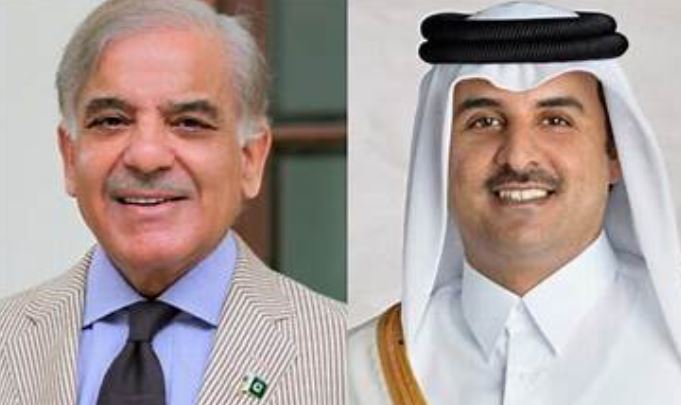
PM Shehbaz, Qatar Amir exchange Eid greetings

PM Shehbaz, Qatar Amir exchange Eid greetings

ISLAMABAD, MAR 25 /DNA/ – Prime Minister Muhammad Shehbaz Sharif held a telephone conversation with His Highness Sheikh Tamim bin Hamad Al Thani, Amir of the State of Qatar, this evening.

During their warm and cordial conversation, the Prime Minister conveyed Eid ul Fitr greetings to the Amir of Qatar and the brotherly people of Qatar. These sentiments and good wishes were reciprocated by the Qatari Amir.

The Prime Minister expressed his serious concern over the ongoing hostilities in the region. He reiterated strong condemnation of the attacks against Qatar and other brotherly Gulf countries and conveyed deep condolences over the loss of precious lives in these attacks, while praying for the injured. He assured His Highness of Pakistan’s full solidarity and support with the brotherly people of Qatar, especially at this challenging time.

While appreciating Qatar’s remarkable restraint in the wake of the ongoing hostilities, the Prime Minister apprised His Highness the Amir of Pakistan’s diplomatic outreach and its peace efforts. He emphasized that Pakistan had consistently called on all parties to de-escalate and resolve their differences through dialogue and diplomacy.

His Highness the Amir appreciated Pakistan’s sincere diplomatic efforts for regional peace. Both leaders agreed to remain in close contact in the coming days.

Stay Connected

64FansLike
60FollowersFollow

Latest Reviews

Exchange Rates

USD - United States Dollar
EUR
1.14
GBP
1.34
AUD
0.70
CAD
0.71