Home Blog Page 205

Senator Mushahid Hussain, ex-Israeli general clash over ‘Greater Israel’ plans in TV show

Senator Mushahid Hussain, ex-Israeli general clash over 'Greater Israel' plans in TV show

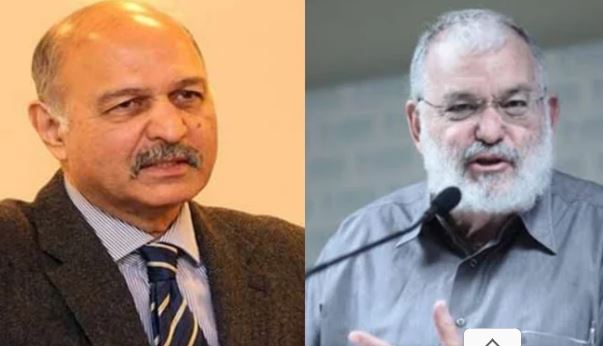
ISLAMABAD, MAR 28: A heated on-air exchange between Senator Mushahid Hussain and a former Israeli national security adviser brought into focus the sharp divide over the ongoing Iran war, as Mushahid insisted that the conflict was part of a broader “Greater Israel” agenda and argued that Iran had emerged in a position of strength despite continued fighting.

The clash occurred during a televised debate on Al Arabia English, where participants discussed competing claims by the United States and Iran over a proposed peace deal, as well as the broader strategic balance in the conflict. The US and Israel launched strikes against Iran on February 28, creating regional and global challenges, particularly disruptions to oil supplies.

Former Israeli national security adviser and former Maj Gen Yakov Amidror defended Israel’s military campaign, arguing that operations were proceeding according to plan and significantly degrading Iran’s capabilities. He rejected claims that Israel was running low on defensive resources and insisted that the country could sustain military operations for weeks.

He also claimed that the situation inside Israel remained normal and said fewer interceptors had been used than initially expected. When challenged by Mushahid Hussain over the effectiveness of the Iron Dome, which has often been portrayed as nearly unbeatable, Amidror said the system was performing very well and claimed it had intercepted 90% of incoming attacks.

However, during the same exchange, he went on to acknowledge that the majority of interceptions had in fact been carried out not by the Iron Dome, but by Arrow-3.

In contrast, Senator Mushahid maintained that Iran had demonstrated resilience and strategic leverage, particularly through its control over the Strait of Hormuz. He said both Washington and Tel Aviv had miscalculated, and claimed that the conflict was part of a wider attempt to politically reshape the Middle East in line with what he described as a “Greater Israel” vision.

Mushahid further said that Iran held the upper hand in the war and argued that neither US President Donald Trump nor Jsraeli Prime Minister Benjamin Netanyahu could have imagined that Iran would still be standing firmly in the fourth week of the conflict with full force.

He also maintained that Iran had managed to keep the Strait of Hormuz effectively shut with considerable success, calling it a major strategic achievement that had exposed the weakness of the Israeli-American plan.

According to Mushahid, the US-Israeli strategy had “badly failed”, and he claimed that Trump was now compelled to seek peace after the conflict had not unfolded as Washington and Tel Aviv had expected.

The debate also featured US analyst Brandon Weichert, who warned that the conflict risked turning into a prolonged war of attrition, with mounting economic and political costs for the United States. He suggested that neither side appeared ready for meaningful negotiations, raising concerns of further escalation.

The exchange highlighted broader disagreements over whether Iran or the US-led alliance currently holds the upper hand, with conflicting narratives on military effectiveness, economic strain, and political resolve continuing to shape perceptions of the war.
PSL 11: RawalPindiz win toss, opt to bat first against Peshawar Zalmi

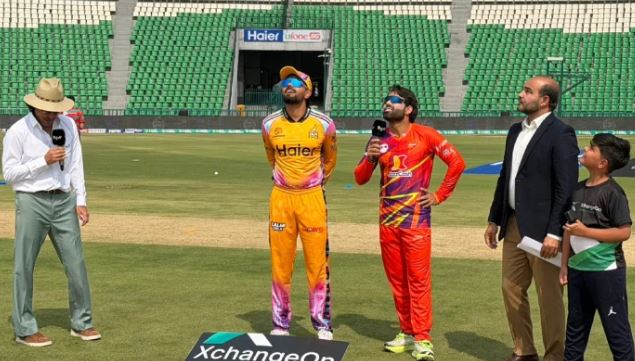
PSL 11: RawalPindiz win toss, opt to bat first against Peshawar Zalmi

LAHORE, MAR 28: RawalPindiz won the toss and decided to bat first against Peshawar Zalmi in the third match of the Pakistan Super League (PSL) 11 at the Gaddafi Stadium on Saturday.

Zalmi, the 2017 champions, and Pindiz are facing each other for the first time as the new side is making its debut in PSL history.

Playing XIs
Peshawar Zalmi: Babar Azam (c), Mohammad Haris (wk), Kusal Mendis, Aaron Hardie, Farhan Yousuf, Michael Bracewell, Abdul Samad, Aamir Jamal, Sufiyan Muqeem, Shoriful Islam and Ali Raza.

RawalPindiz: Mohammad Rizwan (c/wk), Yasir Khan, Abdullah Fazal, Kamran Ghulam, Sam Billings, Daryl Mitchell, Amad Butt, Rishad Hossain, Naseem Shah, Mohammad Amir and Asif Afridi.

Atif Ikram hails IMF deal as vital step for Pakistan economy

Atif Ikram hails IMF deal as vital step for Pakistan economy

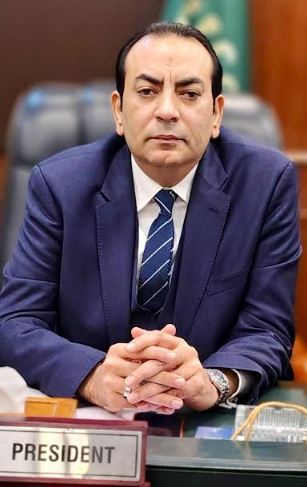
KARACHI, MAR 28 /DNA/ – Atif Ikram Sheikh, President of the Federation of Pakistan Chambers of Commerce & Industry (FPCCI), has welcomed the newly reached Staff-Level Agreement (SLA) between the Government of Pakistan and the International Monetary Fund (IMF) for the disbursement of approximately $1.2 billion.

Mr. Atif Ikram Sheikh elaborated that the agreement, which follows the successful conclusion of the third review of the Extended Fund Facility (EFF) and the second review of the Resilience and Sustainability Facility (RSF), is a vital step toward sustaining macroeconomic stability.

Mr. Atif Ikram Sheikh, President of FPCCI, commended the development, noting that the unlocking of $1 billion under the EFF and $210 million under the RSF will provide much-needed breathing room for the economy.

FPCCI Chief explained that this agreement will bolster our foreign exchange reserves; rebuild market confidence and send a positive signal to international rating agencies and bilateral partners. However, stabilization alone is not the finish line. The government must urgently pivot its focus toward fostering robust, inclusive industrial growth by addressing the structural bottlenecks that continue to stifle the private sector, he added.

Mr. Atif Ikram Sheikh highlighted that, while the apex trade body expresses relief over the successful continuation of the IMF program, FPCCI leadership demands incentivization of the business, industry and trade community as it is currently operating under immense pressure due to high operational costs and geopolitical uncertainties.

FPCCI President maintained that, to capitalize on the economic buffer provided by the IMF agreement, FPCCI urges the government to immediately prioritize reforms aimed at facilitating trade and industry – and, as the first step, a significant reduction in the policy rate, which is meaningful and immediate, can help boost the investor and business confidence. 

Mr. Atif Ikram Sheikh reiterated that, instead of further squeezing the regular taxpayers, broadening the tax base should be the key policy consideration – and, revenue mobilization efforts must focus on bringing untaxed sectors into the net rather than burdening the already compliant and law-abiding business community.

Mr. Atif Ikram Sheikh pointed out that policies such as the further tax and delayed sales tax refunds drain industry out of the much needed liquidity and must be addressed. Echoing the structural benchmarks highlighted by the IMF, FPCCI calls for robust institutional reforms to

curb corruption; improve the rule of law and ensure transparency in public financial management.

Mr. Saquib Fayyaz Magoon, Senior Vice President (SVP) of FPCCI, expressed concerns on the external threats facing the economy – noting that escalating military tensions in the Middle East and surging global freight costs are severely endangering Pakistan’s trade outlook. In the face of these global supply chain disruptions and fuel price volatility, domestic economic policies must act as a shock absorber – not an additional burden on our exporters, he added.

FPCCI reaffirms its commitment to serving as a constructive partner to the government. The apex body stands ready to assist in drafting evidence-based policies that promote an enabling environment for sustainable industrial expansion; export growth and business climate resilience.

Saudi, Turkish, Egyptian diplomats to hold joint consultations in Islamabad

Saudi, Turkish, Egyptian diplomats to hold joint consultations in Islamabad

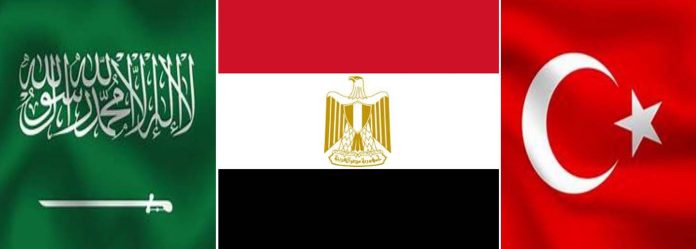
ISLAMABAD, MAR 28 /DNA/ – In a significant diplomatic development, the Foreign Ministers of Saudi Arabia, Türkiye, and Egypt are set to arrive in Islamabad on a three-day official visit beginning March 29, 2026. The dignitaries are visiting at the invitation of Pakistan’s Deputy Prime Minister and Foreign Minister, Senator Mohammad Ishaq Dar.

According to an official statement, Saudi Foreign Minister H.H. Prince Faisal bin Farhan Al Saud, Turkish Foreign Minister H.E. Hakan Fidan, and Egyptian Foreign Minister H.E. Dr. Badr Abdelatty will engage in in-depth discussions with their Pakistani counterpart during the visit, which will conclude on March 30.

The talks are expected to focus on a wide range of bilateral and regional issues, with particular emphasis on efforts to de-escalate rising tensions in the region. In addition to the trilateral meetings with Foreign Minister Dar, the visiting dignitaries are scheduled to call on the Prime Minister of Pakistan.

The Foreign Office emphasized that Pakistan highly values its relations with the brotherly nations of Saudi Arabia, Türkiye, and Egypt. The visit, it added, will serve as a vital opportunity to further strengthen cooperation and coordination across multiple sectors of mutual interest.

Observers note that the simultaneous arrival of top diplomats from three key Middle Eastern and regional powers underscores the growing diplomatic momentum to address pressing regional challenges and enhance strategic partnerships with Islamabad.

IRS hosts expert webinar on OIC’s momentum against illegal settlements

IRS hosts expert webinar on OIC’s momentum against illegal settlements

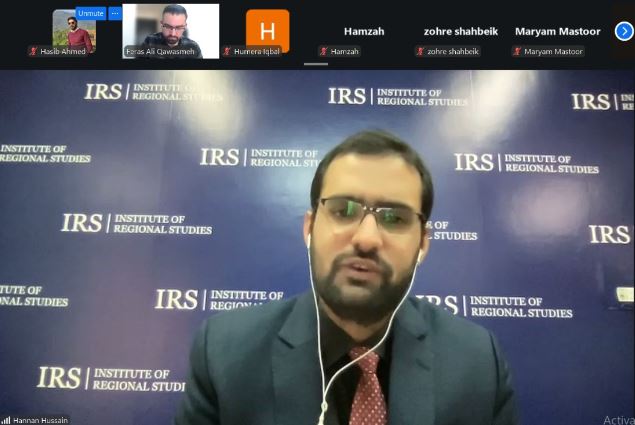
ISLAMABAD, MAR 28 /DNA/ – The Institute of Regional Studies, Islamabad (IRS) convened an expert webinar featuring Dr. Feras Qawasmeh, Assistant Professor of Public Policy at the Joaan Bin Jassim Academy for Defence Studies in Qatar, on the theme “A United Front Against Illegal Settlement Expansion: The Role of The Organisation of Islamic Cooperation.”

The discussion focused on the changing patterns of Israel’s expanding illegal settlements in the occupied West Bank, and the value of the collective consensus among Pakistan and its OIC partners at the extraordinary open-ended ministerial session recently. Dr. Qawasmeh underlined the need for greater regional diplomacy to leverage grass-root campaigns – including those that involve Palestinian-led movements focused against settlement expansion.

The discussion underlined how Pakistan has continued to back the two-state solution, the sanctity of Palestinian liberties, and a clear stance against any illegal aggression or violence that threatens Palestinian statehood. Recognizing the value of the OIC to meaningful progress, Dr. Qawasmeh built on the significance of Muslim-majority states presenting a consensus against settlement expansion.

His talk put a premium on countries to navigate complex challenges that prevent sufficient international scrutiny towards the expanding settlement challenge, considering how rising arson attacks and impediments to life carry on.

His talk delivered a critical value addition on the role of key movements, such as the Boycott, Divestment and Sanctions (BDS), in lending international scrutiny and awareness to the settlement issue.

These considerations were part of policy recommendations, including a set pipeline of Palestinian rights advocates and organized groupings that can derive traction with Pakistan and key Gulf partners within the OIC, to collectively advance their own consensus against any forced annexation with grass-roots advocacy.

Hannan Hussain, head of the West Asia Program at the Institute, added that the talk provided an in-depth assessment of the conditions on-ground in occupied West Bank, where rising tensions between recipient populations and those spearheading violence, deserves ample attention.

Core reference points included the lasting effects of the Oslo Accords which have led to a geographical shift in terms of the security controls and political liberties enjoyed by Palestinians at present, and how these elements of control continue to shift to their detriment amid settlement expansion.

These dynamics – largely understudied in official discourse on the occupied West Bank – closely align with Pakistan’s principled position on ending settler violence and growth in illegal settlements as international attention focuses on the tensions within the Middle East. Major proof points for Pakistan’s position include its latest alarm at the UN Security Council, where support for Palestinian liberties – and an end to Israel’s alarming growth in settlements – was amply reinforced.

The talk concluded with an interactive Q&A session, with in-depth assessments on the constraints and opportunities facing key regional players on improving Palestinian freedoms, and marking a break from a potential entrenchment of the occupation – all in line with international legal obligations and the trajectory of the OIC.

PSL 11: Karachi Kings set 182-run target against Quetta Gladiators

PSL 11: Karachi Kings set 182-run target against Quetta Gladiators

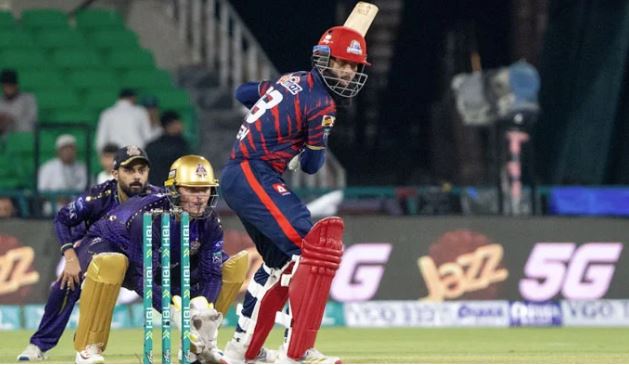
LAHORE, MAR 27: Moeen Ali’s late blitz helped Karachi Kings post a 182-run target against Quetta Gladiators in the Pakistan Super League (PSL) 11’s second match at Lahore’s Gaddafi Stadium on Friday.

Put into bat first, the Kings racked up 181/7 in their 20 overs despite none of their batters scoring a half-century.

The 2020 champions got off to a shaky start to their innings as their right-handed opener Muhammad Waseem perished for a three-ball duck as he fell victim to Alzarri Joseph in the first over, with just three runs on the board.

Following the early setback, Salman Ali Agha joined skipper David Warner in the middle for a 41-run partnership for the second wicket until getting trapped lbw by Daniyal in the fourth over.

The Pakistan captain made 22 off 10 deliveries, hitting four fours and a six.

Warner was then involved in another crucial partnership for the Kings when he put together 43 runs for the third wicket with Saad Baig before both perished in quick succession and brought the total down to 100/4 in 10.3 overs.

The skipper made an anchoring 35 off 22 deliveries, laced with four fours and a six, while Saad contributed with a 23-ball 30, featuring six fours.

Karachi Kings then suffered another setback in the 14th over when Azam Khan was cleaned up by Usman Tariq and walked back after making a run-a-ball 14.

After a brief middle-order collapse, experienced all-rounder Moeen Ali took the reins of the Kings’ batting expedition and stitched an important 39-run partnership for the sixth wicket with Khushdil Shah, who made an eight-ball 12 before being dismissed by Daniyal in the 17th over.

Moeen, on the other hand, batted until the end and returned after top-scoring with an unbeaten 48 off 29 deliveries, studded with four fours and three sixes.

Discover more
Video news production gear
politics
Documentary film access
Daniyal spearheaded the Gladiators’ bowling charge with three wickets for 36 runs in his four overs, followed by Alzarri Joseph with two, while Usman Tariq and Abrar Ahmed made one scalp apiece.

Businessmen slam drive against GSP

Businessmen slam drive against GSP

DNA

LAHORE: The Federation of Pakistan Chambers of Commerce and Industry (FPCCI) on Friday condemned statements against Pakis­tan’s status under the European Union’s Generalised Scheme of Preferences Plus (GSP+).

The remarks come a day after as government officials bitterly criticised ex-premier Imran Khan’s son Kasim and party leader Zulfi Bukhari for allegedly att­e­m­pting to derail the country’s GSP+ status in a speech he made at the sidelines of a United Nations Human Rights Council (UNHRC) moot.

It should be mentioned that, according to a fact check by iVerify, the claim that Kasim demanded the suspension of Pakistan’s GSP+ status at the UNHRC summit was found to be false.

Addressing a press conference in Lahore, FPCCI officials, including Vice Chairman Zaki Aijaz and United Business Group Patron-in-Chief S.M. Tanveer condemned statements against the country’s GSP+ status.

In his remarks, Aijaz said that “ensuring the protection of the GSP+ status is a national responsibility”.

“FPCCI and the business community condemn any group that is involved in lobbying against Pakistan’s economic interests,” he said, warning that it puts “millions of Pakistanis and the country’s economy at risk”.

Aijaz appealed to all stakeholders to “stand united for the good of Pakistan’s economy and its people”.

Tanveer, meanwhile, said, “We have been seeing uproar in the media since yesterday, and we are not a political party, but we condemn (the reports).

“Whoever speaks against the GSP+ status and from wherever, we would still condemn it, because this is not a joke,” Tanveer said.

He maintained that 37 per cent of Pakistan’s total exports were to the EU, and the two share the bilateral trade volume of up to $12 billion.

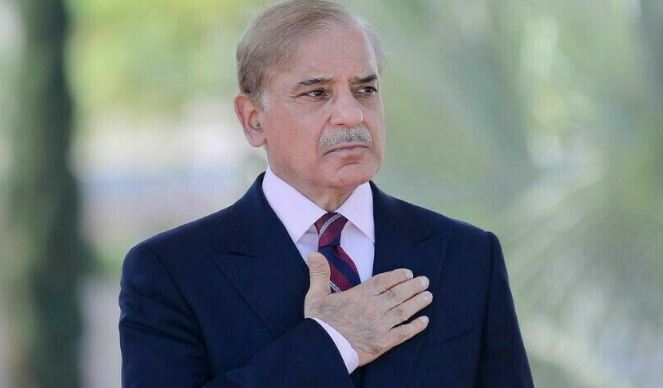
PM Shehbaz rejects summary to hike petrol, diesel prices, again

Shehbaz Sharif

Prices of petrol and diesel should be Rs544 and Rs790 per litre respectively, but govt shouldering burden, says premier

Fiaz Chaudhry

ISLAMABAD: Prime Minister Shehbaz Sharif has rejected a summary to hike petrol and diesel prices once again despite a surge in global oil rates. He made the announcement during an address to the nation, saying that he had received a summary to increase the price of petrol by Rs56 per litre and that of HSD by Rs203 per litre.

“However, I have rejected this summary,” he said.

The premier began his address by speaking about the ongoing war in the Middle East, saying that the government was trying its best to cushion the effects of the skyrocketing prices of oil while also making efforts for the restoration of peace in the region through diplomacy.

“Pakistan is making sincere and full-fledged mediatory efforts on the diplomatic front for an end to this war, so that the region and brotherly Muslim countries no longer face the destructive and negative consequences of this war,” he said. The PM further said the purpose of these efforts was to pave the way for lasting peace through “collective wisdom and consultation”.

“Pakistan’s diplomatic efforts are not merely an international diplomatic responsibility, but they are also purely for the will of Gold and the benefit of ummah,” he said.

Alarming Rise in youth drug abuse urges sparks concern

Alarming Rise in youth drug abuse urges sparks concern

ISLAMABAD, Mar 27: Calling drug abuse a growing crisis, anti-narcotics expert Syed Zulfiqar Hussain emphasized a joint societal response to drug abuse, pointing to its rapid spread among youth and calling on the governments to strengthen healthcare and rehabilitation infrastructure.

While speaking to a local media channel, Syed Zulfiqar Hussain highlighted that countries like Afghanistan and India are often blamed for supplying drugs, fueling the growing addiction crisis.

He emphasized that the influx of narcotics from these regions has directly contributed to the rising number of drug cases among youth in the country.

Hussain also stressed that responsibility does not lie solely with external suppliers. Parents, he said, must remain vigilant and guide their children, ensuring awareness about the dangers of drug use from an early age. Teachers and educational institutions, particularly private universities and colleges also play a crucial role in monitoring and counseling students to prevent drug abuse.

He expressed deep concern over the rising rate of drug use among girls, urging that both families and educational authorities take proactive steps.

Hussain called on the government to strengthen rehabilitation facilities and support systems, emphasizing that only a coordinated effort between society, institutions and authorities can curb this growing menace.

Responding to a query, Syed Zulfiqar Hussain said the government should focus on controlling the supply of narcotics to curb the growing drug menace.

He also appealed to the Punjab government and Chief Minister to establish dedicated hospitals and rehabilitation centers to treat affected youth, emphasizing the urgent need for proper healthcare infrastructure to tackle the rising cases.

He also stressed that youth must be made aware of the dangers of drug abuse and encouraged to make responsible choices. Hussain emphasized that awareness campaigns in schools, colleges and communities are vital to prevent addiction and protect the younger generation from falling prey to narcotics.

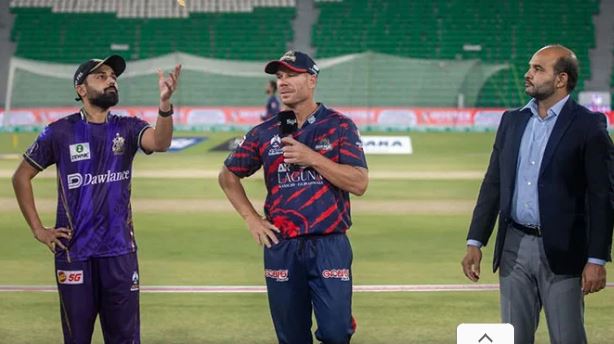
Quetta Gladiators win toss, elect to bowl first against Karachi Kings in PSL 11 encounter

Quetta Gladiators win toss, elect to bowl first against Karachi Kings in PSL 11 encounter

LAHORE, MAR 27: Quetta Gladiators won the toss and elected to bowl first against Karachi Kings in the Pakistan Super League (PSL) 11 second match at Gaddafi Stadium, Lahore, on Friday.

Playing XI

Quetta Gladiators: Saud Shakeel(c), Shamyl Hussain, Rilee Rossouw, Hasan Nawaz, Khawaja Nafay, Ben McDermott(w), Tom Curran, Ahmed Daniyal, Alzarri Joseph, Abrar Ahmed, Usman Tariq

Karachi Kings: David Warner(c), Muhammad Waseem, Salman Agha, Saad Baig, Moeen Ali, Azam Khan(w), Khushdil Shah, Shahid Aziz, Hasan Ali, Adam Zampa, Mir Hamza

Head-to-head
Karachi Kings and Quetta Gladiators have come face-to-face 20 times in PSL history, with the latter leading the head-to-head record with 13 victories, compared to the 2020 champions’ seven.

Their last meeting came at the same venue in the previous edition, which saw Gladiators prevail by five runs.

Matches: 20
Quetta Gladiators: 13
Karachi Kings: 7
Form Guide
The two teams enter the fixture with contrasting momentum in their favour as the Gladiators finished as the runners-up of the landmark 10th edition of the marquee league, while the Kings suffered a playoff exit.

The 2019 champions won four of their last five matches, while the Kings have three triumphs in their respective as many games.

Quetta Gladiators: L, W, W, W, W (most recent first)

Karachi Kings: L, L, W, W, W

Stay Connected

64FansLike
60FollowersFollow

Latest Reviews

Exchange Rates

USD - United States Dollar
EUR
1.14
GBP
1.34
AUD
0.70
CAD
0.71