Home Blog Page 204

Ishaq Dar announces Pakistan ready for US-Iran dialogue

Saudi Arabia, Turkiye, Egypt and Pakistan FMs meeting underway to ease Mideast tensions

ISLAMABAD, MAR 29 /DNA/ – Deputy Prime Minister and Foreign Minister Ishaq Dar on Sunday announced that Pakistan is ready to host potential talks between United States and Iran, following the conclusion of the second meeting of foreign ministers from Pakistan, Saudi Arabia, Turkey, and Egypt in Islamabad.

Addressing a joint press briefing, Ishaq Dar said the four countries held detailed discussions on the ongoing regional conflict and emphasized the urgent need for an early and permanent ceasefire. He noted that the continued war is causing severe humanitarian and economic damage across the region.

The foreign ministers collectively agreed that the conflict serves no party and only leads to further destruction. They stressed the importance of unity among Muslim countries and called for coordinated efforts to de-escalate tensions and prevent further military escalation.

Dar revealed that Pakistan briefed participating countries on the possibility of facilitating dialogue between the United States and Iran in Islamabad. The initiative received full support from Saudi Arabia, Turkey, and Egypt, reflecting growing international backing for Pakistan’s diplomatic role.

The meeting also underscored that dialogue and diplomacy remain the only viable solutions to resolve conflicts, with participants reaffirming their commitment to the principles of the United Nations Charter, including sovereignty and territorial integrity.

In addition, the four countries discussed enhancing mutual cooperation in political, economic, and strategic domains to strengthen regional stability.

Ishaq Dar further stated that Pakistan has been actively engaging global stakeholders, including the United States and Iran, to push for a peaceful resolution. He confirmed that both countries have expressed confidence in Pakistan’s role as a facilitator.

He also shared that Wang Yi, Foreign Minister of China, and the United Nations Secretary-General have extended full support to Pakistan’s peace initiative.

Reaffirming Pakistan’s commitment, Dar said the country will continue its diplomatic efforts with sincerity and determination, while seeking support from the international community to achieve lasting peace in the region.

PSL 11: Quetta Gladiators open account with victory against Hyderabad Kingsmen

PSL 11: Quetta Gladiators open account with victory against Hyderabad Kingsmen

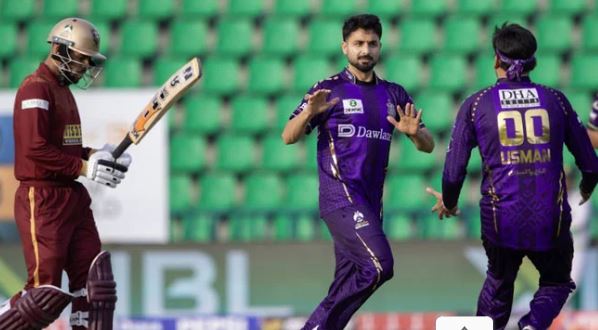
LAHORE, MAR 29: Saud Shakeel-led Quetta Gladiators claimed their first Pakistan Super League (PSL) 11 triumph as they defeated Hyderabad Kingsmen by 40 runs at Lahore’s Gaddafi Stadium on Sunday.

Chasing 175, Kingsmen were restricted to 134-8 in their allotted 20 overs, courtesy of an exceptional bowling performance by Gladiators’ bowling attack.

Saim Ayub was the first to fall after smashing back-to-back fours in the opening over. He scored eight off four deliveries before being undone by a sharp, unplayable bouncer from Alzarri Joseph.

In the following over, second opener Maaz Sadaqat was dismissed for a second-ball duck by Abrar Ahmed, leaving the side reeling at 17-2 in 1.2 overs.

Kingsmen failed to build momentum and lost their third wicket inside the powerplay as Abrar struck again, dismissing Usman Khan cheaply for 14 off 18 balls, including two fours.


Saad Ali and Marnus Labuschagne then attempted to stabilise the innings, adding crucial runs to take the total past the 50-run mark.

However, Usman Tariq made an immediate impact in his first over, removing Saad Ali for seven off 12 deliveries as Kingsmen slipped to 51-4 in nine overs.

Skipper Saud then chipped in with the ball and struck in his first over, claiming the key wicket of Marnus Labuschagne, who scored 23 off 21 balls, including three fours, reducing Kingsmen to 57-5 in 9.4 overs.

Irfan Khan Niazi and Hassan Khan then put together a decent partnership, keeping the scoreboard ticking and guiding the total past the 100-run mark.


The 48-run stand was eventually broken when Ahmed Daniyal dismissed Hassan Khan, who had played a fine knock of 31 off 19 deliveries, including three fours and a six, leaving Kingsmen under pressure at 105-6 in 15 overs.

Abrar struck again to hand Kingsmen another blow, dismissing Irfan Khan for 33 off 25 deliveries, including two fours and two sixes. Ahmed Daniyal then joined the attack and removed Hammad Azam for six off eight balls, adding further pressure on the side.

Hyderabad ended their innings losing eight wickets, falling short of the target, with Maheesh Theekshana unbeaten on two and Riley Meredith scoring three runs.

Shamyl was declared Player of the Match.


Batting first, the Gladiators notched up 174-8 in their allotted 20 overs after going off to a decent start as their openers, skipper Saud and Shamyl, began adding runs from the outset.

However, Riley Meredith struck on the final delivery of the second over, dismissing Saud after he had scored a run-a-ball four, giving his side the early advantage as the Gladiators were reduced to 21-1.

In the fourth over, Meredith struck again, providing another crucial breakthrough by dismissing Rilee Rossouw for a five-ball duck.

Shamyl Hussain then joined forces with Hassan Nawaz, as the pair aimed to stabilise the innings, taking the team past the 50-run mark.

Their partnership of 50 runs eased the pressure, allowing them to score at regular intervals and put pressure on the Kingsmen’s bowling attack.

Shamyl was in fine form, raising his bat for back-to-back fifties in PSL 11.

However, the 89-run stand was broken when Meredith struck yet again, dismissing Shamyl Hussain after an exceptional knock of 54 off 41 balls, which included three fours and three sixes.

Hassan continued to pile on the runs, reaching his fourth PSL fifty, with Khawaja Nafay joining him at the crease.

However, Maheesh Theekshana turned the game with his bowling in the 15th over, claiming two quick wickets.

He dismissed Nafay for six off four deliveries, including one four, and followed it up by sending wicketkeeper-batter Ben McDermott back to the pavilion for a duck.

Tom Curran smashed boundaries in the final overs of the innings, helping his team’s total soar past the 150-run mark.

Akif Javed bowled the final over, claiming two crucial wickets—first dismissing Curran for 31 off 18 balls, which included one four and three sixes, and then removing Alzarri Joseph for a duck.


Abrar Ahmed came to the crease and hit back-to-back fours, taking a single on the final delivery to finish unbeaten on nine off three balls, while Ahmed Daniyal contributed six runs off eight deliveries.

Riley Meredith was Kingsmen’s standout bowler, claiming 3/38 runs in four overs, while Maheesh Theekshanan and Akif Javed contributed two wickets each.

Saudi Foreign Minister meets Prime Minister Shehbaz

Saudi Foreign Minister meets Prime Minister Shehbaz

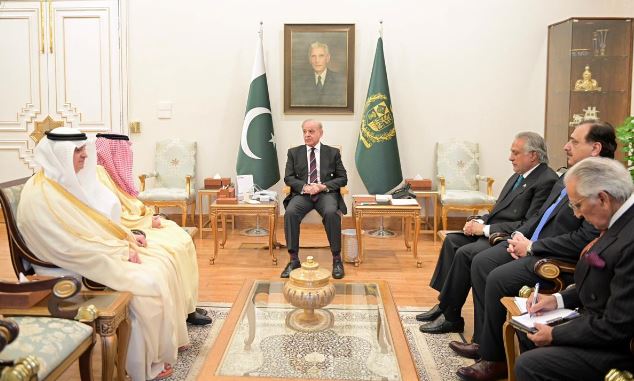
ISLAMABAD, MAR 29: /DNA/ – Prince Faisal bin Farhan Al-Saud, Foreign Minister of Saudi Arabia, called on Prime Minister Shehbaz Sharif in Islamabad on Sunday, where both sides discussed strengthening bilateral relations and enhancing cooperation across multiple sectors.

According to official sources, the meeting focused on expanding collaboration in trade, investment, energy, and defense. The Saudi Foreign Minister reaffirmed Riyadh’s commitment to deepening its strategic partnership with Pakistan and expressed interest in increasing investment opportunities.

Prime Minister Shehbaz Sharif welcomed the Saudi delegation and reiterated Pakistan’s desire to further strengthen its long-standing ties with the Kingdom. He appreciated Saudi Arabia’s continued support and emphasized the importance of economic cooperation for regional stability.

The Peacemaker Who Played with Power

The Peacemaker Who Played with Power

by Muhammad Mohsin Iqbal

On a hushed night in the year 2060, when the city outside appeared calm but history still murmured beneath the silence, a grandmother sat beside her granddaughter’s bed. The child had grown fond of stories that were neither fairy tales nor myths, but reflections of a troubled past—stories meant to sharpen conscience rather than merely entertain. The lights were dimmed, shadows rested on the walls, and the grandmother began.

“Once upon a time,” she said softly, “there ruled a man who stood at the helm of a powerful country. He was eloquent, theatrical, and acutely aware of the power of perception. He rarely relied on a single identity. Instead, he adopted different names, titles, and pseudonyms—each suited to the audience before him. In one place he was hailed as a peacemaker, in another as a global guardian. His real name has faded, but his conduct remains unforgettable.”

In the early years, she explained, his reputation was carefully cultivated. Wherever conflict brewed, he appeared—at conferences, summits, emergency visits—claiming credit for preventing wars that, according to him, would have otherwise turned into great disasters. He would stand before applauding crowds and say that his intervention alone had saved regions from catastrophe. Hosts welcomed him warmly, media celebrated him generously, and admirers praised his courage in “stopping wars before they began.”

For a time, the world believed him.

“He spoke often of reconciliation,” the mother said, “and quoted laws and treaties as if they were sacred vows. He warned others against recklessness and preached restraint. People trusted him because they wanted peace, and because confidence, once projected convincingly, can feel like truth.”

But his character, she continued, was never rooted in principle.

Gradually, almost imperceptibly, his stance began to shift. The same man who once condemned interference now found reasons to intrude. His thinking, once wrapped in the language of diplomacy, turned sharply—almost overnight—by a full one hundred and eighty degrees. What had once been restraint became impatience; what had once been mediation became domination.

“He developed a habit,” the mother said, “of interfering where he was neither invited nor needed.”

Each day brought a new position. One morning he would praise dialogue, by evening he would dismiss it as weakness. One day treaties were binding; the next day they were obsolete. His words no longer anchored his actions. Allies struggled to understand him, adversaries learned to fear him, and smaller nations grew anxious, never knowing which version of him would appear tomorrow.

To many observers, his behavior began to resemble a familiar figure from everyday life—like the stereotypical ‘Massi’ of the neighborhood, the woman who inserted herself into every household dispute, every street quarrel, every private matter, convinced that no affair could proceed without her involvement. What once seemed concern slowly revealed itself as control. What once appeared helpful turned into habitual intrusion.

“He interfered everywhere,” the mother said quietly, “not to solve problems, but to assert presence.”

As the global mood darkened, so did his conduct. The belief that “might is right” gained currency in many corridors of power, and he embraced it eagerly. Law, he argued, was useful only when it served strength. Treaties were tools, not obligations. Morality became flexible, adjusted daily to suit advantage.

Then came the night that stripped away all remaining illusions.

Under the cover of darkness, he ordered an operation beyond his borders. Armed men entered another land and seized its rulers from their own home—without trial, without legal process, without international consent. When the world reacted in shock, he appeared unmoved. Adopting yet another title, he justified the act as necessary for global stability.

“He spoke,” the mother said, “as though power itself had replaced law.”

The room felt heavier.

“He did not stop there,” the mother said. “Once he crossed that line, others vanished. He threatened more nations, and treated war like a strategy game. He no longer cared about rules—only outcomes. Treaties became scraps of paper. Law became something for others to obey.”

“Did people stop him?” the granddaughter asked.

“Some tried,” the mother replied, brushing her daughter’s hair. “But many applauded him. They called him strong. They confused force with courage and speed with wisdom. And so, fear spread, conflicts multiplied, and the world paid a price that took decades to heal.”

From that moment onward, his transformations accelerated. His positions shifted daily, sometimes hourly. He spoke of peace while preparing war, invoked morality while violating every norm he once defended. Soon, his rhetoric turned toward an ancient country—first cautiously, then aggressively, and finally with open menace.

No treaty restrained him now. No institution commanded his respect. Critics were mocked, allies confused, and supporters applauded what they mistook for decisiveness. In reality, it was unpredictability elevated to doctrine.

“He ruled,” the mother said, “without trust—and a leader without trust is more dangerous than an open enemy.”

The daughter turned her face toward her mother. “Did he succeed?” she asked.

The mother shook her head slowly. “Power gained without principle never succeeds. His rule left the world more unstable, alliances weaker, and conflicts deeper. Even after he faded from the stage, the damage he caused took years—sometimes decades—to heal.”

She leaned closer and whispered, “That is why I tell you this story. Remember; a leader who changes principles day by day cannot be trusted. When interference becomes habit, peace becomes performance. And when ‘might is right’ replaces justice, the world loses its moral compass.”

She kissed her granddaughter’s forehead and turned off the light.

As the child drifted into sleep, the lesson lingered in the quiet room—a reminder passed from one generation to the next; that peace is proven by restraint, not slogans; that power without law breeds chaos; and that history never forgets those who wore the mask of peace while practicing the language of force.

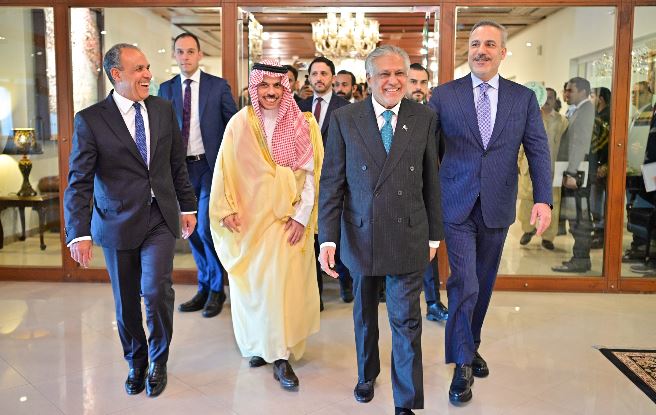
Saudi Arabia, Turkiye, Egypt and Pakistan FMs meeting underway to ease Mideast tensions

Saudi Arabia, Turkiye, Egypt and Pakistan FMs meeting underway to ease Mideast tensions

ISLAMABAD, MAR 29: – The Foreign Ministers of Pakistan, Saudi Arabia, Türkiye, and Egypt gathered today in Islamabad for a family photo at the opening of the Quadrilateral Consultations, signaling a renewed push for regional cooperation and economic coordination among key Muslim-majority nations.

A two-day quadrilateral meeting of foreign ministers from Saudi Arabia, Turkiye, Egypt and Pakistan is currently underway in Islamabad to deliberate upon a variety of issues, including efforts to reduce the ongoing tensions in the region amid the US-Israeli war on Iran.

Islamabad has emerged as a key facilitator between Iran and the United States as their war drags on, serving as an intermediary for messages between the two sides.

The meeting comes amid efforts to open a window for diplomacy to end over a month-long war between the US, Israel, and Iran, which began on February 28 and has affected the broader Middle East.

In this regard, Turkish Foreign Minister Hakan Fidan and Egyptian Foreign Minister Badr Abdelatty arrived in Islamabad a day earlier on an official visit.

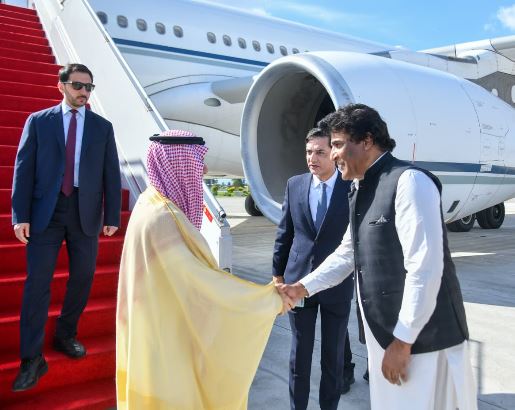
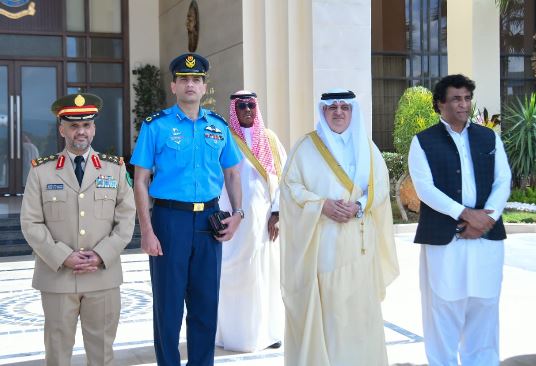
Saudi Foreign Minister Prince Faisal bin Farhan Al Saud has also arrived in Islamabad.

Two days earlier, DPM Dar confirmed that indirect talks between the United States and Iran were underway through messages being relayed by Pakistan, with Turkiye and Egypt also helping in the effort.

These efforts included direct contact between Chief of Defence Forces (CDF) and Chief of Army Staff (COAS) Field Marshal Asim Munir and US President Donald Trump on Sunday, confirmed by the White House.

Subsequently, Pakistan delivered a US proposal to Iran, a senior Iranian source told Reuters on Wednesday. The source did not reveal details of the proposal or confirm if it was the 15-point US framework reported by media outlets.

However, Iran rejected the US proposal, insisting it will end the ongoing “imposed war” on its own terms and timeline, a senior political-security official told Press TV.

Iran outlined five conditions for ending the war: a complete halt to “aggression and assassinations”; mechanisms to prevent the war from being reimposed; guaranteed payment of reparations; resolution across all fronts and resistance groups; and international recognition of Iran’s control over the Strait of Hormuz.

As part of preparations, Prime Minister Shehbaz Sharif said he had a detailed telephone conversation with Iranian President Masoud Pezeshkian earlier today (Saturday), lasting over one hour.

The call was the PM’s second conversation with Pezeshkian in five days, both of which focused on de-escalation and dialogue.

“I reiterated Pakistan´s strong condemnation of the continued Israeli attacks on Iran, including recent strikes on civilian infrastructure, and conveyed Pakistan´s solidarity with the brave people of Iran,” he wrote on X.

PM said he also expressed his condolences on the tragic loss of precious lives and prayed for the swift recovery of the injured and displaced.

“I apprised him of Pakistan’s ongoing diplomatic outreach — engaging the United States and brotherly Gulf and Islamic countries — to facilitate dialogue and de-escalation.”

The PM Office said separately that Pezeshkian “stressed the need to build trust in order to facilitate talks and mediation”.

Egyptian, Turkish FMs meet DPM Dar
Meanwhile, the deputy prime minister held separate meetings with his Egyptian and Turkish counterparts at the Ministry of Foreign Affairs on the sidelines of the upcoming two-day quadrilateral meeting in Islamabad.

During the meeting, both sides held discussions on the Middle East tension as well as strengthening bilateral relations between Pakistan and Egypt.

According to a statement issued by the Foreign Office, the deputy PM warmly welcomed the Egyptian foreign minister and reaffirmed that Pakistan attaches great importance to its longstanding and brotherly relations with Egypt.

The two sides exchanged views on regional and international developments, particularly the situation in the Middle East. They underscored the need for restraint, de-escalation, and the resolution of disputes through dialogue and diplomacy.

Dar reaffirmed Pakistan’s unwavering support for the Palestinian people and strongly condemned the continued aggression by Israeli occupying forces in Gaza and the West Bank.

He appreciated Egypt’s role in facilitating humanitarian assistance to the people of Gaza, including support extended to Pakistan’s relief efforts.

The meeting reaffirmed the shared commitment of Pakistan and Egypt to further strengthen their close and brotherly relations and to deepen cooperation across all areas of mutual interest.

In a meeting with FM Fidan, the two sides exchanged views on recent regional developments, including the evolving situation in Iran, and emphasised the importance of dialogue and sustained diplomatic engagement to promote peace and stability.

DPM Dar and FM Fidan also reaffirmed their unwavering support for each other’s core national interests, agreed to maintain close coordination, and to continue working together to deepen the strategic partnership between Pakistan and Turkiye.

The deputy prime minister expressed satisfaction at the positive trajectory of bilateral relations and reaffirmed Pakistan’s commitment to expanding cooperation with Türkiye across all sectors of mutual interest.

‘Dialogue and diplomacy’
Separately, DPM Dar held a telephonic conversation with Iranian Foreign Minister Abbas Araghchi, according to a statement issued by the Foreign Office.


The two leaders discussed the evolving regional situation and ongoing developments.

The deputy premier emphasised the need for de-escalation, stressing that dialogue and diplomacy remain the only viable path for lasting peace.

He also underscored the importance of an end to all attacks and hostilities.

Dar said that Pakistan remains committed to supporting all efforts aimed at restoring regional peace and stability.

President urges nation to cut food waste on Zero Day

President urges nation to cut food waste on Zero Day

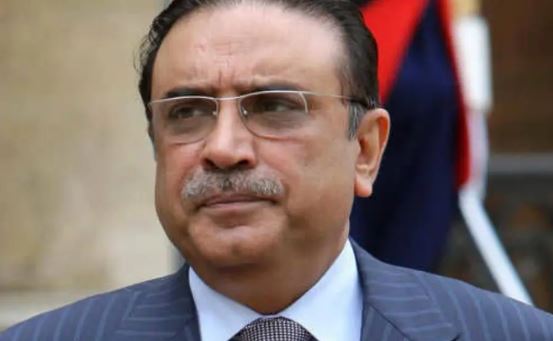
ISLAMABAD, MAR 29: /DNA/ – President of the Islamic Republic of Pakistan Asif Ali Zardari, in a message marking the International Day of Zero Waste, observed on March 30 with a global focus on food waste, has urged the nation to prioritize reducing food loss and waste as a practical necessity across all stages of production, storage, distribution, and consumption.

The President highlighted that for countless Pakistani families, food waste is not an abstract issue but a daily economic burden. He noted that spoilage before market arrival, post-harvest losses due to inadequate storage, and large-scale disposal of cooked food at events represent squandered resources that could have been used responsibly. “At a time when households are managing tight budgets and food prices remain a concern,” the President stated, “reducing waste is closely tied to the daily wellbeing of ordinary citizens.”

Emphasizing the broader environmental and resource costs, the President explained that wasted food also means the loss of water, land, energy, and labor. Discarded food ending up in landfills contributes to greenhouse gas emissions, adding pressure to the environment. “Addressing food waste is therefore closely linked to both food security and the wider challenge of climate change,” he added.

As an agrarian economy, Pakistan must pay particular attention to losses occurring between the farm and the market. The President called for better post-harvest handling, reliable storage facilities, and stronger cold-chain systems to significantly reduce spoilage. He also urged markets, local administrations, and charitable organizations to work together to ensure surplus food reaches vulnerable communities instead of being discarded.

The President further stressed that public institutions should lead by example in their practices, while businesses across the food supply chain have a responsibility to reduce waste through better planning, improved storage, and responsible distribution. At the household level, he recommended small steps such as buying only what is needed, storing food properly, and making full use of cooked meals to make a meaningful difference.

“Reducing food waste is not a single policy measure,” the President concluded. “It requires steady effort across farms, markets, institutions, and homes. Treating food with the care it deserves will help strengthen food security, make better use of our resources, and ease pressure on the environment.”

NADRA releases data of e-Sahulat franchises for citizen’s convenience

NADRA releases data of e-Sahulat franchises for citizen’s convenience

LAHORE, Mar 29: The National Database and Registration Authority (NADRA) released complete data of e-Sahulat franchises established across the country to facilitate citizens.

According to official sources, a list of more than 3,000 franchises was issued, enabling users to access map locations and other details of their nearest e-Sahulat centres.


The list also included information about franchise owners, while users could check complete details of nearby NADRA franchises by entering the name of a specific area.


Officials said citizens availed various identity-related services at these centers, including renewal of identity cards, issuance of duplicate cards and other facilities.


They said the facility for issuance of Form B for children under 10 years of age was also available at e-Sahulat franchises, while the process for cancellation of identity cards of deceased persons had been made available through these centres.


According to NADRA, the initiative reduced the need for residents of remote areas to visit its offices and helped save time and costs.


The authority said modern facilities were being utilized to ensure fast, convenient and efficient service delivery to the public.

A diplomatic convergence: a positive signal for ME peace

A diplomatic convergence: a positive signal for ME peace

At the same time, there is another dimension that cannot be ignored. Iran’s policy of supporting proxy groups in various countries has long been a source of concern for the West and regional actors alike. While Iran may view these relationships as strategic assets, they contribute to instability and mistrust

Opinion

Ansar Mahmood Bhatti

The recent meeting of the Foreign Ministers of Pakistan, Saudi Arabia, Turkey, and Egypt has emerged as a significant and timely development in an increasingly volatile Middle Eastern landscape. At a time when geopolitical tensions are running high and conflicts risk spiraling into broader confrontations, this gathering carries the promise of restraint, dialogue, and a renewed commitment to peace. The joint stance adopted by these influential countries sends a strong signal that diplomacy, not coercion, must guide the future of the region.

At the heart of the meeting was a clear and unequivocal message: the path forward lies in dialogue. The foreign ministers collectively rejected the use of force as a tool of policy and called upon all parties to refrain from coercive means. This consensus is particularly noteworthy given the diversity of interests and strategic alignments among these nations. Their ability to converge on such a fundamental principle reflects both the gravity of the current situation and a shared understanding that continued escalation would have disastrous consequences for the entire region.

A major highlight of the discussions was the strong condemnation of recent attacks on Iran, which were termed unjustified and destabilizing. Equally, the ministers denounced attacks on Gulf countries, emphasizing that no nation should be subjected to aggression. This balanced approach is crucial. By condemning all forms of aggression regardless of the target the participating countries avoided the pitfalls of selective outrage and demonstrated a principled commitment to international norms.

Pakistan, in particular, played a leading role in shaping this narrative. Its stance was firm yet measured, advocating for de-escalation while emphasizing respect for sovereignty. This is precisely the kind of leadership expected from Pakistan, especially given its status as the only nuclear power in the Muslim world. With such capability comes responsibility, and Pakistan appears to be stepping up by promoting stability rather than confrontation.

An important aspect of the meeting was the recognition of the restraint shown by Gulf countries, especially Saudi Arabia, the United Arab Emirates, Qatar and Kuwait. Pakistan lauded their patience and calculated responses, which have so far prevented the conflict from escalating further. In a region often marked by rapid retaliation and tit-for-tat actions, such restraint deserves acknowledgment. It highlights that even in the face of provocation, measured responses can help contain crises rather than inflame them.

The meeting also indirectly addressed the broader question of power politics and the misuse of strength. There is a growing concern globally that powerful nations often act unilaterally, assuming they can impose their will without consequences. This approach has repeatedly proven flawed. The situation with Iran is a case in point. Attempts at regime change widely believed to have been a strategic objective of the United States have not succeeded. Nor were they likely to. Iran is not Venezuela; it has deep-rooted institutions, a resilient political structure, and significant regional influence.

On the issue of Iran’s nuclear program, the discussion becomes even more nuanced. There is a widely accepted principle in international law: every country has the right to access nuclear technology for peaceful purposes. Iran is no exception. Denying this right outright would set a dangerous precedent and undermine the framework of global nuclear governance. However, this right comes with responsibilities. Transparency, compliance with international agreements, and confidence-building measures are essential to ensure that peaceful intentions are not misinterpreted.

At the same time, there is another dimension that cannot be ignored. Iran’s policy of supporting proxy groups in various countries has long been a source of concern for the West and regional actors alike. While Iran may view these relationships as strategic assets, they contribute to instability and mistrust. The combination of advanced nuclear capabilities and active proxy networks creates a perception of a potentially dangerous mix, one that alarms not just Western powers but also neighboring states. If Iran seeks broader acceptance and reduced tensions, it may need to reassess this aspect of its foreign policy.

The meeting also sheds light on a deeper, more structural issue within the Muslim world the lack of unity. Despite frequent references to the concept of the “Ummah,” the reality is starkly different. The Muslim world today is fragmented, divided by political rivalries, sectarian differences, and competing national interests. Institutions such as the Organization of Islamic Cooperation (OIC) and the Arab League have largely failed to play meaningful roles in resolving major conflicts. Their ineffectiveness has been particularly evident in recent crises, including the situation involving Iran.

This raises an important question: do these organizations still serve a purpose? There is a growing argument that they either need comprehensive reform or should be replaced by more effective, action-oriented groupings. Instead of large, unwieldy bodies that struggle to reach consensus, there may be merit in creating smaller coalitions of committed countries willing to take concrete steps toward peace and stability. The recent meeting of Pakistan, Saudi Arabia, Turkey, and Egypt could be seen as a step in this direction a pragmatic alignment of states that are serious about addressing regional challenges.

Another dimension that warrants careful consideration is the evolving relationship between Pakistan and the United States. If current developments suggest that Washington is taking a more supportive stance toward Pakistan, it should not be misinterpreted as a fundamental shift in US policy. Historically, US  engagement with Pakistan has been shaped by strategic interests, often fluctuating with changing geopolitical priorities. Any present alignment may well be temporary, driven by immediate concerns rather than long-term commitments.

This is particularly relevant in the context of Pakistan’s nuclear program. The United States has consistently maintained a cautious, and at times critical, position on nuclear proliferation. There is little reason to believe that this stance has fundamentally changed. Therefore, Pakistan must tread carefully. It should avoid overreliance on transient diplomatic goodwill and instead focus on strengthening its own strategic autonomy.

In this context, Pakistan’s role as a responsible nuclear state becomes even more important. Being a nuclear power is not just about deterrence; it is also about setting an example in conflict resolution and regional cooperation.

The gathering of Pakistan, Saudi Arabia, Turkey, and Egypt represents more than just a diplomatic event it is a statement of intent. It signals that key players in the Muslim world are willing to take responsibility for regional stability. It also highlights the need for a more realistic and pragmatic approach to international relations, one that recognizes the limits of force and the value of dialogue. Whether this initiative will lead to lasting peace remains to be seen, but it is undoubtedly a step in the right direction.

Riyadh, Islamabad unite on evolving regional situation

Riyadh, Islamabad unite on evolving regional situation

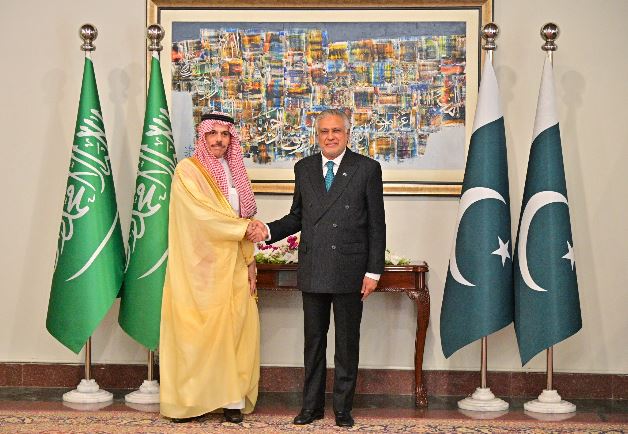
ISLAMABAD, MAR 29 /DNA/ – Deputy Prime Minister/Foreign Minister Senator Mohammad Ishaq Dar received H.H. Prince Faisal bin Farhan Al Saud, Foreign Minister of the Kingdom of Saudi Arabia, at the Ministry of Foreign Affairs today. The two sides will engage in comprehensive consultations on the evolving regional situation.

The visit reflects the shared commitment of Pakistan and Saudi Arabia to sustained dialogue, close coordination and enhanced cooperation in addressing evolving regional developments.

Saudi foreign minister arrives in Islamabad ahead of quadrilateral huddle

Saudi foreign minister arrives in Islamabad ahead of quadrilateral huddle

ISLAMABAD, MAR 29: Quadrilateral meeting seeking de-escalation of regional tensions to take place in Islamabad; Iran govt official says Tehran “did not start the war but suffered significant losses”.

The meeting, bringing together foreign ministers from Pakistan, Saudi Arabia, Turkey and Egypt, is focused on assessing the evolving conflict and identifying possible diplomatic pathways to end hostilities

Stay Connected

64FansLike
60FollowersFollow

Latest Reviews

Exchange Rates

USD - United States Dollar
EUR
1.14
GBP
1.34
AUD
0.70
CAD
0.71