Home Blog Page 202

Minister calls for integrated, people-centric disaster management system

Minister calls for integrated, people-centric disaster management system

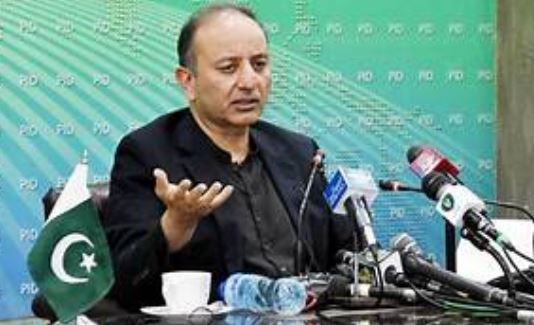
ISLAMABAD, Mar 31: Federal Minister for Climate Change and Environmental Coordination Dr Musadik Malik on Tuesday stressed the need for a comprehensive, integrated and people-centric approach to disaster management, highlighting the importance of timely response, effective early warning systems and strong coordination among all stakeholders.

Addressing a ceremony here, the minister said that Pakistan, being among the most climate-vulnerable countries, was facing increasing risks from torrential floods, glacial lake outburst floods (GLOFs) and extreme weather events, particularly in northern regions.

He underlined that while various initiatives had been undertaken to enhance disaster preparedness, there was a need to further strengthen the effectiveness of early warning systems to ensure timely evacuation of communities at risk.

Dr Malik said that response time in case of sudden disasters such as GLOFs was often limited to 20 to 25 minutes, which required a well-connected and fully functional system linking monitoring infrastructure with district administration and local communities.

He emphasised that modern technology, including satellite systems, drones and real-time data integration, could play a vital role in improving disaster response mechanisms. “With the advancement in technology, it is now possible to develop integrated solutions that can help save lives and minimise losses,” he added.

The minister highlighted the importance of ensuring that disaster preparedness measures translate into practical benefits for affected populations, particularly vulnerable communities living in high-risk areas.

He also stressed the need for improved zoning regulations and their effective enforcement to prevent construction in flood-prone zones, which could exacerbate damage during natural disasters.

Referring to social challenges, Dr. Malik said that communities must be protected through inclusive policies so that individuals are not forced to remain in hazardous areas due to economic or social pressures.

He called for enhanced coordination between federal and provincial governments, as well as local administrations, to ensure a unified and effective response to climate-induced disasters.

The minister also appreciated the support of international development partners, including the World Bank, Asian Development Bank and United Nations agencies, for assisting Pakistan in strengthening its climate resilience and disaster management capacity.

Highlighting future initiatives, Dr Malik said the government was working to promote innovation and research in climate-related fields, including support for young entrepreneurs and startups to develop practical solutions for climate challenges.

He reiterated the government’s commitment to utilising modern technologies and strengthening institutional frameworks to build a resilient system capable of protecting lives, livelihoods and infrastructure from the impacts of climate change.

Dr Malik said that collective efforts at all levels would be essential to address the growing challenges posed by climate change and to ensure sustainable development in the country.

NA Speaker lauds NAB’s historic recovery of Rs. 6.213 trillion

ISLAMABAD, Mar 31: National Assembly Speaker Sardar Ayaz Sadiq on Tuesday hailed NAB’s record Rs 6.213 trillion recovery in 2025, praising Chairman Nazir Ahmed Butt’s leadership and the Bureau’s reform-driven transformation into a transparent, people- and business-friendly institution.

The Speaker expressed these views during a meeting with Chairman NAB at Parliament House, where Nazir Ahmed presented the Bureau’s Annual Report 2025.

Speaker Sardar Ayaz Sadiq commended the leadership of Chairman NAB Nazir Ahmed, under whose stewardship the Bureau achieved a record-breaking recovery of Rs. 6.213 trillion—the highest annual figure since its inception in 1999.

He further appreciated NAB’s cumulative recoveries of Rs. 11.524 trillion (approximately USD 41 billion) over the past three years, noting that the 2025 recovery alone accounts for more than half of this amount and is thirteen times higher than the total recoveries recorded over the preceding 23 years.

The Speaker also expressed satisfaction over NAB’s 72 percent prosecution success rate, terming it a significant indicator of institutional effectiveness. He further highlighted NAB’s success in reclaiming approximately 2.98 million acres of encroached or misappropriated state and forest land, valued at Rs. 5.98 trillion.

While Praising NAB’s people-centric approach, the Speaker noted that the Bureau has provided relief to 115,587 affectees of fraudulent housing and investment schemes through the disbursement of Rs. 180 billion.

He also acknowledged NAB’s focus on complex financial crimes, which led to the attachment of assets worth Rs. 127 billion in 39 high-profile anti-money laundering cases.

During the meeting, Chairman NAB Nazir Ahmed briefed the Speaker on major institutional reforms aimed at enhancing transparency, fairness, and inclusivity. These include the establishment of specialized Facilitation Cells for parliamentarians, civil bureaucracy, the business community, and overseas Pakistanis. He further informed that NAB has introduced AI-assisted investigations and transitioned to a paperless working environment through the implementation of the NAB E-Office (NEO) system in 2025.

Later on, Chairman NAB expressed his gratitude to the Speaker Sardar Ayaz Sadiq for his support and appreciated the constructive role of Parliament and its members in the fight against corruption.

Romania and Pakistan sign MoU on port cooperation

Romania and Pakistan sign MoU on port cooperation

The Memorandum reflects the shared objective of enhancing maritime connectivity between Karachi Port and the Port of Constanța on the Black Sea, facilitating more efficient trade flows between South Asia and Europe

DNA

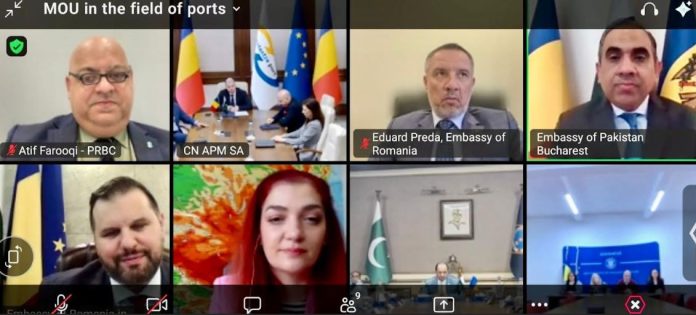
ISLAMABAD: Romania and Pakistan marked a significant step in advancing their economic and maritime partnership with the signing of a Memorandum of Understanding (MoU) on port cooperation. The agreement was concluded between the National Company “Maritime Ports Administration” S.A. Constanța and the Karachi Port Trust during an online ceremony. It was signed by Mr. Mihai Teodorescu, General Manager of the Port of Constanța Administration, and Rear Admiral Shahid Ahmed SI(M), Sbt. (Retd), Chairman of Karachi Port Trust.

The ceremony was attended by representatives of the Ministries of Foreign Affairs and Transport of both countries, alongside ambassadors Dan Stoenescu and Ilyas Mehmood Nizami. Representatives of the Pakistan Romania Business Council, including Mr. Sohail Shamim Firpo and Mr. Atif Farooqi, also took part.

The Memorandum reflects the shared objective of enhancing maritime connectivity between Karachi Port and the Port of Constanța on the Black Sea, facilitating more efficient trade flows between South Asia and Europe. It supports Pakistan’s efforts to develop its maritime sector and blue economy, while reinforcing Romania’s role as a key logistical gateway to the European Union.

The Port of Constanța, one of the largest on the Black Sea, benefits from a strategic position that ensures direct access to Central and Western Europe through the Danube corridor. From Constanța, goods can be transported efficiently via inland waterways through Hungary, Austria and Germany, reaching major hubs such as Rotterdam in the Netherlands. This multimodal route offers a cost-effective and sustainable solution for European distribution.

Enhanced connectivity between Karachi and Constanța is expected to generate new opportunities for bilateral trade. Romanian exports – including industrial equipment, machinery, chemicals and agricultural products – stand to gain improved access to Pakistan and wider regional markets, while Pakistani goods will benefit from more efficient entry points into Europe.

The agreement builds on discussions initiated in 2025 in Karachi and establishes a practical framework for cooperation, including the creation of a joint working group. It promotes collaboration in training, exchange of expertise in port management and operations, and the development of new trade opportunities.

Ambassador Dan Stoenescu highlighted Romania’s objective to expand its exports to Pakistan, thereby strengthening Romania’s economic presence in Asia and contributing to more balanced trade flows. He emphasized that enhanced maritime connectivity represents a practical tool for deepening regional integration, facilitating trade and promoting shared prosperity. In a context of increasing pressure on existing infrastructure and the need for diversified supply routes, the Romania-Pakistan partnership provides a forward-looking framework for sustainable economic cooperation.

Maritime trade plays a central role in the European Union’s economy, with over 75% of the EU’s external trade carried by sea, making ports and shipping essential to growth, connectivity and supply chain resilience. Within this context, the EU’s Blue Economy strategy promotes sustainable use of ocean resources, innovation in maritime sectors and the development of efficient, green and digital port infrastructure. At the same time, Pakistan benefits from the European Union’s GSP+ scheme, which grants preferential access to the EU market for a wide range of exports. Strengthened maritime links between Romania and Pakistan can therefore facilitate increased trade flows under this framework, supporting economic development, diversification of exports and deeper integration into global value chains for both sides.

China says will boost cooperation with Pakistan on Iran issue as Dar lands in Beijing

China says will boost cooperation with Pakistan on Iran issue as Dar lands in Beijing

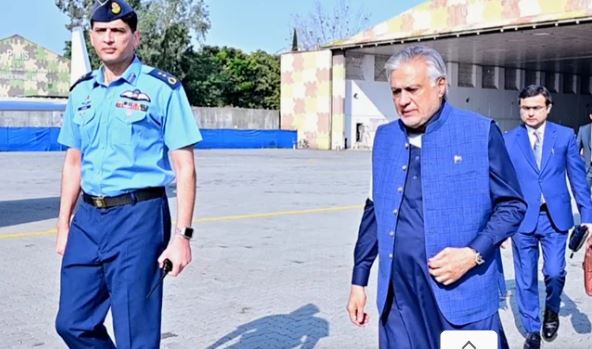
ISLAMABAD, MAR 31: China and Pakistan will “strengthen” their cooperation on Iran, Beijing’s foreign ministry said Tuesday, as Deputy Prime Minister and Foreign Minister Ishaq Dar landed in Chinese capital amid diplomatic efforts to ease tensions between US and Iran.

Pakistan has stepped up diplomatic efforts to end the US-Israel war on Iran, hosting key regional ministers — from Saudi Arabia, Turkiye, and Egypt — and relaying messages between Washington and Tehran, placing Islamabad firmly in the global spotlight.

In a brief statement, the Foreign Office said during his one-day visit, marking his second to Beijing this year, both FMs Dar and Yi will review bilateral ties and discuss regional developments and matters of mutual interest.

Addressing a press conference separately, Beijing’s foreign ministry spokeswoman Mao Ning said that the two foreign ministers will strengthen strategic communication and coordination on the Iran situation and make new efforts toward advocating for peace.

Ahead of Dar’s visit, China was being viewed as a potential guarantor in any future talks between Iran and the United States.

Washington-based scholar Vali Nasr, Iran has sought guarantees in any potential agreement with the US, with indications that Dar was travelling to China to explore Beijing’s role as a guarantor. Meanwhile, Chairman of the Pakistan-China Institute (PCI) Mushahid Hussain Syed said China’s role at this stage was “very important”, adding that Iran required a strong guarantor for any ceasefire and that China could fulfil that role.

In an earlier statement, the Foreign Office said Pakistan and China enjoy an all-weather strategic cooperative partnership, marked by close coordination and regular consultations on regional and international issues.

Discover more
Global current affairs magazine
politics
Cybersecurity solutions news
The FO said Dar’s visit would provide an opportunity for both sides to hold in-depth discussions on regional developments, as well as bilateral and global issues of mutual interest.

The statement added that Dar’s decision to proceed with the visit despite medical advice to rest following a hairline shoulder fracture suffered yesterday reflected the importance Pakistan attaches to its relationship with China.

The visit comes at a time when Pakistan has emerged as a key facilitator between Iran and the United States, serving as an intermediary for messages between the two sides as the war continues.

On Sunday, DPM Dar said a quadrilateral meeting of the foreign ministers of Pakistan, Saudi Arabia, Türkiye and Egypt had called for an immediate and permanent end to the ongoing war in the Middle East.

In a televised address after the meeting in Islamabad, Dar said Pakistan had hosted the talks to discuss a range of issues, including efforts to ease rising regional tensions caused by the US-Israeli war on Iran.

Meanwhile, US President Donald Trump told aides he is willing to end the military campaign against Iran even if the Strait of Hormuz remains largely closed and leave a complex operation to reopen it for a later date, the Wall Street Journal reported on Monday, citing administration officials.

The more than month-long war between the United States, Israel and Iran, which began on February 28 and has affected the wider Middle East. The conflict has also had serious economic consequences, with Iran’s effective blockade of oil and gas shipments through the Strait of Hormuz since the attacks began, causing economic pain across the world.

The Decline of a Sacred Profession

The Decline of a Sacred Profession

by Muhammad Mohsin Iqbal

Medicine has long been regarded as a messianic vocation, a sacred covenant between the healer and the afflicted, wherein the physician serves not merely as a practitioner of science but as an instrument of Divine mercy. The restoration of health, in this noble understanding, is not solely the outcome of pharmacological intervention or surgical dexterity, but a manifestation of the will of Allah, bestowed through those endowed with knowledge, compassion, and fortitude. Across civilizations, the medical profession has commanded reverence, for it demands both intellectual rigor and moral excellence, a rare confluence that elevates its adherents to a station of profound trust.

In Pakistan, this trust was once embodied with distinction. Doctors trained in our institutions earned acclaim not only for their clinical acumen but also for their refined ethical sensibilities. Their education extended beyond anatomy and therapeutics into the delicate art of human engagement, where empathy, patience, and decorum were cultivated alongside diagnostic skill. The physician’s presence itself was often therapeutic; a gentle word, a reassuring glance, or a measured tone could alleviate the patient’s anxiety even before any prescription was written. The Hippocratic ethos was not a mere abstraction but a lived reality, shaping the doctor-patient relationship into one of mutual respect and confidence.

Yet, with the passage of time, a disquieting transformation appears to have taken root. Instead of progressing along the path of excellence, certain segments within the profession seem to be receding into a state of ethical erosion. The demeanor once synonymous with civility and compassion is, in some quarters, being supplanted by indifference, impatience, and, at times, outright hostility. Reports from various public hospitals paint a troubling picture, where young doctors, entrusted with the sanctity of human life, exhibit conduct that is at variance with the very essence of medical professionalism. Instances of altercations within hospital premises, reminiscent more of street brawls than of scholarly discourse, have become alarmingly frequent. Even more distressing is the apparent disregard for senior counsel, as advice offered by experienced practitioners is met with defiance rather than deference.

The erosion of this professional decorum has grave implications, for the edifice of medicine rests upon an intangible yet indispensable foundation; trust. The patient, often in a state of vulnerability, entrusts his or her most intimate concerns to the physician, believing in the sanctity of confidentiality and the sincerity of care. This fiduciary relationship, once robust, now shows signs of fragility. When compassion is replaced by callousness, and when ethical restraint gives way to recklessness, the patient’s faith is inevitably shaken.

A recent incident in a prominent hospital in Lahore has brought this crisis into stark relief. Within the confines of an operation theatre in a gynecology ward—an environment that ought to epitomize precision, dignity, and solemn responsibility—a spectacle unfolded that defies both medical ethics and human decency. Two cases of childbirth reportedly became the subject of a grotesque competition among attending doctors, with the proceedings being recorded on a mobile device and subsequently disseminated. The gravity of this act cannot be overstated. In that moment, the operating theatre, meant to safeguard the lives of mother and child, was reduced to a stage for trivial amusement. The presence of male staff further compounded the violation of privacy and propriety, stripping the situation of any semblance of professional decorum.

One is compelled to ask; how did we arrive at such a nadir? How did those entrusted with the sanctity of life come to trivialize it so profoundly? It is particularly unsettling to consider that these patients—someone’s daughter, sister, or wife—were subjected to such indignity at a moment of utmost vulnerability. The risks inherent in obstetric procedures, including haemorrhage, fetal distress, and other complications, necessitate the highest degree of vigilance and care. To compromise this responsibility for the sake of frivolity is not merely negligence; it is a moral transgression of the gravest order.

The intervention of the concerned authorities, including the health minister, is a necessary step, yet it addresses only the immediate manifestation of a deeper malaise. Disciplinary action, including the revocation of licenses and the imposition of legal penalties, may serve as a deterrent, but the root cause lies in a systemic failure to inculcate ethical consciousness during medical training. The curriculum, while comprehensive in its scientific scope, must place equal emphasis on medical ethics, professionalism, and the psychological dimensions of patient care. The formation of a competent physician is not achieved through textbooks alone; it requires the cultivation of character.

Equally troubling are reports of coercive practices in clinical decision-making, particularly in obstetrics, where families are pressured into consenting to surgical interventions under the specter of imminent danger. The suggestion that a case is “not normal” and requires immediate operative management, often delivered in an atmosphere of urgency, leaves relatives with little choice but to acquiesce. While caesarean sections are, in many instances, medically indicated, their unnecessary proliferation raises concerns about both ethical integrity and patient welfare. Surgical intervention carries its own risks, including infection, thromboembolic events, and long-term reproductive complications. In many advanced healthcare systems, a conservative approach is adopted, allowing natural processes to proceed to the fullest extent before resorting to operative measures.

If such trends persist, the consequences will extend beyond individual cases to erode public confidence in the healthcare system as a whole. The question then arises with poignant urgency; who will entrust their loved ones to institutions where dignity and safety are no longer assured? The sanctity of the medical profession must be restored, not merely through punitive measures but through a comprehensive reorientation towards its original principles—compassion, integrity, and accountability.

The physician must once again become a custodian of hope, a figure whose presence reassures rather than intimidates, whose conduct reflects the highest ideals of humanity. Only then can the noble legacy of this sacred profession be preserved, and the trust that has been so gravely shaken be painstakingly rebuilt.

Turkish varsities to strengthen collaboration in emerging areas with Pakistan

Turkish varsities to strengthen collaboration in emerging areas with Pakistan

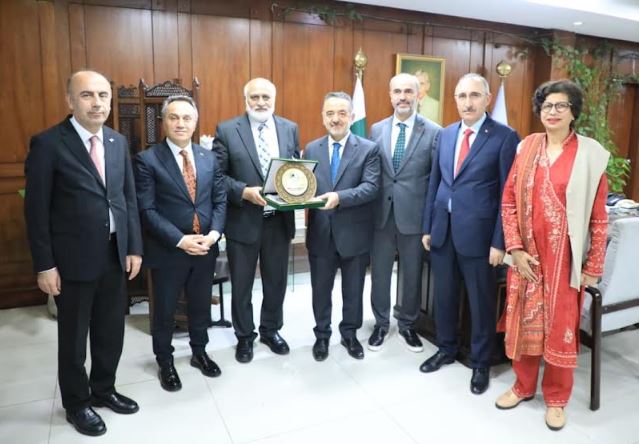
ISLAMABAD, MAR 31 /DNA/ – A delegation of Turkish universities, led by Ambassador of Türkiye to Pakistan İrfan Neziroğlu, visited the Higher Education Commission (HEC) Pakistan to discuss bilateral matters aimed at expanding cooperation in higher education. 

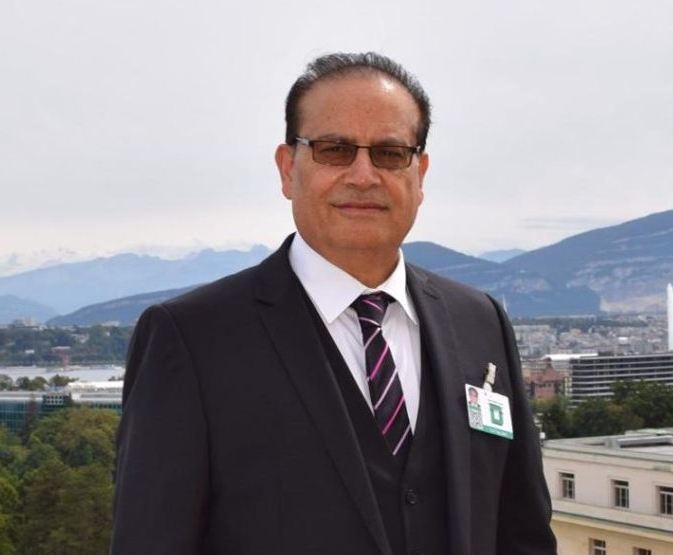
The delegation, comprising Prof. Dr. Fatih Yılmaz from Tokat Gaziosmanpaşa University, Prof. Dr. Mehmet Keleş from Adıyaman University, Prof. Dr. Fahrettin Göktaş from Fırat University, and Prof. Dr. Mutlu Türkmen from Bayburt University alongside officials from the Turkish embassy, called on Chairman HEC Dr. Niaz Ahmad Akhtar and other HEC officials, expressing keen interest in expanding bilateral academic and research engagements.  

The two sides agreed to strengthen relations in the emerging fields, such as artificial intelligence, cybersecurity, and digitisation, while promoting joint research in medicine, agriculture, physics, biotechnology, pharmaceuticals, social sciences, and languages including Urdu and Turkish. They also discussed enhancing collaboration through student and faculty exchange programmes, joint research and innovation development initiatives, conferences, summer exchange programmes, visiting scholar programmes in specialised areas, joint and dual degree programmes, and online learning modules in various disciplines.    

In addition, the two sides proposed establishing a pool of experts from both countries who could collaborate on areas such as natural, biological, and social sciences, strategic studies, defence-related research, and policy papers addressing the evolving global landscape.

The Chairman HEC and the Turkish Ambassador agreed to compile a list of experts in relevant fields who could be designated as visiting faculty to deliver physical and online courses and undertake collaborative research activities.

The Chairman reiterated HEC’s commitment to supporting the advancement of higher education and further strengthening the longstanding brotherly relations between Pakistan and Türkiye.

Iran on the Brink of a Ground War

Qamar Bashir

Qamar Bashir

Frustration is now visible on all sides of the U.S.-Israel war against Iran. After weeks of bombardment, strategic signaling, and diplomatic theater, the central objectives publicly associated with Washington and Tel Aviv still appear only partially achieved. The Strait of Hormuz remains the decisive choke point, Iranian retaliatory capacity has not been extinguished, and the war has entered its second month with fresh troop deployments rather than a settled outcome. Reuters reported on March 30 that thousands of U.S. Army paratroopers from the 82nd Airborne had arrived in the Middle East, joining Marines and other forces already in theater, while officials acknowledged that these deployments increase capacity for possible incursions into Iranian territory, including operations linked to Kharg Island and Hormuz security.

That is why the current moment is so dangerous. Even if a full-scale invasion still remains unlikely, the line between a “limited mission” and an expanding war is historically thin. The United States may initially contemplate a narrow ground operation: seizure of a strategic island, raids on coastal batteries threatening shipping, or even a special operation linked to Iran’s uranium stockpile. Yet history shows that once a great power commits troops and begins receiving body bags in return, its political logic changes. Retaliation produces counter-retaliation. A war presented as surgical starts demanding prestige, vengeance, and escalation. Vietnam, Iraq, and Afghanistan all demonstrated that limited entry rarely guarantees limited exit.

The strategic motives behind such a move are not difficult to understand. Kharg Island is Iran’s principal oil export hub. The Strait of Hormuz carries a huge share of the world’s seaborne oil trade. Control of both would give Washington leverage over global energy flows while denying Tehran its most potent geoeconomic weapon.

At the same time, Iran’s expanding stockpile of highly enriched uranium remains a central concern. Reuters, citing the IAEA, reported earlier this month that Iran held about 440.9 kilograms of uranium enriched up to 60%, material that in theory could be further enriched for roughly 10 nuclear weapons. That figure alone explains why any U.S. operational planning would include not only maritime control and coercive strikes, but also thoughts of raids tied to nuclear assets.

But Iran is not waiting passively for such a contingency. Its parliament speaker has warned that Tehran sees public talk of negotiations as a cover for secret planning for a land assault, and Iranian leaders have vowed to burn any invading force and punish regional partners. Whether or not every Iranian threat is executable, the central point stands: Iran has prepared for attritional resistance, dispersal, underground storage, missile retaliation, drones, and proxy expansion. That means even a limited U.S. ground assault would not occur in a vacuum. It would likely trigger attacks on American bases, shipping lanes, partner infrastructure, and perhaps multiple secondary fronts beyond Iran itself.

This is why the destruction of civilian infrastructure now being threatened is so morally revealing. If ports, roads, bridges, refineries, and power systems are systematically targeted, the principal victims will not be the bunker-protected leadership or deeply buried military networks. The true burden will fall upon ordinary Iranians who never built shelters, never planned for prolonged blackout, and never volunteered to become the human cushion of a geopolitical struggle. Iranian missiles have already damaged Israel’s Haifa refinery complex and widening regional attacks affecting energy installations and bases. Such escalation shows that the war is moving beyond military targets into the economic bloodstream of entire societies.

The illusion that negotiations will easily stop this spiral is also fading. Pakistan has emerged as the most active intermediary, hosting regional discussions and preparing to facilitate U.S.-Iran talks in the coming days. Yet the diplomatic gap remains profound. Washington has promoted a 15-point framework; Iran has publicly rejected it and insists on sovereignty, security, and an end to attacks. Reuters noted on March 30 that Islamabad is preparing to host these efforts, but there was still no confirmation that any direct, substantive breakthrough had been achieved. In other words, the parties remain boxed inside terms that each side fears would amount to capitulation.

Meanwhile, the battlefield itself is expanding horizontally. Israel has widened pressure in Lebanon, the Houthis are threatening to reopen a Red Sea front, and the Saudi dimension has already become more exposed after Iran-linked strikes wounded U.S. personnel at Prince Sultan Air Base. Once Hormuz and the Red Sea are both destabilized, the consequences no longer belong only to Tehran, Tel Aviv, or Washington. They belong to Europe, Asia, Australia, South America, and every economy dependent on fuel, shipping insurance, manufacturing inputs, and stable freight routes. Reuters reported that the war’s energy shock is already dimming the outlook for many economies, according to the IMF.

In this background, four scenarios emerge. The first, and in my judgment the most likely, is a prolonged air-maritime war without a deep occupation of Iran. In this scenario, Washington and Israel continue heavy strikes while avoiding the political and military cost of trying to march into Iran’s interior. The second is a limited U.S. ground raid or seizure of a strategic site such as Kharg Island or coastal launch areas near Hormuz. The third is a negotiated de-escalation through Pakistani and regional mediation. The fourth, least likely but most catastrophic, is a broader regime-change campaign with sustained U.S. ground presence inside Iran.

My own estimate is this: a prolonged high-intensity war without major occupation carries about a 45% probability; a limited ground incursion about 25%; negotiated de-escalation about 20%; and a broad regime-change invasion about 10%. Those figures are not certainties, only judgments based on current force posture, public rhetoric, and the historical reluctance of Washington to bear the cost of long occupation when air and naval coercion can still be intensified. But the most important warning is that even a 25% chance of limited ground action contains within it the seed of a much wider war. Once U.S. boots hit Iranian soil and resistance produces American casualties, domestic pressure in Washington may drive escalation far beyond the original mission.

If the United States “wins,” it may reopen shipping, damage Iran’s missile and naval capacity, and perhaps enforce a new nuclear arrangement. But such a win would still leave behind an unstable region, a humiliated but not necessarily pacified society, and a new cycle of insurgent or proxy retaliation. If Iran holds the line and turns even limited ground operations into a grinding trap, the defeat would be historic, not merely military but psychological, undermining U.S.-Israeli coercive credibility across the region. If negotiations somehow succeed, the outcome will not be friendship. It will be an ugly compromise designed to stop the bleeding.

That is why the world stands at a catastrophic juncture. The danger is not only that a ground assault may occur. The greater danger is that once it begins, no one may be able to keep it limited. The war planners may speak the language of optionality, precision, and controlled force. History speaks a different language. It says that powerful states often enter wars believing they can calibrate violence, only to discover that resistance, pride, and fear rapidly seize control. Let us hope that this time the diplomats win before the generals do, because once the ground war begins, peace may become far more expensive than anyone now imagines.

Qamar Bashir

Press Secretary to the President (Rtd)

Former Press Minister, Embassy of Pakistan to France

Former Press Attaché to Malaysia

Former MD, SRBC | Macomb, Michigan

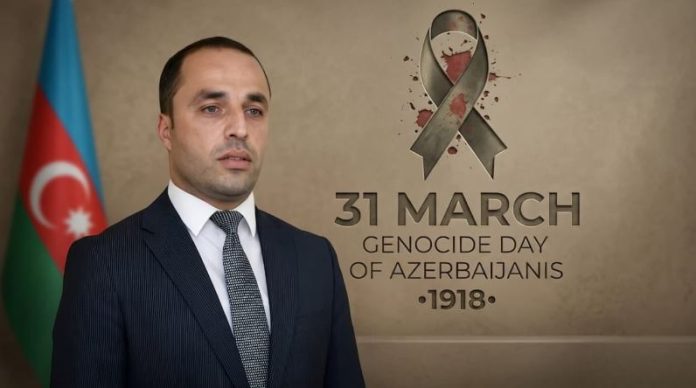
March 31 Genocide – A crime against humanity committed against Azerbaijanis

March 31 Genocide – A crime against humanity committed against Azerbaijanis

Farid MUSTAFAYEV

Starting from the early 18th century, Armenian nationalists carried out a policy of genocide against the Azerbaijani people. During that period, Tsarist Russia, which was expanding its territories toward the South Caucasus, used Armenians as a tool and encouraged them with the promise of establishing an Armenian national state in the region.

According to a decree issued on November 10, 1724, in the name of Peter I, favorable conditions were to be created for the resettlement of Armenians in the newly occupied territories, including Baku and other areas.

Taking advantage of this opportunity, Armenians pursued their insidious policies and committed massacres against Azerbaijanis in various regions in an attempt to establish an Armenian state on the historical lands of Azerbaijan. As a result of this systematic and deliberate policy of genocide, thousands of innocent Azerbaijanis were brutally killed, their homes were burned, and their property was looted.

It should be noted that although Armenians constituted a minority in the territories where they were resettled, they managed, with the support of their patrons, to establish administrative units. Thus, the foundation was laid for the policy of expelling and annihilating Azerbaijanis from their own lands.

In order to legitimize the fabricated idea of a “Greater Armenia,” Armenian history was falsified, while Azerbaijan’s history was distorted. In the 20th century, Armenian aggressors, inspired by such artificial ambitions, carried out even more brutal acts of violence against Azerbaijanis.

As a result, atrocities that began in Baku spread throughout the entire territory of Azerbaijan. Thousands of Azerbaijanis were brutally killed, and hundreds of settlements were destroyed. The first large-scale massacres against Azerbaijanis in the 20th century, driven by the illusion of “Greater Armenia,” occurred in 1905–1907.

During that time, thousands of Azerbaijanis were mercilessly killed by Armenians in Baku, Nakhchivan, Zangezur, Iravan, and other historical Azerbaijani lands.

Between December 1917 and March 1918, under the leadership of Andranik, Armenian armed units actively participated in the destruction of Azerbaijani villages. In the Iravan district, 32 villages; in Echmiadzin district, 84 villages; and in Nor-Bayazid district, 7 villages were destroyed—197 villages in total.

Many residents were killed, while others were displaced from their homes, their property looted, and their houses completely demolished. Armenians began to realize their ambitions under the banner of Bolshevism. In March 1918, Stepan Shaumyan was appointed Extraordinary Commissar of the Caucasus and sent to Baku.

From that moment, under the slogan of “struggle against counter-revolutionary elements,” the Baku Commune, led by Shaumyan and supported by Dashnak-Bolshevik forces, initiated a plan to cleanse Baku of its Azerbaijani population.

When discussing the genocide against Azerbaijanis, particular attention is given to the massacres carried out in March 1918 in Baku, Shamakhi, Quba, Goychay, Kurdamir, Salyan, Lankaran, and other regions. Between March 30 and April 3, 1918, armed Armenian units affiliated with the Baku Soviet and the Dashnaktsutyun party committed mass killings against Azerbaijanis in Baku and across various regions, including Karabakh, Nakhchivan, Shamakhi, Quba, Khachmaz, Lankaran, Salyan, Zangezur, and others. According to official sources, nearly 12,000 Azerbaijanis were killed, tens of thousands went missing, and settlements, historical monuments, mosques, and cemeteries were destroyed. Beginning on March 31, 1918, mass killings of Azerbaijanis in Baku intensified.

Around 6,000 armed soldiers of the Baku Soviet and 4,000 armed members of the Dashnaktsutyun participated in the massacres. Over the course of three days, Armenian armed groups, with Bolshevik support, carried out sudden attacks on Azerbaijani neighborhoods, killing people indiscriminately—men, women, and children alike. In 1925, a German witness named Kulner described these events, stating that Armenians entered Muslim (Azerbaijani) neighborhoods, killing everyone, mutilating bodies, and committing acts of extreme brutality without sparing children or the elderly.

After the establishment of the Azerbaijan Democratic Republic in 1918, special attention was given to investigating the March events. On July 15, 1918, the Council of Ministers established an Extraordinary Investigation Commission. According to its findings, Armenian armed groups killed up to 8,000 civilians in Shamakhi alone. Entire villages were destroyed in various districts, including Jabrayil and Javanshir. Near Gyumri, a convoy of 3,000 Azerbaijanis—mostly women, children, and elderly—was ambushed and completely annihilated.

In Zangezur, 115 Azerbaijani villages were destroyed, and over 10,000 Azerbaijanis were killed or injured, while 50,000 were displaced. In the Iravan province, 135,000 Azerbaijanis living in 199 villages were killed, and the villages were razed to the ground. Between 1918 and 1920, Armenian armed groups also destroyed 150 villages in the mountainous part of Karabakh.The Azerbaijan Democratic Republic declared March 31 a national day of mourning in 1919 and 1920.

The systematic study and international recognition of these tragic events were later advanced under the initiative of national leader Heydar Aliyev. By a decree dated March 26, 1998, March 31 was officially declared the “Day of Genocide of Azerbaijanis.” Since then, significant efforts have been made to study this tragedy, publish research, and translate materials into foreign languages. One of the most tragic episodes of this genocide is the mass grave discovered in the city of Quba on April 1, 2007, during excavation work. Investigations revealed that in April–May 1918 alone, 167 villages in the Quba district were completely destroyed.

In 2009, the Cabinet of Ministers approved a plan to commemorate the victims, leading to the construction of a memorial complex at the site. On September 18, 2013, the Quba Genocide Memorial Complex was officially opened. Research has shown that along with Azerbaijanis, representatives of other ethnic groups living in the region—such as Lezgis, Jews, Tats, and others—were also brutally killed and buried in the mass grave. On January 18, 2018, President Ilham Aliyev signed a decree marking the 100th anniversary of the 1918 genocide of Azerbaijanis.

According to the decree, the centenary was widely commemorated not only in Azerbaijan but also by Azerbaijani diaspora organizations and embassies around the world. Articles and materials were published in the media to raise international awareness about the crimes committed by Armenian-Bolshevik armed groups against Azerbaijanis.

Farid MUSTAFAYEV

Deputy Chairman of the Territorial Party Organization of YAP Yasamal District under the Ministry of Science and Education at the Institute of Soil Science and Agrochemistry, Member of the Western Azerbaijan Community.

4 Kazakh boxers secure medals ahead of Asian Championship bouts

4 Kazakh boxers secure medals ahead of Asian Championship bouts

ASTANA, 30 MAR (DNA) — The Asian Boxing Championships kicked off in Ulaanbaatar, Mongolia on March 30, Qazinform News Agency reports.Ahead of the start of the continental tournament, it was already known that four Kazakhstani boxers had secured medals at the 2026 Asian Championships, as they will enter the competition at the semifinal stage, where even a loss guarantees at least bronze, with no match held for third place.

Thus, Nurbek Oralbay (85 kg), Bakyt Seidish (70 kg), Nadezhda Ryabets (80 kg), and Dina Is­lambekova (+80 kg), who will begin from the semifinals, have already secured at least bronze medals. Kazakhstan has also suffered its first loss at the championships, as Zhazira Orakbayeva (51 kg) sustained a shoulder injury in the third round of her bout against Kum Byol An of North Korea and was unable to continue, with the victory awarded to her opponent.

Elina Bazarova (54 kg) will also enter the ring in Ulaanbaatar to face Preeti Pawar of India, according to the draw, later today, March 30. The schedule of opening bouts for other Kazakhstani boxers at the 2026 Asian Championships is as follows:

March 31 – Round of 16

60 kg: Rimma Volosenko vs Priya (India)

April 1 – Round of 16

60 kg: Orazbek Assylkulov vs Paul Julyfer Bascon (Philippines)

April 2 – Round of 16

65 kg: Ertugan Zeynullinov vs Yu-ting Lin (Chinese Taipei)

April 3 – Quarterfinals

55 kg: Makhmud Sabyrkhan

70 kg: Torekhan Sabyrkhan (opponent to be determined)

April 4 – Quarterfinals

65 kg: Laura Yessenkeldi vs Ankushita Boro (India)

75 kg: Valentina Khalzova vs a boxer from Korea

50 kg: Sanzhar Tashkenbay

+90 kg: Aibek Oralbay

(opponents for Sanzhar and Aibek to be determined)

April 5 – Quarterfinals

48 kg: Aigerim Sattibayeva vs Sabina Bobokulova (Uzbekistan)

57 kg: Ulzhan Sarsenbek (opponent to be determined)

75 kg: Sabirzhan Akkalykov vs Taiga Yagi (Japan)

80 kg: Yerassyl Zhakpekov (opponent to be determined)

90 kg: Sagyndyk Togambay vs Xuezhen Han (China)

April 6 – Semifinals

70 kg: Bakyt Seidish (opponent to be determined)

80 kg: Nadezhda Ryabets vs Pooja Rani (India)

+80 kg: Dina Is­lam­bekova vs Oltinoy Sotimboeva (Uzbekistan)

April 7 – Semifinals

85 kg: Nurbek Oralbay (opponent to be determined)

Earlier, Qazinform News Agency reported that Kazakh athletes have secured three medals at the Asian Track Cycling Championships. — DNA

APNS, AGM, elections on Tuesday

Pakistan removes harsh clauses from anti-Israel UN Resolution

DNA

KARACHI: The Annual General Council of the All Pakistan Newspapers Society will meet on Tuesday, March 31, 2026 at 11:00 a.m. at APNS House, Gulistan-e-Jauhar, Karachi”, stated a press release of the APNS. 

The Annual General Council will discuss the conditions prevailing in the newspaper industry and take decisions to address the problems faced by the member publications and will finalize its recommendations on the issues pertaining to the Govt. – Press relations, freedom of press and the future of the industry. The members will consider and adopt the report of the Executive Committee for the year 2025-2026, approve audit report of Annual Accounts for the year 2025 and elect members to the Executive Committee for the year 2026-2027. The new Executive Committee will elect its office bearers for the new term. The meetings of the General Councils will be attended by full members only.

The Secretary General, APNS has requested publishers of full member publications to attend the above Council meeting positively.”

Stay Connected

64FansLike
60FollowersFollow

Latest Reviews

Exchange Rates

USD - United States Dollar
EUR
1.14
GBP
1.34
AUD
0.70
CAD
0.71