Home Blog Page 20

CS reviews preparedness ahead of Murree snowfall

CS reviews preparedness ahead of Murree snowfall

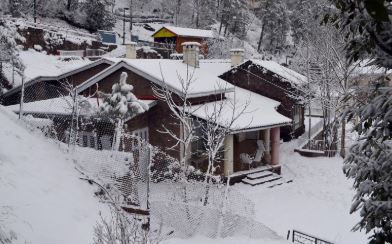
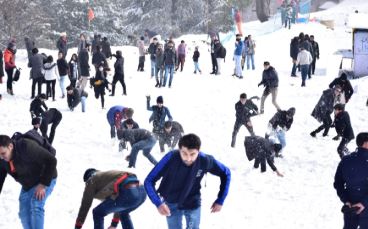
LAHORE, Dec 30 (APP/DNA): With snowfall forecast in Murree, Chief Secretary Punjab Zahid Akhtar Zaman on Tuesday directed the district authorities and relevant departments to remain on alert to prevent disruptions and ensure the safety of tourists.

A meeting, chaired by the Chief Secretary Punjab at the Civil Secretariat, reviewed arrangements for snow clearance, traffic management and public facilitation during the expected snowfall.

Officials informed the meeting that snow-clearing machinery was in place and ready for deployment, with salt spreading and clearance operations set to begin immediately once snowfall starts.

The chief secretary instructed authorities to keep traffic flowing and ensure heavy machinery remains operational throughout the snowfall.

He also emphasized the need for timely and accurate information to guide tourists and avoid congestion and traffic bottlenecks.

Inspector General of Police Dr Usman Anwar told the meeting that additional personnel would be deployed from Lahore to assist Murree police with traffic control and security.

The deputy commissioner of Murree said 13 facilitation centres had already been established for tourists, while a control room had been activated to monitor the situation around the clock.

The secretaries of relevant departments including finance, communication and works, tourism and rescue 1122, along with the director general of the Provincial Disaster Management Authority, attended the meeting.

The Rawalpindi commissioner, regional police officer, deputy commissioner and district police officer of Murree joined via video link.

Islamabad chamber invited to visit Abuja for stronger business ties

Islamabad chamber invited to visit Abuja for stronger business ties

Sardar Tahir Mehmood for Unlocking New Trade Avenues With Nigeria

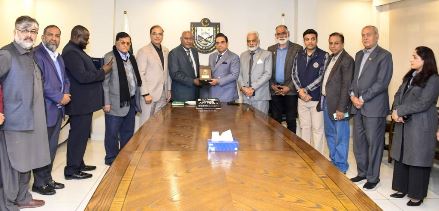
ISLAMABAD, DEC 30 /DNA/ – The Charge d’ Affairs of the Nigerian High Commission to Pakistan, Mr. Yushau Mohammed, has said that Nigeria and Pakistan enjoy numerous areas of common interest and that his country offers multiple promising avenues for trade and investment. He emphasized that the Government of Pakistan, the private sector, and the people of Pakistan must move forward collectively to fully capitalize on these opportunities.

He expressed these views while speaking at the Islamabad Chamber of Commerce and Industry (ICCI) on Monday. The meeting was attended by President ICCI Sardar Tahir Mehmood, Senior Vice President Tahir Ayub, Vice President Irfan Chaudhry, former President ICCI and Chairman Diplomatic Affairs Committee Zafar Bakhtawari, along with Executive Members and former office bearers of the Chamber.

Mr. Yushau Mohammed highlighted that Africa is the third-largest trading partner of Pakistan, underscoring the strong foundation for expanding economic relations. He pointed out existing and potential collaboration between Pakistan and African countries, particularly in education, defence cooperation, military training, equipment supply, and oil exploration.

Identifying priority sectors for bilateral cooperation, the Charge d’ Affairs mentioned agriculture and agro-processing, pharmaceuticals and healthcare products, textiles and value-added garments, rice, wheat and food exports, engineering goods, and construction materials as key areas where both countries can benefit through joint ventures and trade partnerships.

Appreciating the proactive role of ICCI, he lauded the Chamber’s efforts in promoting trade and investment linkages with overseas entrepreneurs through engagement with relevant chambers. He also invited the ICCI leadership to plan a visit to Abuja to further strengthen institutional and business-to-business cooperation.

In his welcome address, President ICCI Sardar Tahir Mehmood stated that Pakistan and Nigeria enjoy long-standing friendly and cordial relations, based on mutual respect, shared aspirations, and cooperation at bilateral and multilateral platforms. He said both countries are leading economies in their respective regions and possess immense potential to deepen collaboration, particularly in the fields of trade, investment, and economic cooperation.

He further said that the Islamabad Chamber of Commerce and Industry has consistently played a pivotal role in promoting economic diplomacy and strengthening international trade linkages, and remains fully committed to facilitating closer engagement between the business communities of Pakistan and Nigeria.

Senior Vice President ICCI Tahir Ayub expressed the hope that stronger collaboration between ICCI and Nigerian trade and investment institutions would help unlock new avenues of cooperation and contribute to sustainable economic growth for both countries.

Former President ICCI and Chairman Diplomatic Affairs Committee Zafar Bakhtawari termed the interaction an excellent opportunity for enhancing trade volumes, improving connectivity, addressing market access issues, and encouraging two-way investments. He also suggested the formation of a joint think tank to explore new areas of cooperation and long-term partnership between Pakistan and Nigeria.

Among others present on the occasion were Garba Auwalu,  Third Secretary ( Economic, Trade and Investment ) Nigerian High Commision,   Executive Members Abdur Rehman Siddiqui, Waseem Chaudhry, Imran Minhas, Zulqurnain Abbasi, and former Senior Vice President Khalid Chaudhry.

Dar, Saudi foreign minister discuss regional situation in phone call

Dar, Saudi foreign minister discuss regional situation in phone call

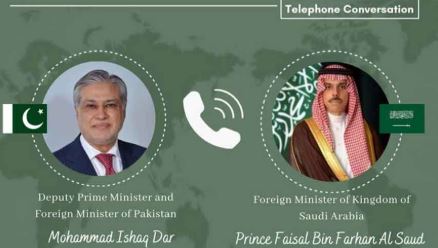
ISLAMABAD, DEC 30: /DNA/ – Deputy Prime Minister and Foreign Minister, Senator Mohammad Ishaq Dar @MIshaqDar50, called Saudi Foreign Minister H.H. Prince Faisal bin Farhan @FaisalbinFarhan.

Both leaders exchanged views on the current regional situation and recent developments. The DPM/FM conveyed Season’s Greetings and best wishes for the New Year, which were warmly reciprocated by Prince Faisal.

The DPM/FM expressed satisfaction with the positive trajectory of bilateral relations. Prince Faisal reaffirmed his commitment to further strengthening and enhancing bilateral ties.

Abbasi announces Rs100,000 reward for Railway Police constable’s exemplary honesty

Abbasi announces Rs100,000 reward for Railway Police constable’s exemplary honesty

ISLAMABAD, Dec 30 (APP/DNA):Federal Minister for Railways Muhammad Hanif Abbasi has announced a cash reward of Rs100,000 for Railway Police Constable Rao Sharif in recognition of his exemplary honesty and sense of duty.

The minister said that the reward amount would be paid from his personal funds as a gesture of appreciation for the constable’s integrity, said a news release.

Praising Rao Sharif’s conduct, Hanif Abbasi said that officers like him represent the true and positive image of Pakistan Railways.

He emphasized that honesty and devotion to duty are the real strength of state institutions, adding that such actions help build and reinforce public trust in government departments.

Constable Rao Sharif earned widespread appreciation after he returned a bag containing Rs3.8 million that he found on a train.

Demonstrating exceptional responsibility, he traced the rightful owner and handed over the cash to Karachi-based trader Mohsin at Rohri Railway Station.

The minister lauded the constable’s act as a shining example for others to follow and expressed hope that such instances would inspire greater professionalism and integrity across public service institutions.

Escalating Gulf Rivalry and Pakistan’s option

Azerbaijan: a global model of religious tolerance

For Riyadh and Abu Dhabi, Pakistan is a pivotal South Asian state with strategic geography, a sizeable market, and longstanding military-to-military and intelligence linkages. Amid rapidly evolving Middle East dynamics from shifting security calculations to economic diversification drives Islamabad is widely believed to be engaging discreetly to ease frictions between the two Gulf powers, even as each pursues distinct regional and economic agendas

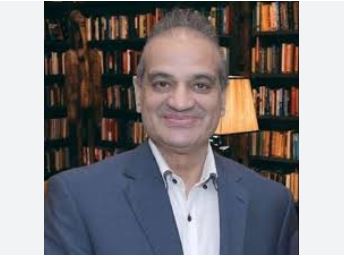
By Ansar Mahmood Bhatti

In a significant escalation highlighting the deepening rift between Saudi Arabia and the United Arab Emirates (UAE), the Saudi-led coalition executed a precise airstrike on Yemen’s Port of Mukalla on Tuesday, targeting weapons and military vehicles reportedly shipped from the UAE to bolster separatist forces.

Saudi officials described the operation as “limited,” with no civilian casualties or collateral damage reported. The strike focused on shipments arriving from the UAE’s Fujairah port, which Riyadh claims were unloaded without authorization to support the UAE-backed Southern Transitional Council (STC). The STC has recently consolidated control over key eastern provinces, including Hadramout and al-Mahra, prompting stern warnings from the coalition.

This marks a pivotal shift: Riyadh and Abu Dhabi, once unified in their intervention against the Houthis, are now openly clashing over Yemen’s future. Saudi Arabia prioritizes a unified Yemen under the internationally recognized government, while the UAE supports southern separatism through the STC. The airstrike underscores Riyadh’s abandonment of restraint, signaling a willingness to confront perceived threats to its interests directly and forcefully.

The implications extend far beyond Yemen. This power struggle is regional, with Sudan potentially the next battleground. Saudi Arabia backs the Sudanese Armed Forces, while the UAE is said to have been supporting the rival Rapid Support Forces—mirroring the proxy dynamics now turning direct in Yemen.

As fractures widen in Yemen, Saudi Arabia is actively reinforcing alliances elsewhere. Recent diplomatic engagements, including meetings in Islamabad between Saudi Ambassador Nawaf Saeed Al-Malki and Sudanese counterpart, point to an emerging broader Saudi-Sudan partnership in the coming days.

For Pakistan, a close friend to both Riyadh and Abu Dhabi, the situation poses significant challenges that reach far beyond traditional diplomacy. Saudi Arabia and the United Arab Emirates are indispensable partners for Islamabad, underpinning Pakistan’s economic stability through deposits, balance-of-payments support, energy supplies on deferred payment, large-scale investments, and remittances from millions of Pakistani expatriates working across the Gulf.

Any perception of divergence between Riyadh and Abu Dhabi therefore forces Pakistan into a delicate balancing act: maintaining strategic equidistance while ensuring neither partner feels sidelined. The UAE President’s brief visit to Pakistan on December 26 underscored continuity amid uncertainty. High-level engagements focused on trade, investment, and sectoral cooperation in energy, infrastructure, IT, and logistics—signaling that both sides intend to translate political goodwill into tangible projects.

The optics of the visit mattered, too: at a moment when speculation occasionally surfaces about underlying strains in Gulf alignments, the trip projected steadiness and intent to deepen ties. Regardless of the circumstances, Saudi Arabia and the UAE remain vitally important to Pakistan—and Pakistan to them. Islamabad provides a large, skilled workforce, defense cooperation, and a dependable partner in regional security dialogues.

For Riyadh and Abu Dhabi, Pakistan is a pivotal South Asian state with strategic geography, a sizeable market, and longstanding military-to-military and intelligence linkages. Amid rapidly evolving Middle East dynamics from shifting security calculations to economic diversification drives Islamabad is widely believed to be engaging discreetly to ease frictions between the two Gulf powers, even as each pursues distinct regional and economic agendas.

 Such behind-the-scenes efforts align with Pakistan’s traditional role as a bridge-builder in the Muslim world, seeking de-escalation and pragmatic coordination rather than zero-sum competition among allies. This is a true test for nations allied with both sides, as the once-solid Gulf front shows signs of internal differentiation. The ripple effects are unpredictable: maritime security in the Red Sea, investment pipelines and energy flows, labor market policies affecting expatriates, and broader diplomatic alignments could all feel the impact.

For Pakistan, the path forward will require disciplined message management, calibrated economic diplomacy, and an unwavering focus on mutually beneficial projects. Success will be measured less by headline breakthroughs than by preserving strategic trust, insulating economic cooperation from political headwinds, and keeping channels open so that competition does not harden into confrontation.

Yemen asks UAE forces out within 24 hours

Yemen asks UAE forces out within 24 hours

DNA

RIYADH, DEC 30: Tensions between Saudi Arabia and the United Arab Emirates escalated dramatically on Tuesday as Yemen’s Saudi-backed Presidential Leadership Council ordered all Emirati forces to withdraw from the country within 24 hours, following a Saudi-led coalition airstrike on Mukalla port targeting alleged UAE-supplied weapons to southern separatists.

The “limited military operation” destroyed weapons and armored vehicles unloaded from two vessels that arrived from the UAE’s Fujairah port without authorization, according to coalition spokesperson Brig. Gen. Turki al-Malki. The ships had disabled tracking systems, and the cargo was intended for the UAE-backed Southern Transitional Council (STC), which has recently seized control of eastern provinces including Hadramout and al-Mahra.

In a televised address, council head Rashad al-Alimi accused the UAE of directing the STC’s offensive, fueling internal strife, and undermining state authority. He canceled a joint defense agreement with Abu Dhabi, declared a 90-day state of emergency, and imposed a 72-hour blockade on air, sea, and land entries except those approved by the coalition.

Saudi Arabia swiftly backed the demand, stating its national security is a “red line.” The Saudi Foreign Ministry expressed disappointment over UAE actions pressuring the STC near its borders, warning they threaten regional stability and the Arab Coalition’s foundations. Riyadh urged the UAE to comply with Yemen’s withdrawal request and halt all military or financial support to any Yemeni faction.

No casualties were reported in the early morning strike, which Saudi media described as precise with no collateral damage. The UAE has not yet commented on the incident or the ultimatum.

This marks the most direct confrontation yet between the once-aligned Gulf powers, whose differences in Yemen—Saudi support for a unified state versus UAE backing for southern separatism—have intensified amid the STC’s rapid advances this month.

The rift mirrors broader regional rivalries, including competing influences in Sudan, and raises fears of renewed full-scale conflict in Yemen, potentially benefiting the Iran-aligned Houthis. International calls for restraint have grown, with observers warning of unpredictable consequences for Red Sea stability and Gulf unity.

As the 24-hour deadline looms, diplomatic efforts appear stalled, testing the limits of Saudi-UAE relations in a rapidly shifting Middle East landscape.

Pakistan condemns targeting of Putin’s residence

Pakistan condemns targeting of Putin's residence

ISLAMABAD, Dec 30 (DNA): Pakistan on Tuesday condemned the reported targeting of the residence of President of the Russian Federation Vladimir Putin, calling it a grave threat to peace and security.

“Pakistan condemns the reported targeting of the residence of His Excellency Vladimir Putin, President of the Russian Federation. Such a heinous act constitutes a grave threat to peace, security, and stability, particularly at a time when efforts aimed at peace are underway,” Prime Minister Shehbaz Sharif wrote on his X timeline.

The prime minister expressed solidarity with the President of the Russian Federation, and with the government and people of Russia.

“We reiterate our firm rejection of all forms of violence and acts intended to undermine security and threaten peace,” he added.

At UN, Pakistan warns Israel’s recognition of ‘Somaliland’ threatens Horn of Africa’s unity

At UN, Pakistan warns Israel’s recognition of 'Somaliland' threatens Horn of Africa's unity

By Iftikhar Ali

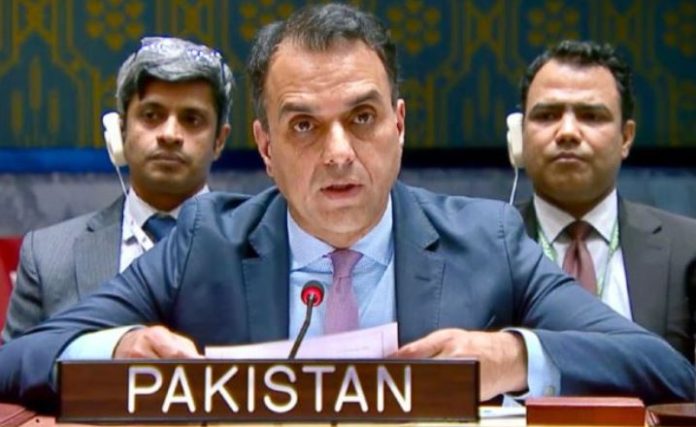
UNITED NATIONS, Dec 30 (APP):Pakistan Tuesday condemned Israel’s “direct assault” on Somalia’s unity and territorial integrity through the “unlawful” recognition of “Somaliland” region,  warning that the move could threaten stability in the Horn of Africa and undercut Mogadishu’s sovereignty and political cohesion.

“The ‘Somaliland’ region remains an integral, inseparable, and inalienable part of Somalia. No external actor has either the legal standing or the moral authority to alter that fundamental reality, ” Ambassador Usman Jadoon, deputy permanent representative of Pakistan to the United Nations, told the UN Security Council, which discussed recent developments in “Somaliland” and Israel’s official recognition of the region.

 “Any action that diverts attention, weakens cohesion or fuels division is profoundly irresponsible,” he added.  

Israel’s occupation of Palestinian land has been a central source of instability and conflict in the Middle East for decades, the Pakistani envoy said.  “It is now exporting this destabilizing conduct to the Horn of Africa.”

Most speakers in the debate decried the Israeli move in clear terms, with only the United States and Israel defending it.

Israel “has the same right to conduct diplomatic relations as any other sovereign State”, the United States Deputy Permanent Representative, Tammy Bruce, told the 15-member Council.  

“We have no announcement to make regarding US recognition of ‘Somaliland’ and there has been no change in American policy,” she added.

Israel’s announcement triggered broad regional and international pushback, including a joint statement by 20 Middle Eastern, Asian and African countries rejecting and condemning the action.  Pakistan is a signatory to that statement.  Regional organizations and partners — including the League of Arab States, the Eastern African Community, the Organization of the Islamic Conference and the European Union — reiterated the need to respect Somalia’s unity, sovereignty and territorial integrity.

In his comments, Ambassador Jadoon, the Pakistani envoy,  reaffirmed Pakistan’s “unwavering and steadfast”support to the sovereignty, unity, and territorial integrity of the Federal Republic of Somalia.

Somalia, under the forward-looking vision and leadership of President Hassan Sheikh Mohamud, has made notable strides in national reconciliation, constitutional reform, and the revitalization of state institutions, he said. Positive trends in the financial sector, particularly the efforts related to economic legislation and preparations for inclusive, one-person-one-vote elections represent important steps toward consolidating Somali democracy and stability, it was pointed out.

Similarly, he added, the phased two-year transition of the United Nations presence in Somalia is progressing smoothly, with the handover of responsibilities under the first phase of the United Nations Transitional Assistance Mission in Somalia (UNTMIS)  completed, and the roadmap for the second and final phase finalized.  The Mission is scheduled to cease operations on 31st  October 2026.

“This positive momentum must be protected and reinforced, not undermined by actions that risk fragmenting the country and reversing hard-won progress”.

Pakistan, he said,  also acknowledges the sacrifices and resilience of the Somali people and their security forces, supported by AU-UN missions, in confronting the persistent threat posed by Al-Shabaab and its affiliates, underscoring  continued  support for Somalia’s security sector and stabilization efforts.

“At this pivotal juncture, when Somalia is focused on defeating extremism, any action that diverts attention, weakens cohesion, or fuels division is profoundly irresponsible.”

Against the backdrop of Israel’s previous references to “Somaliland” of the Federal Republic of Somalia as a destination for the deportation of Palestinian people, especially from Gaza, its unlawful recognition of the region is “deeply troubling,” the Pakistani envoy said

 Pakistan, he said,  unequivocally rejects any proposals or plans aimed at the forced displacement of Palestinians., pointing out that Security Council Resolution 2803 endorsed US President Donald Trump’s Comprehensive Plan to End the Gaza conflict, which states: “no one will be forced to leave Gaza”.

“Any actions that advocate or imply displacement or resettlement not only violate international law but also undermine the prospect of a just and lasting peace,” Ambassador Jadoon said.

Reaffirming Pakistan’s steadfast support for the Palestinian people in their legitimate struggle for self-determination, he said,  “The only path to lasting peace and stability lies in the realization of an independent, contiguous and sovereign State of Palestine on pre-1967 borders, with Al-Quds Al-Sharif as its capital.”

At the outset, Somalia’sUN Ambassador Abukar Dahir Osman, also speaking for Algeria, Guyana and Sierra Leone, condemned Israel’s “flagrant assault” on his country’s unity and territorial integrity through its recognition of “so-called ‘Somaliland’, which is legally incapable of entering into any agreement or arrangement with another country”.  Any such purported arrangements are “null and void”, he stressed, and constitute a direct violation of the UN Charter, the fundamental principles of the African Union and international law.

“This act of aggression is aimed at encouraging fragmentation of Somalia,” and the Somali envoy called on all member states to condemn it “unequivocally”.  And, citing “some official statements” regarding the forced relocation of Palestinians to other countries, Ambassador Osman rejected “any attempt by Israel to relocate the Palestinian population from Gaza to the north-west region of Somalia”.  

 “This utter disdain for law and morality must stop now,” he added.

Federal Govt Pledges Full Support for Peace in Khyber Pakhtunkhwa: Mohsin Naqvi

Federal Govt Pledges Full Support for Peace in Khyber Pakhtunkhwa: Mohsin Naqvi

‎‎ISLAMABAD, DEC 30 /DNA/ – Federal Interior Minister Mohsin Naqvi met Governor of Khyber Pakhtunkhwa, Faisal Karim Kundi. During the meeting, a detailed exchange of views was held on the prevailing law and order situation in the province. The Governor apprised the Interior Minister of the security challenges faced by Khyber Pakhtunkhwa. During the meeting, security measures in the border areas of KP and ongoing operations against Khawarij were discusse.

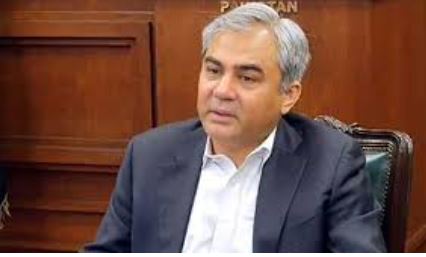
‎Interior Minister Mohsin Naqvi reiterated his assurance of full federal support for maintaining peace and order in Khyber Pakhtunkhwa, stating that ensuring peace in the province is the foremost priority and the federal government stands ready to provide all kinds of support. He emphasized that the sacrifices made by the people of Khyber Pakhtunkhwa in the fight against terrorism are greatly appreciated. He added that the elimination of Fitna-al-Khawarij and their facilitators is being carried out through joint efforts, and no leniency will be shown towards Khawarij.

‎Governor Faisal Karim Kundi said that federal cooperation is essential for the establishment of peace and order in the province, and stressed the need for coordinated and joint measures to eradicate terrorism.

Uzbek President to visit Pakistan in Feb

Uzbek President to visit Pakistan in Feb

DNA

ISLAMABAD: Deputy Prime Minister / Foreign Minister, Senator Mohammad Ishaq Dar received a call from Foreign Minister of Uzbekistan Bakhtiyor Saidov.

FM Bakhtiyor extended Season’s greetings and best wishes for New Year, which were warmly reciprocated by the DPM/FM.

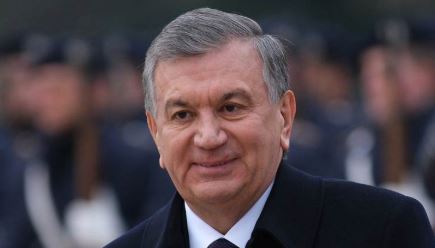
FM Bakhtiyor further confirmed the visit of President of Uzbekistan in February 2026.

They also exchanged views on regional and international developments and affirmed commitment to enhance bilateral relations further by deepening cooperation in areas of mutual interest.

Stay Connected

64FansLike
60FollowersFollow

Latest Reviews

Exchange Rates

USD - United States Dollar
EUR
1.16
GBP
1.34
AUD
0.67
CAD
0.72