Home Blog Page 199

Petrol price hike sparks grave concerns among business community: RCCI

Petrol price hike sparks grave concerns among business community: RCCI

RCCI urges out-of-the-box solutions amid war conflict to provide relief

RAWALPINDI, APR 3 /DNA/ – The Rawalpindi Chamber of Commerce and Industry (RCCI) has expressed grave concern over the sharp increase in petroleum prices, warning that the move will have far-reaching consequences for the economy, businesses, and the general public.

RCCI President Usman Shaukat, while reacting to the government’s decision to increase POL prices, stated that the unprecedented hike—raising petrol prices by Rs137 per litre to a record Rs458.4—has effectively doubled transportation costs. He cautioned that this surge will significantly fuel food inflation and escalate construction expenses, further burdening both consumers and the business community.

He noted that the new petrol price is disproportionately higher than trends in the international market, attributing the spike to the imposition of a record petroleum levy of Rs160.61 per litre. “Such excessive taxation is placing an unbearable strain on the economy and must be urgently reviewed,” he said.

Highlighting the need for immediate corrective measures, the RCCI chief proposed a reduction in non-essential government expenditures and a temporary cut in development projects to create fiscal space for relief measures. He also urged provincial governments to pool resources and introduce targeted subsidies to cushion the impact on the masses.

Citing an example, he quoted the Punjab government’s initiative (August 2024) of providing relief in electricity prices by allocating Rs45 billion from its own budget, and suggested that similar proactive measures be adopted for fuel price relief.

RCCI further called upon the federal government to engage with the IMF to ensure that the burden of levies is not directly transferred to consumers. Usman Shaukat emphasized the importance of adopting a phased approach to fuel price adjustments, coupled with targeted subsidies for vulnerable sectors.

“Policymakers must engage with the business community to find balanced solutions that protect consumers while ensuring the sustainability of production,” he added.
Government can attract international investors with rights policies: Sardar Tahir Mehmood

Government can attract international investors with rights policies: Sardar Tahir Mehmood

Warns, Unprecedented Petroleum Price Hike Will Increase Cost of Doing Business

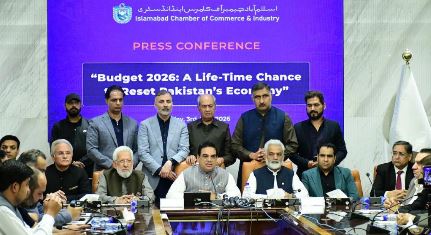
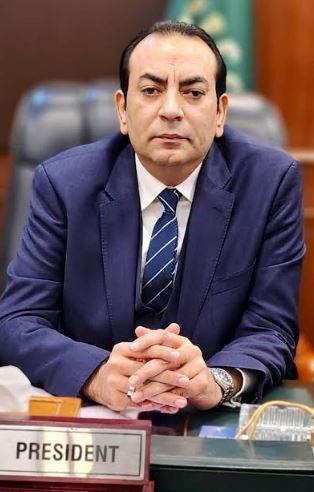
ISLAMABAD, APR 3 /DNA/ – President Islamabad Chamber of Commerce and Industry (ICCI), Sardar Tahir Mehmood, has said that the upcoming Federal Budget 2026 presents a historic opportunity for the government to reset Pakistan’s economy, restore investor confidence and place the country firmly on the path of sustainable economic growth.

Addressing a press conference at the Chamber House on Friday, he said that the purpose of the briefing was to present the proposals and expectations of the business community to policymakers so that a business-friendly, investment-oriented and growth-driven budget could be formulated.

He noted that the rapidly changing global and regional situation, particularly the tensions in the Middle East, has created new investment dynamics. In this scenario, many overseas Pakistanis are exploring alternative investment destinations. He urged the government to capitalize on this opportunity by attracting overseas Pakistani investors through tax rebates, tax holidays and other incentives.

Sardar Tahir Mehmood said that while the business community appreciates the government’s initiatives aimed at providing relief to the common man, including the subsidy for motorcyclists, the unprecedented increase in petroleum prices has significantly increased the financial burden on the public. He warned that higher fuel prices would not only escalate the cost of doing business but also fuel inflation across the economy. He therefore urged the government to take concrete measures to reduce energy costs and provide relief to industry.

The ICCI President emphasized that the real estate and construction sectors are among the most vital pillars of Pakistan’s economy, as they are connected with numerous industries including cement, steel, electrical goods and transportation, while also generating large-scale employment opportunities. He stressed the need for a transparent, simple and investor-friendly policy framework to revive and accelerate growth in this sector.

He added that the Prime Minister has hinted at announcing a package for the construction industry soon. The business community expects that this package will be comprehensive and inclusive, enabling Pakistan to attract investors particularly from GCC countries, who have shown keen interest in investing in the ck ountry.

Sardar Tahir Mehmood also proposed the establishment of special economic zones for overseas Pakistanis, promotion of tourism through incentives and public-private partnerships, enhanced facilitation for IT exports and startups, and the effective utilization of Pakistan’s vast mineral resources through investor-friendly policies.

He further suggested the creation of a one-window investment facilitation system for overseas Pakistanis to simplify investment procedures and eliminate bureaucratic hurdles. He stressed that policy consistency, a simplified tax regime and business-friendly regulations are essential to restore investor confidence.

The ICCI President emphasized that key economic decisions should be taken in consultation with chambers of commerce and business community representatives instead of unilateral policymaking, as such collaboration would lead to more practical and effective economic policies.

Reaffirming ICCI’s commitment, he said the Chamber will continue to work closely with the government and all stakeholders to promote policies that encourage business growth, investment and economic stability. He expressed hope that by incorporating the proposals of the business community, Budget 2026 can help Pakistan achieve economic stability and emerge as a stronger economic force in the region.

On this occasion  former Presidents Zubair Ahmed Malik, Mohammad Ejaz Abbasi, Executive Members Imran Minhas, Zulqurnain Abbasi, Najeeb Ellahi Malik, Ishaq Sial,  Mirza Mohammad Ali, Raja Naveed Satti,  former SVP Khalid  Chaudhry, former VP Ashfaq Chattah,  ICCI senior members Israr Mishwani, Rana Qaisar, Tehmas Butt, Chaduhry Mohammad Ali and other were also present.

Petrol at Rs458, diesel Rs520 triggers de-industrialization fears

Petrol at Rs458, diesel Rs520 triggers de-industrialization fears

ISLAMABAD, APR 3: Atif Ikram Sheikh, President of the Federation of Pakistan Chambers of Commerce & Industry (FPCCI), has expressed profound concerns and outright dismay over the staggering and unprecedented increase in petroleum prices announced by the federal government. He proposed that an emergency, temporary suspension of the Petroleum Development Levy (PDL) should be announced to provide immediate breathing room to the industrial sector – until the global petroleum supplies return back to normalcy.

Mr. Atif Ikram Sheikh stated that the business, industry and trade community warns that this colossal spike in the cost of doing business has escalated beyond a mere operational challenge; it now poses an existential threat to the national economy – triggering severe de-industrialization; paralyzing fragile supply chains and unleashing a devastating wave of hyperinflation across Pakistan.

FPCCI Chief pointed out that, with petrol prices surging by Rs 137.23 to reach an all-time historical high of Rs 458.40 per litre – representing a staggering 42.7% increase – and high-speed diesel (HSD) seeing an astronomical rise of Rs 184.49 to hit Rs 520.35 per litre – a 55% increase – the business community is bracing for catastrophic economic disruptions.

Mr. Atif Ikram Sheikh noted that if we account for the previous increase in petroleum prices in the country during March 2026, the cumulative increase works out to be 77% within a month – and, the government should have devised a better strategy through a much needed consultative process.

Mr. Atif Ikram Sheikh has explained the crippling effect this will have on the nation’s industrial output and export targets. While we acknowledge that the ongoing geopolitical crisis in the Middle East has sent global oil markets into a frenzy, passing on an increase of this magnitude directly to the consumers and the industrial sector overnight is completely unsustainable, he added.

President FPCCI maintained that a 55% hike in diesel prices will fundamentally paralyze our manufacturing sectors. Our flagship export industries are already struggling with high cost of doing business. With this latest shock, we are staring at a complete loss of export competitiveness on the global stage. International buyers will simply pivot to our regional competitors.

Mr. Saquib Fayyaz Magoon, SVP FPCCI, elaborated that the cascading impact of this price surge threatens to destabilize multiple critical sectors simultaneously. Firstly, textiles and manufacturing will face multiplied freight and transportation charges – which will drastically inflate production overheads – leading to inevitable factory closures and shifts reductions.

Mr. Saquib Fayyaz Magoon stressed that agriculture – with the harvesting season underway – can not manage the astronomical cost of diesel and will render the operation of tractors, tube wells and harvesters financially unviable for the average farmer, threatening national food security as the result.

Mr. Saquib Fayyaz Magoon said that small and medium enterprises (SMEs) will be hardest hit as they lack the financial buffers of large corporations. SMEs – the backbone of the economy – will face an immediate liquidity crisis as their operational costs will double overnight.

SVP FPCCI emphasized the devastating ripple effects on daily commodities – availability and prices both – as the diesel is the absolute lifeblood of our logistics; goods transport and supply chains. Pushing HSD past the Rs 520 mark means domestic freight charges will skyrocket instantly. This will directly translate to exorbitant price hikes for essential food items; medicines and raw materials.

Punjab enforces PM’s national savings & austerity plan

Punjab enforces PM’s national savings & austerity plan

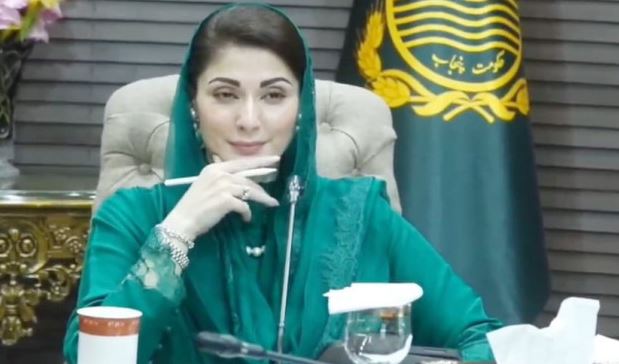
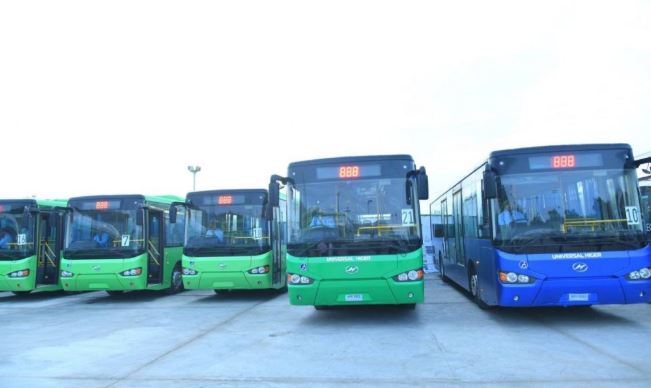
LAHORE, APR 3: /DNA/ – Chief Minister Punjab Maryam Nawaz Sharif directed the authorities concerned to ensure strict implementation of Prime Minister Shehbaz Sharif’s comprehensive national savings and austerity program. She announced a major relief package for the people of Punjab amid historic global crisis, as citizenss will not have to buy tickets while traveling on Orange Line Train, Metro Bus Service, Speedo Bus, and Green Electro Bus. She decided to provide cash to protect agriculture, food, and farmers, as she announced a subsidy of Rs. 100 per liter of diesel per acre for farmers. She also directed to provide subsidy to motorcyclists, as every citizen with a registered bike will receive a subsidy of Rs. 100 on 20 liters.

Chief Minister Punjab paid tribute to Prime Minister Muhammad Shehbaz Sharif for maintaining supply and prices of petroleum products in Pakistan for one month despite global crisis. She said that by providing billions of rupees in relief in one month, Prime Minister Shehbaz Sharif has made a sincere effort to protect public from hardships, as he has provided relief to people amid the worst economic situation. She added that they will not leave people alone in difficult times. She appealed to the public to use public transport instead of private vehicles in these extraordinary circumstances, as the whole world is suffering from a severe global economic crisis as a result of war. She noted that Pakistan is being affected more by the impact of war due to its dependence on imported oil. She promised to relieve people of economic burden as soon as conditions improve.

Ethiopian coffee ceremony charms Karachi visitors at expo

Ethiopian coffee ceremony charms Karachi visitors at expo

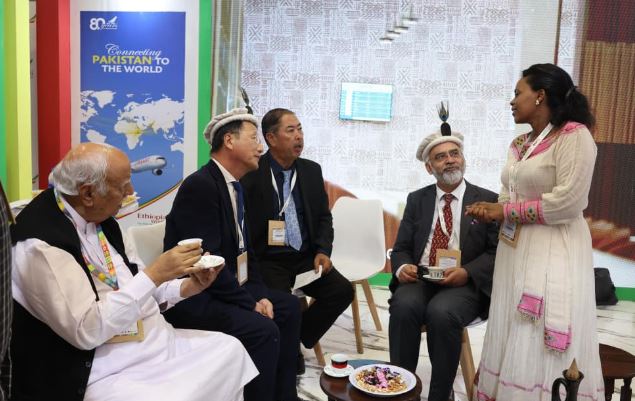
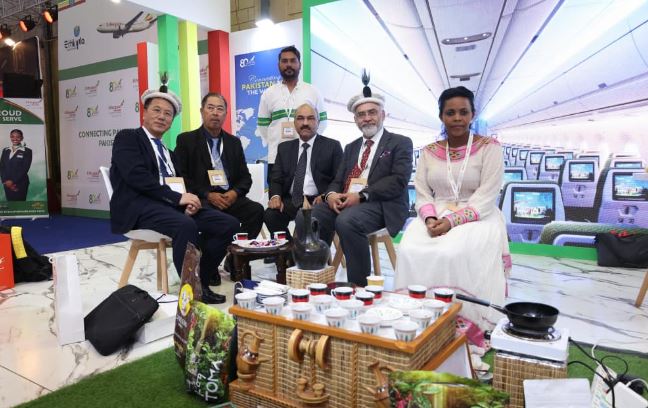
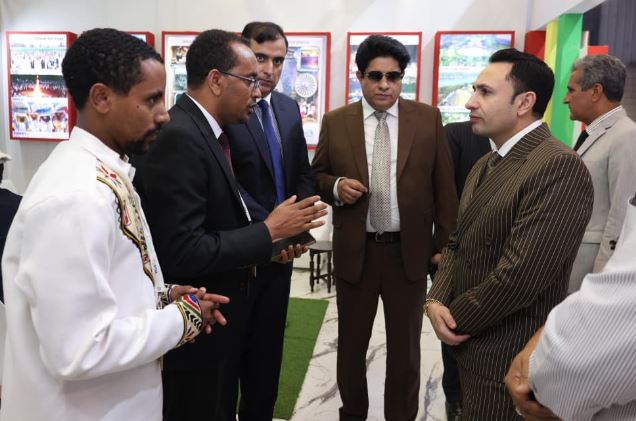
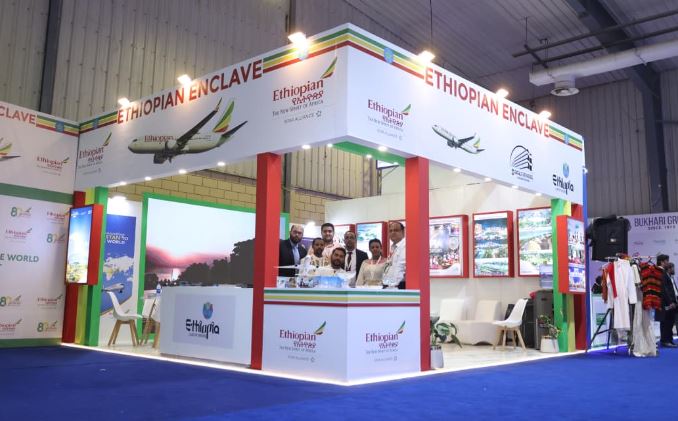
KARACHI, APR 3 /DNA/ – The Ethiopian Embassy Islamabad, in collaboration with Ethiopian Airlines, opened the “Ethiopian Enclave” at the Pakistan Travel Mart 2026 which kicked off here on Friday in Karachi Expo Center.

The Ethiopian Enclave has been designed to showcase the nation’s ancient heritage, diverse tourism landscapes, and vibrant cultural identity.

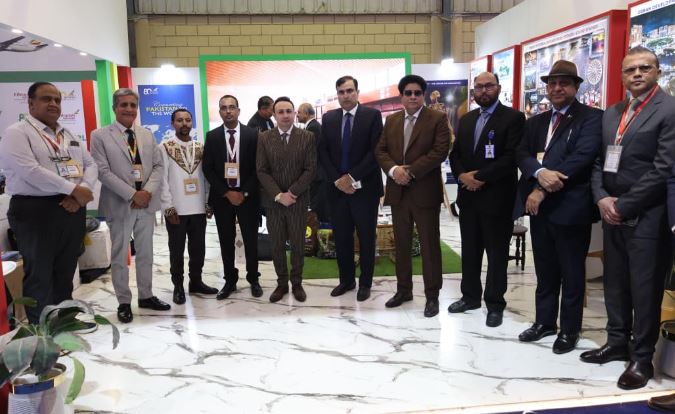
​The Enclave received a high-profile reception, welcoming senior officials of the Government of the Islamic Republic of Pakistan including Sardar Yasir Ilyas Khan, Coordinator to the Prime Minister of Pakistan on Tourism and Aftab ur Rehman Rana, Managing Director of the Pakistan Tourism Development Corporation.

Visitors experienced traditional Ethiopian coffee ceremony while discussing bilateral opportunities in hospitality and travel sectors.

​The exhibit drew a massive response from Karachi residents, media representatives, and travel agencies, successfully positioning Ethiopia as a premier destination for Pakistani travelers.

The Ethiopian Enclave will remain open at the PTM 2026 uptil April 5 (Sunday).

Waqf, Zakat reforms key to socio-economic uplift: Experts

Waqf, Zakat reforms key to socio-economic uplift: Experts

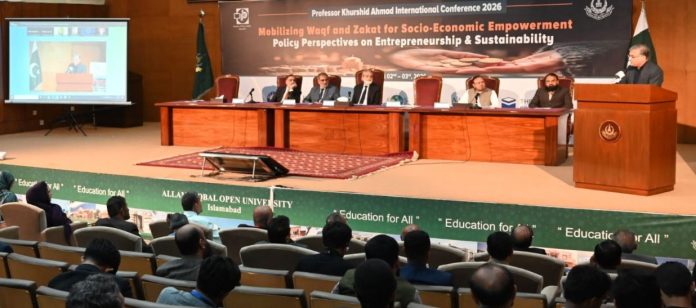
ISLAMABAD, Apr 3: /DNA/ – Experts on Thursday stressed that institutional reform, technological integration and adherence to the principles of Maqasid al-Shariah were essential to revitalize Waqf and Zakat systems for socio-economic empowerment.

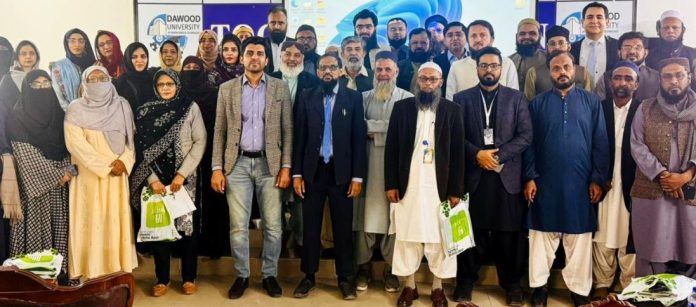
The views were expressed on the opening day of the Professor Khurshid Ahmad International Conference 2026, jointly organized by the Institute of Policy Studies and Allama Iqbal Open University. The two-day moot is focusing on mobilizing Waqf and Zakat as structured tools for sustainable and inclusive development.


Speakers highlighted that both Zakat and Waqf have historically played a vital role in equitable wealth distribution and social welfare, but their effectiveness in the Subcontinent has declined over time due to weak governance, corruption and lack of regulatory frameworks, eroding public trust.


They emphasized the need to enhance transparency and efficiency through modern tools, including financial technologies and artificial intelligence, citing examples from countries like Türkiye, Malaysia, Indonesia and Kuwait where reforms have improved outreach and institutional performance.


The participants underscored that Islam provides a comprehensive socio-economic framework, and any Islamic financial model must align with the country’s socio-political realities to ensure inclusive growth. They stressed that revitalized Waqf and Zakat systems could help address poverty and widening inequalities through sustainable mechanisms.


Experts also called for shifting the focus from mere financial assistance to skill development and entrepreneurship, enabling beneficiaries to achieve long-term economic independence.


Critiquing the prevailing market-driven development paradigm, speakers said Islamic economic principles offer a more balanced approach that integrates ethical and social considerations with economic progress.


They also reflected on the intellectual contributions of Professor Khurshid Ahmad, emphasizing the need to revisit his ideas to address contemporary challenges in a coherent and integrated manner.


Speaking on the occasion, IPS Chairman Khalid Rahman said growing geopolitical tensions and economic uncertainties have increased the need for alternative development models that prioritize collective well-being. He noted that institutions like Waqf and Zakat can play a critical role in reconstruction and development, particularly in post-crisis situations.

Romanian envoy Presents Choral Arrangement of Pakistan’s National Anthem Senate Chairman

Romanian envoy Presents Choral Arrangement of Pakistan’s National Anthem Senate Chairman

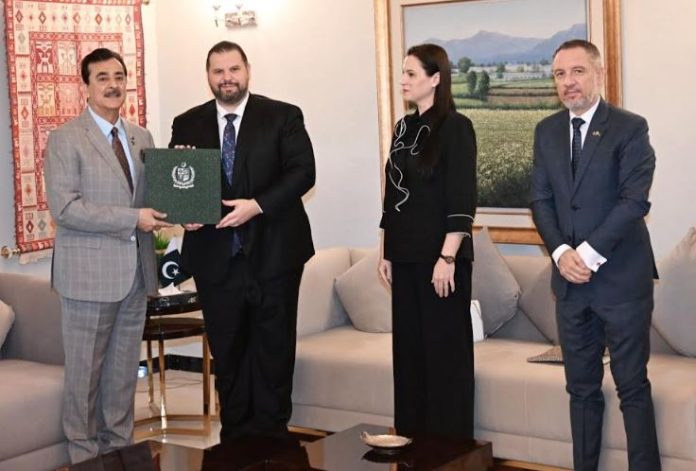
ISLAMABAD, APR 3 /DNA/ – In a significant gesture of cultural diplomacy and friendship, Romania has gifted Pakistan the world’s first professional choral arrangement and official score of the national anthem, Qaumi Tarana.

Romanian Ambassador to Pakistan, Dr. Dan Stoenescu, personally presented the official album and the written choral score to Syed Yousuf Raza Gilani, Chairman of the Senate of Pakistan, in a special ceremony.

The unique artistic project was realized by Romania’s renowned National Chamber Choir “Madrigal – Marin Constantin”, with the support of the Embassy of Romania in Islamabad. The arrangement transforms the original orchestral composition of Qaumi Tarana into a refined polyphonic choral work for soprano, alto, tenor, and bass voices.

According to Ambassador Stoenescu, the new version preserves the solemnity and spirit of Pakistan’s national anthem while adding a fresh musical dimension that beautifully bridges Eastern melodic richness with Western harmonic depth.“This unique artistic project symbolizes more than a musical achievement — it reflects a deep respect for Pakistan’s national identity and a shared commitment to cultural dialogue,” the Ambassador stated.

The initiative is part of the choir’s international programme “Diplomacy – The Anthems of the World,” and was launched to mark Pakistan Day (23 March). The album and score are being presented to Pakistan’s highest leadership as a token of friendship between the two nations.During the meeting, Ambassador Stoenescu and Senate Chairman Gilani also held substantive discussions on strengthening bilateral relations, with a special focus on enhancing parliamentary cooperation and expanding economic ties. They exchanged views on regional and international issues, including the situation in the Middle East, and emphasized the need for dialogue and stability.

Chairman Gilani extended an invitation to his Romanian counterpart, Mircea Abrudean, to visit Pakistan.

Ambassador Stoenescu expressed gratitude for the warm welcome and appreciation shown by Chairman Gilani, noting that the gesture highlights the power of culture to bring nations closer together.

Public transport made free in Islamabad for one month

Public transport made free in Islamabad for one month

This package comes as part of ongoing efforts to promote public transport usage, reduce traffic congestion, and offer direct relief to the masses

Saifullah Ansar

ISLAMABAD, APR 3 /DNA/ – In a significant relief measure for citizens amid rising living costs, the federal government has announced that public transport in Islamabad will be completely free for one month. Federal Interior Minister Syed Mohsin Naqvi stated that the government will bear all expenses for the initiative.

 He described the step as being in line with the directives of the Prime Minister to ease the burden on the common man.

The decision aims to provide immediate financial relief to daily commuters, students, and working-class families who rely on buses and other public transport services in the federal capital.

Provincial Governments Follow SuitThe move has triggered similar relief announcements from provincial governments:Punjab Chief Minister has announced free public transport in the province, aligning with the federal initiative to support commuters.

Sindh Chief Minister has announced a Rs 2,000 subsidy for all bike holders (motorcycle owners) to help offset rising fuel costs and provide targeted relief to two-wheeler users.

These coordinated steps across federal and provincial levels signal a broader government effort to support public mobility and reduce the financial pressure on ordinary Pakistanis during challenging economic times.

The one-month free transport period in Islamabad is expected to begin soon, with authorities working on implementation details. Officials have urged citizens to make full use of the facility responsibly.

This package comes as part of ongoing efforts to promote public transport usage, reduce traffic congestion, and offer direct relief to the masses.

HEC successfully completes nationwide faculty training for Fehm-e-Quran initiative

HEC successfully completes nationwide faculty training for Fehm-e-Quran initiative

ISLAMABAD, APR 3 /DNA/ – The Higher Education Commission (HEC) Pakistan, through its National Academy of Higher Education (NAHE), has successfully concluded a landmark nationwide faculty training initiative under the Fehm-e-Quran program. This achievement reaffirms HEC’s commitment to integrating meaningful religious understanding and ethical values within higher education across Pakistan.

Pursuant to the directive of the Chairman HEC issued on March 28, 2025, the Fehm-e-Quran course was introduced as a compulsory two-credit-hour subject for all undergraduate and graduate programs in HEC-recognized universities. In line with this national mandate, NAHE was tasked with preparing university faculty through a comprehensive and structured training program.  

The training was delivered in two phases — online orientations and in-person workshops at designated regional hubs — ensuring maximum outreach and participation from higher education institutions across the country. Out of a total of 267 universities, including 160 public and 107 private sector institutions, NAHE has successfully trained faculty from 229 universities, achieving an impressive 85.7 percent national coverage. Of these, 190 universities were covered through physical workshops, while 39 universities took part via online orientations.

Regionally, Punjab showed exceptional compliance, with 92 out of 97 universities, or 94.8 percent, successfully trained, the highest among all regions. Significant participation was also recorded from the Federal area, Khyber Pakhtunkhwa, Sindh, Balochistan, Azad Jammu and Kashmir, and Gilgit-Baltistan. To ensure sustained academic support, Dr. Ubaid-ur-Rehman Bashir, Consultant for Fehm-e-Quran, has been offering continuous guidance, query resolution, and facilitation to universities through digital platforms and direct institutional coordination since May 2025.

With the successful completion of the core training mandate, NAHE now proposes transitioning the initiative into the implementation and compliance phase. Considering constraints on physical engagements, any additional training requests will be facilitated through online platforms such as MS Teams. This initiative marks a significant milestone in Pakistan’s higher education landscape by fostering a deeper understanding of the Quran among students while promoting intellectual, ethical, and spiritual development.

The Higher Education Commission remains passionately committed to strengthening academic excellence and value-based education in line with national priorities and aspirations.

China says peace talks advance between Pakistan, Afghanistan

China says peace talks advance between Pakistan, Afghanistan

DNA

BEIJING: Negotiations ‌between Afghanistan and Pakistan are advancing steadily, China said on Friday following reports that the South Asian neighbors were meeting there to try to end their worst conflict since the Taliban returned to power in 2021.

China, which shares a western border with both nations, has been trying to mediate between the allies ‌turned foes, ‌holding telephone calls with their ‌foreign ⁠ministers and sending ⁠a special envoy on visits in March.

“Both Pakistan and Afghanistan attach importance to, and welcome, China’s mediation, and are willing to sit down for talks again, which is a positive development,” ⁠foreign ministry spokesperson Mao Ning told ‌a daily press ‌conference.

Mao did not say where the ‌talks were being held, though the neighbors ‌have previously said they were in the northwestern city of Urumqi.

China has been mediating and promoting talks, in close communication with both ‌sides to build suitable conditions and provide a platform, Mao ⁠said, ⁠adding that the three countries would issue further information in due course.

The fighting between Pakistan and Afghanistan that started in October has killed scores of people on both sides, with Afghans taking the brunt.

Islamabad accuses the Afghan Taliban of harboring Islamist militants who launch attacks in Pakistan, although Kabul denies this calling the militancy its neighbor’s domestic problem.

Stay Connected

64FansLike
60FollowersFollow

Latest Reviews

Exchange Rates

USD - United States Dollar
EUR
1.14
GBP
1.34
AUD
0.70
CAD
0.71