Home Blog Page 197

Baluchistan: Between Truth and Propaganda

Baluchistan: Between Truth and Propaganda

by Muhammad Mohsin Iqbal

In an age where information travels faster than truth, the case of Baluchistan has increasingly become a theatre not merely of conflict, but of narratives—some grounded in fact, others carefully constructed to serve vested interests. It is, therefore, imperative to examine with sobriety and discernment the claims propagated by separatist elements and their external patrons, and to place before the world a clearer picture of realities as they exist on the ground.

There is little doubt that certain separatist factions operating in Baluchistan draw sustenance not from indigenous grievances alone, but from the calculated encouragement of hostile actors beyond Pakistan’s borders. Misguided elements in India and Afghanistan, long opposed to Pakistan’s stability and cohesion, have extended financial, logistical, and propagandistic support to these groups. Their intent is neither concealed nor benign; to foment discord, weaken the federation, and tarnish Pakistan’s image in the councils of the world. Through orchestrated campaigns, often amplified on international platforms, these actors seek to construct a narrative of alienation and oppression, divorced from the complexities and truths of the region.

Pakistan, however, has not remained oblivious to these machinations. Through diplomatic engagement and the presentation of evidence, it has succeeded in drawing international attention to the role of externally sponsored terrorism in Baluchistan. Indeed, several of the organisations involved have been designated as terrorist entities by multiple states, a testament to the credibility of Pakistan’s position and the gravity of the threat posed.

The recent remarks made by Mexican human rights lawyer Ms. Ana Lorena Delgadillo Pérez at a conference organised by the Baloch National Movement in Geneva on 27 March 2026 exemplify the dangers of one-sided narratives. While Pakistan holds in high regard the mandate of international human rights mechanisms and remains committed to constructive dialogue, it must be stated, with due respect, that such interventions, when predicated upon selective information and unverified claims, risk distorting reality rather than illuminating it.

Baluchistan is, and has always been, an integral part of Pakistan. This is not merely a constitutional assertion but a fact recognised by the international community in accordance with the principles of sovereignty and territorial integrity enshrined in international law. The security measures undertaken by Pakistan in the province are not acts of repression, but lawful responses to a persistent threat of terrorism. They are conducted within the framework of domestic law and in consonance with international obligations, including the inherent right of self-defence.

According to authentic and credible findings, Groups such as the Baluchistan Liberation Army and the Baluchistan Liberation Front have been responsible for heinous acts of violence against civilians, security personnel, and critical infrastructure. Their actions betray not a struggle for rights, but a campaign of terror that undermines peace and development. The designation of these groups as terrorist organisations by countries such as the United States and the United Kingdom further reinforces the legitimacy of Pakistan’s counter-terrorism efforts. International bodies, including the United Nations Security Council, have likewise condemned attacks in Baluchistan and called for cooperation in bringing perpetrators and their sponsors to justice.

It is equally important to recognise the role played by certain organisations operating under the guise of advocacy. The Baloch National Movement and its affiliates, including elements associated with some particular Committee, function as the political and propagandistic extensions of militant outfits. By glorifying militants as martyrs and manipulating the sensitive issue of missing persons, they seek to blur the distinction between legitimate grievances and terrorist agendas. Numerous instances have come to light where individuals reported as “disappeared” have later resurfaced as active participants in militant activities, exposing the deliberate misuse of humanitarian concerns for political ends.

Pakistan acknowledges that issues such as enforced disappearances are serious and demand transparent and accountable mechanisms. In this regard, the establishment of a Commission of Inquiry on Enforced Disappearances reflects the state’s commitment to due process and judicial oversight. Thousands of cases have been examined and resolved through legal channels. It is also a matter of record that many reported cases involve individuals who have either joined militant groups, absconded, or are subject to lawful detention under anti-terrorism laws. Allegations of widespread abuses, including mass graves or systematic extrajudicial actions, remain unsubstantiated by independent verification.

Far from neglecting the human dimension of the conflict, Pakistan has undertaken initiatives aimed at addressing its root causes. The establishment of rehabilitation and deradicalisation centres in Baluchistan represents a forward-looking approach, seeking to reintegrate individuals influenced by extremist ideologies into society through education, counselling, and skill development. Such efforts underscore a commitment not merely to security, but to human dignity and sustainable peace.

At the heart of the matter lies a fundamental distinction; between genuine human rights concerns, which Pakistan is willing and prepared to address through dialogue and institutional mechanisms, and orchestrated propaganda designed to delegitimise the state and embolden violent actors. To conflate lawful counter-terrorism measures with human rights violations is not only misleading but also unjust to the thousands of innocent Pakistanis—civilians and security personnel alike—who have fallen victim to terrorism.

Pakistan remains steadfast in its adherence to the rule of law and its obligations under international human rights frameworks. It continues to engage constructively with the United Nations and other international partners, while firmly rejecting narratives that are selective, unverified, and politically motivated. The path to peace in Baluchistan lies not in the amplification of divisive rhetoric, but in the collective resolve to confront terrorism, promote development, and uphold justice.

Finally, the truth about Baluchistan cannot be reduced to slogans or soundbites. It demands a balanced understanding, an appreciation of context, and a commitment to fairness. The international community must, therefore, exercise caution in distinguishing between advocacy and agenda, between fact and fabrication. Only then can it contribute meaningfully to the cause of peace and stability in a region that has long endured the consequences of both violence and misrepresentation.
Pakistan’s Struggle for Civilian Space

Pakistan’s Struggle for Civilian Space

Dr. Muhammad Akram Zaheer

Few countries have experienced the persistent entanglement of religion and power quite like Pakistan. Since its inception, the state has oscillated between competing centres of authority the barracks and the pulpit each shaping the country’s political trajectory in ways that continue to reverberate. The uneasy alignment between military dominance and religious influence has defined not only governance but also the national imagination. At independence, Pakistan’s founding vision was neither theocratic nor militaristic. Muhammad Ali Jinnah’s early speeches suggested a constitutional state where religion would remain a personal matter. Yet, the fragility of political institutions, combined with early security anxieties, created fertile ground for the military’s rise. Over time, the armed forces came to see themselves not merely as defenders of borders but as custodians of the state’s ideological frontiers.

Parallel to this ascent was the growing influence of religious actors. The mosque, as a social and political space, gradually evolved into a powerful platform capable of mobilising public sentiment. While religious scholars had initially played a limited role in the nationalist movement, their significance increased as successive governments sought legitimacy through Islamic symbolism. This convergence was neither accidental nor entirely organic. It was, in many ways, a product of deliberate policy choices. The state, in moments of political weakness, turned to religion as a unifying force. The Objectives Resolution of 1949 marked an early step in embedding religious principles into governance. While framed as a compromise between modern statehood and Islamic ideals, it opened the door to future contestations over the role of religion in law and policy.

The military’s involvement deepened this dynamic. During periods of direct rule, generals often invoked religious narratives to justify their authority. The most pronounced example came during the regime of General Zia-ul-Haq, whose Islamisation policies left an enduring imprint on Pakistani society. Laws were reconfigured, educational curricula reshaped, and public discourse reframed in explicitly religious terms. The mosque, in this period, was not merely a place of worship but an extension of state power. Yet, the relationship between military and mosque has never been entirely harmonious. It is marked as much by cooperation as by tension. Religious groups have often been both allies and adversaries. At times, they have been instrumentalised for strategic purposes, particularly in regional conflicts. At other moments, they have challenged the state’s authority, questioning its commitment to Islamic principles.

This duality has had profound consequences. On the one hand, it has enabled the state to harness religious sentiment in pursuit of political or strategic goals. On the other, it has empowered actors whose agendas do not always align with state priorities. The result is a complex landscape where lines of authority are blurred and accountability is often elusive. The impact on democratic development has been particularly stark. Civilian governments, already constrained by institutional weaknesses, have found themselves navigating a delicate balance. Efforts to assert parliamentary sovereignty are frequently overshadowed by the enduring influence of the military establishment. Simultaneously, political leaders often invoke religious rhetoric to bolster their legitimacy, further entrenching the mosque’s role in governance.

This interplay has also shaped public discourse. Questions of identity, citizenship, and rights are frequently framed in religious terms, limiting the space for pluralism. Minority communities, in particular, have borne the brunt of this dynamic, as debates over faith and belonging intersect with political power. The promise of equal citizenship, envisioned at independence, remains unevenly realised. Education and media have not been immune. Narratives constructed over decades have reinforced a particular understanding of Pakistan’s ideological foundations, often privileging religious identity over civic values. This has contributed to a societal environment where dissenting voices can be marginalised, and critical inquiry discouraged.

Yet, it would be reductive to view Pakistan solely through the prism of military and mosque. The country is also home to vibrant civil society movements, an assertive judiciary, and a resilient, if contested, democratic tradition. Periodic transitions to civilian rule, though imperfect, reflect an ongoing struggle to recalibrate the balance of power. In recent years, there have been signs of both continuity and change. The military remains a central actor in national affairs, though its role is increasingly scrutinised in public debate. Religious groups continue to wield influence, particularly at the grassroots level, but their political appeal is not uniform. Urbanisation, technological change, and a growing youth population are reshaping the contours of political engagement.

The challenge for Pakistan lies in redefining this relationship in a manner that strengthens democratic institutions while respecting the country’s religious sensibilities. This requires a careful disentangling of state authority from both military overreach and the instrumental use of religion. It calls for a renewed commitment to constitutionalism, where power is exercised within clearly defined limits and accountability is upheld. Equally important is the need to reclaim the mosque as a space of spiritual reflection rather than political mobilisation. Religion, in its essence, offers ethical guidance and social cohesion. When subsumed into the machinery of power, it risks losing its moral authority and becoming a tool of division.

The path forward is neither simple nor linear. It demands political will, institutional reform, and societal introspection. Pakistan’s history offers ample lessons on the costs of imbalance whether in the form of authoritarian rule or ideological rigidity. The task now is to forge a more inclusive and stable order, where neither the barracks nor the pulpit overshadow the will of the people. Ultimately, the story of Pakistan between military and mosque is one of negotiation between power and principle, authority and faith. How this negotiation unfolds will determine not only the nature of the state but also the aspirations of its citizens. In that sense, the question is not merely about institutions, but about the kind of society Pakistan seeks to become.

‘We got him’: Trump confirms rescue of airman whose F-15 was downed in Iran

'We got him': Trump confirms rescue of airman whose F-15 was downed in Iran

WASHINGTON: US forces staged the audacious rescue of an airman behind enemy lines after Iran downed his fighter jet, officials said on Sunday, resolving a crisis for President Donald Trump as he weighs escalating the war, now in its sixth week.

The airman rescued by special operations forces, who Trump said was a colonel, was the weapons-systems officer on the downed F-15, a US official told Reuters.

“Over the past several hours, the United States Military pulled off one of the most daring Search and Rescue Operations in US History,” Trump said in a statement, adding that the airman was injured but “he will be just fine.”

The officer was the second of two crew members on the warplane that Iran said on Friday had been brought down by its air defences. Iran’s Revolutionary Guards said several aircraft were destroyed during the US rescue mission, Tasnim news agency reported.

Reuters reported on Friday that the first crew member had been retrieved, triggering a high-profile search by both Iran and the United States for the remaining airman.

Iranian officials had urged citizens to help find him, hoping to gain leverage against Washington in the war Trump and Israel launched on February 28.

Trump has threatened to escalate the conflict in the coming days with attacks on Iran’s energy infrastructure.

Had Iran captured the airman, the ensuing hostage crisis could have shifted American public perception of a conflict that opinion polls show was already unpopular.

Trump said the airman was rescued “in the treacherous mountains of Iran” in what he said was the first time in military memory that two US pilots had been rescued, separately, deep in enemy territory.

The official told Reuters that as the weapons-systems officer was moved from near a mountain to a transport aircraft parked within Iran, US forces had to destroy at least one of the aircraft because it had malfunctioned.

US aircraft hit
The rescue effort, involving dozens of military aircraft, encountered fierce resistance from Iran.

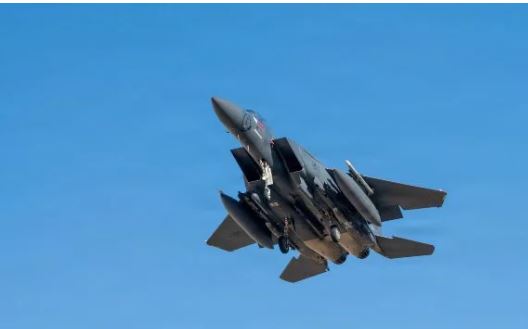
This handout photo provided by the US Air Force shows an F-15E Strike Eagle taking off for a training sortie at Seymour Johnson Air Force Base, North Carolina, on August 22, 2025. — AFP
Reuters reported on Friday that two Black Hawk helicopters involved in the search were hit by Iranian fire but escaped from Iranian airspace.

Separately, a pilot ejected from an A-10 Warthog fighter aircraft after it was hit over Kuwait and crashed, the officials said, though the extent of crew injuries was unclear.

“The fact that we were able to pull off both of these operations, without a SINGLE American killed, or even wounded, just proves once again, that we have achieved overwhelming Air Dominance and Superiority over the Iranian skies,” he said in his statement.

US air crews are trained in what to do if they go down behind enemy lines, measures known as Survival, Evasion, Resistance and Escape, but few are fluent in Persian and face a challenge in staying undetected while seeking rescue.

The conflict has killed 13 US military service members, with more than 300 wounded, US Central Command said, adding no US troops have been taken prisoner by Iran.

While Trump has repeatedly sought to portray the Iranian military as being in tatters, they have repeatedly been able to hit US aircraft.

Reuters reported on US intelligence showing that Iran retains large amounts of missile and drone capability. Until just over a week ago, the US could only determine with certainty that it had destroyed about one-third of Iran’s missile arsenal.

The status of about another third was less clear, but bombings probably damaged, destroyed or buried those missiles in underground tunnels and bunkers, Reuters sources said.

The US and Israeli war on Iran has spread across the Middle East, killing thousands and hitting the global economy with soaring energy prices that are fueling fears of inflation.

Chairman HEC reaffirms support to National Centres for research development

HEC

ISLAMABAD, APR 5 /DNA/ – Chairman Higher Education Commission (HEC) Pakistan Dr. Niaz Ahmad Akhtar has underlined the strategic role of National Centres in advancing research, innovation, and technological development in the country.        

In his introductory meeting, he convened, with Project Director National Centre in Big Data & Cloud Computing (NCBC) Dr. Naveed Arshad, the Chairman HEC advised the centre and its affiliated laboratories to proactively showcase their research outputs and innovative products through their websites and social media platforms. He reaffirmed HEC’s commitment to support the centers, assuring the NCBC of providing access to HEC’s digital and social media handles for dissemination of their success stories and research contributions.

During the meeting, research activities and key achievements of the centre and its partner labs were reviewed in detail. The centre also presented its strategy to address commercialisation challenges, including the establishment of a dedicated Business Development Unit.

The Chairman appreciated the valuable contributions and services rendered by the centre, particularly its support to Government of Sindh in the health sector. He emphasised that such centres hold strategic national importance in advancing research, innovation, and technological development in the country.

Dr. Niaz Ahmad Akhtar stressed the need to strengthen networking among researchers across all affiliated labs. He also emphasised profile building of the researchers through a centralised portal in order to enhance collaboration and outreach.

Diplomats unite in Islamabad for World Cup qualifiers

Diplomats unite in Islamabad for World Cup qualifiers

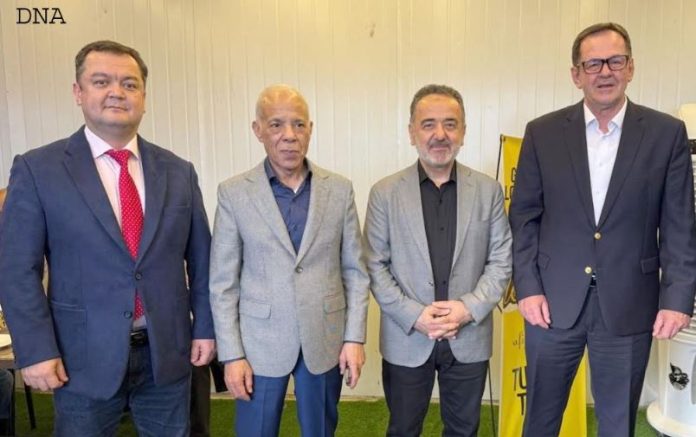
ISLAMABAM, APR 5 /DNA/ – In a vibrant display of sporting diplomacy, the ambassadors of four nations competing in the 2026 FIFA World Cup qualifiers came together in Islamabad to celebrate football as a unifying force.

The event, organized to highlight the shared passion for the beautiful game, saw the ambassadors of Uzbekistan, Morocco, Türkiye, and Bosnia and Herzegovina pose for a group photo.

The diplomats gathered to acknowledge their countries’ respective journeys on the road to the 2026 FIFA World Cup, emphasizing themes of friendship, mutual respect, and unity through sport.

“Football has a unique ability to bridge cultures and bring people together,” a spokesperson for the event noted. The gathering served as a reminder of the power of athletic competition to foster international goodwill, even as nations vie for a spot on the world’s biggest football stage.

The 2026 World Cup, which will be hosted jointly by the United States, Canada, and Mexico, is set to feature an expanded 48-team format, adding further significance to the ongoing qualifying campaigns.

Bilawal slams ‘illegal war’ on Iran, fears Middle East conflict will engulf entire world

Bilawal slams 'illegal war' on Iran, fears Middle East conflict will engulf entire world

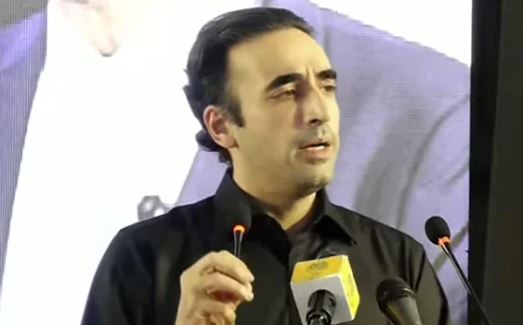
ISLAMABAD, APR 4: Pakistan Peoples Party (PPP) Chairman Bilawal Bhutto Zardari has condemned the war against Iran as unlawful, warning that rising tensions in the Middle East could escalate into a wider global conflict.

Speaking at a gathering held in Garhi Khuda Bakhsh to mark the 47th death anniversary of PPP founder and former prime minister Zulfikar Ali Bhutto, the PPP chairman expressed alarm over reported attacks, including a strike on a school in Iran that led to the deaths of children, terming it a deeply tragic development.


He criticised the ongoing aggression and said the region was already facing a volatile security situation, cautioning that the consequences were no longer limited to Iran and were being felt globally, including in Pakistan.

The former foreign minister stressed that war does not resolve disputes and instead inflicts the greatest harm on civilians.

He added that Pakistan, along with other countries, was supporting efforts aimed at achieving a ceasefire and restoring stability in the region.

“We pray for all those forces, including the Pakistani government, who are working to achieve a ceasefire,” said Bilawal.

Referring to Pakistan’s defence capabilities, Bilawal said the country’s nuclear strength — envisioned by Zulfikar Ali Bhutto — serves as a strong deterrent against external threats.

“Iran, Lebanon and Syria are under attack, yet the Zionist forces cannot even dare to set their sights on Pakistan,” he said.

He reiterated that his party has consistently promoted unity during challenging times and would continue to play its role in bringing the nation together.

On the domestic front, Bilawal emphasised the need for political consensus, saying federal and provincial governments had worked together to deliver public relief amid economic challenges intensified after the Middle East tensions.

He urged all stakeholders to set aside differences and cooperate in the national interest during difficult times.

Bilawal said the PPP-led Sindh government is preparing a fuel subsidy plan for private transport firms to prevent fare increases.

His statement came a day after Sindh Chief Minister Murad Ali Shah announced relief measures, including a Rs2,000 subsidy for each registered motorcyclist for April, following a massive hike in fuel prices.

The relief package also includes support for public transport and the transport sector. Registered passenger buses will receive Rs100,000 per vehicle per month, two-axle trucks Rs70,000 per month, and heavy trucks Rs80,000 per month. Intra-city buses with higher fuel consumption will also receive additional support.

PSL 11: Islamabad United outclass RawalPindiz with clinical all-round display

PSL 11: Islamabad United outclass RawalPindiz with clinical all-round display

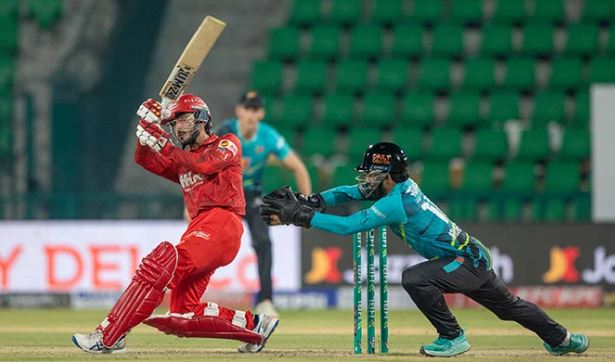
LAHORE, APR 4: Islamabad United secured a commanding seven-wicket victory over RawalPindiz following Sameer Minhas’ blistering half-century and a disciplined bowling performance in the 12th match of the Pakistan Super League (PSL) 11 at Lahore’s Gaddafi Stadium on Saturday.

Set to chase a modest 157-run target, the three-time champions comfortably knocked the runs for the loss of just three wickets and 34 balls to spare.


Leading the way for them was emerging opener Sameer, who made a quickfire 70 off just 36 deliveries, studded with seven fours and three sixes.

His brilliance was backed by fellow top-order batter Mohammad Faiq (19) and the middle-order duo of Haider Ali and Mark Chapman, who remained unbeaten with 26 and 24, respectively.

For Pindiz, Rishad Hossain, Jalat Khan and Mohammad Amir could pick up a wicket apiece.United captain Shadab Khan’s decision to field first proved beneficial as the Pindiz could accumulate 156/7 in their 20 overs despite Kamran Ghulam’s anchoring half-century.

The Pindiz got off to a dismal start to their innings as Richard Gleeson dismissed both their openers, Yasir Khan and captain Mohammad Rizwan, two each, inside four overs with just 15 runs on the board.

Meanwhile, Ghulam, who walked out to bat at No.3, took the reins of Pindiz’s batting charge and attempted to launch a recovery by putting together a 51-run partnership for the third wicket with Daryl Mitchell, who contributed 19 off 15 deliveries.

The right-handed batter continued his grit following Mitchell’s dismissal and brought up his third PSL half-century off 37 balls by hitting United captain Shadab for a six on the final delivery of the 11th over.

He, however, failed to convert his half-century into a big knock as Faheem Ashraf got him caught behind on the fourth delivery of the subsequent over and thus walked back after top-scoring for the Pindiz with a 39-ball 50, comprising six fours and two sixes.

Following his dismissal, the Pindiz continued to lose wickets at regular intervals and ultimately settled for a below-par total despite handy contributions by Abdullah Fazal and Dian Forrester, who made 23 and 44 not out, respectively.

The pace trio of Salman Irshad, Gleeson and Faheem jointly led the United’s bowling charge with two wickets each, while experienced all-rounder Imad Wasim chipped in with one scalp.

Pakistan rejects misleading claims on UAE deposits return

Pakistan rejects misleading claims on UAE deposits return

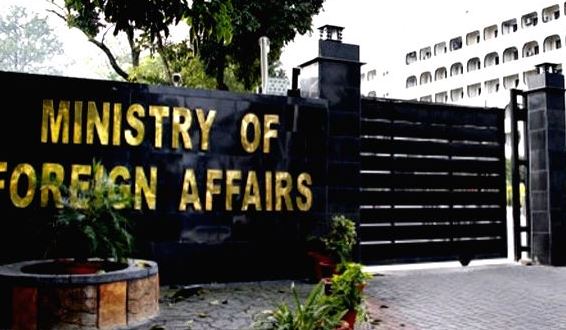
ISLAMABAD, APR 4 /DNA/ – The Ministry of Foreign Affairs categorically rejects the recent misleading and unfounded commentary regarding financial deposits from the United Arab Emirates (UAE) held with the State Bank of Pakistan (SBP).

The deposits were placed under bilateral commercial agreements, demonstrating the UAE’s strong support for Pakistan’s economic stability and prosperity. Accordingly, pursuant to mutually agreed terms, the Government of Pakistan, through the SBP, is now returning the matured deposits to the UAE. This is a routine financial transaction, and any attempt to portray it otherwise is erroneous and misleading.

Pakistan and the UAE share a longstanding, fraternal partnership built on trust and strategic cooperation across trade, investment, defence, and people-to-people ties.

This relationship has stood the test of time and has grown stronger with each passing year. The people of Pakistan warmly cherish the pivotal role played by His Highness, the late Sheikh Zayed bin Sultan Al Nahyan, in forging this enduring friendship, as well as his special affection for Pakistan.

Pakistan remains fully committed to further strengthening this enduring relationship for a shared, prosperous future.

PSL 11: Islamabad United win toss, elect to bowl first against RawalPindiz

PSL 11: Islamabad United win toss, elect to bowl first against RawalPindiz

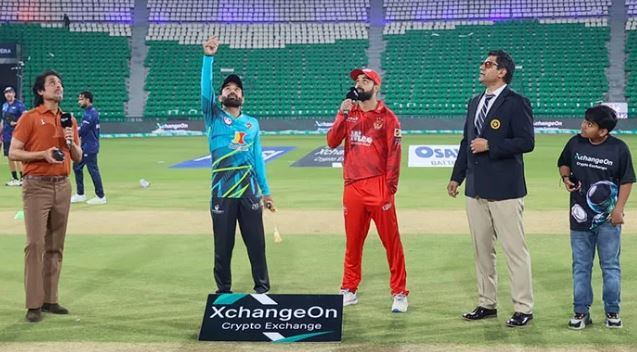
LAHORE, APR 4: Islamabad United won the toss and decided to field first against RawalPindiz in the 12th match of the Pakistan Super League (PSL) 11 at Gaddafi Stadium, Lahore, on Saturday.

This fixture marks the first-ever meeting between United and RawalPindiz as the latter are featuring in their maiden PSL.


Islamabad United: Devon Conway (wk), Sameer Minhas, Mohammad Faiq, Mark Chapman, Shadab Khan (c), Haider Ali, Imad Wasim, Faheem Ashraf, Chris Green, Richard Gleeson and Salman Irshad.

RawalPindiz: Mohammad Rizwan (c & wk), Yasir Khan, Kamran Ghulam, Abdullah Fazal, Sam Billings, Daryl Mitchell, Dian Forrester, Cole McConchie, Rishad Hossain, Jalat Khan and Mohammad Amir.

Head-to-head
The upcoming fixture marks the first-ever meeting between United and RawalPindiz as the latter are featuring in their maiden PSL.

Form Guide
United and Pindiz enter the fixture with contrasting momenta as the three-time champions are fresh from a resounding eight-wicket victory over the previous edition’s runners-up Quetta Gladiators, while the new entrants are on a two-match losing streak.

The United got off to an underwhelming start to their PSL 11 campaign as they suffered a five-wicket defeat at the hands of Multan Sultans, while their subsequent fixture against Peshawar Zalmi was washed out due to rain.

The Pindiz, on the other hand, lost each of their first two matches against Zalmi and the leaders Karachi Kings, respectively, by five wickets, and thus are yet to taste a triumph in the PSL.

Islamabad United: W, NR, L, L, L (most recent first)

RawalPindiz: L, L

Naval chief stresses strong, tech-driven Navy at ceremony

Naval chief stresses strong, tech-driven Navy at ceremony

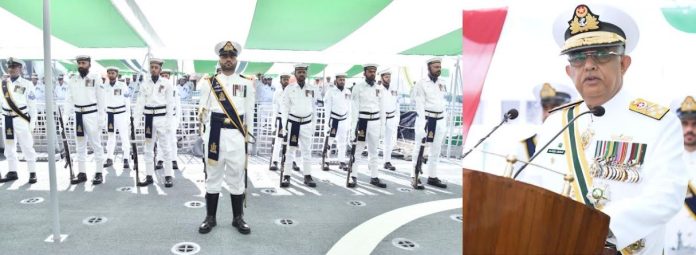
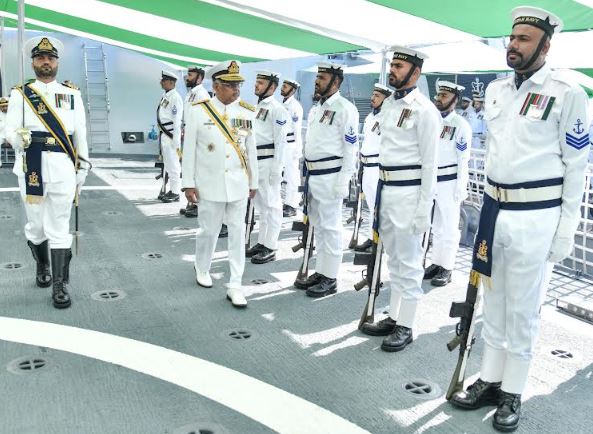
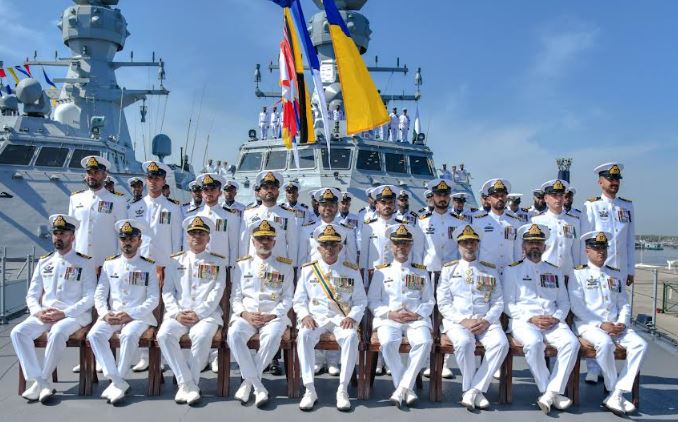
KARACHI, APR 4 /DNA/ – Chief of the Naval Staff, Admiral Naveed Ashraf, emphasized the importance of a strong, balanced and technologically advanced Navy during the induction ceremony of the 2nd PN MILGEM Class Corvette, PNS KHAIBAR, into Pakistan Navy’s fleet.

Addressing the gathering, CNS highlighted that Pakistan’s strategic location along vital maritime trade and energy corridors demands a potent naval force to safeguard national interests and ensure secure Sea Lines of Communications (SLOCs).

Naval Chief underscored that during Marka-e-Haq, Pakistan Navy was poised to sink Indian Navy Aircraft Carrier which forced Indian Navy to remain retreated in their perceived safe havens. The mastery and conduct of Naval operations during Marka-e-Haq delivers an unequivocal message that any attempt to challenge Pakistan’s maritime interests will be met with an appropriate response.

Naval Chief emphasized that Pakistan Navy is being equipped with state of the art platforms and niche technologies enabling it to target critical infrastructure/ vulnerabilities and naval assets of adversary. Inductions of advanced platforms like PNS KHAIBAR and the forthcoming HANGOR Class Submarines mark a milestone in PN’s modernization; enhancing operational flexibility, combat power and the strategic reach.

Concluding his address, Naval Chief extended best wishes to PNS KHAIBAR crew while reaffirming Pakistan Navy’s resolve to defend sovereign seas and uphold its responsibility as guardian of the maritime frontiers.

Stay Connected

64FansLike
60FollowersFollow

Latest Reviews

Exchange Rates

USD - United States Dollar
EUR
1.14
GBP
1.34
AUD
0.70
CAD
0.71