Home Blog Page 195

‘Islamabad accord’: Iran, US ‘receive plan’ to end hostilities, immediate ceasefire

'Islamabad accord': Iran, US 'receive plan' to end hostilities, immediate ceasefire

ISLAMABAD, APR 6: Iran and the United States have received a Pakistan-formulated plan to end hostilities that could come into effect soon and reopen the Strait of Hormuz, a source aware of the proposals said on Monday.

A framework to end hostilities has been put together by Pakistan and exchanged with Iran and the US overnight, the source said, outlining a two-tier approach with an immediate ceasefire followed by a comprehensive agreement.

“All elements need to be agreed today,” the source said, adding the initial understanding would be structured as a memorandum of understanding finalised electronically through Pakistan, the sole communication channel in the talks.

Axios first reported on Sunday that Pakistan, along with other regional mediators, was engaged in intense diplomatic efforts to broker a potential 45-day ceasefire between Iran and the United States that could lead to a permanent end to the war.

The source told Reuters that Chief of Army Staff (COAS) and Chief of Defence Forces (CDF), Field Marshal Asim Munir, has been in contact “all night long” with US Vice President JD Vance, special envoy Steve Witkoff and Iranian Foreign Minister Abbas Araghchi.

Under the proposal, a ceasefire would take effect immediately, reopening the Strait of Hormuz, with 15–20 days to finalise a broader settlement.

The deal, tentatively dubbed the “Islamabad Accord,” would include a regional framework for the strait, with final in-person talks in Islamabad.

Meanwhile, senior Iranian official told Reuters that Tehran had received Pakistan’s proposal for an immediate ceasefire and was reviewing it, adding that Tehran does not accept being pressured to accept deadlines and make a decision.

Iran won’t reopen the Strait of Hormuz in exchange for a “temporary ceasefire”, the official said, adding that Tehran views Washington as lacking the readiness for a permanent ceasefire.

Iranian officials have previously told Reuters that Tehran was seeking a permanent ceasefire with guarantees they will not be attacked again by the US and Israel. They have said Iran has received messages from mediators including Pakistan, Turkiye and Egypt.

The final agreement is expected to include Iranian commitments not to pursue nuclear weapons in exchange for sanctions relief and the release of frozen assets, the source said.

Two Pakistani sources said Iran has yet to commit despite intensified civilian and military outreach.

“Iran has not responded yet,” one source said, adding proposals backed by Pakistan, China and the United States for a temporary ceasefire have drawn no commitment so far.

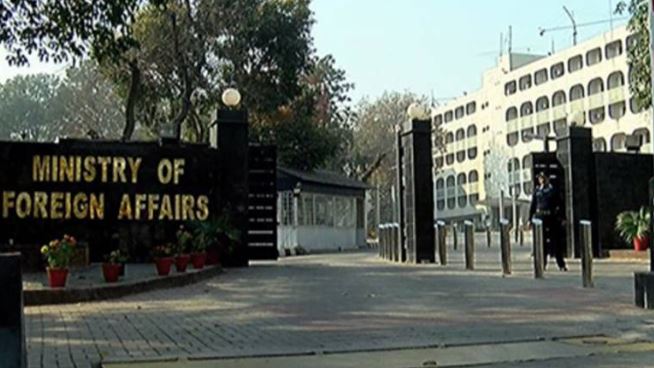
Separately, Foreign Office (FO) Spokesperson Tahir Andrabi has declined to confirm or deny reports suggesting that Islamabad proposed a framework to end the ongoing US-Israel war on Iran.

“There have been multiple reports regarding a 45-day ceasefire proposal or a 15-point plan,” Andrabi told Al Jazeera.

He added, “We do not comment on individual, specific reports. Our position is that the peace process is ongoing.”

The latest diplomatic push comes amid escalating hostilities that have raised concerns over disruption to shipping through the Strait of Hormuz, a critical artery for global oil supplies.

US President Donald Trump has in recent days publicly pressed for a rapid end to the conflict, warning of consequences if a ceasefire is not reached within a short timeframe.

The conflict has heightened volatility in energy markets, with traders closely watching any developments that could affect flows through the strait.

Illegal kidney transplant case: SC expresses dismay over accused doctor’s absence

Illegal kidney transplant case: SC expresses dismay over accused doctor’s absence

ISLAMABAD, Apr 6 (DNA): The Supreme Court of Pakistan on Monday expressed strong displeasure over the absence of an accused doctor in a serious case involving illegal kidney transplants, terming the matter highly alarming and of an extraordinary nature.

A two-member bench headed by Justice Hashim Kakar heard the case against Dr. Fawad Mumtaz, who is accused of performing illegal kidney transplants while posing as a plastic surgeon.

During the hearing, Director Legal Punjab, Imran Ahmed, and defense counsel appeared before the court. The Director Legal informed the bench that the accused was arrested while carrying out illegal kidney transplant procedures in Sector B-17 of Islamabad, at a location lacking even a proper operation theatre. He further stated that the accused had previously been caught conducting similar unlawful procedures.

Justice Kakar inquired whether the accused doctor was present in court. The defense counsel responded that Dr. Fawad Mumtaz had failed to appear. At this, the court expressed strong displeasure, with Justice Kakar remarking that it was incomprehensible how a plastic surgeon could perform such a complex procedure as a kidney transplant.

The Director Legal Punjab informed the court that the accused is currently out on bail and is facing multiple cases. Justice Kakar observed that the doctor had been “stealing kidneys from people” and should fear God, adding that such an individual deserved a lengthy prison sentence.

The court further remarked that the case was of a very serious nature, involving exploitation of poor individuals. Justice Kakar also inquired whether the affected patients were alive, to which it was confirmed that the patients undergoing transplant procedures were alive.

During the proceedings, Justice Kakar noted that the accused appeared to possess surgical skills, which should have been used for positive purposes, even suggesting that such expertise could have been utilized at institutions like Quaid-i-Azam University instead of engaging in illegal activities.

Subsequently, the court issued notices and adjourned the hearing until April 23.

It is pertinent to mention that the Prosecution Punjab has filed an appeal seeking enhancement of the accused’s sentence, while a high court had earlier reduced his sentence to the period already undergone. The accused had originally been sentenced to seven years imprisonment in 2023.

Pakistan, Portugal stress de-escalation, dialogue

Pakistan, Portugal stress de-escalation, dialogue

News Story


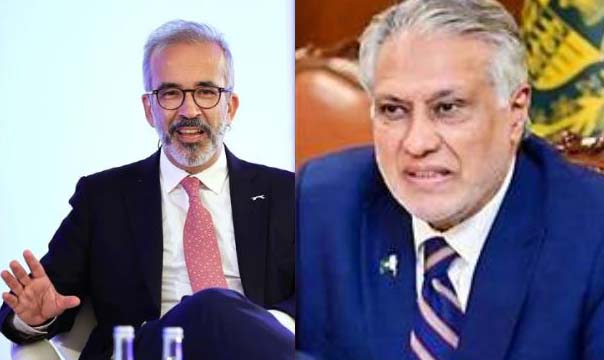
ISLAMABAD, APR 6 /DNA/ – Deputy Prime Minister and Foreign Minister Ishaq Dar held a telephone conversation with Portugal’s Minister of State for Foreign Affairs Paulo Rangel on Monday, during which both leaders discussed the evolving regional situation and emphasized the need for peace and stability.

During the call, Ishaq Dar underscored the urgent need for de-escalation amid ongoing regional tensions, highlighting Pakistan’s consistent efforts to promote dialogue and diplomacy as the only viable path toward lasting peace. He reiterated Islamabad’s commitment to playing a constructive role in reducing tensions and fostering stability in the region.

Paulo Rangel expressed full support for Pakistan’s peace initiatives and appreciated the government’s proactive role in facilitating diplomatic engagement. He commended Pakistan’s efforts aimed at encouraging dialogue and preventing further escalation.

The two leaders also reviewed bilateral relations and welcomed the positive momentum in cooperation between Pakistan and Portugal. They agreed to further strengthen ties across areas of mutual interest, including political, economic, and cultural collaboration.

Both sides emphasized the importance of sustained high-level exchanges and agreed to remain in close contact to advance shared objectives of regional peace and stronger bilateral relations.

Three cops martyred in Bannu firing Incidents

Three cops martyred in Bannu firing Incidents

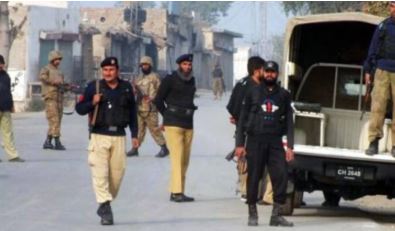
PESHAWAR, Apr 06 (DNA): In two separate firing incidents in the district of Bannu, unidentified armed assailants martyred three police personnel, creating panic and fear in the area on Monday.

According to Bannu police, the first incident occurred in the Kinger Jan Bahadur area of Mandan, where a police official identified as Sher Muhammad Khan was shot dead. Police said he was on his way to duty when targeted by unknown attackers.

Immediately after the incident, the area was cordoned off, and the body was shifted to a nearby hospital. A search operation was launched to apprehend the attackers.

In another incident, armed men opened fire at the NADRA office in Baka Khel, resulting in martyrdom of constable Rafiullah and security guard Gul Shah Noor.

Police said a heavy contingent was dispatched to the scene following the attack, and an investigation is underway.

Islamabad Safe City to be upgraded to ‘Capital Smart City’

Islamabad Safe City to be upgraded to ‘Capital Smart City’

ISLAMABAD, Apr 6 (DNA): The federal government has decided to transform the Islamabad Safe City project into a fully integrated Capital Smart City, aimed at modernizing policing, traffic management, and civic services.

Interior Minister Mohsin Naqvi visited the Safe City Headquarters in Islamabad, where he chaired a high-level meeting to review progress on Phase-II of the Safe City project.

During the briefing, it was decided that all ongoing work under Phase-II will be completed by May 30. The minister directed authorities to ensure the timely completion of the project without any delays.

Naqvi announced that the Central Command and Control System in Islamabad will be upgraded, adding that advanced systems for traffic management and crime control will be fully integrated under the Capital Smart City framework.

He stated that every possible resource is being utilized to make Islamabad a safer city.

The meeting also approved the new design of the Safe City Headquarters.

Inspector General of Islamabad Police Ali Nasir Rizvi briefed the minister in detail, revealing that 75% of Phase-II work has already been completed.

The installation of modern cameras and monitoring systems is in progress, while 152 kilometers of fiber-optic cable has been laid.

According to the briefing, Phase-II work will be completed by May 20, after which the testing phase will begin.

The meeting was attended by Interior Secretary Khurram Agha, DG FIA Dr. Usman Anwar, IG Islamabad Police Ali Nasir Rizvi, DG Safe City Haroon Joya, and other senior officials.

Al-Shifa Trust warns screening gaps raise blindness risk for premature babies

Al-Shifa Trust warns screening gaps raise blindness risk for premature babies

ISLAMABAD, APR 6 /DNA/ – Premature babies in Pakistan are losing their sight at rates far above global averages as a treatable eye condition, retinopathy of prematurity (ROP), continues to go undetected across large parts of the country, according to data compiled by Al-Shifa Trust Eye Hospital.

ROP develops when abnormal blood vessels grow in the retina of premature infants, which can lead to permanent blindness. Although timely screening and treatment can prevent most cases, access to ROP services remains limited, with only a small number of hospitals offering consistent screening.

Pakistan recorded an estimated 921,600 preterm births in 2020, placing it among the highest globally. The country’s preterm birth rate of 14.4 percent ranks Pakistan fourth worldwide in total preterm births and third in neonatal deaths.

Clinical studies show that 32.2 percent of eligible premature infants in Pakistan develop ROP, nearly double the 12 to 18 percent reported in high-income countries. A 2025 study published in BMC Ophthalmology linked the higher burden to improved survival of premature babies without a parallel expansion in screening and treatment capacity.

Infrastructure shortages remain a major obstacle. In Peshawar, only two of seven neonatal intensive care units with ophthalmology services had staff capable of conducting ROP screening. In Balochistan, surveyed NICUs lacked essential screening equipment. At Lahore General Hospital, researchers found that only 46.7 percent of 3,521 eligible infants were screened between 2015 and 2021.

Untreated ROP can have severe consequences; one study found that 76.4 percent of affected children became completely blind, while 23.6 percent developed severe visual impairment.

Prof. Dr. Sumaira Altaf, Senior Consultant and Head of Pediatric Ophthalmology at Al-Shifa Trust Eye Hospital, said the trust has been providing free ROP screening since 2010. A five-year study at the hospital found that 1,610 premature infants required more than 8,000 visits, leading to the diagnosis of 543 cases and urgent treatment for more than 250 infants.

The hospital has a dedicated ROP coordinator to track at-risk newborns and ensure follow-up screening, an approach uncommon in many hospitals.

The trust conducts workshops and training sessions for ophthalmologists. As a result, at least four hospitals in the twin cities now have Al-Shifa-trained specialists providing ROP services, while the screening network has expanded to hospitals in major cities of Azad Jammu and Kashmir.

A January 2026 analysis of Global Burden of Disease data identified Pakistan as having the highest prevalence of vision loss linked to ROP globally, a trend likely to persist without policy intervention.

Infants born at 35 weeks of gestation or earlier, or weighing two kilograms or less, face the highest risk and require screening within four weeks of birth. Each year, around 7,200 infants born before 32 weeks of gestation can develop ROP.

Despite the scale of the problem, Pakistan still lacks a national ROP screening protocol, leaving thousands of preventable cases of childhood blindness unaddressed.

Regional peace vital for economic stability, says PUC chairman

Regional peace vital for economic stability

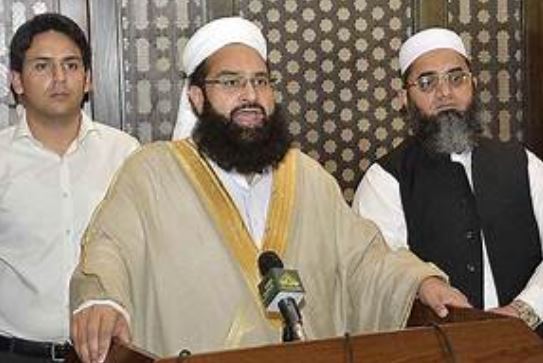
LAHORE, Apr 5: Pakistan Ulema Council (PUC) Chairman Hafiz Tahir Mahmood Ashrafi on Sunday said that Pakistan seeks peaceful coexistence and stability in the region while firmly opposing the use of Afghan soil against Pakistan.

Addressing an “Ittehad-e-Ummat Conference” at Jamia Manzoor Islamia in Lahore Cantt, he expressed hope that ongoing negotiations with the Afghan interim government would succeed, urging Afghan authorities and religious scholars to ensure that their territory is not used for activities against Pakistan. He stressed that targeting innocent women and children is neither jihad nor permissible, but a grave crime.


Highlighting regional developments, he said Pakistan has been playing a constructive and positive role in promoting peace and preventing conflict among Muslim countries. He noted that Pakistan’s civil and military leadership made coordinated efforts with brotherly Islamic nations to avert escalation.


Referring to the situation in the Middle East, Ashrafi expressed concern over restrictions on worship at Al-Aqsa Mosque, stating that for the first time since 1967, Eid prayers could not be offered there. He underscored the need to avoid confrontation within the Muslim world, particularly between Iran and other Islamic countries.


He also warned against the spread of misinformation, saying baseless propaganda and irresponsible narratives by certain overseas social media figures were damaging Pakistan’s international image. He clarified that strong diplomatic engagement continues with countries including Saudi Arabia, Iran and United Arab Emirates, dismissing rumors about strained ties.


Ashrafi said Pakistan successfully countered misunderstandings through diplomatic efforts and national coordination mechanisms, adding that both Iran and Saudi Arabia have appreciated Pakistan’s role in promoting peace. He said that the Muslim Ummah stands united for the protection of the Haramain Sharifain.


He maintained that Pakistan will continue its efforts to de-escalate tensions and promote dialogue, adding that sustainable peace is essential for economic stability and reducing inflation.

After Iran, a Regime Change in the USA

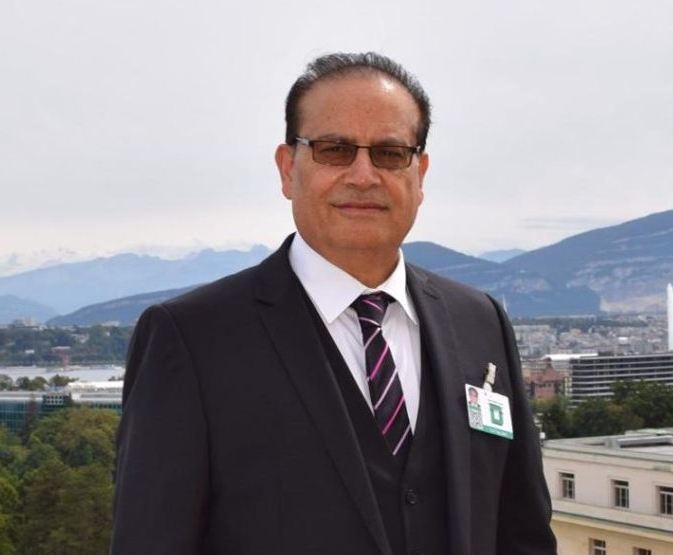
Qamar Bashir

Qamar Bashir

The most consequential development in the ongoing conflict is not unfolding in the skies over Iran or the waters of the Gulf—it is unfolding inside the Pentagon. In the middle of an active war, Defense Secretary Pete Hegseth abruptly removed Army Chief of Staff Randy George along with other senior officers, triggering one of the most destabilizing leadership purges in modern U.S. military history. At a moment that demands continuity, coordination, and institutional stability, Washington has instead projected disruption, uncertainty, and internal fracture.

This purge did not go unnoticed. Iran immediately seized the moment and transformed it into a powerful instrument of narrative warfare. Through its diplomatic channels, including messaging amplified by the Iranian Embassy in South Africa, Tehran mocked Washington with a blunt and calculated taunt: the “regime change” that the United States had long claimed to be engineering in Iran had now taken place within America itself. Images of dismissed U.S. generals were circulated with captions implying that Washington had become the victim of its own doctrine. The message was clear—while the United States spoke of dismantling Iran’s command structure, its own command hierarchy was being shaken from within.

This narrative shift coincided with a far more serious battlefield development. Iranian air defenses successfully downed three advanced U.S. aerial platforms, shattering the long-held assumption of uncontested American air superiority. For decades, U.S. military doctrine has relied on dominance of the skies as the foundation of all subsequent operations. That dominance is no longer absolute. The downing of these aircraft is not merely a tactical loss—it is a strategic rupture.

The consequences unfold immediately across multiple layers. First, operational confidence is shaken; pilots can no longer assume safe penetration of hostile airspace. Second, mission planning becomes more cautious, reducing the tempo and effectiveness of air campaigns. Third, intelligence assumptions are exposed as flawed, revealing gaps in understanding Iran’s air defense capabilities. Fourth, political pressure mounts in Washington as high-value losses demand accountability. Fifth, allies begin to question the reliability of U.S. protection. Sixth, adversaries are emboldened, seeing that the technological gap can be contested. Seventh, escalation becomes more unpredictable, as each loss increases the pressure to respond more forcefully.

It is within this context that the Pentagon purge takes on deeper meaning. Leadership changes in wartime are rarely isolated decisions; they are often reactions to battlefield realities, intelligence failures, or strategic disagreements. The removal of top commanders, therefore, cannot be separated from the emerging operational setbacks. Whether driven by accountability, political loyalty, or internal conflict, the timing reinforces a perception of instability at the highest levels of U.S. military command.

The escalation ladder now becomes the central question. With air superiority contested and leadership in flux, the United States faces a narrowing set of options. Continuing the air campaign carries increased risk. Expanding strikes invites broader regional retaliation. The final and most dangerous step—deploying ground forces—would fundamentally transform the conflict.

However, a ground invasion of Iran would not resemble conventional warfare. There would be no clearly defined frontlines, no visible massing of Iranian divisions waiting for engagement. Instead, the United States would encounter a form of warfare that is largely invisible, decentralized, and deeply embedded within terrain and population. Iranian strategy, shaped by decades of asymmetric doctrine, would avoid direct confrontation. There would be no large-scale battlefield for American forces to dominate—only a constant, elusive threat.

In such a scenario, U.S. troops could find themselves operating in an environment where the enemy is rarely seen but always present. Attacks would be selective, sudden, and dispersed. Supply lines, forward bases, and isolated units would become targets. The battlefield would extend beyond geography into psychology, where uncertainty and constant threat erode operational effectiveness. This is not a war of visibility—it is a war of perception and endurance.

The comparison with groups such as Hamas and Hezbollah is instructive, though Iran operates at a far more sophisticated level. These groups have demonstrated how smaller forces can neutralize technological superiority through tunnel networks, decentralized command, and precision strikes. Iran’s capability extends this model into a state-level framework, combining conventional defenses with asymmetric tactics, cyber operations, and regional proxies.

What emerges is a battlefield where visibility is reversed. American forces, despite their technological advantage, become exposed targets within a complex and unfamiliar environment. Iranian forces, by contrast, remain largely concealed, choosing the timing and location of engagement. This inversion of visibility fundamentally alters the balance of power on the ground.

At the same time, the information war continues to amplify these realities. By linking the Pentagon purge with battlefield developments, Iran reinforces a narrative of American disarray—military setbacks abroad, leadership instability at home, and strategic confusion at the highest levels. Whether or not this perception fully reflects reality is secondary; its impact on global opinion and allied confidence is undeniable.

The United States now faces a convergence of pressures: operational challenges in the field, political scrutiny at home, and a rapidly shifting global perception of its strength. Each element feeds into the other, creating a cycle that is difficult to break. Military losses raise political questions. Political decisions create military uncertainty. Perception amplifies both.

And at the center of this cycle lies the original event—the purge of top military leadership. What may have been intended as a corrective measure now risks being interpreted as a symptom of deeper instability. In war, perception can be as decisive as firepower, and the image of a fractured command structure can weaken deterrence as effectively as any battlefield defeat.

The irony is stark. A nation that has long championed regime change as a tool of foreign policy now finds itself confronting the language, the imagery, and the perception of that very phenomenon turned inward. Not through revolution, but through disruption; not through overthrow, but through fragmentation.

The war, therefore, is no longer confined to Iran. It has expanded into a contest of narratives, resilience, and institutional stability. And in that broader battlefield, the question is no longer who controls the skies or the الأرض—it is who maintains coherence under pressure.

At this moment, the answer remains uncertain. But one reality is clear: when leadership fractures at the top, the consequences cascade downward—and in war, those consequences can define the outcome long before the final shot is fired.

Qamar Bashir

Press Secretary to the President (Rtd)

Former Press Minister, Embassy of Pakistan to France

Former Press Attaché to Malaysia

Former MD, SRBC | Macomb, Michigan

PSL 11: Smith stars with 53 as Multan Sultans beat Quetta Gladiators

PSL 11: Smith stars with 53 as Multan Sultans beat Quetta Gladiators

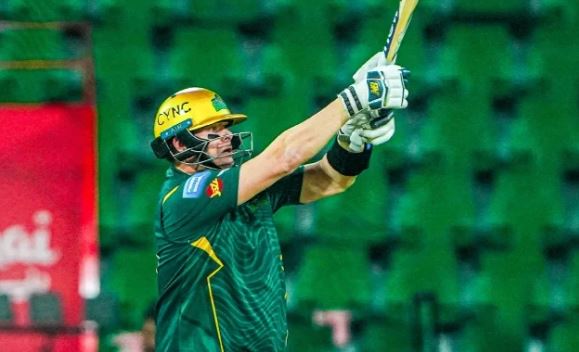
LAHORE, APR 5: Steven Smith struck a fifty as Multan Sultans clinched a six-wicket victory over Quetta Gladiators in the 13th match of the Pakistan Super League (PSL) 11 at Lahore’s Gaddafi Stadium on Sunday.

Set to chase a modest 167-run target, the 2021 champions comfortably knocked the winning runs for the loss of four wickets and 15 balls to spare.


The Sultans got off to a high-flying start to the run chase as their opening pair of Sahibzada Farhan and Smith raised 71 runs in just five overs before Alzarri Joseph dismissed the former on the first delivery of the subsequent over.

Farhan made a handy contribution with a brisk 32 off just 14 deliveries, comprising four fours and two sixes.

The Sultans suffered another setback an over later as Josh Philippe fell victim to Saud Shakeel after scoring a 15-ball 18.

With the scoreboard reading 96/2 in eight overs, Shan Masood joined Smith in the middle, and the duo knitted a quick 40-run stand to put the Sultans within touching distance before the latter was eventually dismissed by Hasan Nawaz in the 14th over.

Smith remained the top-scorer for Sultans with a swashbuckling 53 off 35 deliveries, studded with seven fours and a six.

Nawaz struck again in his next over, trapping Arafat Minhas (six) lbw to further reduce Sultans to 148/4.

But Masood remained firm and steered the Sultans over the line in the 18th over with an unbeaten 46 off 30 deliveries with the help of two sixes and as many fours.

Hasan was the pick of the bowlers for the Gladiators, taking two wickets for 17 runs in his two overs, while Alzarri Joseph and captain Saud Shakeel could make one scalp apiece.

Sultans captain Ashton Turner’s decision to field first paid dividends as the 2019 champions could accumulate 166/7 in their 20 overs despite an anchoring half-century by captain Saud Shakeel.

The Gladiators got off to a shaky start to their innings as they lost both their openers, Khawaja Nafay (12) and Shamyl Hussain (two), inside three overs with just 15 runs on the board.

Following the early stutter, Hasan Nawaz (20) joined captain Saud in the middle, and the duo attempted to launch a recovery by putting together an anchoring 55-run partnership for the third wicket, which culminated with the former’s dismissal off Arafat Minhas in the 10th over.

Minhas struck again in the 10th over, dismissing Rilee Rossouw (one) and further reducing the 2019 champions to 72/4 just one delivery before the halfway mark.

Meanwhile, Saud stood his ground firm and knitted another crucial partnership for the Gladiators – a 47-run stand for the fifth wicket with Jacobs – until eventually falling victim to Nawaz on the first delivery of the 17th over.

The skipper remained the top-scorer for the Gladiators with a valiant 56 off 41 deliveries, comprising six fours and a six.

Nawaz inflicted a further blow on the Gladiators’ batting charge in the pulsating 17th over by dismissing Tom Curran, who could muster one off three deliveries.

Jacobs, on the other hand, batted until the end but fell agonisingly short of a well-deserved half-century as he made an unbeaten 49 off 31 deliveries, laced with four fours and three sixes.

Nawaz spearheaded the Sultans’ bowling charge with three wickets for 30 runs in his four overs, followed by Minhas with two, while captain Turner chipped in with one scalp.

Pakistan condemns attack on UAE embassy in Damascus

Pakistan condemns attack on UAE embassy in Damascus

ISLAMABAD, APR 5 /DNA/ – Pakistan has strongly condemned the incident of vandalism and unrest targeting the Embassy of the United Arab Emirates in Damascus.

In an official statement, the Foreign Office said such acts violate the sanctity and security of diplomatic missions, which are protected under international law, including the Vienna Convention on Diplomatic Relations. Pakistan noted that these actions undermine the norms governing peaceful diplomatic engagement between states.

The statement reiterated Pakistan’s unwavering commitment to the principles of international law and diplomatic norms, and emphasised the importance of maintaining peace, stability and mutual respect among nations.

No casualties or further details about the attack were immediately available. Pakistan called for the full protection of diplomatic personnel and premises in accordance with international obligations.

Stay Connected

64FansLike
60FollowersFollow

Latest Reviews

Exchange Rates

USD - United States Dollar
EUR
1.14
GBP
1.34
AUD
0.70
CAD
0.71