Home Blog Page 194

We can destroy Iran in one night and that maybe today: Trump

Trump says US military studying 'very strong options' for Iran

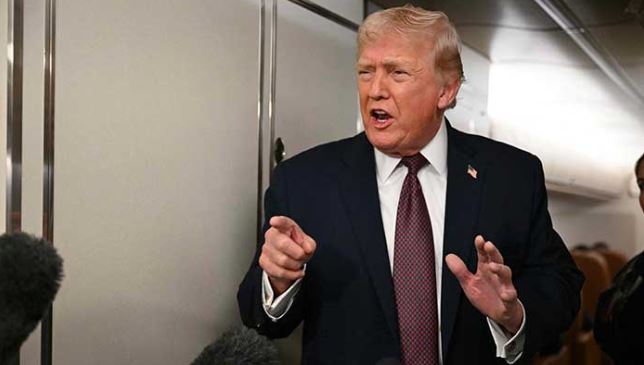
WASHINGTON, APR 6 /DNA/ – U.S. President Donald Trump on Monday addressed a press conference following a high-risk military operation that successfully rescued a downed American fighter jet pilot from inside Iran.


Trump hailed the rescue as one of the most complex and daring missions in U.S. military history, stating that the injured pilot had been safely recovered after being stranded in hostile territory for hours. The operation involved extensive air support and careful planning amid ongoing conflict.


Emphasizing U.S. military strength, the president said no country possesses the level of equipment or capabilities that the United States has. “Nobody is even close to us,” he remarked, underscoring Washington’s technological and operational superiority.


Issuing a stern warning, Trump said that “tomorrow night could be a dreadful night for the enemy” if no agreement is reached, signaling the possibility of further escalation. His remarks come amid reports of ongoing diplomatic efforts to secure a ceasefire, though tensions remain high.


Reiterating Washington’s long-standing position, Trump stressed that Iran must not be allowed to acquire nuclear weapons, calling it a red line for the United States.


The press conference reflects a mix of military assertiveness and diplomatic signaling, as Washington weighs both intensified action and potential negotiations in the evolving conflict.

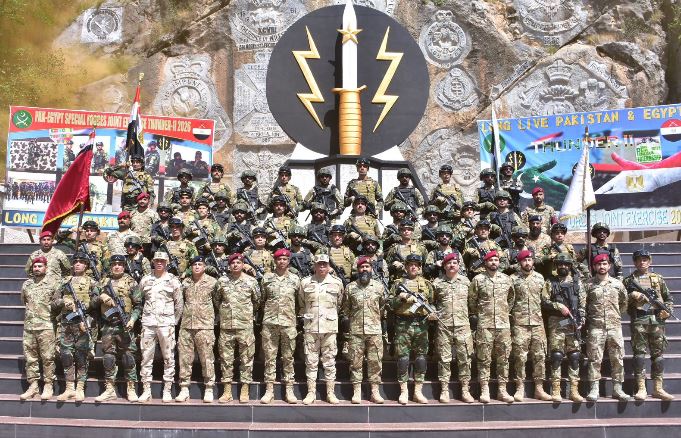
Pakistan-Egypt joint exercise Thunder-II begins in Cherat

Pakistan-Egypt joint exercise Thunder-II begins in Cherat

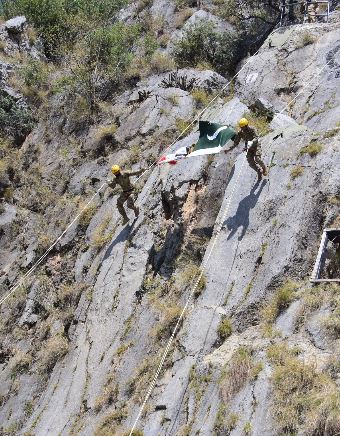
RAWALPINDI, APR 6 /DNA/ – Pakistan–Egypt Joint Exercise Thunder-II is a bilateral counter-terrorism exercise conducted between the armies of Pakistan and Egypt.

Two weeks long exercise commenced on 06 April 2026 at the Special Operations School, Cherat, Pakistan. Troops from the Special Services Group of the Pakistan Army and Special Forces of the Egyptian Army are participating in the exercise. The Commandant Special Operations School, Cherat, graced the opening ceremony as Chief Guest.

The exercise is aimed at enhancing professional skills through joint training, while further strengthening the longstanding military-to-military relations between the two friendly countries. Participating troops will benefit from the exchange of mutual experiences and expertise, particularly in the conduct of counter-terrorism operations.

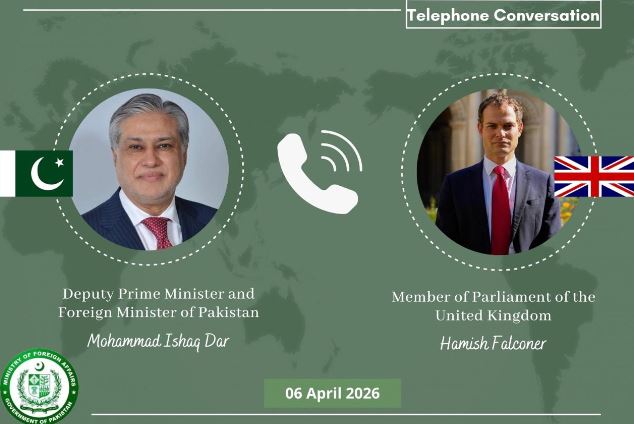
UK Minister appreciates Pakistan’s peace, dialogue efforts

UK Minister appreciates Pakistan’s peace, dialogue efforts

ISLAMABAD, APR 6 /DNA/ – Deputy Prime Minister/Foreign Minister Senator Ishaq Dar @MIshqqDar50 spoke today with Parliamentary Under-Secretary of State (Minister of State) Hamish Falconer @HFalconerMP.

They discussed the evolving regional situation. Mr Falconer appreciated Pakistan’s efforts to promote dialogue and diplomacy in support of peace and stability in the region.

Both sides reaffirmed the strength of Pakistan-UK relations and agreed to remain in close contact.

Matloob Ahmed clinches 12th J.A Zaman Memorial Title

Matloob Ahmed clinches 12th J.A Zaman Memorial Title

By our correspondent

ISLAMABAD: Matloob Ahmed of Garrison Golf Club delivered a commanding performance to clinch the 12th J.A Zaman Memorial Championship, pulling away from the field in emphatic fashion on the final day.

Starting the day tied with his long-time rival M. Shabbir, Matloob wasted no time in asserting control, carding an early birdie on the second hole. He maintained the momentum through the front nine, adding another birdie on the 6th, while Shabbir struggled to find rhythm, with uncharacteristic errors and bogeys creeping into his round due to errant shots.

The defining moment of the championship came on the 7th hole. After Shabbir’s tee shot drifted left, forcing him to play safe into the fairway, Matloob seized the opportunity with a brilliant approach, landing his ball just feet from the pin in two shots. Under pressure, Shabbir faltered, pulling his approach into the greenside bunker and eventually carding a bogey. Matloob calmly converted his eagle putt, resulting in a decisive three-shot swing that shifted the momentum firmly in his favor.

Minhaj claimed third place with a solid final round of 3-under par, finishing at -4 overall. While not at his peak throughout the tournament, his late surge earned him a podium finish. Other notable performances included Talat Ijaz at -3 and Alam at -2 for the championship.

In the senior professionals category, Tariq continued his dominance, capturing his fourth consecutive title. The junior professionals title was awarded to Ashass from Karachi, who finished with a total score of +3. Marking a significant milestone for the tournament, the ladies professionals category was introduced this year and won by Zehbunissa.

The 2026 edition of the championship witnessed record participation, with over 600 golfers from across Pakistan, making it the largest golf tournament in the country in terms of player turnout.

Speaking at the closing ceremony, Chief Patron Hamid Zaman expressed gratitude to the Zaman family for their unwavering support in promoting the game of golf in memory of their father. He paid tribute to the late Mr. J.A Zaman, describing him as an avid golf enthusiast and a man of remarkable character. The continued success of the championship in his honor stands as a testament to his legacy and contribution to the sport in Pakistan.

Pakistan, Türkiye enter new era in judicial cooperation and institutional reform

Pakistan, Türkiye enter new era in judicial cooperation and institutional reform

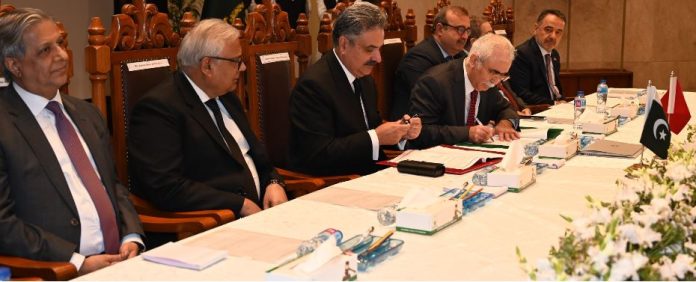
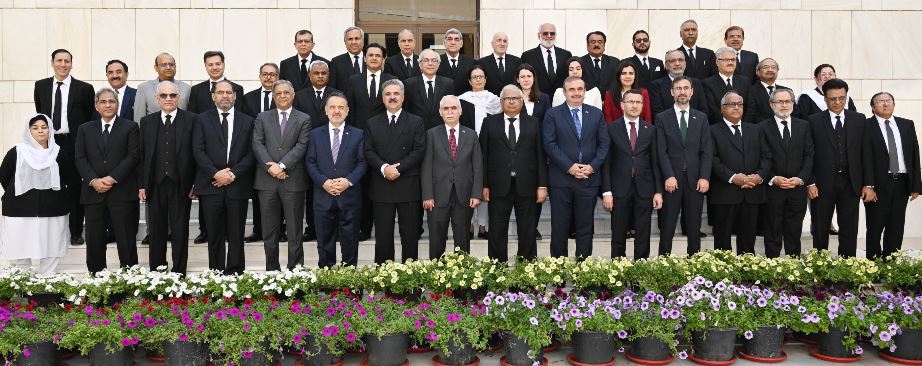
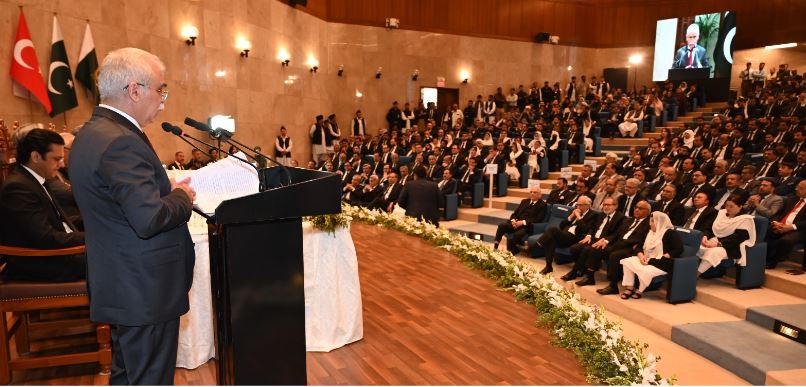
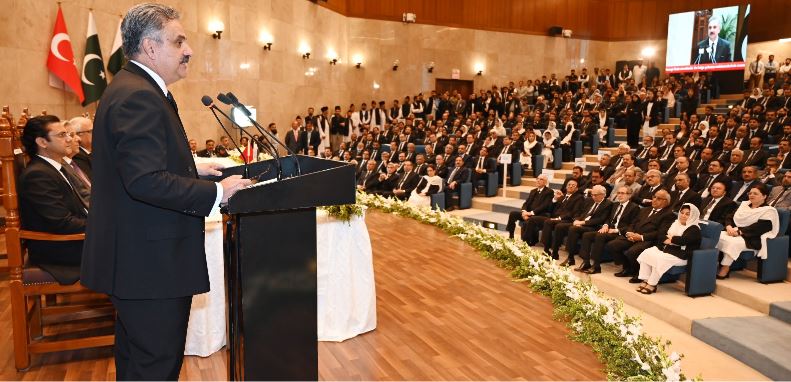
ISLAMABAD, Apr 6 (DNA): “Strengthening institutional linkages between the judiciaries of Pakistan and Türkiye is vital for enhancing efficiency, accessibility, and transparency in the administration of justice,” said Chief Justice of Pakistan Justice Yahya Afridi on Monday.

The remarks came as the Supreme Court of Pakistan hosted a high-level delegation from the Constitutional Court of Türkiye, led by its President Kadir Özkaya, who is visiting Pakistan as a state guest.

A key highlight of the visit was the signing of a Memorandum of Understanding (MoU) on judicial cooperation between the two institutions. The agreement was signed by Chief Justice Yahya Afridi and President Kadir Özkaya during a ceremony held at the Supreme Court Monday.

The event was attended by judges of the Federal Constitutional Court, chief justices of all high courts including Azad Jammu and Kashmir and Gilgit-Baltistan, the federal minister for law and justice, the attorney general for Pakistan, senior government officials, members of the district judiciary, and representatives of the legal fraternity.

Welcoming the delegation, the Chief Justice emphasized that such engagements play a crucial role in improving judicial performance and strengthening institutional cooperation.

In his remarks, President Özkaya appreciated the warm hospitality extended to the delegation and underscored the importance of sustained judicial dialogue and knowledge sharing between the two countries.

The MoU provides a comprehensive framework for cooperation, including judicial exchanges, capacity building, professional training, and sharing of best practices in adjudication and court administration. It places particular emphasis on the professional development of the district judiciary through joint training programmes, academic exchanges, and exposure to comparative legal systems.

The agreement also envisages collaboration in adopting modern technologies in judicial processes, including digitalisation and e-courts, to enhance efficiency, transparency, and access to justice. It further includes provisions for joint research initiatives, exchange of legal knowledge and jurisprudence, and the establishment of a joint working group to ensure effective implementation.

As a symbolic gesture of friendship and partnership, the visiting delegation planted a sapling within the premises of the Supreme Court, reflecting the strong fraternal ties between Pakistan and Türkiye and their shared commitment to sustainability.

The development marks a significant step towards deepening judicial cooperation between the two countries, reaffirming their commitment to the rule of law and institutional reform through sustained collaboration.

FPCCI vows close FBR collaboration for trade-friendly Pakistan

FPCCI vows close FBR collaboration for trade-friendly Pakistan

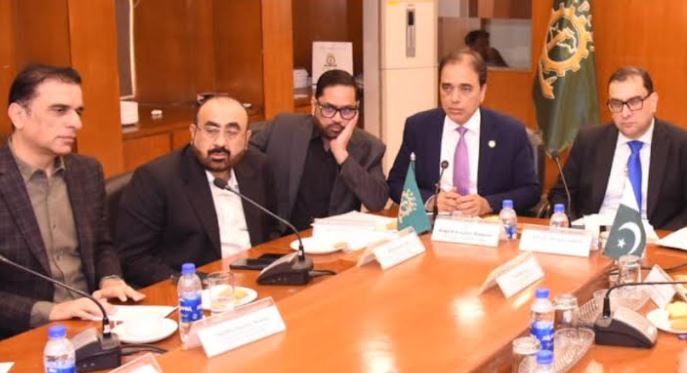
KARACHI, APR 6 /DNA/ – Atif Ikram Sheikh, President of the Federation of Pakistan Chambers of Commerce & Industry (FPCCI), has apprised that a high-profile, consultative and interactive meeting with Syed Shakil Shah, Member Customs (Operations), has discussed the most significant and prevailing issues pertaining to the customs department – while appreciating implementation of the faceless system; pre-arrival clearance and other digitalization measures.

Mr. Atif Ikram Sheikh added that the session – held both in-person and via virtual link across Pakistan – was aimed to discuss matters of mutual interest; presenting strategic, practical and reformative recommendations and addressing the pressing problems faced by the business community regarding Customs Operations at the same time.

Mr. Atif Ikram Sheikh, President FPCCI, emphasized upon the critical role of efficient border and port management in economic stabilization and growth as trade & industry relies heavily on seamless customs operations for trade facilitation. Faceless system and pre-arrival clearance have been FPCCI’s longstanding demands vis-à-vis ease of doing business and digitalization of customs – and, the apex body appreciates these transformational measures, he added.  

In response to the concerns raised by FPCCI, Syed Shakil Shah, Member Customs (Operations), assured the business community of the department’s full cooperation – particularly, the need for the upgradation of customs laboratory; addressing the grievances related to complaint management system and making full use of alternative dispute resolution committees (ADRC).

Syed Shakil Shah also invited the individual companies and traders to bring their genuine and legitimate cases along with the supportive documentation. Pakistan Customs is dedicated to facilitating the traders under the permissible provisions as per the legal framework and regulations, he added.

Mr. Saquib Fayyaz Magoon, SVP FPCCI, highlighted the day-to-day and operational hurdles faced by importers and exporters. Our members frequently encounter challenges related to valuation disputes; HS codes; valuation rulings; clearance delays and systemic or procedural anomalies. We urge the customs department to establish a more transparent, fast-tracked and digitalized mechanism to ensure redressal of the above complaints, issues and delays.

Mr. Saquib Fayyaz Magoon questioned the procrastination in the upgradation and expansion of customs laboratory as there is no dearth of funds with customs; they have good technical human resources already and they are also in a position to hire more technical and scientific HR – if required. This step can eliminate unnecessary delays and costs when third-party laboratories have to be engaged. We propose a fully-functional; adequately-expanded and up-to-date customs laboratory of international caliber, he added.

Mr. Saquib Fayyaz Magoon raised the issue of futile litigation and court cases for the lack of alternative dispute resolution committees (ADRCs); specially, for SMEs as it is very difficult for them to afford the legal costs; engage lawyers and get their liquidity stuck in the import-export cycle.

Mr. Asif Sakhi, VP FPCCI, drew the Member Customs Operations attention to the operational delays at the ports as the current operational hurdles and extended dwell times at the ports directly inflate cost of doing business – rendering our products less competitive. He also proposed that goods imported under export facilitation scheme (EFS) shall not be subjected to valuation rulings.

Mr. Aman Paracha, VP FPCCI, stressed that customs procedures must be modernized, predictable and supportive of SMEs. He raised that issue of confiscating goods on account of a mere suspicion of smuggling as most of those cases actually turn out to be legitimate and legally fit in the end. But, the clearance from charges wastes 2-3 months for no fault of the concerned traders – causing delays and incurring costs, he added.

FPCCI leadership concluded the session by reaffirming its commitment to working closely with the Federal Board of Revenue (FBR) and Pakistan Customs to foster a conducive environment for trade and industry across Pakistan.

Minister reviews digital overhaul plan for Pakistan Railways

Minister reviews digital overhaul plan for Pakistan Railways
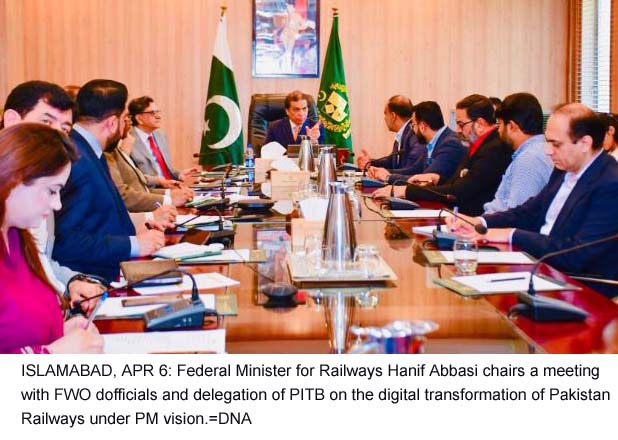
ISLAMABAD, APR 6: Federal Minister for Railways Hanif Abbasi chairs a meeting with FWO dofficials and delegation of PITB on the digital transformation of Pakistan Railways under PM vision.=DNA

ISLAMABAD, Apr 06: Federal Minister for Railways Muhammad Hanif Abbasi on Monday chaired a meeting to review a wide-ranging digital transformation plan for Pakistan Railways, including real-time tracking of locomotives and assets, smart surveillance and passenger-focused services.

Senior officials of the Frontier Works Organisation (FWO), including its chief technical officer and chief operating officer, briefed the minister on progress under the Railways Advanced Infrastructure Network (RAIN) Phase-I — a key component of the department’s modernisation drive.

Officials said a locomotive tracking system comprising around 700 devices was being introduced to enable end-to-end monitoring of train movements.

In parallel, a rolling stock tracking system involving about 6,000 devices, along with the installation of 14,000 RFID tag devices, would allow closer oversight of railway assets and operations.

The briefing also covered the establishment of modern control rooms at the railway headquarters and across all divisions, provision of free Wi-Fi for passengers, and deployment of a smart surveillance system in major cities in the initial phase, including Karachi, Lahore and Sukkur.

A real-time fuel monitoring system is also part of the initiative, aimed at improving operational efficiency and transparency.

Separately, officials apprised the minister of digital systems being introduced in collaboration with the Punjab Information Technology Board (PITB). An advanced attendance management system is expected to become fully operational within a week, with the aim of ensuring discipline and transparency in staff attendance.

The meeting was further informed that an e-inspection regime is being launched to enable real-time monitoring of field operations. The system is expected to bring significant improvements in inspection processes and asset management.

According to officials, all major digital projects being executed with FWO’s support are likely to be completed within the current financial year, after which Pakistan Railways’ operational framework would be substantially upgraded.

Speaking on the occasion, Abbasi said the reforms were aligned with the prime minister’s vision to transform Pakistan Railways into a modern, efficient and internationally competitive transport system.

He said the digitalisation drive would not only enhance institutional performance but also strengthen transparency, accountability and passenger services.

The minister reiterated the government’s commitment to developing Pakistan Railways into a safe, reliable and modern mode of transport capable of supporting the country’s economic growth.

ICCI chief calls for broad-based economic reforms

ICCI chief calls for broad-based economic reforms

ISLAMABAD, APR 6 /DNA/ – Sardar Tahir Mehmood, President of the Islamabad Chamber of Commerce and Industry (ICCI), has emphasized that while Pakistan has firmly established its strategic strength as a nuclear power, the nation must now demonstrate an equal resolve in building a resilient, self-reliant economy.

Addressing a delegation of visiting businessmen at the Chamber House on Monday, he stated that a strong defence framework remains indispensable for national security; however, long-term sovereignty and prosperity are ultimately anchored in economic stability and sustainability.

He emphasized the urgent need for the government to move beyond repetitive taxation of compliant taxpayers and instead adopt pragmatic measures to broaden the tax base. Expanding the tax net, he noted, is crucial for ensuring fairness, enhancing revenue collection, and promoting economic confidence.

Highlighting key growth drivers, he stressed that Pakistan must prioritize export-led growth through structural reforms in agriculture, industry, and technology, while simultaneously reducing dependence on imports by strengthening domestic production capabilities.

Sardar Tahir Mehmood further called for decisive action to rationalize public expenditure, advocating for transparent and responsible fiscal management. He remarked that disciplined financial governance and deep-rooted structural reforms are essential for positioning Pakistan as a robust economic power alongside its strategic capabilities.

The ICCI President also urged the government to introduce a comprehensive and investor-friendly incentive framework for overseas Pakistanis, particularly to attract capital into the real estate and construction sectors. He noted that overseas Pakistanis have consistently been a cornerstone of economic support, and with improved facilitation, stronger investor protection, and competitive incentives, their contributions can be significantly enhanced.

Increased investment in real estate and construction would act as a catalyst for economic activity, generating employment and stimulating a wide range of allied industries, thereby contributing meaningfully to sustainable economic growth, he concluded.

Parliament in the Grip of Inflation

Parliament in the Grip of Inflation

Zaryab Zaib

After weeks of drift and public unease over rising prices, the resumption of proceedings in the National Assembly of Pakistan on April 6 signals a return to formal politics. Yet the chamber the government has reconvened is not the one it last left behind. Inflation has hardened public attitudes, coalition arithmetic has grown more delicate, and the opposition particularly factions aligned with Pakistan Tehreek-e-Insaf  appears intent on using the floor of the House as much as the street to press its case.

The immediate test will be whether the Assembly can move beyond ritual confrontation. Lawmakers are expected to train their fire on the cost of living, a subject that now shapes nearly every political conversation. The treasury benches will likely defend recent measures as necessary stabilisation, while the opposition will portray them as avoidable burdens placed on already strained households. Such exchanges are not new, but the tone this time may be sharper. The public mood is less forgiving, and the margin for political missteps has narrowed. For the government, the session offers both risk and opportunity. On one hand, it must shepherd legislation tied to the economy — revenue measures, adjustments to subsidies, and changes in regulatory frameworks — through a chamber that is increasingly restive. On the other, it has a chance to demonstrate that parliamentary processes still matter in a climate often dominated by executive decision-making. The credibility of the House will depend on whether debate is allowed to be substantive rather than perfunctory, and whether dissent is managed through procedure rather than curtailed by it.

The opposition, for its part, seems poised to adopt a two-track strategy. Inside the Assembly, it will seek to corner the government through pointed questioning and procedural tactics. Outside, it may attempt to amplify parliamentary arguments through public mobilisation. This approach carries its own risks. A strategy that relies too heavily on disruption can blur the line between scrutiny and obstruction, potentially eroding the very platform the opposition seeks to use. Yet, given the stakes, restraint may be in short supply. Another area to watch is the government’s legislative agenda on security. Regional uncertainties and internal challenges have already pushed security considerations to the forefront. Any attempt to introduce or amend laws in this domain is likely to invite close scrutiny. The opposition may question both the necessity and the scope of such measures, while civil society voices will be alert to the implications for rights and freedoms. Here, too, the manner in which debate is conducted will matter as much as the outcome.

Coalition management will remain a quiet but decisive factor. With allies holding the balance in several key votes, the government cannot afford complacency. Differences over economic policy or constituency concerns could surface during the session, complicating the passage of legislation. Skilled floor management and timely concessions may prove essential in keeping the coalition intact. Beyond the arithmetic of votes, the session will also serve as a barometer of institutional health. In recent years, questions have been raised about the centrality of parliament in decision-making. A productive session one that features informed debate, meaningful committee work, and transparent lawmaking could help restore some confidence. Conversely, a descent into acrimony without output would reinforce the perception that the real decisions lie elsewhere.

There is also the question of pace. The urgency of economic challenges might tempt the government to fast-track legislation. While expediency has its place, it should not come at the expense of scrutiny. Laws passed in haste often require revision, creating uncertainty for both citizens and markets. A careful balance between speed and deliberation will be necessary. Ultimately, the significance of this session extends beyond the bills it passes or the speeches it hosts. It will shape the trajectory of political engagement in the weeks ahead. A chamber that accommodates contestation while producing outcomes can lower the temperature outside it. One that mirrors the polarisation of the street risks amplifying it.

As the Assembly convenes, expectations are modest but not insignificant. At a time when economic strain and political rivalry are both intensifying, the country’s elected forum has an opportunity and a responsibility to assert its relevance. Whether it rises to the occasion will become clear soon enough.

Zaryab Zaib

M.Phil Scholar University of Okara

HEC conducts first-ever national skill competency test in 112 Cities

HEC

ISLAMABAD, APR 6 /DNA/ – The Higher Education Commission (HEC) Pakistan has successfully conducted National Skill Competency Test (NSCT) nationwide for the students enrolled in the 7th and 8th semesters of computing programmes.  

The test, held across 165 centres in 112 cities, marked a major step towards strengthening skills assessment and opportunities for students across Pakistan.

Federal Minister for IT & Telecommunications Shaza Fatima Khawaja, along with the Federal Secretary IT, visited the Virtual University Control Centre in Islamabad, where they were briefed by HEC on the overall progress. Live monitoring of centres was observed, reflecting the scale and coordination of this effort. 

The Minister appreciated the contributions of universities, institutional heads, focal persons, and on-ground teams whose dedication ensured the smooth and successful conduct of NSCT.  

Chairman HEC Dr. Niaz Ahmad Akhtar also visited the VU and noted that the test was conducted smoothly and efficiently. He appreciated the Rector and the Virtual University team for executing the initiative effectively.

The free-of-charge, computer-based NSCT enables the IT students to be part of the national IT talent pool and have access to employment opportunities in the IT industry. High-achieving students will receive a joint certificate by HEC, Pakistan Software Export Board (PSEB), and Pakistan Software Houses Association (P@SHA). In addition, the qualifying students will receive one academic credit from their respective institutions and gain prioritised access to internships, apprenticeships, and international certification pathways.

HEC announced the commencement of NSCT for IT graduates in January as a landmark initiative to align academic outcomes with the rapidly evolving demands of the global technology sector.

Stay Connected

64FansLike
60FollowersFollow

Latest Reviews

Exchange Rates

USD - United States Dollar
EUR
1.14
GBP
1.34
AUD
0.70
CAD
0.71