Home Blog Page 193

Turkish cultural heritage sector seeks deeper cooperation with China

Turkish cultural heritage sector seeks deeper cooperation with China

ISTANBUL, Apr 7: As a pivotal bridge for global conservation, the 9th “Heritage Istanbul” fair has become a vibrant platform for Türkiye’s cultural heritage sector to seek deeper cooperation with China.

Held between April 1 and 4 at the Yenikapi Eurasia Exhibition and Show Center, the event brought together over 140 local and international companies to explore how shared expertise in restoration, museology, and archaeology can revitalize the ancient bonds of the Silk Road for the modern era.

Turkish heritage experts noted that as Türkiye and China strengthen their ties through bilateral agreements, merging Chinese expertise in museology with Turkish restoration skills is the next frontier for the industry.

The dialogue at the fair reached back to the dawn of civilization. Renowned Turkish archaeologist Nezih Basgelen proposed a bold vision: creating a “Heritage Silk Road” to mirror the ancient economic route with a modern cultural one.

“Türkiye and China represent two of the world’s three great ‘Neolithic cores,’ where unique developments in agriculture, ceramics, and architecture first emerged,” Basgelen told Xinhua. “From the earliest travel of rice and millet to the preservation of Silk Road caravanserais, our shared history demands that we act together to protect cultural assets from the threats of modern conflict.”

He emphasized that both nations are uniquely positioned to lead global discussions on heritage protection under the UN umbrella.

For Nihat Okten, CEO of Miniature Art, China is both a source of inspiration and a technical partner. Having meticulously crafted 1:25 scale models of Chinese scenic spots such as the Yellow Crane Tower in central China’s Wuhan City and the Temple of Heaven in Beijing, Okten sees a natural alignment between Turkish craftsmanship and Chinese technology.

“We have already collaborated with Chinese firms on architectural modeling projects,” Okten told Xinhua, highlighting the potential for expanding these ties. “While China has a rich tradition in miniatures, the concept of standardized miniature parks presents a fresh opportunity for bilateral investment as our relations continue to flourish.”

Osman Murat Akan, founder of Heritage Projects, underscored that the groundwork for this collaboration has been laid within an international framework. He described the event as a multi-faceted “Heritage Week” featuring over 120 global speakers, while attracting pavilions from Russia and the United Arab Emirates alongside firms from Europe and the United States.

With an eye on the 10th edition of the fair, Akan extended invitations to his Chinese counterparts to join this growing ecosystem. “We have already initiated steps to integrate Chinese expertise in museology and library technologies into our platform. We expect to see a strong presence of Chinese professionals here by 2028, fostering a mutual exchange of ‘know-how’ that benefits the entire global heritage sector,” he said.

Indonesia charges 19 over baby trafficking

Indonesia charges 19 over baby trafficking

DNA

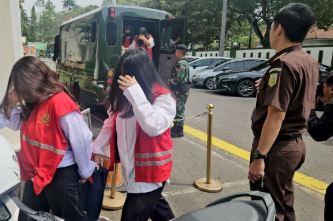
BANDUNG, APR 7: Indonesian prosecutors charged 19 people with human trafficking on Tuesday for their alleged roles in buying babies from new parents and selling them at a profit to clients at home and abroad.

A man and 18 women, including alleged ringleader Lie Siu Luan, 70, were formally charged during an appearance at the Bandung district court in West Java province.

If found guilty, they could face up to 15 years in prison under Indonesian laws governing human trafficking and child protection, officials said.

The defendants were arrested last year after a parent reported an alleged baby kidnapping to police in West Java.

Investigators tracked down a suspect who allegedly confessed to having traded more than two dozen infants, some as young as three months old.

They were bought from people who did not want or could not afford to keep their babies.

The person who reported the kidnapping had actually entered into an agreement with the syndicate but never got paid, police said.

“Most of those babies were trafficked to Singapore,” prosecutor Sukanda — who like many Indonesians has only one name — told the court on Tuesday.

Police rescued several infants held by the syndicate in Indonesia, before they could be sold.

Others, rejected by would-be clients in Singapore, had already been sold domestically, including to adoptive parents in the capital Jakarta.

Police said the syndicate had started operating in 2023 and had sent at least 14 babies to Singapore.

The defendants allegedly played distinct roles: some were assigned to find babies, some to care for them, and others to prepare identity documents and passports.

One of the women told prosecutors she had procured 34 children for the group.

Human trafficking is a recurring problem in Indonesia, a sprawling nation of more than 17,000 islands.

In one of the worst cases in recent years, at least 57 people were found caged on a palm oil plantation in North Sumatra province in 2022.

Abortion is illegal in the Muslim-majority archipelago except in cases of rape or medical necessity.

COAS vows to eliminate all terrorist proxies relentlessly

COAS vows to eliminate all terrorist proxies relentlessly

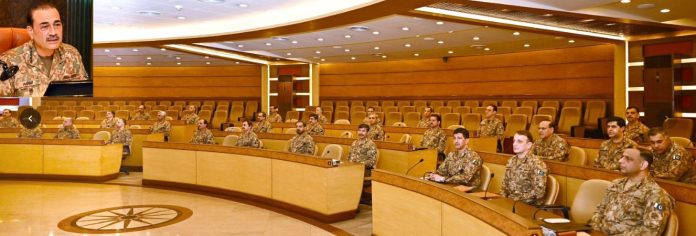
RAWALPINDI, APR 7 /DNA/ – Field Marshal Syed Asim Munir, NI (M), HJ, COAS & CDF, presided over the 274th Corps Commanders’ Conference (CCC) at General Headquarters (GHQ), Rawalpindi.

The Forum offered Fateha for the Shuhada of the Armed Forces, Law Enforcement Agencies, and innocent civilians who laid down their lives in defence of the motherland. Paying solemn tribute to their unmatched sacrifices, the Forum reaffirmed that their legacy remains the bedrock of Pakistan’s national security.

The COAS & CDF expressed his satisfaction and commended the Pakistan Armed Forces for their unwavering professionalism, operational excellence, and steadfast commitment towards defence of the country and sustained, intelligence-based counter-terrorism operations. He underscored that through the synergy of the Government, Armed Forces, and the people, Pakistan continues to consolidate security gains, strengthen economic resilience, and enhance its regional and global standing.

The Forum undertook a comprehensive review of the prevailing internal and external security environment, reaffirming that all terrorist proxies operating on behest of Indian and other external sponsors, along with their facilitators and abettors, will be pursued and eliminated, relentlessly, and without exception. The pace of Operation Ghazab-lil-Haq will be maintained till the culmination of terrorists’ safe heavens and use of the Afghan soil against Pakistan is decisively brought to an end.

The Forum appreciated the hectic efforts by the Government, to bring an end to the War in the Middle East, echoing the call for restraint, dialogue, and de-escalation, reaffirming Pakistan’s commitment to principled diplomacy and constructive engagement. The Forum reiterated Pakistan’s role as a responsible regional stakeholder, actively contributing to peace and stability as a Regional Security Stabiliser.

The Forum noted with concern and vehemently condemned latest attacks on KSA’s petrochemical and industrial complex as an unnecessary escalation which spoils sincere efforts to resolve the conflict through peaceful means. Forum noted that restrain and calibration so far exhibited by KSA, despite grave provocations, enabled mediation and diplomatic resolution, however, such unwarranted aggressions have serious repercussions, to spoil the ongoing peaceful options and conducive environment.

The Forum categorically rejected persistent disinformation, baseless allegations, and false flag narratives attributed to India, noting that such tactics stand discredited internationally. The Forum expressed concern over continued human rights violations by Indian authorities in Indian Illegally Occupied Jammu and Kashmir, and noted the recent spate of fake encounters at various locations to cover up extrajudicial killings.

In his concluding remarks, the COAS & CDF directed commanders to maintain the highest standards of operational readiness, professionalism, and adaptability, expressing full confidence in the Armed Forces’ ability to counter all forms of threats and to ensure the sovereignty and territorial integrity of Pakistan.

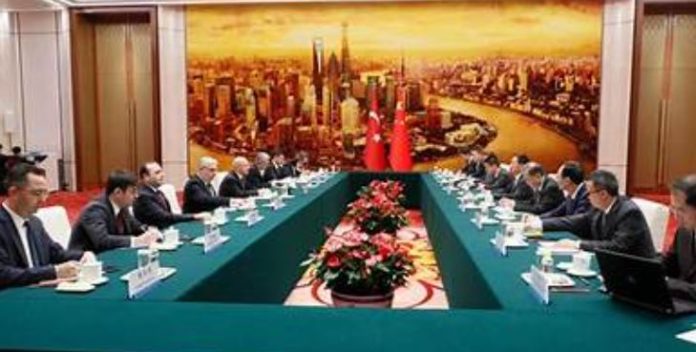
RAWALPINDI, APR 7 /DNA/ – Field Marshal Syed Asim Munir, NI (M), HJ, COAS & CDF, presided over the 274th Corps Commanders’ Conference (CCC) at General Headquarters (GHQ), Rawalpindi.

The Forum offered Fateha for the Shuhada of the Armed Forces, Law Enforcement Agencies, and innocent civilians who laid down their lives in defence of the motherland. Paying solemn tribute to their unmatched sacrifices, the Forum reaffirmed that their legacy remains the bedrock of Pakistan’s national security.

The COAS & CDF expressed his satisfaction and commended the Pakistan Armed Forces for their unwavering professionalism, operational excellence, and steadfast commitment towards defence of the country and sustained, intelligence-based counter-terrorism operations. He underscored that through the synergy of the Government, Armed Forces, and the people, Pakistan continues to consolidate security gains, strengthen economic resilience, and enhance its regional and global standing.

The Forum undertook a comprehensive review of the prevailing internal and external security environment, reaffirming that all terrorist proxies operating on behest of Indian and other external sponsors, along with their facilitators and abettors, will be pursued and eliminated, relentlessly, and without exception. The pace of Operation Ghazab-lil-Haq will be maintained till the culmination of terrorists’ safe heavens and use of the Afghan soil against Pakistan is decisively brought to an end.

The Forum appreciated the hectic efforts by the Government, to bring an end to the War in the Middle East, echoing the call for restraint, dialogue, and de-escalation, reaffirming Pakistan’s commitment to principled diplomacy and constructive engagement. The Forum reiterated Pakistan’s role as a responsible regional stakeholder, actively contributing to peace and stability as a Regional Security Stabiliser.

The Forum noted with concern and vehemently condemned latest attacks on KSA’s petrochemical and industrial complex as an unnecessary escalation which spoils sincere efforts to resolve the conflict through peaceful means. Forum noted that restrain and calibration so far exhibited by KSA, despite grave provocations, enabled mediation and diplomatic resolution, however, such unwarranted aggressions have serious repercussions, to spoil the ongoing peaceful options and conducive environment.

The Forum categorically rejected persistent disinformation, baseless allegations, and false flag narratives attributed to India, noting that such tactics stand discredited internationally. The Forum expressed concern over continued human rights violations by Indian authorities in Indian Illegally Occupied Jammu and Kashmir, and noted the recent spate of fake encounters at various locations to cover up extrajudicial killings.

In his concluding remarks, the COAS & CDF directed commanders to maintain the highest standards of operational readiness, professionalism, and adaptability, expressing full confidence in the Armed Forces’ ability to counter all forms of threats and to ensure the sovereignty and territorial integrity of Pakistan.
North Korean Ambassador meets PPP leaders

North Korean Ambassador meets PPP leaders

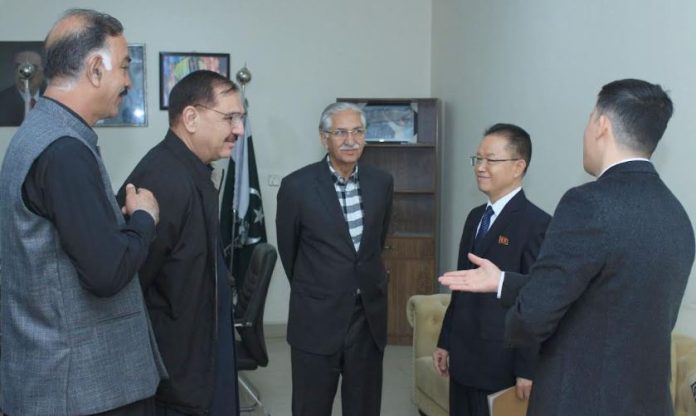
ISLAMABAD, APR 7 /DNA/ – Choe Chang Man, the Ambassador of the Democratic People’s Republic of Korea (North Korea) to Pakistan, visited the Central Secretariat of the Pakistan Peoples Party (PPP).

He held a meeting with senior PPP leaders, including Syed Nayyar Hussain Bukhari, Secretary General of the Pakistan Peoples Party Parliamentarians, and Humayun Khan (Incharge) along with Syed Sabt-ul-Haidar Bukhari, Secretary General of the Pakistan Peoples Party.

During the meeting, both sides exchanged views on matters of mutual interest, bilateral relations, and the overall regional situation. The two parties agreed to further strengthen relations between Pakistan and North Korea and to expand cooperation in various sectors.

The PPP leaders expressed confidence that the friendly relations between Pakistan and North Korea would be further promoted in the future. At the conclusion of the meeting, Ambassador Choe Chang Man stated that relations with Pakistan would be further strengthened.

He added that both the government and the people of North Korea highly value and appreciate the bilateral ties between the two countries. The North Korean Ambassador also thanked the PPP leadership for the warm and cordial welcome.

Pakistan condemns attacks on Saudi Arabia, extends condolences and solidarity

Pakistan condemns attacks on Saudi Arabia, extends condolences and solidarity

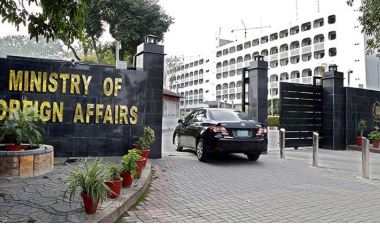
ISLAMABAD, APR 7 /DNA/ – The Government of Pakistan expresses its deep concern and unequivocal condemnation of the missile and drone attacks carried out by the Islamic Republic of Iran last night against energy facilities in the Eastern Region of the Kingdom of Saudi Arabia.

Pakistan mourns the loss of life resulting from these attacks and strongly deplores the damage inflicted on vital infrastructure. The Government of Pakistan conveys its sincere condolences to the families of the victims and firmly stands in solidarity with the Government and people of the Kingdom of Saudi Arabia during this difficult time.

The Government of Pakistan considers these attacks a serious violation of Saudi Arabia’s sovereignty and territorial integrity and a dangerous escalation that undermines regional peace and stability.

Pakistan reaffirms its unwavering support for the Kingdom’s security.

Power That Roars Only at the Weak

Power That Roars Only at the Weak

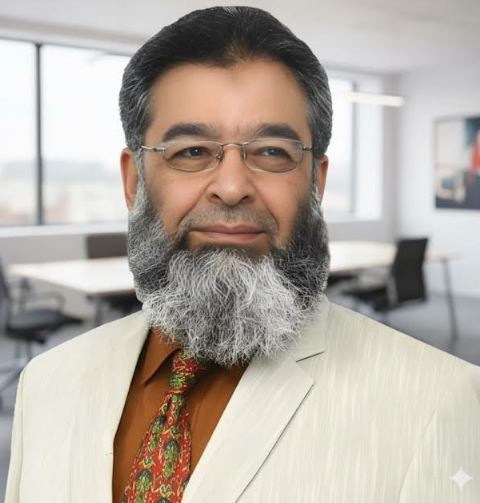
by Muhammad Mohsin Iqbal

There was a man among my relatives who possessed considerable wealth and, with it, an authority that seemed to extend beyond material comfort into the temper of his dealings with others. He was habitually prone to anger. When matters did not unfold according to his will or temperament, he would erupt in fits of indignation, directing his harsh words toward those whom he considered socially or financially inferior. His friends and relatives, rather than confronting his conduct, would excuse it with a convenient explanation; that he suffered from high blood pressure, and therefore his anger was involuntary, even pardonable. In this manner, his excesses were tolerated, if not silently endorsed.

Yet, one day, an incident occurred that revealed a truth more instructive than any medical justification. A dispute arose between him and a neighbour whose social standing was not negligible—one son held a senior position in the police, while another resided in the United States. The matter was brought before a Panchayat. There, in a gathering where voices carried weight and consequences were not easily dismissed, the neighbour spoke plainly and firmly. To the surprise of many, my relative did not lose his temper. His blood pressure, so often cited as the cause of his fury, remained perfectly under control. He listened, measured his words, and responded with restraint. An elderly man present at the gathering remarked with quiet irony that his anger and blood pressure were indeed most discerning; they rose only in the presence of the weak.

This seemingly ordinary episode carries within it a profound reflection on human conduct, particularly on the nature of power and its exercise. Anger, often portrayed as a spontaneous and uncontrollable emotion, is in many cases neither blind nor indiscriminate. It is calculated, selective, and frequently directed where resistance is least expected. The strong, it appears, are often spared the harshest expressions of wrath, while the weak are made its habitual recipients.

It is this recollection that comes to mind when one observes, in recent times, the language employed by political leaders on the global stage. The conduct of statesmen has traditionally been guided by a sense of decorum, shaped by the recognition that their words carry consequences far beyond personal sentiment. Diplomacy, by its very nature, demands restraint, dignity, and a careful calibration of language. Yet, history and contemporary events alike demonstrate that this standard has not always been upheld.

The President of the United States, Donald Trump, has recently used language in reference to Iran that departs markedly from the conventions of diplomatic discourse. His remarks, laced with profanity and overt hostility, stand in sharp contrast to the measured tone expected in international relations. It is difficult to imagine that similar language would be employed against nations such as China, Russia, or North Korea without inviting a formidable and immediate response. The asymmetry is telling. Just as in the case of my relative, the harshness of expression appears to find its direction where the likelihood of equal retaliation is perceived to be limited.

This is not, however, an entirely new phenomenon in American political history. The use of coarse or profane language by presidents has been documented across generations, though often confined to private conversations, later revealed through memoirs, recordings, or historical inquiry. Harry S. Truman was known for his blunt expressions, once referring to General Douglas MacArthur in terms that would scarcely befit formal address. John F. Kennedy, admired for his eloquence in public, was reputed to employ decidedly less refined language in private moments. Lyndon B. Johnson carried this tendency further, his speech often coloured by rustic and unvarnished expressions that reflected both his personality and political style.

Perhaps the most striking example emerged during the presidency of Richard Nixon, whose secretly recorded conversations, later released in the wake of the Watergate scandal, revealed a pattern of language that shocked the public conscience. These recordings exposed not only profanity but also remarks that carried undertones of prejudice and intolerance. In more recent times, even leaders such as George W. Bush and Barack Obama have, on occasion, been associated with informal or coarse expressions, though generally in private or less formal contexts.

What distinguishes the present moment is not merely the use of such language, but its open and public deployment, particularly through the immediacy of social media. President Donald Trump has frequently articulated his views in terms that blur the line between political rhetoric and personal invective. His recent statements concerning Iran, including explicit threats accompanied by profane expressions, exemplify a departure from the traditional norms of statecraft. The gravity of international conflict, especially in a region as sensitive as the Middle East, would ordinarily call for language that seeks to de-escalate rather than inflame.

The implications of such a shift are not confined to matters of etiquette. Language shapes perception, and perception, in turn, influences action. When the discourse of leadership descends into vulgarity, it risks normalising a tone that erodes respect, both domestically and internationally. It diminishes the moral authority that nations seek to uphold and complicates the delicate task of diplomacy.

The lesson, whether drawn from a modest Panchayat or the corridors of global power, remains consistent. Strength is not demonstrated through the ability to intimidate the weak, nor is authority enhanced by the abandonment of restraint. True leadership lies in the capacity to exercise power with wisdom, to speak with dignity even in moments of tension, and to uphold standards that inspire respect rather than fear.

Here’s the bottom line, anger that discriminates between the strong and the weak is neither a sign of sincerity nor of strength. It is, rather, a reflection of calculation. And when such calculation finds expression in the language of those who shape the destinies of nations, it becomes not merely a personal flaw, but a matter of global consequence.

3-Day National Youth Summit Gwadar begins

3-Day National Youth Summit Gwadar begins

GWADAR, APR 7 /DNA/ – The National Youth Summit Gwadar 2026, a three-day event organized by the Department of Youth Affairs, Government of Balochistan officially began on Tuesday.

All preparations are well completed, with participants—including youth delegates, experts, scholars, and professionals from across the country—already arriving in Gwadar.

Taking place from April 7 to 9, 2026, at the auditorium of GDA Public School, the summit aims to provide young people with a powerful platform to contribute to leadership, innovation, and socio-economic development, Gwadar Pro reported.

The central theme of the summit is “Learn, Innovate, Lead.” Each day will focus on a different topic.

The first day will center on leadership and digital innovation, with the opening ceremony, panel discussions, workshops, and sessions aimed at highlighting the potential of youth.

Day two will focus on entrepreneurship and the blue economy, featuring workshops, business pitch competitions, media and information literacy sessions, as well as study visits to Gwadar Port and the Fish Harbour.

The third day will address climate resilience and women’s empowerment, with discussions on women’s leadership, environmental protection, and the critical role of youth in these areas.

The summit will feature speeches from prominent provincial and national leaders, ministers, and experts. Informational and exhibition stalls will also be available to participants.

In addition to the educational sessions, there will be cultural activities and a comedy show, offering both learning and entertainment opportunities.

IMF demand for fuel levy to deeper poverty in Pakistan

IMF demand for fuel levy to deeper poverty in Pakistan

ISLAMABAD, APR 7 /DNA/ – Business leader and former president of the Islamabad Chamber of Commerce and Industry, Shahid Rasheed Butt, said on Tuesday that pressure from the International Monetary Fund (IMF) to immediately withdraw fuel price support could deepen poverty and fuel public unrest in Pakistan.


He said millions of farmers, transporters, and low-income households depend on affordable diesel to sustain their livelihoods, and removing the subsidy at a time of severe energy shocks would place an unbearable burden on struggling segments of society.


The IMF has expressed concern over fuel price distortions, particularly the absence of the petroleum development levy (PDL) on high-speed diesel. The levy currently stands at zero, compared with the Rs80 per litre target envisaged in the federal budget.


Shahid Rasheed Butt said restoring the levy at the present moment would significantly raise diesel prices, triggering a chain reaction across the economy. Diesel is the backbone of Pakistan’s freight and agricultural systems, and rising transport costs have already begun feeding into the prices of flour, fertiliser, and other essential goods.


He warned that the timing of the proposed policy shift is especially problematic as the wheat harvest season approaches. Combine harvesters, threshers, irrigation pumps, and the trucks transporting grain to flour mills all run on high-speed diesel, meaning higher fuel prices could directly translate into higher food costs.


Public transport operators have already raised fares by up to 35 percent without formal approval, further squeezing low-income commuters who rely on buses and vans for daily travel.


Pakistan imports nearly 80 percent of its oil needs, leaving the economy highly exposed to global price volatility. The recent surge in international energy prices has increased import costs, undermined export competitiveness, and intensified pressure on Pakistan’s external accounts.


According to the World Bank, Pakistan’s poverty rate reached 40.5 percent in fiscal year 2024, while the Benazir Income Support Program reaches only a portion of vulnerable households.


Butt said the government should negotiate flexibility with the IMF to temporarily retain targeted relief on diesel during the harvest season. He added that rigid fiscal targets should not apply when external conflicts, rather than domestic policy failures, are driving the economic shock.

Embassy of Romania marks one year of Opera in Pakistan

Embassy of Romania marks one year of Opera in Pakistan

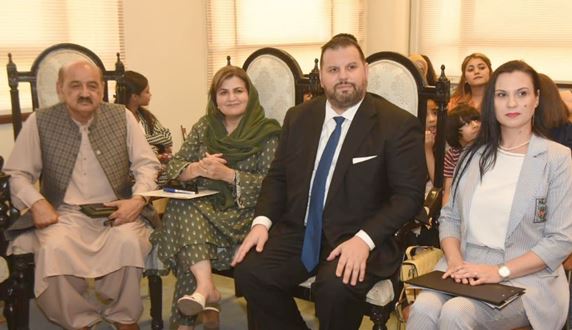
ISLAMABAD, APR 7 /DNA/ – The Embassy of Romania in Pakistan proudly celebrates one year since the launch of the first opera course in the history of Pakistan, a landmark cultural initiative carried out in partnership with the Pakistan National Council of the Arts in Islamabad.

Launched in April 2025, the program represents a pioneering effort to introduce and promote the art of opera in Pakistan. The courses are held weekly, every Wednesday and Friday, under the guidance of Romanian soprano Georgiana Costea-Glugă.

This initiative aims to foster cultural dialogue between Romania and Pakistan while opening new artistic horizons for young talents. Through the dedication and expertise of Ms. Costea-Glugă, the program highlights the vital role of music and culture in building bridges between nations and encouraging creative exchange.

Romania has a rich and longstanding operatic tradition, rooted in European classical heritage and sustained by renowned institutions such as the Romanian National Opera and the National Opera of Cluj-Napoca. This strong cultural foundation informs Romania’s commitment to sharing its artistic expertise internationally. Cultural diplomacy remains a key pillar of Romania–Pakistan bilateral relations, strengthening people-to-people ties and complementing growing cooperation in areas such as education, trade, and institutional partnerships.

Over the past year, the opera course has brought together a growing community of young music enthusiasts, offering them a unique opportunity to explore and engage with the world of opera. The initiative reflects Romania’s strong commitment to promoting cultural diversity, artistic education, and mutual understanding.

The Embassy of Romania in Islamabad warmly invites all those interested to join the ongoing courses and contribute to the development of a vibrant and dynamic cultural community in Pakistan.

30-bed trauma facility opens at Major Shabbir Sharif Shaheed (Nishan-e-Haider) hospital

30-bed trauma facility opens at Major Shabbir Sharif Shaheed (Nishan-e-Haider) hospital

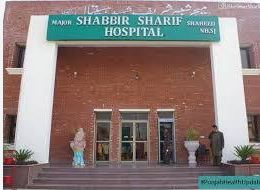
GUJRAT, Apr 6: A 30-bed trauma center was inaugurated at Major Shabbir Sharif Shaheed (Nishan-e-Haider) Hospital in Kunjah,while the upgradation of Rural Health Center (RHC) Shadiwal has been completed.

Federal Minister for Overseas Pakistanis and Human Resource Development,Chaudhry Salik Hussain inaugurated the facilities,according to officials.
The ceremony was attended by Additional Deputy Commissioner (Revenue),Waqas Safdar Sikandari,CEO District Health Authority Gujrat,Dr.Syed Ata-ul-Munim,SP Mehr Riaz and other officials.
Speaking on the occasion, the minister said the projects would help ensure timely and quality healthcare for the public, adding that efforts were under way to improve health facilities in line with the Punjab government’s vision.
He also appreciated the performance of the health department,particularly CEO Health Dr.Ata-ul-Munim and Medical Superintendent Syed Ghamkhwar Hussain.
Officials said that the trauma center would provide emergency treatment to patients injured in accidents and other incidents, while the upgraded RHC would offer improved medical services to residents of the area.

Stay Connected

64FansLike
60FollowersFollow

Latest Reviews

Exchange Rates

USD - United States Dollar
EUR
1.14
GBP
1.34
AUD
0.70
CAD
0.71