Home Blog Page 19

FPCCI, Islamic Chamber to Host Sustainable Tourism Forum in Karachi

FPCCI, Islamic Chamber to Host Sustainable Tourism Forum in Karachi

KARACHI, DEC 31 /DNA/ – Atif Ikram Sheikh, Presdient of the Federation of Pakistan Chambers of Commerce & Industry (FPCCI), has apprised that, in collaboration with the Islamic Chamber of Commerce and Development (ICCD), FPCCI will jointly organize the Sustainable Tourism Forum (STF) & Expo on 21-22 January 2026 in Karachi.

Mr. Atif Ikram Sheikh added that the international event will bring together policymakers, investors, tourism professionals and development institutions from Pakistan and across the Islamic world – highlighting tourism as a powerful engine of economic growth, investment, employment and cultural diplomacy.

FPCCI Chief stressed that tourism has emerged globally as one of the most dynamic sectors; contributing significantly to economic development, foreign exchange earnings, job creation and people-to-people connectivity – and, the STF will, therefore, focus on strengthening regional cooperation, promoting sustainable tourism practices and unlocking new investment opportunities.

Mr. Atif Ikram Sheikh informed that the discussions will explore key areas such as tourism diplomacy, investment and partnerships in sustainable tourism; namely, medical & wellness tourism; green growth; education & skills development; sustainable destination management and the transformation of tourism through digital technology and artificial intelligence.

Mr. Atif Ikram Sheikh elaborate that the specialized knowledge-sharing sessions will also address critical challenges and opportunities facing the sector; including, heritage management for cultural tourism sites & museums; the impact of climate change & natural disasters on tourism and innovative approaches for building resilient and sustainable tourism destinations. Renowned speakers and industry experts from multiple countries will share global best practices and regional perspectives – enriching the dialogue and generating actionable outcomes, he added.

Mr. Atif Ikram Sheikh highlighted that alongside the forum, the Tourism Expo will provide a vibrant platform for participating countries and organizations to showcase their tourism destinations, heritage assets, hospitality services, cultural products, traditional crafts and emerging tourism ventures. The expo is expected to facilitate business networking, partnership building and cross-border collaboration – further strengthening tourism’s role in regional economic integration.

The Sustainable Tourism Forum & Expo is a landmark initiative for promoting Pakistan and the broader region as a competitive, sustainable and future-ready tourism destination, he added.

Punjab CM Maryam Nawaz’s Directives Lead to Formation of WASA Attock

Punjab CM Maryam Nawaz’s Directives Lead to Formation of WASA Attock

By Malik Faisal Munir / DNA 

ATTOCK: The directives of Punjab Chief Minister Maryam Nawaz Sharif, the process for the establishment of WASA Attock has been completed to improve and make more effective the water supply and sewerage services in Tehsil Attock.

In this regard, a formal ceremony was held at the Deputy Commissioner Office Attock, which was attended by Deputy Commissioner Attock Rao Atif Raza, Administrator Municipal Committee Attock and Additional Deputy Commissioner (General) Attock Anil Saeed, Managing Director WASA Attock Muhammad Aqeel Awan, Director Finance WASA Attock Shams-ur-Rehman, Managing Director WASA Rawalpindi Muhammad Saleem Ashraf, along with other concerned officers.

During the ceremony, agreements were exchanged for the transfer of water supply and sewerage-related assets and responsibilities from the Municipal Committee Attock to WASA Attock. The exchange of agreements was carried out between Administrator Municipal Committee Attock Anil Saeed and MD WASA Attock Muhammad Aqeel Awan in the presence of Deputy Commissioner Attock Rao Atif Raza.

While addressing the ceremony, Deputy Commissioner Attock Rao Atif Raza stated that from January 1, 2026, WASA Attock will formally assume responsibility for water supply, sewerage, and all related matters in Tehsil Attock. He clarified that at present, WASA has been established only in Tehsil Attock, while water supply and sewerage services in other tehsils of the district will continue to be managed by the respective municipal committees.

The Deputy Commissioner expressed hope that WASA Attock would deliver services in a professional manner, keeping public needs in view and in accordance with the vision of the Chief Minister of Punjab. He emphasized that the establishment of WASA will not only improve service delivery but will also help in the timely resolution of civic issues, ensuring the provision of clean drinking water and an improved sewerage system for citizens.


Islamic finance posts double-digit growth in 2025

Islamic finance posts double-digit growth in 2025

DNA

The global Islamic finance industry has steadily evolved from a niche, alternative financial system into a systemically important component of the international financial architecture. Grounded in Shariah principles that emphasise risk sharing, asset-backed transactions, and social justice, Islamic finance today represents a diversified ecosystem encompassing banking, capital markets, insurance (takaful), FinTech, and social finance instruments. Its expansion has been propelled not only by the demographic momentum of a global Muslim population exceeding two billion, representing more than 25% of the world’s population, but also by rising interest from non-Muslim markets seeking ethical, resilient, and values-based financial solutions. In recent years, Islamic finance has demonstrated a notable capacity to sustain growth despite global macroeconomic tightening, elevated inflation, geopolitical disruptions, and financial market volatility, reinforcing its growing relevance within the global financial system.

As of the most recent industry assessments, total global Islamic finance assets reached at 5.2 trillion USD and continue to expand at a pace that compares favorably with, and in some cases exceeds, the conventional financial sector growth average pace. According to international standard-setting and industry monitoring institutions, global Islamic finance assets grew by approximately 14.9% year-on-year in 2025, reaching nearly USD 5.2 trillion, compared to average single-digit growth in many conventional banking markets. Forward-looking projections suggest that total assets are on track to cross USD 6 trillion by the end of 2026, supported by strong balance-sheet expansion in Islamic banking, accelerating Sukuk issuance volumes, and the rapid digitalization of Shariah-compliant financial services. The Islamic Financial Services Industry entered 2025 with renewed momentum, recording double-digit growth across its core sectors and benefiting from regulatory reforms, stronger prudential oversight, and the gradual opening of new jurisdictions, particularly across Africa and selected European markets. This sustained performance underscores the intrinsic resilience of Islamic finance, derived from its close linkage to the real economy and its structural avoidance of excessive leverage, speculation, and interest-based transactions.

Despite this positive trajectory, the structure of the Islamic finance industry remains highly concentrated. Islamic banking continues to dominate the landscape, accounting for approximately 72% of total industry assets, equivalent to more than USD 2.7 trillion globally. While this dominance provides scale and systemic depth, it also highlights persistent structural imbalances. Sukuk represents the second-largest segment, with an estimated share of 18% depending on classification, corresponding to more than USD 900 billion in outstanding value globally. Sukuk has become a critical funding and liquidity management instrument for sovereigns and corporations, particularly in the Gulf Cooperation Council and Southeast Asia. Islamic FinTech, although still modest in absolute terms, accounts for roughly 3% of industry activity and has emerged as the fastest-growing subsector, with annual growth rates consistently exceeding those of traditional Islamic finance segments. Islamic capital markets beyond Sukuk, including Islamic funds, asset management, pension funds, and Islamic REITs, collectively represent around 3% of total assets, while Takaful and Islamic microfinance and social finance each contribute approximately 2%. The remaining 1% comprises miscellaneous activities such as Islamic leasing entities and Mudarabah-based investment pools as illustrated in the below chart. This composition illustrates both the strength and vulnerability of the industry: while banking provides stability and scale, excessive reliance on a single segment limits diversification, constrains liquidity management options, and exposes the system to concentration risks over the long term.

Industry performance during 2025 reflected both continuity and transition. Islamic banking remained the backbone of the system, supported by steady financing growth of over 17% year-on-year and sustained deposit expansion approaching 9% globally. Several African jurisdictions recorded compound annual growth rates well above the global average, in some cases exceeding 20%, signaling a gradual but meaningful geographical rebalancing of Islamic banking activity. At the same time, structural challenges persisted, most notably the limited availability of Shariah-compliant liquidity instruments and the continued dependence of Islamic banks on sovereign Sukuk for liquidity and balance-sheet management. International regulators and standard-setting bodies have increasingly stressed that without deeper and more liquid Islamic capital markets, banking-led growth alone may not be sufficient to ensure long-term financial resilience.

The Sukuk market emerged as one of the most dynamic segments of the industry during 2025. Global Sukuk issuance rose sharply, with total issuance volumes exceeding USD 230 billion in 2024, reflecting annual growth of more than 25%. This momentum carried into 2025, driven by sovereign funding needs, infrastructure investment requirements, and growing corporate participation. Importantly, new Sukuk markets emerged in Tanzania, Zambia, and Kenya, marking a significant milestone in Africa’s integration into global Islamic capital markets. These issuances underscore increasing confidence among African policymakers in Sukuk as a tool for infrastructure financing, fiscal diversification, and capital market development. However, despite strong primary market performance, Sukuk markets continue to face structural limitations, including shallow secondary market liquidity, limited benchmark yield curves, and a relatively concentrated investor base dominated by buy-and-hold institutions. Addressing these challenges remains essential if Sukuk is to function more effectively as a liquidity management, pricing, and risk-management instrument within the global financial system.

Beyond Sukuk, Islamic capital markets recorded moderate but uneven growth. Islamic funds and asset management benefited from improved global equity market conditions and growing investor interest in sustainability-linked investments. Nevertheless, the sector remains fragmented, with a large number of small-scale funds limiting economies of scale and cross-border competitiveness. Sustainability-themed Islamic funds and green Sukuk gained visibility during 2025, aligning Islamic finance more closely with global ESG trends, yet they still account for a relatively small proportion of total market activity, highlighting considerable untapped potential.

The takaful sector experienced steady growth during 2025, with global takaful assets expanding at an estimated rate of 15–17% annually. Markets in the Gulf Cooperation Council and Southeast Asia continued to dominate, supported by stronger regulatory frameworks, higher insurance penetration, and more developed investment markets. In contrast, Takaful development in Africa and Central Asia remains constrained by regulatory capacity gaps, limited re-takaful availability, and shallow domestic capital markets. Strengthening institutional frameworks and expanding Shariah-compliant investment avenues will be critical to sustaining Takaful growth beyond core markets.

Among all subsectors, Islamic FinTech stands out as the most rapidly expanding and strategically transformative. According to the State of the Global Islamic Economy Report 2024/25, Islamic FinTech growth has consistently outpaced most traditional Islamic finance segments, supported by digital payments, Shariah-compliant buy-now-pay-later solutions, embedded finance, and the application of artificial intelligence and blockchain technologies to enhance transparency, compliance, and operational efficiency. Several Islamic FinTech platforms have achieved regional scale, while transaction volumes in Islamic digital finance have grown at double-digit rates annually. These platforms increasingly target underbanked and unbanked populations, particularly across Africa and South Asia, positioning Islamic FinTech as a critical driver of financial inclusion and market expansion. Although Islamic FinTech currently represents a small share of total industry assets, its strategic significance far exceeds its size and is expected to increase materially by 2026.

Geographically, Asia continues to dominate the global Islamic finance landscape, accounting for more than 50% of global Islamic finance assets when combined with GCC markets, led by Malaysia, Indonesia, Pakistan, and the Gulf economies. However, this dominance is expected to gradually diminish as Africa and Western markets attract a growing share of capital flows. Africa has emerged as the most promising frontier for Islamic finance expansion, supported by favorable demographics, infrastructure financing needs, and increasing regulatory openness. In addition to Sukuk issuances in East and Southern Africa, Islamic banking has begun to take root in countries such as Eswatini, Zimbabwe, Ghana, and Uganda. Looking ahead to 2026, new African entrants are expected to include Ethiopia, Ghana, Uganda, and Somalia or Somaliland, reflecting rising demand for Shariah-compliant financial services and broader financial inclusion objectives.

Europe is also moving from cautious experimentation toward more structured engagement with Islamic finance. The anticipated entry of Italy, Switzerland, Portugal, and the Netherlands into Islamic banking and capital market frameworks signals growing recognition of Islamic finance as a credible component of ethical and sustainable finance strategies. While not all of these jurisdictions are expected to operationalize Islamic finance simultaneously, at least two European markets are likely to emerge as active participants by 2026. Albania has already established itself as a functioning Islamic banking market, further reinforcing Europe’s gradual integration into the global Islamic finance ecosystem.

The year 2026 presents a wide range of strategic opportunities for the Islamic finance industry. Deepening Islamic capital markets remains a central priority, particularly through the development of liquid Sukuk secondary markets and more standardized issuance structures that support price discovery and broader investor participation. Islamic FinTech offers strong potential for cross-border scaling, cost reduction, and inclusion-driven growth, especially when supported by regulatory sandboxes and greater international harmonization. Africa-focused Islamic infrastructure finance, particularly Sukuk-backed projects in energy, transport, and agriculture, represents another high-impact opportunity. At the same time, the growing convergence between Islamic finance and ESG principles positions the industry favorably within global sustainability and climate-finance agendas.

Sadiq and Jaishankar connect in Dhaka

Sadiq and Jaishankar connect in Dhaka

NA Speaker, Indian FM exchange pleasantries at residence of former Bangladeshi premier, per sources

Centreline Report

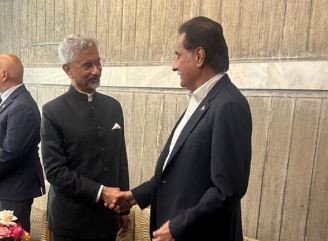
DHAKA: National Assembly Speaker Ayaz Sadiq and Indian External Affairs Minister Subrahmanyam Jaishankar held a meeting in Dhaka on Wednesday at the residence of former Bangladeshi prime minister Khaleda Zia.

According to sources, the National Assembly speaker and the Indian external affairs minister shook hands and exchanged pleasantries.

Zia, the first female prime minister of Bangladesh, passed away on Tuesday at the age of 80. Flags were lowered to half-mast, and thousands of security personnel lined the streets as her body was carried through Dhaka in a vehicle draped with the national flag.

World leaders, including Sadiq and Jaishankar, also traveled to Dhaka to attend the funeral ceremonies of the former Bangladeshi leader.

The meeting marks the first such interaction since May 2025, when Pakistan and India fought a brief but intense war. It comes months after the Pahalgam incident, which led to cross-border clashes between the two nuclear-armed neighbours.

The conflict between Pakistan and India was sparked by an attack on Hindu tourists in Indian Illegally Occupied Jammu and Kashmir (IIOJK), which New Delhi, without evidence, said was backed by Pakistan. Pakistan has denied involvement, with the foreign ministry having questioned the credibility of India’s account of the events, saying it was “replete with fabrications”.

Both sides used fighter jets, missiles, artillery and drones during the four-day conflict, killing dozens of people, before agreeing to a US-brokered ceasefire. In the immediate aftermath of the conflict, Pakistan said it took down seven Indian fighter jets during the conflict, including the French-made Rafale. New Delhi acknowledged “some losses” during the conflict but denied losing seven jets.

Political tensions between the two neighbouring countries were reflected on the cricket field during the ACC Men’s Asia Cup 2025, as Indian players reportedly refused to shake hands with their Pakistani counterparts.

The two teams met on three occasions during the tournament, including the final, yet India’s sportsmanship remained under scrutiny throughout.

The saga began in the group-stage clash, continued through the Super Four, and culminated in the final, where India defeated Pakistan but chose not to personally accept the trophy from Mohsin Naqvi, the PCB Chairman and head of the Asian Cricket Council.

Similar handshake controversies were reported in the Women’s World Cup match between the two sides, the Hong Kong Super Sixes, and other ACC events, including junior tournaments where teams also avoided customary greetings.

APNS urges government to allocate ad quotas for Journals

APNS urges government to allocate ad quotas for Journals

DNA

KARACHI, DEC 31: The All Pakistan Newspapers Society (APNS) has expressed deep concern over the deteriorating financial condition of magazines, which it describes as a vital pillar of the print media. In an official statement, APNS highlighted that government institutions have completely sidelined journals in their advertising campaigns, exacerbating their economic woes.

Senator Sarmad Ali, President of APNS, stated that the lack of government attention has pushed journals into severe hardship. Not only have they been deprived of public sector advertisements, but Pakistan Post has also drastically increased postal service rates, further straining their finances. He noted that the process of receiving payments from Pakistan Post has become increasingly difficult, with unnecessary conditions now imposed on sending and receiving money orders.

The statement also pointed out that the privatization of many Pakistan Railways trains has led to a sharp rise in distribution costs for journals and magazines across the country, placing an additional burden on publishing houses.

APNS has called on the Pakistan Post administration to reduce postal service rates to help alleviate some of the challenges faced by newspapers and journals.

NADRA’s new citizen facilitation initiative

NADRA’s new citizen facilitation initiative

ISLAMABAD, DEC 31 (APP/DNA): Due to age or certain medical conditions, the fingerprints of many citizens gradually fade over time. When such citizens approach banks, SIM card franchises, housing societies or seek services related to property transfer and other transactions where biometric verification through fingerprints is mandatory, they often face significant difficulties. Moreover, at many service points, biometric verification is also not possible due to the use of substandard or low-quality fingerprint readers. Although the State Bank of Pakistan and the Pakistan Telecommunication Authority have prescribed facilitative mechanisms for such citizens, in practice, individuals continue to face considerable challenges in availing these services.

To ensure an immediate and effective resolution of this issue, the Prime Minister of Pakistan and the Federal Minister for Interior and Narcotics Control have issued directives to NADRA. In compliance with these directives, NADRA has undertaken the following key measures.

First, on the recommendation of NADRA, the Federal Government has amended the National Identity Card Rules to expand the definition of biometrics. In addition to fingerprints, facial photographs and iris scans have now been legally recognised as valid biometric identifiers. This amendment provides a robust legal foundation for the implementation of a multi-biometric verification system in Pakistan.

Based on this legal framework, NADRA has introduced technical innovations enabling contactless fingerprint and facial recognition-based biometric verification. This system is currently available both at NADRA Registration Centres and on the Pak ID mobile application for services falling within NADRA’s jurisdiction. It is already being utilised for biometric verification in the transfer of Islamabad-registered vehicles and online passport applications. In the near future, proof-of-life certificates for Federal Government pensioners will also be issued under this system, while the scope of these digital services is being expanded in phases.

Insha Allah, with effect from 20 January 2026, NADRA will commence the issuance of facial recognition-based biometric verification certificates at all its registration centres for those citizens whose fingerprint-based verification is not possible. Wherever any institution requires such verification, citizens may obtain this certificate from any NADRA Registration Centre upon payment of a nominal fee of Rs 20.

Under this procedure, if fingerprint-based biometric verification fails at the service provider’s end, the citizen will visit the nearest NADRA Registration Centre to have a fresh photograph taken. This photograph will be matched with the image already available in NADRA’s records. Upon successful verification, NADRA will issue a certificate containing the purpose of verification, the citizen’s recent photograph alongside the photograph on record, CNIC number, name, father’s name, a unique tracking ID and a QR code. The certificate will be valid for seven days. The citizen will submit it to the relevant institution where biometric verification was required and the concerned institution will incorporate the certificate into its records and verify it online through NADRA.

In the future, facial image-based biometric verification certificates will also be available through NADRA’s e-Sahulat franchises. Following the formal launch of the Digital ID, this facility will be made available for all services through the Pak-ID application.

NADRA is fully prepared to implement this system. However, for its effective execution, NADRA has requested all regulators, relevant public institutions and private sector organisations to progressively upgrade their hardware and software in accordance with approved standards to enable the use of this biometric verification service. In the first phase, technical upgrades to institutional software applications will be required to allow the integration of facial recognition-based biometric verification certificates issued by NADRA. In the second phase, it will be necessary for institutions to install cameras at service counters or integrate cameras into existing KYC biometric machines, as without these upgrades, NADRA cannot provide this facility directly at such locations. If citizens encounter any issues regarding the availability of this service after 20 January 2026, they may lodge complaints with the relevant institution or department, as the service will be available from NADRA’s end.

To ensure the earliest possible operationalisation of this facility, NADRA has also requested the Ministry of Interior to issue appropriate instructions to all concerned institutions. It is envisaged that, following the rollout of this system, the difficulties faced by citizens due to faded fingerprints will be effectively resolved. Upon full implementation, citizens will be able to avail this facility directly at the relevant institution without the need to visit a NADRA Registration Centre. Following the formal launch of the Digital ID, citizens will also be able to access this facility independently through the Pak-ID application.

On the occasion of the New Year, NADRA reaffirms its commitment to further enhance its services through technological innovation while strengthening safeguards against identity fraud and misuse.

HEC displays over 100 tech solutions

HEC displays over 100 tech solutions

ISLAMABAD, DEC 31 /DNA/ – The Higher Education Commission (HEC), Pakistan organised TDF Impact Showcasing (TIS’25) to put on display over 100 successful projects completed under Technology Development Fund (TDF), one of its flagship research and development initiatives.  

The exhibits included innovations made in vital areas of Health, Agriculture, Biotechnology, Engineering, Energy Systems, Environmental Management, and Emerging Technologies. It is pertinent to mention here that out of 238 projects awarded under the Fund, 192 have been completed while the rest are in their execution phases. 

The daylong exhibition was aimed at projecting the impact of TDF, providing a platform for policymakers, academic brains, and industry professionals to witness ideas translating into solutions, and encouraging the innovating partners. The event brought together Government representatives, academia and industry leaders, entrepreneurs, and development partners for panel discussions and a fireside conversation.

In his address, Chairman HEC Mr. Nadeem Mahbub termed TIS’25 as a testimony to the HEC’s belief that the future of Pakistan lies in the potential of a robust collaborative bridge between academia and industry. He revealed that the mission of TDF is to transform ideas into market-ready solutions and empower the universities to become engines of socio-economic development. The initiative, he underlined, has become one of the success stories as it has not only nurtured the spirit of innovation across the country’s higher education institutions, but has also strengthened Pakistan’s Triple Helix Model, bringing together the government, industry, and academia for technology-driven development.     

Highlighting the project achievements, the Chairman said that 116 patents have so far been filed under the initiative, and 25 of the filed patents have already been granted. He added that 48 trademarks and copyrights have been filed and 13 have already been granted under the project, in addition to development of 177 products and prototypes, signing of 162 technology licenses, and 18 emerging start-ups and spin-offs. He maintained that TDF led to 330 research publications, including 241 in impact factor journals. More than 5,600 professionals have been trained under the project, building a future-ready workforce, he added.

“These achievements are not just numbers, they represent stories of perseverance, collaboration, and belief in Pakistan’s potential,” he asserted, urging all the stakeholders to build new partnerships, scale promising technologies, and together shape a robust innovation ecosystem.

Sharing his insight, Chairman Rastgar Group of Companies Mr. Imtiaz Ali Rastgar underlined the significance of technology in the human life while exemplifying technological advancement across the world. He emphasised the need for unabated consistency in the execution of innovative technological projects for incessant progress. He expressed his satisfaction over the continuing efforts, through HEC’s initiatives such as Offices of Research, Innovation and Commercialization (ORICs) and Business Incubation Centres (BICs), to strengthen university-industry linkages and materialise problem-solving research. He noted that universities have a great role to play in removing the hurdles lying in industrial development and commercial activism in the urban as well as rural setups. He pointed out tangible measures such as improvement in the syllabi of business and entrepreneurship education, strengthened role of business schools in research selling, and profiling of students towards entrepreneurship, and development of export enhancement skills among business education students, to further consolidate the academia-industry linkages and yield more effective outcomes. Devising a national strategy is a need of the hour to address the gaps, he concluded.

In his remarks, Executive Director HEC Dr. Zia Ul Haq reiterated HEC’s commitment to bridging academia with industry, providing a pathway to develop products crucial for socio-economic development of the country. He extended gratitude to the government representatives, industry professionals, and researchers and innovators from the academia for gracing the showcasing event. “HEC urges the industry to open its doors to academia, as the secret of socio-economic development of a country lies in working in tandem,” he emphasised. He noted that Pakistan’s innovation future depends on strong Triple Helix synergy, robust industry-academia partnerships, and consistent, well-aligned policy implementation.

Advisor Research & Innovation (R&I) Division Dr. Muhammad Ali Nasir said on the occasion that TDF stands as one of the HEC’s most visionary initiatives, designed to translate academic research into tangible socio-economic impact. He said the project aims to bridge the long-standing gap between academia and industry by enabling universities to move beyond publications towards prototypes, products, patents, and commercially viable enterprises aligned with national priorities. He said that HEC has prepared PC-I of the TDF Phase-II, which will soon be presented before the Government.

TDF was launched in 2016 under PSDP with an initial budget of Rs. 2.9 billion, was established to facilitate knowledge and technology transfer from academia to industry through the development of prototypes, products, and processes. As a first programme of its kind in Pakistan, TDF has served as a platform for transforming academic innovation into revenue-generating ventures while fostering industry-academia collaboration. In recognition of its success and impact, the initiative has been extended until June 2027.

Deputy Prime Minister / Foreign Minister to visit China

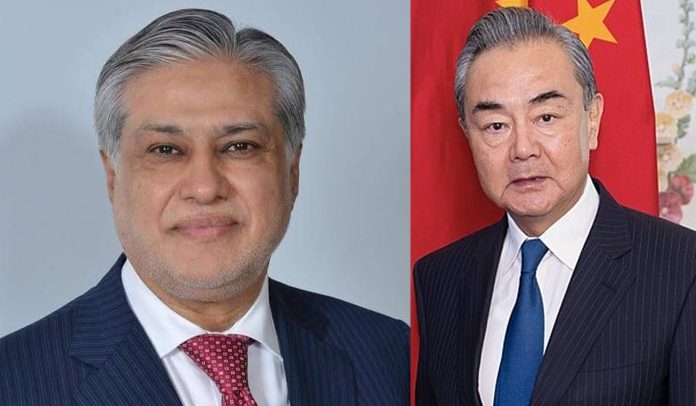
ISLAMABAD, DEC 31 /DNA/: At the invitation of Mr. Wang Yi, Member of the Politburo of the Communist Party of China, Director of the Office of the Central Commission for Foreign Affairs, and Minister for Foreign Affairs of China, Deputy Prime Minister and Foreign Minister Senator Mohammad Ishaq Dar will undertake an official visit to China to co-chair the 7th Round of the Pakistan–China Foreign Ministers’ Strategic Dialogue, scheduled to be held in Beijing on 4 January 2026.

The Foreign Ministers’ Strategic Dialogue represents the highest consultative mechanism between Pakistan and China. It provides a structured platform for both sides to review the entire spectrum of bilateral cooperation, as well as regional and international developments of mutual interest.

During the Dialogue, the two Foreign Ministers will announce a series of initiatives and commemorative activities to mark the 75th anniversary of the establishment of diplomatic relations between Pakistan and China in 2026. These activities will highlight the enduring friendship and multifaceted cooperation between the two countries.

The visit forms an important part of the regular high-level exchanges between Pakistan and China and reflects their shared determination to broaden and deepen the All-Weather Strategic Cooperative Partnership. It will also reaffirm their mutual commitment to regional peace, stability, and sustainable development.

PPP not consulted on potential govt-PTI talks, says KP governor

PPP not consulted on potential govt-PTI talks, says KP governor

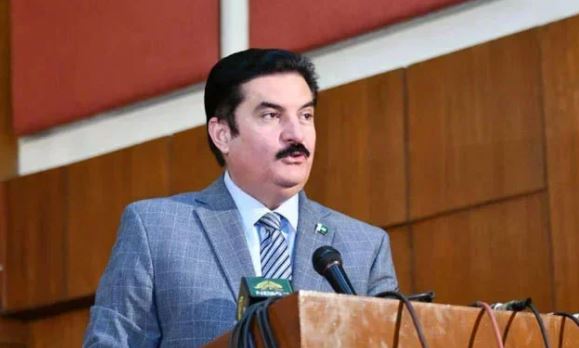
PESHAWAR, DEC 31: Khyber Pakhtunkhwa Governor Faisal Karim Kundi has said that the Pakistan Peoples Party (PPP) has not yet been consulted regarding any potential dialogue between the federal government and Pakistan Tehreek-e-Insaf (PTI).

Speaking to Geo News, Governor Kundi said that if such talks were underway, his party chief Bilawal Bhutto-Zardari would have issued a statement.

The governor made it clear that if talks take place in the future, the release of PTI’s founding chairman, Imran Khan, will not be on the agenda.

The remarks come amid the possibility of government-PTI talks, with Prime Minister Shehbaz Sharif open to dialogue, while PTI has neither fully accepted nor completely ruled out the discussions.

“PTI founder will serve his sentence and will not receive any NRO,” Kundi added.

The governor, however, expressed serious doubts about PTI’s credibility, saying that the party cannot be trusted.

“PTI cannot be trusted; it has sabotaged the dialogue process in the past as well,” he added. Referring to past events, the KP governor said that during the previous 16-month government, efforts were made to bring PTI to the dialogue table, but it resorted to “May 9 sort of incidents.”

He reiterated that political issues should be resolved through political dialogue.

Kundi said that PTI had “damaged Khyber Pakhtunkhwa for the sake of one individual,” urging the party to focus on governance in the province.

He said that on the one hand, PTI’s leadership talks about negotiations, but on the other hand, the party’s founder posts “provocative messages” about marching on Islamabad.

“Who actually holds decision-making authority within PTI? Even party members lack trust in each other.”

It is worth noting that dialogue talks are gaining momentum again, after Prime Minister Shehbaz Sharif stated that discussions with PTI will only be possible on “legitimate” demands, and any attempts at blackmail under the guise of dialogue will not be tolerated.

Addressing the federal cabinet meeting on December 23, the prime minister said that PTI founder and his associates were also discussing holding talks. He said that he had previously invited PTI leaders for dialogue and had also extended the invitation on the National Assembly floor.

“Discussions could only be held on legitimate demands. Blackmailing will not work under the guise of negotiations, said the prime minister.

Separately, PTI Chairman Barrister Gohar Ali Khan on December 27 responded to claims made by the Prime Minister’s Coordinator Ikhtiar Wali Khan and said that there has been no contact with PM Shehbaz — regarding dialogue — in the past 10 days, or even throughout the year.

Barrister Gohar said that the critical issue of the negotiation process should not be treated casually.

“There has been no contact with Prime Minister Shehbaz Sharif in the last 10 days or the entire year. Although I have always been in favour of dialogue, this authority belongs only to Mahmood Khan Achakzai and Allama Raja Nasir Abbas,” he added.

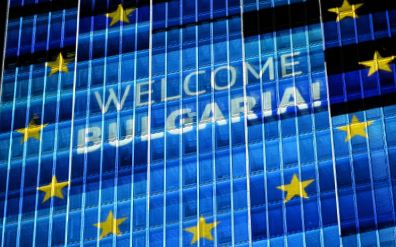
Bulgaria readies to adopt the euro, nearly 20 years after joining EU

Bulgaria readies to adopt the euro, nearly 20 years after joining EU

SOFIA, DEC 31: Bulgaria was preparing to switch to the euro on Wednesday night to become the 21st eurozone member, amid concerns the move could usher in higher prices and add to political instability rattling the Balkan country.

At midnight (2200 GMT Wednesday), Bulgaria will wave goodbye to both 2025 and its lev currency, which has been in use since the late 19th century.

While successive governments in the country of 6.4 million people have advocated joining the euro currency over hopes it will boost the economy of the EU’s poorest member, reinforce ties to the West and protect against Russia’s influence, some have been opposed to the switch.

Bulgaria, which joined the EU in 2007, faces unique challenges, including anti-corruption protests that recently swept a conservative-led government from office, leaving the country on the verge of its eighth election in five years. 

Outgoing Prime Minister Rossen Jeliazkov said on Tuesday that he nonetheless felt his cabinet had accomplished a milestone. 

“Bulgaria is ending the year with a gross domestic product of 113 billion euros (nearly $133 billion) and economic growth of more than three percent, which places us among the top five countries in the EU,” he said before a government meeting.

He added that inflation in the Black Sea country, which hovers around 3.6 percent, was “linked to increased purchasing power” and a less corrupt economy, and not in any way to the introduction of the euro.

                  – Cheers, fears and queues –

                  Some Bulgarians worry the introduction of the euro could lead to price increases.

                  Those fears were fuelled in part by a protest campaign that emerged this year to “keep the Bulgarian lev”, which tapped into a generally negative view of the single currency among much of the population.

                  According to the National Statistical Institute, food prices rose by five percent year-on-year in November, more than double the eurozone average.

                  “Unfortunately, prices no longer correspond to those in levs (…) 40 levs is not 20 but 30 euros for certain products,” pastry shop owner Turgut Ismail, 33, told AFP, saying that prices have already begun surging.

                  Some people, including business owners, have complained that it has been difficult to get their hands on euros, with shopkeepers saying they haven’t received the euro starter packages they ordered.

                  Banks have already warned of possible disruptions to card payments and ATM withdrawals on New Year’s Eve.

                  On Tuesday, people queued outside the Bulgarian National Bank and several currency exchange offices in the capital Sofia to obtain euros, an AFP journalist observed.

                  Elena Shemtova, 37, who owns a small gallery and jewellery shop in the city centre, said she is optimistic.

                  “We will experience difficulties at first, there will be problems with giving change, but within a month we will have gotten used to it,” she told AFP.

                  According to the latest Eurobarometer survey, 49 percent of Bulgarians are against the single currency.

                  As political instability has been rocking the country, any problems with euro adoption would be seized on by anti-EU politicians, said Boryana Dimitrova of the Alpha Research polling institute.

                  “There will be challenges, but we are counting on the tolerance and understanding of both citizens and businesses,” said Jeliazkov.

                  He stressed that introducing the euro will have “a positive long-term effect on the Bulgarian economy and on the environment in which the country is developing”.

                  The euro was first rolled out in 12 countries on January 1, 2002. Croatia was the last to join in January 2023.

                  Bulgaria’s accession will bring the number of Europeans using the euro to more than 350 million.

Stay Connected

64FansLike
60FollowersFollow

Latest Reviews

Exchange Rates

USD - United States Dollar
EUR
1.16
GBP
1.34
AUD
0.67
CAD
0.72