Home Blog Page 188

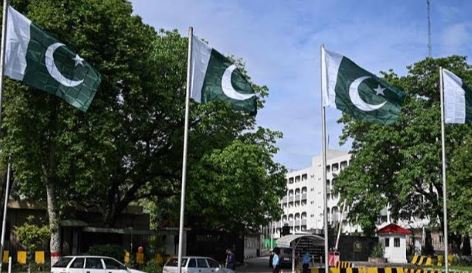
President Zardari felicitates President of Vietnam

President Zardari felicitates President of Vietnam

ISLAMABAD, Apr 10: President Asif Ali Zardari on Friday extended warm congratulations to President of the Socialist Republic of Vietnam, To Lam, on his election, noting that the unanimous vote of the National Assembly reflects the trust and confidence reposed in his leadership.

In his letter, the President expressed confidence that, under President To Lam’s stewardship, Viet Nam would continue to achieve greater progress and prosperity.

Referring to Pakistan–Viet Nam relations, the President said that the two countries enjoy cordial and friendly ties based on mutual trust and goodwill.

He conveyed his desire to work closely with President To Lam to further strengthen bilateral relations and advance shared goals of peace, stability and prosperity, while enhancing cooperation for the mutual benefit of the two peoples.

Khamenei says Iran does not want war but ‘criminal agressors’ won’t go unpunished

Khamenei says Iran does not want war but 'criminal agressors' won't go unpunished

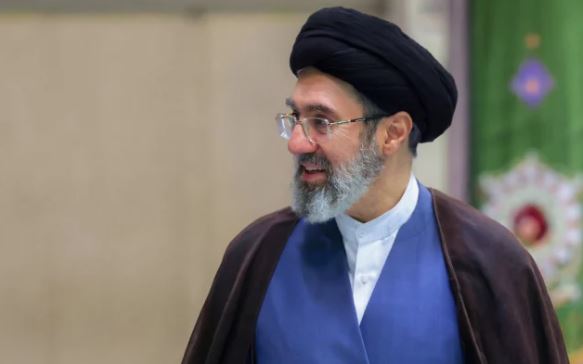
TEHRAN: Iran’s new supreme leader Mojtaba Khamenei said in his latest written message that his nation did not want war with the United States and Israel, but would protect its rights as a nation, state television reported Thursday.

“We did not seek war and we do not want it,” he said in the message read out on state TV, weeks after his father, Ayatollah Ali Khamenei, was martyred on February 28, the first day of the war.


“But we will not renounce our legitimate rights under any circumstances, and in this respect, we consider the entire resistance front as a whole,” he added, in an apparent reference to Lebanon where Israel is fighting with Tehran’s ally Hezbollah.

“All must know that, by Almighty God’s will, we definitely won’t allow the criminal aggressors who attacked our country to go unpunished.”

Iran this week agreed to a fragile two-week ceasefire with the United States that could lead to peace negotiations after threats of annihilation from US President Donald Trump.

The supreme leader also urged the country’s southern neighbours to carefully observe ongoing regional developments, describing them as a “miracle” and calling for a clear and informed stance.

He said that Iran will move the management of the strategic Strait of Hormuz into a new phase.

Khamenei told Iranians that they must “not imagine that taking to the streets is no longer necessary” despite the announcement of the ceasefire.

“Your voices in public squares are undoubtedly influential in the outcome of the negotiations,” he said.

Likely wounded in the strike that martyred his father, Mojtaba Khamenei, has still not been seen in public since his leadership appointment.

He has issued written declarations, most of them read out by presenters on state television.

US President Donald Trump has even speculated that he could be dead, but Iran’s state television said he is recovering from his injuries and posts photos of him, without specifying when they were taken.

Pakistan offers visa on arrival for delegates attending Islamabad talks

Pakistan offers visa on arrival for delegates attending Islamabad talks

ISLAMABAD, Apr 10: Deputy Prime Minister and Foreign Minister Ishaq Dar on Friday announced that Pakistan will provide visa-on-arrival facilities to delegates coming to Islamabad for the upcoming talks.

“Pakistan welcomes all delegates including journalists from participating nations, traveling in relation to Islamabad Talks 2026”, the deputy prime minister said in a post on X.

To this end, he said all airlines are requested to permit boarding to all such individuals without Visa.

“Immigration authorities in Pakistan will issue them Visa on Arrival,” he added.

Pakistan hosts 8th UNODC anti-trafficking experts meeting

Pakistan hosts 8th UNODC anti-trafficking experts meeting

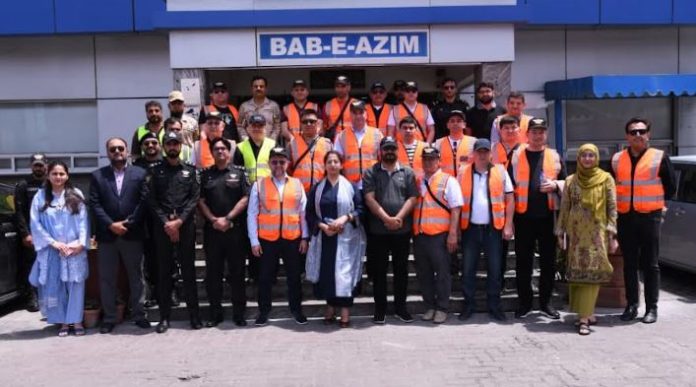
KARACHI, APR 10 /DNA/ – The United Nations Office on Drugs and Crime (UNODC) Country Office for Pakistan in collaboration with Pakistan Customs and Anti Narcotics Force hosted the 8th Expert-Level Meeting of the Inter-Regional Network of Customs Authorities and Port Control Units (IREN) in Karachi, marking a significant milestone under the Global Passenger and Cargo Control Programme (PCCP).

The four-day meeting is focusing on enhancing intelligence-sharing, improving risk-based targeting, addressing evolving trafficking threats, and further finetuning of the practical interregional collaboration. It brought together international experts, customs officials, and law enforcement agencies from eight IREN member countries to strengthen cooperation against illicit trafficking and transnational organized crime.

Welcoming the participants, Syed Shakeel Shah, Member Customs (Operations) Pakistan Customs Service, said, “It is a matter of great pleasure and privilege for Pakistan to host the 8th Inter-Regional Experts Meeting under the auspices of UNODC and the World Customs Organization. This meeting holds special significance as the first experts-level IREN forum being convened in Pakistan. We deeply value this opportunity to bring together regional and international partners committed to strengthening cooperation, operational coordination, and mutual trust. Pakistan remains committed to working closely with UNODC, WCO, and participating countries to advance intelligence-led border management, address evolving trafficking threats, and promote secure and lawful trade across the region.”

Arsalan Malik, Criminal Justice Advisor, United Nations Office on Drugs and Crime emphasized the urgency and coordinated action, “In today’s interconnected world, organized crime moves faster than ever across borders. Strengthening cooperation and intelligence-sharing is no longer optional, it is essential.”

Svetlan Savov, international expert, World Customs Organization highlighted the importance of balancing security and trade, “Customs administrations play a critical role in securing global supply chains while ensuring the smooth flow of legitimate trade.”

Pakistan, as one of the pilot countries of the programme since 2007, has played a central role in regional cooperation in advancing the PCCP, from establishing its first Port Control Unit in Karachi in 2008 to becoming a regional training hub, Pakistan continues to lead capacity-building and operational cooperation and has since evolved into a regional training center. Pakistan coordinated the IREN Operation on Synthetic Drugs in 2024, demonstrating its leadership in tackling emerging drug threats.

Background: A Network Built on Cooperation

The IREN network, established in 2019 through a Memorandum of Understanding among participating countries, enables real-time information exchange to combat trafficking across regions. Today, it covers 36 port and airport control units and targeting centres in 9 countries, with over 160 trained officers, strengthening coordinated responses to illicit trade.

Through the PCCP, implemented by UNODC in partnership with the World Customs Organization, International Civil Aviation Organization, and INTERPOL, countries are strengthening inter-agency cooperation and interregional practical collaboration to prevent the abuse of legitimate trade and transport corridors through intelligence-led and risk-informed detection of high-risk shipments and interception of illicit goods, including drugs, precursor chemicals, and other prohibited items.

In Pakistan, these efforts have led to significant enforcement results, including the seizure of 1.7 tons of methamphetamine in 2024, 1.3 tons of methamphetamine and 2.6 tons of opium in 2025, along with over 14 tons of Red Phosphorus, approximately 100 kg of cocaine, and tons of psychotropic substances, heading to outer world.

Discussions during the 8th Expert-Level Meeting capitalized upon key issues including emerging trafficking trends, balancing trade facilitation with enforcement, and the use of digital tools and artificial intelligence in border risk management. The programme also included practical workshops and a site visit to Karachi’s seaport facilities to demonstrate operational practices.

The meeting reaffirmed a shared commitment among participating countries to enhance cooperation, strengthen border security, and disrupt organized crime networks. The agenda reflected the growing complexity of global trade and crime. Discussions were focused on the emerging trafficking trends and regional threat environments; balancing trade facilitation with enforcement; digitalization and the use of AI in risk management; and strengthening coordinated border controls and one-stop inspections. These practical components ensure that discussions translate into actionable strategies.

A Test of Global Order and Pakistan’s Resolve

A Test of Global Order and Pakistan’s Resolve

By Muhammad Mohsin Iqbal

There was a time when the world, weary of war and ruin, gathered under one roof and formed the United Nations. The purpose was simple and noble. Nations would no longer rush to war without restraint. Disputes would be brought to a common forum. Wisdom would prevail over impulse. Peace would be guarded by collective will.

This institution was not created to serve the designs of a few powerful states. It was not meant to grant license to those who imagine threats and then move to destroy them. It was not meant to justify action first and offer explanation later. The spirit behind it was justice. Its strength was meant to lie in impartiality.

Yet the conduct of nations often strays from declared ideals. When power grows unchecked, it begins to see shadows as enemies. It creates fears and then seeks to remove them by force. Such actions shake the very foundations of international order. They weaken trust. They erode the faith of smaller nations in global institutions.

In recent times, the world has witnessed a familiar pattern. This time, Iran was targeted, yet it stood firm as an obstacle in a region already weighed down with tension. The assumptions were clear. The response was expected to be weak. The outcome was thought to be certain. Yet events did not follow the script. Iran responded with resolve. Calculations proved wrong. The situation grew more fragile.

In such a moment, the role of the United Nations became even more vital. The modern world is interconnected. A conflict in one region can ignite instability across continents. The risks are not limited to armies. They extend to economies, societies, and the fragile balance of peace. It was necessary that the global body act with urgency and clarity. It was expected to rise above politics and restore calm.

But history repeated itself. Silence replaced action. Hesitation took the place of leadership. The institution that was meant to prevent escalation once again stood constrained by the very forces it was created to regulate.

In this delicate hour, Pakistan stepped forward in a manner that surprised many. It assumed a role that others had neglected. It sought to calm tensions. It engaged with responsibility. It demonstrated that even in a divided world, a nation guided by clarity of purpose can influence events beyond its size.

There is a belief among many that Pakistan has been blessed in recent times. Since May 2025, it has carried itself with confidence. Its civil and military leadership have shown foresight. Decisions have been measured. The outcome has been dignity. Such moments are not accidental. They are shaped by resolve, unity, and faith.

Gratitude is essential in such times. A nation must acknowledge its blessings. Yet gratitude alone is not enough. It must also adopt a careful strategy. Gains must be preserved. Honor must be protected. The path ahead must be chosen with wisdom.

Pakistan must also look inward. A strong role abroad requires strength at home. The needs of its people cannot be ignored. Stability within gives credibility beyond. It must balance its external responsibilities with internal priorities. This balance is the true test of statesmanship.

As Pakistan plays the role of a mediator, new questions arise. Mediation demands trust. It requires that all parties believe in fairness. Yet in this conflict, there exists a party whose credibility is doubtful. Agreements are meaningful only when they are honored. Without trust, even the strongest arrangements become fragile.

There are voices that question the dynamics behind the scenes. Some analysts suggest that powerful states are themselves constrained. They speak of influence that operates quietly. They argue that power is sometimes guided rather than guiding. Whether such claims hold truth or not, they reflect a deeper uncertainty in global affairs.

Others recall recent history. They point to moments when Pakistan assisted major powers in difficult situations. They suggest that once again, it has stepped in where others faltered. Such observations add another layer to the narrative.

Mediation, however, is not merely about bringing parties to the table. It carries responsibility. In our traditions, when elders gather to resolve a dispute, their role does not end with an agreement. They remain guardians of that settlement. If one party breaks its word, it is their duty to intervene. They must correct the course. They must ensure justice.

There is a simple wisdom in our culture. They say you can’t clean a well if the source of the filth is still there. Drawing water again and again will not cleanse it. The problem must be addressed at its root. This wisdom applies to nations as well. Superficial solutions cannot resolve deep conflicts. Real peace requires honesty. It demands accountability.

The world stands at a sensitive juncture. Institutions must rediscover their purpose. Powerful states must reflect on their actions. Smaller nations must assert their voice. And those who step forward in moments of crisis must do so with sincerity.

Pakistan has shown that it can rise to the occasion. The challenge now is to sustain this role. To remain balanced. To remain just. And to ensure that its actions continue to reflect both strength and wisdom.

The ideals that led to the creation of the United Nations still hold value. They must not be abandoned. They must be revived. For in their revival lies the hope of a more stable and peaceful world.

Islamabad Talks

Islamabad Talks

Sanaa Khetran

As the peace dialogue for US-IRAN war is going to start soon in Islamabad, It has become talk of the town and the world. Pakistan has emerged on the map of the world as a peace harbinger. Delegates from Iran and US are coming to sit together to focus on agenda that could take them to peace. Undoubtedly, the morale is high of people of Pakistan and there could be seen filled corridors in the arena of media, politicians and think tanks and even in civil society the discussion is only focused upon Islamabad Peace Talks. 

Though the crisp and fine diplomacy trend set up by Pakistan recently has brought the results that are seen in conducting these peace dialogue in Islamabad, the expectations of the world and especially the Arab World are high.

In these circumstances, the speculations are many and in such closed-door conversations it is difficult to get into the real story before the announcements are made. However, as Islamabad Talks, lets ponder over what could be the next move?

The US-Iran War that started on February 28, 2026 is still ongoing. Though a ceasefire with an expectation to last for two weeks has been announced to set a stage for dialogue. The peace dialogue with mediation of Pakistan between US and Iran will be starting from Saturday 12, 2026 in Islamabad.

Before we would have the real results of dialogue, amidst of lurking fears that anything could happen before on the Israel front to sabotage the talks and there could be a slip between the cup and the lip, diplomacy in Pakistan has been reshaped and strengthened recently that has brought hope of peace and is determined to bring the desired outcome and that is continued ceasefire and to avoid major regional war.

On the chess board the K which is US in this case with all its hegemonic approach as a super power alongside Israel the warmonger has remained on one side trying to annihilate Iran for more than a month. Facing this super power is Iran on the other side that has strategically fought well and took every move so calculated that the super power has left with no choice but to be part of the dialogue if be known significantly as a peaceful super power and to remain a part of MAGA. 

J.D Vance has been supporter of MAGA, though the other main members of the delegation would see the glass half empty, but a mix of minds would not let US down on being MAGA and loose its role as a super power. The damage of the war still be recovered for U.S if talks would not be made shady through Israel non-stop attacks on allies of Iran. The US would enjoy the status of super power only if the talks could bring peace in the region.

Otherwise, the loss is greater for US than Iran. The war would sweep away MAGA with it.

In the beautiful weather of Islamabad, wherein great expectations are connected, Islamabad still talks about peace in the region if it may get heard.  

Sanaa Khetran

Professional in the development sector, analyst.

Pakistan women secure record-breaking win in FIFA series

Pakistan women secure record-breaking win in FIFA series

AFZAL JAVED

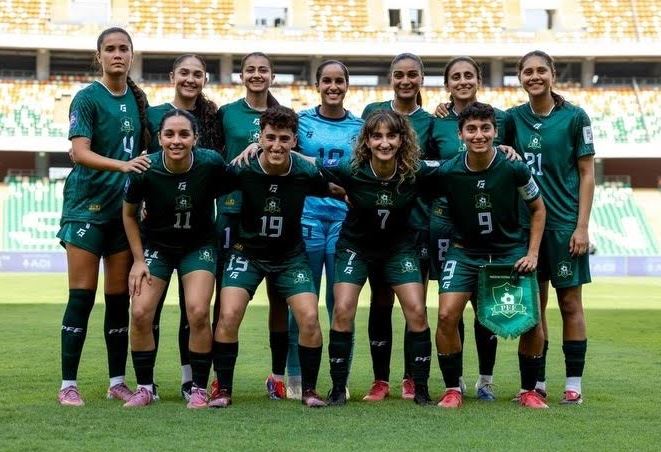
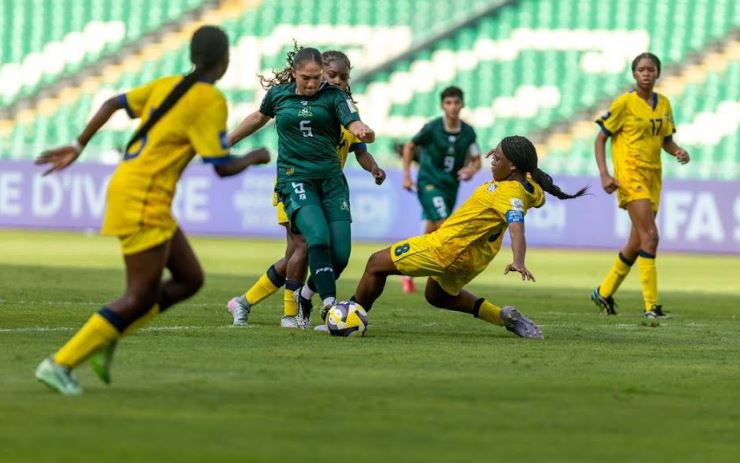
ISLAMABAD: Pakistan Women’s Football Team made a sensational start to the FIFA Series, thrashing Turks and Caicos Islands 8-0 to register the biggest win in their history.

The match, played at Stade Alassane Ouattara, saw Pakistan dominate from the outset. Four different players found the net in the first half — Zahmena Malik, Aqsa Mushtaq, Layla Banaras and Mariam Mahmood — to put the team firmly in control.

Pakistan opened the scoring in the 10th minute when Zahmena Malik calmly finished to give her side the lead. Just two minutes later, Aqsa Mushtaq doubled the advantage, slotting home after a rebound. Layla Banaras made it 3-0 in the 31st minute with a brilliant solo run and composed finish, before Mariam Mahmood added the fourth in the 38th minute with a superb volley at the back post.

The attacking dominance continued in the second half as Nadia Khan scored in the 56th minute with a well-placed header. Aqsa Mushtaq netted her second goal in the 76th minute with a stunning strike, while Layla Banaras also completed her brace with a fine effort from outside the box. Isra Khan wrapped up the historic win in the 81st minute, sealing an emphatic 8-0 victory.

The win surpasses Pakistan’s previous best result — a 7-0 victory over Maldives in 2022 — marking a historic moment and a powerful statement on the international stage.

Meanwhile  Syed Mohsen Gillani, President of the Pakistan Football Federation, has congratulated the nation on the Pakistan women’s team’s record-breaking victory in their opening match of the FIFA Series, dedicating the achievement to the country’s leadership.

In his message, Gillani praised the team’s outstanding performance and termed the victory a historic milestone for women’s football in Pakistan.

“At a time when our Prime Minister Shehbaz Sharif and  Field Marshal Syed Asim Munir are playing a historic role for peace, our girls have created history on the football field,” he said. “We dedicate this victory to our leadership for their commitment and vision.”

He further expressed confidence in the future of the sport, stating that Pakistan’s women footballers are making the nation proud on the international stage.

“The golden era for Pakistan women’s football is dawning, and our players are proving to the world that they have the talent and determination to excel,” he added.

Olivia Rodrigo, Louis Partridge breakup uncertain after confusing signs

Olivia Rodrigo and Louis Partridge’s breakup is once again under the spotlight as fans seem to find mixed signals about their relationship status ahead of the pop superstar’s new album release.

The 23-year-old songstress recently revealed the cover of her album, you seem pretty sad for a girl so in love, which appears to be inspired by a painting that Partridge shared on his Instagram before.Eagle-eyed fans noticed more clues like the name “Caroline” appearing in both of their posts about letters, which sparked a debate about whether or not the couple actually parted ways or it is a PR stunt. 

While fans were confused, the celebrity gossip account DeuxMoi wrote in an update, “Short answer: based on the final version of Olivia Rodrigo’s latest album, ‘you seem pretty sad for a girl so in love,’ her & Louis are broken up.”Despite the alleged confirmation, fans maintained that it will all be clear once the album comes out on June 13.

Rodrigo and the Enola Holmes star kept their relationship very private, but fans believe her mostly autobiographical music will have snippets about their relationship and sudden split.

IMF’s Georgieva expects war to trigger demand for up to $50bn in Fund support

International Monetary Fund (IMF) chief Kristalina Georgieva said on Thursday the global lender expected near-term demand for IMF financial support to rise to between $20 billion to $50 billion as result of spillovers from the war in the Middle East.

Georgieva said the now-paused war was testing the global economy, with a 13% cut in the daily flow of the world’s oil and a 20% cut in liquefied natural gas triggering a supply shock that had sent energy prices soaring, while disrupting supply chains.In prepared remarks ahead of next week’s meetings of the IMF and World Bank, Georgieva said the war had prompted the Fund to cut its global growth forecast, echoing a message she shared with Reuters on Monday.

US President Donald Trump on Tuesday announced a two-week ceasefire with Iran, but Israel’s continued bombardment of Lebanon threatens to derail talks to forge a permanent peace.

“Even in a best case, there will be no neat and clean return to the status quo ante,” Georgieva said. Qatar’s Ras Laffan complex, which produces 93% of the Gulf’s LNG, for instance, had been shut since March 2 and could take three to five years to return to full capacity.

“The fact is, we don’t truly know what the future holds for transits through the Strait of Hormuz, or for that matter, for the recovery of regional air traffic,” she added. “What we do know is that growth will be slower — even if the new peace is durable.”The conflict, which began on February 28, would have ripple effects for some time, Georgieva said, including oil refinery shutdowns and refined product shortages that were disrupting transportation, tourism and trade.

Another 45 million people would face food insecurity, bringing the total number of people in hunger to over 360 million. Supply chain disruptions would also continue, given industrial dependencies on inputs such as sulphur, helium for chip-making and naptha for plastics.

Growth forecast downgraded

The IMF will release a range of scenarios in its World Economic Outlook next week, going from a relatively swift normalisation to a scenario that saw oil and gas prices remaining much higher for much longer, Georgieva said.

Even the most hopeful scenario, she said, involved a growth downgrade due to infrastructure damage, supply disruptions, losses of confidence and other scarring effects.

In January, the IMF had forecast global growth of 3.3% in 2026 and 3.2% in 2027.

Next week’s meetings, which will bring together thousands of finance officials from all over the world, will focus on how to weather the shock of the war, and how the IMF can help its member countries in need, Georgieva said.

She said the IMF was well-resourced and could scale up balance of payments support through existing programmes, and additional countries were expected to request aid. She did not identify any specific countries seeking help.

The expected surge in funding requests comes on top of $140 billion in existing programmes before the war, an IMF official said.

Between May 2024 and March 2025, the IMF approved over $36 billion in new lending, according to a study by Boston University.

Georgieva warned that the energy supply shock was already driving up short-run inflation expectations, although longer-run expectations had not budged.

Financial conditions had already tightened, but in an orderly manner, and some easing was now evident.

The broader impact would depend on whether the ceasefire held and resulted in a lasting peace, and how much damage the war left in its wake, Georgieva said.

Countries should not go it alone

Georgieva cautioned that a demand adjustment was unavoidable, but cautioned countries against adopting export controls, price controls and other measures that could further upset global conditions.

“I appeal to all countries to reject go-it-alone actions,” she said. “Don’t pour gasoline on the fire.”

Georgieva said there was value in watching and waiting, but central banks should “step in firmly with rate hikes” if inflation expectations threatened to break anchor and trigger an inflationary spiral.

She noted that many countries were putting in place conservation measures, including limits on private vehicle use and remote work. Most countries had avoided untargeted tax cuts or energy subsidies, and the IMF was working actively with countries to ensure any measures remained temporary.

Adding deficit-funded stimulus now would increase the burden on monetary policy and amplify the rise in benchmark yield curves, further driving up the cost of debt.

Public debt was generally much higher than 20 years ago, Georgieva said, urging countries to move decisively to rebuild their financial buffers after this shock after years of failing to do so.

Even before the war, global public debt was projected to rise to about 100% of gross domestic product by 2029, its highest level since 1948.

Authorities announce two-day local holiday in Rawalpindi, Islamabad

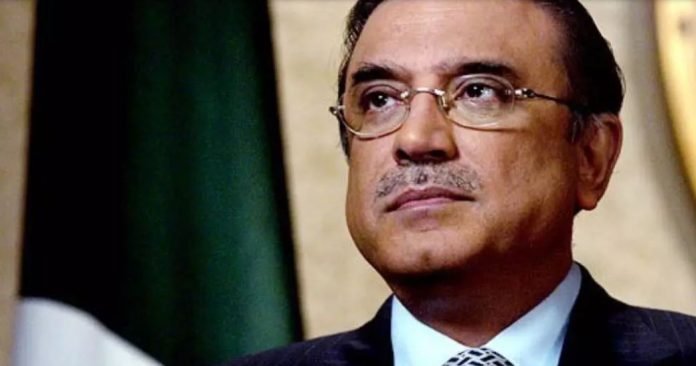
Authorities have announced a local holiday in Rawalpindi and Islamabad on April 9 and 10, ordering the closure of all schools and offices during the two-day period.

According to the district administration, all educational institutions and government and private offices in the twin cities will remain closed on Thursday and Friday. However, essential services will continue to operate without interruption, the notification read.

“It is notified that 09th & 10th April, 2026 (Thursday & Friday) are hereby declared as local holidays within the revenue limits of Islamabad Capital Territory except the offices of essential services in Islamabad, including MCI, CDA, ICT Administration, ICT Police, IESCO, SNGPL and hospitals,” it stated.The development came after Pakistan’s diplomatic efforts paused the ongoing US-Israel war on Iran.

Mediated by Pakistan, US President Donald Trump agreed to a two-week ceasefire with Iran, less than two hours before his deadline for Tehran to reopen the Strait of Hormuz or face devastating attacks on its civilian infrastructure.

Prime Minister Shehbaz Sharif also announced that he has invited the leadership from both nations to Islamabad on April 10 to further negotiate a conclusive agreement to settle all disputes.

“I… extend deepest gratitude to the leadership of both countries and invite their delegations to Islamabad on Friday, 10th April 2026, to further negotiate for a conclusive agreement to settle all disputes,” he said in a post on X.Pakistan, which has forged a close relationship with US President Donald Trump and is sensitive to developments in neighbouring Iran, has emerged as a channel for messaging between Tehran and Washington in recent weeks.

“We earnestly hope, that the ‘Islamabad Talks’ succeed in achieving sustainable peace and wish to share more good news in the coming days,” PM said.

Stay Connected

64FansLike
60FollowersFollow

Latest Reviews

Exchange Rates

USD - United States Dollar
EUR
1.14
GBP
1.34
AUD
0.70
CAD
0.71