Home Blog Page 184

Punjab’s Changing Education System

Punjab’s Changing Education System

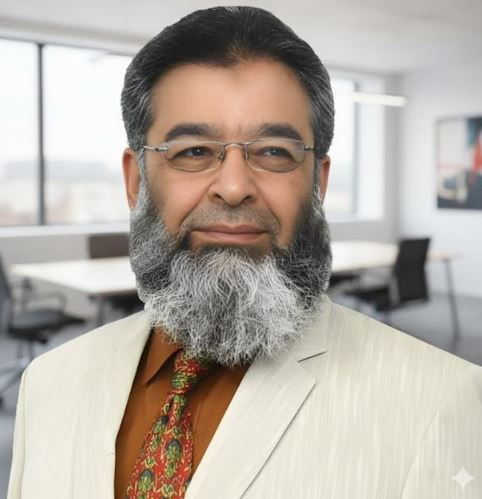
Dr. Muhammad Akram Zaheer

Punjab’s education landscape has long stood at the intersection of ambition and constraint. Successive governments have promised reform, yet the gap between policy and classroom reality has often remained wide. In this evolving context, the educational vision of Maryam Nawaz Sharif, particularly in relation to the Public Schools Reorganisation Programme (PSRP) and the Punjab Education Foundation (PEF), is being closely watched by educators, parents, and policy observers alike.

Her approach appears to build upon an existing framework rather than discarding it altogether. The PSRP, which places underperforming public schools under the management of private partners, has been both praised and criticised over the years. Supporters argue that it injects efficiency and accountability into a system weighed down by bureaucratic inertia. Critics, however, caution that it risks diluting the public character of education and may prioritise numbers over substance. Within this debate, Maryam Nawaz Sharif’s stated emphasis on improving access and standards suggests a pragmatic rather than ideological stance. Her public addresses have repeatedly highlighted the need to ensure that no child is left out of school due to poverty or geography. In a province where millions of children remain out of school, such a focus resonates with ground realities.

The role of PEF in this vision is central. Established as a vehicle to promote public-private partnerships in education, the foundation has expanded its reach over the years, particularly in low-income communities. Through programmes that subsidise tuition for students in private schools, it has sought to bridge the affordability gap. Under the current administration, there are indications that this model may be further strengthened, with an emphasis on expanding coverage and tightening oversight. Observers note that one of the more significant aspects of this approach is its reliance on measurable outcomes. Schools operating under PEF-supported schemes are required to meet certain performance benchmarks, often assessed through standardised testing. This has introduced a culture of evaluation that is not always present in traditional public schools. For policymakers, such data offers a way to track progress and identify gaps. For teachers and students, however, it can sometimes translate into pressure to perform within narrow parameters. Maryam Nawaz Sharif’s challenge lies in balancing these competing considerations. On one hand, there is a clear need to raise standards and ensure accountability. On the other, education cannot be reduced to test scores alone. Issues such as teacher training, curriculum relevance, and student well-being require equal attention. In her recent statements, there has been some recognition of this broader picture, with references to improving school infrastructure, investing in teacher capacity, and incorporating modern teaching methods. Another dimension of her educational vision is its social context. In many parts of Punjab, particularly in rural and underserved urban areas, schools are not just centres of learning but also spaces o

The Stark Reality Behind the Gentle Decline

The Stark Reality Behind the Gentle Decline

by Muhammad Mohsin Iqbal

In the course of human affairs, both individuals and nations have long laboured under the necessity of sustaining certain cherished illusions that lend purpose to their endeavours and preserve their collective dignity. These illusions, woven from habit, shared conviction, and the memory of past triumphs, enable peoples to uphold peace among themselves and command respect from the wider world. They serve as a bulwark against despair, allowing statesmen and citizens alike to navigate the uncertainties of existence with a measure of confidence.

Yet when the illusion begins to fray—when the world no longer bends to the old certainties—moral defeat arrives with quiet inevitability. The once-mighty are compelled to confront their limitations, and what was once feared as unassailable power reveals itself as fragile and contingent.

Such a moment has lately overtaken the United States of America. For generations, whenever Washington resolved upon a military intervention or lent its decisive weight to the overthrow of a regime deemed unfriendly, its traditional allies stood ready to offer support, whether through open endorsement, logistical aid, or discreet diplomatic cover.

That familiar pattern, however, has now been decisively broken. In the recent and escalating tensions surrounding Iran, America’s longstanding partners in Europe, within the NATO alliance, and across other established coalitions made it unmistakably clear that they would neither endorse nor participate in any military endeavour aimed at toppling the Iranian government. The refusal was not whispered in private chambers but declared with firm and public resolve.

For the first time in recent memory, the United States found itself diplomatically isolated even among those it had long counted upon as natural confederates, a development that exposed the limits of its once-unquestioned influence.

Faced with this unexpected resistance, Iran conducted itself with notable composure and strategic resolve. It confronted both Israel and its powerful patron without yielding ground, engaging in a measured yet determined defence that earned it a considerable measure of moral authority in the eyes of many observers across the region and beyond.

The spectacle of an isolated superpower, unable to rally its accustomed coalition despite repeated appeals, has subtly but profoundly shifted global perceptions. America, long feared for the reach of its military might and its capacity to bend events to its will, now appears diminished in stature, its actions viewed less as the assertions of a hegemon and more as the frustrations of a power struggling to adapt.

In response, certain voices in Washington have issued thinly veiled warnings to their former allies, intimating that in future hours of need—when crises arise closer to European or allied shores—American support might no longer be extended with the same readiness or generosity. Yet these admonitions, once potent instruments of leverage, have fallen largely upon deaf ears. The allies, it seems, have grown weary of following a path they no longer believe leads to shared security or mutual benefit, choosing instead to chart their own course with quiet independence.

The fracture has extended even to the Gulf states, whose security arrangements have historically been intertwined with American policy. These nations declared openly and without equivocation that they would not be drawn into any conflict pursued on behalf of Israel, a stance that underscored a broader regional reluctance to serve as instruments of distant ambitions.

Undeterred by these rebuffs, the United States subsequently appealed for international assistance in securing the Strait of Hormuz—an artery of critical importance to global energy flows and economic stability. The appeal, however, met with further indifference and polite but firm rebuffs, compounding the sense of diplomatic humiliation. What had once been achieved through a mere word of command now required protracted negotiation and yielded only silence or evasion.

Within the United States itself, the consequences of these developments have been felt with particular keenness. President Trump has come under intense and sustained criticism from members of Congress across party lines, from influential segments of the public, and from commentators who once formed part of the establishment consensus. Discussions that began as cautious speculation have now turned openly to the possibility of removing him from office, whether through constitutional mechanisms, sustained political pressure, or the weight of public discontent. Even plans to impeach or otherwise force him from the presidency are reportedly under active consideration.

The story did not end there. Trump also levelled sharp criticism at the Pope Leo, a move that added considerable fuel to the fire already burning against him and further isolated him from moral and religious voices both at home and abroad.

Many observers also argue that his approach to international affairs has squandered the intangible yet vital assets of fear, prestige, and credibility that America had accumulated over generations of careful diplomacy and demonstrated strength.

The old illusion of unchallenged supremacy, it is widely contended, lies in ruins, eroded by policies that have alienated partners and emboldened adversaries. Canada, a neighbour bound by long ties of friendship and shared history, has likewise distanced itself from certain aspects of American policy under the present administration, adding yet another layer to the growing sense of fracturing alliances and diminished cohesion among traditional partners.

According to analysts, in only one case can the United States hope to rid itself of the humiliation brought about by President Trump’s misguided policies; by removing him from the presidency and thereby regaining some of its lost prestige in the eyes of the world. Only by such a decisive step, they maintain, can Washington hope to restore the moral and diplomatic capital it has lately expended and begin the arduous work of rebuilding the trust and deference it once commanded.

History, in its impartial wisdom, teaches that illusions—however comforting and however diligently maintained—cannot endure indefinitely when they cease to correspond with the realities of a changing world. Nations, like individual men and women, must eventually reconcile themselves to the world as it is rather than as they once wished it to be.

The present discomfort of the United States may yet prove salutary if it prompts a sober and unflinching reassessment of its role and its relationships. Pride and arrogance, when left unchecked by reflection, have brought low many powers before this age; wisdom resides in recognising the precise moment when the old certainties must yield to new understandings. Whether America will draw this necessary lesson remains to be seen, but the signs of strain are unmistakable, and the world continues to watch with careful and attentive eyes.

Govt announces loadshedding, cautions of hiking power tariffs amid Middle East crisis

Govt announces loadshedding, cautions of hiking power tariffs amid Middle East crisis

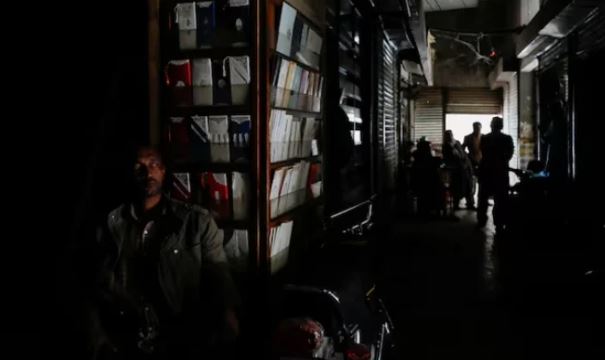
ISLAMABAD, APR 14: The federal government has announced loadshedding of more than two hours during “peak hours” and warned that the nation should be ready to brace for an increase in electricity prices.

The major move comes as the world grapples with an energy crisis following Iran’s closure of the Strait of Hormuz in retaliation for US-Israel strikes, sending governments scrambling to conserve power.


In a statement, the Power Division’s spokesperson said that in light of the situation, the government has decided that from 5pm to 1am (peak hours), electricity supply will be suspended for nearly 2:30 hours daily.

The rationale, the spokesperson explained, was that the government aims to minimise the use of expensive fuel and prevent the possible increase in electricity prices.

The spokesperson added that at present, the “biggest challenge” the government faces is during peak hours, where there is a significant increase in electricity demand, particularly because these days, the production of hydel power plants has decreased substantially.

“If expensive fuel is relied upon to meet these requirements, it can lead to a considerable increase in electricity prices,” the spokesperson said, further explaining the reason behind the loadshedding.

Explaining further, the spokesperson added that the situation is continuously being monitored and Prime Minister Shehbaz Sharif has given Power Division the taks that “there should not be a huge increase in electricity price” and “if due to furnace oil use some increase in price also happens, then measures must be taken to [minimise the possible increase]”.

The spokesperson noted that despite the ongoing crisis, from July to February, the power tariff has gone down by Re0.71 per unit on average.

“The basic reasons for this significant decrease include reforms brought into the system, various relief packages, strict implementation of merit order, better and timely planning, and running the system effectively in accordance with modern requirements.”

Given the PM’s instructions to ensure power tariff remains low, the Power Division’s spokesperson said 80 MMCFD local gas has been provided to power plants, due to which not only Re0.80 per unit increase in electricity price has been prevented, but extra load management has also been stopped.

The purpose of the over two-hour peak hour load management is to “prevent” approximately Rs3 per unit increase in electricity price, the Power Division said.

“Despite limiting furnace oil use, we have to be ready for approximately 1.5 rupees per unit increase, which if these measures were not taken, would have caused 5 to 6 rupees per unit increase,” the statement mentioned.

US, Iranian teams could return to Islamabad for peace talks this week, say sources

US, Iranian teams could return to Islamabad for peace talks this week, say sources

ISLAMABAD, APR 14: Negotiating teams from the US and Iran could return to Islamabad later this week, five sources said on Tuesday, days after the highest-level inaugural talks between the two countries in decades ended inconclusively.

A source involved in the negotiations said a date is not yet decided, but both countries could return as early as the end of this week.

“No firm date has been set, with the delegations keeping ⁠Friday through Sunday open”, a senior Iranian source said.

The weekend meeting in Islamabad to resolve the conflict between Washington and Tehran, held four days after last Tuesday’s ceasefire announcement, was the first direct encounter between American and Iranian officials in more than a decade, and the most senior engagement since Iran’s 1979 Islamic Revolution.

A proposal has been shared with both the US and Iran to resend their delegates to resume the talks, the first source said.

Two Pakistani sources with knowledge of the talks said Islamabad is communicating with the two sides about the timing of the next round and the meeting would likely take place ⁠on the weekend.

“We have reached out to Iran and we got a positive response that they will be open to a second round of talks,” a senior Pakistani government official said.

Pakistan’s foreign ministry and Prime Minister’s Office did not respond to a Reuters request for comment. The White House also did not immediately respond to a ⁠request for comment.

US Vice President JD Vance and Iranian Parliamentary Speaker Mohammad Baqer Qalibaf led their respective delegations in the last round of talks to work out a slew of issues, including the Strait of Hormuz, a major transit ⁠point for global energy supplies that Iran has effectively blocked but the US has vowed to reopen, as well as Iran’s nuclear programme and international sanctions on Tehran.

Vance told reporters after the talks ended ⁠that “We leave here with a very simple proposal, a method of understanding that is our final and best offer.”

“We’ll see if the Iranians accept it.”

The initial round of US-Iran talks, hosted by Pakistan in Islamabad, brought together senior delegations in what officials described as intensive, closed-door negotiations aimed at ending weeks of conflict. The trilateral ‘Islamabad Talks’ lasted nearly 21 hours after beginning on the afternoon of April 11, reflecting the complexity and high stakes involved.

Despite extensive discussions, the first round ended without a formal agreement. Officials in Islamabad, however, viewed the meeting as a significant step in opening direct channels of communication between Washington and Tehran.

The Islamabad talks were widely seen as a rare instance of direct engagement facilitated by a third party, with Pakistan coordinating closely with both sides to bring them to the table. Officials familiar with the process said the discussions focused on narrowing differences over ceasefire terms, regional security and broader political concerns.

The conflict, which began on February 28 following coordinated US-Israeli strikes on Iranian targets, has killed more than 2,000 people and destabilised the wider region. Iran responded with retaliatory actions, including disrupting shipping through the Strait of Hormuz and targeting US and Israeli interests.

A ceasefire announced on April 8 — brokered with Pakistan’s involvement — has temporarily halted hostilities, but major disagreements remain. Washington has proposed a 15-point framework covering nuclear and missile issues, sanctions relief and maritime security, while Tehran has put forward a 10-point plan seeking broader sanctions removal and greater control over key waterways.

The international community has broadly welcomed Pakistan’s role in hosting the Islamabad Talks and facilitating dialogue, with its continued diplomatic efforts seen as key to sustaining momentum towards a potential agreement.

Premier Shehbaz will visit Saudi Arabia, Qatar and Turkiye, say sources, as Pakistan intensifies diplomacy.

PM Shehbaz set to visit Saudi Arabia, Qatar and Turkiye amid Middle East tensions

PM Shehbaz set to visit Saudi Arabia, Qatar and Turkiye amid Middle East tensions

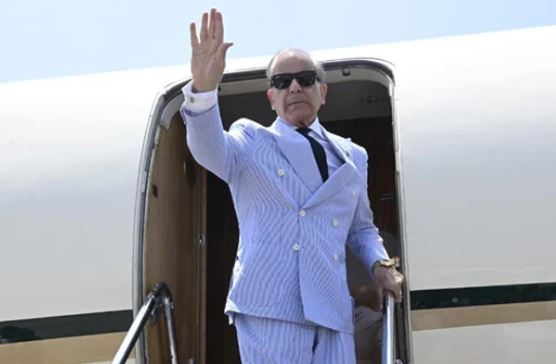
ISLAMABAD, APR 14: Prime Minister Shehbaz Sharif is expected to undertake a three-nation visit to Saudi Arabia, Qatar, and Türkiye as Pakistan steps up diplomatic engagement amid rising Mideast tensions.

According to sources the visit, which was initially planned only for Saudi Arabia, has now been expanded and rescheduled. The prime minister will begin his tour in Saudi Arabia, followed by Qatar, and will conclude it in Türkiye.

During the trip, the prime minister is expected to meet key leadership across the region to discuss important diplomatic and security matters, with a focus on regional stability and evolving geopolitical developments.

In Saudi Arabia, Shehbaz Sharif is scheduled to hold talks with Crown Prince Mohammed bin Salman, where both sides will review bilateral relations and cooperation in multiple sectors.

Sources further said discussions are expected to include regional developments, including the situation surrounding the Strait of Hormuz, as well as the next round of US-Iran talks. Pakistan’s ongoing diplomatic role in facilitating dialogue between Washington and Tehran is also likely to be reviewed.

Pakistan has recently emerged as a key mediator in efforts to reduce tensions between the United States and Iran. The recent high-level talks held in Islamabad were the first direct engagement between the two sides in over a decade, although they ended without a formal agreement after extensive discussions.

Following the negotiations, tensions in the region have remained high, with concerns over maritime security and fragile ceasefire arrangements. Reports also suggest that further rounds of US-Iran talks could potentially be held in Islamabad in the coming days.

All options on table for funding, strategic fuel reserves under consideration: FinMin Aurangzeb

All options on table for funding, strategic fuel reserves under consideration: FinMin Aurangzeb

ISLAMABAD, APR 14: The government is considering Eurobonds, loans from other countries and commercial debt to replace a $3.5 billion facility from the United Arab Emirates (UAE) and manage foreign reserves, Federal Minister for Finance Muhammad Aurangzeb said.

The FinMin also told Reuters the shock from the ongoing war in the Middle East meant that Pakistan must consider a strategic petroleum reserve and a faster switch to renewable energy.


“All options are on the table,” Aurangzeb said when asked if the government was in talks with Saudi Arabia for a loan that could replace the UAE facility.

Reuters reported that Pakistan will return a $3.5 billion loan to the UAE this month.

The South Asian country has been thrust into the international spotlight as it plays the role of a mediator between the US and Iran to end the war in the Middle East.

Aurangzeb, speaking on the sidelines of the IMF/World Bank annual spring meetings, said the country could manage all debt repayments, and that its reserves remained at roughly 2.8 months of import cover. Maintaining at least that level, he said, would be “an important aspect of our overall macro stability as we go forward.”

“We are looking at Eurobond, we are looking at Islamic sukuk, we are looking at dollar-settled rupee-linked bonds,” Aurangzeb said, adding that they expected to issue Eurobonds this year and are also exploring commercial loans.

Aurangzeb said while the country had not yet requested any additions or changes to its $7 billion IMF lending programme due to the economic shocks of the war in the Middle East, it was a potential option.

“Depending upon how things pan out over the next few weeks, that’s something which can be discussed,” he said.

The Fund’s board is likely to sign off on the latest lending tranche by the end of this month or early next month, Aurangzeb said, which would unlock just under $1.3 billion via the Extended Fund Facility and the Resilience and Sustainability Facility.

Pakistan also expects to launch its first-ever Panda bond — debt denominated in Chinese yuan — next month, he said. The $250 million issue, the first of a planned $1 billion programme, will be backed by the Asian Development Bank and the Asian Infrastructure Investment Bank.

Aurangzeb said the country’s expected GDP growth of close to 4%, remittances of around $41.5 billion and targeted assistance to the poorest citizens could withstand the Iran war shock for this fiscal year, which ends on June 30.

But the price spikes meant the country should focus on establishing strategic reserves of fuels and LPG — rather than simply relying on commercial reserves — and accelerate its move towards renewable energy.

“When you go through a supply shock like this… it sends a very clear view that we need to accelerate these journeys,” he said.

Empowering artisans and preserving heritage at Nomad Craft Festival

Empowering artisans and preserving heritage at Nomad Craft Festival

DNA

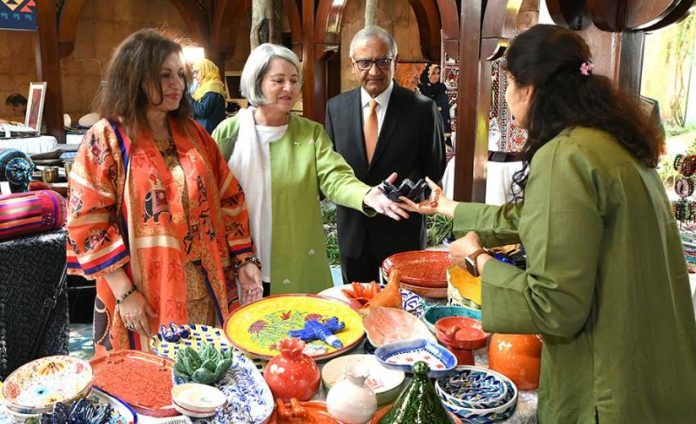
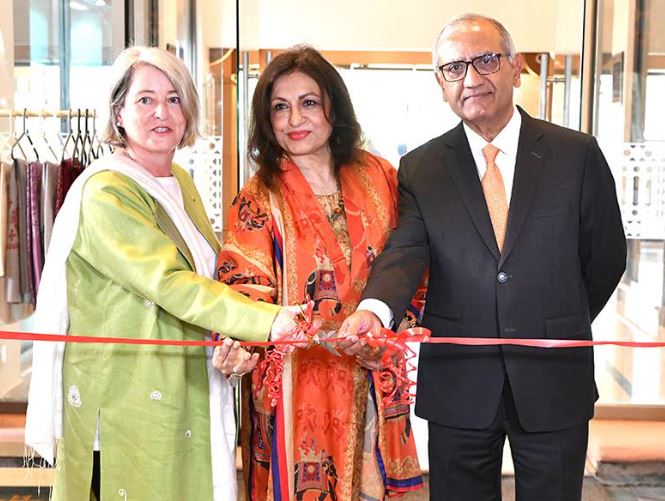
ISLAMABAD: Serena Hotels in collaboration with Nomad Art Gallery under the Cultural Diplomacy initiative, proudly presents the Nomad Craft Festival, a vibrant celebration of Pakistan’s diverse cultural heritage, craftsmanship, and artistic excellence. The festival brings together master artisans, designers, and craft enthusiasts from across the country, offering a unique platform to showcase indigenous art and promote sustainable livelihoods.

Rooted in a shared vision, the collaboration aims to highlight and empower women, honor the indigenous art and artisans of Pakistan, and support communities through skills and creativity in arts and crafts. The festival features an exquisite collection of handcrafted textiles, shawls, gifts, natural foods, ceramics, homeware, jewelry, apparel, and inspiring artworks. These creations represent the rich cultural tapestry of Sindh, Khyber Pakhtunkhwa, Punjab, Balochistan, Gilgit-Baltistan, and Kashmir, making them ideal for both personal collections and meaningful gifts.

In this festival, special emphasis is placed on highlighting the traditions of the Saami tribe of Sindh, showcasing their unique cultural expressions and artisanal expertise, and reinforcing the importance of preserving indigenous heritage.

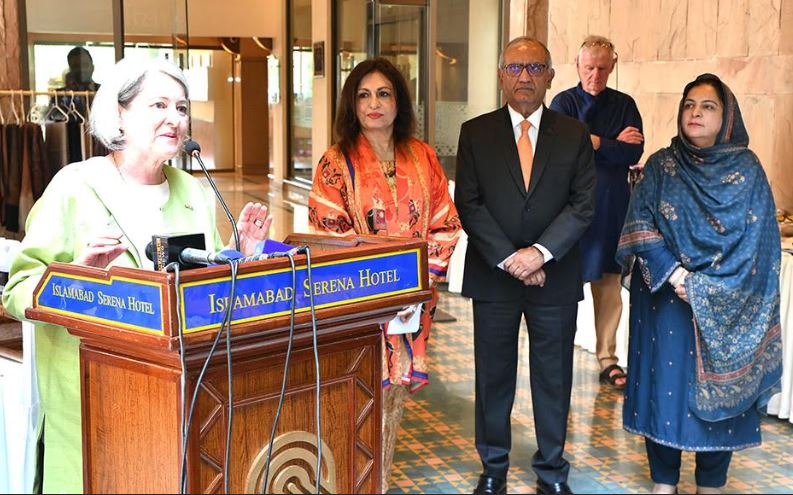
Speaking about the initiative, Nageen Hayat, founder of Nomad Art Gallery, said that the festival celebrates Pakistan’s cultural diversity while creating meaningful opportunities for artisans, particularly women, to connect their creativity with wider audiences and sustain their craft.

As the Guest of Honour, Mary O’Neil the Ambassador Ireland to Pakistan praised the initiative for promoting indigenous crafts and empowering local communities. She emphasized the role of cultural platforms in building mutual understanding and appreciation.

Serena Hotels remains committed to supporting cultural initiatives by creating meaningful platforms that promote local artisans, preserve heritage, and encourage community empowerment through creative expression.

The Craft Festival promises an immersive cultural experience, developing appreciation for the country’s rich traditions while supporting the talented artisans who keep these legacies alive.

Prime Minister Shehbaz Sharif Receives Telephone Call from Canadian PM Mark Carney

US-Iran ceasefire still holding, efforts underway to resolve disputed issues: PM

ISLAMABAD, APR 13: /DNA/ – Prime Minister Muhammad Shehbaz Sharif received a telephone call from Canadian Prime Minister Mark Carney this evening.

During their warm and cordial conversation, the Canadian Prime Minister congratulated Prime Minister Muhammad Shehbaz Sharif on Pakistan’s peace efforts that culminated in the temporary ceasefire and led to the recently held talks between the United States and Iran, hosted by Pakistan.

While appreciating Canada’s endorsement and support for Pakistan’s diplomatic efforts, the Prime Minister highlighted that the US-Iran negotiations were an important step towards peace and assured that Pakistan would continue with its efforts to urge both parties to maintain the ceasefire and make meaningful progress towards de-escalation and regional peace and stability.

The two leaders also exchanged views on Pakistan-Canada bilateral relations and expressed their desire to work together to enhance cooperation in agriculture, clean energy, mines and minerals as well as enhancing Canadian investments in Pakistan.

The Prime Minister reiterated his invitation to the Canadian Prime Minister to undertake an official visit to Pakistan at his kind convenience.

Both leaders agreed to maintain close coordination.

Youth Panchayat under BELIEF Project highlights barriers faced by minorities

Youth Panchayat under BELIEF Project highlights barriers faced by minorities

DNA

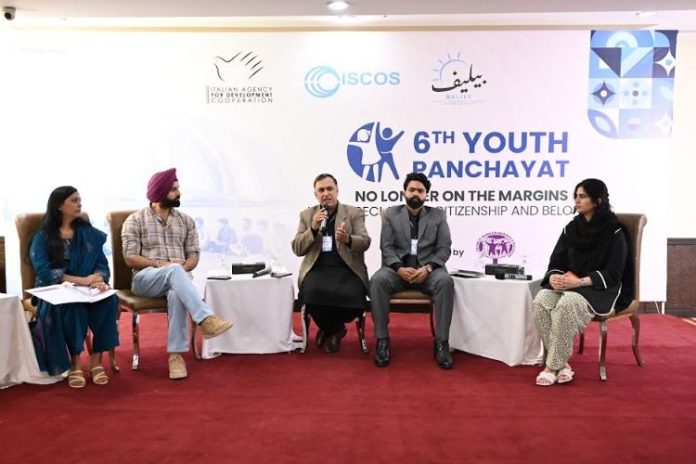
ISLAMABAD: A Youth Panchayat was successfully convened under the BELIEF Project on April 13, 2026, at Ramada Islamabad, bringing together young leaders, experts, and practitioners to deliberate on the critical issue of minority rights in Pakistan. The event was held under the theme “Youth No Longer on the Margins: Minorities Reclaiming Citizenship and Belonging.”

The Panchayat featured three dynamic panels Majority, Minority, and Experts creating a platform for inclusive dialogue and diverse perspectives on fostering social cohesion and equitable citizenship.

Minority Panel

The Minority Panel comprised of Ms. Kiran Peter, Founder and Executive Director of Weaving People to Grow Foundation; Mr. Christopher Sharaf, National Coordinator/Consultant at Saiban-e-Pakistan; Mr. Harmeet Singh, Anchor; Mr. Sharmoon Javed Ms. Shahrish — minority rights activitists. The discussion focused on barriers faced by minorities, including biases in curriculum, lack of grassroots awareness, and systemic inequalities, while also highlighting the need for allyship and increased social interaction between communities.

Ms. Peter stated:

“Minorities do not seek special treatment only equal rights, dignity, and a genuine sense of belonging as citizens of this country.”

Majority Panel

The Majority Panel included Ms. Saeeda Bano, Deputy Chief Manager at SBP-BSC — Financial Inclusion Unit; Zeeshan Naqvi, Focal Person of the Prime Minister’s Youth Programme; Dr. Faisal Abbasi from, Professor at School of Social Sciences NUST; Mr. Izzat Kamal Pasha, General Secretary of the CDA Employees Union; and Arwa Mudassir, a minority rights activist. The panelists emphasized the importance of institutional responsibility, inclusive policymaking, and narrative change within the majority community, highlighting the need for equitable representation and proactive allyship.

Saeeda Bano remarked:

“The responsibility of inclusion lies with the majority through institutional reforms and everyday actions, we must ensure minorities feel equal, respected, and represented in all spheres of society.”

Expert Panel

The Expert Panel featured Ms. Asiya Nasir, Former MNA; Ms. Rabia Razzaque, Senior Program Manager at ILO; Mr. Dileep Joshi – expert analyst; Mr. Abdur Rehman Hur Bajwa, Member of the Islamabad Bar Council; and Mr. Fahad Barlas, Vice President of the Rawalpindi Chamber of Commerce and Industry. The panel provided insights into legal frameworks, policy gaps, and socio-economic dimensions of minority inclusion, emphasizing the need for stronger legal protections and cross-sector collaboration.

Ms. Asiya Nasir observed:

“Addressing minority rights requires a comprehensive approach strengthening legal frameworks, ensuring implementation, and fostering collaboration across all sectors of society.”

In his remarks, Mr. Syed Muhammad Ali Shah, Country Head of ISCOS, appreciated the initiative and stated:

“Platforms like the Youth Panchayat are vital for fostering dialogue and understanding. Building an inclusive Pakistan requires collective responsibility, where every citizen—regardless of background—feels valued, protected, and empowered”

The event concluded with a renewed commitment from stakeholders to continue advocating for minority rights and to strengthen efforts toward an inclusive and equitable society where all citizens feel a sense of belonging.

Iran war weighs on global economy

Iran war weighs on global economy

News Desk

LONDON: Alarm over the impact of the Iran war on the global economy grew on Monday with more countries announcing emergency support measures to combat rising energy costs, while others appealed for international support.

The conflict – the third major shock to hit the world’s economy after the Covid pandemic and Russia’s invasion of Ukraine – will dominate this week’s gathering of finance officials at the International Monetary Fund in Washington.

Any lingering hopes of an early restart to oil shipments through the Strait of Hormuz chokepoint were dashed after the failure of US-Iran talks at the weekend that left a fragile ceasefire in yet greater jeopardy.

The IMF and World Bank have already signalled they will downgrade their forecasts for global growth and raise their inflation predictions as a result of the war, with emerging markets and developing countries seen hit hardest.

Nigeria said on Monday it would need greater international support to combat fuel costs at home even as higher crude prices boosted foreign exchange earnings for Africa’s top oil producer.

“The shock comes at a critical transition point, intensifying inflationary pressures and raising living costs for households,” Finance Minister Wale Edun said in a statement ahead of this week’s meetings in Washington.

Local petrol prices have surged more than 50% and diesel more than 70% since the start of the conflict, Edun said, adding that the shock threatened to derail efforts launched in 2023 to stabilise the economy and revive growth.

More countries signal support as shock mounts

Few countries are immune to the aftershocks from the halt of energy shipments through the strait since the war began on February 28 and triggered the world’s worst ever disruption to supplies. Dozens of governments have already acted with measures aimed at conserving energy or designed to support consumers.

Germany’s coalition government, which initially resisted calls to provide support, said on Monday it had agreed fuel price relief for consumers and businesses worth 1.6 billion euros ($1.9 billion) via cuts to levies on diesel and petrol.

“This war is the real cause of the problems we are experiencing in our own country as well,” Chancellor Friedrich Merz said at a press conference.

Sweden’s government said it would also cut fuel taxes and hike electricity subsidies in a package worth around $825 million.

“It is a signal that we will do whatever it takes to … dampen the blow to households of what is happening now,” Finance Minister Elisabeth Svantesson told reporters.

British finance minister Rachel Reeves is due later this week to set out her approach to helping businesses struggling with high energy prices. In a column for the Sunday Times, she wrote that UK manufacturers had “faced uncompetitive energy prices for too long”.

Stay Connected

64FansLike
60FollowersFollow

Latest Reviews

Exchange Rates

USD - United States Dollar
EUR
1.14
GBP
1.34
AUD
0.70
CAD
0.71