Home Blog Page 182

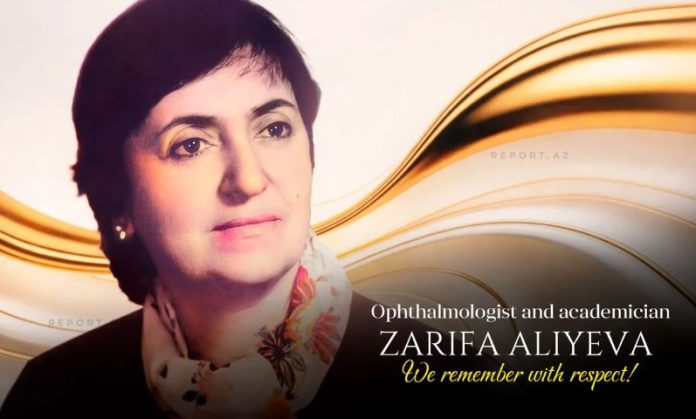
Azerbaijan remembers Zarifa Aliyeva

Azerbaijan remembers Zarifa Aliyeva

BAKU, APR 15: Today marks the remembrance day of Azerbaijan’s prominent scholar, Honored Scientist, Doctor of Medical Sciences, Professor, full member of the Azerbaijan National Academy of Sciences, Zarifa Aliyeva, Report informs. It has been 41 years since Zarifa Aliyeva’s death.

Zarifa Aliyeva died on April 15, 1985, in Moscow. In 1994, her remains were transferred from Moscow’s Novodevichy Cemetery to Baku and buried in the Alley of Honor next to her father’s grave.

Zarifa Aliyeva was born on April 28, 1923, in the Sharur district of Nakhchivan.

She graduated from the Azerbaijan State Medical Institute named after Nariman Narimanov in 1947. She worked as a scientific researcher at the Azerbaijan Scientific Research Institute of Ophthalmology, and from 1969, she served as an associate professor, professor, head of the laboratory of occupational pathology of visual organs, and head of the ophthalmology department (1982-1985) at the Azerbaijan State Advanced Training Institute for Doctors named after A. Aliyev.

Zarifa Aliyeva made exceptional contributions to the development of ophthalmology science in Azerbaijan. She was one of the authors of many substantial studies on trachoma, which was once widespread in Azerbaijan, and among the first in global medical practice to study, prevent, and treat occupational eye diseases, especially in chemical and electronic industries, as well as on modern problems of ophthalmology, including rare scientific works such as “Therapeutic Ophthalmology” and “Fundamentals of Iridodiagnostics.”

She authored 12 monographs, textbooks, and teaching aids, nearly 150 scientific works, 1 invention, and 12 improvement proposals.

Academician Zarifa Aliyeva was a member of the Presidium of the All-Union Society of Ophthalmologists, the Soviet Peace Defense Committee, the Board of the Azerbaijan Ophthalmology Society, and the editorial board of the journal “Vestnik oftalmologii” (Moscow).

For her high scientific achievements, she was awarded the M.I. Averbakh Prize of the USSR Academy of Medical Sciences in 1981.

FPCCI chief welcomes Saudi aid for economic stability

FPCCI chief welcomes Saudi aid for economic stability

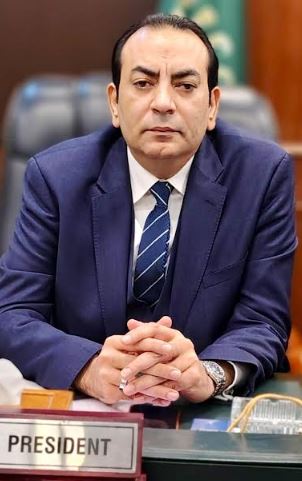
KARACHI, APR 15 /DNA/ – Atif Ikram Sheikh, President of the Federation of Pakistan Chambers of Commerce & Industry (FPCCI), has warmly welcomed the Kingdom of Saudi Arabia’s timely and generous decision to pledge a fresh deposit of $3 billion to the State Bank of Pakistan (SBP) – alongside the extension of the existing $5 billion facility for an additional three years through 2028.

Mr. Atif Ikram Sheikh said that the announcement made by the Finance Minister on the sidelines of the World Bank-IMF Spring Meetings in Washington is a massive breakthrough for Pakistan’s macroeconomic stability. He noted that removing the condition of an annual rollover for the $5 billion facility and adding a fresh $3 billion injection provides an unprecedented layer of predictability to Pakistan’s economic planning.

Mr. Atif Ikram Sheikh highlighted several critical economic impacts this strategic financial support will have on Pakistan’s economy; including, bolstering foreign exchange reserves as the fresh $3 billion injection comes at a critical time geo economically – significantly reinforcing the SBP’s liquid foreign exchange reserves (FERs).

Mr. Atif Ikram Sheikh said that this will play a pivotal role in helping the government achieve its target of building reserves to around $18 billion by the end of FY26 – which is necessary for providing a much-needed import cover of over 3-month for the country.

FPCCI Chief stressed that Pakistan needs currency stabilization and inflation control; and, enhanced reserves will directly ease the pressure on the Pakistani Rupee. A stable exchange rate is vital for curbing imported inflation – thereby lowering the cost of doing business and providing relief to the general public.

Mr. Atif Ikram Sheikh maintained that this injection will also prove to be instrumental in restoring business and investor confidence as the business community thrives on certainty. By securing external financing and extending the maturity of the $5 billion facility to 2028, the government has mitigated the immediate balance of payments risks and liquidity crunch.

President FPCCI explained that this renewed confidence will likely stimulate both domestic industrial expansion and foreign direct investment (FDI); which will facilitate industrial growth due to a stabilized external account. Additionally, the SBP will be in a better position to facilitate the timely clearance of Letters of Credit (LCs). This ensures a steady supply of essential industrial raw materials; machinery and petroleum products required to keep the wheels of industry running and to drive export-led growth.

Mr. Atif Ikram Sheikh stated that Saudi Arabia has once again proven to be an all-weather friend and a pillar of support for Pakistan during testing times. This financial support offers our policymakers the crucial breathing space needed to implement long-term structural reforms; improve the investment climate and shift the economy from import-reliance to export-driven growth.

FPCCI extends its profound gratitude to the Custodian of the Two Holy Mosques, King Salman bin Abdulaziz Al Saud and Crown Prince Mohammed bin Salman for their unwavering support. The Federation also commends Pakistan’s political and economic leadership – including the Prime Minister, the Finance Minister and the SBP Governor – for their successful diplomatic and financial negotiations.

The apex trade body reiterated its commitment to working closely with the government to translate this macroeconomic stabilization into on-the-ground industrial growth; job creation and enhanced bilateral trade between Pakistan and the Kingdom of Saudi Arabia.

Mpox update: 25 confirmed cases, 9 deaths reported in Sindh

Mpox update: 25 confirmed cases, 9 deaths reported in Sindh

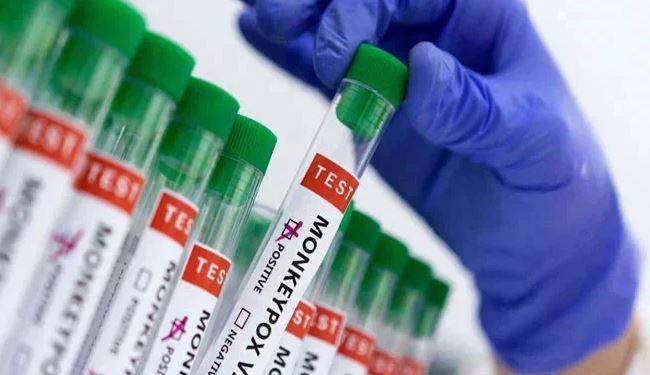
SUKKUR, Apr 15 (DNA): The Sindh Health Department has said a total of 122 suspected cases of Mpox have been reported across the province till April 14, 2026, of which 25 have been laboratory confirmed while nine deaths have been recorded.

According to a handout issued here on Wednesday, two new cases were reported in the last 24 hours one from Karachi and one from Khairpur.


District wise data shows the majority of confirmed cases have been reported from Khairpur with 18 cases, followed by four from Karachi and three from Sukkur.


In response to the situation, the Sindh Health Department said it has taken immediate measures, including the establishment of isolation wards in all district and major hospitals, a coordinated system for timely transport of samples, and the activation of Disease Surveillance and Response Units across Sindh.


Additional steps include tracing of healthcare staff and close contacts of affected persons, strict enforcement of infection control protocols, complete sterilisation of medical equipment and active case search in affected areas.


The health department has urged the public and medical staff to strictly follow precautionary measures, immediately report to the nearest hospital if symptoms appear and exercise special care in handling newborns.

PIDE calls for smart and sustainable mineral development in Pakistan

PIDE calls for smart and sustainable mineral development in Pakistan

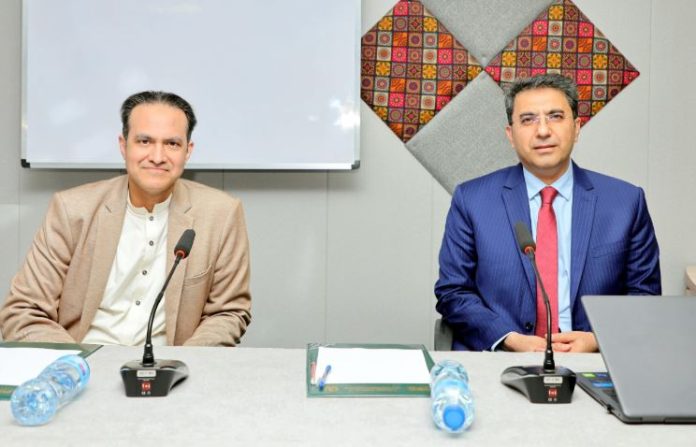
ISLAMABAD, APR 15 /DNA/ – The Pakistan Institute of Development Economics (PIDE) hosted a high-level seminar titled “Minerals & Economic Development: Prospects for Pakistan,” bringing together scholars, policymakers, and development practitioners to examine how Pakistan can convert its mineral potential into inclusive and sustainable economic progress. Opening the session, PIDE Vice Chancellor Dr. Nadeem Javaid (SI) observed that natural resources have shaped the rise and fall of nations, from the silver mines of ancient economies to the energy geopolitics of the modern world. He noted that the central question remains unchanged: why some countries are able to turn resource wealth into prosperity, while others continue to struggle.

Dr. Javaid said Pakistan stands at an important juncture, with growing interest in minerals as a possible source of foreign exchange and long-term growth, while also facing persistent challenges related to governance, energy constraints, security concerns, and institutional capacity. He framed the seminar around four central questions: whether mineral wealth can support sustainable development or reinforce inequality and volatility, what distinguishes countries that escape the resource curse from those that remain trapped in it, where Pakistan currently stands on this spectrum, and what a realistic, policy-driven mineral development strategy for the country should look like.

The seminar featured Prof. Saleem H. Ali, Chair and Distinguished Professor at the University of Delaware, affiliated with the University of Queensland, and a member of the UN International Resource Panel, as the keynote speaker. Introducing him, PIDE highlighted Prof. Ali’s extensive global work on extractive industries, environmental conflict resolution, and sustainability, noting his academic, policy, and field experience across more than 160 countries. Dr. Javaid noted that Prof. Ali’s work bridges global scholarship and policy practice in extractive industries and sustainable development, and expressed hope that his insights would help illuminate a practical way forward for Pakistan. Setting the tone for the discussion, he asked what one reform or strategic decision Pakistan should prioritize in the minerals sector.

In his address, Prof. Ali argued that minerals have historically played a foundational role in economic transformation and remain deeply linked to modern prosperity, even in service-led economies. Drawing on both economic history and contemporary policy debates, he emphasized that mineral wealth alone does not guarantee development; what matters is whether countries build the institutions, policy frameworks, and reinvestment mechanisms needed to turn resource endowments into broad-based national gains.

A major theme of the seminar was the need to move beyond simplistic narratives of mineral abundance. Prof. Ali cautioned against confusing resources with reserves, stressing that only economically viable and extractable reserves should inform serious planning. He also revisited the ideas of the “resource curse,” the “Dutch disease,” and the “paradox of plenty,” noting that while mineral-led growth can create wealth, it can also deepen inequality, distort institutions, and weaken alternative sectors if not managed wisely. At the same time, he underlined that these outcomes are not inevitable. Countries that combine investment, learning, transparency, and effective governance can transform extractive sectors into drivers of national development.

Discussing Pakistan’s options, Prof. Ali outlined several mineral development pathways, including large transformative projects with royalties and fiscal flows, infrastructure minerals linked to construction and connectivity, energy minerals, and the branding of Pakistani gemstones for global commercial markets. He stressed that the real economic impact of mining does not lie only in taxes and royalties, but also in backward and forward linkages such as local procurement, services, employment clusters, entrepreneurship, and downstream activity. He further observed that while large industrial mines often create limited direct jobs, smaller-scale “development minerals” and associated local industries can generate wider employment opportunities if properly supported.

Referring to Reko Diq as Pakistan’s most prominent mineral project, Prof. Ali described it as one of the world’s largest copper-gold developments currently underway and a potentially transformative opportunity for the country. However, he argued that the real test lies not simply in extraction, but in ensuring transparent governance, effective fiscal use, and developmental reinvestment. He noted that security concerns, while often highlighted, are not necessarily the decisive barrier for global mining firms; rather, investors are often more concerned about governance failures and resource capture. In this context, he pointed to international examples and recommended that Pakistan consider stronger transparency mechanisms and more deliberate development planning around major mineral projects.

The seminar also gave significant attention to local benefit-sharing, especially in Balochistan. During the discussion, Prof. Ali argued that mineral-rich regions must see visible and measurable development gains from extraction taking place in their areas. Citing international practice, he referred to Peru’s model of reinvesting a portion of mineral-related development expenditure in the producing region and suggested that Pakistan could consider similar arrangements. He stressed that relying solely on formal revenue shares is not enough; meaningful reinvestment in local communities is essential for improving development indicators, reducing grievances, and building long-term legitimacy around mineral development.

Another major point raised during the seminar was value addition. Prof. Ali noted that processing minerals domestically is an important long-term goal, but warned that it requires three conditions at once: reliable and affordable energy, skilled labour, and strong governance. Without these, forced value addition can become economically counterproductive. He also encouraged Pakistan to think beyond conventional extraction by exploring gemstone branding, circular economy opportunities, and “urban mining” through metal recovery from existing waste and infrastructure. He suggested that the country should also examine the future potential of a minerals-focused sovereign wealth approach based on actual windfall revenues, alongside scenario modelling and research on long-term development impacts.

In his concluding remarks, PIDE Vice Chancellor Dr. Nadeem Javaid underscored that natural resources alone do not determine a nation’s future. He noted that what truly matters is how effectively a country governs its resources, invests in their productive use, and builds strong institutions around them. He said this is where both the real challenge and the real opportunity lie for Pakistan. He further expressed hope that the ideas shared during the seminar would inspire deeper research, informed policy adaptation, and practical application in the Pakistani context for the country’s long-term benefit.

The seminar concluded with an interactive question-and-answer session, during which participants engaged with the speaker on key policy, governance, and provincial development issues related to Pakistan’s mineral sector.

Germany, Ukraine discuss defense, drones and reconstruction

Germany, Ukraine discuss defense, drones and reconstruction

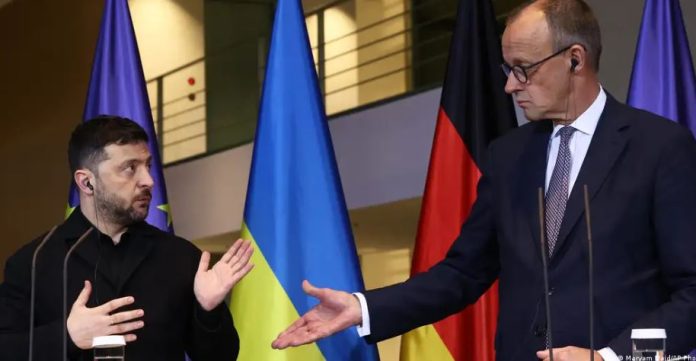
BERLIN, APR 15: EU membership for Ukraine, European involvement in peace talks and a comprehensive ​bilateral drone deal were all on the agenda as Chancellor Merz hosted President Zelenskyy. A new consultation center has been opened in Berlin to provide advice and counsel for Ukrainians living in the German capital who would like to return home.

German Interior Minister Alexander Dobrindt opened the so-called “Unity Hub” alongside the Ukrainian Minister of Social Policy, Denys Uliutin, on Tuesday as part of inter-governmental consultations between the German and Ukrainian governments.

Dobrindt said the center was intended to function as a “connecting element to the homeland” for Ukrainians which could “provide answers to all questions regarding a future in Ukraine.”

Uliutin said the Berlin center was to be one of many across Europe aimed at bringing Ukrainian refugees together as a “community” and retaining links with Ukraine.

While the German Interior Ministry said the principal aim of the center was to “increase connections to Ukraine and encourage a desire to return,” the institutions would also offer help on integration in Germany, including language lessons, cultural offers and assistance in finding work.

As of February 2026, around 1.16 million Ukrainians live in Germany, around 60,000 of them in Berlin.

Life after Orbán: How his crushing defeat is set to transform EU power dynamics

Life after Orbán: How his crushing defeat is set to transform EU power dynamics

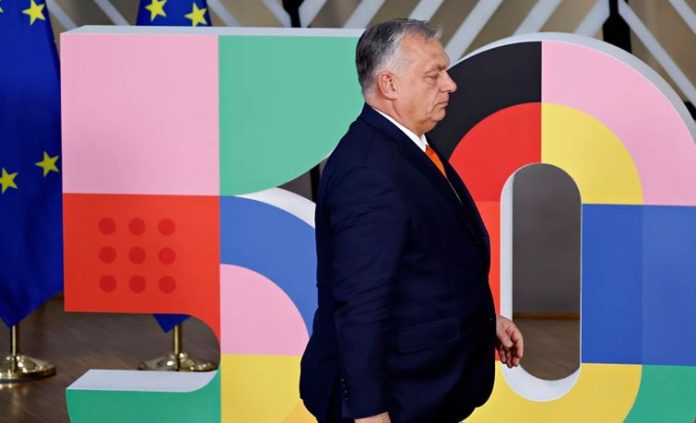
The Hungarian election has brought the Viktor Orbán era to an abrupt end. His defeat is set to transform the power dynamics at the EU table. The European Council is heading for a revamp.

Its longest-serving member, Viktor Orbán, is on his way out after a crushing defeat in a parliamentary election that has brought an abrupt end to his 16 years of uninterrupted, and at times unchecked, power. For the first time in a generation, Hungary will be led by another prime minister, Péter Magyar, from another party, Tisza.

The change of guard automatically shifts the power dynamics in the European Union, where Hungary, under Orbán’s tight grip, became synonymous with disruption and obstruction, infuriating leaders left, right and centre.

His notorious use of the veto, a legal tool conceived as a last resort that Orbán made customary, was particularly aggravating for other member states. His vetoes were variously described as “transactional”, “bad faith”, “unacceptable” and “blackmail”.

symbol
00:09

02:00
Read More

A senior diplomat once joked that Orbán’s vetoes were like Russian dolls because “you never know what comes next after this one”.

In recent weeks, the doll comparison morphed into “Trojan Horse” following bombshell revelations that Orbán’s foreign minister regularly briefed his Russian counterpart, Sergey Lavrov, about key EU decisions. For many, the situation was simply untenable.

The exasperation explains why leaders were so enthusiastic in congratulating Magyar.

“Hungary has returned to the very heart of Europe, where it has always belonged,” said Ursula von der Leyen, the president of the European Commission, who was demonised by Orbán’s failed campaign as an enemy of Hungary.

France’s Emmanuel Macron encouraged Magyar to “join forces for a strong, secure, and above all, united Europe”, while Spain’s Pedro Sánchez declared that European values had won. Germany’s Friedrich Merz was franker, admitting he was “very grateful and relieved” by the results and predicting that “things will be easier now”.

Despite having attended EU summits for 16 continuous years, Orbán was noticeably overlooked and received very little attention in the flood of messages.

Italy’s Giorgia Meloni and the Czech Republic’s Andrej Babiš, two like-minded colleagues, were among the few who explicitly paid tribute to the outgoing premier.

“I know that even from the opposition, he will continue to serve his nation,” Meloni said.

‘Cautious optimism’
Meanwhile, in Brussels, the main stage of Orbán’s vetoes, diplomats and officials are wondering what kind of Hungary will emerge after the history-making election.

For some, the future scenario is still hard to picture, given how much Orbán has reshaped the Hungarian state by dismantling checks and balances, undermining the rule of law, capturing the media landscape and deepening links with Moscow.

The fact that Magyar, a conservative, was previously a card-carrying member of Orbán’s Fidesz party until he broke ranks in 2024 to lead Tisza has raised some eyebrows.

Asked about their expectations for the winner, diplomats and officials, granted anonymity to speak freely, expressed diverging opinions.

One heralded a “significant shift” in both substance and style, with a new Hungary more practical and less contrarian. A second diplomat was much more measured, pointing to Magyar’s prior association with Fidesz, which might linger on. A third settled for “cautious optimism”, with special emphasis on the word “cautious”.

“Of course, there is a sense of relief to see a government that has actively sabotaged the EU for years go,” said an EU official.

Amid the assorted views, there is one overarching feeling of hope that, at the very least, Magyar will turn the page on Orbán’s veto-happy era and that collective deliberations will be spared from acrimonious, time-consuming blockages.

Magyar himself has promised that, under his stewardship, Hungary would adopt a “constructive position” that is “critical and willing to debate”.

In his first press conference after the election, Magyar addressed one of Orbán’s most contentious decisions: his veto on the €90 billion loan for Ukraine, which upended a delicate agreement reached by leaders at a make-or-break summit in December.

Magyar said the deal “was already made” in December and should not be revisited. He also confirmed that Hungary would retain the opt-out from the joint borrowing, negotiated by Orbán, because the country is in a “very difficult financial situation”.

The comments were well received inside the Commission, which has struggled to overcome Orbán’s veto and his demands regarding the Druzhba oil pipeline. A spokesperson said the loan should reach Kyiv “as soon as possible”.

Also still blocked are the 20th round of sanctions against Russia, the opening of accession clusters for Ukraine and €6.6 billion in military aid for Kyiv.

Back at the table
Beyond the vetoes, the prime friction point that EU leaders want to remove, the most pressing task for Magyar is to realign Hungary’s position in the political constellation and restore ties between Budapest and Brussels, currently at an all-time low.

His professed determination to be “at the table” is a 180-degree turn from Orbán, who gradually removed himself from the conversation until he became disruptor-in-chief from the sidelines. At a crucial summit in December 2023, Orbán was asked to leave the room to enable the necessary consensus – an unprecedented episode in the bloc.

ADVERTISEMENT

This isolation is what Magyar seems most keen to avoid.

Party politics are certain to help him. While Orbán belongs to the far-right, Eurosceptic Patriots for Europe (PfE), Magyar stems from the European People’s Party (EPP), the centre-right family that dominates the European Council. That, in itself, is a major advantage for the newcomer to navigate the complex power dynamics.

His approach to Brussels could draw parallels with that of Polish Prime Minister Donald Tusk, who came to power in 2023 under the banner of improving Warsaw-Brussels ties and unblocking billions in EU funds. Magyar faces the exact task.

“My working assumption is that Magyar will take on a role similar to Tusk: drop the confrontative vetoes, especially on Ukraine, without significantly changing his positions on migration, climate policy or social issues,” says Nicolai von Ondarza, a senior researcher at the German Institute for International and Security Affairs (SWP).

“As the new government will have to focus on reforming the state and cleaning up the corruption structures created by Orbán, the outsized importance that Hungary had due to Orbán’s destructive behaviour is likely to be reduced.”

Robert Fico and Viktor Orbán.
Robert Fico and Viktor Orbán. AP Photo
Hungary’s realignment at the table, from the fringe to the centre, will be closely followed by Slovak Prime Minister Robert Fico, who has been Orbán’s closest ally in the European Council and espoused similar positions on matters related to Ukraine and Russia.

Fico, like Orbán, has courted controversy by resorting to vetoes to extract concessions in unrelated files. Fico’s vetoes, however, are not exactly like Orbán’s. Although both are willing to filibuster, the Slovak prefers to maintain an open line of communication with other leaders in a bid to reach a compromise. Orbán, by contrast, seems content to maintain the deadlock, regardless of outside pressure.

How Fico behaves without Orbán by his side remains to be seen. Some diplomats believe he will remain disruptive. Others predict he will be inevitably weakened.

Either way, the prospect of a veto – an option at the disposal of any sitting leader, including Magyar – will continue to hang over the 27-member bloc as it confronts major challenges that demand fast, decisive action.

For Ursula von der Leyen, the post-Orbán era should be about “the lessons learned”.

“I think moving to qualified majority voting in foreign policy is an important way to avoid systemic blockages, as we’ve seen in the past,” she said in the wake of the election. “And we should use the momentum now, really, to move forward on that topic.”

PM Shehbaz departs for Saudi Arabia, kicking off three-nation tour amid regional tensions

PM Shehbaz departs for Saudi Arabia, kicking off three-nation tour amid regional tensions

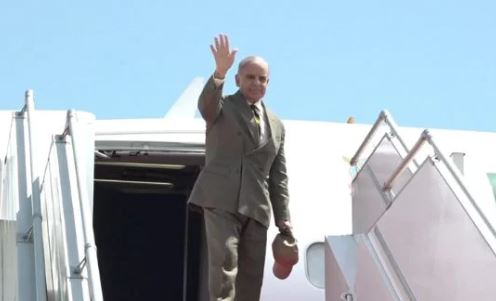
ISLAMABAD, APR 15: Prime Minister Shehbaz Sharif on Wednesday departed for Saudi Arabia as part of his three-nation visit from April 15 to 18, the Foreign Office said, as Pakistan steps up diplomatic efforts to promote peace in the Middle East.

The prime minister will also travel to Qatar and Turkiye following his visit to the Kingdom, the FO said. It added that the visits to Saudi Arabia and Qatar will take place in a bilateral context, where the prime minister will meet the respective leadership to discuss ongoing cooperation as well as regional peace and security.

During his visit to Turkiye, the prime minister will participate in the Antalya Diplomacy Forum, where he is scheduled to join the Leaders’ Panel alongside other global figures and present Pakistan’s perspective.

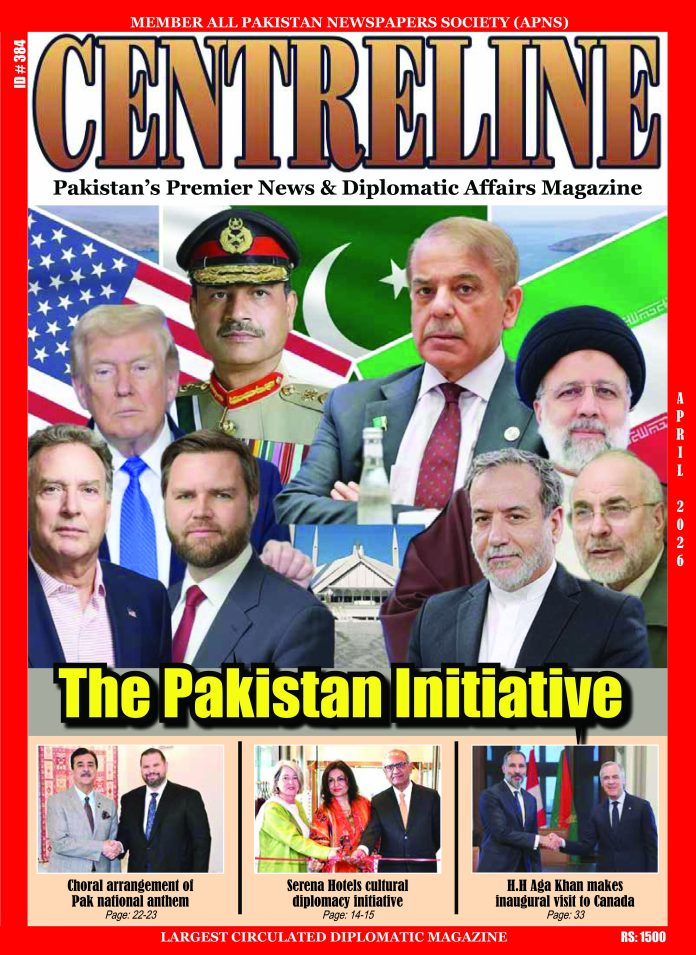
The visit follows as Pakistan has taken centre stage as host of high-stakes US-Iran talks in Islamabad, drawing global attention amid rising regional tensions.

On the sidelines of the forum, PM Shehbaz is expected to hold bilateral meetings, including with Turkish President Recep Tayyip Erdogan and other key world leaders, according to the FO.

“Pakistan’s participation in the forum reflects its commitment to constructive diplomacy, multilateral cooperation, and active engagement on global issues,” the FO added.

The prime minister is accompanied by Deputy Prime Minister and Foreign Minister Ishaq Dar, Information Minister Attaullah Tarar, Special Assistant Syed Tariq Fatemi, and other senior officials.

The much-anticipated US-Iran talks in Islamabad, which ran from Saturday into early Sunday and were the first direct engagements between the two countries meeting in more than a decade and the highest-level discussions since Iran’s 1979 Islamic Revolution.

The talks came just days after a ceasefire took effect on Tuesday, aimed at ending six weeks of fighting that has killed thousands across the Gulf, disrupted critical energy supplies and fuelled fears of a wider regional conflict.

Despite 21 hours of intense discussions, the two sides failed to reach a formal agreement. In the aftermath, the US military announced plans to impose a blockade on all maritime traffic entering and leaving Iranian ports and coastal areas, putting the fragile two-week ceasefire at risk.

A second round of talks is expected to be held in Islamabad before the ceasefire ends, with Trump saying it could take place within the next few days.

Nissan to add AI driving system to 90 percent of models

Nissan to add AI driving system to 90 percent of models

TOKYO, Apr 14: Nissan Motor Co. said Tuesday it plans to add an autonomous driving system employing artificial intelligence to 90 percent of its future models as it aims to revive its sluggish sales.

The Japanese automaker will introduce the next-generation driving technology by the end of fiscal 2027 in its new large minivan Elgrand, which is expected to be launched this summer.

By restructuring its global market strategy, the company aims to sell 550,000 units in Japan and 1 million vehicles each in the United States and China by fiscal 2030.

For fiscal 2025, it projected sales of 420,000 units in Japan, 653,000 units in China and 1.3 million vehicles in North America.

The struggling Japanese automaker said it will reduce the number of its models to 45 from the current 56.

Nissan also unveiled plans to launch several new models, including a hybrid version of the X-Trail sport utility vehicle and an electric version of the Juke SUV.

The company is pushing restructuring steps that include closing seven plants in Japan and overseas, including the Oppama plant in Yokosuka, Kanagawa Prefecture. The plan also calls for reducing its workforce by 20,000 employees.

Romania appreciates Pakistan’s role in facilitating recent Islamabad Talks

Romania appreciates Pakistan’s role in facilitating recent Islamabad Talks

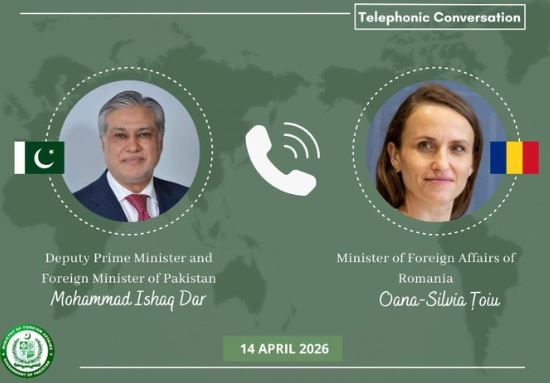
ISLAMABAD, APR 14 /DNA/ – Deputy Prime Minister and Foreign Minister Senator Mohammad Ishaq Dar received a telephone call from Romanian Foreign Minister Oana-Silvia Toiu on Tuesday, with both leaders reaffirming their commitment to deepen bilateral cooperation.

During the call, Foreign Minister Toiu appreciated Pakistan’s role in facilitating the recent Islamabad talks. Both leaders welcomed the growing positive momentum in Pakistan-Romania relations and agreed to further enhance cooperation across multiple sectors.

The two foreign ministers also exchanged views on regional and global issues, underscoring the importance of continued dialogue and diplomacy for the peaceful resolution of conflicts.

Senator Dar reiterated Pakistan’s commitment to constructive engagement with Romania and other international partners to promote peace, stability, and mutual prosperity.

Stay Connected

64FansLike
60FollowersFollow

Latest Reviews

Exchange Rates

USD - United States Dollar
EUR
1.14
GBP
1.34
AUD
0.70
CAD
0.71