Home Blog Page 18

Muslim nations demand immediate Gaza aid, cite harsh winter conditions

Muslim nations demand immediate Gaza aid, cite harsh winter conditions

ISLAMABAD, JAN 2 /DNA/ – The Foreign Ministers of the Islamic Republic of Pakistan, the Arab Republic of Egypt, the Republic of Indonesia, the Hashemite Kingdom of Jordan, the State of Qatar, the Republic of Türkiye, the Kingdom of Saudi Arabia, the United Arab Emirates, expressed their deepest concern regarding the deteriorating humanitarian situation in the Gaza Strip, which has been exacerbated by severe, harsh, and unstable weather conditions, including heavy rainfall and storms, and compounded by the continued lack of sufficient humanitarian access, acute shortages of essential life-saving supplies, and the slow pace of the entry of essential materials required for the rehabilitation of basic services and the establishment of temporary housing.

The ministers highlighted that the severe weather has laid bare the fragility of existing humanitarian conditions, particularly for almost 1.9 million people and displaced families living in inadequate shelters. Flooded camps, damaged tents, the collapse of damaged buildings, and exposure to cold temperatures coupled with malnutrition, have significantly heightened risks to civilian lives, including due to disease outbreaks, especially among children, women, the elderly, and individuals with medical vulnerabilities.

They commended the tireless efforts of all United Nations organizations and agencies, especially UNRWA, as well as humanitarian international NGOs, in continuing to assist Palestinian civilians and deliver humanitarian assistance under extremely difficult and complex circumstances. They demanded that Israel ensure the UN and international NGOs are able to operate in Gaza and the West Bank in a sustained, predictable, and unrestricted manner, given their integral role in the humanitarian response in the Strip. Any attempt to impede their ability to operate is unacceptable.

Moreover, they reaffirmed their full support for UNSCR 2803 and President Trump’s Comprehensive Plan and their intention to contribute to the successful implementation thereof, with a view to ensuring the sustainability of the ceasefire, bringing an end to the war in Gaza, to secure a dignified life for the Palestinian people who have endured prolonged humanitarian suffering, and leading to a credible pathway to Palestinian self-determination and statehood.

In this context, they stressed the urgent need to immediately initiate and scale up early recovery efforts, including the provision of durable and dignified shelter to protect the population from the severe winter conditions.

The ministers called on the international community to uphold its legal and moral responsibilities and to pressure Israel, as the occupying power, to immediately lift constraints on the entry and distribution of essential supplies including tents, shelter materials, medical assistance, clean water, fuel, and sanitation support. They called for the immediate, full, and unhindered humanitarian aid into the Gaza Strip without any interference by either party, through the UN and its agencies, the rehabilitation of infrastructure and hospitals, and the opening of the Rafah Crossing in both directions as stipulated in President Trump’s plan.

Linguistic Analysis of the President of the Republic of Uzbekistan’s 2026 State of the Nation Address

Ilyos Rabbimov, CERR

CERR Public Relations Service

The analysis covers the key thematic and semantic emphases of the President’s speech, the structure of core concepts and their interrelations, priority directions of state policy, as well as the strategic benchmarks for the country’s socio-economic development in 2026.

On 26 December 2025, President Shavkat Mirziyoyev delivered his Address to the Oliy Majlis and the people of Uzbekistan. Experts of the Center for Economic Research and Reforms (CERR) conducted a linguistic content analysis of the President’s speech.

The analysis was carried out using modern linguistic methods and is aimed at identifying semantic priorities, key concepts and their connections. A word cloud and diagrams were also prepared to visually demonstrate the priority directions of state policy.

Analysis (from the original language)

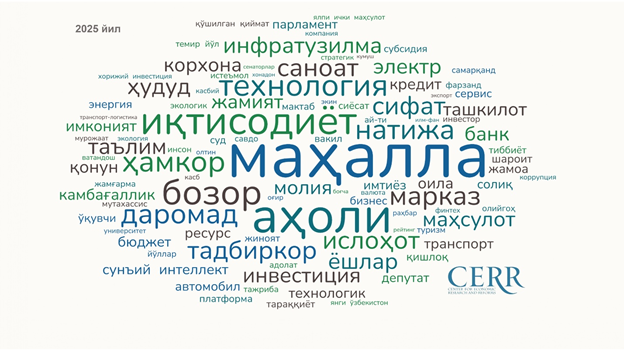
In total, the President used 9,135 words in his Address. The creation of a word cloud made it possible to visualize the most significant themes and gain a deeper understanding of the priorities and directions of the country’s socio-economic development.

Figure 1. Most frequently used words in the President’s Address (26.12.2025)

The linguistic analysis showed that the most frequently used key words included “mahalla” – 49 times, “aholi” (population) – 35 times, “iqtisodiyot” (economy) – 28 times, “bozor” (market) – 26 times, “loyiha” (project) – 25 times, and “technology” – 22 times (Fig. 1).

Words such as “ta’lim” (education), “natija” (result) and “daromad” (income) were each used 20 times; “tadbirkor” (entrepreneur) and “sanoat” (industry) – 19 times each; “suv” (water) – 18 times; “elektr” (electricity) and “hudud” (territory) – 17 times each; “yoshlar” (youth), “infratuzilma” (infrastructure) and “qurilish” (construction) – 16 times each.

The analysis of two-word expressions showed that the phrase “Markaziy Osiyo” (Central Asia) was used eight times; “aholi daromadi” (household income), “qishloq xo‘jaligi” (agriculture) and “yangi bosqich” (new stage) – seven times; “yangi texnologiyalar” (new technologies) and “Toshkent shahri” (city of Tashkent) – six times each. Expressions such as “Davlat xizmatlari” (public services), “xorijiy investitsiya” (foreign investment) and “yangi tizim” (new system) were used five times, while “dual ta’lim” (dual education), “ish o‘rni” (jobs), “viloyat markazlari” (regional centers) and “tuman byudjeti” (district budgets) were used four times each.
Among three-word combinations, the most frequent expressions included “the next five years” – nine times; “based on dual education” – four times; and “water-saving technologies” and “water, electricity” – three times each.

Thus, the analysis shows that at the core of state policy are the mahalla, public welfare, and the transition to a new stage of development based on economic and technological transformation, with clearly defined strategic objectives for the next five years.

Thematic structure of the speech

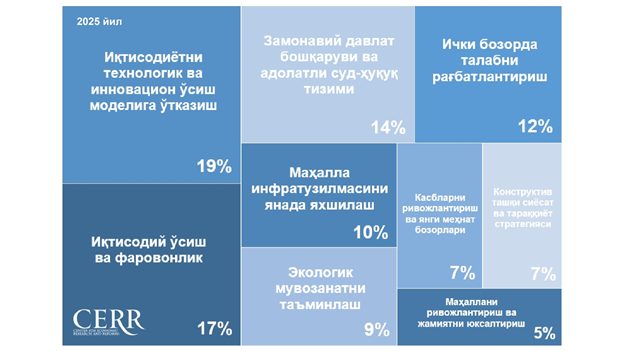
The diagram below shows the distribution of the speech’s vocabulary by key directions, where the content is grouped into nine main thematic blocks.
The diagram clearly demonstrates that technological development and human interests, implemented at the level of the mahalla, are at the center of state policy. The ultimate goal of all reforms is to ensure public welfare through sustainable economic growth (Fig. 2).

Figure 2. Distribution of words by thematic areas in the structure of the speech

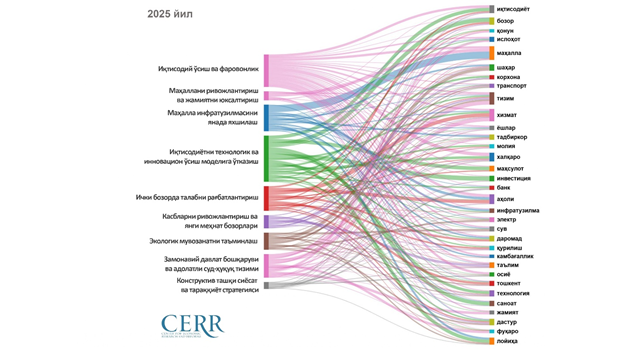
Interconnection of development directions

The analysis highlights key words that demonstrate the interconnection between various directions of Uzbekistan’s state policy in the coming years.
The transition of the economy to a technological and innovation-based growth model is a central element of state policy and implies a shift away from a raw-materials model toward high-tech industry. This direction is closely linked with such concepts as “investment,” “technology,” “market,” and “product.”

The block on economic growth and welfare reflects the key outcomes of reforms, including the increase of the economy to $145 bn and a twofold reduction in poverty over the past three years. It is directly associated with the concepts of “population,” “economy,” “mahalla,” and “services.”

The social foundation of reforms is built through the development of the mahalla and social solidarity. This direction is associated with “mahalla,” “youth,” “society,” and “values.”

Structuring vocabulary by thematic areas shows that the core of the President’s speech is technological modernization of the economy and a human-centered governance model based on the “mahallabay” system.

It emphasizes the interconnection between economic growth, improvement of public welfare and the development of local infrastructure, as well as priorities such as strengthening human capital, expanding employment and increasing the efficiency of public administration.

Figure 3. Interconnection of development directions

Among the highlighted semantic blocks are also tasks related to stimulating domestic demand, developing the housing and tourism sectors, modernizing the transport system, increasing productivity in agriculture and introducing water-saving technologies.

Special emphasis is placed on the “green” agenda, including the development of renewable energy, expansion of the “Yashil Makon” (“Green Space”) initiative, and strengthening resilience to climate risks.

In the foreign policy dimension, the analysis highlights Uzbekistan’s openness, strengthening of good-neighborly relations, and integration into the global economic system.

The linguistic analysis confirms that the idea at the core of the President’s speech is built around the triad “inson qadri – mahalla – farovonlik” (human dignity – mahalla – welfare), where the goal of reforms is sustainable growth, improved quality of life, and the further strengthening of Uzbekistan’s position.

Ukraine says overnight Russian drone attack damaged power infrastructure

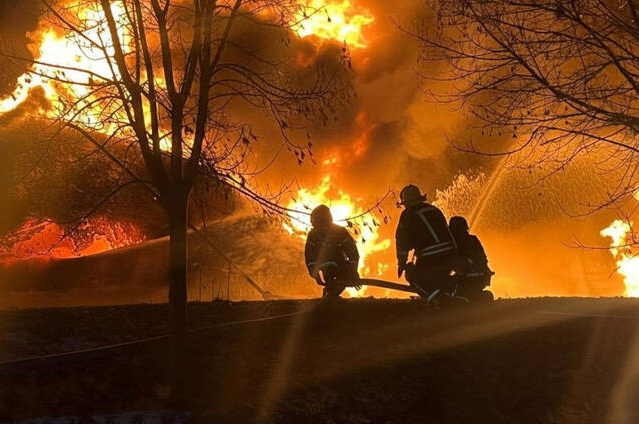
UKRAINE, JAN 1 /DNA/: A Russian drone attack damaged power infrastructure ​in several Ukrainian regions overnight, Ukraine’s energy ministry said on Thursday.

The ministry said a “significant ‌number” of ‌households ‌in the ⁠Volyn ​and ‌Odesa regions — in northwestern and southwestern Ukraine, respectively — were disconnected from power supplies by the ⁠strike, as well ‌as some in ‍the ‍Chernihiv region ‍north of the capital Kyiv.

The governor of Volyn said more ​than 103,000 households in that region had ⁠lost power as a result of the attack. Volyn region is several hundred kilometers from the front line and borders NATO member ‌Poland.

Will 2026 be better — or worse?

Qamar Bashir

Qamar Bashir

The year 2025 will be remembered as one of the most turbulent in recent history. Global diplomacy struggled under the weight of escalating violence, unpredictable political shifts, and competing visions of world order. From nuclear-armed neighbours in South Asia to Middle Eastern confrontations, from renewed clashes in Eastern Europe to growing tension in the Western Hemisphere, humanity faced a litany of conflicts that reshaped geopolitics. As the calendar turns to 2026, the central question is whether the world will break the cycle of violence or simply perpetuate it.

One of the most dangerous confrontations occurred between Pakistan and India, two nuclear-armed neighbours in a region that is home to more than two billion people. What began with provocative military moves quickly escalated into a brief but intense confrontation, raising fears of catastrophe. Pakistan responded with disciplined strategic coordination across land, sea, and cyber domains, demonstrating its modern military capability. The frightening reality was that both states possess significant nuclear arsenals and delivery systems capable of wide-ranging destruction. Had the conflict continued, millions of lives might have been lost. Fortunately, it ended before reaching that threshold, but the episode highlighted the fragility of peace in South Asia.

The confrontation also had wider geopolitical consequences. Pakistan emerged with renewed international recognition and expanding defence partnerships. Its defence industries — from drones to aircraft — are now finding export markets, reshaping its economic trajectory and regional influence. Whether this alignment ultimately proves advantageous or risky remains to be seen, but it has already altered the strategic balance in the region.

Across the Middle East, another defining crisis unfolded as Israel and Iran engaged in direct and sustained hostilities. Iranian missile and drone strikes deep inside Israeli territory tested Israel’s military resilience and strategic partnerships. Even with extensive U.S. logistical and missile-defence support, Israel suffered strain on its forces and infrastructure. Iran — already burdened by economic hardship — saw its currency weaken further amid internal dissent. Although a ceasefire now holds, rivalries remain deep, and 2026 may witness renewed confrontation unless diplomacy prevails.

In Europe, the war in Ukraine continued with devastating human and economic cost. Efforts by U.S. and allied diplomats to negotiate a ceasefire generated dialogue but yielded limited progress. Both Kyiv and Moscow continue to view military advantage as attainable, and both remain deeply reliant on external support. Even if negotiations take root in 2026, rebuilding trust and infrastructure will take years, perhaps decades.

The Gaza Strip saw another tragic cycle as humanitarian suffering mounted amid continued bombardment and displacement. A fragile ceasefire, often violated, has yet to translate into sustainable peace. Proposed multinational stabilisation forces face near-impossible odds unless underlying political causes that fuel conflict are addressed.

Beyond these headline wars, a series of lesser-known clashes also shaped the year. Border violence between Armenia and Azerbaijan in the South Caucasus, though subject to diplomatic agreements, remains fragile on the ground. Renewed skirmishes between Cambodia and Thailand over long-contested border areas saw temporary ceasefires that reduced bloodshed without resolving underlying grievances.

Amid these global tensions, a new flashpoint emerged — the Western Hemisphere. Throughout 2025, the United States dramatically intensified pressure on Venezuela. A campaign labelled Operation Southern Spear saw U.S. naval quarantines of sanctioned oil tankers, repeated strikes on alleged drug trafficking infrastructure, and the formal declaration by U.S. officials that the nation was in a “non-international armed conflict” with organised groups tied to Caracas. These actions, including recent bombardments of coastal facilities, represent the most significant escalation yet between the United States and Venezuela, with critics warning the Caribbean could become a theatre of full-blown conflict in 2026.

Russia condemned these U.S. actions as akin to piracy, accusing Washington of reviving historical aggression and undermining maritime law. Moscow’s foreign ministry also reaffirmed support for Venezuelan sovereignty and called for peaceful resolution, intensifying the geopolitical stakes in the region.

The United States also saw rising diplomatic tensions with Canada. What began as trade disputes — including punitive tariffs on key Canadian industries — has occasionally strained relations with Ottawa. While both sides expressed hope to ease trade friction, the rhetoric and economic pressure hint at deeper ideological divergence.

Meanwhile, President Donald Trump repeatedly raised controversial territorial ambitions, including discussions of acquiring Greenland — a self-governing Danish territory. Trump described the Arctic island as “essential to U.S. national security”, a pronouncement that was met with strong opposition from Greenland’s leaders and Denmark, who rejected any notion of ceding sovereignty. Such statements have fueled concern among European capitals about Washington’s approach to traditional alliances.

Throughout 2025, Trump also made claims about brokering peace or ceasefires in various global conflicts, asserting success in ending or pausing up to eight wars — including disputes involving Pakistan and India, Cambodia and Thailand, Armenia and Azerbaijan, and others. Critics note that many of these claims refer to temporary armistices or negotiations rather than enduring peace, and in several cases fighting resumed shortly after declarations were made. These political narratives became part of the year’s global discourse, illustrating the complex intersection of diplomacy, rhetoric, and reality.

Amid these crises, scientific and technological progress marched forward. Advances in artificial intelligence, quantum computing, robotics, and space technology marked 2025 as a transformative year. Competing global powers — particularly the United States, China, and India — deepened their race to harness computing power that could revolutionise fields from medicine to climate science. Ambitious plans to deploy data centres into space to leverage uninterrupted solar energy and orbital connectivity underscored a new frontier for technological infrastructure.

Quantum computing moved closer to practical application, offering the potential to solve complex problems long out of reach. Robotics advanced toward intelligent systems capable of complex cognitive tasks. These developments hold transformative promise — but also risk disrupting labour markets, magnifying inequality, and concentrating power in the hands of a few.

So, will 2026 be better — or worse?. The honest answer is that it depends on whether the world learns from 2025 or repeats its mistakes. War has shown, yet again, that force alone cannot guarantee peace. Symbolic diplomatic gestures without shared political understanding are fragile. Military escalation, whether in Eastern Europe, the Middle East, or the Caribbean, comes with unacceptable human cost.

What the world needs most in 2026 is restraint, humility, and honest diplomacy. True strength lies not in destruction but in the ability to preserve life, foster cooperation, and build institutions that protect dignity. Technology must be guided by ethics and shared responsibility, not domination.

As we step into 2026, let us hope it becomes a year when nations choose negotiation over escalation, understanding over animosity, and shared destiny over discord. May it be a time when humanity consciously abandons war as policy and embraces peace as strategy.

Qamar Bashir
Press Secretary to the President (Rtd)
Former Press Minister, Embassy of Pakistan to France
Former Press Attaché to Malaysia
Former MD, SRBC | Macomb, Michigan, USA

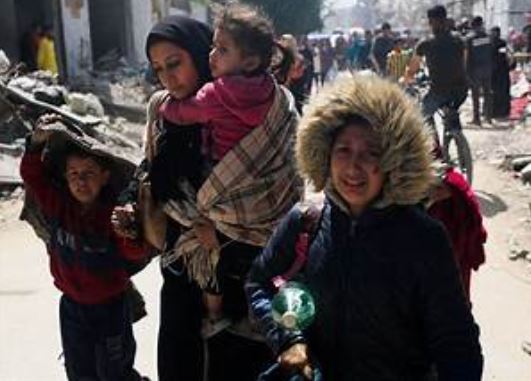
Govt Slashes fuel prices to ring in new year

Govt Slashes fuel prices to ring in new year

DNA

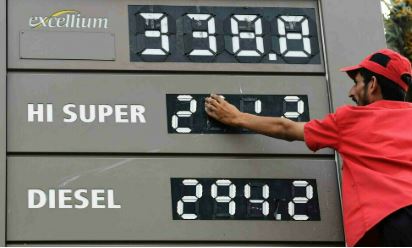
ISLAMABAD: In a major relief for consumers, the government has announced a significant cut in petroleum prices effective from the New Year.

Diesel price reduced by Rs 8.57 per liter, bringing the new rate to Rs 257.08.

Petrol price reduced by Rs 10.28 per liter, now available at Rs 252.17.

The decision has been widely welcomed across the country, with citizens hailing it as a timely move to ease inflationary pressures and provide financial relief at the start of 2026.

Railway police athletes honoured for stellar performance at 35th national games

Railway police athletes honoured for stellar performance at 35th national games
LAHORE, Dec 31 (APP/DNA):Inspector General Railway Police Rai Tahir (Hilal-e-Shujaat, Sitara-e-Imtiaz) has awarded special prizes and certificates of appreciation to the athletes of Pakistan Railway Police for winning two gold and one silver medals at the 35th National Games held in Karachi.

According to the PR Police spokesman on Wednesday, a total of 15 male and female personnel of the Railway Police represented the department in the tug-of-war competition and brought pride to the force with their outstanding performance. The men’s team secured a gold medal, while another gold medal was won in the mixed men/women category. The women’s team clinched a silver medal.
The male personnel included Captain Yasir Abbas, Muhammad Hashim and Farrukh Abbas, while the women athletes comprised Captain Rimsha Sahar, Asma Ghaus, Kiran, Nimra Munawar, Rabia Tabassum, Saba, Maryam, Sumbal, Zainab Iqbal, Uzma Batool, Shahneiza and Momina Khalid.
In recognition of their achievements, the IG Railway Police invited the entire sports contingent to the Central Police Office Railways, where each athlete was awarded a cash prize of Rs100,000 along with a first-class certificate of appreciation.
Congratulating the players, IG Rai Tahir said that excelling in sports alongside professional duties is highly commendable. He assured that sportspersons within the Railway Police would be provided all necessary facilities and encouragement at every level to help them continue bringing honour to the department and the country through improved performance.

EU says Israel suspending Gaza NGOs would block ‘life-saving aid’

EU says Israel suspending Gaza NGOs would block 'life-saving aid'

Brussels, Belgium, Dec 31 (AFP/APP):The EU warned Wednesday that Israel's threat to suspend several aid groups in Gaza from January would block "life-saving" assistance from reaching the population.
              "The EU has been clear: the NGO registration law cannot be implemented in its current form," EU humanitarian chief Hadja Lahbib posted on X, after Israel said several groups would be barred for failing to provide details of their Palestinian employees.
              "IHL (international humanitarian law) leaves no room for doubt: aid must reach those in need," Lahbib wrote.
              NGOs had until December 31 to register under the new framework, which Israel says aims to prevent "hostile actors or supporters of terrorism" operating in the Palestinian territories, rather than impede aid.
              Israeli authorities announced Tuesday that organisations which "refused to submit a list of their Palestinian employees in order to rule out any links to terrorism" had received notice that their licences would be revoked as of January 1, with an obligation to cease all activities by March 1.
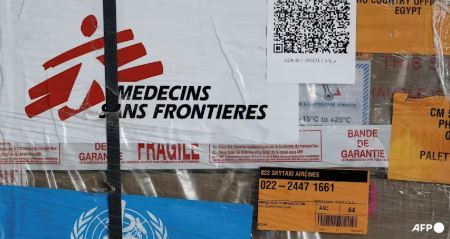
              Israel has not disclosed the number of groups facing a ban, but it has specifically called out Doctors Without Borders (MSF) for failing to meet the rules. It accused the  medical charity of employing two individuals with links to Palestinian armed groups. 
              The Israeli government told AFP earlier this month that 14 NGO requests had been rejected as of November 25.
              Several NGOs said the new rules will have a major impact on aid distribution in Gaza, with humanitarian organisations saying the amount of aid entering Gaza remains inadequate. 
              While an accord for a ceasefire that started on October 10 stipulated the entry of 600 trucks per day, only 100 to 300 are carrying humanitarian aid, according to NGOs and the United Nations.
              COGAT, the Israeli defence ministry body responsible for Palestinian civilian affairs, said last week that on average 4,200 aid trucks enter Gaza weekly, which corresponds to around 600 daily.

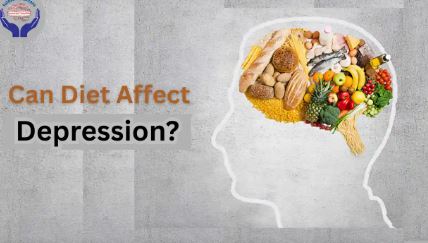
Unhealthy diet can trigger depression, experts warn

Unhealthy diet can trigger depression, experts warn

Health experts have warned that unhealthy daily routines and poor dietary habits can significantly contribute to depression, stressing that adopting a balanced lifestyle and nutritious diet can play a vital role in improving mental well-being.

According to medical specialists, a person’s lifestyle is directly linked to both mental and physical health. While obesity is widely recognized as the root cause of numerous diseases, many people overlook the importance of a balanced diet for staying healthy and instead consume whatever food is easily available.

Experts say that constant eating and excessive consumption of unhealthy foods not only lead to physical illnesses but can also result in mental stress and depression. Studies suggest that the number of people suffering from depression in offices and institutions may be alarmingly high, and individuals can assess their own condition by observing changes in their mood and behavior.

People affected by depression often rely on medication to cope with symptoms such as persistent sadness, sleep deprivation, loss of appetite, and lack of concentration. However, research shows that medication alone is not sufficient. Environmental factors, daily habits, and especially dietary changes play a crucial role in improving mental health.

A study conducted at the University of Melbourne in Australia highlights that controlling depression requires understanding which foods should be avoided and which should become part of daily meals. The research emphasizes that diet and brain health have a strong and direct connection.

According to the findings, when the body receives high-quality and nutritious food, both the brain and the body function more effectively. A report published in the American Journal of Clinical Nutrition states that higher consumption of legumes, fish, fruits, and vegetables helps reduce the risk of depression.

Experts further explain that whatever a person eats has a direct impact on the brain and body. Since the brain is composed of fats, amino acids, and proteins, foods such as nuts, seeds, and fish support the growth and repair of brain cells.

Dietary habits also affect sleep patterns. If a person feels unusually alert at night and drowsy during the day, an imbalanced diet may be one of the reasons. Previous research indicates that increased intake of seafood and avoiding fast food can help reduce symptoms of depression.

Research published in BMC Medicine suggests that consuming vegetables, fruits, low-fat dairy products, unsalted nuts, fish, olive oil, and eggs can significantly lower the likelihood of depression. In contrast, fast food and sugary items increase the risk.

Regarding physical health, experts say certain foods act like natural medicines. Green vegetables help protect against lung diseases, while folic acid-rich foods reduce the risk of anemia, stroke, and pregnancy-related complications in women.

Similarly, foods such as salmon, mushrooms, broccoli, garlic, ginger, and turmeric help reduce inflammation and strengthen the immune system. Green tea, yogurt, oranges, pomegranates, and tomatoes are considered beneficial for skin, hair, and overall physical health.

Experts conclude that improving dietary choices alongside healthy daily routines can play a key role in preventing depression and enhancing overall quality of life.

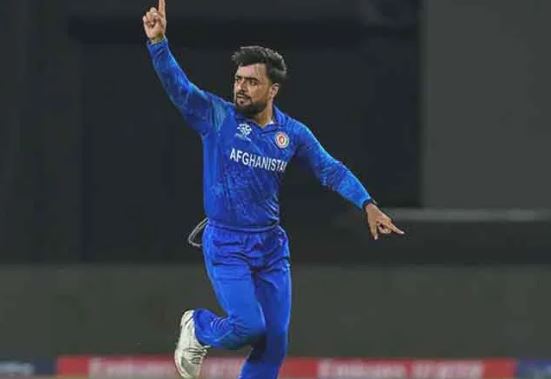
Rashid to lead Afghanistan in T20 World Cup

Rashid to lead Afghanistan in T20 World Cup

DUBAI, DEC 31: All-rounder Rashid Khan will captain a formidable Afghanistan squad in the upcoming Twenty20 World Cup, following the return of seamer Fazalhaq Farooqi and off-spinner Mujeeb Ur Rahman for the marquee event scheduled for February-March.

The 15-member squad also includes all-rounder Gulbadin Naib and seamer Naveen-ul-Haq for the 20-team tournament, which will take place across India and Sri Lanka.

Afghanistan impressed in the previous T20 World Cup in 2022, reaching the semi-finals with notable wins over strong teams such as New Zealand, West Indies, and Australia.

Ahead of the World Cup, the team will play a three-match T20 series against the West Indies in the United Arab Emirates next month.

“Afghanistan had a fantastic run in the last T20 World Cup,” said Afghanistan Cricket Board CEO Naseeb Khan. “We have fond memories of that performance and aim for even better results this year under Asian conditions. Hosting the West Indies provides a valuable opportunity to fine-tune our squad and prepare thoroughly for the tournament.”

Afghanistan is set to open their World Cup campaign against New Zealand on February 8 in Chennai.

Mujeeb-ur-Rehman Shami stresses need for national stability, dialogue

Mujeeb-ur-Rehman Shami stresses need for national stability, dialogue

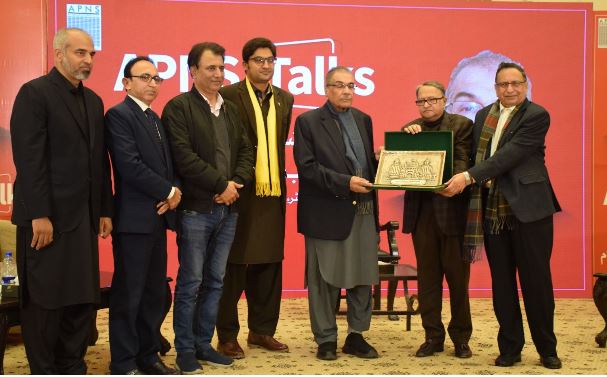
LAHORE, DEC 31 /DNA/ – Renowned Pakistani journalist, senior editor, analyst, and distinguished intellectual Mujeeb-ur-Rehman Shami emphasized the need to steer Pakistan away from the quagmire of conflict to ensure the country’s progress and survival. Speaking at a memorable evening organized by the All Pakistan Newspapers Society (APNS) as part of the APNS Talks series, Shami stressed that national stability, democratic values, institutional coordination, and meaningful dialogue are essential to overcome the challenges facing the country.

APNS President Syed Sarmad Ali welcomed all participants and remarked that in front of Shami’s knowledge, experience, and insight, they feel like mere students. “Every session with Shami is a treasure trove of wisdom, and no gathering is complete without benefiting from it,” he added.

Jameel Athar Qazi, Chairman of the APNS Punjab Committee, reflected on Shami’s contribution to Pakistan, stating: “The country has seen two Mujibs—one who broke Pakistan, and the other who has been striving to hold it together.” Senior journalist Habib Akram lauded Shami’s guidance, sharing that upon moving from Sargodha to Lahore, he received invaluable mentorship from Shami, which helped him achieve prominence in journalism.

Shami’s son, Umar Mujeeb Shami, described his father as consistent in both appearance and character, saying: “He has always kept me close, and is not only a father but also a friend. I have grown learning from his life and work.” Umar also recounted memorable anecdotes from his father’s career.

Other participants, including Dr. Savera Shami, Salman Ghani, and Ajmal Jami, highlighted Shami’s fearless journalism during authoritarian regimes. They noted that despite facing restrictions on his newspapers Shami’s resolve never wavered. He has remained a steadfast champion of truth and democracy through all eras.

Throughout his career, prominent leaders sought Shami’s counsel. Prominent personalities of the country valued his advice. Analysts say that any account of Pakistani journalism marked by integrity, courage, and insight would be incomplete without Shami’s name in golden letters.

When asked that in his opinion which period in Pakistan’s history would he describe as relatively free for the press, he said that the governments of Shaheed Mohtarma Benazir Bhutto was favourable towards press freedom.

Having dedicated over half a century to journalism, Mujeeb-ur-Rehman Shami has not only made it his life’s purpose but has also brought new direction, dignity, and intellectual depth to the profession. He is widely regarded not only as one of the most senior journalists in Pakistan but also as a pillar of the country’s ideological and intellectual media landscape.

The evening was attended by notable editors, journalists, and media owners, including Naveed Kashif, Naveed Chaudhry, Dr. Savera Shami, Umar Mujeeb Shami, Naushad Ali, Isar Rana, Shafqat Abbas (DG PID), Dr. Shugrah Sadaf, Ahmed Bilal Mehboob, Usama Ghazi, Rana Abid, Dr. Faiza Latif, and Ali Shami, among others.

Stay Connected

64FansLike
60FollowersFollow

Latest Reviews

Exchange Rates

USD - United States Dollar
EUR
1.16
GBP
1.34
AUD
0.67
CAD
0.72