Home Blog Page 18

PC board approves restructuring framework for first batch of DISCO Privatisation, sets EOI deadlines

PC board approves restructuring framework for first batch of DISCO Privatisation, sets EOI deadlines

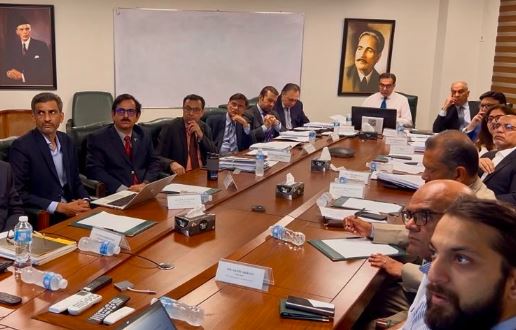
ISLAMABAD, JUL 28 /DNA/ – The Privatisation Commission (PC) Board, chaired by Mr. Muhammad Ali, Adviser to the Prime Minister on Privatisation, convened today to review and recommend key milestones in the Government’s privatisation agenda. The Board formally recommended that the Cabinet Committee on Privatisation (CCoP) approve the restructuring plans and schemes of arrangement for the privatisation of the first batch of power distribution companies (DISCOs): Faisalabad Electric Supply Company (FESCO), Gujranwala Electric Power Company (GEPCO), and Islamabad Electric Supply Company (IESCO).

The restructuring framework, developed using audited financial statements for the period ending March 31, 2026, is designed to balance value maximization for the Government of Pakistan with commercial viability to attract private sector investment. Under the proposed structure, a Government-owned Special Purpose Vehicle (SPV) will be established to carve out selected assets and liabilities of the three DISCOs. This mechanism aims to create a streamlined, efficient transaction structure that mitigates risks and enhances the appeal to prospective buyers.

Investor Interest and EOI Timeline
The Board was apprised of significant interest from both domestic and international investors in the privatisation of these entities. To maintain a transparent and competitive bidding process, the deadlines for submission of Expressions of Interest (EOIs) have been set as follows:

  • FESCO: August 7, 2026
  • GEPCO: August 21, 2026
  • IESCO: September 7, 2026

In a separate agenda item, the Board constituted two Transaction Committees to oversee the outsourcing process for Islamabad, Lahore, and Karachi airports. The Asian Development Bank (ADB) has been appointed as Financial Adviser for the outsourcing of Islamabad International Airport, while the process for appointing Financial Advisers for Lahore and Karachi airports is currently underway.

To ensure financial accountability, the Board approved the appointment of RSM Avais Hyder Liaquat Nauman, Chartered Accountants, as auditors for privatisation transactions completed during the financial years 2024–25 to 2026–27. The firm will conduct separate audits of each completed transaction. Additionally, the annual audit of the Privatisation Commission’s financial statements for the financial years 2025–26 to 2027–28 will be carried out by BDO Ebrahim & Co., Chartered Accountants, which was appointed earlier through a competitive bidding process.

The Board reaffirmed its commitment to implementing the Government’s privatisation programme in a transparent, competitive, and professionally managed manner. The initiatives are aimed at promoting efficiency, attracting private investment, and maximising value for the Government and the people of Pakistan.
HEC launches national outreach programme for University Management at QAU

HEC

ISLAMABAD, JUL 28 /DNA/ – The National Academy of Higher Education (NAHE), Higher Education Commission (HEC), has launched the National Outreach Programme for university management staff at Quaid-i-Azam University (QAU), Islamabad.    

The training programme aims at strengthening the professional and managerial capacities of university management officers and staff. The comprehensive training programme covers a range of contemporary and practical themes, including Professional Communication and Office Procedures, Personal and Professional Development, Public Sector Project and Financial Governance, Strategic Planning and Policy Development for Institutional Growth, Artificial Intelligence (AI) for Workplace Efficiency and Smart Governance. 

The sessions are being facilitated by experienced faculty members, subject experts, and practitioners from academia and the public sector. Through interactive lectures, case studies, group activities, and practical exercises, participants are being provided with opportunities to enhance their professional skills.

The programme has attracted participants from various administrative and management cadres, creating a platform for knowledge sharing, networking, and exchange of best practices among them.

The training program will continue till August 3, 2026, and is expected to equip participants with practical tools, modern management approaches, and strategic insights to effectively contribute to the advancement of Pakistan’s higher education sector.

In his address, Director NAHE HEC Dr. Muneer Ahmed Mirjat, who was chief guest of the opening ceremony, emphasised the importance of creating an enabling environment for teachers and students. He stated that universities can transform our society and help in developing socio-economic activities in the country. He added that training will help in improving institutional performance, strengthening governance, and supporting the growth and development. He assured that NAHE will continue to extend high-quality professional development opportunities to higher education institutions across the country.

Time to transform Pakistan-Turkiye brotherhood into economic prosperity: Haroon Akhtar

Time to transform Pakistan-Turkiye brotherhood into economic prosperity: Haroon Akhtar

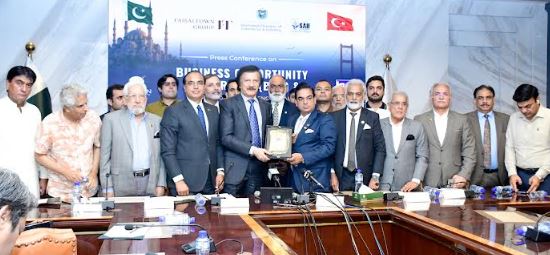
ISLAMABAD, JUL 28 /DNA/ – Special Assistant to the Prime Minister on Industries and Production Haroon Akhtar Khan has reaffirmed the Government of Pakistan’s unwavering commitment to private-sector-led economic growth, describing the Islamabad Chamber of Commerce and Industry’s (ICCI) Business Opportunity Conference & Excellence Awards, scheduled to be held in Istanbul on August 13, 2026, as a timely initiative that complements the vision of Prime Minister Muhammad Shehbaz Sharif and Turkish President Recep Tayyip Erdoğan to raise bilateral trade to US$5 billion.

Addressing a hugely attended press conference at ICCI here on Tuesday,  Haroon Akhtar Khan said Türkiye is Pakistan’s second home and stressed that the deep-rooted political and brotherly ties between the two countries must now be transformed into stronger economic partnerships through investment, joint ventures, technology transfer and enhanced business-to-business collaboration. He announced that he would proudly lead the Pakistani business delegation to Türkiye and facilitate meaningful engagements with Turkish investors and entrepreneurs.

He said Pakistan has entered a new phase of political and macroeconomic stability, resulting in growing international confidence in its economy. He noted that the government’s foremost priority is to empower the private sector, accelerate industrialization and position Pakistan as a competitive manufacturing and export hub. He added that comprehensive reforms aimed at improving the ease of doing business, simplifying regulations, rationalizing tariffs and promoting industrial competitiveness are already underway.

Haroon Akhtar Khan further highlighted that the government is introducing progressive industrial, auto and electric vehicle policies while creating new opportunities in renewable energy, battery manufacturing, electronics and pharmaceuticals. He said special emphasis is being placed on strengthening SMEs and exporters through easier access to finance, export refinancing, long-term financing facilities and targeted tax incentives.

Speaking on the occasion, Sardar Tahir Mehmood, President of the Islamabad Chamber of Commerce and Industry, expressed profound gratitude to Haroon Akhtar Khan for his strong support of the Chamber’s international outreach initiatives. He said ICCI’s Business Opportunity Conference in Istanbul is designed to showcase Pakistan’s economic potential, facilitate high-impact B2B meetings, attract investment, promote joint ventures, encourage technology transfer and create new export opportunities in sectors including  real estate, construction, healthcare, pharmaceuticals, information technology, agriculture, food processing, textiles, tourism, engineering and logistics.

He emphasized that ICCI is committed to projecting Pakistan as a peaceful, reliable and investment-friendly destination while strengthening economic diplomacy through private-sector engagement. He expressed confidence that the conference would make a meaningful contribution towards achieving the shared Pakistan–Türkiye vision of expanding bilateral trade to US$5 billion and opening a new chapter of economic cooperation between the two brotherly nations.

Enes Malik Cetin, Commercial Counsellor at the Embassy Turkiye, Islamabad while hailing the ICCI leadership for the initiative expressed confidence that the visit will prove fruitful and the B2B match making will lead to further strengthening of two countries trade and investment relations.Those present on the occasion included ICCI Founder Group Chairman Sheikh Tariq Sadiq, Senior Vice President Tahir Ayub, Vice President Irfan Chaudhry, former Presidents Zubair Ahmed Malik,  Moammad Ejaz Abbasi, Khalid Javaid, Sheikh Aamir Waheed, Executive Members, Zulqurnain Abbasi, Imran Minhas, Waseem Chaudhry, Mirza Mohammad Ali, Rohail Anwar Butt, Aftab Gujjar, former SVP Khalid Chaudhry, ICCI members Israr Mishwani and trade leaders belonging to different markets of Islamabad.

Kremlin says Ukrainian attack on Iranian vessel should be seen as an assault on Iran

Kremlin says Ukrainian attack on Iranian vessel should be seen as an assault on Iran

MOSCOW, JUL 28: The Kremlin said on Tuesday that a Ukrainian attack on an Iranian vessel in the Caspian Sea should be considered as an assault on Iran itself and showed how important it was to eliminate what it said was the threat from Kyiv.

Iran’s Foreign Ministry on Saturday condemned the Ukrainian attack, saying it resulted in an explosion that killed one sailor and injured another. Ukrainian President Volodymyr Zelenskyy said Kyiv had struck vessels used in military cargo shipments involving Iran.

Kremlin spokesman Dmitry Peskov on Tuesday accused Ukraine of widening the geographical scope of what he called its “terrorist attacks.”

Peskov accused Kyiv of blowing up Germany’s Nord Stream pipelines – something it denies – and of hurting Kazakhstan’s interests by targeting CPC Pipeline Infrastructure.

“This threat must be neutralized and definitively destroyed,” Peskov said.

POA Rescues Neglected Sprint Star Faiqa Riaz

POA Rescues Neglected Sprint Star Faiqa Riaz

AFZAL JAVED

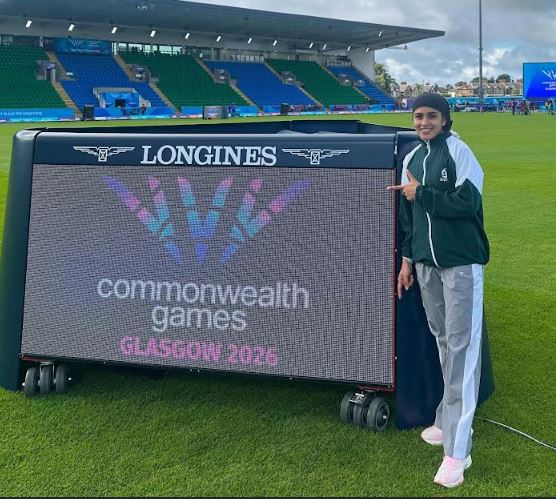
GALSGOW, JUL 28 /DNA/ – In what is being described as a glaring example of official negligence, Pakistan’s newly crowned national 100m record holder, Faiqa Riaz, was reportedly denied sponsorship for the Glasgow Commonwealth Games 2026 by the Pakistan Sports Board (PSB) and the Athletics Federation of Pakistan (AFP).

According to the details, the Athletics Federation of Pakistan, reportedly in coordination with PSB officials, refused to sponsor Faiqa’s participation despite her outstanding performances and her recent achievement of setting a new national record in the women’s 100m event.

Following the refusal, the Pakistan Olympic Association (POA) stepped in to ensure the talented sprinter’s participation by bearing all of her expenses. Acting on the special directives of POA President Arif Saeed, the NOC facilitated her inclusion in the Commonwealth Games, giving Pakistan’s fastest woman the opportunity to showcase her talent on the international stage.

Faiqa justified the POA’s decision with a record-breaking performance, clocking 11.64 seconds in the women’s 100m event to establish a new national record. She eclipsed the previous mark of 11.81 seconds, jointly held by Olympian Sadaf Siddiqui and Naseem Hameed, officially becoming Pakistan’s fastest woman in the event.

Expressing her gratitude, Faiqa Riaz thanked POA President Arif Saeed and Secretary General Khalid Mahmood for their timely support, saying that without the POA’s intervention she would not have been able to compete at the Commonwealth Games or achieve her historic national record.

She said representing Pakistan at prestigious international events is the dream of every athlete, as nothing is more inspiring than raising the national flag and making the country proud on the global stage. Despite limited facilities and resources, Pakistani athletes continue to work tirelessly and give their best to bring honour to the nation. She stressed that talented athletes must be provided with opportunities to compete internationally if Pakistan expects them to improve their performances and win laurels for the country.

D-8 chief urges private sector to boost intra-bloc trade

D-8 chief urges private sector to boost intra-bloc trade

D-8 Secretary-General stresses private sector’s central role in enhancing intra-d-8 trade and accelerating economic integration

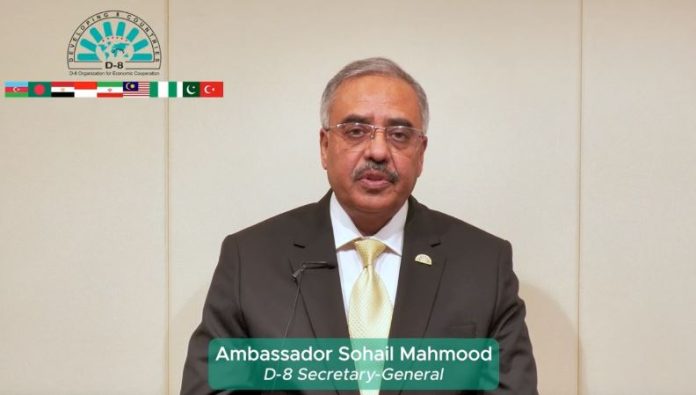
ISTANBUL, JUL 28 /DNA/ – The Secretary-General of the Developing-8 Organization for Economic Cooperation (D-8), Ambassador Sohail Mahmood, has called for stronger collaboration between governments and chambers of commerce, and stressed the central role of the private sector in realizing the Organization’s ambitious target of US$500 billion in intra-D-8 trade by 2030 and accelerating economic integration.

D-8 chief urges private sector to boost intra-bloc trade

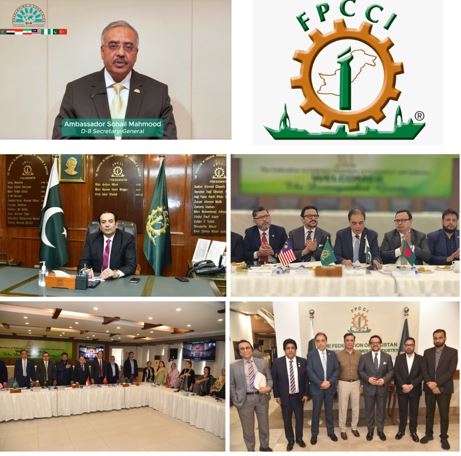
The Interactive Session on “Economic Integration among the Developing Eight: Current Status and Future Prospects,” organized by the Federation of Pakistan Chambers of Commerce and Industry (FPCCI), brought together representatives of national chambers of commerce, senior government officials, diplomats from D-8 Member States, business leaders, exporters, industrialists, and private-sector stakeholders. The Director-General from the Pakistan Ministry of Foreign Affairs, Mr. Irfan Soomro, also participated and shared detailed perspective on the subject.

Held in a hybrid format with both physical and virtual participation, the event served as an important platform to deliberate on practical measures for expanding intra-D-8 trade, enhancing investment cooperation, improving banking and financial connectivity, promoting business-to-business (B2B) engagement, and accelerating effective implementation of the D-8 Preferential Trade Agreement (PTA).

In his address on the occasion, delivered through a special video message, Secretary-General Ambassador Sohail Mahmood emphasized that the D-8’s economic potential can best be realized through stronger implementation of the D-8 PTA, deeper regional value chains, enhanced investment flows, and intensified private-sector engagement. He noted that the D-8 represents nearly 1.3 billion people, a combined GDP exceeding US$5 trillion, and intra-bloc trade of approximately US$160 billion. He stressed that the private sector had the most vital role to play in helping realize the Organization’s target of increasing intra-D-8 trade to US$500 billion by 2030 set in the D-8 Decennial Roadmap 2020-2030.

The Secretary-General welcomed recent progress in strengthening the D-8 trade architecture, including Egypt’s ratification and Pakistan’s operationalization of the D-8 PTA. He underscored that the chambers of commerce and the private sector remain indispensable in translating policy frameworks into tangible commercial outcomes through stronger business partnerships, raising awareness about possibilities under the PTA, and expanding opportunities for trade and investment. He also highlighted the Trade Ministers’ decision regarding establishment of the Permanent Secretariat of the D-8 Chamber of Commerce and Industry (D-8 CCI) in Istanbul, in collaboration with the Union of Chambers and Commodity Exchanges of Türkiye (TOBB), as a major institutional milestone for advancing regional economic cooperation.

In his opening remarks, FPCCI President Mr. Atif Ikram Sheikh emphasized that the D-8 possesses enormous untapped economic potential that can only be realized through stronger institutional cooperation and greater private-sector participation. Calling for a more action-oriented D-8 economic agenda, he urged the immediate and effective implementation of the D-8 PTA and presented a number of practical proposals to strengthen regional business connectivity. These included organizing a D-8 CCI Expo under the auspices of FPCCI, convening at least two virtual meetings of the D-8 CCI each year, establishing a dedicated digital platform and website for the D-8 CCI to facilitate business networking and information-sharing, and further simplifying visa procedures for businesspersons to facilitate trade, investment, and commercial exchanges among D-8 Member States.

Chairing the session, FPCCI Senior Vice President Mr. Saquib Fayyaz Magoon reaffirmed the private sector’s readiness to play a leading role in advancing regional economic integration. Participants broadly supported stronger business-to-business engagement, enhanced banking and financial connectivity, regular trade fairs and investment forums, and closer cooperation among national chambers of commerce to unlock new opportunities for trade, investment, innovation, and joint ventures, particularly for small- and medium-sized enterprises (SMEs).

Reaffirming the Secretariat’s commitment to advancing the D-8 economic agenda, Secretary-General Ambassador Sohail Mahmood stated that the D-8 Secretariat would continue working closely with Member States, chambers of commerce, business associations, and all other relevant stakeholders. He underlined that achieving the set targets in trade and economic integration would require stronger political commitment, effective implementation of trade instruments, and, above all, active engagement of the private sector across the D-8 geography. It would also require enhanced customs cooperation, improved hard and soft connectivity, digital integration, and predictable cross-border and transit systems, he stressed.

The D-8 Secretariat welcomed FPCCI’s initiative in convening this timely dialogue and its concrete recommendations for advancing economic integration among D-8 Member States. The Secretariat expressed confidence that the proposals emerging from the session would provide valuable impetus for strengthening the implementation of the D-8 economic cooperation agenda and contribute meaningfully to the realization of the D-8 Decennial Roadmap (2020–2030), reinforcing the Organization’s role as a leading platform for South-South economic cooperation.

PM Shehbaz orders expansion of country’s strategic petroleum reserves

PM Shehbaz orders expansion of country's strategic petroleum reserves

ISLAMABAD: Prime Minister Shehbaz Sharif on Tuesday instructed authorities to expand Pakistan’s strategic petroleum reserves, calling refinery upgradation a “key pillar of Pakistan’s comprehensive energy security system”.

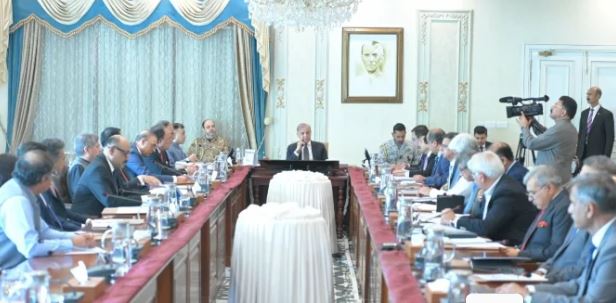
The premier made the remarks while chairing a meeting of the Cabinet Committee on Energy at the Prime Minister’s Office, where the proposed amendments to the Pakistan Oil Refining Policy, 2023, were approved, according to a statement issued by the PM Office.

During the meeting, PM Shehbaz said that the upgradation of oil refineries is an important need of the time, stressing that refineries aligned with modern requirements will not only better meet the country’s energy needs but will also prove helpful in reducing dependence on imported fuel and providing environment-friendly fuel.

It was said during the meeting that upgrading existing refineries was inevitable to increase their production capacity.

The production of fuel meeting Euro-4 and Euro-5 standards was termed essential for fulfilling Pakistan’s international environmental commitments, reducing air pollution, and providing better-quality fuel to the public.

PM Shehbaz directed that reforms be introduced to improve the Oil and Gas Regulatory Authority’s (Ogra) performance to promote competition, transparency, and investment in the energy sector.

He emphasised that effective and timely implementation of the new policy must be ensured, saying no negligence or delay in this regard will be tolerated under any circumstances.

The prime minister directed relevant ministries and institutions to expedite the reform process while maintaining close contact with all stakeholders.

He affirmed that the government will continue to take all possible measures to introduce sustainable reforms in the energy sector, promote modern technology, and provide a conducive environment for investment.

To promote the amended policy regarding brownfield refineries, the premier directed that roadshows be held in Qatar, Saudi Arabia, and other Gulf countries.

PM Shehbaz appreciated the petroleum minister and his team’s performance over the amendment to the refining policy on brownfield refineries.

The meeting was given a detailed briefing on the progress of upgradation of oil refineries in the country, reforms in the energy sector, and implementation of the policy.

The meeting was informed that the amendments made to the policy aimed to ensure the production of environment-friendly petrol and diesel compliant with Euro-V standards and to reduce furnace oil and low-quality petroleum products.

Federal ministers Ahad Khan Cheema, Muhammad Aurangzeb, Ali Pervaiz Malik, Ahsan Iqbal, relevant federal secretaries, and senior government officials attended the meeting.

PML-N wins nine seats, PPP four in first phase of AJK elections

PML-N wins nine seats, PPP four in first phase of AJK elections

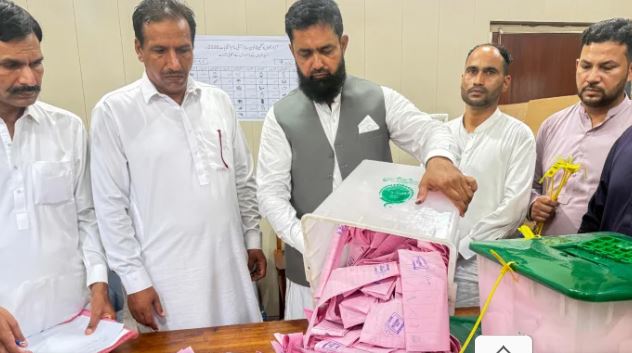
MUZAFFARABAD: Pakistan Muslim League-Nawaz (PML-N) secured victory in nine constituencies in the first phase of the Azad Jammu and Kashmir (AJK) Legislative Assembly elections, according to unofficial and provisional results.

Polling was held on Monday across all 13 constituencies in Mirpur, Kotli and Bhimber districts. Voting officially ended at 5pm, with an additional hour allowed for voters already present at polling stations before counting began.

According to the unofficial results, the PML-N won nine seats, while the Pakistan Peoples Party (PPP) has secured four.

According to the unofficial and provisional results, the PML-N won LA-1 Mirpur-1, LA-4 Mirpur-4, LA-5 Bhimber-1, LA-6 Bhimber-2, LA-7 Bhimber-3, LA-9 Kotli-2, LA-11 Kotli-4, LA-12 Kotli-5 and LA-13 Kotli-6.

The PPP won LA-2 Mirpur-2, LA-3 Mirpur-3, LA-8 Kotli-1 and LA-10 Kotli-3.

In LA-1 Mirpur-1, PML-N candidate Azhar Sadiq won with 15,427 votes, defeating PPP’s Muhammad Afser Shahid, who secured 9,832 votes.

In LA-2 Mirpur-2, PPP’s Qasim Majeed was declared successful with 12,904 votes, while PML-N’s Azeem Bakhsh Chaudhry finished second with 8,182 votes.

PPP candidate Chaudhry Yasir Sultan won LA-3 Mirpur-3 with 11,676 votes, ahead of PML-N’s Chaudhry Muhammad Saeed, who received 9,832 votes.

In LA-4 Mirpur-4, PML-N’s Chaudhry Rukhsar Ahmed secured victory with 20,172 votes, while PPP’s Chaudhry Sohaib Arshad obtained 13,865 votes.

PML-N candidate Waqar Ahmed Noor won LA-5 Bhimber-1 with 30,259 votes, defeating PPP’s Chaudhry Pervaiz Ashraf, who received 29,574 votes, by nearly 700 votes.

According to the unofficial and provisional results from all 195 polling stations in LA-6 Bhimber-2, PML-N candidate Chaudhry Muhammad Razaq won the seat with 32,732 votes, while Istehkam-e-Pakistan Party (IPP) candidate Ali Shan Chaudhry finished second with 26,718 votes.

In LA-7 Bhimber-3, PML-N’s Chaudhry Tariq Farooq secured 35,490 votes to defeat independent candidate Chaudhry Anwar-ul-Haq, who polled 25,100 votes.

PPP’s Zafar Iqbal Malik won LA-8 Kotli-1 with 19,535 votes, while PML-N’s Malik Muhammad Nawaz Khan came second with 11,966 votes.

In LA-9 Kotli-2, PML-N’s Umair Naeem was declared successful after securing 31,080 votes, ahead of PPP’s Javed Iqbal Budhanvi, who received 28,509 votes.

According to the unofficial and provisional results from all 169 polling stations in LA-10 Kotli-3, PPP candidate Chaudhry Muhammad Yasin won the seat with 12,431 votes, while PML-N candidate Fateh Mehmood-ul-Hassan finished second with 9,245 votes.

PML-N candidate Muhammad Asif won LA-11 Kotli-4 with 26,190 votes, defeating PPP’s Chaudhry Muhammad Akhlaq, who secured 21,751 votes.

In LA-12 Kotli-5, PML-N’s Muhammad Riasat Khan secured 35,168 votes to defeat PPP’s Chaudhry Muhammad Yasin, who received 30,320 votes.

Discover more
Arabs & Middle Easterners
Politics
Multilateral Organizations
PML-N’s Raja Ayaz Ahmed Khan won LA-13 Kotli-6 with 21,856 votes, while Istehkam-e-Pakistan Party (IPP) candidate Nisar Ansar Abdali finished second with 15,859 votes.

Rana Sanaullah, adviser to the prime minister on political affairs, said that the PML-N had won nine of the 13 seats, while the PPP secured four seats. He congratulated all the successful candidates on their victories.

He said the entire administration across Mirpur Division had worked hard to make the necessary arrangements for the elections.

Referring to security incidents, Sanaullah said a dispute between members of the same family led to a firing incident at one location, while another untoward incident occurred in Nakyal, where one person was killed.

He added that six people had been arrested in connection with the murder case.

Sanaullah said that no other untoward incidents were reported apart from the one in Nakyal. He alleged that a candidate in LA-6 personally went to a polling station and removed ballot boxes.

He maintained that, overall, the elections were free and fair. He also said the administration had registered a case against the candidate involved in the LA-6 incident and had arrested him.

Bilawal Bhutto accuses state of rigging AJK elections

Bilawal Bhutto accuses state of rigging AJK elections

Staff Report

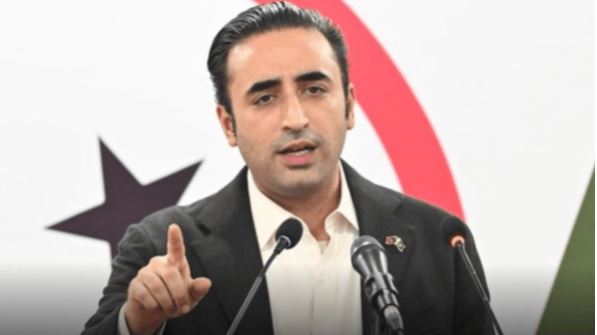
MUZAFFARABAD: Chairman of the Pakistan People’s Party (PPP) Bilawal Bhutto Zardari has accused the state of openly patronizing the Pakistan Muslim League-Nawaz (PML-N) in the recent Azad Jammu and Kashmir (AJK) elections, alleging massive rigging and manipulation of results.

Addressing a rally in Muzaffarabad, Bilawal questioned whether the state considered the PML-N more important than the people of Pakistan, warning that such favoritism undermines democracy and fuels resentment among Kashmiris.

Bilawal claimed that the elections were rigged on a scale that cannot be ignored, describing it as a “conspiracy against the Kashmiri people.” He argued that it was impossible for a PPP candidate to win in one constituency but lose in his own hometown, calling the outcome a clear indication of manipulation.

He said the PPP had remained silent in the past in the interest of national unity, but there was a limit to such silence when the will of the people was being blatantly disregarded.

The PPP leader further remarked that rigging is an old phenomenon in Pakistan, but this time it was confined specifically to AJK, where the scale of manipulation was unprecedented. He indirectly supported the AJK Banned Committee, criticizing the state’s handling of protests and unrest.

Bilawal also addressed the controversy surrounding the 12 seats reserved for Mohajirs, saying that a middle ground could have been found instead of resorting to force. “There was absolutely no need for 14 days of misery inflicted on the Kashmiri people,” he said, adding that the use of force created unnecessary friction and worsened the situation. He suggested that a Truth and Reconciliation Commission should have been formed to deal with the grievances of the protesting people, which could have saved many lives.

He lamented that both the state and protestors refused to step back, resulting in innocent lives being lost. “In this strife, innocent people are being killed. Without peace, elections in AJK are not possible,” Bilawal warned, stressing that reconciliation and dialogue were the only way forward.

Bilawal’s fiery speech reflects growing frustration within the PPP over what it sees as systematic efforts to sideline the party in AJK politics. His remarks also highlight the broader challenge of ensuring free and fair elections in the region, where political tensions, ethnic divisions, and security concerns often overshadow democratic processes.

The PPP chairman’s call for accountability and reconciliation underscores the urgency of addressing the grievances of the Kashmiri people. His criticism of the state’s approach—favoring one party, using force against protestors, and ignoring the need for dialogue—resonated strongly with the crowd in Muzaffarabad.

Where the Mountains Stole Hearts

Where the Mountains Stole Hearts

Dr. Muhammad Akram Zaheer

The roads that lead to Pakistan’s northern mountains have a curious way of changing the traveller. Long before the valleys appear, the crowded towns begin to give way to open plains, the air grows lighter and the mind gradually sheds the weight of routine. It was with this anticipation that five friends Abdul Rehman Chishti, Khan Shahbaz Ahmad, Malik Sabir Hussain, Burhan Chishti and I set out on the morning of July 10, 2026, on a journey that would take us through some of the country’s most celebrated landscapes. What began as a recreational trip eventually became an opportunity to reflect on Pakistan’s immense natural wealth, its rich traditions of hospitality and the persistent challenges confronting domestic tourism.

Our first destination was the Khewra Salt Mine. Hidden beneath the Salt Range, the mine remains one of Pakistan’s remarkable natural and industrial landmarks. Descending into its vast chambers, where walls shimmer under carefully placed lights, one is reminded that nature often conceals extraordinary beauty beneath ordinary ground. The underground tunnels, the cool air and the centuries-old history of salt extraction offered a fascinating introduction to our journey. The mine has long been recognised as both an economic asset and a tourist attraction and its careful preservation demonstrates how heritage and tourism can complement one another. From Khewra we travelled towards Attock, where we spent the night. Few places in Pakistan carry the historical symbolism of Attock. Standing near the mighty Indus, one cannot help but think of the countless armies, traders and travellers who crossed this region over the centuries. The meeting of geography and history gives the city a character unlike any other. Our brief stay provided a welcome pause before we began the longer drive towards Swat the following morning.

The road to Mingora unfolded like a changing landscape painting. Wheat fields gradually disappeared behind rolling hills, streams accompanied the highways and forests began to dominate the horizon. Every turn seemed to reveal another picture worthy of admiration. Such journeys remind us that Pakistan’s natural diversity is one of its greatest strengths. Within a single day’s drive, one can travel from the plains of Punjab to the cool valleys of Khyber Pakhtunkhwa. By evening we reached Mingora, where we were warmly received by Khan Riaz Ahmad Khan. Hospitality is often described as a defining feature of Pakhtun culture, but descriptions rarely capture its genuine warmth. Our host welcomed us not as visitors but as members of his extended family. Traditional tribal cuisine was served with remarkable generosity and every conversation reflected sincerity rather than formality. The experience reminded us that while scenic beauty attracts travellers, it is often the kindness of local people that leaves the deepest impression.

The following day Khan Riaz Ahmad Khan accompanied us to Shangla Top. The winding mountain road tested both patience and driving skills, yet every kilometre rewarded us with breathtaking scenery. Dense forests covered the slopes while clouds drifted lazily across the peaks. At Shangla Top we were welcomed by Mr Sultan Ahmad Khan, whose gracious reception reflected the same generous spirit we had experienced throughout the valley. A traditional lunch, prepared with great care, transformed an already memorable visit into an unforgettable one. Standing at Shangla Top, surrounded by mountains stretching endlessly into the distance, it was impossible not to feel a profound sense of pride. Nature has blessed Pakistan with landscapes capable of competing with any tourist destination in the world. Yet these blessings also impose responsibility. Such places deserve careful preservation, thoughtful planning and responsible tourism if future generations are to experience the same beauty.

Our journey continued towards Malam Jabba, one of Pakistan’s best-known hill resorts. On the way we stopped at Jahanabad, where the giant rock carving of the Buddha stands as silent testimony to the region’s Buddhist heritage. The sculpture reminds visitors that Swat has, for centuries, been a meeting point of different civilisations and faiths. Preserving such archaeological treasures is not merely an academic exercise; it strengthens our understanding of the country’s plural historical legacy. Malam Jabba itself offered magnificent views. The forests, cool mountain breeze and panoramic landscape fully justified its popularity. Visitors crowded the chairlift station while families enjoyed the pleasant weather. Yet alongside these attractions emerged a troubling reality that deserves serious attention.

The operation of local transport and recreational facilities has increasingly fallen into the hands of groups that appear more interested in short-term profits than in promoting tourism. Jeep operators demanded excessive fares with little transparency, while chairlift charges seemed disconnected from the quality of services offered. Visitors unfamiliar with local conditions often found themselves with little choice but to accept unreasonable prices. Tourism flourishes where visitors feel respected and fairly treated; it suffers where they feel exploited. This issue extends beyond individual complaints. Domestic tourism is becoming an important contributor to local economies, but its long-term success depends upon regulation. Provincial authorities should establish clear fare structures for jeep services, recreational rides and parking facilities. Publicly displayed rate lists, regular inspections and accessible complaint mechanisms would go a long way towards restoring visitors’ confidence.

From Malam Jabba we travelled onwards to Kalam, perhaps one of the most picturesque valleys in Pakistan. During the summer season the town appears to host visitors from every corner of the country. Hotels remain fully occupied, markets bustle with activity and vehicles crowd the narrow roads. Such popularity demonstrates the enormous potential of Pakistan’s tourism sector. Unfortunately, Kalam also revealed familiar shortcomings. Hotel tariffs frequently bore little relation to the quality of accommodation provided. Food prices remained unusually high while standards often failed to justify the expense. Some service providers responded discourteously when customers questioned charges or attempted reasonable bargaining. Such behaviour damages the reputation of destinations that otherwise possess extraordinary appeal.

It is important, however, to distinguish between commercial practices and the conduct of ordinary residents. Throughout our journey we encountered villagers whose warmth, honesty and willingness to help reflected the finest traditions of Pakistani society. Whether offering directions, sharing local knowledge or simply exchanging greetings, rural communities consistently demonstrated generosity that no commercial establishment could replicate. The following morning we travelled to Mahodand Lake and Saifullah Lake. Few experiences compare with witnessing the crystal-clear waters surrounded by towering mountains and dense forests. Families enjoyed boating while younger visitors eagerly crossed zip lines suspended above the landscape. The cool breeze, flowing streams and quiet beauty created an atmosphere that photographs alone can never capture.

Yet even these remarkable locations were not free from problems. Litter scattered across certain areas, inadequate waste management, traffic congestion and poor crowd control all pointed towards weak administrative planning. Tourism cannot thrive where cleanliness and discipline receive insufficient attention. Environmental neglect not only diminishes the visitor experience but also threatens fragile ecosystems that require careful protection. Responsibility does not rest solely with government institutions. Visitors themselves must recognise that tourism carries civic obligations. Throwing plastic bottles into rivers, leaving food waste behind and damaging natural surroundings reflect attitudes that ultimately harm everyone. Clean tourist destinations are built through shared responsibility between authorities, businesses and visitors alike.

Pakistan frequently celebrates its natural beauty and rightly so. From the Salt Range to the valleys of Swat, our landscapes possess extraordinary appeal. Yet beautiful scenery alone cannot sustain a successful tourism industry. Efficient management, transparent pricing, environmental protection and respectful treatment of visitors are equally essential. Countries that have transformed tourism into a major source of national income did so through consistent planning rather than relying solely on natural advantages. As our journey drew to a close, the memories that remained strongest were not confined to mountains, lakes or forests. They included the generosity of our hosts, the conversations shared over traditional meals, the pride inspired by Pakistan’s landscapes and the disappointment caused by avoidable administrative failures. The contrast between unmatched natural beauty and persistent mismanagement was impossible to ignore.

Pakistan does not need to search for paradise elsewhere; much of it already exists within its borders. The challenge is not discovering these treasures but preserving them with wisdom and presenting them with dignity. If public authorities enforce fair regulations, businesses recognise that satisfied visitors are their greatest asset, and tourists themselves respect the places they visit, then the country’s tourism potential can become a lasting source of prosperity and national pride. The mountains have already done their part. It is now for us to prove that we are worthy custodians of the extraordinary homeland we proudly call our own.

Stay Connected

64FansLike
60FollowersFollow

Latest Reviews

Exchange Rates

USD - United States Dollar
EUR
1.16
GBP
1.35
AUD
0.71
CAD
0.71