Home Blog Page 169

Pakistan achieves technological excellence with EO-3 launch

Pakistan achieves technological excellence with EO-3 launch

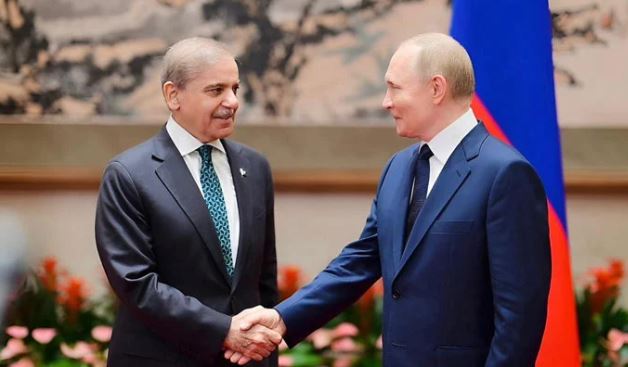
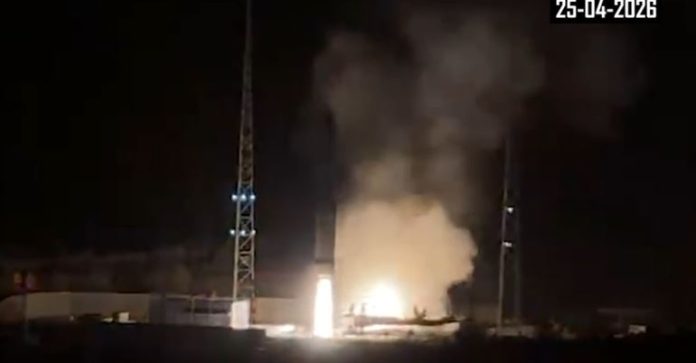
RAWALPINDI, APR 25 /DNA/ – Pakistan Space and Upper Atmosphere Research Commission (SUPARCO), announces historic achievement with the successful launch of Pakistan’s indigenous Electro-Optical Satellite (EO-3) from Taiyuan Satellite Launch Center (TSLC), China.

Today’s launch of EO-3 Satellite is yet another significant milestone; a step forward in Pakistan’s journey towards self-reliance and technological excellence. The satellite will provide imaging data to revolutionize urban planning, disaster management, food security and environment protection. The successful launch of EO-3 Satellite will serve as the edifice for an integrated Earth Observation System to support national priorities across multiple sectors and will contribute towards sustainable socio-economic development.

On this historic occasion, Prime Minister of Pakistan Mr Muhammad Shehbaz Sharif appreciated the professional excellence and commitment of SUPARCO’s engineers and scientists. He also acknowledged unwavering support of Pakistan’s all-weather friend China in the space domain.

Pakistan, Yangzhou agree on trade roadshows and mutual visits

Pakistan, Yangzhou agree on trade roadshows and mutual visits

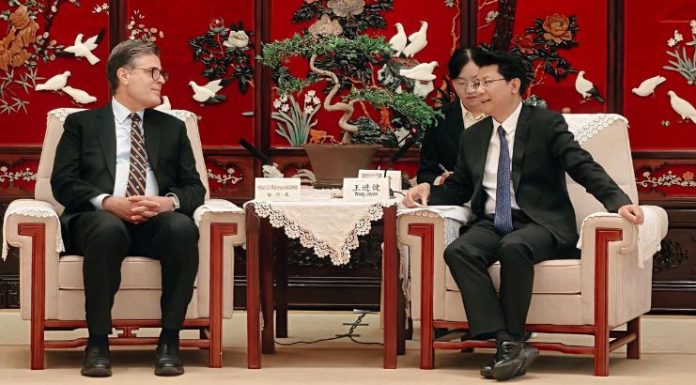
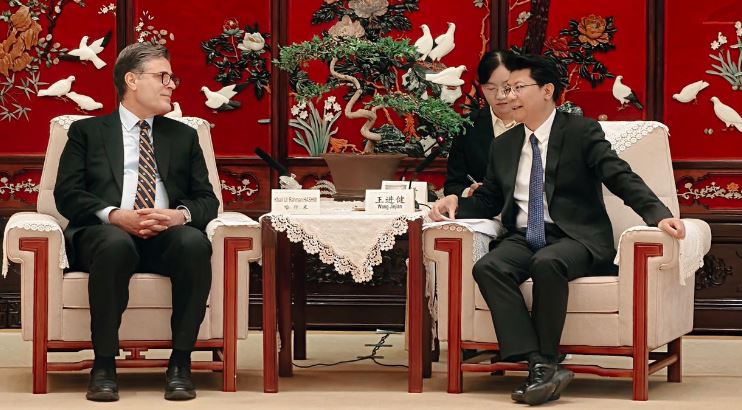
YANGZHOU, APR 25 /DNA/ – Pakistan’s envoy to China, Ambassador Khalil Hashmi visited Yangzhou, a historic, industrially advanced and culturally rich city of Jiangsu province, from 23-24 April 2026. The visit aimed at further deepening Pakistan-China investment, trade and vocational training cooperation in agriculture, new energy and new technologies, chemical engineering as well as scaling up people-to-people exchanges.

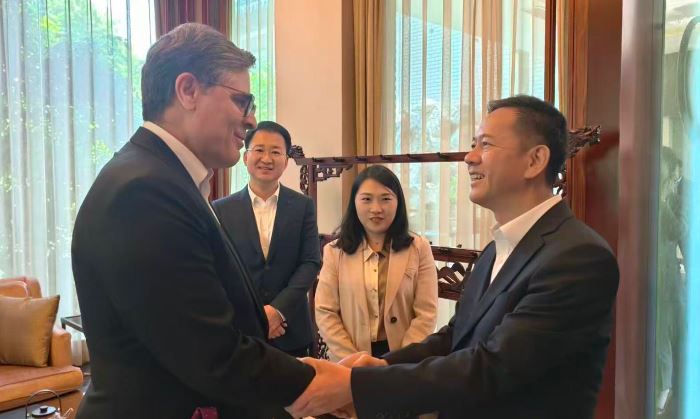
The Ambassador met Party Secretary Wang Jinjian and Mayor Zheng Haitao. He also visited FAMSUN, a leading Yangzhou-based company providing integrated agriculture technology and product solutions. Ambassador Hashmi also spoke in detail and interacted with leading agriculture enterprises at the forum organized by FAMSUN.

During interactions with Yangzhou leaders, Ambassador Hashmi discussed a number of proposals to further expand B2B investment and trade ties by optimally harnessing the existing Punjab-Jiangsu sister province cooperation mechanism, organizing periodic B2B investment mobilization roadshows, and facilitating mutual visits by enterprises.

Both sides agreed to leverage Yangzhou’s strengths in the fields of new technologies, new materials, agriculture modernization, information technology, automotive and construction industries as well as batteries and storage systems. Ambassador Hashmi invited Yangzhou-based companies to participate in the B2B Investment Conference on IT and Telecommunication in Hangzhou next month. He also expressed willingness to co-organize investment roadshows in Yangzhou, Beijing and Pakistan, and to facilitate visits to Pakistan.

During his visit to FAMSUN, Ambassador Hashmi and his delegation were received by its President Chen Zhengjun. President Chen briefed them on the company’s state-of-the-art Smart Park which seamlessly optimizes resources, energy consumption, and ecological sustainability. The Ambassador appreciated FAMSUN’s growing footprint in Pakistan and encouraged the company to further expand partnerships in agricultural modernization, agro-processing, dairy products, and capacity building.

Ambassador Hashmi participated in the China-Pakistan Agricultural Modernization and Food Security Innovation Cooperation Forum on 24 April 2026. In his remarks, he highlighted Pakistan’s commitment to transforming its agriculture sector through mechanization, resilient supply chains, improved seed development, enhanced micro financing, and skills development and vocational training programmes. He invited Chinese enterprises to explore business opportunities, particularly in areas such as precision agriculture, cold-chain logistics, digital farming solutions, and dairy products. Senior representatives from Irritech, Zoomlion and FAMSUN made detailed presentations, which were followed by a detailed interactive session. Ambassador Hashmi shared Pakistan’s priorities, plans and keenness to partner with Chinese companies in agriculture, food processing, developing value and industrial chains by harnessing technology, finance and management resources.

Yangzhou represents a dynamic city that has excelled in industrial development, ecological and cultural preservation, while promoting exquisite culinary and tourism resources. It boasts a key geographical location at the junction of the Grand Canal and Yangtze River. With a population of nearly five million, and development of six key industrial clusters, Yangzhou has emerged as a dynamic industrial and tourism hub, with a GDP of over $100 billion and industrial sales exceeding $140 billion.

Iran’s Foreign Minister meets PM Shehbaz

Iran’s Foreign Minister meets PM Shehbaz

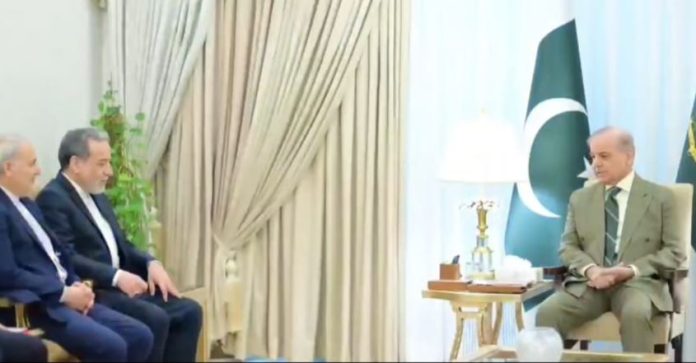
ISLAMABAD, APR 25 /DNA/ – Iranian Foreign Minister Abbas Araghchi arrived at the Prime Minister’s House to meet with Prime Minister Shehbaz Sharif. The meeting has begun.

Deputy Prime Minister and Foreign Minister Senator Mohammad Ishaq Dar, along with Chief of Army Staff and Chief of Defense Forces Field Marshal Syed Asim Munir, are also attending the meeting alongside the Prime Minister.

Discussions will focus on the regional situation.

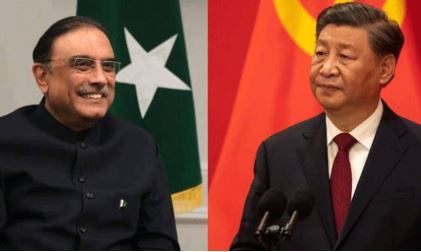
President Zardari to undertake an official visit to China

President Zardari to undertake an official visit to China

ISLAMABAD, APR 25 (DNA): On the invitation of the Government of the People’s Republic of China, President of the Islamic Republic of Pakistan Asif Ali Zardari will undertake a visit to China from April 25 to May 1.

“The President will travel to Changsha, Hunan Province, from 25 to 27 April, and to Sanya, Hainan Province, from 28 April to 1 May.

He will hold meetings with the provincial leadership to discuss Pakistan–China bilateral relations, with a particular focus on economic and trade cooperation and the China–Pakistan Economic Corridor (CPEC),” the Foreign Office Spokesperson, Saturday, said in a press release.

The visit is part of the longstanding tradition of high-level exchanges between Pakistan and China and holds special significance in the context of the 75th anniversary of the establishment of diplomatic relations between the two countries, being commemorated this year.

It reflected the deep commitment of both countries to further strengthening the all-weather strategic cooperative partnership, it was added.=DNA

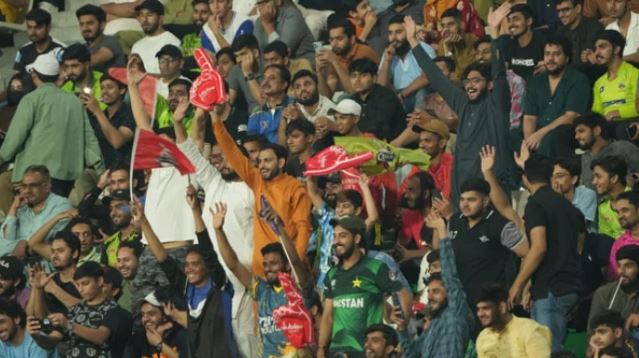
PM Shehbaz approves spectators for PSL 11 final after franchise owners’ request

PM Shehbaz approves spectators for PSL 11 final after franchise owners' request

LAHORE: Prime Minister Shehbaz Sharif has approved the presence of spectators for the Pakistan Super League (PSL) 11 final following a request from franchise owners, Pakistan Cricket Board (PCB) Chairman Mohsin Naqvi said on Saturday.

In a post on X, Naqvi said he had requested the prime minister to allow spectators in stadiums and that while the premier was inclined to permit fans, he had underscored that austerity measures remained in force across the country, particularly to minimise fuel consumption.

However, Naqvi said the prime minister had “graciously approved” fan attendance for the PSL 11 final after franchise owners pressed for the move. He thanked the premier for facilitating supporters and allowing crowds for the title clash.

The development marks a partial relaxation of restrictions imposed before the start of PSL 11, when the PCB announced matches would be played without spectators as part of the government’s resource conservation plan amid the regional fuel crisis linked to the US-Israel-Iran conflict.

At the time, Naqvi had said the tournament would be confined to Karachi and Lahore to reduce public movement and support broader austerity efforts.

The decision to allow spectators came after several franchise owners publicly urged the government to reconsider the no-crowd policy, arguing the league felt incomplete without fans and that spectator presence was central to the tournament’s atmosphere and identity.

Some franchise representatives had appealed directly to Prime Minister Shehbaz as well as provincial chief ministers to permit crowds during the ongoing edition.LAHORE: Prime Minister Shehbaz Sharif has approved the presence of spectators for the Pakistan Super League (PSL) 11 final following a request from franchise owners, Pakistan Cricket Board (PCB) Chairman Mohsin Naqvi said on Saturday.

In a post on X, Naqvi said he had requested the prime minister to allow spectators in stadiums and that while the premier was inclined to permit fans, he had underscored that austerity measures remained in force across the country, particularly to minimise fuel consumption.

However, Naqvi said the prime minister had “graciously approved” fan attendance for the PSL 11 final after franchise owners pressed for the move. He thanked the premier for facilitating supporters and allowing crowds for the title clash.

The development marks a partial relaxation of restrictions imposed before the start of PSL 11, when the PCB announced matches would be played without spectators as part of the government’s resource conservation plan amid the regional fuel crisis linked to the US-Israel-Iran conflict.

At the time, Naqvi had said the tournament would be confined to Karachi and Lahore to reduce public movement and support broader austerity efforts.

The decision to allow spectators came after several franchise owners publicly urged the government to reconsider the no-crowd policy, arguing the league felt incomplete without fans and that spectator presence was central to the tournament’s atmosphere and identity.

Some franchise representatives had appealed directly to Prime Minister Shehbaz as well as provincial chief ministers to permit crowds during the ongoing edition.

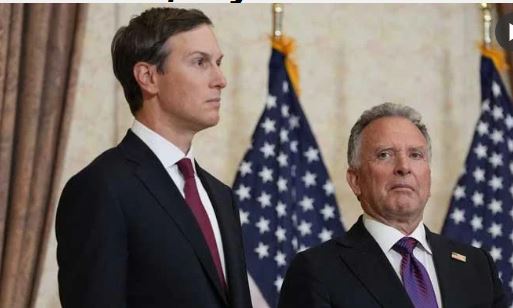
US delegation including Jared Kushner and Steve Witkoff to arrive in Islamabad

US delegation including Jared Kushner and Steve Witkoff to arrive in Islamabad

DNA

TEHRAN/ISLAMABAD — A high-level US delegation featuring senior adviser Jared Kushner and special envoy Steve Witkoff is expected to arrive in Pakistan today for the second round of direct negotiations with Iran, amid ongoing Pakistani mediation efforts to stabilize the region following recent conflict.

The talks, facilitated by Pakistan, come as Iranian Foreign Minister Abbas Araghchi begins a regional diplomatic tour on Friday, with his first stop in Islamabad. Iranian state media (IRNA) reported that Araghchi will hold bilateral consultations in Islamabad, followed by visits to Muscat and Moscow. The focus includes current regional developments and the situation stemming from the US-Israeli military actions against Iran.

 Pakistan’s Deputy Prime Minister and Foreign Minister, Senator Mohammad Ishaq Dar, recently received a phone call from Araghchi. Both sides discussed regional developments, the ceasefire, and Pakistan’s role in facilitating US-Iran engagement. Dar emphasized the need for sustained dialogue to resolve issues and promote peace, while Araghchi appreciated Pakistan’s constructive efforts. The two agreed to stay in close contact.

 This follows an earlier round of intense but inconclusive talks in Islamabad earlier this month, which involved high-level figures on both sides and prompted temporary security measures and transport disruptions in the Pakistani capital and Rawalpindi. Local residents have expressed hope that progress in diplomacy will ease security concerns and allow normal public transport operations to resume, including any extensions of energy relief initiatives.

Araghchi’s trip is part of Iran’s broader outreach to friendly states for consultations on the evolving situation. Pakistani officials have indicated a “high likelihood of a breakthrough” as efforts intensify to resume structured negotiations.

In a related development, European Council President Antonio Costa stressed on Friday that the immediate reopening of the Strait of Hormuz without restrictions is “vital” for the world. Speaking after talks with regional leaders, including from Lebanon and Syria, Costa stated in Cyprus:“The Strait of Hormuz must immediately reopen without restrictions and without tolling, in full respect of international law and the principle of freedom of navigation. This is vital for the entire world.”

The waterway’s status has significant implications for global energy markets and maritime trade.

Separately, Iran’s mission to the United Nations strongly condemned the US seizure of the Iranian commercial vessel Touska on April 19. The ship was reportedly carrying critical medical equipment. In a statement on X, the mission described the action as an “illegal seizure” and a “flagrant breach of international law,” including prohibitions on aggression and violations of human rights and the right to life. It warned that the move endangers lives, undermines freedom of navigation, and called for accountability.

Tensions around the Strait of Hormuz and related maritime incidents continue to underscore the urgency of diplomatic progress.

Pakistan continues to play a key facilitation role between Washington and Tehran, with both sides engaging through backchannel and direct contacts. Observers note that sustained engagement could help address outstanding issues and contribute to broader regional stability. Developments are being closely watched as delegations converge in Islamabad.

All services on one platform: NADRA’s modern website introduced

All services on one platform: NADRA's modern website introduced

LAHORE, Apr 24 (DNA): The National Database and Registration Authority (NADRA) has introduced a modern website.

Identity services will now be available in a more organized and user-friendly manner, all services including CNIC, NAICOP, POC, FRC have been integrated on one platform.


Registration data and statistics are available in the form of maps on the nGRIDS system, a comparative review of census and registration at the district level has also been provided, a map gallery has been introduced to guide research activities and planning.


National and provincial level statistics and trends have also been highlighted on the website.
An integrated system of birth, death, marriage and divorce registration has been integrated, verification services for banking, telecom and government institutions have been integrated, call center, IVR and email support have been made more effective.


The complaint registration and redressal system is well-functioning, the NADRA Career Portal has been upgraded, a simple online application process has been introduced, while complete information and guidance on the NADRA network across the country and abroad has been provided.


Information on registration centers and mobile registration vans is available at one place, the Right to Information and Media Center sections have been developed on modern lines.

Gambler’s Fallacy

Gambler’s Fallacy

Dr M Ali Hamza

In gambling, a player often convinces himself that after a string of losses, a win is somehow due. It feels logical, even reassuring, but it is wrong. Each roll of the dice, each flip of the coin, is independent. This is the essence of the gambler’s fallacy: the mistaken belief that past outcomes influence future ones.

A similar illusion quietly shapes high-stakes diplomacy. In the long and strained relationship between Iran and the United States, cycles of negotiation and escalation often carry an unspoken assumption, that persistence alone will eventually produce a breakthrough. That if talks have failed repeatedly, the next round must somehow succeed.

Consider the recent engagement in Islamabad. After nearly forty-nine years of hostility, the mere fact that both sides sat across the table for seventy-two hours was, in itself, significant progress. Expectations, however, quickly outpaced reality. The talks stalled, as many before them have. Yet preparations for a second round are already underway, with Pakistan investing diplomatic capital and logistical effort to bring both parties back again. Beneath this effort lies a familiar belief: that repetition will eventually yield results.

But diplomacy does not operate on streaks. Each negotiation is shaped not by the number of previous failures, but by shifting political interests, strategic calculations, domestic pressures, and visible actions on the ground. Assuming that time alone will correct outcomes risks mistaking hope for strategy.

This fallacy extends beyond negotiations into the realm of escalation. Both Iran and the United States have, at various points, relied on pressure tactics, economic sanctions, military signaling, and strategic leverage over key assets such as the Strait of Hormuz. Roughly 20% of the world’s oil supply passes through this narrow corridor. The implicit assumption is straightforward: increase pressure, and the other side will eventually concede.

Yet history suggests otherwise. Sanctions regimes have expanded, oil flows have been threatened, and military posturing has intensified, but neither side has fundamentally altered its core positions. Instead of capitulation, there is adaptation. Instead of resolution, there is recalibration.

And while policymakers play this high-stakes game, the consequences are borne elsewhere. The true victims of this fallacy are not seated at negotiation tables, they are spread across a region that is home to more than half of the world’s population.

The economic effects are both immediate and far-reaching. One of the most critical disruptions lies in the supply of urea and fertilizers. A significant portion of global fertilizer trade is linked, directly or indirectly, to shipping routes through the Strait of Hormuz. Even minor disruptions can push prices upward. Over the past year, fertilizer prices in some markets have risen by 15% to 25%during periods of heightened tension, increasing input costs for farmers.

The ripple effect is predictable. Higher fertilizer costs reduce usage, which in turn lowers crop yields. For countries already grappling with food inflation, where prices in some regions have risen by over 20% year-on-year, this compounds an already fragile situation. Food security, particularly in import-dependent economies, becomes less a policy challenge and more a structural risk.

The pharmaceutical sector faces a parallel strain. Industry estimates suggest that up to 40% of active pharmaceutical ingredients (APIs) used in generic drug manufacturing rely on complex international supply chains. When shipping routes are disrupted or rerouted, freight costs can rise by 30% to 50%. Air cargo constraints further exacerbate the problem, delaying shipments and increasing production costs. The result is simple: medicines become more expensive and, at times, less available.

Beyond these essentials, the broader business environment absorbs the shock. Shipping insurance premiums increase, fuel prices fluctuate, and delivery timelines become uncertain. For manufacturers, this means higher production costs. For retailers, it means inconsistent inventory. For consumers, it means inflation. Global trade, already navigating post-pandemic adjustments, faces yet another layer of unpredictability.

Nowhere are these disruptions more visible, however, than at the local level. Islamabad’s recent week-long lockdown, imposed ahead of the anticipated second round of talks, offers a telling example. For nearly seven days, key parts of the city were effectively sealed. Major roads were blocked, public transport was halted, and commercial activity slowed to a crawl. In a city of over two million people, even partial restrictions quickly translate into widespread disruption.

Islamabad depends heavily on daily inflows of food items; fresh vegetables, fruits, and safe dairy products. With transport routes restricted, delivery cycles were disrupted by 24 to 48 hours. In perishable markets, such delays are not minor, they are decisive. The impact extended to medicines. Pharmacies experienced delays in restocking essential drugs, particularly those reliant on inter-city distribution networks. While not a full-scale shortage, the strain was visible enough.

For small and medium-sized businesses, the consequences were even more severe. These enterprises, which account for nearly 90% of Pakistan’s business sector and employ a significant portion of the urban workforce, operate on narrow margins and continuous cash flow. A week of disruption is not an inconvenience; it is a shock.

Shopkeepers across affected areas reported declines in customer footfall of up to 50% . Many daily wage workers lost an entire week’s income. Small retailers, already navigating inflationary pressures, faced both reduced sales and delayed inventory replenishment. The supply chain, once disrupted, does not reset overnight; it lingers, affecting business activity even after restrictions are lifted.

What emerges from this sequence is a clear pattern: decisions driven by flawed assumptions at the geopolitical level cascade into tangible economic stress at the local level. The gambler’s fallacy, when translated into policy, is not merely an abstract error in reasoning; it carries real costs.

The lesson is neither cynical nor defeatist. Dialogue remains necessary, and persistence is often essential in diplomacy. But persistence must be grounded in realism, not in the illusion of inevitability. Outcomes are shaped by strategy, incentives, and timing, not by the number of attempts made.

DPM Dar, Russian FM discuss rescheduling PM Shehbaz’s Moscow visit

DPM Dar, Russian FM discuss rescheduling PM Shehbaz's Moscow visit

ISLAMABAD: Deputy Prime Minister Ishaq Dar on Friday held a telephonic conversation with Russian Foreign Minister Sergey Lavrov, during which the two sides discussed rescheduling Prime Minister Shehbaz Sharif’s planned visit to Russia.

PM Shehbaz cancelled his official visit to Russia in light of the turmoil that gripped the region in the wake of the US-Israel attack on Iran, the Prime Minister’s Office said last month.


According to Russian media, the prime minister was due to travel to Russia from March 3 to 5.

According to a statement released by the Foreign Office today, DPM Dar and Russian FM underscored the importance of maintaining regular high-level engagements and discussed setting new dates for the prime minister’s visit at a mutually convenient time.

The two leaders also discussed bilateral relations and cooperation at multilateral fora in support of international peace and security.

Russian FM Lavrov appreciated Pakistan’s constructive role in facilitating dialogue between Iran and the United States, the statement added.

During the telephonic conversation, DPM Dar, who also holds the portfolio of foreign minister, underscored Pakistan’s resolve to continue contributing to efforts aimed at promoting dialogue and diplomacy to resolve all issues.

In addition, the deputy prime minister extended an invitation to his Russian counterpart to visit Pakistan. The two foreign ministers also agreed to remain in close contact to advance cooperation, the FO statement concluded.

Lebanon-Israel ceasefire extended by 3 weeks

Lebanon-Israel ceasefire extended by 3 weeks

WASHINGTON/BEIRUT/JERUSALEM, 24 APR (DNA) —     Lebanon and Israel extended their ceasefire for three weeks after a high-level meeting at the White House, US President Donald Trump said on Thursday. Trump hosted Israel’s ambassador to Washington Yechiel Leiter and Lebanese ambassador to the US Nada Moawad in the Oval Office for a second round of US-facilitated talks, a day after Israeli strikes killed at least five people including a journalist.

“The Meeting went very well! The United States is going to work with Lebanon in order to help it protect itself from Hezbollah,” Trump wrote on Truth Social. Hezbollah, the Iran-aligned armed group that is fighting Israel, was not present at the talks. It says it has “the right to resist” occupying forces.

Trump added that he looked forward to hosting Israeli Prime Minister Benjamin Netanyahu and Lebanese President Joseph Aoun in the near future. Trump also spoke to reporters in the Oval Office alongside the participants in the meeting, saying he hoped the leaders would meet during the three-week cessation of hostilities. He said ‌there was “a great ‌chance” the two countries would reach a peace agreement this year.

Vice President JD Vance, Secretary of State ‌Marco ⁠Rubio, US Ambassador to ⁠Israel Mike Huckabee and US Ambassador to Lebanon Michel Issa also attended the meeting. The ceasefire, reached after talks between the two nations’ ambassadors to Washington last week, was set to expire on Sunday. It has yielded a significant reduction in violence, but attacks have continued in southern Lebanon, where Israeli troops have seized a self-declared buffer zone.

Ambassador Moawad, who went into the meeting seeking an extension of the ceasefire, thanked Trump for hosting the talks. “I think with your help, with your support, we can make Lebanon great again,” she said. A Lebanese official earlier said Beirut would push for an Israeli withdrawal, the return of Lebanese detained in Israel and a delineation of the land border in a next phase of negotiations.

Israel has sought to make common cause with ⁠Lebanon’s government over Hezbollah, which Beirut has been seeking to disarm peacefully for the past year. Asked how the ‌US would help Lebanon to fight Hezbollah, Trump did not provide details but said the US ‌had “a great relationship with Lebanon.” Trump said Israel had to be able to defend itself against attacks from Hezbollah.

Trump also called for Lebanon to abolish laws ‌against engagement with Israel. “It’s a crime to talk with Israel?” he responded when asked about the statutes known as anti-normalization laws, which he did not ‌appear to be aware of. “Well, I’m pretty sure that that will be ended very quickly. I’ll make sure of that,” Trump said.

The Israeli military said on Thursday that it killed two armed individuals in southern Lebanon after identifying them approaching soldiers and posing what it described as an immediate threat. It was not immediately clear whether the incident was related to strikes reported earlier in nearby areas by Lebanon’s health ministry, which said an Israeli air strike had killed three people ‌and artillery shelling wounded two others, including a child.

Wednesday was Lebanon’s deadliest day since the ceasefire took effect on April 16.Those killed by Israeli strikes included Lebanese journalist Amal Khalil, according to a senior ⁠Lebanese military official and her employer, Al-Akhbar ⁠newspaper. Israel’s military said on Wednesday it was reviewing an incident in which it had received reports that two journalists were wounded by strikes it said were aimed at vehicles departing a military structure used by Hezbollah. It said Israel does not target journalists.

Hezbollah lawmaker Hassan Fadlallah said the group wanted the ceasefire to continue but “on the basis of full compliance by the Israeli enemy.” At a televised press conference, he reiterated Hezbollah’s objections to the face-to-face talks and urged the government to cancel all forms of direct contact with Israel. Hostilities between Hezbollah and Israel reignited on March 2, when the group opened fire in support of Iran in the regional war.

The ceasefire in Lebanon emerged separately from Washington’s efforts to resolve its conflict with Tehran, though Iran had called for Lebanon to be included in any broader truce. Hezbollah said it carried out four operations in south Lebanon on Wednesday in response to Israeli strikes.— DNA

Stay Connected

64FansLike
60FollowersFollow

Latest Reviews

Exchange Rates

USD - United States Dollar
EUR
1.14
GBP
1.34
AUD
0.70
CAD
0.71