Home Blog Page 1601

Roche gets U.S. approval for flu drug for children aged 5 and over

ZURICH – Roche (ROG.S) has received approval from the U.S. Food and Drugs Administration for its Xofluza drug to treat influenza in children aged five years and older, the drugmaker said on Friday.

The medicine has been approved to treat acute uncomplicated influenza in otherwise healthy children who have shown symptoms for no more than 48 hours.
The FDA also approved Xofluza to prevent influenza in children aged five years and above following contact with an infected person.

The drug becomes the first single-dose oral influenza medicine approved in the United States for children in this age group, Roche said. Xofluza is already FDA-approved to treat influenza in people aged 12 and above.

Hania Aamir & Mere Humsafar trend on Twitter

Latest episode of popular Pakistani drama serial Mere Humsafar, took viewers on to a non-stop roller coaster of emotions as fans stormed twitter praising the lead star Hania Aamir for her stunning performance.

Mere Humsafar is an on-going drama serial filled with combination of love, jealousy & hate, showcasing the twisted side of relationships in which ‘Jannan’ actress is playing lead role as the character named Hala.

Spellbound by the acting of Aamir, fans flooded the social media platform with bundle of messages and snippets of drama, making #Hania Aamir & #Mere Humsafar a top trend.
“Hania Aamir is a gem; nobody could have made Hala work. She has made the audience root for a character who could have easily gone down the long list of sorry characters, that nobody cares about. She made Hala reasonate with all,” tweeted a fan.

“I loved the fact how Hala was finally able to express her feelings. Felt content after watching the episode,” praised another fan.

Naming Hania Aamir as one of the most defining actresses, viewers were also quick to take a note of the most heartbreaking scene which stole the whole episode where Hala confront her family with an outburst.

“This scene was impactful and nicely delivered too. She finally made her father know about the trauma he gave her all her life. Her performance, the dialogues, the emotions, everything was so on point,” applauded a fan.

“Hania literally stole the episode her acting in this scene was out of the world,” shared another fan while praising her for the accurate depiction of pain and suffering.
The mind-blowing turn of the story-line was so captivating that just in few minutes of streaming over the YouTube, it reached to millions of live views along with surpassing over 6 million views in just 13 hours.

As the events have started to get unfold in a surprising way, fans are now eagerly waiting for the next episode with a hope to see the evils getting punished for their wrongdoings.

Pak-UK ties based on friendship, mutual cooperation: Army Chief

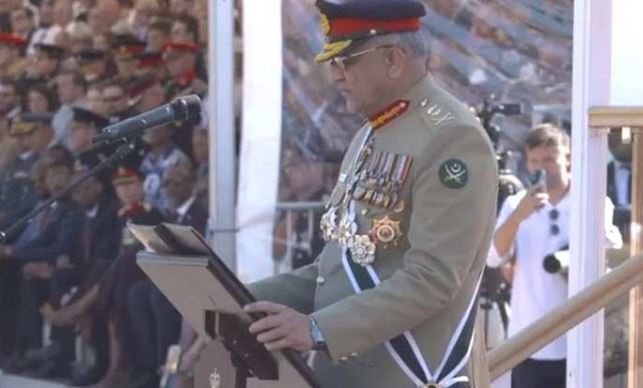
LONDON – Chief of Army Staff General Qamar Javed Bajwa addressed a passing out parade at the British Royal Military Academy, Sandhurst as the first Pakistani dignitary who was invited as the chief guest.

Addressing the parade at Royal Military Academy Sandhurst, COAS Bajwa greeted to all the audience and viewers and said that the relations between Pakistan and Great Britain are based on friendship and mutual cooperation.

General Bajwa congratulated the Royal Academy cadets on passing the training course. He said that to face the challenges of today youth should take advantage of the technology.

“Your alma matter is, without a doubt, one of the finest military institutions in the world which have produced some of the great military leaders that this world has ever seen,” he said, adding that graduating from Sandhurst is a great honour and pride.

Apart from UK local cadets, 41 international cadets from 26 other countries including two cadets from Pakistan namely Muhammad Abdullah Babar and Mujtaba — have passed out.

It is worth mentioning here that Army Chief Qamar Javed Bajwa has become the first Pakistani ever to be the representative of the Queen during the sovereign’s parade at the Military Academy Sandhurst.

According to the UK’s Defence Ministry, General Bajwa represented the Queen at the sovereign’s parade for commissioning course 213 (CC213) of the Royal Military Academy Sandhurst (RMAS) on Friday during a ceremony that attracted military leaders from dozens of countries of the world.

This was the 198th sovereign’s parade where General Bajwa became the first Pakistani to be the sovereign’s representative.

General Bajwa was accompanied at the parade by Director-General Inter-Services Public Relations (ISPR) Major General Iftikhar Babar and Pakistani High Commission s military attache Col Rana Asif Khan.

British High Commission plants 75 trees to mark 75 years of UK – Pakistan relations

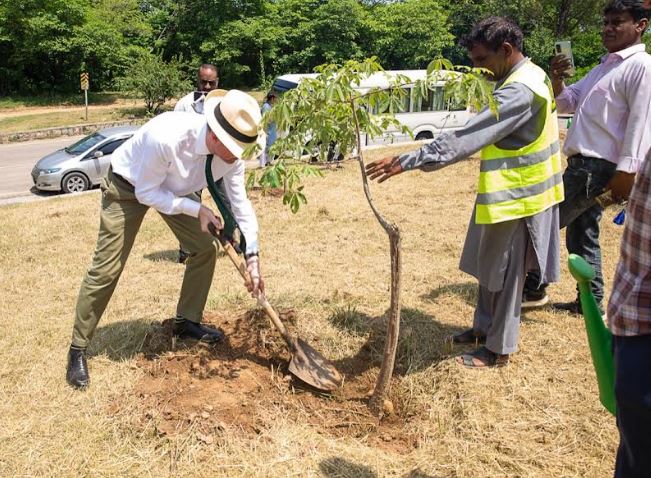
ISLAMABAD, AUG 12 /DNA/ – On Friday to commemorate 75 years of UK – Pakistan relations, British High Commission staff joined by Chevening alumni and personnel from the Islamabad Capital Development Authority, planted 75 trees native to Pakistan, in the Shakarparian National Park.

This activity compliments a vast year-long tree planting programme carried out in the UK by the British Pakistan Foundation and Pakistan High Commission. Named ‘The Legacy Project’, this was launched to celebrate the achievements of British Pakistanis over the last 75 years. A total of 7,500 trees are set to be planted.

The UK – Pakistan relationship has gone from strength to strength this year, with major events such as the independence anniversary and the Birmingham Commonwealth Games revitalising deep people-to-people ties. 

On the occasion the Acting British High Commissioner Andrew Dalgleish said:

“Right now the UK and Pakistan are collaborating to tackle some of the world’s most pressing challenges from driving forward action on climate change to improving gender equality. I know that we will continue to do so over the next seventy-five years. Happy Birthday, happy Independence Day, Azm-e-aali Shaan, Shaad rahe Pakistan!”

Baluchistan is most important component of CPEC; Daroo Khan Achakzai

Quetta: /DNA/ – Pakistan Businesses Forum (PBF) have appointed Engineer Daroo Khan Achakzai as Chairman (Balochistan).  He also served before as President for the Federation of Pakistan Chambers of Commerce and Industry in the year of 2019 and also served as Director of the Balochistan Board of Investment (BBIT).

He has an extensive work experience in the field of trade and industry. 

Daroo Khan Achakzai told to media, the establishment of the PBF was much needed in Balochistan as there is a need to establish non political dialogue with the national and provincial stakeholders to expedite the issues of the Baluchistan trade and industry. 

We urged the Government to establish Chaman as a focal area for the trade towards Central Asian countries. 
He also said Balochistan is most important component of CPEC as this is the most deprived province of Pakistan. It is located at the eastern edge of Iran. It is geographically the largest of the four provinces with 347,190 sq km and equates to 42 percent of the total land area of Pakistan. The population density is very low due to the hilly territory and insufficiency of water and other human resources. It has 26 districts and the approximate population of Balochistan is about 15 million.
Balochistan is rich in natural resources. The economy is largely based on the production of natural gas, coal and minerals. The province’s natural resources significantly help meet the energy needs of Pakistan as a whole. Limited farming in the east and fishing along the Arabian Sea coastline are other forms of income and sustenance for the local population. Balochistan is very poor in basic education.
It is expected that 2.0 million people are expected to move to Gwadar within a span of 30 years. The port is not yet functioning, but noticeable signs of progress have been seen. Similarly, new residential areas, hotels, buildings, schools, hospitals and roads are indicative of modern trends. It is also expected to have a positive impact on the rest of the province, which has been neglected for a long time. Gwadar Port is a mega project of CPEC and a vast amount of investment is anticipated in both its infrastructure and extensions; he added.  
PBF Chairman (Balochistan) further told through CPEC,  Pakistan’s International role will be more prominent; as many regional and extra-regional countries will be joining CPEC; this will improve Pakistan’s international stature, our contacts and will create an aura of peace and stability in the region.

Mian Anjum says debt repayments put pressure on foreign exchange reserves

DNA

ISLAMABAD, AUG 12: As the foreign exchange reserves of the central bank have fallen to the critical level of $8.39 billion due to heavy debt servicing and other payments, reporting a record drop of over $2 billion in just five weeks, the Businessmen Panel (BMP) of the Federation of Pakistan Chambers of Commerce & Industry has scrambled over securing dollar inflows, calling for managing this financial crisis amidst widening trade deficit along with dried up dollar inflows.

FPCCI former president and BMP Chairman Mian Anjum Nisar said that the reserves’ position is critical for Pakistan which is desperately seeking dollar inflows to meet its balance-of-payments needs. A low level of reserves has caused severe pressure on its currency market with the rupee witnessing its worst monthly performance in July in over 50 years.

We require a combination of an improvement in trade deficit, export proceeds and IMF’s recent statement on the country’s successful completion of all prior actions to halt a slide that saw the rupee close in on the 240 level in the inter-bank market two weeks back, which is now appreciating.

He said that country’s total liquid foreign exchange reserves have plunged to $13.56 billion in the first week of August, depicting a decrease of $2.2 billion during one month period of this fiscal year. The recent decline in reserve is due to massive scheduled external debt servicing. The reserves also reached below the $14 billion mark followed by continuous debt payment. The foreign exchange reserves fell another $190 million, clocking in at an alarming level of $8.39 billion during the week ended on July 29, 2022.

Quoting the data released by the SBP, he said total liquid foreign reserves held by the country stood at $14.21 billion while net foreign reserves held by commercial banks clocked in at $5.82 billion.

The urgent task that needed to be taken up was foreign exchange reserve management and for this purpose the major focus should be on negotiation with the IMF, he said. Strong relations with the US, China, and Saudi Arabia are very important in determining the outlook of foreign flows to the country and roll over of maturing debt. Moreover, initiatives for overseas Pakistanis should be prioritized and proper channel flows for remittances should be maintained to keep foreign reserves afloat. He believed that the currency should be allowed to remain at its market determined level, and take any pressure from the external account. FPCCI former president said that the payment for settlement of the Reko Diq case, increasing current account deficit and delays in debt roll over resulted in rapid erosion of foreign exchange reserves, he said and added that fast depletion in reserves weighed on the rupee.

The BMP Chairman said that with the delay in the revival of the International Monetary Fund program and falling foreign currency reserves, the Pakistani rupee has hit an all-time low against the US Dollar, crippling the country’s economy further.

It is good news that the State Bank of Pakistan said that external debt repayments are expected to moderate during the next three weeks of August. In fact, around three-fourth of debt servicing for the month of August was concentrated during the first week.

The country for the last few months is facing a serious crisis of foreign exchange due to a record $39.58 billion trade deficit followed by a $72 billion import bill in the last fiscal year (FY22).

Mian Anjum Nisar asked the government to make serious efforts to build the sliding foreign exchange reserves. It is appreciable that Pakistan has also reached staff level agreement with IMF and the board is likely to release $1.1 billion as tranche of Extended Fund Facility (EFF) end of this month.

Pakistan posted a record $17.4 billion current account deficit in FY22 as against $2.8 billion in FY21. He was also expecting a sharp decline in the current account deficit followed by lower import bill.

During the week under review, SBP’s reserves decreased by $ 555 million to reach below the $8 billion mark due to external debt payments. The reserves held by the SBP declined to $ 7.83 billion at the end of the last week as against $8.385 billion a week earlier.

Net foreign reserves held by commercial banks also dropped $ 92.5 million to $5.7301 billion as of August 5, 2022 down from $5.823 billion as of July 27, 2022.

Upward march of rupee welcomed

ISLAMABAD, AUG 12: /DNA/ – FPCCI’s Presidential candidate Atif Ikram Sheikh on Friday welcomed the surprising improvement in the value of the rupee against the US dollar and demanded that its benefit should be transferred to the masses.

He said that a strengthened rupee is good for the masses and importers but it has added to the problems of some exporters.

Atif Ikram Sheikh said that a host of issues including the political environment have played a major role in firming up the local currency which has also reduced the debt and liabilities.  

Talking to the business community, he said that the government should try to keep the momentum in remittances during the current fiscal year.

The introduction of the Roshan Digital Account by SBP is also a good move as it has opened new avenues for investment by expatriates, he said.  

The UBG leader said that the government should tackle the issue of reduced exports of goods and services and increasing imports to strengthen the rupee on a sustainable basis.

Pakistan is expected to receive the letter of intent from the International Monetary Fund any time soon.

The IMF letter would take Pakistan a step further closer to the release of two tranches worth $1.17 billion under a stalled loan facility which will have a positive impact on the market, he said.

The UAE’s intention to invest $1 billion in Pakistani enterprises in a variety of economic and investment areas has come at a very right time which also boosted confidence in the market.

Xinjiang cotton comparative advantage and befitting lessons for Pakistan: Dr. Khan

DNA

Islamabad, Aug 12: Xinjiang cotton has comparative advantage and befitting lessons for Pakistan, says a report published by Gwadar Pro on Friday.

Furthermore, adopting Chinese techniques of intercropping and double cropping is the way forward for Pakistani cotton farmers.

Quoting Dr. Mehmood Ul Hassan Khan, Director of the Center for South Asia & International Studies (CSAIS),  the report stated, mechanical harvesting in Xinjiang saved 50 percent consumption of water and 30 percent of fertilizer. It also reduced the labour cost by 30 percent while enhanced the yield by the same percentage. Thus close Pak-China mechanical harvesting cooperation will further strengthen cotton yields in the country.

Development of new types of cotton seeds, and getting assistance from the Chinese molecular biology to introduce such new seeds that adapt to climate in the country should be encouraged. 

Luckily, the Punjab government has provided two agro-based industrial zones in Vehari and Bhalwal that offer several incentives to Chinese firms including tax waivers which should be used for forming a corridor of knowledge between two countries.

Cotton is one of the largest crops in Pakistan but its unit yield is far behind that in Xinjiang. Pakistan and Xinjiang are adjacent to each other and have similar natural conditions; it is easier for many Xinjiang companies to breed high-yield and high-quality cotton seeds suitable for planting in Pakistan.

Natural gold fiber cotton may have push-over economic stimulation under CPEC in the country. Moreover, joint efforts and close cooperation in cotton production would further accelerate the prospects of joint ventures in garments projects in the days to come. 

Thus Xinjiang and Pakistan cotton production cooperation is the way forward which should be executed as soon as possible.

With constant “structural reforms” especially in the economy, agriculture, agro-machinery, investments, and infrastructure development, Xinjiang region has become a “hub” of global cotton production. Now it has specific “comparative advantage” in the world  cotton production.

Xinjiang is the largest cotton growing region in China, ranking first nationally in total output, per unit production and planting area for the last two decades. In 2020, the total cotton planting area in Xinjiang reached 2.51 million hectares, nearly the same as in 2019. 

Xinjiang is expected to see another bumper harvest this year which is good omen for the national economy and exports of the country.

Moreover, the China Cotton Association (CCA) statistical data upholds that more than half of  farmers in Xingjiang usually grow cotton, with the majority being ethnic minorities. Cotton farming is the major source of local agricultural income in south Xinjiang. 

It is true that cotton fields bring handsome income to growers, but also provides substantial employment opportunities to many migrant workers. In this regard, nearly 4,000 people in the Aral township in Aksu Prefecture joined the migrant cotton-picking community year, earning an average of nearly RMB 6,000 (about $895) per capita in two months, with the champion cotton picker pocketing RMB 23,000. Over 90 percent of north Xinjiang cotton fields are now harvested using machinery. The practice is also becoming popular in south Xinjiang.

Xinjiang’s cotton output accounts for about a fifth of the world total, while China’s textile and apparel exports make up about one third of the global value. Moreover, to propel the industry’s growth, Xinjiang has shared its cotton growing expertise with other areas such as some central Asian countries. The cotton growers of Pakistan should learn valuable lessons from it.

China has certain comparative advantage in cotton research and industrialization with advanced biological breeding technology for cotton, high-quality cotton seed production technology and high-yield and high-efficiency cultivation and management technique for cotton, which should be shared with the Pakistani cotton growers under CPEC in the country. 

It would be new value-addition for the streamlining, systemizing and further strengthening of cotton cooperation between Pakistan and China.

China has standardized production technology of cotton seed which has enabled the rate of seed germination to reach above 85 percent. In Xinjiang, the temperature is relatively lower, but the plastic film covering technology helps raise the temperature of soil, thus promoting the germination and growth of seeds.

Furthermore, the Chinese innovative and technologically advanced smart agriculture can make the cultivation and management of cotton more feasible, realize the prevention and control of plant diseases and insect pests, and predict the yield in advance in the country which should be incorporated in the domestic productive channels of Pakistan.

Because of climate change, there is an urgent need to create new cotton germ plasma that is resistant to both biological and abiotic stresses, develop high-quality and long-fiber cotton, establish and improve mechanized planting and harvesting, and optimize management measures for planting and cultivation. Thus Pak-China (Xinjiang) cotton cooperation is the need of hour.  

In this connection, CPEC has already established China-Pakistan Cotton Biotechnology Joint Laboratory, which aimed at introducing high technology into Pakistan, as well as a comprehensive platform for agricultural technical cooperation.

Rigorous and joint seed research for right atmosphere, cotton-peanut intercropping and plant architecture that allows for mechanical harvest enabled Xinjiang to enhance its share in China’s cotton production from less than 4 percent in 1949 to 76 percent as of today, the report added.


CPEC: The Metamorphosis of A Northern Middle-age

By Kiran Naz

“I am no more what I was. My Chinese colleagues helped complete my metamorphosis, he said with deep appreciation. Oshikhandass, a small beautiful mountain village, is situated near Gilgit in northern Pakistan. Because of the remote location, many people are engaging in agriculture and handicraft industry and living a relatively traditional and simple life. As there are not many local employment opportunities, most of the young and middle-aged in the village choose to work in big cities to support their families. Manzoor Alam, 35, is one of many middle-aged men who have traveled from the north to the big cities to pursue their dreams. He can still recall that when he first came to Karachi alone in 2004 he could hardly find any better job rather than a driver due to lack of adequate education and skills. He earned 16,000 rupees per month at that time, which could barely cover his basic living expenses. Since then, he had changed jobs several times, but none of them were very satisfactory. He could only engage in livelihoods such as driver, purchasing officer, salesman and other positions that do not require much skills. In 2010, he decided to quit his job and started his own business by opening a pharmacy and a grocery store in a small town near his village. The business was good in the beginning and he had pretty good surplus after deducting the costs and employee salaries. However, the good times did not last long. Since 2014, the business has become more and more miserable, and he even couldn’t support the rent and staff salaries.

Just when he was at his wit’s end, he was forced to leave his hometown again in 2015 on the recommendation of a friend who later introduced him to an interview at the Islamabad office of a Chinese company. According to its profile, the company entered Pakistan in 2013 and has participated in a series of CPEC or non-CPEC projects, especially Chinese-aided projects. It’s been seven years but Manzoor can still remember the warm reception he received from his two Chinese colleagues when he first entered the office. At that moment, he felt, for the first time, the corporate culture of the Chinese company and the warmest friendship between the Chinese and Pakistani people. The company offered him a monthly salary of Rs 25,000 as a driver, his most familiar position. To be honest, he could have made it elsewhere, but something mysterious in his mind made him decide to stay.

One day, Mr. Li, the in-charge of the office, suddenly called him into his office and said that he found him very responsible and intelligent in his work. Most importantly, he found him very talented at learning Chinese culture and language. So Li decided to send him to a professional school for studying Chinese language and the company would bear his tuition. Manzoor was so encouraged that he readily accepted Li’s offer. So he spent three months at a Chinese language training school in blue area, and another six months at Chinese department NUML. Since then, he has mastered basic everyday Chinese and performed better in his work. His colleagues were all surprised by his changes and promotions. Two years after his joining, he was promoted to house manager, responsible for daily management and reception of delegations. And his income was more than thrice as much as when he joined the company. With the help of the company and his Chinese colleagues, Manzoor has greatly improved his various abilities and his dedication to the work has brought him unanimous praise. In 2021, he was awarded the Excellent Employee.

According to him, his life changed dramatically after joining the Chinese company. In 2017, he used his savings of the past few years to build a small but warm house in his village, which enable the family to no longer suffer snow and cold in winter. With the improvement of his financial status, he fathered a third child and all of them are now enjoying better education. He attaches great importance to education and hopes that one day his kids will be able to leave the mountains and avoid the similar fate as his. With his help, a total of 15 relatives and friends got jobs in different Chinese companies, and many of them were lifted out of poverty. Since 2018, in particular, he has quietly funded two poor students in Islamabad and two families in need in his village by providing them tuition and food.

“I am no more what I was. My Chinese colleagues helped complete my metamorphosis.” Chinese companies have been working to help Pakistan improve its infrastructure, actively participate in the fields of agriculture, industrial cooperation and social livelihood, which has greatly improved the employment, local people’s livelihood and brought various opportunities to the social and economic development of Pakistan, he said with deep appreciation.

The author is a freelance contributor.

Pakistan, A Journey of 75 Years & On

“By: Syed Ali Nawaz Gilani”

Today the nation is celebrating 75thIndependence Day with national spirit and enthusiasm. This marks the platinum jubilee of Pakistan. Our journey started 75 years ago as a proud nation. Our beloved and God-gifted country was given to us with the motto of Kalma-e-Tuyiba in which we promised that we will build this country as a prodigious Islamic democratic country of the Muslim world. In the last 75 years, the country has faced serious economic and socioeconomic problems that questioned our progress as a nation and fulfillment of our duties as compatriots. For the previous seven decades, we have not only defended our homeland by fighting three wars with India but also made the country eminent throughout the world with our successful missile and nuclear programs. The nation will never forget its heroes like Dr. Abdul Qadeer khan (Mohsin -e- Pakistan) and fearless martyred commanders like Major Aziz Bhatti (Shaheed). On this special occasion, since we are celebrating the platinum jubilee of Pakistan, we should not forget out real heroes who sacrificed their lives and those who have worked hard to build Pakistan as a global force.They deserve respect and the whole nation salutes their relentless efforts, and we pay great tribute to them.

Apart from that, we have proven to be a peaceful, sports, and culture-loving nation by winning more than thirty-five international titles in various sports including hockey, cricket, snooker, squash, and kabaddi. We celebrate Independence Day every year on August 14 with the pride that our ancestors crossed the river of blood and gained this homeland, and we will do everything for its protection, rising, and development. The overwhelming successes and failures of the country have put us at an avenue where we need to revive our commitment again. If we look at our post-independence journey, there was no shortage of resources in our country, apart from petrol, natural gas, and precious metals. Pakistan has a rich history of natural resources which includes reserves of salt, coal, iron, gold, and silver in which mines like Reko Diq and Saindak are also included. If these natural resources are extracted and utilized properly, the destiny of this country can turn around.

Geographically Pakistan is situated in a very vital position. And Neighbors like China and Iran can play a dynamic role in the progress of our country through trade and investment. China has already started its investment in Pakistan through the ambitious project Belt and Road Initiative (BRI) and China Pakistan Economic Corridor (CPEC). The project needs to be utilized and implement in a very proper manner. Similarly, if the way is paved for an open trade agreement with Iran its oil and gas resources can also assist in the progress of our economy.

The country is also producing a large amount of gold. Since its independence, Pakistan has progressed in many areas like sports, information technology, artificial intelligence, science, technology, etc. There has never been a lack of talent in Pakistan and the only thing that needs to be addressed is the arduous work, dedication, and honesty. The biggest example for us in that regard is China which gained independence from the British Empire a year after us and when it began its journey towards development, its condition was bad, more than half of its people were opium addicted. China’s determination toward prosperity and progress has ended those evils forever which were a hindrance in their way. Today China became an economically developed country while it has the world’s highest resources. China has made this development by following the simple quote of our father of nation Quaid-e-Azam Muhammad Ali Jinnah that work, work, and only work. As a nation, we too can progress to follow the same way. Therefore, it is necessary to commit to the government and public level that we will work hard and dedicatedly in every sector. If we look at the modern world, we still have a place in it. The world knows us because of having a strong army, we have importance in other fields, and we need to follow the way which leads towards prosperity and development. If we want to be economically stable, we must make tough decisions keeping in mind the national interests. The effortless way for that is to familiarize a corruption-free economic system. For introducing a corruption-free economic system, we must not adopt other country systems, but it should be modeled keeping in view the objective conditions of the country and it should be implemented with enthusiasm.

Until and unless we make a comprehensive plan for the development of the country we cannot stand in the ranks of a developed nation. Therefore, on the 75th Independence Day of the country, it is necessary to commit that we would work together for the betterment of our beloved country. This can be possible when the government officials, the rulers, and the peoples of the country are ready to create a society free from corruption. The nation that has worked with honesty day and night like China has kissed its feet.

Therefore, as a nation, we must repeat the same lesson. In the past, we were the fastest growing nation in Asia. Scholars know that in the 1960s and 1970s Pakistan was one of the fastest growing countries. Our downfall began in the 1980s and 1990s when we started taking loans from International financial institutions and pledged ourselves to these institutions. Now the situation is quite tense in terms of finance. Even now we can improve our situation if we work diligently and set a clear path. On the 14th, August 1947 Allah gave us freedom from the British Empire, let the nation pledge to revive efforts for the development, prosperity, and progress of the country with dedication and honesty. (The writer is Media Consultant his email is [email protected]).

Stay Connected

64FansLike
60FollowersFollow

Latest Reviews

Exchange Rates

USD - United States Dollar
EUR
1.17
GBP
1.35
AUD
0.67
CAD
0.72