Home Blog Page 16

32 terrorists killed in KP, Balochistan operations over 24 hours: ISPR

32 terrorists killed in KP, Balochistan operations over 24 hours: ISPR

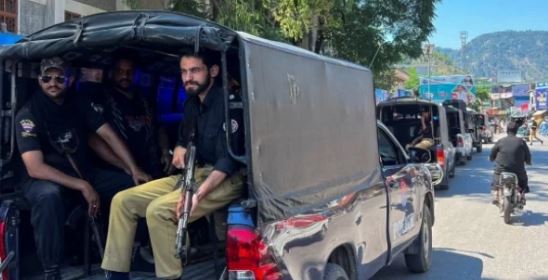
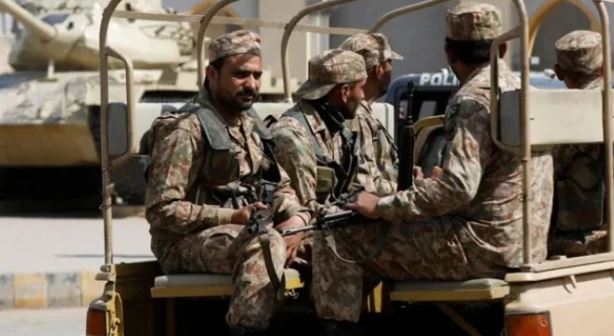
RAWALPINDI, JUL 29: Security forces have eliminated 32 India-backed terrorists during operations conducted in Khyber Pakhtunkhwa (KP) and Balochistan over the last 24 hours, the Inter-Services Public Relations (ISPR) said on Wednesday.

In a statement, the military’s media wing said that comprehensive joint operations were being carried out in different parts of KP and Balochistan to weed out Fitna al-Khawarij and Fitna al-Hindustan terrorists and their facilitators.

“In [the] last 24 hours, security forces have successfully eliminated 32 terrorists of these Indian proxies,” read the communique.

“On night [of] 28/29 July, multiple intelligence-based area sanitisation and targeted operations were conducted in district Khyber of KP,” the ISPR said.

During these targeted operations, security forces effectively engaged different terrorist locations, killing 24 terrorists belonging to Fitna al-Khawarij, it added.


According to the ISPR, security forces also conducted multiple intelligence-based operations in District Nushki of Balochistan, where, after an intense engagement, eight terrorists belonging to Fitna al-Hindustan were eliminated.

Security forces also recovered and destroyed weapons, ammunition, and improvised explosive devices used by terrorists.

Sanitisation operations were being conducted to eliminate any other Indian-sponsored terrorist found in the area, the ISPR said.

A report by the Centre for Research and Security Studies (CRSS) showed KP and Balochistan were the epicentres of violence, with the former recording as the worst hit region, during the second quarter of 2026.

Jointly, the two provinces accounted for almost 96% of all violence-linked fatalities, with over 61% (475) recorded in the former and 34% (265) in the latter province, according to the report.

KP recorded the highest number of violent incidents in the second quarter, with 151 cases (57%), followed by Balochistan with 94 incidents (35%), accounting for the majority of reported violence.

Iran to get Chinese shoulder-launched missile systems in weeks, sources say

Iran to get Chinese shoulder-launched missile systems in weeks, sources say

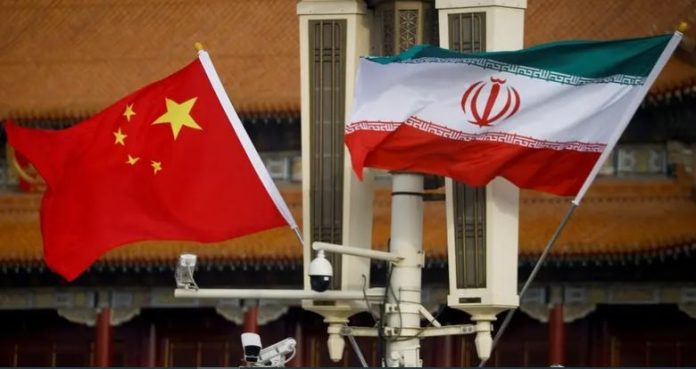
TEHRAN, JUL 29: Iran is expected to receive within weeks a first shipment out of up to 400 Chinese-made shoulder-fired air-defense missile launchers, three sources familiar with the deal told Reuters, as it rebuilds its defenses amid war with the United States.

The purchase, valued at $60-70 million, is one of Tehran’s largest-known efforts to strengthen its short-range air defenses since the outbreak of its war with the Us and Israel, which exposed gaps in Iran’s ability to protect military sites and strategic infrastructure.

The contract covers the purchase of between 300 and 400 man-portable air defense systems (MANPADS), including Chinese-made QW-12 and FN-16 missiles, the sources said.

The deal was signed with Zhongqing Baoshang International Investment, a Hong Kong-based company that the sources said was acting as an intermediary between the Iranian side and the Chinese supplier.

Iran needs to rearm after months of war

The sources spoke on condition of anonymity because of the sensitivity of the matter. Iran’s foreign ministry did not immediately reply to a request for comment.

China’s Foreign Ministry said: “The relevant reports are completely groundless. China has consistently played a role in promoting peace and ending the conflict.”

Beijing-based Zhong Qing Bao Shang Group, the parent company of Zhongqing Baoshang International Investment, did not immediately respond to an email request for comment on Tuesday.

Iran needs to rearm after months of fighting in which the US and Israel have struck facilities linked to its missile, drone and air-defense programs, and Tehran responded with barrages of ballistic missiles and drones.

The conflict has highlighted the challenge of defending fixed military and strategic sites against advanced aircraft and precision-guided weapons.

Washington abruptly suspended two weeks of bombardment on Saturday, but President Donald Trump said strikes would resume if negotiations failed to end the five-month-old conflict, which has in theory been in a state of ceasefire since April.

The delivery of hundreds of MANPADS would significantly expand Iran’s inventory of short-range air-defense weapons and underscore how military ties with China are deepening.

The sources cautioned that, although the agreement had been signed, delivery schedules, quantities and other implementation details could still change.

Under a plan agreed by the parties, deliveries will initially be by air from Urumqi in western China, then transiting through Pakistan to Iran, according to the sources, who did not clarify whether the transfers would take place by air or by road.

Pakistan’s military public relations wing ISPR said: “Speculations of Pakistan being involved in supply of Air Defense weapons to Iran from China are absolutely concocted and false.” A spokesperson for the Pakistani Foreign Ministry did not respond to requests for comment.

China and Iran explore land routes for delivery, sources say

While Iran has invested heavily in the past two decades in missiles, drones and radar, military experts say portable air-defense systems are important because they can be dispersed quickly, operated by small teams and relocated frequently, making them less vulnerable than fixed air-defense batteries.

A European security source said authorities in his country were aware of several contracts under discussion involving the possible sale of QW-series MANPADS to Iran, including QW-12, QW-18 and QW-19 systems.

A second security source, in the Middle East, said Iran had been seeking to purchase QW-12 and QW-18 missiles, but they were unaware that a deal had already been concluded.

The QW-12 and FN-16 are shoulder-fired, infrared-guided surface-to-air missile systems designed to engage low-flying aircraft, helicopters and drones. Their mobility allows them to be deployed rapidly around military installations, energy infrastructure and other sensitive sites.

Defense analysts regard the QW-12 as less capable than newer QW variants, including the QW-18 and QW-19, but say the systems can still provide an effective layer of short-range protection against drones and low-flying targets.

Two Western intelligence sources and an Iranian official said Tehran had also explored the use of overland routes to move Chinese military supplies and dual-use components more discreetly and reduce the risk of disruption.

The procurement highlights Iran’s continuing reliance on a combination of domestic weapons production and foreign suppliers despite years of sanctions and restrictions on defense-related imports.

Reuters previously reported that Iran was close to securing a separate agreement with China to acquire anti-ship cruise missiles, according to people familiar with those negotiations. Reuters could not determine whether the agreement went through.

Law enforcers continue operations against armed groups in Rawalakot: AJK police

Law enforcers continue operations against armed groups in Rawalakot: AJK police

RAWALAKOT: Law enforcement agencies continue operations against armed groups carrying out attacks against security personnel in Azad Jammu and Kashmir’s (AJK) Rawalakot, a top police official said on Wednesday.

Addressing a press conference in Rawalakot, AJK police spokesperson, Senior Superintendent of Police (SSP) Khawar Ali Shaukat, said that armed attackers have taken positions in different buildings across the city.

His remarks come amid violent clashes in the city involving supporters of the proscribed Jammu Kashmir Joint Awami Action Committee (JAAC) amid general elections in the region.

The AJK government had declared JAAC a proscribed organisation on June 5 under the Anti-Terrorism Act (ATA), accusing the group of involvement in terrorism.

The ban was imposed days before the committee’s planned June 9 protest demanding the abolition of 12 AJK Assembly seats reserved for refugees from Indian Illegally Occupied Jammu and Kashmir (IIOJK) who migrated to Pakistan after 1947.


During today’s presser, SSP Shaukat said that armed groups continue carrying out attacks on law enforcement personnel in different areas, adding that no concession would be given to “miscreant elements”.

According to the official, at least one Rangers personnel was martyred in the attacks as enforcement agencies continue operations against the armed groups.

The AJK police spokesperson said that police arrested several miscreants during the ongoing operations and recovered sophisticated weapons.

Terming the attacks on security forces and state institutions “unacceptable”, he maintained that state institutions had consistently exercised restraint.

Those involved in attacks against state institutions would be dealt with “with an iron hand”, he said.

SSP Shaukat said that the “links” of the miscreants extended elsewhere and claimed that anti-state elements were spreading negative propaganda on social media.

He vowed that authorities would not allow peace in the region to be undermined.

Polls amid violence
The federal government has termed the violence involving the banned JAAC an attempt to disrupt the ongoing electoral process and undermine peace in the region.

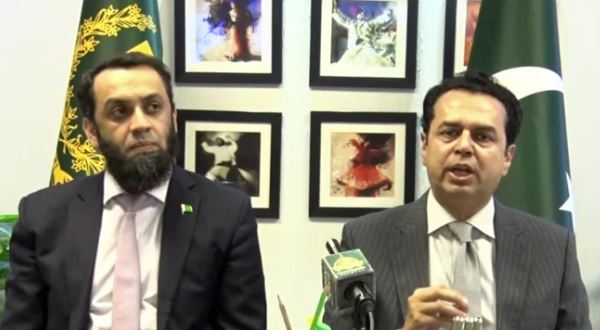
State Minister for Interior Talal Chaudhry on Tuesday said that the federal government would fully support the AJK administration to crush agitators.

Speaking at a press conference in Islamabad alongside Federal Information Minister Attaullah Tarar, the minister said that the banned outfit’s campaign was “not a movement to secure rights, but one aimed at taking rights away from the people”.

He alleged that the proscribed group was seeking to deprive Kashmiris of their right to vote and undermine the democratic process.

The first phase of the AJK elections was held on July 27, with Pakistan Muslim League-Nawaz (PML-N) securing victory in nine constituencies, according to unofficial and provisional results.

Discover more
Broadcast & Network News
South Asians & Diaspora
Sci-Tech News
Polling was held across all 13 constituencies in Mirpur, Kotli and Bhimber districts. According to the unofficial results, the PML-N won nine seats, while the Pakistan Peoples Party (PPP) secured four.

West Indies beat Pakistan by 90 runs to take 1-0 series lead

West Indies beat Pakistan by 90 runs to take 1-0 series lead

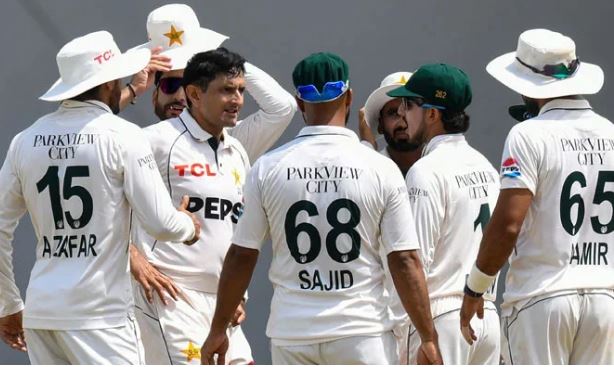
TAROUBA: West Indies wrapped up a commanding 90-run victory over Pakistan in the opening Test on Tuesday, bowling out the visitors for 120 while defending a target of 211 to take a 1-0 lead in the two-match series at the Brian Lara Cricket Academy.

Resuming their chase after Tea at 114/9, with captain Babar Azam and No. 11 Mohammad Abbas unbeaten on 53 and 22, respectively, Pakistan could add only six more runs before Seales trapped Abbas lbw in the second over after the interval.

Babar remained Pakistan’s top scorer with an unbeaten 58 from 107 deliveries, while Abbas made a defiant 23 from 33 balls. Wicketkeeper-batter Mohammad Rizwan was the only other Pakistan batter to reach double figures, scoring 11 during a 21-run fourth-wicket partnership with Babar.

Seales spearheaded West Indies’ bowling attack in the second innings with outstanding figures of 5/20 from 14.2 overs. Kemar Roach and Justin Greaves claimed two wickets apiece, while Shamar Joseph picked up one.

Earlier, Babar and Rizwan resumed cautiously after Tea and added 21 runs for the fourth wicket before Justin Greaves bowled Rizwan in the sixth over of the session.

Following Rizwan’s dismissal, Pakistan lost five wickets for the addition of just 25 runs and slumped to 71/9.

Babar was then joined by Abbas, and the pair shared an unbroken 49-run stand for the final wicket, during which the Pakistan captain brought up his 32nd Test half-century and guided his side past the 100-run mark.

Earlier in the day, Pakistan made a disappointing start to their chase as Kemar Roach had experienced opener Imam-ul-Haq (3) caught behind in the third over with just five runs on the board.

Emerging opener Azan Awais (3) briefly resisted alongside Babar in a 16-run partnership for the second wicket before Jayden Seales had him caught behind in the sixth over.

Seales struck again in his next over, trapping Salman Ali Agha lbw for a duck to leave Pakistan struggling at 25/3.

At the start of the fourth and final day, West Indies resumed their second innings on 126/7 and added a valuable 55 runs for their remaining three wickets.

Having secured a slender 29-run first-innings lead after posting 311 and dismissing Pakistan for 282, the hosts set the visitors a target of 211 to win the series opener.

Lower-order batters Shamar Joseph and Kemar Roach, who resumed the innings overnight, continued to frustrate Pakistan’s bowlers by extending their partnership to 61 runs.

Right-arm pacer Mohammad Ali finally made the breakthrough in the fifth over of the day, deceiving Joseph with a slower delivery. The left-hander top-scored for West Indies with a brisk 38 from 27 deliveries, including four sixes and a four.

Roach eventually fell to Abbas in the 53rd over after lobbing a simple catch to Babar Azam at short cover. He scored a patient 18 from 63 deliveries.

No. 10 batter Jomel Warrican added to Pakistan’s frustration with a quickfire 14 from 20 balls before Abbas bowled him to finish with outstanding figures of 5/22 from 15.5 overs.

Abbas was well supported by fellow pacers Mohammad Ali and Khurram Shahzad, who claimed two wickets each, while Aamir Jamal chipped in with one.

US, Saudis attack ‘Iran-backed groups’ in Iraq, threatening to intensify conflict

US, Saudis attack 'Iran-backed groups' in Iraq, threatening to intensify conflict

DUBAI/CAIRO: The US and Saudi Arabia launched strikes on Iran-backed groups in Iraq on Wednesday, saying they were responsible for drone attacks on Saudi oil facilities, prompting Iran to warn that blaming it for such attacks was a “major miscalculation”.

The strikes on targets inside Iraq come as Oman proposed a new regional deal aimed at resolving the conflict over the critical Strait of Hormuz, through which about a fifth of global oil and liquefied natural gas flowed before the war.

Iran’s Revolutionary Guards (IRGC) said on Wednesday that its forces struck three oil tankers in the strait and forced them to stop after they ignored warnings for taking an “unsafe and illegal route”.

The IRGC Navy said in a statement that it continued to maintain full control over the strategic waterway and warned that “unlawful US military interference” and instructions to vessels in the region would not go unanswered.

Reuters could not immediately verify the Guards’ account.

The US-Saudi strikes in eastern Iraq occurred just hours after the US military said its air defences had averted a surprise Iranian attack on US troops in the region. The IRGC said on Wednesday it had fired several ballistic missiles at US military installations in Jordan.

Back-and-forth attacks in recent days have ended a brief pause in the fighting, after US President Donald Trump abruptly called off a two-week US bombing campaign and Iran appeared to follow suit.

US-Saudi hit pro-Iran targets in Iraq
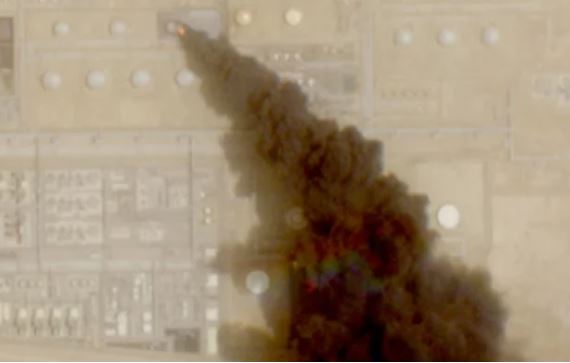
Saudi Arabia said on Tuesday that its air defences destroyed several drones targeting oil facilities in the kingdom’s Eastern Province. Iran-backed militias launched the attacks from Iraqi territory, Saudi Defence Ministry spokesperson Turki al-Maliki said.

Later in the day, US Central Command and Saudi Arabia’s defence ministry said the two countries hit multiple sites across eastern Iraq that they said had been used by Iran to direct drone attacks. The Saudi Defence Ministry said it was not seeking escalation but would respond to any “aggression”.

Iraq’s Popular Mobilisation Forces said a number of its official headquarters in different parts of Iraq were attacked on Wednesday by what it described as US and Saudi forces. The PMF said preliminary reports indicated several people were killed and others wounded, with damage to a number of its buildings and facilities.

Oil prices rose over $3 a barrel on Wednesday after US and Saudi Arabia strikes over concerns the conflict may escalate.

Speaking to state TV in Iran, an Iranian defence official strongly denied any connection between projectiles fired from other countries toward Saudi targets.

The unnamed military official, quoted by state broadcaster IRIB, said attributing attacks on US interests in the region to Iran was a “major miscalculation”.

US Central Command also said on Tuesday that Iran had launched multiple ballistic missiles “in an attempted surprise attack on US forces based in the Middle East,” and that the missiles were successfully intercepted.

In a statement, the Revolutionary Guards said: “As long as threats against the Islamic Republic of Iran continue and illegal and malicious actions by US forces against our interests are under way, the resistance will also continue.”


In an effort to resolve the conflict over the Strait of Hormuz, Oman has presented Iran with a plan backed by Gulf states to manage the waterway that would include collecting voluntary fees from ships, a Gulf source and a Western diplomat told Reuters on Tuesday.

Under the Omani proposal, Iran would not exercise sole control and fees would be voluntary, the Gulf source and the Western diplomat briefed on the matter told Reuters.

The system would be analogous to one in place on Asia’s Strait of Malacca, where Indonesia, Malaysia and Singapore ask ships to pay voluntary contributions to fund navigation, environmental protection and search-and-rescue operations.

Gulf Cooperation Council foreign ministers met via video call on Tuesday to discuss the latest developments in the conflict, a statement from the Qatari Foreign Ministry said.

A US official on Tuesday again rejected the idea of tolls or fees for ships transiting the strait, reiterating that it is an international waterway that should be free of Iranian control or restrictions. The official told Reuters that the deal under discussion would not include any tolls or fees.

Iran effectively shut the strait after the US and Israel attacked Iran on February 28. A deal last month between the US and Iran partially reopened the strait, with future talks planned to resolve larger issues including Iran’s nuclear program. But the agreement collapsed in early July after Iran fired on vessels using a shipping channel it does not recognise.

OGRA announces minor increase in Petrol and Diesel prices effective July 29

Petrol price hiked by Rs3.66, diesel up Rs4.80 per litre

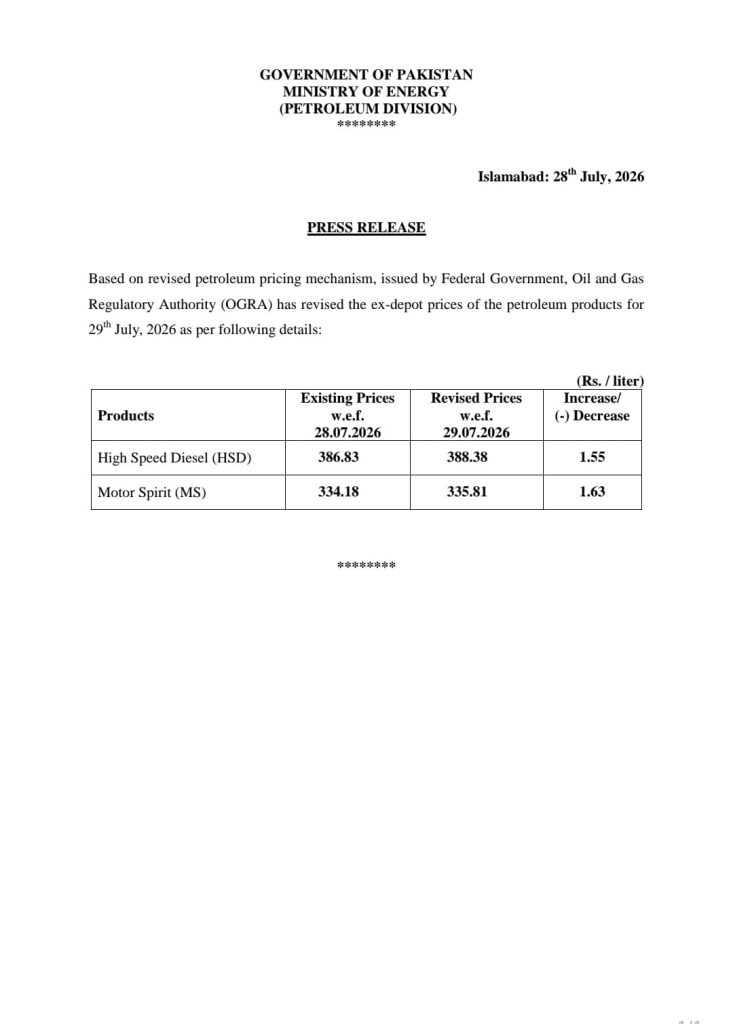
ISLAMABAD, JUL 28 /DNA/ – The Government of Pakistan, through the Ministry of Energy (Petroleum Division), has issued a press release announcing a slight increase in the prices of petroleum products, effective July 29, 2026.

According to the official notification released on July 28, 2026, the Oil and Gas Regulatory Authority (OGRA) has revised the ex-depot prices based on the updated petroleum pricing mechanism issued by the Federal Government.

Price Breakdown:

  • High Speed Diesel (HSD): The price has increased by Rs. 1.55 per liter, rising from Rs. 386.83 to Rs. 388.38.
  • Motor Spirit (MS / Petrol): The price has increased by Rs. 1.63 per liter, rising from Rs. 334.18 to Rs. 335.81.

These new rates will come into effect from tomorrow, July 29, 2026. The slight upward revision follows the government’s periodic review of global oil prices and currency exchange rates.

Kuwaiti Foreign Minister arrives in Islamabad

Kuwaiti Foreign Minister arrives in Islamabad

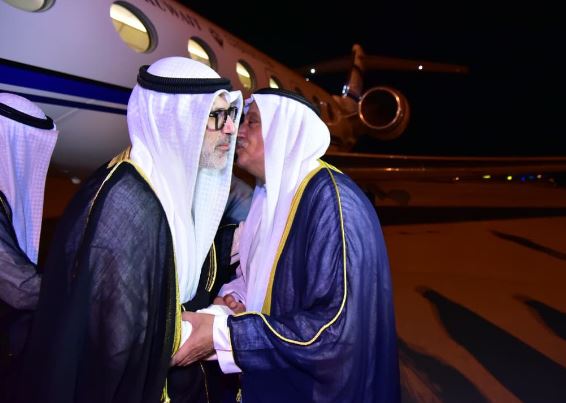
ISLAMABAD, JUL 28 /DNA/ – Sheikh Jarrah Jaber Al-Ahmad Al-Sabah, Minister of Foreign Affairs of the State of Kuwait, arrived in Islamabad today on an official visit at the invitation of Deputy Prime Minister and Foreign Minister Senator Mohammad Ishaq Dar.

Upon arrival at Islamabad International Airport, the dignitary was received by Mr Zahid Hussain, Additional Secretary (Middle East), Ministry of Foreign Affairs.

During the visit, the two sides will hold talks covering the full spectrum of bilateral relations and exchange views on regional and international issues of mutual interest. The visit reflects the longstanding brotherly relations between Pakistan and Kuwait, anchored in shared history, mutual trust and close cooperation.

Centre stands with AJK govt to crush agitators trying to sabotage elections: minister

ISLAMABAD: State Minister for Interior Talal Chaudhry on Tuesday said the federal government would fully support the Azad Jammu and Kashmir (AJK) administration to crush agitators seeking to disrupt the electoral process and undermine peace in the region.

He stated this while speaking at a press conference in Islamabad alongside Federal Information Minister Attaullah Tarar.

Talal’s remarks came against the backdrop of violent clashes in Rawalakot involving supporters of the proscribed Jammu Kashmir Joint Awami Action Committee (JAAC).

Earlier in the day, the AJK government said that the banned JAAC attempted to disrupt the ongoing electoral process through acts of violence and unrest.

AJK Secretary Information Muhammad Rashid Hanif made the statement during a press conference in Muzaffarabad alongside AJK Police spokesperson DIG Irfan Masood Kashfi, following violent clashes between law enforcement personnel and banned JAAC protesters in Rawalakot amid continuing sit-ins.


Hanif said the state’s primary responsibility was to maintain law and order and assured that authorities would take all necessary measures to ensure public safety and the smooth conduct of elections.

The AJK government had declared JAAC a proscribed organisation on June 5 under the Anti-Terrorism Act (ATA), accusing the group of involvement in terrorism.

The ban was imposed days before the committee’s planned June 9 protest demanding the abolition of 12 AJK Assembly seats reserved for refugees from Indian Illegally Occupied Jammu and Kashmir (IIOJK) who migrated to Pakistan after 1947.

The information secretary added that the banned group included armed individuals, militants and people linked to Fitna al-Khawarij, claiming that evidence of such involvement was available with state institutions.

He urged citizens to remain cautious of what he described as misleading information being circulated about the protests.

Hanif further said that some elements within JAAC had used civilians as human shields during demonstrations.

He added that public participation in the first phase of the AJK elections in Mirpur Division reflected the people’s preference for resolving disputes through peaceful and democratic channels.

DIG Kashfi said some protesters involved in the clashes were carrying modern and automatic weapons. He added that five police personnel, including an officer, were injured after coming under fire during the unrest.

The police spokesperson urged citizens to maintain contact with the administration and state institutions, saying public cooperation was essential for preserving peace and stability in the region.

On Sunday, Federal Information Minister Attaullah Tarar confirmed that security agencies had arrested a suspect allegedly involved in an India-linked digital influence campaign targeting Pakistan.

Tarar said the suspect was providing digital marketing services and that investigations had uncovered links between these activities and India, Radio Pakistan reported.

He added that payments made for promoting anti-Pakistan content on social media were traced to sources in India.

The minister had said the investigation had also exposed a network of bot farms allegedly being used to spread misinformation and amplify content targeting Pakistan’s sovereignty, government, armed forces and state institutions.

Tarar further claimed that during interrogation, the suspect revealed that a significant portion of the content being circulated through the network was linked to the activities of the proscribed JAAC in the AJK.

Trump shows irritation with Netanyahu before White House talks on Iran

Trump shows irritation with Netanyahu before White House talks on Iran

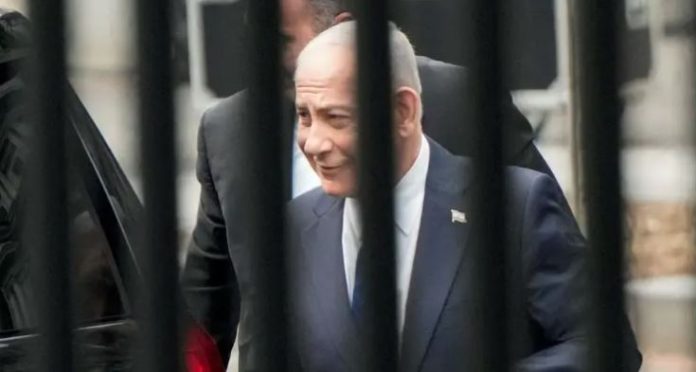
WASHINGTON, JUL 28: US President Donald Trump voiced irritation with Benjamin Netanyahu ahead of their White House meeting on Tuesday, complaining that details of the Israeli prime minister’s planned talking points on Iran had surfaced publicly, in a fresh sign of strain between the two leaders.

Asked about reports that Netanyahu wanted to talk to him about Pickaxe Mountain, a fortified facility buried deep underground near one of Iran’s main nuclear sites, Trump said, using Netanyahu’s nickname: “I don’t need Bibi to tell me that. Bibi’s telling me that because he wants me to stay involved.”

“Why don’t you just tell it to me? Why do you have to announce it to the world?” Trump said in an interview with “Fox & Friends.”

The New York Post reported on Monday that Netanyahu was expected to provide intelligence to Trump that Iran is building up its nuclear facilities at Pickaxe Mountain and is lying about wanting a peace deal, citing a source in Jerusalem.

Netanyahu’s office did not immediately respond to requests for comment on Trump’s remarks.

The US president was meeting Netanyahu after first having brief closed-door talks with Ukrainian President Volodymyr Zelenskyy.

Relations with Zelenskyy have warmed as Ukraine has blunted Russian advances, while Netanyahu faces growing White House frustration over the lack of progress toward a broader settlement in the Iran conflict and criticism from some of Trump’s supporters who oppose deeper US involvement in the Middle East.

The two men are in Washington to attend a memorial service for Senator Lindsey Graham, a hawkish Republican who was an advocate for both Israel and Ukraine in Washington, especially in getting their views heard by Trump.

Arriving in Washington earlier, Zelenskyy said anti-ballistic defense and strategic cooperation with the US were the “number-one priority” for meetings with Trump and his team.

“Peace needs to be brought closer,” Zelenskyy said in a post on X.

Both the Ukraine war and the widening Middle East conflict are at critical junctures. After the collapse of a ceasefire in the Iran war, Trump says he has paused US airstrikes to give diplomacy another chance. Zelenskyy, meanwhile, has been buoyed by Ukraine’s recent successes.

Netanyahu seeks Trump’s support for reelection
Netanyahu has run hot and cold with Trump, who at times has had to rein in the Israeli leader from attacking targets in Lebanon to try to weaken Iran-backed Hezbollah militants.

An acrimonious phone call in June in which the president called the prime minister “f**king crazy,” first leaked to the media and later publicly confirmed by Trump himself, laid bare the strains between the two leaders.

Sources familiar with the matter said Netanyahu aims to get Trump’s support for his reelection campaign ahead of an October 27 vote.

A meeting with Trump that showcases what has traditionally been a close relationship between the two leaders could help Netanyahu at home where he is struggling in the opinion polls.

They are also expected to discuss the Abraham Accords, the series of agreements Trump brokered to normalize diplomatic relations between Israel and the United Arab Emirates, Bahrain, Morocco and Sudan.

Trump wants to add Saudi Arabia to the accords but Riyadh has so far rejected joining the accords without a path toward Palestinian statehood.

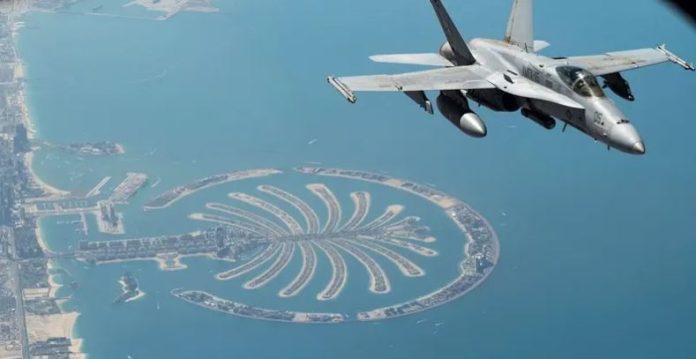
US, UAE announce first bilateral military AI task force

US, UAE announce first bilateral military AI task force

WASHINGTON, JUL 28: The US military on Tuesday announced an agreement with the UAE to establish the first bilateral AI task force.

The task force will focus on integrating AI applications for intelligence support, protecting critical infrastructure, and monitoring the regional security environment, according to the United States Central Command (CENTCOM).

“This will be a historic milestone as we work with one of our most capable regional partners to rapidly deliver evolving AI advancements to our warfighters,” CENTCOM chief Adm. Brad Cooper said.

The US-UAE task force, named Task Force Talon Synapse, is expected to launch in the coming weeks.

Based in Abu Dhabi, the team will be made up of around 20 Americans and Emiratis with expertise in AI, data, and cybersecurity.

“Together, we and our Emirati partners share a strong commitment to adopting AI applications that will foster innovation at speed and scale,” Cooper said.

The task force builds on talks that started last year between Cooper and UAE National Security Advisor Sheikh Tahnoon bin Zayed. There was a follow-up last month during a CENTCOM visit to the region, where they met with Emirati defense officials and industry leaders.

Stay Connected

64FansLike
60FollowersFollow

Latest Reviews

Exchange Rates

USD - United States Dollar
EUR
1.16
GBP
1.35
AUD
0.71
CAD
0.71