Home Blog Page 1591

IHC fixes prohibited funding case before larger bench

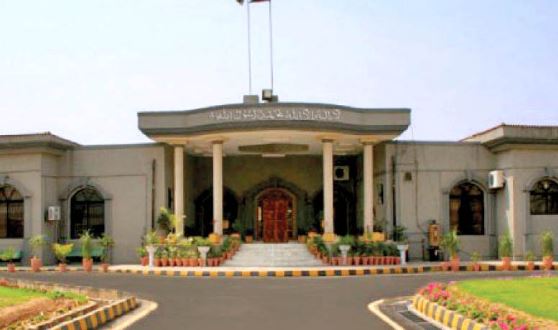
ISLAMABAD, AUG 16: The Islamabad High Court on Tuesday decided to fix the prohibited funding case before a larger bench. The hearing is set to take place on August 18.In his remarks during today’s hearing, acting IHC chief justice Aamer Farooq said: “Let us constitute a larger bench to hear this case.”

“The larger bench will hear the case the day after tomorrow,” he said.Barristers Anwar Mansoor and Faisal Chaudhary appeared on behalf of the PTI, which was found by the Election Commission of Pakistan to have received prohibited funding. A notice was issued to the party asking it to explain why the funds should not be confiscated.

“We have challenged the Election Commission’s fact-finding report,” Mansoor said.

According to the lawyer, “it was not necessary to disclose accounts for various reasons”.”The money went from here (Centre) to provincial accounts, which was not necessary to disclose,” the counsel said.

He appealed to the court to not take any action as far as the show cause notice issued to the party is concerned.At this, Justice Farooq said that this matter, too, will be taken up by the larger bench.

The court then adjourned the hearing, before issuing directives for a larger bench to hear the case on August 18.In a unanimous ruling on August 2, a three-member bench of the election commission said it has found that the PTI received prohibited funding.

The case was earlier referred to as the “foreign funding” case, but later the election commission accepted the PTI’s plea to refer to it as the “prohibited funding” case.As per the 68-page order, the commission stated that the Imran Khan-led PTI did indeed receive funding from foreign companies and individuals, which it hid.

The ECP verdict states that the PTI received funds from 34 individuals and 351 businesses, including companies.

Miftah defends hike in petrol price

Says, IMF loan disbursement to start by August end

Shujaat Hamza

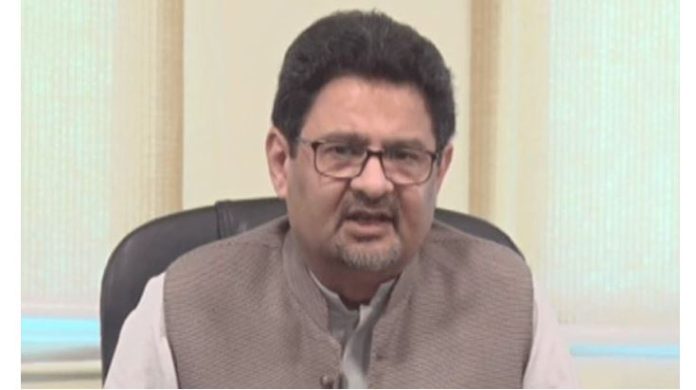
ISLAMABAD, ISLAMABAD: Finance Minister Miftah Ismail defended on Tuesday the federal government’s decision to hike the price of petrol after backlash from his party’s supremo Nawaz Sharif and a strong coalition partner — PPP.

The government jacked up Monday night the price of petrol by Rs6.72 per litre for the next fortnight, taking it to 233.91 per litre, while the rate of diesel was also moved up to 244.44 per litre.

In his press conference today, the finance minister clarified that he had not stated that he would not be increasing the price of petroleum products.

Addressing a press conference, the minister said that Islamabad had received Letter of Intent (LoI) from the fund requiring some edits by State Bank of Pakistan (SBP) and Finance Ministry, which were done after holding meetings with IMF.

The minister said new LoI has been received today (Tuesday) which he would send back after signing adding “We expect the board meeting would be held in August, hopefully 29 August then the disbursement would start.”

The minister said that rupee has been performing as best currency of the world following continuous appreciation against dollar for first 15 days of August. Earlier, US Dollar had gone out of control after July 17 and reached to Rs239 exchange rate.

He said, at that time when rupee was depreciating in July he had argued that there was need to control imports and bring it to the level of exports plus remittances to strike balance.

The minister said that the imports were recorded at $.80 billion during the fiscal year 2021-22 whereas the exports stood $ 31.7 billion, bringing trade deficit to $48.3 billion. During the year, the remittances were recorded at $30 billion. Consequently, the current account deficit (CAD), he said, was recorded at $17.5 last year despite the fact had PTI was specially focusing to bring it down.

He said, PTI had singularly focused on CAD and was not realizing the measures taken by Pakistan Muslim League government for improving growth rate, infrastructure improvements, building energy and communication.

He deplored that during its 4 years turn, PTI government took around Rs19,300 billion debt which is around 79 percent of total debt taken in 71 years.

He said, PTI gave $17.5 billion CAD, 1500 billion electricity circular debt, Rs.1400 gas circular debt, Rs200 billion losses in Sui Northern gas and left just 10.3 reserves at a time when the country was liable to pay $21 billion debt in 2022-23, $3 billion in June-July.

He question what real freedom the PTI has been talking about when there is $48 billion trade deficit while the PTI government was providing subsidy on fuel, giving amnesty to friends and bring defaults. He said, it was not only PTI, last government did the same citing 8.1 percent deficit in Musharraf regime.

He said, the incumbent government curbed imports including non-essential and luxury goods and then vehicles, air-conditioners, fridges, and locally assembly products that needed 90 percent imports.

He said the government was monitoring imports, exports and remittances adding that so far there had been $3.4 billion outflows and $4.1 billion outflows during the month of August. So more dollars are coming in than coming out, he added.

The minister said, imports reduced by 20 compared to last year while exports increased by 5 percent compared to last year.

Azerbaijan’s MFA comments on burning of forests by Armenians in Lachin

BAKU, AUG 16: The Ministry of Foreign Affairs of Azerbaijan (MFA) commented on the burning of forests by Armenians in Lachin city, Zabukh and Sus villages, citing the ministry’s spokesperson Leyla Abdullayeva’s Twitter account.

“Have a look at what’s left in Lachin city, Zabukh and Sus villages while the illegal Armenian settlers leave the area.

-Houses are devastated and burnt.
-Forests burnt, flora and fauna seriously damaged.
-Infrastructure facilities were destroyed.

Is this how Armenia prepares for peace?!” Abdullayeva tweeted.

Salman, Naseem receive their debut ODI caps from Yousaf, Shaheen

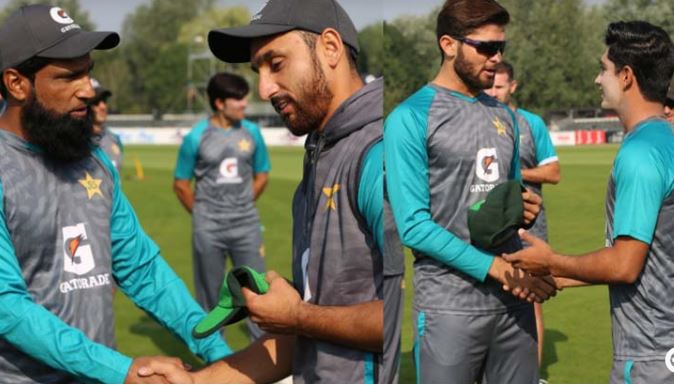
ROTTERDAM: Young Pakistan cricketers Salman Ali Agha and Naseem Shah received their debut ODI caps from Mohammad Yousaf and Shaheen Shah Afridi ahead of the first fixture of the three-match one-day international (ODI) series against Netherlands.

While giving Naseem the cap, Shaheen said, “You deserve this cap and enjoy your achievement.”

Salman and Naseem are Pakistan’s ODI players number 236 and 237.

Pakistan will be without the services of world number three ODI bowler Shaheen Shah Afridi, who is not available for the first two games due to a knee injury.

Pakistan Playing XI: Fakhar Zaman, Imam-ul-Haq, Babar Azam (captain), Mohammad Rizwan, Agha Salman, Khushdil Shah, Mohammad Nawaz, Mohammad Wasim, Haris Rauf, Naseem Shah

Meanwhile, the match is taking place under the lights of the Voetbalvereeniging Cricket Stadium in Rotterdam.

MoFEPT, PTCL sign contract 

DNA

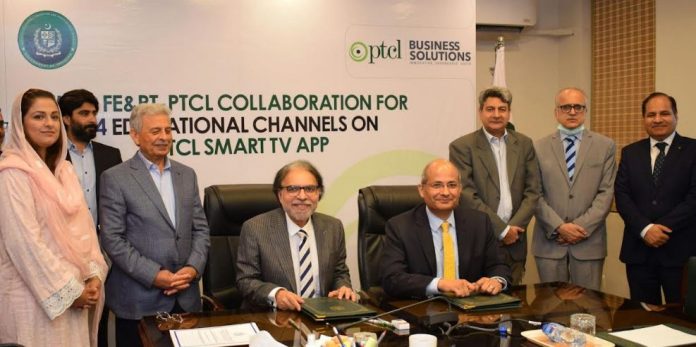
Islamabad:  Ministry of Federal Education and Professional Training (MoFEPT) and Pakistan Telecommunication Company Limited (PTCL) signed an agreement for the provision of 04 educational OTT channels in order to deliver educational content to students across the country, at a ceremony in Islamabad on Thursday. The channels will boost accessibility to quality educational content to foster learning and growth amongst students of different age groups.

Minister of Federal Education & Professional Training, Rana Tanveer Hussain was the Chief Guest at the occasion. Federal Secretary-MOFEPT, Aamir Ashraf Khawaja and Federal Secretary IT, Mohsin Mushtaq also attended the event. Contract was signed by Additional Secretary (MOFEPT), Waseem Ajmal Chaudhary and Group Chief Business Solutions Officer (PTCL & Ufone), Zarrar Hasham Khan.

Under the agreement, PTCL will provide 04 channels to the MOFEPT on its OTT Smart TV platform to deliver educational content for live viewing and downloading to students throughout the country. The digital channels will be available free of cost nationwide. The initiative will help MOFEPT in taking a stride toward digitalization of the education system for greater efficiency and improved learning.

During the ceremony, Rana Tanveer Hussain, Federal Ministry of Education and Professional Training said, “The arrangement with PTCL is an important step toward the digitalization of Pakistan’s educational system based on the latest learning and tutoring techniques. We believe the time is ripe for such interventions because there is nationwide penetration of smartphones and speedy internet even across remote regions. We are glad to have found a collaborative partner in PTCL that shares our vision for such a ground-breaking initiative for the advancement of learning in society. Digitalization is the future and we will explore the opportunities for enhancing the scope and reach of this initiative for a sustainable and deeper impact”.

Speaking at the occasion, Waseem Ajmal Chaudhary, Additional Secretary MOFEPT said “The 04 OTT educational channels will be completely free of cost so that the educational material is accessible to students from all socioeconomic backgrounds without any need for a subscription. This step will play a significant role in the socioeconomic development of the country. Moreover, the initiative furthers MOFEPT’s continuous endeavor to foster social good for the people of Pakistan”.

Commenting on the agreement, Zarrar Hasham Khan, Group Chief Business Solutions Officer, PTCL & Ufone said, “PTCL is the largest ICT services provider having footprint across Pakistan and being a company playing a pivotal role in driving digital transformation revolution in the country, needs partners to boost education sector. This will create synergies to revolutionize the educational system of Pakistan and enable all geographical areas with modern learning mechanisms.”
Senior officials from MOFEPT & PTCL also attended the ceremony.

Socio-economy and geopolitics of Indo-Pacific region enters into a new trade war

DNA

Islamabad, Aug 16: The socio-economy and geopolitics of the Indo-Pacific region has entered into a new “blind alley” of another trade war in terms of semiconductor/CHIPs, says a report published by Gwadar Pro on Tuesday.

Most recently, the US government has announced to form a BIG/CHIP 4 Alliance (US, Japan, South Korea and Taiwan) to contain the Chinese semiconductor capacity and market share, the report added quoting an article contributed by Dr. Mehmood Ul Hassan Khan, Executive Director of the Center for South Asia & International Studies (CSAIS).

It was stated that in the near past, the world experienced a shortage of chips during the Covid-19 pandemic, which disrupted the production of multiple products and sparked a worldwide debate about chip production.
In this connection, the US President Joe Biden recently signed the Chips and Science Act of worth US$52 billion and sets aside tens of billions of dollars to encourage companies to set up manufacturing and design facilities in the US. 
The Act has “violated” basic market rules by using the government’s power to change the global labor distribution pattern in the semiconductor industry, which has been formed naturally over the years according to market characteristics and resources.

China and some other countries are good at mass production because these countries have advantages over the US in terms of labor costs. Therefore, a short-term subsidy aimed at moving all the sectors of the semiconductor to the US will only add to its manufacturing cost, making the products less competitive in the international market.

On the other hand, if companies decide to accept US subsidies and give up chip investment in Chinese mainland, that almost means a spontaneous abandonment of the huge Chinese market, which not only helps produce a large amount of chips at a relatively low cost for them, but buys many semiconductor products from them. Thus, in the long run, the global chip giants may be at a loss.

Shares of many global chip makers plunged, even the US companies are facing the heat. US chip stocks’ plunged also to some extent, reflecting the concerns of semiconductor enterprises as they are forced to choose sides, restructure their future investment and layout following passage of the bill.
Conversely, several leading semiconductor companies in China, including the largest producer and major component suppliers, reported strong results in the first half of 2022, despite the US’ relentless crackdown against China’s chip industry.

China’s largest chipmaker, Semiconductor Manufacturing International Corp (SMIC), Yangzhou Yangjie Electronic Technology Co, Amlogic (Shanghai) Co and last but not least, Sino Wealth Electronic shared substantial increase in their overall profitability and market share, which is a very healthy sign for the Chinese domestic semiconductor industries.

Now is the age of globalization, in which all commercial decisions are made on the basis of “supply-demand”, availability of cheap labour, expected business expenses and cost of massive production, but somehow, the successive government of the US has been “cliff-hanging’ with the self-defined doctrine of economic nationalism and protectionism. Due to which, in many cases, the concept and model of free market has been “compressed” and “compromised” in the world.
The government subsidies have “killing instincts” for the globalized economy, economic sustainability, free & fair play, supply chains, international payment system and especially free flow of funds and foreign direct investments in the world.
Thus, the US CHIPs Act is “anti-international economy” and its subsidies are anti-standardization of the modern industrial world.
Taiwan Semiconductor Manufacturing Co, or TSMC, the world’s largest chip foundry, started building a $12 billion complex in Arizona last year. Samsung Electronics is working on a $17 billion factory in Texas.
However, in the past, the success of Silicon Valley depended on venture capital investments, the very high-risk, high-reward investments that fueled the emergence and growth of the semiconductor industry. Nevertheless, when they stopped their investments and preferred to develop overseas markets such as Japan, South Korea and Taiwan and later on the Chinese mainland, the US quite naturally lost its edge in manufacturing semiconductor chips which is now at the lowest ebbs.
It seems that now throwing money at the semiconductor industry to make up for the lost decades may not succeed, because the lost decades mean that the US no longer has the necessary people with the skills to build and run a state of the art fab.
The Chinese “financial gurus” and banking experts should consider alternative means to evade the CHIPS Act’s clauses by adopting special commercial structures such as “sovereign wealth funds’, trust or other methods, which will help them mitigate its negative impacts. 
Public-private partnership in the R & D of national industries of semiconductors and technological cooperation with ASEAN countries and government incentives may be good countermeasures of China to mitigate spillover repercussions of the US CHIPS & Science Act. 

Strategic expansion of the “BRICS” and start of “CHIP BRI Initiative” may be sensible strategic measures to mitigate negative impacts of the US Chip Act.

Information in this article comes from third party providers. This website does not provide explicit or implied warranty for such information and is not liable for any losses directly or indirectly caused by using such information, the article added.

Speakers highlight sacrifices of independence movement heroes

DNA

ISLAMABAD: Resilient Pakistan – A special talk on Resilient Pakistan was organized by Rotary Club of Islamabad (Metropolitan) in line with celebrations of 75th Anniversary of Independence of Pakistan. Imran Ghaznavi President RCIM welcomed the Guest Speaker Maj General Dr Sumraiz Salik.

General Salik served in army for 34 years. High points of his career have been, instructional appointments, rich experience of war on terror, 5 tenures in GHQ and command of a formation in Balochistan. He authored a book on War on Terror and he completed PhD on Strategic Security Management of CPEC in 2021.

General highlighted how Pakistan has faced various challenges since it’s independence and resiliently the entire nation over powered them.

Courage, contentment, faith and bravery are in our national bloodline.  We all need to unite and together can lead Pakistan into the road of Peace and Prosperity remarked Imran Ghaznavi.

The talk ended with a vote of thanks by Mian Shaukat Masood.

Violent protests erupt in parts of Kenya over vote

DNA

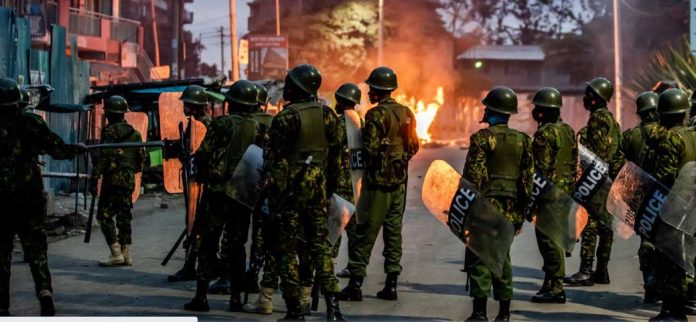
Kisumu, Kenya Violent protests erupted in Raila Odinga’s stronghold of Kisumu and parts of Nairobi after he lost his fifth bid for Kenya’s presidency on Monday, with angry demonstrators alleging vote-rigging as police fired tear gas to disperse them.

Odinga, 77, a veteran opposition politician now backed by the ruling party, has not spoken in public since the results were announced, but has accused his opponents of cheating him out of victory in the 2007, 2013 and 2017 presidential elections.

The 2007 polls in particular — which many independent observers also considered deeply flawed — cast a long shadow over Kenyan politics, unleashing a wave of ethnic violence that pitted tribal groups against each other and cost more than 1,100 lives.

As news of the results filtered through to Kisumu, large numbers of protesters congregated on a roundabout in the lakeside city, throwing stones and setting tyres on fire as they blocked roads with broken rocks.

“It was not free and fair. We were cheated,” 26-year-old Odinga supporter Collins Odoyo told as he rushed off to join the crowd, barefoot and with a vuvuzela horn strapped across his back.

– ‘You can’t steal from us’ –

“The government must listen to us. They must redo the election,” said Isaac Onyango, 24, his eyes streaming as police tried to defuse the demonstration with tear gas.

“You can’t steal from us!” shouted a young man in a balaclava wielding a club.

As tensions spike following the disputed outcome of the August 9 vote, 55-year-old president-elect William Ruto vowed to work with “all leaders”.

“There is no room for vengeance,” he said. “I am acutely aware that our country is at a stage where we need all hands on deck.”

correspondents reported that police fired live rounds as protests erupted in the Nairobi slum of Mathare where Odinga is popular.

And across town in Kibera, one of Nairobi’s largest slums, young supporters, who refer to him as “Baba” or “father” in Swahili, demanded a re-run as they hurled stones.

“Baba’s vote has been stolen,” said motorcycle taxi driver Emmanuel Otieno.

“Stop lying to Kenyans, we know Baba won,” said another protester, Eliud Omolo, waving a banner supporting Odinga.

Pakistan’s 75th Independence Day marked in Canada

DNA

OTTAWA, AUG 15: The 75th Independence Day of Pakistan was marked in Canada with elaborate flag hoisting ceremonies held at the Pakistan High Commission in Ottawa and the Consulates General of Pakistan in Toronto, Vancouver and Montreal.
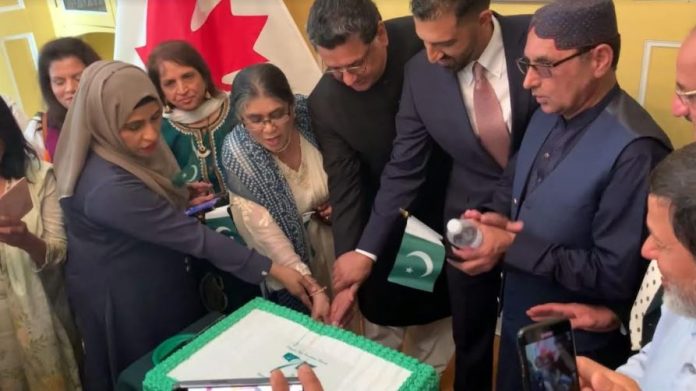
The main event of the day was the flag hoisting ceremony held at the Pakistan High Commission where High Commissioner for Pakistan Zaheer Janjua hoisted the national flag to the accompaniment of the National Anthem in the presence of a large number of Pakistan expatriates, including Canadian MP George Chahal, who had gathered at the chancery in Ottawa. The Messages of the President and the Prime Minister were also read out on the occasion. Later, a beautiful specially made cake in green and white Pakistani flag colours to fit the occasion was also cut.
In a message on the occasion, High Commissioner Zaheer Janjua felicitated the Pakistani diaspora in Canada on the 75th Independence Day of Pakistan. He paid tribute to the founding fathers of Pakistan for their heroic struggle and sacrifices for attaining the goal of an independent motherland.
He said Pakistan had weathered many challenges in the past 75 years but the goal of achieving a better, stronger and prosperous Pakistan as envisioned by our founding fathers was ongoing and required continued collective and concerted efforts of all at all levels.
He said Pakistan desires friendly relations on equal basis with all countries in the region and the world. He said Pakistan and Canada are also marking this year the 75th anniversary of the establishment of their diplomatic relationship. We enjoy cordial and friendly relations with Canada and the economic, educational and cultural linkages between both the countries are getting stronger, he said.
He also paid rich tributes to the Pakistani diaspora in Canada for their role in strengthening bilateral relationship and contributing to the progress and development of their adopted home and the country of their origin.  
He hoped and prayed the Kashmiris suffering under the Indian yoke would also have their freedom one day.
Later in the day, Pakistan High Commission and Salam Pakistan Canada, a local orgnaisation of Pakistani Canadians, jointly organised ‘Pakistan Festival’, a cultural fest featuring a host of attractions, including food and clothing stalls, shoes, jewellery, paintings, artifacts etc, at the historical Strathcona Park in the Canadian capital.
High Commissioner Zaheer Janjua along with Ottawa-based Pakistani Canadian MP Yasir Naqvi, MP Chandra Arya, Deputy Mayor Ottawa Ms Laura Dudas, MPP Chandra Pasma, Member Sindh Assembly (Pakistan) Nusrat Seher Abbasi and a large number of locals and Pakistani Canadians attended the festival.

Greek phone-hacking scandal: investigative media’s key role

DNA

Athens, AUG 15: Investigative journalism has emerged as a powerful force during Greece’s phone-hacking scandal, rocking a government that tries to “control” the media landscape, experts say.

The long-rumbling “Predatorgate” affair reignited at the end of July when Nikos Androulakis, leader of the opposition Socialists, told journalists about the attempted surveillance of his mobile phone via spyware Predator, having filed a legal complaint.

  The spyware can hack into a target’s phone and access messages and conversations.

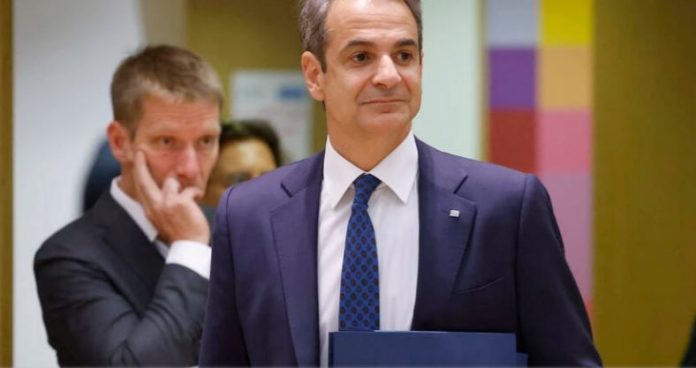
Greek Prime Minister Kyriakos Mitsotakis acknowledged last week that the intelligence service’s surveillance had been “politically unacceptable”, claiming he had not been informed.

He was speaking three days after two key members of his conservative government resigned over the matter.

Earlier this year two Greek journalists launched legal action, saying they had fallen prey to similar attacks on their phones.

Months-long probes by Greek investigative media have played a crucial part in shedding light on the phone-hacking.

Eliza Triantafyllou, a journalist with the Inside Story website, began investigating the case in January after the publication of two reports by the University of Toronto’s Citizen Lab and Meta (Facebook) referring to a new spyware, Predator, with clients and targets in Greece.

  “These reports went unnoticed by the (mainstream) Greek media at the time, though they revealed that the Greek government had probably bought Predator,” she wrote in a recent article.

   Last April, Inside Story published “the first confirmed case of Predator use in 2021 against a European citizen” — Greek journalist Thanasis Koukakis, who specialises in reporting on corruption.

  Online investigative news site Reporters United followed up by reporting that the journalist’s phone was monitored by the Greek intelligence service, EYP, in 2020.

  Stories first published online by investigative journalists are now making headlines in Greek newspapers.

   The country’s media landscape is marked by the connivance of traditional media groups with public authorities in line with political and financial interests.

 The Reporters Without Borders (RSF) non-profit gives Greece the lowest press freedom rank in Europe.

      RSF and the Media Freedom Rapid Response NGO have said the ruling party is “obsessed with controlling the message” and “minimising critical and dissenting voices”.

But investigative outlets are “a hope for freedom of expression” in Greece, according to Katerina Batzeli, a member of the Pasok-Kinal central committee, former minister and MEP.

“These innovative media have taken risks and done an extraordinary job” she said.

Greek investigative media, including Inside Story, Solomon and Reporters United, have been on the rise in recent years, using subscriptions to promote “independent and analytical information”.

   With disinformation rife, “investigative media dare to control the power”, said media analyst Georges Tzogopoulos.

Stay Connected

64FansLike
60FollowersFollow

Latest Reviews

Exchange Rates

USD - United States Dollar
EUR
1.17
GBP
1.35
AUD
0.67
CAD
0.72