Home Blog Page 1563

Governance model vital to tackle cyber security in power sector: NEPRA Chief

DNA

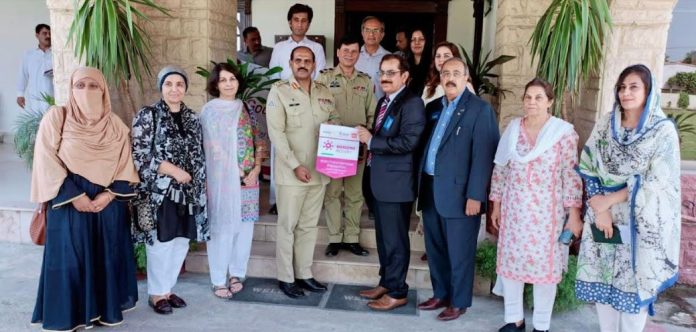
ISLAMABAD: Expressing concerns over the continuous occurrence of cyber security incidents in the national energy sector, NEPRA Chairman Tauseef H. Farooqi has stressed the need to develop a comprehensive cyber security governance model to deal with this challenge and promote security.

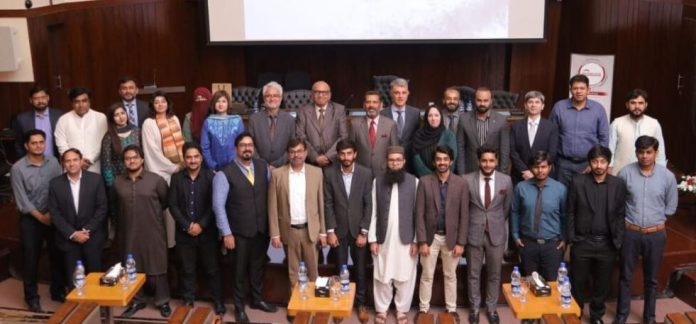
He said this while addressing a session on “Cyber Security Challenge in Critical Infrastructure (Power Sector)” at the NEPRA Tower here on Tuesday. The event was organized by TechAccess Pakistan jointly with its industrial partner RTA

Purpose of the event was to solicit awareness amongst national public and private sectors’ energy power entities against the global risks of cyber-attacks. A large number of power sector’s professionals, trade and business representatives and NEPRA members of the Authority and professionals attended the session.

Highlighting the importance of the session, the NEPRA Chairman said, “Cyberspace is the 21st century’s new warzone. Most of the cyber-attacks in 2021 and 2022 were focused on energy sector. Cyber security is more challenging within power sector due to dispersed geo-locations of generation plants and interdependence between OT and IT infrastructure. 

He added that cyber security incidents are now “Eco-System” challenges because it is not just one electricity supply chain actor that is targeted but the weakest link in somewhere in country’s power system.”

In his remarks, CTO Tariq Malik emphasized that the recent cyber-attacks by means of “viruses” or other known methods against primary energy operators are once again reminding us that we are now facing a very expensive “digital pandemic” which has become an “endemic” in security monitoring.

He explained that in fact, many events of cyber incidents are continuously emerging at global level on several OT Systems on different industrial technological plants with a fluctuation of increases and temporary apparent decreases in the number of cases identified.

He said that industries have to learn to live with it, putting in place and continuously updating the necessary treatments to thwart and “mitigate their effects” according to the “protocols” suggested by cyber security authorities and industrial entities, specialists in the cyber domain, daily involved to categorise insurgences’ cyber incidents and their effects.

CEO of TechAccess Pakistan, Mehmood Jabbar, in his remarks said that their company took as a mission to have a national under-controll cyber security solution which is able to manage in a secure way its H24 support to national corporates and governmental authorities by the adaptation of RTA and iSOC to the operational requirements and IT / OT infrastructures for its most sensitive Customers.

CM KPK lauds forest department employees for donating in flood relief

From Our Correspondent

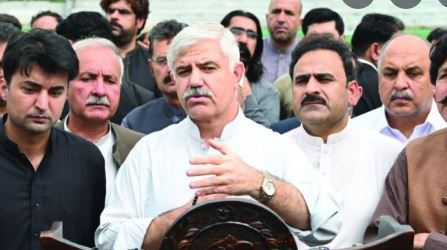
PESHAWAR, SEP 13 /DNA/ – Chief Minister Khyber Pakhtunkhwa Mahmood Khan has appreciated the resolve and determination of the employees of Forest Department in supporting the people affected by recent floods adding that the monitory contribution of the employees is proof that the sympathies of people are with the affectees and every possible step is being taken to rehabilitate them.

As part of contributions to the Chief Minister Flood Relief Fund, a cash cheque worth Rs.5.086 million was presented to the Chief Minister by the Minister for Forest & Environment Ishtiaq Urmar and Secretary Forest & Environment department Abid Majeed. Chief Conservator Forest Ijaz Qadir and other officials were also present on the occasion. According to details, the amount has been contributed voluntarily by all the employees of Forest Department. Employees from BPS-17 and above have contributed 3 days salary, BPS-16 employees have contributed two days salary whereas BPS-15 and lower have contributed a days salary for the rehabilitation of flood affectees in the Chief Minister Flood Relief Fund.

Touching upon the issue, Mahmood Khan reiterated that is our national and moral duty to help those who have been affected by this natural calamity adding that all individuals, philanthropists, civil societies and institutions should contribute as per their affordability.

The Chief Minister clarified that despite financial constraints, the compensation amount has been increased considerably and all available resources have been mobilized to ensure rehabilitation of the flood affectees on priority basis.

Will give final call for protest before Sept end, says Imran Khan

ISLAMABAD, SEP 13: Pakistan Tehreek-e-Insaf (PTI) supremo and former Prime Minister Imran Khan on Tuesday said that he will give last call for protest to the nation before September.

Talking to journalists in Bani Gala, the PTI chairman said that immediate elections should be announced, adding that the appointment of the army chief should be postponed until the election of a new government. “A few people have put national security at stake for their interests, and maybe I will mention the names of those people,” Imran added.

Imran Khan further said that the matter of giving the last call to the nation will not go beyond September, adding that he will stand with institutions that support the national interests.

Earlier on Monday, former PM said that they still have the option of dissolving the provincial assemblies, and they also have a few ideas and will push the federal government staying within the constitution.

He said that on one hand, a message is being conveyed that everyone should work together, while on the other hand, his party is being pushed against the wall. “I can bring the whole nation onto the streets,” he said.

Imran Khan said that the country is passing through a difficult phase and he decided to stage a peaceful protest and go home, adding that the elections could be delayed by around two months. “How can a fugitive with just 85 seats appoint a new army chief,” he asked, adding that the opponents could appoint a new army chief if they win the election and he would have no problem.

The PTI chairman said that the floods have wreaked havoc in the country and the torrential rains caused flooding from the Koh-e-Suleiman. The accumulated flood water in Sindh has ruined the rice crop, which could lead to a food crisis in the future, and the whole nation will have to help the flood affectees.

Imran Khan went on to say that Pakistan needs internal and external aid at this juncture as not a single dam has been constructed in the past 50 years. He further said the construction work on 10 dams was started during his government.

He said, “Climate change is causing destruction all over the world, that s why our government started the Billion Tree Tsunami, adding that the old forests in the country were destroyed and 10 billion trees are very necessary.”

Khan said that a conspiracy was hatched to topple his government when the country was progressing, adding that he had warned those who had the power. “We said that no one would be able to manage the economy in case of instability at that time, adding that they had no plan to manage the economy, these people just wanted to get rid of their cases.”

The former PM said that he could not imagine that Allah would give him such popularity, adding that he had not seen such enthusiasm during the PTI’s public rallies in big cities. “We are benefiting from every effort of the government, even in Musharraf’s era, I have not seen such cruelty, fascism, people are being intimidated, people are getting calls from anonymous numbers, cable operators were threatened in a telethon,” he added. “My popularity is increasing, but I am afraid of economic conditions,” Imran said.

While reiterating his call for early elections, the PTI supremo said that the best option is to hold elections in the country to bring political stability, and we have the option to resign from all our governments.

“I can take the nation out on the streets whenever I want, and people come to the streets on my two-hour call, the condition of the common man is bad. It is not a difficult task to evacuate the people, but I decided on peaceful protests because the country is facing a difficult time and we cannot bear more damage,” he said.

Imran Khan admitted and stated that accepting the name of the Chief Election Commissioner was a big mistake, adding that the establishment had given a guarantee, but the Chief Election Commissioner left no room against us. “The CEC openly opposed and sabotaged the EVM, and if a transparent election is to be held in the country, voting must be done with a machine,” he added.

The former PM further added that intellectuals like Ayaz Amir were humiliated, adding that two TV channels were closed, but if Shehbaz Sharif is not taking responsibility for all these acts, then he should tell the nation who is behind these actions.

“Nations that are developing have a better merit system, and the main reason for China s development is the merit system. I said that Nawaz and Zardari are not qualified to appoint COAS because they are globally recognised corrupt leaders,” Imran took a dig at PPP and PML-N bigwigs.

Lashing out at PM Shehbaz Sharif, Imran went on to dub him [Shehbaz] as a “fugitive”, questioning how the person with 85 seats can have the power to select the COAS. Reiterating the narrative of a foreign conspiracy, Imran said that the current government came into power through a plot, but if the people in the coalition government came to rule by getting a mandate through the vote, then they [the coalition government] could go for the selection of the COAS. “I am ready to talk with everyone, but first we will talk about the general elections.” However, “they [coalition government] get upset when they hear about elections, so how could I talk to them,” said the former premier.

“I neither have any property abroad nor intend to run away from this country. These people live in the richest areas of London, but for me, Pakistan is a priority,” said the PTI Chairman. He also warned that the country will continue to face the worst situation if this government continues to rule. The PTI Chairman added that he has “no idea how long it will take Pakistan to get back on track if the country has to go bankrupt.” Imran claimed that there was no possibility of political stability in the country under the coalition government. Talking about Sindh by-elections, Imran went on to say that the province has been witnessing floods due to which by-elections could be delayed for two months. Sharing his thoughts about the western world, the former premier claimed that no one but him better knew the “psyche” of the western world.

Taking a dig at PM Shehbaz, Imran went on to claim that during Shehbaz Sharif’s conservation with the UN Secretary, he [Shehbaz] had said quite “weird” things. He further lashed out at the PM Shehbaz-led government and said that 60 per cent of Shehbaz’s cabinet are on bail. The Financial Accountability, Transparency, and Integrity (FACTI) panel has conducted research in the world, saying that the elite class, by looting money, sends money to western countries.

CM Mahmood Khan reviews progress on Provincial Climate Change Policy

DNA

PESHAWAR: The Khyber Pakhtunkhwa Cabinet meeting held here on Tuesday with Chief Minister Mahmood Khan in the chair approved the Khyber Pakhtunkhwa Climate Change Policy and Action Plan-2022, which focuses on reducing vulnerability of natural and human systems as well as lessening greenhouse gas emissions through technological or nature-based solutions.

The new policy is in consonance with the objectives of the Revised National Climate Change Policy 2021 and will address as many as nine Agro-Ecological Zones of the province including the merged districts. The successful implementation of the policy will open new avenues to attract international climate financing in adaptation and mitigation sectors, allowing Khyber Pakhtunkhwa Province to achieve sustainable development and create resilience against natural disasters thereby securing the province’s fragile economy in confronting future environmental challenges.

The Chief Minister said that after 18th amendment, the Khyber Pakhtunkhwa became the first province that devised Provincial Climate Change Policy and Action Plan 2022 in the context of changes taking place in the climate.

The meeting besides the cabinet members was also attended by the Provincial Chief Secretary, Additional Chief Secretary, Senior Member Board of Revenue and Administrative Secretaries of various government departments.

Special Assistant to Chief Minister Khyber Pakhtunkhwa on Information & PRs Barrister Muhammad Ali Saif while briefing media persons about the decisions of the cabinet meeting at ITLA’A Cell informed that the Chief Minister directed the concerned authorities to complete feasibility study within a month period for setting up a plant for producing energy from wastes/garbage.

 The bio-fuel plant will not only help in controlling environmental pollution but will also contribute towards making the province self-sufficient in energy. The Chief Minister, he said, further directed for bringing amendments in the relevant laws with regard to the acquisition of land for setting up universities and no more than 100 Kanals of land be procured for a university.

This will ensure the protection of agricultural lands. The cabinet, he said, also accorded approval towards allowing the food department to sign MoU with the Bank of Khyber for Insaf Food Card. The deserving households, he said, will receive rupees 2100 monthly under the Insaf Food Card for which billions of rupees will be borne by the government as subsidy.

The SACM further informed that the cabinet while reviewing some of its earlier decisions taken during the special budget meeting held on June 13, 2022 accorded approval to reduce the Ad-hoc Allowance 2022 from 16 % to 15 % to be granted to all provincial government employees on running basic pay, with no immediate pay-as-you-go deduction towards the Defined Contribution Pension Program. Similarly, the decision regarding calculation of pension emoluments on the basis of last three years’ average basic pay with effect from 1st July 2022 was also held in abeyance.     

He said that the cabinet also approved the extension of Water and Sanitation Services Company (WSSC) Bannu’s jurisdiction to 11 village councils and 5 neighborhood councils falling within the ambit of the Assistant Director Local Government Bannu to benefit a population of 89, 596 persons.

Barrister Saif further said that the cabinet also accorded approval for lease agreement between the Local Government, Elections & Rural Development Department and Sports, Tourism and Culture Department for giving 100 Kanal land, located on Mardan bypass road, on lease basis to the latter one for the establishment of a Cultural Complex in Mardan. The cabinet, he further informed, also approved the inclusion of Patwar Halqas of Sulatanr and Jarogo valleys in the jurisdiction of Upper Swat Development Authority to enable the Authority to carry out its functions regarding promotion of eco-tourism and environment friendly development effectively. The cabinet, he said, also approved personal upgradation of as many as four employees of the defunct FATA Development Corporation, which included Muhammad Suleman Khan, Muhammad Rafiq, Sanaullah and Fazal Rabi. 

He said the cabinet also approved the Khyber Pakhtunkhwa Private Schools Regulatory Authority (Amendment) Act, 2022 with certain amendments in the previous one to make it more clear and simple. Furthermore, the cabinet also approved the posting of Mr. Zakaullah Khattak (PCS EG BS-20) against the vacant post of Managing Director, Khyber Pakhtunkhwa Urban Mobility Authority, he informed. Similarly, the cabinet also approved regularization of the 21 left over Special Police Officers of the Special Police Force against the vacant positions in various districts of the province.

Imran Khan has enmity with none but wants ties with mutual respect: Farrukh 

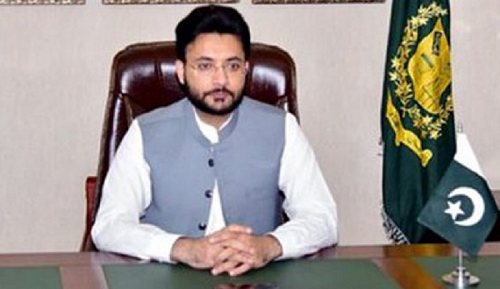
ISLAMABAD:  /DNA/ – Pakistan Tehreek-e-Insaf (PTI) Central Secretary Information Farrukh Habib made it clear that PTI Chairman Imran Khan had no enmity with any country but he would never compromise on prestige of the country and wanted relations based on mutual respect.
He said that Imran Khan always safeguarded and promoted the interest of Pakistan unlike the gang of thieves who held meetings with the American diplomats to hurt the country by toppling the well-performing PTI government through foreign collaborators.
Farrukh Habib in a statement issued from PTI Central Media Department (CMD) here on Tuesday said that PTI Chairman worked tirelessly to restore the image and prestige of the country at the international level.
However, he said that the self-centered, greedy and crooked ruling junta were making all-out efforts to implicate Imran Khan in various cases because the foreign imposed cabal of crooks could not defeat him politically.
However, he stated that Imran Khan was not afraid of baseless, fabricated and fake cases, as he always spoke about the rule of law.
Farrukh Habib went on to say that the group imposed through foreign conspiracy has become a source of nuisance for the people, as they compounded the miseries of the masses manifolds.
He said that Imran Khan’s popularity was scaring the corrupt gangs; hence they were looking various options to delay the polls because they were well-aware of the fact that they would face humiliating defeat whenever polls were held, adding that the root of all the problems currently facing the country was the bunch of these thieves who seized the power through foreign backed conspiracy.
Farrukh lashed out at the imported Information Minister Maryam Aurangzeb and said that the maid had lost her senses in ego, selfishness and lust for throne.
He said that the nation knew these looters who forgave corruption cases of whooping Rs. 1100 billion by giving themselves NRO-2, as their ringleader fled the country by lying before the courts while his notorious coteries became the guards of the institutions.
He stated that the election commissioner worked as a pawn of PDM, who hurt the country due to his dishonesty.
Farrukh Habib stated that Imran Khan was the only national leader, whose life and death was in Pakistan and he would leave no stone unturned to flush the country of these termites with the power of public revolution and truth.

BISP distributes over 24 billion rupees among 965,248 flood affected families

DNA

Islamabad, Sep 13: The financial assistance of flood affected families through Benazir Income Support Programme is conitnue across the country. According to the latest figures Benazir Income Support Programme has so far disbursed Rs. 24,131,200,000 among 965,248 flood affected families.

An amount of Rs. 25,000 per family under Flood Relief Cash Assistance is being provided to flood affected families of Balochistan, Sindh, Khyber Pakhtunkhwa and Punjab. As of Tuesday evening 120,215 affected families have received Rs.3,005,375,000 in Balochistan; 576,682 families have received Rs.14,417,000,000 in Sindh; 118,940 families have received Rs.2,973,500,000 in Khyber Pakhtunkhwa and 149,413 families have received Rs.3,735,325,000 in Punjab. 

Today 18,051 flood affected families received cash assistance from different campsites established in flood hit areas of Balochistan, Sindh, Khyber Pakhtunkhwa and Punjab. A control room has been established at Benazir Income Support Pogramme headquarters to ensure smooth payments.

Rotary Club Islamabad donates relief goods for flood victims

DNA

ISLAMABAD: Rotary Club of Islamabad (Metropolitan) donated two truck load of quilts, beddings, floor mats, clothes, shoes, Medicines worth half a million for flood victims. Goods handed over to the Station Commander Nowshera KPK.

President of the Rotary Club of Islamabad Imran Ghaznavi along former Ambassador Fauzia Nasreen, Mian Shaukat, Advocate Tayyaba and Omar Nishtar along other members lead the delegation.

Station Commander appreciated the efforts of Rotarians and their service above self for the people in need of help.

President Imran Ghaznavi commended and highly appreciated the commitment of Station Commander,  his team including Executive Officer, Vice President of Nowshera Cantt Board and district management for their untiring efforts in providing relief activities to flood victims.

Pakistan lacking ‘effectiveness’ on four FATF-linked goals

ISLAMABAD: The Asia-Pacific Group (APG) on Money Laundering has rated Pakistan’s level of effectiveness as ‘low’ on 10 out of 11 international goals on anti-money laundering and combating the financing of terror (AML/CFT), even though the country is now compliant on 38 out of 40 technical recommendations.

The Sydney-based regional affiliate of the Financial Action Task Force (FATF) released an update, as of Sept 2, on the rating of its regional members suggesting that Pakistan had a ‘moderate level of effectiveness’ on only one out of 11 outcomes.

Under this ‘immediate outcome’, Pakistan extends international cooperation on appropriate information, financial intelligence, and evidence, and facilitates action against criminals and their assets.

A 15-member joint delegation of FATF and APG paid an onsite visit to Pakistan from Aug 29 to Sept 2 to verify the country’s compliance with a 34-point action plan committed with FATF at the highest level in June 2018.

ISLAMABAD HAS MADE MODERATE PROGRESS ON ONE OUT OF 11 IMMEDIATE OUTCOMES

The task force had found Pakistan compliant or largely compliant on all the 34 points in February this year and had decided to field an onsite mission to verify it on the ground before formally announcing the country’s exit from the grey list.

Under the FATF-APG assessment mechanism, effective ratings on “Immediate Outcomes” reflect the extent to which a country’s measures are effective. The assessment is conducted on the basis of 11 immediate outcomes, which represent key goals that an effective AML/CFT system should achieve.

However, this has no direct bearing on an expected exit of Pakistan from FATF’s grey list during its Oct 18-22 plenary in Paris.

Last month, the APG had described Pakistan as ‘compliant’ or ‘largely compliant’ on 38 out of 40 technical recommendations of the FATF on anti-money laundering and combating financing of terror. It had, however, retained Islamabad on ‘Enhanced Follow-up’ until further progress was made on the two remaining recommendations.

This means that Pakistan has made major progress on FATF’s technical recommendations to qualify to be moved out of ‘grey list’, but it is still far behind FATF’s immediate outcomes on effectiveness.

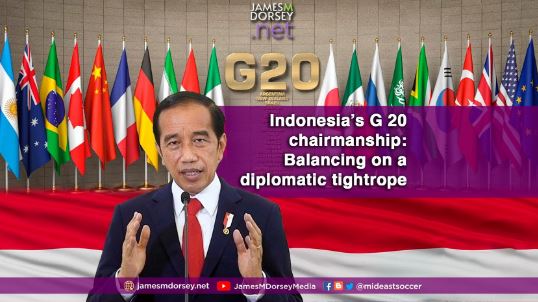
Indonesia’s G 20 chairmanship: Balancing on a diplomatic tightrope

Indonesia’s geopolitical plate is piling up as the archipelago state prepares to host the Group of 20 (G20) summit and associated gatherings in November, including the Religion 20 (R20), a high-level meeting of religious leaders, the first under the G20’s auspices.

The challenges and opportunities for Indonesia are multiple and often unique.

In June, Indonesian President Joko Widodo persuaded the leaders of the Group of 7, which brings together Canada, France, Germany, Italy, Japan, the United Kingdom, the United States and the European Union, to join the summit in Bali of the G20, made up of the world’s largest economies, even if it is attended by Russian President Vladimir Putin.

The G7 leaders had threatened to boycott the summit if Mr. Putin were invited in protest against Russia’s invasion of Ukraine.

Even so, much can derail Mr. Widodo’s achievement in the months leading up to the summit, although he has, for now, prevented a fracturing of the G 20 even before the leaders convene.

Pulling the G20 back from what could have constituted a devastating fiasco is just one of the pitfalls, Indonesia has been seeking to maneuver. With two months to go until the Bali summit and a world mired in conflict, bifurcation, and economic crisis, Indonesia’s G-20 presidency is hardly out of the woods.

Insisting that Mr. Putin should attend the summit helps Mr. Widodo maneuver Indonesia through the minefields of a world increasingly polarized by the rise of civilizationalist leaders who think in civilizational rather than national terms, and the power struggle to shape the world order in the 21st century.

Yet, in a potential preview of the summit, Russian Foreign Minister Sergei Lavrov walked out of a meeting of G20 foreign ministers in Bali in July when Russia came under fire for its war in Ukraine.

The gathering ended without the traditional joint communique, chairperson’s statement and/or group photograph. It underscored the fact that Indonesia may have to walk a diplomatic tightrope to prevent the November summit from fracturing the G 20 beyond repair.

Mr. Lavrov’s walk-out underscored the risks stemming from the power struggle and the expansionist ambitions of civilizationalist leaders such as Mr. Putin and Chinese President Xi Jinping.

They threaten to put a dent in Indonesia’s successful track record of being inspired by the principles of a 1955 conference in the Indonesian city of Bandung that gave birth to the non-aligned movement.

That has not stopped Indonesia from rejecting Chinese claims to territory in the South China Sea, refusing China’s offer to negotiate maritime boundaries, and at times conducting military exercises just beyond Chinese-claimed waters while maintaining substantial economic relations with the People’s Republic.

However, increasingly, Indonesia may find that non-alignment no longer is its best option, even if that would not necessarily mean that it would pick sides in the US-China divide.

What it does mean is that the G20 is the opportunity for Indonesia to showcase itself, on the back of its diplomatic acumen, as an attractive target for badly needed foreign investment and a regional power that has long flown under the radar.

To do so, Indonesia. one the world’s biggest coal exporters and carbon emitters, will have to clarify its stance on a host of issues, including climate change; perceived threats posed not only by China but also by Aukus, the trilateral security pact between Australia, the United Kingdom, and the United States that is allowing Australia to acquire nuclear-powered submarines; and the mushrooming food and energy crisis that raises the specter of a global recession.

One way, Indonesia hopes to make its mark is a summit of religious leaders that is scheduled to precede the meeting of heads of government and state. The religious summit is expected to refashion the G-20’s erstwhile Interfaith 20 track or IF20 as the Religion 20.

But even that is not without its pitfalls.

Organised by Nahdlatul Ulama, the world’s largest Muslim civil society movement in the world’s largest Muslim-majority country and the Islamic world’s foremost democracy, in cooperation with the Indonesian government, the R 20 constitutes at first glance a significant shift away from the approach of the IF 20.

In contrast to the IF 20 that was dominated by scholars and activists, the R 20 intends to bring together religious leaders to globally position religion as a source of solutions rather than problems. It is a call that resonates coming from the world’s most populous Muslim majority country and democracy.

Some 200 religious leaders and politicians, including Nahdlatul Ulama general chairman Yahya Cholil Staquf, World Evangelical Alliance secretary general Bishop Thomas Schirrmacher and former US ambassador to the Vatican Mary Ann Glendon are expected to attend the summit.

On the surface of it, the R 20 constitutes an opportunity to energize the world’s major faith groups to rally around shared civilizational values that would empower religion as a force for good that goes beyond lofty statements that are not worth more than the paper they are written on.

That is a tall order given the role that religious and identity groups play in perpetuating rather than resolving conflicts based on international law, justice, and equity.

Think of the Russian Orthodox church as a driver of extreme Russian nationalism and the definition of Russia as a civilizational rather than a national state, resulting in the invasion of Ukraine and the potential threat to other former Soviet republics.

Or the uncritical support by Christian and Jewish groups of Israeli policies that violate international law, deny Palestinian rights, and long-term put at risk Israel’s existence as a democratic Jewish state.

The R20’s organizers appear to have opted, at least for now, to co-organize the summit with the Muslim World League rather than representative non-Muslim faith groups less beholden to a government.

The League is Saudi Crown Prince Mohammed bin Salman’s vehicle to garner religious soft power, help polish the kingdom’s tarnished image, and propagate a socially liberal but autocratic interpretation of Islam that preaches absolute obedience to the ruler.

An R20 press release quoted the League’s secretary general, Mohammed al-Issa, as saying that “working alongside Nahdlatul Ulama…will strengthen our mission. This partnership with Nahdlatul Ulama will serve as an excellent platform for dialogue that will amplify and extend the Muslim World League’s noble mission.”

Even so, the R 20 could undergird Mr. Widodo’s vision of applying the principles of the Association of Southeast Asian Nations (ASEAN) to the G 20.

Indonesian officials argue that the nature of ASEAN has allowed its ten members, despite their different political and economic systems, to prevent the once war-torn region from confronting another abyss and finding ways to peacefully manage or resolve disputes and tackle common problems.

Like with the religious summit, Indonesia faces a tall order in attempting to pull back from the brink a world consumed by the war in Ukraine as it seeks to maneuver the pitfalls of mounting tensions between the United States and China over issues like Taiwan that, like Eastern Europe, could spark a war with a global fallout.

Dr. James M. Dorsey is an award-winning journalist and scholar, an Adjunct Senior Fellow at Nanyang Technological University’s S. Rajaratnam School of International Studies, and the author of the syndicated column and blog, The Turbulent World of Middle East Soccer.

Sindh’s decision to double wheat support price criticised

Islamabad, SEP 13: Former President of Islamabad Chamber of Commerce and Industry (ICCI) Dr. Shahid Rasheed Butt on Tuesday criticised decision of the Sindh Cabinet to double the wheat support price terming it against the interests of masses reeling under inflation.

The decision should be reversed as it that will affect the whole country and the poor reeling under record inflation will die of hunger, he said.

Shahid Rasheed Butt said that the decision should be withdrawn otherwise the price of flour will increase to Rs150 per kg which the majority cannot afford.

He informed that last year, the support price of 40kg of wheat was Rs2200 which has now been increased to Rs4000 which has started price in the market and triggered hoarding by the profiteers who are benefitting from the development.

The move will result in a record hike in the price of wheat flour and it will become impossible for millions to manage food. He observed.

It is feared that wheat from other provinces will start reaching Sindh which will lead to a nationwide crisis as a bag of flour which was available for Rs1100 to Rs1200 in January is now being sold at more than Rs2000 and any further increase in it will be unbearable for the people.

Now, one hundred kilos of wheat will be bought from the farmer for ten thousand rupees, the price of which after storage, transportation and packing will be Rs12000 minimum which will be the worst exploitation of the people.

He said that the rice crop in Sindh has been destroyed, so the poor farmers who used to eat rice are now eating roti made of wheat flour, which is increasing pressure on the existing stock.

India has banned the export of rice to ensure food security due to which its price has increased by five percent in the global market therefore the export of rice from Pakistan should be banned immediately.

He suggested that if the Sindh government wants to give relief to the flood-affected farmers, instead of doubling the relief price, they should give them a direct subsidy.

Stay Connected

64FansLike
60FollowersFollow

Latest Reviews

Exchange Rates

USD - United States Dollar
EUR
1.17
GBP
1.35
AUD
0.67
CAD
0.72