Home Blog Page 156

Iran’s attacks ‘below the threshold’ of restaring war, US Gen. Dan Caine says

Iran's attacks 'below the threshold' of restaring war, US Gen. Dan Caine says

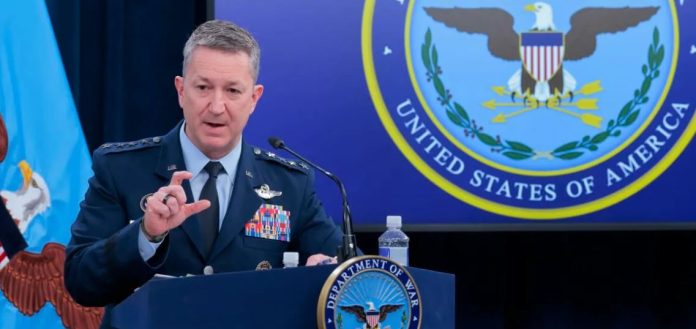
US Secretary of Defense Pete Hegseth added that the US established a “red, white, and blue dome” over the Strait of Hormuz as a “gift from the US to the world.”

WASHINGTON, MAY 5: United States Chairman of the Joint Chiefs of Staff, Gen. Dan Caine, said in a Tuesday press conference at the Pentagon that Iran’s recent attacks would not restart the war, saying the attacks remain “below the threshold of restarting major combat operations at this point.”

Caine added that US operations remain at “low-level kinetics at this time.”

US Secretary of Defense Pete Hegseth also spoke, saying that the US established a “red, white, and blue dome” over the Strait of Hormuz as a “gift from the US to the world.”

Advertisement

US forces are “providing 24/7 overwatch for peaceful commercial vessels, except Iran’s,” said Hegseth.

Hegseth noted that six ships had tried to break the US blockade since the start of Operation Project Freedom on Monday, all of which were “turned around.”


The statement contrasted with statements by the US military on Monday, which said it destroyed six Iranian vessels.

Hegseth added that Operation Project Freedom is a temporary operation separate from both Economic Fury and Epic Fury.

Hegseth: Project Freedom ‘temporary in duration’
“Project Freedom is defensive in nature, focused in scope and temporary in duration, with one mission, protecting innocent commercial shipping from Iranian aggression,” said Hegseth. “American forces won’t need to enter Iranian waters or airspace. It’s not necessary. We’re not looking for a fight.”

Hegseth emphasized that Iran has been “harassing ships” in the Hormuz “for too long.”

“America is using its strength to lift up others,” Hegseth continued. “Iran is trying to subjugate others.”

Hegseth further said that Iran does not control the Strait of Hormuz and that “hundreds of ships are lining up” to pass through the waterway.

Reiterating that the mission is “temporary,” Hegseth demanded that the world “step up,” adding that “the world needs this waterway a lot more than we do.”

“At an appropriate place and time, we will hand responsibility back to you,” he said.

On Monday, US President Donald Trump urged South Korea to join the American effort in the Hormuz after a Korean cargo ship came under fire by Iranian forces.

FPCCI chief warns trade deficit surges 20.28% to $32bn

FPCCI chief warns trade deficit surges 20.28% to $32bn

KARACHI, MAY 5 /DNA/ – Atif Ikram sheikh, President of the Federation of Pakistan Chambers of Commerce and Industry (FPCCI), has expressed his grave concerns over the critical expansion in Pakistan’s trade deficit – which has surged by 20.28% to reach $32 billion during the first 10 months of the current fiscal year (July-April FY26).

Mr. Atif Ikram Sheikh, in an urgent appeal to policymakers, emphasized that the only sustainable solution to stabilize the nation’s fragile external account and protect foreign exchange reserves shall be a comprehensive and fast-tracked strategy to aggressively incentivize the export sectors.

FPCCI Chief, analyzing the latest figures released by the Pakistan Bureau of Statistics (PBS) on Tuesday, highlighted the severely disproportionate ratio between the country’s exports and imports. During the July to April period of FY26, Pakistan’s import bill climbed by nearly 7%, reaching a staggering $57.19 billion. In a stark contrast, total export proceeds over the same ten-month time-frame contracted by 6.25% – falling to $25.21 billion from $26.89 billion in the corresponding period last year.

Mr. Arif Ikram Sheikh explained that this immense gap means the country is importing more than double the value of what it exportاs, pushing the cumulative trade deficit up by 20.28% from $26.59 billion a year ago.

FPCCI President stressed that the business community’s apprehensions are further magnified by the monthly data for April 2026, which recorded a 46-month high monthly trade deficit of $4.07 billion. While April witnessed a 14.03% year-on-year recovery in monthly export receipts, reaching $2.48 billion – but, this growth was entirely eclipsed by massive import payments.

Mr. Saquib Fayyaz Magoon, SVP FPCCI, maintained that the monthly imports surged by 7.46% year-on-year and a dramatic 28.41% month-on-month, clocking in at an overwhelming $6.55 billion. FPCCI asserts that these figures unequivocally prove that temporary import compression tactics have failed – and, structural export weaknesses must be immediately addressed.

Mr. Saquib Fayyaz Magoon stated that, while FPCCI acknowledged a marginal relief from the services sector – where the trade deficit narrowed by 6.7% to $2.15 billion during July-March FY26, backed by a healthy 17% rise in services exports to $7.35 billion – the apex body reiterated that merchandise exports remain the core engine of Pakistan’s economy. The traditional manufacturing and textile sectors simply cannot compete on the global stage while battling the region’s highest energy tariffs, a highly restrictive monetary policy and a continuously deteriorating ease of doing business, he added.

Mr. Abdul Mohamin Khan, VP & Regional Chairman Sindh, FPCCI, reiterated that, to avert a potential balance of payments crisis, FPCCI strongly advocates for an immediate pivot toward export-led economic growth. We have outlined a set of critical, data-driven interventions required from the government – primarily focusing on reducing the crippling cost of industrial production.

Mr. Abdul Mohamin Khan pointed out that these interventions should include the urgent rationalization of electricity and gas tariffs for export-oriented industries to bring them at par with regional competitors, alongside a significant reduction in the policy rate to spur industrial borrowing and capacity expansion, he added.

FPCCI is also calling for the immediate disbursement of all pending export rebates, the introduction of targeted tax incentives for non-traditional export sectors such as IT, engineering goods and pharmaceuticals – and aggressive diplomatic efforts to secure zero-duty access or Free Trade Agreements (FTAs) with major global markets.

UAE calls Iran aggressor

UAE calls Iran aggressor

News Desk

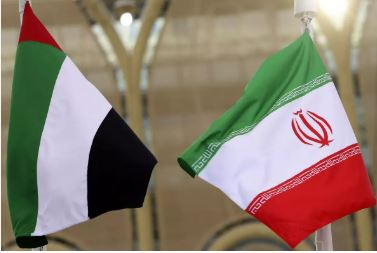
ABU DHABI: Iran launched missiles and drones targeting the UAE, with a drone strike causing a fire at the Fujairah Oil Industry Zone (a key oil storage and export hub outside the Strait of Hormuz). UAE air defenses intercepted most of the threats (reports cite around 15 missiles and 4 drones), but the Fujairah attack injured three Indian nationals.

UAE officials strongly condemned the strikes as “treacherous aggression” violating sovereignty and international law. Anwar Gargash, UAE Presidential Adviser, explicitly called Iran the “aggressor party” responsible for escalating the crisis in the Arabian Gulf and a “source of danger and threat to its security and stability.” Multiple countries (including Canada, India, and others) echoed condemnations.

This fits a pattern of Iranian actions against Gulf infrastructure, especially amid broader conflicts involving the Strait of Hormuz and fragile ceasefires.Saudi Arabia’s PositionSaudi Arabia strongly condemned the Iranian attacks on UAE civilian/economic sites and an ADNOC-linked vessel. The Saudi Foreign Ministry expressed full solidarity with the UAE and called on Iran to stop such actions and respect international law and good neighborliness. Crown Prince Mohammed bin Salman spoke with UAE President Sheikh Mohamed bin Zayed to reaffirm support.

Separately, Saudi Arabia has expressed support for Pakistan’s mediation efforts in regional (including US-Iran) tensions, emphasizing dialogue and restraint to prevent further instability. Pakistan has positioned itself as a facilitator between various parties.

IMF chief Georgieva warns of ‘much worse outcome’ if Middle East war drags into 2027

IMF chief Georgieva warns of 'much worse outcome' if Middle East war drags into 2027

The IMF issued three scenarios for global GDP amid uncertainty over the war in the Middle East: the main “reference forecast,” a middle “adverse scenario,” and a much worse “severe scenario.”

WASHINGTON, MAY 5: The head of the International Monetary Fund on Monday warned that inflation was already picking up and the global economy could face a “much worse outcome” if the war in the Middle East drags on into 2027 and oil prices hit around $125 per barrel.

IMF Managing Director Kristalina Georgieva said the continuation of the war meant that the global lender’s “reference scenario,” assuming a short-lived conflict, which forecast a minor growth slowdown to 3.1% and a minor increase in prices to 4.4%, was no longer possible.

“This scenario, with every day that passes, is further and further behind in the rear-view mirror,” Georgieva said.

The continuation of the war, a forecast of oil prices at or above $100 per barrel, and rising inflationary pressures meant the IMF’s “adverse scenario” was already in effect, she said.

Long-term inflation expectations remained anchored, and financial conditions were not tightening, but that could change if the war continued, she told a conference hosted by the Milken Institute.

Vessels in the Strait of Hormuz near Bandar Abbas, Iran, May 4, 2026. (credit: Amirhosein Khorgooi/ISNA/WANA
Vessels in the Strait of Hormuz near Bandar Abbas, Iran, May 4, 2026. (credit: Amirhosein Khorgooi/ISNA/WANA (West Asia News Agency) via REUTERS)
Advertisement

“Now, if this continues into 2027 and we have oil prices of $125 more or less, then we have to expect a much worse outcome,” she said. “Then we are going to see inflation climbing up, and then inevitably, inflation expectations would start de-anchoring.”

Three possible scenarios for global GDP growth path
The IMF last month issued ​three scenarios for the ‌global GDP growth path in 2026 and 2027 amid massive ​uncertainty over the ​war in the Middle East: the main “reference forecast,” a middle “adverse scenario,” and the much worse “severe scenario.”

The adverse scenario forecasts global growth slowing to 2.5% in 2026 and headline inflation of 5.4%. The severe scenario forecast growth of just 2% and headline inflation of 5.8%.

Chevron Chairman and CEO Mike Wirth, speaking on the same panel, said that physical shortages in oil supply would begin appearing around the world because of the closure of the Strait of Hormuz, through which 20% of global crude supply passed before the war.

Economies will begin shrinking, first in Asia, as demand adjusts to meet supply while the strait remains closed because of the US-Israeli war with Iran, Wirth said.

Georgieva said the IMF was carefully tracking the slow-moving impact of the conflict on supply chains, with fertilizer already 30% to 40% more expensive, which would drive food prices up between 3% and 6%. Other industries could also be affected.

‘It is really serious’
“What I want to stress is that it is really serious,” she said, expressing concern that many policymakers were still acting as if the crisis would end in a couple of months and were putting in place measures to cut the impact on consumers and business, which was keeping demand for oil high.

“Don’t throw gasoline on fire,” she said. “Everybody in this room knows that if your supply shrinks, your demand has to follow.”

‘Full solidarity’: Pakistan strongly condemns missile, drone attacks on UAE

'Full solidarity': Pakistan strongly condemns missile, drone attacks on UAE

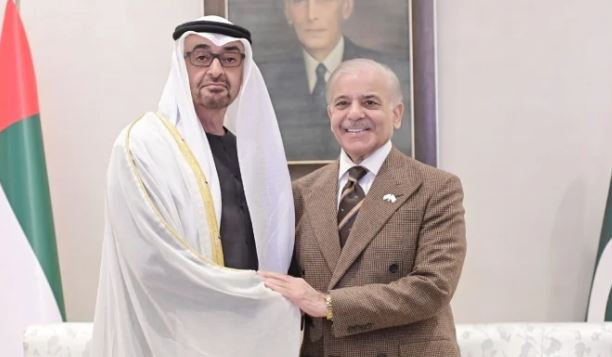
ISLAMABAD, MAY 5 – Prime Minister Shehbaz Sharif has strongly condemned reported missile and drone attacks targeting civilian infrastructure in the United Arab Emirates, expressing full solidarity with the Emirati leadership and people.

The statement comes a day after a drone strike on an energy facility in Fujairah injured three Indians, with the UAE blaming Iran for the attack. Iranian state TV said the Islamic republic had “no pre-planned programme” to attack oil facilities in the UAE.

The Gulf Arab state’s foreign ministry said in a statement that the attacks marked a serious escalation and posed a direct threat to the country’s security, adding that the UAE reserved its “full and legitimate right” to respond.

In a statement on X, the prime minister conveyed Pakistan’s support for the UAE and extended solidarity to President Mohamed bin Zayed Al Nahyan.

“Pakistan stands firmly with our Emirati brothers and sisters as well as with the Government of the United Arab Emirates at this difficult time,” he posted.

PM Shehbaz also emphasised the importance of respecting the ceasefire, warning that any escalation would undermine regional stability. He urged all parties to preserve diplomatic space and prioritise dialogue to achieve lasting peace and stability in the region.

“It is absolutely essential that the ceasefire be upheld and respected, to allow necessary diplomatic space for dialogue leading to enduring peace and stability in the region.”

The drone attacks shattered a period of relative calm in the region since a Pakistani-mediated ceasefire between Washington and Tehran took effect on April 8, pausing more than a month of intense fighting in the Gulf region.

Monday’s strike was not the first time Fujairah’s energy infrastructure had been targeted. A drone attack on March 14 had previously hit the Port of Fujairah, triggering fires and the suspension of some oil-loading operations.

Fujairah has been critical to UAE oil exports during the Iran war as it sits at the end of the Abu Dhabi Crude Oil Pipeline, which carries crude from inland fields to the Gulf of Oman, bypassing the Strait of Hormuz.

This has allowed the UAE to continue shipping oil to global markets even as the waterway remained under threat.

Fresh hostilities
The fresh volleys of missiles and drones came after US President Donald Trump launched a new effort to get stranded tankers and other ships through the strait, the vital energy-trade chokepoint that has been virtually closed since the US and Israel began attacks on Iran in February, a war that has killed thousands of people across the region.

Before Monday was out, several merchant ships in the Gulf reported explosions or fires, the US said it had destroyed six small Iranian military boats, and an oil port in the United Arab Emirates, which hosts a large US military base, was set ablaze by Iranian missiles.

Trump gave scant details about his new effort, which he called “Project Freedom,” to help stuck ships travel through the strait when he announced it on social media, two days after a legal deadline under US law had passed for him to get authorisation from Congress for the war

Trump told Congress the war was “terminated,” and the deadline was moot, a claim disputed by some lawmakers.

It was the first apparent attempt to use military force since last month’s ceasefire announcement to unblock the world’s most important energy shipping route, which Iran’s Islamic Revolutionary Guard Corps has said can only happen with its permission. The cost of shipping insurance has also rocketed. For weeks, the US Navy has blockaded Iran’s trade by sea, which Iran says is itself an act of war.

Meanwhile, Iranian FM Araghchi said Monday’s events showed there was no military solution to the crisis. He said peace talks were progressing with Pakistan’s mediation while warning the US and the UAE against being drawn into a “quagmire by ill-wishers”.

Criticising the US initiative aimed at escorting vessels through the Strait of Hormuz, Araghchi said: “Project Freedom is Project Deadlock”.

US-Iran talks progressing with Pakistan’s efforts, says Araghchi amid Hormuz tensions

US-Iran talks progressing with Pakistan's efforts, says Araghchi amid Hormuz tensions

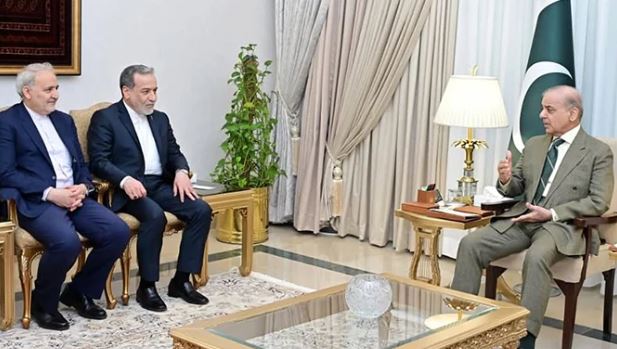
ISLAMABAD, MAY 5: Iranian Foreign Minister Abbas Araghchi on Monday night said talks with the United States were making progress with Pakistan’s “gracious effort,” while cautioning Washington against being drawn into further escalation amid a standoff over the Strait of Hormuz.

The statement comes after US and Iran launched new attacks in the Gulf on Monday as they wrestled for control over the Strait of Hormuz with duelling maritime blockades, shaking a fragile truce.

US President Donald Trump launched a new effort to get stranded tankers and other ships through the strait, the vital energy-trade chokepoint that has been virtually closed since the US and Israel began attacks on Iran in February, a war that has killed thousands of people across the region.

Trump gave scant details about his new effort, which he called “Project Freedom,” to help stuck ships travel through the strait when he announced it on social media, two days after a legal deadline under US law had passed for him to get authorisation from Congress for the war. Trump told Congress the war was “terminated” and the deadline was moot, a claim disputed by some lawmakers.

It was the first apparent attempt to use military force since last month’s ceasefire announcement to unblock the world’s most important energy shipping route, which Iran’s Islamic Revolutionary Guard Corps has said can only happen with its permission.

The cost of shipping insurance has also rocketed. For weeks, the US Navy has blockaded Iran’s trade by sea, which Iran says is itself an act of war.

But Trump’s latest move, at least initially, appeared to have backfired, bringing no surge of merchant ship traffic while provoking a promised show of force from Iran, which has threatened to respond to any escalation with new attacks on its neighbours hosting US soldiers. Major shipping companies said they were likely to wait for an agreed end to hostilities before trying to cross the strait.

Meanwhile, Iranian FM Araghchi said Monday’s events showed there was no military solution to the crisis. He said peace talks were progressing with Pakistan’s mediation while warning the US and the UAE against being drawn into a “quagmire by ill-wishers.”

Criticising the US initiative aimed at escorting vessels through the Strait of Hormuz, Araghchi said: “Project Freedom is Project Deadlock.”

Nonetheless, the US military said two US merchant ships made it through the strait, without saying when, with the support of Navy guided-missile destroyers. While Iran denied any crossings had taken place in recent hours, Maersk said the Alliance Fairfax, a US-flagged ship, exited the Gulf via the Strait of Hormuz accompanied by the US military on Monday.

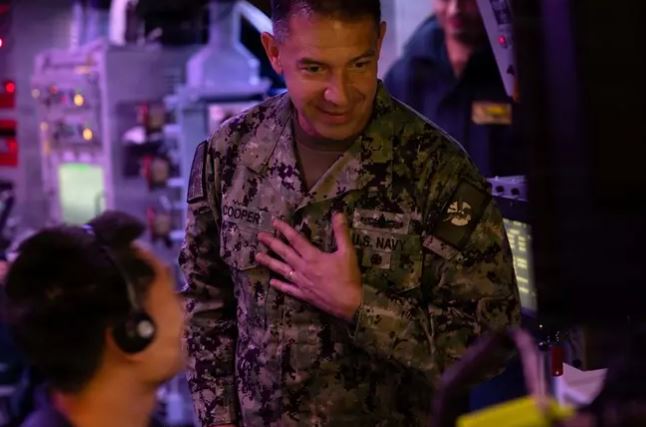
The commander of U.S. forces in the region said his fleet had destroyed six small Iranian boats, which Iran also denied. Admiral Brad Cooper said he “strongly advised” Iranian forces to keep clear of U.S. military assets carrying out the mission.

Iranian authorities released a map of what they said was an expanded sea area now under their control, extending far beyond the strait to include long stretches of the UAE’s coastline.

‘Dialogue and diplomacy’
A day earlier, Deputy Prime Minister and Foreign Minister Ishaq Dar held a telephonic conversation with his Iranian counterpart, during which both sides discussed the evolving regional situation and Pakistan’s ongoing diplomatic efforts.

According to the Foreign Office, Araghchi appreciated Pakistan’s constructive role and mediation efforts, while Dar reaffirmed Islamabad’s commitment to promoting dialogue and engagement.

He stressed that diplomacy remained the only viable path to achieving lasting peace and stability.

Negotiations between Washington and Tehran have remained stalled since a ceasefire took effect on April 8, with tensions centred on Iran’s blockade of the Strait of Hormuz following US-Israeli strikes. The move has disrupted global flows of oil, gas and fertiliser, while the United States has responded by imposing a counter-blockade on Iranian ports.

Pakistan has emerged as a key intermediary in efforts to revive dialogue, hosting high-level engagements between the two sides in Islamabad last month, though a second round of talks has yet to materialise.

CENTCOM commander says US military destroyed six Iranian boats after attacks

CENTCOM commander says US military destroyed six Iranian boats after attacks

AUTHOR: S Shujahat Ali, Civil Services of Pakistan, Fulbright Scholar

If opportunity cost is the unseen tax on CSS aspirants, then poor measurement is its silent accomplice which confuses noise for signal.

Consider this: should a score of 80 in a regional language carry the same weight as 60 in Economics or Applied Mathematics? The answer, intuitively, is no. These subjects differ not only in difficulty but also in grading standards, evaluator subjectivity, and intellectual demands. Yet the current CSS rules of different optional subjects carrying same weights regardless of qualitative difficulties of those subjects, producing a statistical illusion of fairness while masking structural inequities.

This problem is not unique to Pakistan. India’s Union Public Service Commission (UPSC) faced a similar crisis. Optional subjects led to “score inflation arbitrage,” where candidates strategically chose high-scoring disciplines rather than those aligned with aptitude or future administrative utility. Over time, UPSC reduced the weight of optional subjects and introduced normalization techniques to ensure comparability across candidates. The lesson is clear: when evaluation systems ignore subject heterogeneity, they reward gaming behavior over genuine competence.

CSS today suffers from this very distortion. High-scoring subjects become crowded, low-scoring ones become traps, and the system inadvertently incentivizes tactical selection over intellectual authenticity or academic rigor. A more rational approach would involve either eliminating optional subjects altogether or statistically normalizing scores across disciplines. At the very least, optional subject scores should act as tie-breakers rather than primary determinants when candidates perform similarly in compulsory papers.

The second flaw is redundancy. What statisticians would call multicollinearity. There is substantial overlap between compulsory and optional subjects, and even within compulsory papers themselves. For instance, International Relations and Current Affairs, or Indo-Pak History and Pakistan Affairs. More critically, the viva voce often becomes a mere oral repetition of written content. Candidates are asked to reproduce facts, opinions, and arguments they have already demonstrated on paper. This is not assessment; it is duplication.

In predictive analytics, redundant variables add noise without improving explanatory power. Similarly, in CSS, overlapping evaluations consume time and cognitive energy without meaningfully enhancing candidate differentiation. Worse, they skew preparation strategies toward memorization and rehearsed articulation rather than original thinking.

Internationally, modern civil service systems are moving in the opposite direction. For instance, the UK’s Civil Service Fast Stream emphasizes situational judgment tests, group exercises, and behavioral interviews. These are designed not to test what candidates know, but how they think, communicate, and lead under uncertainty.

In essence, the goal is not to make the exam easier, but to make it smarter and efficient. Normalize what is inherently incomparable. Eliminate what is redundant. And redesign evaluation to reflect the actual demands of public service.

Because a system that mistakes repetition for rigor will inevitably select for conformity not competence.

Google Accidentally Exposes COSMO AI Assistant with Proactive Features

Google Accidentally Exposes COSMO AI Assistant with Proactive Features

Google has accidentally revealed details of a new AI assistant called COSMO after a test app briefly appeared on the Play Store. The leak, just weeks before Google I/O 2026, suggests the company is preparing a major upgrade to how AI works on smartphones.

COSMO moves beyond traditional assistants

COSMO is designed to work differently from tools like Google Assistant or Gemini. Instead of waiting for commands, it can understand context and act on its own. It works in the background, observing what the user is doing and offering help when needed.

This means fewer manual searches, fewer voice commands, and faster task completion. The goal is simple: reduce friction in everyday phone use.

Built on-device with smarter processing

A key part of COSMO is that it runs directly on the device using Gemini Nano. This allows it to respond instantly without relying fully on the internet.

This also improves privacy, since sensitive data can stay on the device instead of being sent to the cloud.

At the same time, COSMO can switch to cloud processing for more complex tasks. This hybrid system allows it to handle both quick actions and advanced requests efficiently.

Understands your screen in real time

One of the biggest changes is COSMO’s ability to read and understand what is happening on the screen.

It can:

  • Detect conversations
  • Recognise tasks
  • Identify important information

For example, if you are chatting about meeting someone, it may suggest adding a calendar event. If you are reading a long article, it can summarise it instantly.

This makes interactions faster and more natural.

Designed to complete tasks, not just answer

The leaked features show COSMO is built for action, not just conversation.

It can:

  • Suggest events automatically
  • Find content like photos using context
  • Write and summarise documents
  • Combine data from multiple sources
  • Perform actions inside apps and browsers

This is a step toward AI that acts more like a personal assistant than a search tool.

Part of a larger industry shift

The leak shows Google is moving toward deeper AI integration at the system level. Instead of separate apps, AI is becoming part of how the entire device works.

This matches a wider trend in the tech industry. Companies are focusing on AI that can anticipate needs, automate tasks, and improve productivity without constant input.

It also reflects growing competition in AI, where companies are trying to build assistants that are faster, smarter, and more useful in daily life.

What happens next

It is not yet clear how Google will launch COSMO. It could be released as a standalone product or built into existing services like Gemini or Android itself. The leaked version appears unfinished, so features may change before release.

However, the direction is clear. AI assistants are moving from tools that respond to questions to systems that understand users and take action.

With Google I/O 2026 approaching, COSMO is likely to be one of the most important announcements to watch.

Reimagining CSS II: Normalization, Redundancy, and the Illusion of Merit

Reimagining CSS II: Normalization, Redundancy, and the Illusion of Merit

If opportunity cost is the unseen tax on CSS aspirants, then poor measurement is its silent accomplice which confuses noise for signal.

Consider this: should a score of 80 in a regional language carry the same weight as 60 in Economics or Applied Mathematics? The answer, intuitively, is no. These subjects differ not only in difficulty but also in grading standards, evaluator subjectivity, and intellectual demands. Yet the current CSS rules of different optional subjects carrying same weights regardless of qualitative difficulties of those subjects, producing a statistical illusion of fairness while masking structural inequities.

This problem is not unique to Pakistan. India’s Union Public Service Commission (UPSC) faced a similar crisis. Optional subjects led to “score inflation arbitrage,” where candidates strategically chose high-scoring disciplines rather than those aligned with aptitude or future administrative utility. Over time, UPSC reduced the weight of optional subjects and introduced normalization techniques to ensure comparability across candidates. The lesson is clear: when evaluation systems ignore subject heterogeneity, they reward gaming behavior over genuine competence.

CSS today suffers from this very distortion. High-scoring subjects become crowded, low-scoring ones become traps, and the system inadvertently incentivizes tactical selection over intellectual authenticity or academic rigor. A more rational approach would involve either eliminating optional subjects altogether or statistically normalizing scores across disciplines. At the very least, optional subject scores should act as tie-breakers rather than primary determinants when candidates perform similarly in compulsory papers.

The second flaw is redundancy. What statisticians would call multicollinearity. There is substantial overlap between compulsory and optional subjects, and even within compulsory papers themselves. For instance, International Relations and Current Affairs, or Indo-Pak History and Pakistan Affairs. More critically, the viva voce often becomes a mere oral repetition of written content. Candidates are asked to reproduce facts, opinions, and arguments they have already demonstrated on paper. This is not assessment; it is duplication.

In predictive analytics, redundant variables add noise without improving explanatory power. Similarly, in CSS, overlapping evaluations consume time and cognitive energy without meaningfully enhancing candidate differentiation. Worse, they skew preparation strategies toward memorization and rehearsed articulation rather than original thinking.

Internationally, modern civil service systems are moving in the opposite direction. For instance, the UK’s Civil Service Fast Stream emphasizes situational judgment tests, group exercises, and behavioral interviews. These are designed not to test what candidates know, but how they think, communicate, and lead under uncertainty.

In essence, the goal is not to make the exam easier, but to make it smarter and efficient. Normalize what is inherently incomparable. Eliminate what is redundant. And redesign evaluation to reflect the actual demands of public service.

Because a system that mistakes repetition for rigor will inevitably select for conformity not competence.

Trump threatens to ‘blow Iran off face of the Earth’ if US vessels attacked

Trump threatens to 'blow Iran off face of the Earth' if US vessels attacked

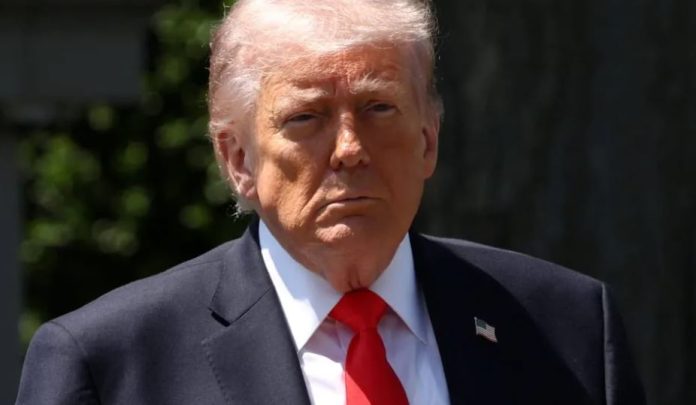
WASHINGTON, MAY 4: US President Donald Trump threatened Iran would be “blown off the face of the Earth” if US vessels were attacked in the Strait of Hormuz during an interview with FOX News on Monday.

“We have more weapons and ammunition at a much higher grade than we had before,” Trump said. “We have the best equipment. We have stuff all over the world. We have these bases all over the world. They’re all stocked up with equipment. We can use all of that stuff, and we will, if we need it.”

Trump’s comments came just after several missiles were launched from Iran at the UAE, and the head of CENTCOM, Admiral Brad Cooper, said the US had destroyed six Iranian small boats and intercepted Iranian cruise missiles and drones fired by Tehran.

Cooper said he “strongly advised” Iranian forces to remain clear of U.S. military assets as it launches the operation. He said a U.S. blockade of Iran, which prevents ships from going to Iran or departing Iranian territory, also remains in effect and is exceeding expectations.

Stay Connected

64FansLike
60FollowersFollow

Latest Reviews

Exchange Rates

USD - United States Dollar
EUR
1.14
GBP
1.34
AUD
0.70
CAD
0.71